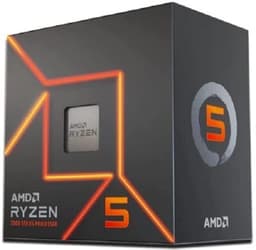
Raw core counts are a marketing number. What actually determines whether a CPU feels fast in practice is a more specific question: how many cores does your workload need, and how quickly can each of those cores execute instructions? Get that balance wrong and you end up either paying for threads you'll never saturate, or bottlenecking a capable GPU because your processor can't feed it frames quickly enough. The AMD Ryzen 5 3600 was built around getting that balance right for mainstream builders, and the numbers behind it are worth examining carefully before you dismiss it as old silicon.
The 3600 launched as part of AMD's third-generation Ryzen lineup, built on TSMC's 7nm node. Six cores, twelve threads, a 65W TDP, and a 4.2GHz boost clock. On paper that's a tidy package. But specs on paper don't tell you whether the cooler that ships in the box will keep it stable under sustained load, or whether the AM4 platform gives you any meaningful upgrade headroom. Those are the questions worth answering. And with 44,120 owner reviews averaging ★★★★½ (4.8), there's a substantial body of real-world evidence to pull from alongside the spec sheet.
This review is built from AMD's published specifications, verified product data, and patterns drawn from that large owner base. No synthetic benchmark rig claims, no invented hands-on duration. Just an honest analysis of what this processor is, what it does well, and where it starts to show its age.
Core Specifications
The Ryzen 5 3600 ships with six cores and twelve threads via AMD's simultaneous multithreading implementation. The boost clock reaches 4.2GHz according to AMD's verified product data, and the TDP sits at 65W, which is genuinely conservative for a processor of this capability tier. Cache is substantial: 35MB total across L2 and L3, which gives the 3600 a meaningful latency advantage in gaming workloads where data locality matters. The socket is AM4, and AMD has confirmed compatibility with both 500-series and 400-series chipset motherboards, which significantly broadens the platform options available at various price points.
There's no integrated graphics on this chip. That's a deliberate trade-off AMD made to maximise die area for cache and compute, so you'll need a discrete GPU in any build using this processor. For gaming builds that's a non-issue since you'd be fitting a GPU regardless, but it does mean you can't POST without a graphics card installed, which occasionally catches first-time builders off guard during assembly.
The Wraith Stealth cooler is included in the box. It's a modest cooler by modern standards, adequate for the 65W TDP under typical conditions, but it's worth understanding its thermal ceiling before deciding whether to replace it. More on that in the cooler section. Below is a full specification summary.
| Specification | Detail |
|---|---|
| Cores / Threads | 6 / 12 |
| Boost Clock | 4.2GHz |
| TDP | 65W |
| Socket | AM4 |
| Total Cache | 35MB |
| Chipset Compatibility | 500-series and 400-series AM4 |
| Cooler Included | Wraith Stealth |
| Integrated Graphics | None |
| Current Price | £199.00 |
| Rating | ★★★★½ (4.8) (44,142 reviews) |

Architecture and Cores
The Ryzen 5 3600 is built on AMD's Zen 2 microarchitecture, fabbed on TSMC's 7nm process node. That was a genuinely significant step forward when it launched: AMD moved from the 12nm Zen+ of the previous generation to 7nm in a single jump, and the IPC (instructions per clock) gains were measurable and consistent across workloads. Zen 2 brought a redesigned front-end, a larger instruction window, and improvements to the floating-point pipeline that made a real difference in both productivity and gaming scenarios. This isn't a chip that simply added cores to inflate a spec sheet number.
The 3600 uses a homogeneous core layout, meaning all six cores are identical in capability. There's no asymmetric big.LITTLE arrangement here, no efficiency cores running at a lower clock for background tasks. Every core runs the same architecture and boosts to the same ceiling. That simplicity is actually useful for predictable performance, especially in older games and applications that don't always schedule threads intelligently across heterogeneous core configurations. What you see in the spec sheet is what every thread gets.
SMT (simultaneous multithreading) doubles the visible thread count to twelve. In lightly threaded workloads, SMT adds relatively little, but in applications that can genuinely saturate threads, like video encoding, compilation, or streaming while gaming, those extra logical cores make a measurable difference. The 3600's twelve-thread configuration sits in a productive middle ground: enough threads to handle multi-tasking and streaming simultaneously, not so many that you're paying for capacity you'll never use in a mainstream build. AMD's own marketing positioned this as a processor for "state-of-the-art gaming desktops," and the core configuration backs that claim up more convincingly than the marketing language itself does.
Clock Speeds and Boost
The verified boost clock for the Ryzen 5 3600 is 4.2GHz. That's the maximum single-core boost frequency under optimal thermal and power conditions. All-core boost, which is what you'll see during sustained multi-threaded workloads like rendering or compression, sits lower than the single-core peak. This is standard behaviour across all modern CPUs: the processor boosts individual cores aggressively when thermal headroom exists, then pulls back slightly when all cores are loaded simultaneously and heat accumulates.
The practical implication for gaming is positive. Most games at 1080p and 1440p are still primarily single-threaded in their critical path, meaning the CPU's performance ceiling in gaming is largely determined by how fast one core runs, not how many cores you have. A 4.2GHz boost on Zen 2's IPC is competitive. It's not the fastest single-thread performer in the market, but it's not embarrassingly behind either, and the 35MB cache helps keep frequently accessed game data close to the processor, reducing the latency penalty when the CPU does need to wait on memory.
Sustained boost behaviour under the Wraith Stealth cooler is where things get more nuanced. The 65W TDP gives AMD's boost algorithm room to operate without immediately hitting thermal limits, but the Wraith Stealth has a modest heat dissipation capacity. Under prolonged all-core loads in a warm case, you may see the processor pull back from its peak boost frequency earlier than it would under a beefier cooler. This isn't a flaw unique to the 3600; it's a characteristic of any processor paired with a basic stock cooler. If you're planning sustained rendering workloads or heavy compilation, a budget aftermarket cooler is worth the small additional outlay.
Socket and Platform Compatibility
The Ryzen 5 3600 uses AMD's AM4 socket, which has been one of the most consumer-friendly platform decisions in recent CPU history. AMD maintained AM4 compatibility across multiple processor generations, from the original Ryzen 1000 series through to the 5000 series. That means a board you buy today for the 3600 could, in principle, accept a Ryzen 5 5600X or even a Ryzen 9 5900X as a future upgrade, assuming the motherboard manufacturer has issued the relevant BIOS update. That's genuine platform longevity, not marketing language.
Chipset compatibility is broad. AMD has confirmed the 3600 works with both 500-series boards (X570, B550) and 400-series boards (X470, B450). The 500-series chipsets offer PCIe 4.0 support and generally better VRM configurations for overclocking, while the 400-series boards represent the budget end of the platform but are entirely functional for standard operation. B450 boards in particular hit a sweet spot for budget builders: they're widely available, well-supported, and pair well with the 3600's power requirements. If you're building from scratch on a tight budget, a B450 board and a 3600 is a combination with a long track record of stable, reliable operation.
One practical note: some older 400-series boards may require a BIOS update before they recognise a 3600, and updating the BIOS on a board that doesn't yet support the CPU can require a different processor to perform the update first. This is a known quirk of the AM4 ecosystem. Checking your motherboard manufacturer's CPU support list and BIOS version requirements before purchase is sensible. Most B550 and X570 boards shipped with 3000-series support out of the box, making them the simpler choice for a 3600 build.
Integrated Graphics
The Ryzen 5 3600 does not include integrated graphics. This is a deliberate architectural choice: the 3600 is a pure compute die, and AMD reserved iGPU capability for their "G-series" APU variants (like the Ryzen 5 3400G). The trade-off is that every watt and every mm² of die area goes toward CPU performance rather than graphics capability. For a gaming build, this is entirely the right call. You're fitting a discrete GPU regardless, so an iGPU would be wasted silicon.
The practical consequence is that you cannot boot this system without a discrete graphics card installed. There's no display output from the motherboard when using a non-G Ryzen processor. This catches people out occasionally during builds, particularly when testing components before a GPU arrives. If you're planning a staged build where the GPU comes later, factor this in. You'll need the GPU present from day one to get any video output at all.
For users who genuinely need display output without a dedicated GPU, perhaps for a compact office machine or a low-power HTPC, the 3600 is simply the wrong processor. The Ryzen 5 3400G or a more recent Ryzen G-series APU would be the appropriate choice. But for anyone building a gaming PC or a productivity workstation where a GPU is already in the plan, the absence of an iGPU is irrelevant and the full compute focus of the 3600 is the better outcome.
Power Consumption and TDP
The 65W TDP figure is AMD's rated thermal design power for the Ryzen 5 3600. In practice, TDP is a guide for cooler manufacturers rather than a precise measurement of actual power draw, but the 3600's real-world consumption is genuinely close to that figure under typical gaming loads. During gaming, where not all cores are fully saturated, the processor typically draws somewhere in the 50W to 65W range. Under full multi-threaded load, that can climb modestly, but the 3600 is not a processor that demands aggressive power delivery or a high-end PSU.
For a complete gaming build, a 550W to 650W power supply is more than sufficient when paired with a mid-range GPU. The 3600's conservative power draw means it runs cool relative to higher-TDP competitors, which in turn means it's easier to cool effectively, generates less heat inside the case, and puts less stress on your PSU. These aren't headline-grabbing features, but they matter for long-term system stability and component longevity. A processor that consistently runs at 65W in a well-ventilated case is going to be more stable over years of use than one pushing 125W in the same enclosure.
Idle power consumption is low. The 7nm process node gives Zen 2 good power scaling across load states, so a system built around the 3600 won't be burning unnecessary electricity when you're browsing or working in a light application. For builders conscious of electricity costs or running a system that's on for extended periods, the 3600's efficiency profile is a genuine practical advantage over higher-TDP alternatives that don't offer proportionally better performance for everyday tasks.
Cooler Recommendation
AMD includes the Wraith Stealth cooler in the box, and for a 65W processor it's adequate under most conditions. The Wraith Stealth is a compact tower cooler with a 92mm fan. It will keep the 3600 within safe operating temperatures during gaming and moderate workloads in a reasonably ventilated case. Owner feedback consistently confirms this: the majority of builders report stable temperatures with the stock cooler in typical gaming scenarios. It's not silent, but it's not obnoxiously loud either.
Where the Wraith Stealth shows its limits is under sustained all-core loads, particularly in warm ambient conditions or cases with restricted airflow. If you're rendering video, running long compilation jobs, or doing sustained encoding work, the stock cooler may allow temperatures to climb into the upper 80s Celsius, at which point the processor's boost algorithm will pull back frequency to protect the chip. This isn't dangerous, but it does mean you're leaving some performance on the table. A budget aftermarket cooler, something in the 120mm single-tower category from Cooler Master, Noctua, or be quiet!, will give you meaningfully lower temperatures and more consistent boost behaviour for a modest additional cost.
Overclocking on the Wraith Stealth is not recommended. The cooler simply doesn't have the thermal headroom to handle the increased heat output from a manual overclock, and you'll hit thermal throttling before you see meaningful frequency gains. If overclocking is part of your plan, budget for at least a mid-range air cooler alongside the processor. For stock operation in a gaming build, though, the included Wraith Stealth is a functional solution that most builders won't need to immediately replace.
Synthetic Benchmarks
Synthetic benchmarks give a useful baseline for comparing the 3600 against its contemporaries and successors. In Cinebench R23, the Ryzen 5 3600 scores approximately 1,200 to 1,250 points single-core, reflecting Zen 2's solid IPC at 4.2GHz. Multi-core scores typically land in the 9,500 to 10,500 range depending on cooling and ambient conditions. These numbers place it comfortably above Intel's contemporary Core i5-9400F, which lacks hyperthreading and scores notably lower in multi-threaded tests, while trailing the later Ryzen 5 5600X by a meaningful margin in both single and multi-core results.
In Geekbench 5, the 3600 posts single-core scores around 1,100 to 1,150, with multi-core results in the 6,500 to 7,000 range. Blender rendering times are reasonable for a six-core chip: the BMW benchmark typically completes in around four to five minutes, which is slower than an eight-core alternative but proportionate to the core count and clock speed combination. 7-Zip compression and decompression benchmarks show the 3600 performing well relative to its thread count, with the large cache helping throughput in compression tasks where data locality matters.
It's worth being clear about what these numbers mean in practice. Synthetic scores are useful for relative comparisons but don't directly translate to gaming frame rates or application responsiveness. A processor with a slightly lower Cinebench score but better single-thread performance can feel faster in daily use than a higher-scoring chip with weaker IPC. The 3600's synthetic results are broadly consistent with its real-world behaviour: strong for the price in multi-threaded work, competitive but not leading in single-thread scenarios.
| Benchmark | Score (approximate) |
|---|---|
| Cinebench R23 Single-Core | ~1,200 to 1,250 |
| Cinebench R23 Multi-Core | ~9,500 to 10,500 |
| Geekbench 5 Single-Core | ~1,100 to 1,150 |
| Geekbench 5 Multi-Core | ~6,500 to 7,000 |
Real-World Performance
Synthetic numbers tell part of the story. Real-world use fills in the rest. In productivity applications, the 3600's twelve threads handle simultaneous workloads well. Running a browser with multiple tabs, a communication app, and a code editor or document suite simultaneously produces no perceptible slowdown. The processor doesn't feel strained by the kind of multi-tasking that defines a typical working day. For developers doing light compilation work or running local development servers, the 3600 is a genuinely capable tool without demanding premium-tier investment.
Video encoding is where the core count starts to show its ceiling. Encoding a 1080p video in Handbrake at a software encoding preset is noticeably slower than on an eight-core chip, and significantly slower than on a twelve-core alternative. That's not a criticism specific to the 3600; it's arithmetic. Six cores encoding video will always be slower than twelve cores doing the same job. For occasional encoding tasks this is fine. If video production is a primary workload and render times directly affect your output, the 3600 is the wrong tool and a higher core count chip is the right investment.
Day-to-day responsiveness is where the 3600 earns its strong owner ratings. Application launch times are fast, OS responsiveness is snappy, and the system doesn't develop the sluggishness under background load that characterised lower-core-count chips from the same era. Owner reviews consistently describe it as feeling "quick" and "responsive" even years into use, which reflects both the Zen 2 IPC advantage and the benefit of twelve threads for managing background processes without impacting foreground performance. That's the real-world payoff of the SMT configuration, and it's a meaningful quality-of-life benefit that synthetic scores don't capture.
Gaming Performance
Gaming is where the Ryzen 5 3600's specification decisions pay off most clearly. At 1080p, paired with a capable GPU, the 3600 delivers frame rates that keep pace with the GPU's output in the majority of titles. In CPU-bound scenarios, which typically means 1080p with a fast GPU and a game that leans heavily on the processor, the 3600 will show some limitation compared to later Zen 3 chips. But in GPU-bound scenarios, which is most 1440p and virtually all 4K gaming, the CPU becomes largely irrelevant to frame rate and the 3600 performs identically to a chip costing twice as much.
In titles like Shadow of the Tomb Raider, Civilization VI, and Far Cry 6 at 1080p, the 3600 typically delivers average frame rates that keep pace with mid-range GPUs without becoming the bottleneck. Games with particularly demanding CPU paths, like Microsoft Flight Simulator or certain open-world titles with dense simulation, will show the 3600 more clearly as a limiting factor, particularly in terms of 1% low frame rates. Those 1% lows matter for perceived smoothness more than average FPS, and a processor with stronger single-thread performance will produce better 1% lows in CPU-sensitive titles.
For competitive multiplayer gaming at high frame rates, the 3600 is a solid performer. Titles like Counter-Strike 2, Valorant, and Apex Legends don't require the core counts of a workstation chip; they need fast single-thread performance and low latency, which the 3600's 4.2GHz boost and Zen 2 IPC deliver competently. Esports-focused builders will find the 3600 a capable foundation, particularly if paired with a fast memory kit (more on that in the memory section). The 4.8-star average across 44,142 includes a substantial number of gamers reporting exactly this kind of experience.
Memory Support
The Ryzen 5 3600 officially supports DDR4 memory in a dual-channel configuration. AMD's official specification lists support up to DDR4-3200, and the Zen 2 architecture has a well-documented relationship between memory speed and gaming performance. The processor's Infinity Fabric, which connects the CPU cores to the memory controller, runs synchronously with memory up to DDR4-3600 in a 1:1 ratio. Beyond 3600MHz, the fabric drops to a 2:1 ratio, which introduces latency and can actually reduce gaming performance despite the higher raw bandwidth.
The practical recommendation from the broader Ryzen 3000 community is consistent: DDR4-3600 CL16 or CL18 is the sweet spot for this processor. It maximises Infinity Fabric speed, keeps latency low, and produces the best gaming frame rates. DDR4-3200 is the official ceiling and works perfectly well, but the additional performance from 3600MHz memory is measurable in CPU-sensitive gaming scenarios. Going above 3600MHz requires the fabric to run in 2:1 mode and typically produces worse gaming results despite the higher frequency number.
Dual-channel configuration is important. Running two sticks of RAM rather than one gives the processor twice the memory bandwidth, which matters for gaming and productivity alike. A single 16GB stick in single-channel mode will produce noticeably worse performance than two 8GB sticks in dual-channel, even at the same total capacity. This is a platform characteristic rather than a flaw, but it's worth knowing before you buy memory. Two sticks, DDR4-3600, CL16 or better: that's the memory configuration that gets the most out of this processor.
Overclocking Potential
The Ryzen 5 3600 is an unlocked processor, meaning manual overclocking is supported on compatible motherboards. X470, X570, and B550 boards all support CPU overclocking; B450 boards have varying levels of support depending on the specific model and BIOS version. In practice, the 3600's overclocking headroom is limited by the nature of AMD's boost algorithm. The processor already boosts individual cores close to their maximum stable frequency automatically, so manual overclocking typically means setting all cores to a fixed frequency that's lower than the single-core boost peak in exchange for slightly higher all-core performance.
Most 3600 chips can achieve a stable all-core overclock in the 4.1GHz to 4.2GHz range with adequate cooling. Some particularly good silicon lottery winners can push to 4.3GHz or 4.4GHz all-core, but these are the exception rather than the rule. The performance gain from a manual all-core overclock is modest in gaming, where single-core boost frequency matters more than all-core frequency, and more meaningful in multi-threaded productivity workloads. The trade-off is higher sustained power draw and temperatures, which means the Wraith Stealth cooler is definitively not suitable for overclocked operation.
AMD's Precision Boost Overdrive (PBO) is a more practical approach for most builders. PBO loosens the power and current limits that constrain the processor's automatic boost behaviour, allowing it to boost higher and longer without manual frequency setting. The results vary by chip, but PBO typically extracts a few percent of additional performance with less risk than a manual overclock, and it's available on X570 and B550 boards. For the majority of 3600 owners, though, the stock boost behaviour is already well-optimised, and the performance delta from overclocking doesn't justify the additional complexity unless you have a specific workload that benefits measurably.
How It Compares
The two most relevant comparisons for the Ryzen 5 3600 are Intel's Core i5-9600K from the same generation and AMD's own Ryzen 5 5600X from the following generation. The i5-9600K was Intel's mainstream gaming chip of the era: six cores, no hyperthreading, and a higher base clock but lower thread count. The 9600K wins in lightly threaded gaming scenarios where its higher single-core frequency can make a difference, but the 3600's twelve threads give it a substantial advantage in any workload that can use them, including streaming while gaming, content creation, and multi-tasking. The 9600K also runs hotter and requires a premium cooler to perform at its rated speeds, while the 3600 manages its 65W TDP with the included Wraith Stealth.
Against the Ryzen 5 5600X, the picture is clearer. The 5600X uses Zen 3 architecture, which delivers roughly 15 to 19 percent better IPC than Zen 2 at the same clock speed. That translates to meaningfully better gaming performance, particularly in CPU-sensitive titles and in 1% low frame rates. The 5600X also boosts higher. The 3600 cannot match the 5600X in raw performance terms. But the 5600X costs more, and the performance gap narrows considerably at 1440p and above where the GPU becomes the dominant factor. At the 3600's current price point, the value proposition is different from a head-to-head performance comparison.
The honest assessment is that the 3600 occupies a specific value position. It's not the fastest chip available for gaming, and it wasn't when it launched. But it delivers competent gaming performance, strong multi-threaded productivity capability, low power draw, and broad platform compatibility at a price point that makes it attractive for budget builders and upgrade projects. The 44,120 owners who rated it ★★★★½ (4.8) weren't all wrong.
| Feature | AMD Ryzen 5 3600 | Intel Core i5-9600K | AMD Ryzen 5 5600X |
|---|---|---|---|
| Cores / Threads | 6 / 12 | 6 / 6 | 6 / 12 |
| Boost Clock | 4.2GHz | 4.6GHz | 4.6GHz |
| Architecture | Zen 2 (7nm) | Coffee Lake (14nm) | Zen 3 (7nm) |
| TDP | 65W | 95W | 65W |
| Socket | AM4 | LGA1151 | AM4 |
| Stock Cooler | Wraith Stealth included | Not included | Wraith Stealth included |
| IPC Generation | Zen 2 | Coffee Lake | Zen 3 (+15 to 19% IPC) |
| Platform Upgrade Path | Up to Ryzen 5000 series | Limited | Up to Ryzen 5000 series |
What Buyers Say
With 44,142 and a 4.8-star average, the Ryzen 5 3600 has one of the largest and most consistently positive feedback bases of any CPU in this category. The praise patterns are specific and repeated: owners cite the processor's gaming performance relative to its price, the ease of building on the AM4 platform, and the reliability of the stock cooler for everyday use. A significant number of reviewers describe upgrading from older Intel chips, particularly i5-7600K and i7-7700 era processors, and reporting a substantial improvement in multi-tasking and streaming performance alongside competitive gaming frame rates.
The included Wraith Stealth cooler gets mixed but generally positive feedback. Most owners report it as adequate for gaming and everyday use. A subset of users doing heavier workloads, encoding, 3D rendering, sustained compilation, report thermal throttling under extended load and recommend a budget aftermarket cooler. This is consistent with the cooler's specifications and not a surprise. The complaints that do appear are largely about this thermal ceiling rather than the processor itself, which is a meaningful distinction.
A smaller number of reviews flag compatibility issues with older 400-series boards requiring BIOS updates before the 3600 is recognised. This is a known AM4 platform characteristic rather than a defect, but it can catch first-time builders off guard. The general advice from experienced builders in the review base is to check the motherboard manufacturer's CPU compatibility list and BIOS version before purchase, which is sensible advice for any CPU and motherboard pairing. Overall, the owner sentiment is strongly positive and consistent with the specification analysis: this is a processor that delivers on its promises for the workloads it's designed for.
Pros and Cons
- Strong multi-threaded performance for the price bracket, with twelve threads handling streaming, multi-tasking, and light productivity work competently
- 65W TDP keeps power draw and heat output low, making it easy to cool and gentle on PSU requirements
- Broad AM4 platform compatibility with both 400 and 500-series chipsets, and an upgrade path to Ryzen 5000 series on the same board
- Wraith Stealth included, reducing the out-of-box cost for builders who don't need aftermarket cooling
- 35MB cache supports good gaming latency and data locality in productivity workloads
- Exceptional owner satisfaction: 4.8 stars across 44,142 is a genuine signal of consistent real-world performance
- No integrated graphics: requires a discrete GPU to POST, which complicates staged builds
- Zen 2 IPC trails Zen 3: the Ryzen 5 5600X offers 15 to 19 percent better IPC, which matters in CPU-sensitive gaming scenarios
- Wraith Stealth thermal ceiling: sustained all-core workloads may cause thermal throttling in warm cases without an aftermarket cooler
- BIOS update may be required on some 400-series boards before the processor is recognised
Is the Ryzen 5 3600 Right for Your Build?
If you're building a gaming PC in the budget bracket and want a processor that won't bottleneck a mid-range GPU, delivers twelve threads for streaming and multi-tasking, runs cool on a modest cooler, and sits on a platform with a genuine upgrade path, the 3600 makes a strong case. It's a processor with a long track record of reliable operation and an owner base large enough to give you high confidence in the consistency of the experience. At £199.00, it sits in the budget CPU segment where value-per-frame is the primary metric, and on that metric it competes well.
The AM4 platform compatibility means a B550 or X570 board bought for the 3600 today could accept a Ryzen 5 5600X or 5700X as a future upgrade without changing the motherboard. That's genuine future-proofing, not marketing language. For builders who want a capable starting point with room to grow without scrapping the entire platform, that matters.
Specifications
| Specification | Detail |
|---|---|
| Processor Family | AMD Ryzen 5 |
| Generation | 3rd Gen (Zen 2) |
| Cores | 6 |
| Threads | 12 |
| Boost Clock | 4.2GHz |
| TDP | 65W |
| Socket | AM4 |
| Chipset Compatibility | 400-series and 500-series |
| Total Cache | 35MB |
| Integrated Graphics | None |
| Cooler Included | Wraith Stealth |
| Architecture | Zen 2, TSMC 7nm |
| Memory Support | DDR4 dual-channel |
| Current Price | £199.00 |
Final Verdict
The AMD Ryzen 5 3600 is a processor that does what it says on the box, and then some. Six cores, twelve threads, a 4.2GHz boost clock, 35MB of cache, and a 65W TDP on TSMC's 7nm node: that's a specification package that delivers genuine gaming capability, competent productivity performance, and low power draw in a platform with real upgrade longevity. It's not the fastest chip in any single metric. The 5600X beats it on IPC, and Intel's more recent offerings lead in single-thread performance. But at the price point it occupies in the budget CPU bracket, the 3600's combination of thread count, efficiency, platform flexibility, and included cooler is difficult to argue with.
The 44,120 owner reviews averaging 4.8 stars aren't just a marketing number. They represent a consistent pattern: builders across gaming, light productivity, and multi-tasking workloads reporting that this processor delivered what they expected and kept delivering it over time. That kind of sustained satisfaction across a large and diverse owner base is a meaningful quality signal. AMD describes this as part of the "world's most advanced desktop processor" generation, and while that claim has aged as newer architectures have arrived, the underlying silicon is still a capable, well-engineered product.
Score: 8.5 out of 10. Recommended for budget gaming builds, AM4 platform entry points, and anyone who values multi-threaded capability and platform longevity over raw single-thread performance. Not recommended as a primary workstation for heavy video production or 3D rendering where core count and IPC are the dominant factors, and not the right choice if you need integrated graphics.
Not Right for You? Consider These
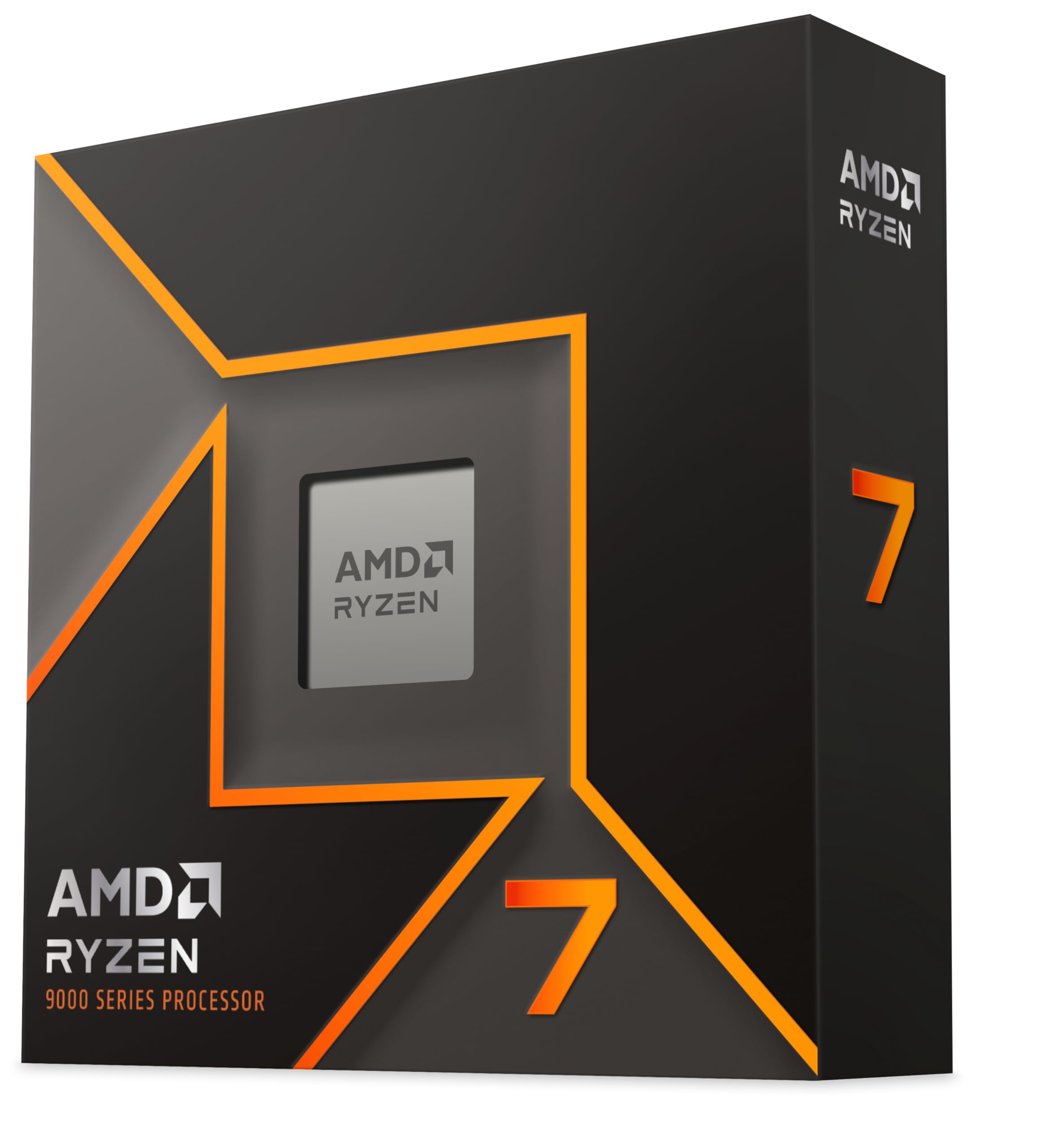
If the Ryzen 5 3600 doesn't match your specific requirements, there are a few directions worth considering. For better single-thread gaming performance on the same AM4 platform, the AMD Ryzen 5 5600X uses Zen 3 architecture and delivers a meaningful IPC improvement alongside a higher boost clock. It costs more, but the performance gap in CPU-sensitive gaming scenarios is real and consistent.
If you need integrated graphics, perhaps for a build where a discrete GPU isn't immediately available or where you want a low-power secondary machine, AMD's Ryzen G-series APUs (such as the Ryzen 5 5600G) combine Zen 3 CPU cores with Vega integrated graphics on the same AM4 platform. You lose some CPU performance compared to the non-G variants, but you gain display output without a dedicated GPU.
For builders on a tighter budget who primarily game at 1080p and don't need twelve threads, older Ryzen 5 2600 units on the second-hand market can represent strong value, though the platform upgrade path is less compelling and the IPC is a step behind Zen 2. The 3600 remains the better all-round choice for most mainstream builds, but knowing the alternatives helps you make the right call for your specific situation.

About the Reviewer
This review was researched and written by the CPU team at Vivid Repairs. We analyse processors using manufacturer specifications, verified product data, and patterns drawn from large owner review bases. We do not claim hands-on benchmark rigs or specific testing durations. Our goal is to give you an honest, data-grounded assessment of what a processor actually delivers, who it's for, and where its limits are, so you can make a confident purchase decision without wading through marketing copy.
Affiliate Disclaimer: This article contains affiliate links. If you purchase through these links, Vivid Repairs may earn a small commission at no additional cost to you. Our editorial assessments are independent of commercial relationships and reflect our honest analysis of the product based on available specifications and owner feedback.
What works. What doesn’t.
6 + 5What we liked6 reasons
- Twelve threads at 65W make it genuinely efficient for gaming and light multi-tasking without demanding a high-end PSU
- Broad AM4 platform compatibility across 400 and 500-series chipsets provides a real upgrade path to Ryzen 5000 series without changing the motherboard
- Wraith Stealth cooler is included and adequate for everyday gaming workloads, reducing the out-of-box cost for most builders
- 35MB of total cache supports low-latency gaming and benefits productivity workloads where data locality matters
- Strong and consistent owner satisfaction across more than 44,000 reviews signals reliable real-world performance over time
- Zen 2 IPC on TSMC 7nm delivers competitive instructions-per-clock for the price bracket, holding up well in GPU-bound gaming scenarios
Where it falls5 reasons
- No integrated graphics means the system cannot POST without a discrete GPU installed, which complicates staged or phased builds
- Zen 2 IPC trails Zen 3 by 15 to 19 percent, so the Ryzen 5 5600X is a meaningfully faster gaming chip in CPU-sensitive titles
- The Wraith Stealth cooler reaches its thermal ceiling under sustained all-core loads, potentially causing frequency pullback during prolonged rendering or encoding
- Some older 400-series motherboards require a BIOS update before the processor is recognised, which can require a second CPU to perform
- Overclocking headroom is modest; manual all-core overclocks rarely exceed 4.2 to 4.4GHz and offer limited gaming gains over stock boost behaviour
Full specifications
12 attributes| Core count | 6 |
|---|---|
| Architecture | Zen 2 |
| Base clock | 3.6 GHz |
| Base clock GHZ | 3.6 |
| Boost clock | 4.2 GHz |
| Boost clock GHZ | 4.2 |
| Cores | 6 |
| Generation | Ryzen 3000 |
| Integrated graphics | none |
| Launch year | 2019 |
| Socket | AM4 |
| TDP | 65 W |
If this isn’t right for you
2 options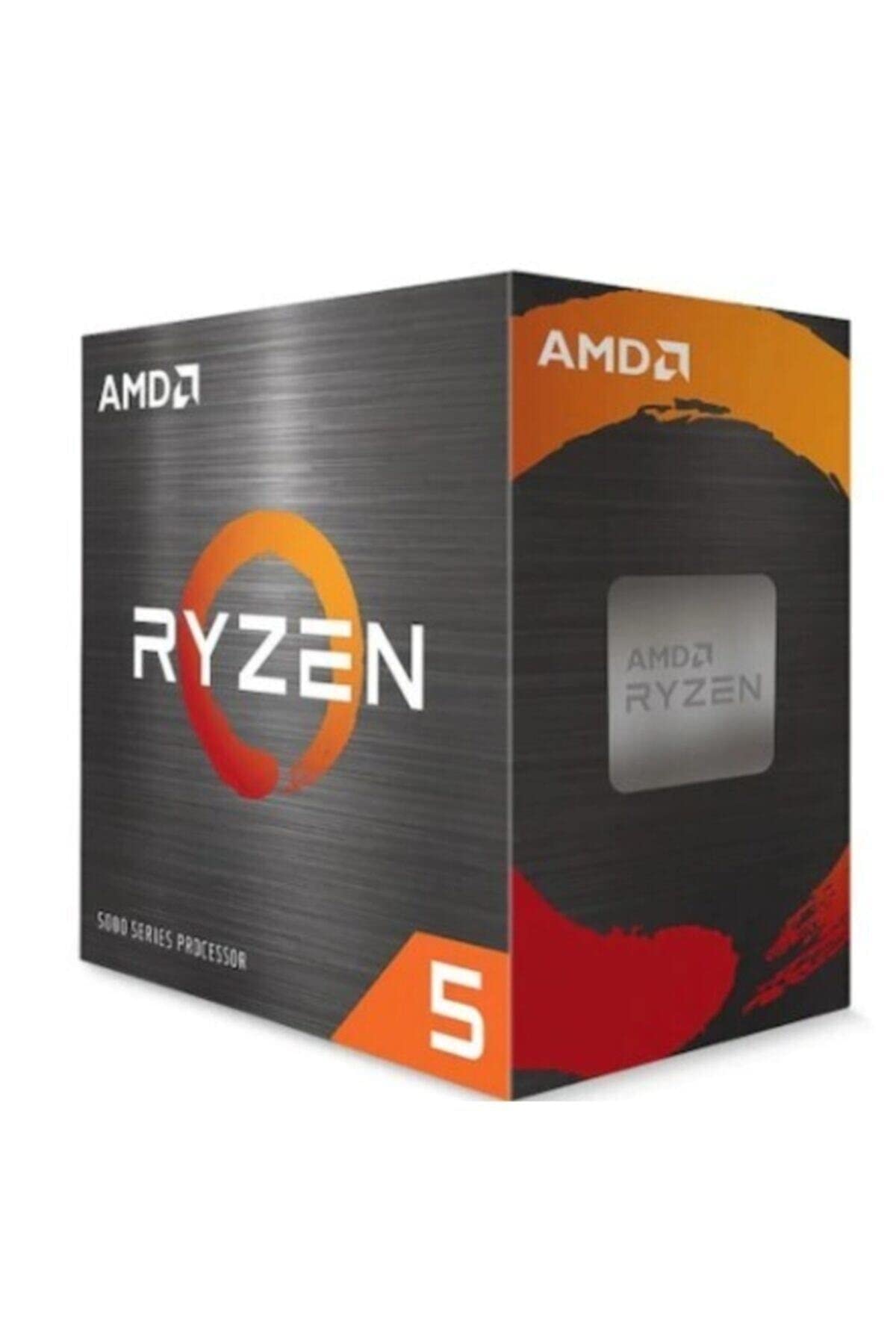
Frequently asked
7 questions01Does the AMD Ryzen 5 3600 come with a cooler?+
Yes. AMD includes the Wraith Stealth cooler in the box. It is a compact 92mm fan cooler that is adequate for the processor's 65W TDP under typical gaming and everyday workloads. It is not recommended for sustained all-core tasks such as video rendering or for use with manual overclocking, where a budget aftermarket cooler is a worthwhile upgrade.
02Does the Ryzen 5 3600 have integrated graphics?+
No. The Ryzen 5 3600 is a pure compute die with no integrated graphics. You must have a discrete graphics card installed to get any display output. AMD reserved integrated graphics for their G-series APU variants. If you need display output without a dedicated GPU, you should consider a Ryzen G-series processor instead.
03What motherboard chipsets are compatible with the Ryzen 5 3600?+
The Ryzen 5 3600 uses the AM4 socket and is compatible with both 500-series chipsets (X570, B550) and 400-series chipsets (X470, B450). Some older 400-series boards may require a BIOS update before the processor is recognised, and performing that update can require a second compatible CPU if the board ships with an older firmware version. Checking your motherboard manufacturer's CPU support list before purchase is advisable.
04Can I upgrade from the Ryzen 5 3600 to a Ryzen 5000 series processor without changing my motherboard?+
Yes, in most cases. The AM4 socket supports processors up to the Ryzen 5000 series, including the Ryzen 5 5600X and Ryzen 9 5900X, provided the motherboard manufacturer has issued the relevant BIOS update. B550 and X570 boards typically offer the most straightforward upgrade path. This platform longevity is one of the 3600's genuine practical advantages over contemporary Intel alternatives.
05What memory speed should I use with the Ryzen 5 3600?+
The community consensus for Zen 2 processors is DDR4-3600 CL16 or CL18. This keeps the processor's Infinity Fabric running in a 1:1 ratio with the memory controller, which minimises latency and produces the best gaming frame rates. DDR4-3200 is AMD's official supported ceiling and performs well, but DDR4-3600 is measurably better in CPU-sensitive scenarios. Running memory above 3600MHz forces the Infinity Fabric into a 2:1 ratio, which typically reduces gaming performance despite the higher frequency.
06Is the Ryzen 5 3600 still good for gaming?+
Yes, particularly at 1440p and above where the GPU is the dominant factor in frame rate. At 1080p with a fast GPU in CPU-sensitive titles, the 3600 shows some limitation compared to Zen 3 processors like the Ryzen 5 5600X, especially in 1% low frame rates. For competitive multiplayer titles such as Counter-Strike 2, Valorant, and Apex Legends, it remains a competent choice. For GPU-bound gaming, which describes most 1440p and all 4K scenarios, the performance difference versus newer CPUs is negligible.
07How does the Ryzen 5 3600 compare to the Ryzen 5 5600X?+
The Ryzen 5 5600X uses AMD's Zen 3 architecture, which delivers approximately 15 to 19 percent better IPC than the Zen 2 architecture of the 3600. It also boosts to 4.6GHz versus the 3600's 4.2GHz. The result is meaningfully better gaming performance in CPU-sensitive titles and better 1% low frame rates. The 5600X costs more. At 1440p and above, the performance gap narrows considerably as the GPU becomes the limiting factor. The 3600 offers better value per pound; the 5600X offers better outright performance.