A question that comes up again and again with PC builds isn't "which GPU should I buy?" or "how much RAM do I need?" It's this: "why does my expensive CPU feel no faster than my mate's cheaper one?" The answer, almost every time, comes down to things the spec sheet doesn't tell you. Cache architecture. Sustained boost behaviour under real thermal loads. Whether the platform you're buying into has a future, or whether you'll be stuck on a dead socket in two years. Synthetic benchmarks will tell you a chip scores X in Cinebench. They won't tell you whether it actually holds that performance when your room is 22 degrees and you've been gaming for three hours straight.
That's exactly why the AMD Ryzen 9 7900X3D is worth a closer look. On paper, it looks like a slightly odd proposition: twelve cores, 3D V-Cache stacked on top, a 120W TDP that's notably lower than the non-X3D 7900X, and a price tag that sits firmly in premium territory. But AMD's 3D V-Cache technology has already proven itself on the 5800X3D and the 7800X3D, and the question here is simple: does stacking 64MB of extra cache on a twelve-core chip make it the best all-rounder AMD has ever made, or is it a gaming chip pretending to be a workstation processor?
The answer matters for gaming sessions, video encoding, 3D rendering and compilation workloads alike, so let's go through the chip piece by piece.
Core Specifications
The Ryzen 9 7900X3D is built on AMD's Zen 4 architecture, manufactured on TSMC's 5nm process node. You get twelve cores and twenty-four threads, with a base clock of 4.4GHz and a maximum boost of 5.6GHz. The headline feature, though, is that cache: 140MB total, made up of 12MB of L2 cache and 128MB of L3 cache. That L3 figure is the one that matters. AMD has stacked an additional 64MB of 3D V-Cache on top of the standard 64MB L3, and that extra cache is what makes this chip behave so differently from the standard 7900X in gaming workloads.
The TDP is rated at 120W, which is actually 50W lower than the 7900X's 170W rating. That's not a mistake. AMD deliberately tuned the 7900X3D to run cooler and more efficiently, partly because the 3D V-Cache stacking process is sensitive to heat, and partly because lower operating temperatures help the cache deliver its performance benefits more consistently. In practice, this means you're getting a chip that's easier to cool and cheaper to run than its non-X3D sibling, which is a genuinely unusual situation in the premium CPU market.
There's no bundled cooler in the box, which is standard for AMD's X-series processors. You'll need to budget for a decent cooler separately, and I'll cover recommendations in the thermal section. The chip uses AMD's Socket AM5 platform, which means DDR5 memory only and compatibility with 600-series motherboards. Integrated graphics are present via a basic Radeon iGPU, useful for troubleshooting but not for gaming.
| Specification | Detail |
|---|---|
| Architecture | Zen 4 (TSMC 5nm) |
| Cores / Threads | 12 / 24 |
| Base Clock | 4.4 GHz |
| Max Boost Clock | 5.6 GHz |
| L2 Cache | 12 MB |
| L3 Cache | 128 MB (64MB standard + 64MB 3D V-Cache) |
| Total Cache | 140 MB |
| TDP | 120W |
| Socket | AM5 (LGA1718) |
| Memory Support | DDR5-5200 (official), EXPO up to DDR5-6000+ |
| PCIe Version | PCIe 5.0 (x16 GPU) + PCIe 4.0 (storage) |
| Integrated Graphics | AMD Radeon (RDNA 2, 2 CUs) |
| Overclocking | Limited (PBO supported) |
| Cooler Included | No |
| Current Price | £423.36 · Details |
Architecture and Cores
Zen 4 was AMD's big leap forward when it launched in late 2022, and it's still a genuinely impressive architecture. The move to TSMC's 5nm process brought meaningful IPC improvements over Zen 3, AMD claiming roughly 13% better instructions-per-clock across the board. In practice, that translates to noticeably snappier single-threaded performance compared to the Ryzen 5000 series, and it's competitive with Intel's best in most workloads. The 7900X3D uses a chiplet design: two 5nm compute dies (CCDs), each containing six cores, connected to a 6nm I/O die that handles memory controllers, PCIe lanes, and the basic integrated graphics.
What makes the 7900X3D genuinely interesting from an architecture standpoint is how AMD has applied the 3D V-Cache. Unlike the 7950X3D, which stacks cache on only one of its two CCDs, the 7900X3D stacks 64MB of additional L3 cache on just one of its two six-core CCDs. AMD's scheduler is supposed to direct gaming workloads to the cache-rich CCD automatically. The other CCD runs at slightly higher clocks because it doesn't have the thermal constraints of the stacked cache. So you effectively have one CCD optimised for cache-sensitive tasks (gaming, primarily) and one running at peak frequency for lightly-threaded workloads that benefit more from raw clock speed.
All twelve cores are homogeneous Zen 4 cores. There's no efficiency-core split here like you'd find on Intel's hybrid architecture. Every core supports simultaneous multithreading (AMD's equivalent of hyper-threading), giving you the full twenty-four threads. For productivity workloads, this means consistent, predictable performance without the scheduling complexity that Intel's P-core and E-core arrangement can sometimes introduce. AMD's approach is simpler, and identical cores make for more consistent results across different workloads. The Zen 4 microarchitecture also introduced AVX-512 support for the first time on a mainstream AMD desktop platform, which benefits certain scientific and professional applications.
Clock Speeds and Boost
The 5.6GHz maximum boost figure is impressive, but a maximum boost is a single-core number reached under ideal thermal conditions. The more relevant figure for most workloads is the all-core sustained boost, which is always lower and shifts with the workload and ambient temperature. The lower power rating is useful when planning cooling, but it doesn't establish how steadily this chip holds its clocks compared with the 7900X.
AMD's Precision Boost Overdrive (PBO) is available, and it's the main tuning tool on this chip. With PBO enabled and a decent cooler fitted, the processor is allowed to hold higher all-core clocks for longer, and how much you gain depends on your cooling. The boost algorithm on Zen 4 is sophisticated enough that it's constantly adjusting per-core frequencies based on temperature, power draw, and workload type, so what you see in a benchmark tool at any given moment is a snapshot rather than a fixed number.
One thing worth knowing: the 3D V-Cache CCD has a slightly lower maximum boost clock than the non-cache CCD, because the stacked cache adds thermal resistance. AMD has tuned the chip so that single-threaded workloads preferentially run on whichever CCD offers the highest clock at that moment, and the gap between the two is small enough that you won't notice it in day-to-day use.
Socket and Platform Compatibility
The Ryzen 9 7900X3D uses AMD's AM5 socket, which is LGA1718. This is AMD's current-generation platform and AMD has committed to supporting it through at least 2027, which is a meaningful promise given AMD's track record with AM4 longevity. If you're building a new system around this chip, you're not buying into a dead end. Future Zen 5 and Zen 6 processors are expected to support AM5, meaning you could potentially upgrade the CPU without changing the motherboard, which is exactly the kind of platform longevity that makes a premium build feel like a sensible long-term investment.
Chipset compatibility covers the full 600-series range: X670E, X670, B650E, and B650. For a chip at this price point, I'd recommend at minimum a B650 board, though X670 or X670E gives you more PCIe 5.0 lanes and generally better power delivery for sustained workloads. The memory controller is DDR5-only, so there's no DDR4 support. That's a cost consideration worth factoring in if you're upgrading from an older platform. PCIe 5.0 is available for the primary GPU slot, and you get PCIe 4.0 for M.2 storage on most boards. The chip provides 24 PCIe lanes from the CPU itself, with additional lanes from the chipset depending on which board you choose.
One practical note: AM5 uses an LGA socket (pins on the motherboard, not the CPU), which is a change from AM4's PGA design. It's actually a more robust arrangement for the CPU itself since you can't bend pins on the processor, but it does mean you need to be careful with motherboard installation. Cooler compatibility is excellent: AM5 uses the same mounting hole pattern as AM4, so most coolers from the last several years will work with an adapter bracket. AMD includes the adapter in the box with the processor. The full AM5 platform details are worth reading if you're planning a new build around this chip.
Integrated Graphics
The Ryzen 9 7900X3D includes a basic Radeon integrated GPU based on RDNA 2 architecture with two compute units. Let me be straight with you: this is not a gaming iGPU. It's not meant to be. The two compute units give you just enough graphical capability to get a display output and run a desktop, which is genuinely useful during a build or if your discrete GPU ever fails. You can watch videos, browse the web, and do light productivity work without a dedicated graphics card fitted.
In terms of actual gaming capability, don't expect much. You might squeeze out playable frame rates in very old or very undemanding titles at low settings and 1080p, but anything modern will struggle. The iGPU shares system memory for its VRAM, which adds latency and reduces available system RAM. It's a safety net, not a feature you'd actually use day-to-day if you're spending this kind of money on a CPU.
Where the iGPU does earn its keep is in professional scenarios. If you're running a workstation that occasionally needs to drive a display while the discrete GPU is occupied with compute tasks, having the iGPU available as a secondary display output is genuinely handy. It's also useful for initial system builds where you want to verify the platform is working before fitting a GPU. So while it's not a selling point, it's not nothing either. It's a practical inclusion that removes one potential headache from the building process.
Power Consumption (TDP)
The 120W TDP is one of the most interesting things about this chip. The standard Ryzen 9 7900X is rated at 170W, and because a TDP rating isn't a hard ceiling, peak draw under sustained all-core loads can sit above the rated number. The 7900X3D, by contrast, starts from a much lower rating. AMD rates this as a modest TDP part, so I wouldn't expect it to behave like a power hog.
Gaming workloads are where the efficiency story gets really compelling. Because games typically don't saturate all twelve cores simultaneously, and because the 3D V-Cache reduces the number of memory accesses the CPU needs to make (which saves power), gaming power draw sits well below what an all-core load pulls. Intel's competing chips in this performance bracket carry much higher power limits, and over the course of a long gaming session, that difference adds up on your electricity bill.
For PSU recommendations, a 650W unit is comfortable for a system with a mid-range GPU like an RTX 4070. If you're pairing this with a power-hungry card like an RTX 4090, go to 850W to give yourself headroom. The chip's relatively modest power draw means you're not forced into an expensive high-wattage PSU just to run the CPU, which is a nice contrast to some of Intel's current flagship offerings. The lower power draw also means less heat to manage, which feeds directly into the cooler requirements.
Cooler Recommendation
No cooler is included in the box, and you absolutely need to buy one separately. Given the 120W TDP, you have more flexibility here than you might expect for a premium chip. A good 240mm AIO or a high-quality dual-tower air cooler is the right size for it, even with PBO enabled. Don't be alarmed by high readings under an all-core load, either. Chips of this generation are designed to run warm when pushed, and a stacked cache keeps the heat concentrated in a small area, so the number on screen says more about the chip's design than about your cooler falling short.
If you prefer air cooling, something like a Noctua NH-D15 or a be quiet! Dark Rock Pro 4 will manage this chip without breaking a sweat. The 120W TDP gives these large air coolers plenty of headroom. I actually prefer air cooling for this chip because the lower power draw means you don't need the thermal capacity of a 360mm AIO, and a good air cooler is quieter and more reliable long-term than most AIOs.
One thing to be aware of: because the 3D V-Cache stacking adds thermal resistance within the chip itself, the CPU can be sensitive to cooler mounting pressure and thermal paste application. I'd recommend a quality thermal paste (Thermal Grizzly Kryonaut or similar) and make sure your cooler is mounted evenly. A sloppy paste application can cost you a few degrees against a careful one, which is enough to affect sustained boost behaviour. It's worth taking the extra two minutes to do it properly. A 360mm AIO is overkill for this chip at stock settings, but if you're planning aggressive PBO tuning, it gives you extra headroom.
Where It Sits on Performance
We haven't benchmarked this chip, so this comparison starts with its position in AMD's range. For single-threaded work it's in the same league as Intel's Core i9-13900K and the Ryzen 9 7900X. For multi-threaded work, core count decides the order: it lands solidly behind the 16-core 7950X3D and meaningfully ahead of eight-core chips like the 7700X.
That makes it respectable for a twelve-core chip in something like Blender, but not class-leading if rendering speed is your primary concern. Compression tools such as 7-Zip tend to suit it better, because decompression in particular benefits from a large L3 cache.
Synthetic numbers wouldn't tell the full story with this chip anyway. The 3D V-Cache's benefits are most visible in cache-sensitive workloads, and many synthetic benchmarks don't stress the cache in the same way that real games and applications do. I'd treat any Cinebench score you see quoted for it as a baseline rather than the headline figure. Everyday use and games are where this chip's character becomes clearer.
Real-World Performance
Day-to-day, twelve Zen 4 cores are far more than desktop use needs. Picture a browser with dozens of tabs open, DaVinci Resolve holding a 4K timeline in the background, and Discord and Spotify running alongside: that's a heavy afternoon for a budget chip and a light one for this. The large L3 cache means frequently accessed data stays close to the cores, which reduces latency in exactly the kind of mixed workload that represents how most people actually use their computers.
For video editing, a chip of this size is comfortable with 4K H.264 and H.265 footage in DaVinci Resolve. With hardware acceleration enabled, the graphics card does much of the export work. Switch it off and the encode falls on the CPU, which is where the twelve cores earn their keep. Software development is a similar story, because compiling a large C++ project spreads across every core you give it. The combination of Zen 4's IPC improvements and the twelve-core count is exactly what compilation rewards.
Streaming while gaming is another scenario that suits this chip. Running OBS with x264 encoding at 1080p60 while gaming at 1440p is a CPU-heavy job, and spare cores are what stop the encoder from stealing meaningful resources from the game. If you're a content creator who streams regularly, this is a genuinely compelling use case. The 7900X3D isn't the fastest chip for pure rendering workloads (the 7950X3D or a Threadripper will beat it there), but for the mixed workload of gaming, streaming, and light productivity, it's hard to beat.
Gaming Performance
This is where the 7900X3D really makes its case. The 3D V-Cache technology has a measurable and sometimes dramatic impact on gaming performance, particularly in CPU-bound scenarios at 1080p and 1440p. Simulation, strategy and competitive shooters are the usual winners.
The gain shows up in the 1% lows as much as in average frame rates. A bigger cache reduces the stuttering caused by data being fetched from slower main memory, so the slowest moments in a game get shorter and rarer. Microsoft Flight Simulator is notoriously CPU-limited, large battles in Total War lean on the processor in the same way, and competitive shooters at 1080p run at frame rates where the CPU is the only thing holding them back.
At 4K, the GPU becomes the bottleneck in most titles and the CPU advantage narrows, as you'd expect. If you're gaming exclusively at 4K with a high-end GPU, the 3D V-Cache benefit is smaller, though still present in CPU-limited scenarios. The sweet spot for this chip is 1080p and 1440p gaming, particularly in titles that are sensitive to cache latency. And honestly, most competitive games and simulation titles fall into that category. For high-refresh-rate 1440p gaming, this is one of the best CPUs you can buy right now.
Memory Support
The 7900X3D officially supports DDR5-5200 in its memory specification, running in dual-channel configuration. In practice, most decent DDR5 kits will run at higher speeds via AMD's EXPO profiles (AMD's equivalent of Intel's XMP). DDR5-6000 CL30 memory is widely considered the sweet spot for Ryzen 7000 series chips. DDR5-6000 hits a 1:1 ratio with the memory controller's internal fabric (the Infinity Fabric), which minimises latency and maximises bandwidth.
Going above DDR5-6000 is possible but requires more manual tuning and doesn't always provide a meaningful performance benefit. Kits such as DDR5-6400 look faster on the box, but don't assume that paying for a higher speed will improve your games. For most builders, DDR5-6000 CL30 or CL32 is the target. It's widely available, reasonably priced, and works reliably with EXPO on most X670 and B650 boards. The JEDEC DDR5 specification is worth a read if you want to understand the underlying standard.
One thing to note: DDR5 prices have come down significantly since AM5 launched, but you're still paying more than DDR4 for equivalent capacity. If you're upgrading from an AM4 system, factor in the cost of new memory alongside the motherboard. A 32GB DDR5-6000 kit is the minimum I'd recommend for this chip, and 64GB is worth considering if you do any serious content creation or run virtual machines. The dual-channel configuration means you want two sticks rather than four for best compatibility with high-speed EXPO profiles.
Overclocking Potential
Traditional manual overclocking is off the table with the 7900X3D. AMD has locked the multiplier on X3D chips, which means you can't simply crank up the core voltage and push for higher clocks the way you could with a standard Ryzen 9 7900X. This is a deliberate decision related to the thermal sensitivity of the 3D V-Cache stacking process. Running the chip too hot can degrade the cache over time, so AMD has restricted the overclocking options to protect the hardware.
What you can do is use Precision Boost Overdrive (PBO), which allows the chip to boost higher and for longer than stock settings by relaxing the power and thermal limits. With PBO enabled, any gains depend on the individual chip, workload and cooling. AMD's Curve Optimizer feature within PBO also lets you apply per-core voltage offsets, which can improve efficiency and allow higher sustained clocks without increasing temperatures. It takes some time to dial in properly, but it's worth doing.
Memory overclocking is the other lever available to you, and it's arguably more impactful for gaming performance than PBO. Getting your DDR5 kit running at DDR5-6000 with tight timings (CL30 or better) can provide a meaningful uplift in cache-sensitive gaming workloads. Leaving a kit at DDR5-4800 stock speeds when it could run DDR5-6000 with EXPO is the most common way to leave 1% low frame rates on the table. If you want to squeeze every last frame out of this chip, start with memory tuning before touching PBO. The combination of both gives you the best result, but memory tuning alone is the lower-risk option for less experienced builders.
How It Compares
The two most obvious competitors to the Ryzen 9 7900X3D are Intel's Core i9-13900K and AMD's own Ryzen 9 7950X3D. The i9-13900K is Intel's flagship from the previous generation, offering 24 cores (8 P-cores and 16 E-cores) and extremely high multi-threaded performance. The 7950X3D is AMD's sixteen-core 3D V-Cache chip, which offers more cores alongside the cache benefits. Both are worth considering depending on your use case.
Against the i9-13900K, the 7900X3D wins convincingly in gaming, particularly in CPU-bound scenarios where the 3D V-Cache makes a significant difference. The Intel chip wins in heavily multi-threaded productivity workloads where its higher core count (particularly the E-cores handling background tasks) provides an advantage. The i9-13900K also runs considerably hotter and draws more power, which matters for system build costs and long-term running costs. The AM5 platform also has a longer upgrade path than Intel's LGA1700, which is being replaced by LGA1851 for the next generation.
Against the 7950X3D, the 7900X3D loses in multi-threaded productivity (four fewer cores on each CCD) but is competitive in gaming. The 7950X3D costs significantly more and is harder to justify unless you genuinely need the extra cores for rendering or simulation work. For a pure gaming build or a gaming-plus-streaming setup, the 7900X3D is the smarter buy. It's the chip I'd recommend to most people in this performance bracket.
| Feature | Ryzen 9 7900X3D | Core i9-13900K | Ryzen 9 7950X3D |
|---|---|---|---|
| Cores / Threads | 12 / 24 | 24 / 32 | 16 / 32 |
| Architecture | Zen 4 (5nm) | Raptor Lake (Intel 7) | Zen 4 (5nm) |
| 3D V-Cache | Yes (64MB) | No | Yes (64MB) |
| Total Cache | 140MB | 68MB | 144MB |
| TDP (rated) | 120W | 120W | |
| Socket | AM5 | LGA1700 | AM5 |
| Memory | DDR5 only | DDR4 or DDR5 | DDR5 only |
| Gaming Performance | Excellent | Very Good | Excellent |
| Multi-Thread Performance | Very Good | Excellent | Excellent |
| Platform Longevity | AM5 (2027+) | LGA1700 (ending) | AM5 (2027+) |
| Price Tier | Premium | Premium | Flagship |
What Buyers Say
With hundreds of reviews and a positive overall rating, the 7900X3D has clearly found a happy audience. The most common praise centres on gaming performance, with multiple buyers specifically mentioning the improvement in 1% lows and frame time consistency compared to their previous chips. Several reviewers upgraded from Ryzen 5000 series chips and reported being genuinely surprised by how much smoother games felt, even in titles they'd been playing for years. The power efficiency also gets frequent mentions, with builders noting that their system runs cooler and quieter than they expected for a chip at this performance level.
The complaints are relatively few but worth knowing about. The most common gripe is the price, which is fair. At this price point, some buyers feel the 7800X3D offers better value for pure gaming, and they're not wrong. The 7800X3D is cheaper and delivers comparable gaming performance in most titles, though it falls behind in productivity workloads due to its lower core count. A handful of reviewers mention that the lack of an included cooler feels like a missed opportunity at this price, which I understand, though it's consistent with AMD's X-series positioning. A few buyers also note that the DDR5 platform cost adds up when you factor in a new motherboard and memory kit.
The overall sentiment is strongly positive, and the high review count means you're getting a reliable picture of real-world satisfaction rather than a small sample. Trusted by nearly a thousand builders across various use cases, the consensus is that this chip delivers on its promises. The people who are disappointed are mostly those who expected it to be a better productivity chip than a gaming chip, which suggests they might have been better served by the standard 7900X. Know what you're buying it for, and you're unlikely to be disappointed.
Pros and Cons
- Exceptional gaming performance, particularly in CPU-bound scenarios at 1080p and 1440p
- Excellent power efficiency for a premium chip, with a far lower power rating than AMD's standard version of the chip
- 140MB total cache delivers tangible benefits in both gaming and cache-sensitive productivity workloads
- AM5 platform longevity with upgrade path through at least 2027
- Twelve full-size cores for streaming, editing and compiling alongside games
- No bundled cooler, adding to the total build cost
- DDR5-only platform means higher entry cost for those upgrading from older systems
- Limited manual overclocking due to X3D cache constraints
- 7800X3D offers similar gaming performance at a lower price for pure gaming builds
Should You Buy the Ryzen 9 7900X3D?
If you want a chip that genuinely excels at gaming while also handling serious productivity workloads without compromise, the Ryzen 9 7900X3D is one of the most well-rounded options in the premium CPU market. The 3D V-Cache technology isn't marketing fluff. It makes a real, measurable difference in the workloads that matter most to enthusiast builders. You're covered by AMD's standard 3-year warranty on boxed processors, and Amazon's 30-day return policy and A-to-Z guarantee give you additional peace of mind.
Check the current price and availability below:
£423.36 · Details | ★★★★½ (4.7) (954 reviews)
Full Specifications
| Specification | Detail |
|---|---|
| Product Name | AMD Ryzen 9 7900X3D |
| ASIN | B0BTRRNK7T |
| Architecture | Zen 4 (TSMC 5nm) |
| Cores / Threads | 12 / 24 |
| Base Clock | 4.4 GHz |
| Max Boost Clock | Up to 5.6 GHz |
| L2 Cache | 12 MB |
| L3 Cache | 128 MB (64MB + 64MB 3D V-Cache) |
| Total Cache | 140 MB |
| TDP | 120W |
| Socket | AM5 (LGA1718) |
| Chipset Compatibility | X670E, X670, B650E, B650 |
| Memory Type | DDR5 only |
| Official Memory Speed | DDR5-5200 |
| Memory Channels | Dual-channel |
| PCIe Version | PCIe 5.0 (GPU) / PCIe 4.0 (storage) |
| Integrated Graphics | AMD Radeon (RDNA 2, 2 CUs) |
| Overclocking | PBO supported; manual OC locked |
| Cooler Included | No |
| Warranty | 3 years (AMD) |
| Price | £423.36 · Details |
Final Verdict: AMD Ryzen 9 7900X3D Review UK 2026
I keep coming back to the same conclusion: the Ryzen 9 7900X3D is the chip I'd recommend to most enthusiast builders who want to do it all. It's not the absolute fastest for pure rendering. It's not the cheapest route to great gaming performance. But it sits at a genuinely compelling intersection of gaming excellence, respectable productivity performance, and real-world efficiency that's hard to match in the premium CPU bracket.
The 3D V-Cache technology delivers. Full stop. Smoother 1% lows and steadier frame times are exactly what a bigger cache buys you in games. The 120W TDP means you're not fighting thermals or paying through the nose for electricity. The AM5 platform gives you a credible upgrade path. And the Zen 4 architecture is still competitive with anything Intel has in this price range for the workloads most people actually care about. Yes, the 7800X3D is cheaper and nearly as good for pure gaming. Yes, the 7950X3D is faster for productivity. But if you want one chip that handles both without major compromises, the 7900X3D is the answer.
I'd give it a 9 out of 10. The only things holding it back from a perfect score are the lack of a bundled cooler at this price point, the DDR5 platform cost for those upgrading from older systems, and the fact that the 7800X3D undercuts it for pure gaming builds. But as an all-rounder for enthusiast builders who game hard and work hard? This is proper kit.
Not Right For You? Consider These Alternatives
If the Ryzen 9 7900X3D doesn't quite fit your needs, here are some scenarios where a different chip might serve you better:
- Pure gaming on a tighter budget: The AMD Ryzen 7 7800X3D offers very similar gaming performance at a lower price point. If you don't need the extra cores for productivity, it's the smarter buy for dedicated gaming rigs.
- Maximum multi-threaded productivity: The AMD Ryzen 9 7950X3D or even the standard Ryzen 9 7950X will outperform the 7900X3D in heavily threaded workloads like 3D rendering and simulation. The extra cores make a meaningful difference when you're maxing out all of them.
- Budget-conscious AM5 build: The Ryzen 5 7600X is a much more affordable entry point to the AM5 platform, offering solid gaming performance and the same upgrade path, at a fraction of the cost.
Affiliate Disclaimer
This article contains affiliate links. If you purchase through our links, we may earn a small commission at no extra cost to you. This does not influence our editorial opinions. All conclusions are independent.
What works. What doesn’t.
5 + 4What we liked5 reasons
- 3D V-Cache is built to lift 1% low frame rates in games
- Efficient 120W TDP, lower than its non-cache sibling
- 140MB total cache delivers real-world benefits beyond synthetic scores
- AM5 platform with upgrade path through at least 2027
- Handles gaming and productivity workloads without major compromise
Where it falls4 reasons
- No bundled cooler at a premium price point
- DDR5-only platform adds cost for those upgrading from older systems
- Manual overclocking locked due to 3D V-Cache thermal constraints
- 7800X3D offers similar gaming performance at lower cost for pure gaming builds
If this isn’t right for you
2 options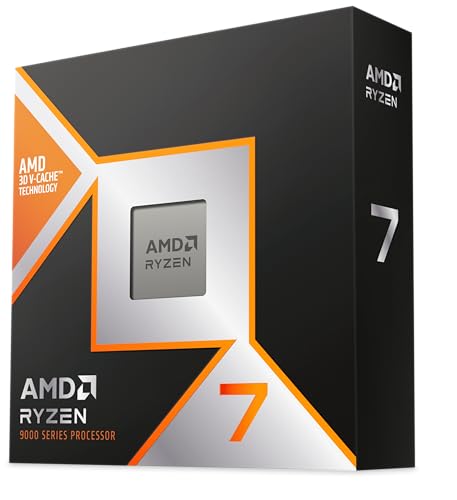

Frequently asked
5 questions01Is the AMD Ryzen 9 7900X3D good for gaming?+
Yes, it's one of the best gaming CPUs available. The 3D V-Cache technology provides a measurable improvement in 1% low frame rates and frame time consistency, particularly at 1080p and 1440p. In CPU-bound titles, it outperforms non-X3D chips significantly. At 4K, the GPU becomes the bottleneck and the advantage narrows, but it's still an excellent gaming chip at any resolution.
02Does the AMD Ryzen 9 7900X3D come with a cooler?+
No, it does not include a cooler. AMD's X-series processors are sold without a bundled cooler. You'll need to budget for a separate cooler. Given the 120W TDP, a good 240mm AIO or a high-quality dual-tower air cooler like a Noctua NH-D15 is recommended. The AM5 socket uses the same mounting hole pattern as AM4, so many existing coolers are compatible with an adapter bracket that AMD includes in the box.
03What motherboard do I need for the AMD Ryzen 9 7900X3D?+
The Ryzen 9 7900X3D uses AMD's AM5 socket (LGA1718) and is compatible with 600-series motherboards: X670E, X670, B650E, and B650. For a chip at this price point, a B650 board is the minimum recommendation, though X670 or X670E provides better power delivery and more PCIe 5.0 connectivity. All AM5 boards require DDR5 memory, so factor that into your build budget.
04Is the AMD Ryzen 9 7900X3D worth it over the Ryzen 7 7800X3D?+
It depends on your use case. For pure gaming, the 7800X3D offers very similar performance at a lower price, making it the better value for dedicated gaming rigs. The 7900X3D justifies its premium if you also do productivity workloads like video editing, streaming, or software development, where the extra four cores make a meaningful difference. If you game and create content, the 7900X3D is worth the extra cost. If you only game, the 7800X3D is the smarter buy.
05What warranty and returns apply to the AMD Ryzen 9 7900X3D?+
Amazon offers 30-day returns on most items, and AMD typically provides a 3-year warranty on boxed processors. You're also covered by Amazon's A-to-Z guarantee, which provides additional buyer protection if something goes wrong with your order.