Best Overall Value
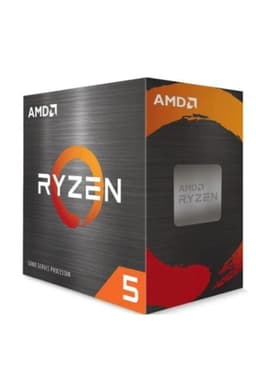
The Ryzen 5 3600 has been a staple recommendation for years, and honestly, it's not hard to see why. Six cores, twelve threads, a generous 35MB of combined cache, and a 65W TDP that won't stress your cooling setup. For professionals who need a reliable daily driver, this chip handles multitasking without complaint. Running multiple browser tabs, a video call, and a spreadsheet simultaneously? No drama.
The 4.1GHz max boost is modest by today's standards, but the Zen 2 architecture is efficient and well-optimised for productivity software. Microsoft Office, Adobe Acrobat, Slack, Teams, all of it runs smoothly. The included Wraith Stealth cooler is a proper bonus too. You won't need to spend extra on cooling for standard office workloads.
Here's the thing: the Ryzen 5 3600 is on the AM4 platform, which means it's compatible with a huge range of motherboards, many of which are now available at very competitive prices. That makes the total build cost genuinely attractive. The trade-off is that AM4 is a mature platform with no future CPU upgrades coming. If you're planning to upgrade your CPU again in two or three years, you'd be better served by an AM5 chip. But if you want a solid, proven professional machine right now without overspending, this is still a very sensible choice.
It doesn't have integrated graphics, so you'll need a discrete GPU or a separate display adapter. For most office environments that's a non-issue, but it's worth factoring in if you're building from scratch on a tight budget.
Pros
- Proven, reliable Zen 2 architecture
- Generous 35MB cache for the price
- Wraith Stealth cooler included
- Huge AM4 motherboard compatibility
- 65W TDP keeps thermals manageable
Cons
- No integrated graphics
- AM4 platform has no upgrade path
- 4.1GHz boost is modest versus newer chips
Buy on Amazon£137.15
Best for Beginners
The Ryzen 5 4500 is an interesting one. On paper it looks similar to the 3600, but there are some meaningful differences under the hood. It uses Zen 2 architecture on a 7nm process, and the 4.1GHz max boost matches the 3600. Where it falls short is the cache. Only 11MB compared to the 3600's 35MB, and that gap shows up in cache-sensitive professional workloads like data processing and code compilation.
That said, for straightforward office work, the 4500 is perfectly capable. Document editing, email, video conferencing, light spreadsheet work. It handles all of that without breaking a sweat. The Wraith Stealth cooler is included, which is always appreciated, and the AM4 platform means affordable motherboard options are plentiful.
For professionals just starting out who need a competent machine without overthinking specs, the 4500 is a reasonable entry point. But if you can stretch the budget slightly, the Ryzen 5 5600X offers noticeably better performance for professional tasks and isn't much more expensive at current prices. Worth checking both before you commit.
Pros
- Good entry-level performance for office tasks
- Wraith Stealth cooler in the box
- Affordable AM4 motherboard options
- 12 threads for basic multitasking
Cons
- Only 11MB cache, noticeably less than rivals
- No integrated graphics
- Better value alternatives exist at similar prices
Buy on Amazon
Best Build Quality
The Ryzen 5 5600GT is a genuinely clever chip for professionals who want a complete, tidy build without the faff of a discrete GPU. The integrated Radeon graphics handle display output, light image work, and even some basic video playback without needing anything extra in the PCIe slot. That keeps your build compact, your power draw low, and your costs down.
Performance-wise, the Zen 3 architecture is a step up from the older Ryzen 5 3600. The 4.6GHz max boost is noticeably snappier for single-threaded professional tasks like working in Excel, running accounting software, or using design tools. The 19MB cache sits between the 4500 and 5600X, which is fine for most professional use cases.
The build quality feel of this chip, combined with the Wraith Stealth cooler and integrated graphics, makes it a proper all-in-one solution for a professional workstation. It's particularly well-suited to small form factor builds where space is at a premium. The AM4 platform limitation applies here too, but for a professional who wants a clean, reliable machine that just works, the 5600GT is a strong contender.
Pros
- Integrated Radeon graphics, no GPU needed
- Zen 3 architecture, fast single-core performance
- 4.6GHz boost for responsive professional apps
- Wraith Stealth cooler included
- Great for compact or small form factor builds
Cons
- 19MB cache is modest versus the 5600X
- AM4 platform, limited future upgrade path
- Integrated graphics won't suit GPU-heavy creative work
Buy on Amazon
Best Under £150
If you're after the best CPUs for professionals on the AM4 platform without pushing past £150, the Ryzen 5 5600X is the one to beat. Zen 3 architecture, 35MB of cache, a 4.6GHz max boost, and a 65W TDP. It's a proper workhorse. The combination of high cache and fast boost frequency means it handles both single-threaded professional applications and heavier multitasking with real confidence.
For content creators doing light video editing in Premiere Pro or DaVinci Resolve, the 5600X holds up well. It's not going to replace an eight-core chip for heavy rendering, but for cutting together short-form content, colour grading, or running multiple creative apps at once, it's more than capable. Software developers will also appreciate the snappy compile times.
The Wraith Stealth cooler is included, which keeps the total build cost honest. And because it's AM4, you've got a wide choice of motherboards at sensible prices. The 5600X has aged very well, and at its current price point it represents one of the strongest value propositions in this entire roundup. Honestly, it's the chip we'd recommend to most professionals who don't need the absolute cutting edge.
Pros
- Excellent price-to-performance ratio
- 35MB cache, same as the flagship 3600
- 4.6GHz boost, fast for professional apps
- Zen 3 architecture, efficient and well-optimised
- Wraith Stealth cooler included
Cons
- No integrated graphics
- AM4 platform, no future CPU upgrades
- Newer Zen 4 and Zen 5 chips are faster
Buy on Amazon£142.98
Best for Cache-Heavy Tasks
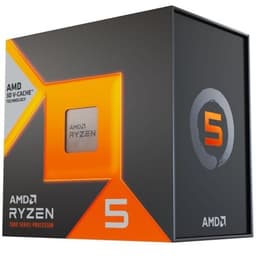
The Ryzen 5 7500X3D is a newer addition to AMD's lineup and brings 3D V-Cache technology to a six-core AM5 chip. For professionals whose workloads are cache-sensitive, think simulation software, certain engineering applications, or large dataset processing, the extra cache can make a meaningful difference to real-world performance.
It sits on the AM5 platform, which means DDR5 memory support and a proper upgrade path for the future. That's a genuine advantage for professionals planning a long-term workstation investment. The AM5 ecosystem has matured considerably, and motherboard prices have come down to reasonable levels.
The trade-off is price. At this level, you're paying a premium for the 3D V-Cache, and for many standard professional tasks like office productivity or video calls, you won't notice the difference versus a standard Ryzen 5 7600. So it's a chip worth considering if your specific workload benefits from large cache, but for general professional use, the 7600 is probably the smarter spend.
Pros
- 3D V-Cache for cache-sensitive professional workloads
- AM5 platform with future upgrade path
- DDR5 memory support
Cons
- Premium price for a six-core chip
- V-Cache advantage limited to specific workloads
- Limited product information available at time of writing
Buy on Amazon£229.00
Best AM5 Entry
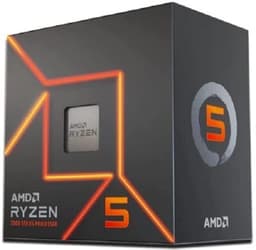
The Ryzen 5 7600 is where AM5 starts to make real sense for professionals. A 5.1GHz max boost, 38MB of cache, integrated Radeon graphics, and a 65W TDP. That's a genuinely impressive spec sheet for a six-core chip. The Zen 4 architecture brings meaningful IPC improvements over Zen 3, which translates to snappier performance in professional applications that rely on single-threaded speed.
The integrated graphics are a proper bonus here. Unlike some chips that include token iGPU support, the Ryzen 5 7600's integrated Radeon handles everyday display tasks, video playback, and light creative work without any fuss. For professionals who don't need a dedicated GPU, this keeps the build cost and complexity down.
The AM5 platform is the real long-term argument for this chip. You're buying into a platform that will support future AMD CPUs, so when you're ready to upgrade in a few years, you won't need a new motherboard. The Wraith Stealth cooler is included, which is always a welcome touch. For professionals who want a modern, future-proof foundation without spending a fortune, the 7600 is a very strong pick.
Pros
- 5.1GHz boost, excellent for professional apps
- Integrated Radeon graphics included
- AM5 platform, proper future upgrade path
- 38MB cache, generous for a six-core
- Wraith Stealth cooler in the box
Cons
- AM5 motherboards cost more than AM4
- DDR5 memory adds to total build cost
- Ryzen 5 9600X offers better performance at a modest premium
Buy on Amazon£154.00
Best Under £130
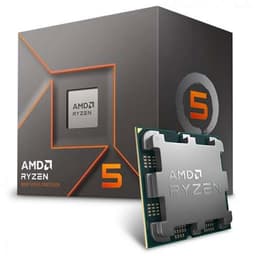
The Ryzen 5 8400F is AMD's budget AM5 offering, and it's an interesting proposition for professionals who want the AM5 platform without the higher price tags of the 7600 or 9600X. The 4.7GHz max boost and 22MB cache are decent, and the Wraith Stealth cooler is included, which saves you a few quid on the total build.
The catch is the lack of integrated graphics. The "F" suffix in AMD's naming convention signals no iGPU, so you'll need a discrete graphics card. For a professional workstation that's often fine, but it does add cost and complexity compared to the 7600 or 5600GT. If your office already has a spare GPU lying around, that's less of an issue.
For the price, the 8400F gives you AM5 platform access and solid everyday professional performance. It's a reasonable choice if you're budget-conscious and already have a GPU sorted. But if you're starting from scratch, the Ryzen 5 7600 with its integrated graphics is probably a smarter overall spend for most professionals.
Pros
- AM5 platform at a budget price
- Wraith Stealth cooler included
- Solid everyday professional performance
- 65W TDP, efficient and cool-running
Cons
- No integrated graphics, discrete GPU required
- 22MB cache is lower than AM5 rivals
- 4.7GHz boost modest versus 7600 and 9600X
Buy on Amazon£118.78
Best Zen 5 Six-Core
The Ryzen 5 9600X is AMD's Zen 5 six-core chip, and it's a proper step forward for professionals who want the latest architecture without moving to an eight-core processor. The 5.4GHz max boost is among the fastest in this roundup, and the 38MB cache is generous. Zen 5 brings real IPC improvements that show up in professional workloads, particularly in applications that are sensitive to single-threaded performance.
Integrated Radeon graphics are included, which is useful for professionals who don't need a dedicated GPU. The 65W TDP keeps thermals sensible, and the AM5 platform ensures you've got upgrade options down the line. For professionals doing demanding work in creative software, data analysis tools, or development environments, the 9600X delivers noticeably better responsiveness than older Zen 3 chips.
The big caveat is the missing cooler. AMD doesn't include one in the box, which is a bit cheeky at this price point. Budget for a decent aftermarket cooler, something like a Cooler Master Hyper 212 or similar, and factor that into your total spend. It's not a dealbreaker, but it's worth knowing upfront.
Pros
- Zen 5 architecture, best IPC in the six-core class
- 5.4GHz boost, excellent for professional apps
- Integrated Radeon graphics included
- AM5 platform, future-proof
- 38MB cache, same as the 7600
Cons
- No cooler included, extra cost required
- Higher price than the 7600
- AM5 motherboard and DDR5 costs add up
Buy on Amazon£156.89
Best Eight-Core AM4
The Ryzen 7 5800 XT steps things up considerably for professionals who need more cores. Eight cores and sixteen threads make a real difference in workloads like video rendering, 3D modelling, running virtual machines, or heavy data processing. If your professional work involves any of those tasks regularly, the jump from six to eight cores is genuinely worthwhile.
The 36MB cache and 4.8GHz boost are solid, and the Zen 3 architecture is well-optimised for professional software. The included Wraith Prism cooler is a proper upgrade over the Wraith Stealth found on lower-tier chips. It handles the 105W TDP without drama and looks decent in a windowed case if that matters to you.
The 105W TDP is worth flagging. It's higher than the 65W chips in this roundup, which means slightly more heat and power consumption. For a workstation that runs all day, that's a consideration. The AM4 platform limitation applies here too, but if you're already on AM4 and want a meaningful upgrade without changing your motherboard, the 5800 XT is a strong option.
Pros
- 8 cores and 16 threads for heavy professional workloads
- Wraith Prism cooler included, premium feel
- 36MB cache, strong for multitasking
- Great AM4 upgrade option
Cons
- 105W TDP, higher power and heat than 65W chips
- No integrated graphics
- AM4 platform, no future CPU upgrades
Buy on Amazon£227.47
Best for Heavy Workloads
The Ryzen 7 9700X is, for many professionals, the sweet spot between performance and sensible spending. Eight Zen 5 cores, a 5.5GHz max boost, 40MB of cache, and a surprisingly modest 65W TDP. That last point is genuinely impressive. AMD has managed to squeeze eight Zen 5 cores into a 65W envelope, which means it runs cool and quiet even under sustained professional workloads.
For professionals doing serious work, video production, software development, data science, architectural visualisation, the 9700X handles it all with confidence. The Zen 5 IPC improvements over Zen 4 are meaningful, and the 5.5GHz boost ensures single-threaded professional applications feel snappy and responsive. This is a chip that won't slow you down.
The AM5 platform gives you a proper upgrade path, and DDR5 memory support means your system is well-positioned for the next several years. The downside is the missing cooler. Like the 9600X, AMD doesn't include one, so budget for a decent aftermarket option. At this performance level, something like a be quiet! Pure Rock 2 or Noctua NH-U12S is a sensible pairing. Factor that into your total budget and the 9700X still represents excellent value for serious professional use.
Pros
- 8 Zen 5 cores at just 65W TDP
- 5.5GHz boost, fastest in the eight-core class here
- 40MB cache for demanding professional workloads
- AM5 platform, long-term upgrade path
- Efficient and cool-running for all-day professional use
Cons
- No cooler included
- Higher price point
- AM5 motherboard and DDR5 add to total build cost
- No integrated graphics
Buy on Amazon£267.45
Best Premium Pick
The Ryzen 7 9800X3D is the most powerful chip in this roundup. Full stop. The 104MB of 3D V-Cache combined with eight Zen 5 cores creates a processor that is genuinely in a different league for cache-sensitive professional workloads. If you're running simulation software, large-scale data modelling, EDA tools, or any application that hammers the cache, this chip will transform your workflow.
The 5.2GHz max boost is slightly lower than the 9700X's 5.5GHz, which is a known trade-off with 3D V-Cache designs. For most professional tasks, you won't notice the difference. The sheer volume of cache more than compensates in the workloads that matter. And for everything else, it's still an extremely fast chip by any measure.
Look, the price is significant. This is a premium investment, and for professionals whose work doesn't specifically benefit from massive cache, the Ryzen 7 9700X is a more sensible choice. But for those who know their workloads are cache-hungry, the 9800X3D is the best CPU for professionals in this roundup by a clear margin. It's the kind of chip you buy once and don't think about again for years.
Pros
- 104MB 3D V-Cache, unmatched for cache-sensitive workloads
- 8 Zen 5 cores, excellent all-round performance
- AM5 platform, future-proof
- Transformative for simulation and data-heavy professional tasks
Cons
- Significant price premium
- 5.2GHz boost slightly lower than 9700X
- Overkill for standard office professional work
- No cooler included
Buy on Amazon£363.00
Best Under £100
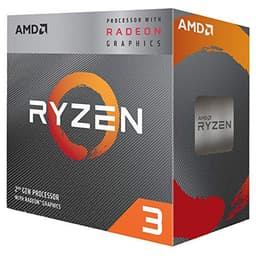
The Ryzen 3 3200G is the most affordable chip in this roundup, and for a certain type of professional, it's actually the perfect choice. Four cores, four threads, and integrated Radeon Vega 8 graphics. That combination means you can build a complete, functional professional workstation without spending a penny on a discrete GPU. For home office workers doing document editing, spreadsheets, email, video calls, and light web browsing, this chip is genuinely sufficient.
The 4.0GHz max boost and 6MB cache are modest by modern standards, and you'll feel the limitations if you try to push it with heavy multitasking or demanding creative software. But for the core tasks that most office professionals actually spend their day doing, it holds up fine. The Wraith Stealth cooler is included, which is a nice touch at this price point.
The Vega 8 integrated graphics are the real selling point here. They handle dual-monitor setups, video playback, and even some light image editing without any issues. For a budget home office build, this chip plus an affordable AM4 motherboard and some DDR4 RAM gets you a capable professional machine for well under £200 total. That's proper value.
Pros
- Radeon Vega 8 integrated graphics, no GPU needed
- Most affordable chip in the roundup
- Wraith Stealth cooler included
- 65W TDP, efficient and quiet
- Complete professional workstation possible on a tight budget
Cons
- Only 4 cores and 4 threads, no hyperthreading
- 6MB cache, noticeably limited for demanding tasks
- 4.0GHz boost, slowest in the roundup
- AM4 platform, no upgrade path
Buy on Amazon£60.78