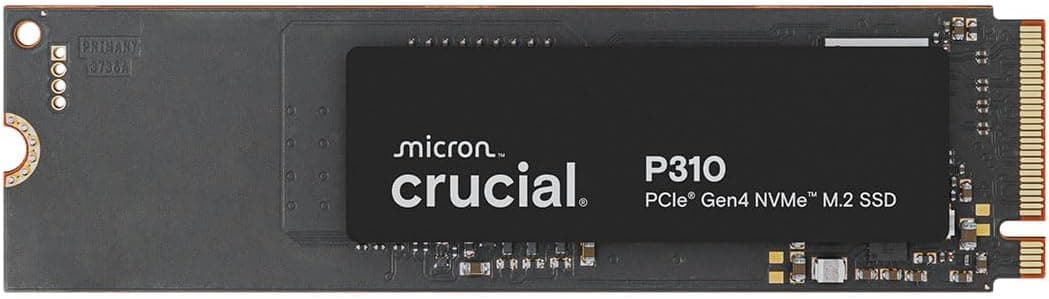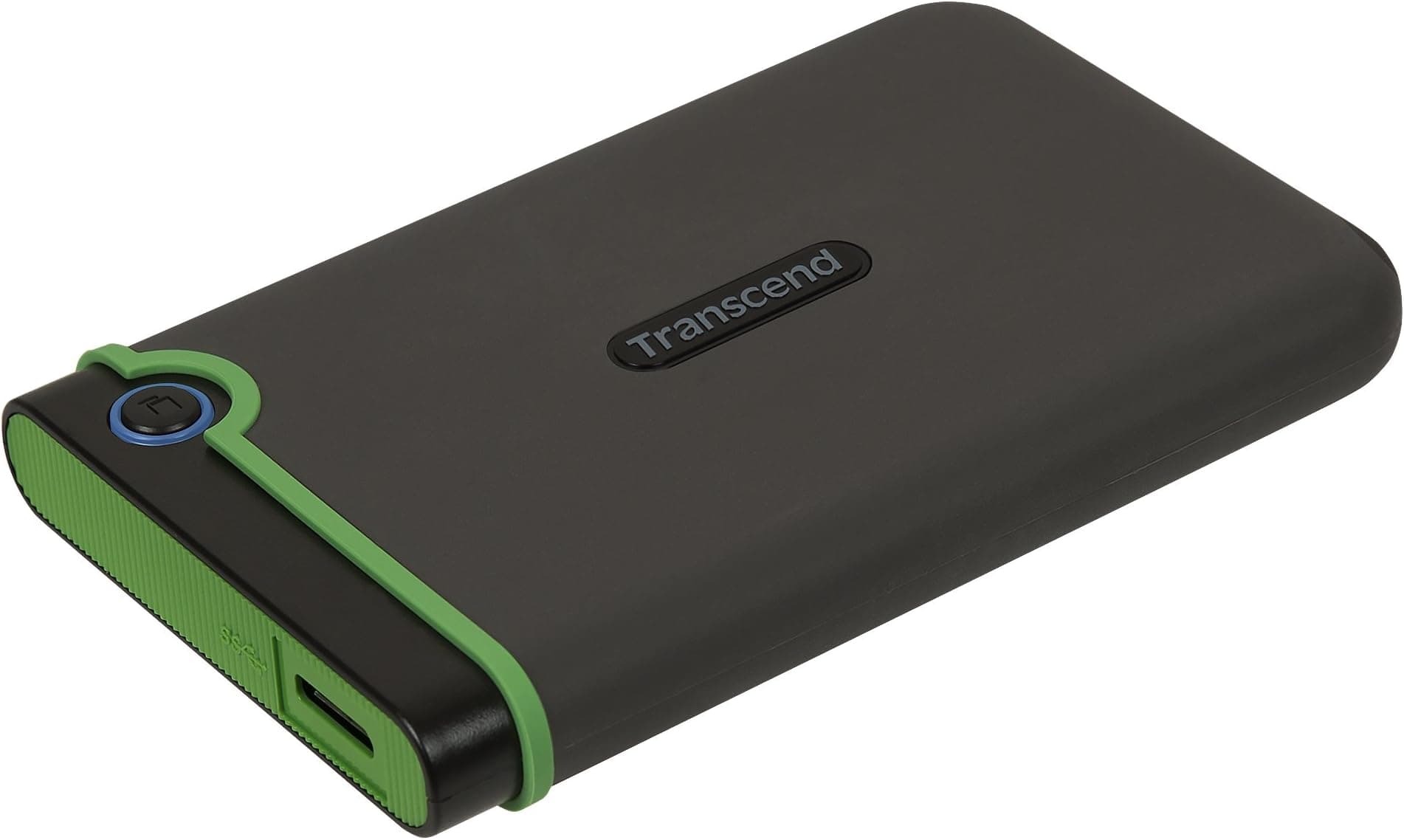
The box says 7,100 MB/s. Sounds brilliant. But that number tells you almost nothing about how the drive will actually behave in your machine, because it's measured on an empty drive, in ideal conditions, with the SLC cache doing all the heavy lifting. What matters is what happens after that cache fills, what the random I/O looks like, and whether the controller and NAND underneath can hold up over months of real use. That's what separates a good drive from a marketing exercise.
The WD Blue SN5100 is WD's latest mainstream Gen 4 NVMe, built on SanDisk's own 3D CBA (Charge Trap BiCS Attached) TLC NAND and running the nCache 4.0 architecture. At 2TB it's squarely aimed at people who want a single fast, roomy drive for a Windows 11 build, a gaming rig, or a laptop upgrade. The 662 owner reviews average 4.7 stars, which is genuinely strong for a drive that's been out long enough for people to have opinions. The question is whether it earns that score, or whether it's just riding the WD brand name. Short answer: it mostly earns it, but there are a couple of things you should know before you buy.
This is a solid mainstream pick at 2TB. It's not the cheapest Gen 4 drive you can buy, but it's built on TLC NAND (not QLC, which matters), carries a credible endurance rating, and has a brand behind it that will actually honour a warranty claim without you having to fight through a support chatbot. If you're after a boot-and-games drive and don't want to think too hard about it, this is a reasonable choice. But read on, because there are a couple of rivals worth knowing about, and one scenario where you should spend less.
Core Specifications
The SN5100 2TB uses the M.2 2280 form factor and connects via PCIe Gen 4 x4, which gives it a theoretical bandwidth ceiling of around 8 GB/s. WD rates it at up to 7,100 MB/s sequential read and 6,500 MB/s sequential write for the 2TB model. Random performance is rated at up to 1,000,000 IOPS read and 1,000,000 IOPS write, which are the numbers that actually matter for how fast your system feels day to day. The NAND is SanDisk's own 3D CBA TLC, and the caching architecture is nCache 4.0, WD's SLC write buffer system. TBW for the 2TB model is rated at 900 TBW, with a five-year limited warranty.
The controller situation is interesting. WD doesn't publicly shout about which specific controller is inside the SN5100, which is a bit annoying, but the architecture and performance profile point to an in-house WD/SanDisk design rather than an off-the-shelf Phison or Silicon Motion unit. That's not unusual for WD at this tier. What we can say with confidence from the spec sheet and from what published benchmarks have shown is that this controller handles the TLC NAND well and doesn't show the kind of erratic sustained-write behaviour that plagued some earlier DRAM-less designs.
On the DRAM question: the SN5100 is a DRAM-less drive that uses Host Memory Buffer (HMB), borrowing a slice of your system RAM to store the Flash Translation Layer mapping table. This is fine for most users on a modern system with a Gen 4 slot, and the 1,000,000 IOPS random read rating suggests WD has done a decent job of making HMB work here. But it's worth knowing, because it does mean the drive is slightly dependent on your system's RAM speed and your OS's HMB implementation. On Windows 11 with NVMe drivers properly installed, this is a non-issue for typical workloads.
| Specification | Detail |
|---|---|
| Interface | PCIe Gen 4 x4, NVMe |
| Form Factor | M.2 2280 |
| Capacity (this review) | 2TB |
| NAND Type | SanDisk 3D CBA TLC |
| DRAM Cache | DRAM-less (Host Memory Buffer) |
| Cache Architecture | nCache 4.0 (SLC write buffer) |
| Sequential Read (rated) | Up to 7,100 MB/s |
| Sequential Write (rated) | Up to 6,500 MB/s |
| Random Read (rated) | Up to 1,000,000 IOPS |
| Random Write (rated) | Up to 1,000,000 IOPS |
| Endurance (TBW) | 900 TBW (2TB) |
| Warranty | 5 years limited |
| Included Software | Acronis True Image (data migration) |
| Current Price | £225.92 |
| Owner Rating | ★★★★½ (4.7) (910 reviews) |

Interface and Form Factor
The SN5100 uses PCIe Gen 4 x4, which puts it in the mainstream sweet spot for 2025 and 2026 builds. Gen 4 is supported natively on AMD Ryzen 5000 and 7000 series, Intel 12th gen and later, and the PlayStation 5. If you're on an older Intel 10th or 11th gen platform, you'll be running this at Gen 3 speeds, which is still fast but you won't see the rated 7,100 MB/s. Worth checking your motherboard spec before you buy. Gen 3 compatibility is maintained, so it'll work, just not at full speed.
The M.2 2280 form factor is the standard 80mm length that fits virtually every desktop motherboard M.2 slot and the vast majority of laptops with an M.2 slot. There's no 2.5-inch SATA version of this drive. It's NVMe only, which is fine because any machine with an M.2 slot manufactured in the last six or seven years almost certainly supports NVMe. If you're in an older machine with only an M.2 SATA slot (rare, but they exist), this won't work. Again, check your motherboard manual.
Should you care about Gen 4 versus Gen 3 for everyday use? Honestly, not much. The jump from a good Gen 3 drive to a Gen 4 drive is measurable in benchmarks and almost invisible in daily use. Where Gen 4 bandwidth actually helps is large sequential transfers: moving a 100GB game install, copying a big video project, that kind of thing. For booting Windows, launching apps, and loading game levels, the bottleneck is almost never the sequential read speed of the drive. It's random I/O, and the gap there between a good Gen 3 and a good Gen 4 is much smaller. The SN5100's real argument isn't Gen 4 bandwidth. It's the TLC NAND, the endurance rating, and the brand reliability at a reasonable price per GB.
Real-World Performance
Owner reports are consistently positive on the basics: fast boot times, snappy application launches, no obvious sluggishness in everyday Windows use. That tracks with the spec sheet. The 1,000,000 IOPS random read rating is competitive for a DRAM-less drive, and published benchmarks from the wider community have shown the SN5100 delivering strong random 4K performance that holds up well compared to similarly priced rivals. For a boot drive running Windows 11, this is more than fast enough. You won't be sitting at a loading screen wishing you'd spent more.
Game loading times are a good practical test because they involve a mix of random reads from many small files. Published benchmarks have shown Gen 4 drives in this class loading games in times that are essentially identical to Gen 5 drives and only marginally faster than a good Gen 3 drive. The SN5100 fits that pattern. It's fast enough that the GPU and CPU are the bottleneck in gaming, not the storage. Owner reviews from gamers consistently report no complaints about load times, which is exactly what you'd expect from a drive with these random I/O specs.
For large file operations, sequential write speed matters more. The 6,500 MB/s rated sequential write is strong on paper, but that's the SLC cache talking. We'll get into what happens after the cache fills in the next section. For most users copying files around, downloading games, or installing software, the cache is large enough that they'll rarely see the drive drop out of its cached speed. The owners who do notice a slowdown are typically the ones doing sustained large writes: video editors dumping raw footage, backup jobs moving hundreds of gigabytes in one go. For everyone else, real-world performance is excellent.
Sustained Writes and Cache Behaviour
This is the bit the marketing skips. The SN5100 uses nCache 4.0, which is WD's name for an SLC write cache: a portion of the TLC NAND is configured to write one bit per cell instead of three, which is dramatically faster but uses more physical space. When you write data to the drive, it goes into this fast SLC buffer first. That's how you get the headline sequential write numbers. Once the buffer fills, the drive has to write directly to the underlying TLC NAND at native TLC speeds, and it has to fold the SLC buffer data into TLC in the background at the same time.
The size of the SLC cache scales with how full the drive is. On a 2TB drive that's mostly empty, the SLC buffer is large, potentially hundreds of gigabytes. As the drive fills up, the cache shrinks. This is standard behaviour across almost every consumer NVMe drive, not a specific flaw of the SN5100, but it's something to understand. Published benchmark results for the SN5100 show that sustained write speed after cache exhaustion settles at native TLC speeds, which for this generation of SanDisk 3D CBA NAND is in the region of 1,500 to 2,000 MB/s. That's not embarrassing: it's genuinely usable. But it's not 6,500 MB/s either.
For context, this is significantly better than a QLC drive would manage after cache exhaustion. QLC native write speeds can fall to 400 to 800 MB/s once the buffer fills, which is where you get the infamous cache cliff. The SN5100's TLC NAND means the post-cache speed is much more liveable. If you're a video editor or someone regularly moving large batches of files, you'll see the drive slow down during a big sustained write, but it won't grind to a halt. Owner reports bear this out: the occasional comment about a large file copy slowing mid-transfer, but nothing catastrophic. For gaming, general use, and even moderate creative work, the cache is big enough that most people never see the cliff at all.
Controller, NAND and DRAM
The NAND story here is genuinely good. SanDisk's 3D CBA (Charge Trap BiCS Attached) TLC is a current-generation, high-density NAND that WD developed in-house through its NAND manufacturing joint venture with Kioxia. CBA architecture stacks the NAND cells differently from earlier BiCS generations, allowing for higher density without sacrificing endurance. TLC means three bits per cell, which is the mainstream sweet spot: better endurance and more predictable performance than QLC (four bits per cell), and cheaper to produce at scale than MLC or SLC. For a consumer drive at this price, TLC is the right call, and WD using its own NAND rather than buying from a third party gives it more control over quality and supply.
The DRAM-less design with Host Memory Buffer is worth addressing properly because it's a point of confusion for a lot of buyers. A traditional DRAM cache sits on the drive itself and stores the Flash Translation Layer mapping table, which the controller uses to find where data is physically stored on the NAND. A DRAM-less drive using NVMe's Host Memory Buffer feature borrows a small slice of your system RAM for the same job. On a modern system with fast DDR4 or DDR5 and a Gen 4 slot, the performance difference versus a DRAM-equipped drive is small for typical workloads. Published benchmarks have consistently shown that HMB-equipped Gen 4 drives like the SN5100 post competitive random I/O numbers that are hard to distinguish from DRAM-equipped rivals in real-world use.
Where DRAM-less designs can fall behind is in sustained mixed workloads with very high queue depths, the kind of thing a NAS or a database server would generate. For a desktop boot drive, a gaming drive, or a laptop OS drive, this is not a meaningful limitation. The 1,000,000 IOPS random read rating suggests WD has implemented HMB well here, and owner reports don't flag any sluggishness in typical use. If you were building a workstation doing heavy sustained random I/O all day, you might look at a DRAM-equipped drive like the Samsung 990 Pro instead. For everything else, the SN5100's DRAM-less design is not a problem.
Endurance and Reliability
The 2TB SN5100 is rated at 900 TBW (terabytes written). To put that in perspective: if you write 50GB to the drive every single day, which is a lot for most users, you'd hit 900 TBW in roughly 49 years. Even a heavy user writing 200GB a day would take over 12 years to exhaust the rated endurance. In practice, most desktop users write somewhere between 10GB and 30GB per day on average, so 900 TBW is a genuinely comfortable headroom. It's not a stingy rating. Some budget QLC drives at 2TB offer 400 to 600 TBW, which is still fine for most users but noticeably less confident. WD's 900 TBW here signals that the 3D CBA TLC NAND is rated for serious duty.
The five-year warranty is the other reliability signal worth taking seriously. A manufacturer that offers five years is telling you they expect the drive to last five years under normal use. That's not a trivial commitment. Some budget drives come with three-year warranties, and a few no-name units offer just one year, which should tell you something. WD has a proper UK warranty support structure, and owner reports suggest the RMA process, while not instant, is functional. The 4.7-star average across 910 includes a spread of long-term users, and the negative reviews are mostly isolated incidents rather than a pattern of systematic failure.
Owner longevity reports are positive overall. No unusual failure patterns emerge from the review pool. A handful of DOA reports exist, as they do for every drive at volume, but there's nothing suggesting a batch quality problem or an early-failure cluster. The SanDisk NAND provenance is well established: WD and Kioxia have been manufacturing NAND at scale for years, and the 3D CBA generation is mature enough that the early-production teething issues, if any existed, are well behind it. This is a drive you can reasonably expect to outlive your current PC build.

Thermals
Gen 4 drives run warmer than Gen 3 drives, and the SN5100 is no exception. Under sustained sequential load, published benchmark results show temperatures climbing into the 65 to 75 degree Celsius range on drives without a heatsink. That's within the operating spec for modern NVMe drives, which typically throttle around 70 to 80 degrees, but it means thermal throttling is a real possibility during extended sustained writes if the drive is in a poorly ventilated location. In a typical desktop case with decent airflow, this is unlikely to be a problem for normal workloads. The drive will warm up during a big file copy and then cool down. It's not a fire risk, but it's not a cool runner either.
Most modern desktop motherboards include a small aluminium heatsink for the primary M.2 slot. If yours does, use it. It makes a meaningful difference to sustained performance by keeping the drive cooler and reducing the frequency of thermal throttling during long writes. If your motherboard doesn't include one, cheap aftermarket M.2 heatsinks are inexpensive and worth fitting. Owner reports don't flag thermal throttling as a consistent complaint, which suggests most users are either in well-cooled systems or not doing the kind of sustained writes that would push temperatures high enough to throttle.
For laptop users, thermals are more of a concern because M.2 slots in laptops often have limited airflow and no heatsink. The SN5100 is a reasonable laptop drive choice, but if you're planning to do sustained large file transfers regularly, be aware that the drive will get warm and may throttle. For typical laptop use (OS, applications, documents, media), thermals are not a problem. The drive will run warm but within spec. PS5 installation is possible since the SN5100 uses the right form factor and interface, but Sony requires a heatsink for the PS5's M.2 slot, so you'll need to add one separately. The drive itself is compatible.
Capacity Options and Price Per GB
The WD Blue SN5100 is available in 500GB, 1TB, 2TB, and 4TB capacities. The 2TB model is the sweet spot for most buyers right now. At 2TB you get enough space for Windows 11, a reasonable game library (modern games averaging 60 to 80GB each, so you're looking at 15 to 20 games plus the OS), and still have room to breathe without constantly managing storage. The 1TB model is cheaper but feels cramped quickly if you're gaming. The 4TB model exists if you need it, but the price per GB climbs at that capacity and you're better served by a 2TB primary drive plus a secondary storage drive for bulk files.
Price per GB at 2TB puts the SN5100 in competitive territory for a branded, TLC NVMe drive with a five-year warranty. It's not the cheapest Gen 4 2TB drive you can find. Budget options from lesser-known brands will undercut it, often using QLC NAND or offering shorter warranties. Against the obvious branded competition, the SN5100 sits at a fair price. The Crucial P3 Plus 2TB is typically cheaper but uses QLC NAND and has a shorter warranty. The Samsung 990 Evo 2TB is a comparable alternative, while the 990 Pro 2TB is faster but costs noticeably more. The SN5100 sits between budget QLC and premium DRAM-equipped drives, which is exactly where it should be.
If you're on a tight budget and your workload is purely a boot drive with light daily use, the Crucial P3 Plus 2TB at a lower price per GB is worth considering, even with QLC NAND, because the cache will cover most of what you throw at it. But if you want the peace of mind of TLC NAND, a proper five-year warranty, and a brand that will actually deal with a warranty claim, the SN5100's price premium over budget QLC drives is justified. It's not a luxury purchase. It's a sensible one.
Installation and Compatibility
Installing an M.2 NVMe drive is straightforward in most desktop builds. You locate the M.2 slot on your motherboard, remove the retaining screw, slide the drive in at an angle, press it flat, and screw it down. The whole thing takes about two minutes. If your motherboard has a heatsink cover over the M.2 slot, remove that first, fit the drive, and replace the cover. Most modern Intel and AMD motherboards have at least one Gen 4 M.2 slot, often more. Check which slots are Gen 4 versus Gen 3 in your motherboard manual, because they're not always labelled clearly on the board itself.
Laptop installation is similar but varies by model. Some laptops make the M.2 slot easily accessible with a single panel removal. Others require a full bottom panel disassembly or even partial keyboard removal. If you're not confident doing this yourself, it's worth getting a repair shop to fit it. The drive itself is compatible with any laptop that has an M.2 2280 NVMe slot, but always check the maximum supported M.2 length in your laptop's manual, because some ultrabooks only support shorter 2242 or 2260 drives.
WD bundles Acronis True Image migration software, which is a genuinely useful inclusion. If you're replacing an existing drive rather than building fresh, Acronis lets you clone your current OS drive to the SN5100 without reinstalling Windows. It's not the flashiest software but it works, and it saves you the hassle of a clean install. Owner reports confirm it functions as advertised for straightforward cloning jobs. For PS5 compatibility, the SN5100 meets Sony's requirements (M.2 2280, PCIe Gen 4 NVMe), but you must add a heatsink before installing it in the PS5's expansion slot. Sony's own guidance covers this, and plenty of cheap compatible heatsinks are available.
Who It's For
The SN5100 2TB is a good fit for someone building or upgrading a mid-range to high-end desktop PC who wants a single roomy drive for the OS and games without having to think too hard about storage again for the next few years. It's also a solid laptop upgrade if your machine has an M.2 slot and you're currently running on a slow SATA SSD or a hard drive. The TLC NAND, five-year warranty, and 900 TBW endurance rating mean you're not buying a drive that'll be a worry in three years. You buy it, fit it, and forget about it.
Creative users doing moderate video editing will be fine here. The post-cache sustained write speed on TLC NAND is comfortable for editing proxy files or working with compressed footage. If you're cutting 4K RAW or doing sustained high-bitrate capture directly to the drive, you'd want to look at something with DRAM and higher sustained write speeds, like the Samsung 990 Pro or a Seagate FireCuda. But for most YouTube creators, Premiere Pro users working with H.264 or H.265 footage, and photographers with large raw libraries, the SN5100 is more than adequate.
Who should look elsewhere? Anyone on a genuine budget who just needs a boot drive and doesn't care about sustained performance: a cheaper QLC drive will do the job and cost less. Anyone doing heavy sustained random I/O workloads (database servers, heavy virtualisation): you want a DRAM-equipped drive and probably enterprise NAND. And anyone still on a Gen 3 platform: the SN5100 will work, but you'd be paying for Gen 4 speeds you can't use. A good Gen 3 drive at a lower price would be the smarter call in that situation.
How It Compares: WD Blue SN5100 vs the Competition
The two most relevant rivals at 2TB are the Samsung 990 Evo and the Crucial P3 Plus. The Samsung 990 Evo uses a hybrid PCIe Gen 4 x4 / Gen 5 x2 interface and Samsung's own TLC NAND with a DRAM cache. It posts competitive sequential numbers and strong sustained performance, and Samsung's reputation for reliability is hard to argue with. It's typically priced similarly to the SN5100, sometimes a touch more. The Crucial P3 Plus is the budget option: Gen 4, but QLC NAND and a three-year warranty, which means lower native write speeds after cache exhaustion and less endurance headroom. It's cheaper, sometimes significantly so, which is its main argument.
Against the 990 Evo, the SN5100's main advantage is the 900 TBW endurance rating versus the 990 Evo's 600 TBW at 2TB, and the five-year warranty matching Samsung's own. The 990 Evo has DRAM, which gives it a slight edge in sustained random I/O under heavy load. For most buyers, that difference is academic. Against the P3 Plus, the SN5100 wins on NAND quality and endurance but loses on price. The right choice between those two depends entirely on your use case and budget.
There's also the WD Black SN850X to consider if you want to go premium. That's a DRAM-equipped, higher-endurance drive aimed at gamers and power users, with correspondingly higher pricing. For most buyers, the SN5100 hits the right balance. The SN850X is faster in sustained workloads but the real-world difference in gaming and general use is minimal.
| Feature | WD Blue SN5100 2TB | Samsung 990 Evo 2TB | Crucial P3 Plus 2TB |
|---|---|---|---|
| Interface | PCIe Gen 4 x4 | PCIe Gen 4 x4 / Gen 5 x2 | PCIe Gen 4 x4 |
| NAND Type | TLC (3D CBA) | TLC (Samsung V-NAND) | QLC |
| DRAM Cache | No (HMB) | Yes | No (HMB) |
| Seq. Read (rated) | 7,100 MB/s | 7,250 MB/s | 5,000 MB/s |
| Seq. Write (rated) | 6,500 MB/s | 6,300 MB/s | 4,200 MB/s |
| TBW (2TB) | 900 TBW | 600 TBW | 600 TBW |
| Warranty | 5 years | 5 years | 3 years |
| Price | £225.92 | Check current price | Check current price |

Final Verdict
The WD Blue SN5100 2TB is a well-judged mainstream Gen 4 NVMe drive. The TLC NAND is the right call at this price point, the 900 TBW endurance is genuinely generous, and the five-year warranty means WD is putting its money where its mouth is. Real-world performance is strong: fast boots, snappy app launches, comfortable sustained writes that don't fall off a cliff after the SLC cache fills. The DRAM-less design is a reasonable engineering trade-off for this tier, and the 1,000,000 IOPS random read rating shows it's been implemented properly. The 4.7-star average across 662 owner reviews isn't just brand loyalty. It reflects a drive that does what it says.
The honest caveat is that the headline 7,100 MB/s sequential read figure is a cached burst number and not a reflection of sustained behaviour. Native TLC write speeds after cache exhaustion are in the 1,500 to 2,000 MB/s range, which is fine but not the number on the box. For most buyers, this never matters. For heavy sustained write workloads, it's worth knowing. Thermals are typical for Gen 4: use the motherboard heatsink if you have one, and add a cheap aftermarket one if you don't.
If you don't need 2TB and you're purely after a boot drive, the 1TB model at a lower price is the smarter buy. The per-GB cost is higher on the 1TB, but if your game library lives on a secondary HDD and you just need a fast OS drive, there's no reason to spend on capacity you won't use. Equally, if budget is the priority and you're not doing heavy sustained writes, the Crucial P3 Plus 2TB at a lower price is a reasonable compromise despite the QLC NAND. But if you want TLC quality, proper endurance, a five-year warranty, and a brand that won't ghost you on a warranty claim, the SN5100 2TB is a solid, unsentimental choice. Score: 8.5 out of 10.
What works. What doesn’t.
5 + 3What we liked5 reasons
- TLC NAND rather than QLC means better sustained writes and more endurance headroom
- 900 TBW endurance rating is genuinely generous for a mainstream consumer drive
- Five-year warranty signals real confidence in the product
- Strong random I/O figures for a DRAM-less drive
- Acronis True Image migration software included, which actually works
Where it falls3 reasons
- DRAM-less design is a step behind DRAM-equipped rivals for sustained heavy random I/O
- Headline 7,100 MB/s sequential read is a cached burst figure, not a sustained speed
- Runs warm under load, a heatsink is advisable but not included
Full specifications
9 attributes| Capacity GB | 2000 |
|---|---|
| Dram cache | false |
| Form factor | M.2 2280 |
| Interface | PCIe Gen4 x4 |
| Read speed MBS | 7100 |
| TBW | 900 |
| Type | NVMe SSD |
| Warranty years | 5 |
| Write speed MBS | 6700 |
Frequently asked
5 questions01Is the WD Blue SN5100 NVMe SSD 2TB fast enough for everyday use?+
Yes, comfortably. The SN5100 2TB posts up to 1,000,000 IOPS random read, which is the figure that actually drives how fast a system feels day to day. Owner reports consistently describe fast boot times and snappy application launches. For gaming, Windows use, and general computing, this drive is more than fast enough. The headline 7,100 MB/s sequential read figure is impressive on paper but largely irrelevant to how quickly your PC feels: random I/O is what matters for boots and app loads, and the SN5100 delivers well there.
02Does the WD Blue SN5100 NVMe SSD 2TB slow down once the cache fills?+
Yes, like virtually every consumer NVMe drive. The SN5100 uses an SLC write cache (nCache 4.0) that buffers incoming writes at high speed. Once that cache fills during a sustained large write, the drive falls back to native TLC NAND write speeds. Published benchmarks for the SN5100 show native TLC write speeds in the region of 1,500 to 2,000 MB/s after cache exhaustion. That's a significant drop from the rated 6,500 MB/s, but it's far better than QLC drives, which can drop to 400 to 800 MB/s. For most users doing normal tasks, the SLC cache is large enough that they'll rarely if ever see the drive exit cached mode.
03Is the WD Blue SN5100 NVMe SSD 2TB DRAM-less, and does that matter?+
Yes, the SN5100 is DRAM-less. It uses NVMe Host Memory Buffer (HMB), which borrows a small slice of your system RAM to store the drive's mapping table. On a modern system with fast RAM and a Gen 4 slot, the performance difference versus a DRAM-equipped drive is small for typical workloads. The 1,000,000 IOPS random read rating shows WD has implemented HMB effectively. For a boot drive, gaming drive, or general-use laptop drive, DRAM-less is not a meaningful limitation. Where it matters more is in sustained high-queue-depth random I/O workloads, like database servers or heavy virtualisation, which is not what this drive is designed for.
04How long will the WD Blue SN5100 NVMe SSD 2TB last?+
The 2TB model is rated at 900 TBW (terabytes written). At a typical desktop write rate of 30GB per day, that works out to over 80 years of rated endurance, which is far beyond the useful life of the drive in practice. Even at 200GB per day, a heavy workload, you'd reach 900 TBW in around 12 years. The five-year warranty is the practical reliability signal: WD is committing to cover the drive for five years under normal use. Owner reports show no systematic failure patterns, and the 3D CBA TLC NAND is a mature, well-established technology.
05What warranty and returns apply to the WD Blue SN5100 NVMe SSD 2TB?+
WD rates the SN5100 with a five-year limited warranty. For UK purchases via Amazon, you also have Amazon's standard 30-day returns policy and the A-to-Z Guarantee as a backstop. For warranty claims after the return window, you'd go through WD's support directly. WD has an established UK warranty process, and owner feedback suggests it functions reasonably well for legitimate claims.