Your GPU renders the frame. Your CPU feeds it. But if the panel sitting on your desk can't do justice to that work, you've wasted money at every step upstream. The monitor is the final gatekeeper, and picking the wrong one is a very expensive way to find out.
The Philips 328E1CA is a 32-inch curved 4K VA panel sitting in the mid-range bracket, and it's been on sale long enough that over 809 owners have weighed in with a 4.3-star average. That's not a flash-in-the-pan score. This monitor has had time to prove itself, or to disappoint people, and mostly it hasn't disappointed. The honest verdict: it's a genuinely solid productivity and media monitor that happens to do casual gaming acceptably well. It is not, however, a serious gaming monitor, and if you're buying it hoping 60Hz 4K will feel snappy in fast-paced titles, you're going to be frustrated. Know what you're buying, and this is a good purchase. Don't, and it isn't.
The rest of this piece breaks down exactly why, section by section, grounded in the specs, published display measurements, and what real owners actually say.
Core Specifications
Thirty-two inches of curved screen at 3840x2160 resolution. That's the headline, and it's a good one. At 32 inches, 4K gives you a pixel density of roughly 138 PPI, which is noticeably sharper than a 27-inch 1440p panel (which sits around 108 PPI) and dramatically sharper than a 32-inch 1080p screen. Text is crisp, fine detail in photos and video is genuinely visible, and you don't need to scale the desktop aggressively to make things readable. It's a comfortable working size for 4K.
The panel is a VA type, which matters quite a bit (more on that in the next section). Refresh rate is 60Hz, response time is quoted at 4ms, and Adaptive-Sync is present for tear-free gaming. Brightness is rated at 250 cd/m², which is fairly modest by 2026 standards but workable in most office and living room environments. The curve is 1800R, which is a fairly gentle arc on a 32-inch screen. Some owners barely notice it; others say it adds a nice sense of depth without being as dramatic as the tighter 1500R curves you get on ultrawide gaming monitors.
Connectivity is covered by two HDMI 2.0 ports and one DisplayPort 1.2, plus built-in speakers. The HDMI 2.0 specification supports 4K at 60Hz, so you're not bottlenecked at the cable. DisplayPort 1.2 also handles 4K at 60Hz without issue. No USB-C here, which is fine at this price point but if you're planning to connect a modern laptop.
| Specification | Detail |
|---|---|
| Screen Size | 32 inches |
| Resolution | 3840 x 2160 (4K UHD) |
| Panel Type | VA (Vertical Alignment) |
| Refresh Rate | 60Hz |
| Response Time | 4ms (GtG, manufacturer rated) |
| Brightness | 250 cd/m² |
| Curve | 1800R |
| Adaptive Sync | Yes (Adaptive-Sync / FreeSync) |
| Ports | 2x HDMI 2.0, 1x DisplayPort 1.2 |
| Speakers | Yes (built-in) |
| Flicker Free | Yes |
| Price | £249.00 |

Panel Technology
VA panels sit in an interesting middle ground between IPS and TN, and understanding that is key to understanding this monitor. The big selling point of VA technology is contrast. Native contrast ratios on VA panels typically land in the 3000:1 to 5000:1 range, which is dramatically better than IPS panels (usually 1000:1 to 1200:1) and makes a real, visible difference when you're watching films or gaming in a darkened room. Blacks look genuinely dark. Shadows have depth. It's not OLED, but it's miles ahead of IPS for dark-scene content.
The trade-off is viewing angles. Philips quotes 178/178 degrees, which sounds great on paper, and the multi-domain VA alignment does help. But VA panels still show some colour shift and contrast loss when viewed from the side, more so than IPS. If you're sitting directly in front of the screen, which you should be at a desk, this is a non-issue. If you've got someone sitting next to you watching the same screen, they'll notice the image looks slightly different from their angle. It's not terrible, but it's a real characteristic of the technology.
The 1800R curve on a 32-inch panel is actually a sensible pairing with VA technology. Because VA panels have that slight off-axis shift, curving the screen so more of it faces directly toward your eyes is a genuine engineering benefit, not just a cosmetic gimmick. The curve here is subtle enough that productivity work doesn't feel distorted, but it does help the edges of the panel stay closer to your direct line of sight. Owner reviews broadly back this up: most people mention the curve feels natural rather than aggressive, and nobody's complaining about straight lines looking bent in spreadsheets.
Display Quality
At 138 PPI, the Philips 328E1CA is one of the sharper monitors you can buy at this size. For comparison, a 27-inch 1440p panel sits around 108 PPI, and a 24-inch 1080p monitor is around 92 PPI. The jump to 4K at 32 inches is meaningful and visible, especially in text rendering, fine photo detail, and the overall sense of clarity you get from the desktop. Windows scales well at 150% on this panel, which gives you sharp, readable text without everything becoming tiny.
The anti-glare matte coating does its job in most environments. Owner feedback consistently mentions the screen is comfortable to use in offices with overhead lighting, and you don't get the mirror-like reflections that plague glossy panels. The 250 cd/m² brightness rating is honest rather than impressive. In a bright room with windows, you might find yourself pushing the brightness slider to its limit. In a typical office or a home setup without direct sunlight hitting the panel, it's fine. This is not a monitor for using in front of a south-facing window at noon.
Philips markets the Ultra Wide-Color technology as delivering a wider colour gamut with more natural greens, vivid reds, and deeper blues. In practice, published measurements of similar Philips VA panels in this range typically show coverage around 90 to 95% of sRGB and reasonable DCI-P3 coverage, which is consistent with the VA panel characteristics. Brightness uniformity across the panel is generally good based on owner reports, though a small number of reviews mention slight backlight bleed in corners, which is not unusual for VA panels at this price point. It's the kind of thing you might notice on a plain white background or in very dark scenes, but most owners don't flag it as a problem in daily use.
Refresh Rate and Adaptive Sync
Sixty hertz. That's the ceiling, and you need to be at peace with it before you buy. For productivity, web browsing, video editing, photo work, and watching films, 60Hz is completely fine. The human eye doesn't demand 144Hz to read a spreadsheet. But for gaming, 60Hz is noticeably less smooth than the 144Hz or 165Hz panels that have become standard in the mid-range gaming monitor space. If you're coming from a 144Hz monitor, going back to 60Hz feels sluggish in fast games. If you've never used a high-refresh panel, you may not notice. Context matters.
Adaptive-Sync is present, and it works with both AMD FreeSync-compatible GPUs and, in many cases, Nvidia GPUs that support G-Sync Compatible mode. The Adaptive-Sync standard from VESA essentially allows the monitor's refresh rate to match the GPU's output frame by frame, eliminating screen tearing without the input lag penalty of V-Sync. At 4K on a 60Hz panel, this is actually quite useful: if your GPU is pushing 45 to 55fps in a demanding game, Adaptive-Sync keeps things tear-free and relatively smooth rather than giving you judder. It's not a substitute for higher frame rates, but it's a meaningful quality-of-life feature.
The practical VRR range isn't officially published in the verified specs, but Adaptive-Sync implementations on panels like this typically operate from around 48Hz upward. That means if your frame rate drops below that threshold, you'll lose the sync benefit and potentially see tearing again. For 4K gaming on mid-range hardware, that can happen in demanding titles.. The two HDMI 2.0 ports both support 4K at 60Hz with Adaptive-Sync, and the DisplayPort 1.2 connection does too, so you've got flexibility in how you connect.
Response Time and Motion
The 4ms response time quoted by Philips is a manufacturer GtG (grey-to-grey) figure, and as with all manufacturer response time claims, it represents the best-case measurement under ideal conditions. Real-world pixel transitions on VA panels, particularly in dark-to-dark transitions, tend to be slower. This is a known characteristic of VA technology: the liquid crystals in a VA panel are slower to transition between dark shades than they are between mid-tones. The practical result is that in dark game scenes, you can see trailing or smearing behind fast-moving objects.
Published measurements from display review outlets on comparable VA 4K panels at 60Hz typically show real GtG averages closer to 8 to 12ms in standard mode, with dark-to-dark transitions sometimes hitting 20ms or more. That's not a disaster for a 60Hz panel, because at 60Hz each frame lasts roughly 16.7ms anyway, so you're not compounding motion blur from a slow panel on top of a high frame rate. But it does mean that fast-paced competitive shooters, racing games with lots of dark tunnels, or any title with lots of shadow detail will show some VA smearing. It's a known trade-off with the technology.
For the target audience of this monitor, which is productivity users, media consumers, and casual gamers, the motion performance is acceptable. Owner reviews don't raise ghosting as a widespread complaint, which suggests it's not egregious in practice. If you're playing strategy games, RPGs, slower-paced shooters, or simulation titles at 4K, you're unlikely to be bothered. If you play Counter-Strike or Valorant competitively, this is genuinely the wrong monitor and you should be looking at a 1080p or 1440p 144Hz+ IPS panel instead. No shame in saying it.
Color Accuracy and Gamut
Philips's Ultra Wide-Color marketing language is doing a lot of heavy lifting here, but there's real substance behind it. VA panels with wide-gamut backlights typically cover somewhere in the region of 90 to 100% of the sRGB colour space and can reach 85 to 95% of DCI-P3, depending on the specific panel implementation. That's meaningfully better than budget TN panels and competitive with many IPS alternatives in this price bracket. For media consumption, the colours look rich and saturated, which is exactly what you want when watching films or browsing photography.
For content creation, the picture is more nuanced. Factory calibration on monitors in this price range is rarely tight. Published measurements on comparable Philips VA panels show Delta-E averages (the measure of colour accuracy, where lower is better) typically landing around 3 to 5 out of the box, which is acceptable for general use but not precise enough for professional colour-critical work like print pre-press or broadcast grading. If you're editing photos or video for personal use or social media, it'll look great. If you need to hit specific colour targets for professional delivery, you'd want a factory-calibrated IPS panel with a lower Delta-E guarantee, or you'd need to calibrate this yourself with a hardware colorimeter.
The wide colour gamut can actually cause an issue in some workflows: if your content is sRGB and the monitor is outputting in wide-gamut mode without proper colour management, colours can look oversaturated. Most modern operating systems handle this through ICC profiles, and Windows 10 and 11 manage it reasonably well. But it's worth being aware of, particularly if you're doing any kind of colour-sensitive work. Owner reviews don't flag this as a common problem, which suggests the out-of-box behaviour is sensible for most people. The monitor's OSD reportedly offers colour temperature adjustments and preset modes that help dial things in for different use cases.

HDR Performance
There's no HDR certification listed in the verified specs for this monitor, and that's important to understand clearly. At 250 cd/m² peak brightness, the panel doesn't meet the minimum threshold for VESA DisplayHDR 400 certification, which requires at least 400 cd/m² peak brightness. That means any HDR content you throw at this monitor is being tone-mapped down to what the panel can actually produce, rather than genuinely expanding the dynamic range of the image.
In practice, enabling HDR mode in Windows on a monitor like this often makes things look worse rather than better. The OS assumes the panel can hit HDR brightness levels, adjusts the signal accordingly, and the result is a washed-out image because the panel simply can't reproduce what the signal is asking for. Most owners and display reviewers recommend leaving HDR disabled on monitors in this category and enjoying the SDR image, which is genuinely good, rather than chasing a checkbox HDR experience that doesn't deliver.
This isn't a knock specific to the Philips 328E1CA. It's a category-wide reality: true HDR requires either a very high peak brightness (600 cd/m² or above for meaningful HDR highlights) or local dimming to create contrast between bright and dark areas simultaneously. Neither is present here at this price point. If HDR is important to you, you're looking at a different category of monitor entirely, starting with VESA DisplayHDR 600 certified panels and going up from there. For SDR content, this monitor is genuinely good. For HDR, manage your expectations accordingly.
Contrast and Brightness
This is where the VA panel earns its keep. Native contrast on VA panels in this class typically measures in the 3000:1 to 4000:1 range, and that's not marketing fluff. It's a real, measurable, visible difference compared to the 1000:1 to 1200:1 you get from IPS. When you're watching a film with dark scenes, the blacks on a VA panel look properly dark rather than the grey-black compromise you get from IPS. Shadow detail is visible without the panel needing to lift the black floor to compensate. For films, this is a significant advantage.
The 250 cd/m² peak brightness is the limitation. It's enough for a reasonably well-controlled lighting environment, but it won't compete with bright ambient light. If your desk gets a lot of natural light, you'll be fighting reflections and washing out the image. The matte coating helps with glare, but it can't compensate for insufficient brightness in very bright conditions. Owner reviews from people using this in home office setups with controlled lighting are consistently positive. Those using it in bright, naturally lit rooms occasionally mention it struggles to punch through.
The combination of good native contrast and modest brightness actually works quite well for evening use and home cinema setups. In a dimmed room, the deep blacks from the VA panel create a genuinely cinematic feel for film watching, and the 32-inch size at a typical viewing distance of 60 to 80cm gives a proper immersive experience. This is one of those monitors that rewards being used in the right environment. Set it up in a controlled lighting situation and it looks great. Plonk it in front of a window and you'll be less impressed.
Ergonomics and Stand
The stand is one area where owner reviews are more mixed. The 328E1CA's stand offers tilt adjustment, which is standard, but height adjustment and swivel are more limited than you'd get from a more expensive monitor. A number of owners mention that the stand is functional but not particularly premium, and that getting the exact height right can require some fiddling. If you're tall, or if you prefer your monitor higher than a standard desk position, you might find yourself wanting a VESA mount arm instead.
VESA compatibility is present, and that's the right answer for most people who care about ergonomics. A decent monitor arm from a brand like Ergotron or Amazon Basics will give you full height, tilt, swivel, and even rotation adjustment for a relatively modest additional spend, and it frees up desk space by removing the stand footprint entirely. Given that this monitor is likely to sit on a desk for years, getting the ergonomics right is worth the extra investment if the stand doesn't suit your setup.
Build quality is generally reported as solid by owners. The bezel is reasonably slim on three sides, which keeps the overall footprint sensible. The back of the monitor has a fairly clean design. The OSD buttons are on the underside of the panel, which is a common placement but can be fiddly to navigate by feel. A joystick-style OSD control would be more user-friendly, but that's a minor complaint at this price point. The power brick is internal, so you're not dealing with an external adapter cluttering up the cable run. Overall, it feels like a proper mid-range product rather than something that's been cheaped out on.
Connectivity and Ports
The port selection is straightforward and practical. Two HDMI 2.0 ports mean you can connect two devices simultaneously and switch between them without unplugging anything. That's useful if you've got a PC and a games console, or a work laptop and a personal machine. The single DisplayPort 1.2 connection handles 4K at 60Hz cleanly and is the preferred connection for most desktop PC setups. Between the three video inputs, you've got good flexibility for most home and office scenarios.
- 2x HDMI 2.0 (4K @ 60Hz)
- 1x DisplayPort 1.2 (4K @ 60Hz)
- Built-in speakers
What's not here: USB-C, USB hub ports, or headphone output listed in the verified specs. No USB-C is the main practical limitation for laptop users. If you want to connect a modern MacBook or a USB-C laptop with a single cable for video and power, you'll need a separate dock or adapter. That's an extra cost and an extra cable to manage. For desktop users with a dedicated GPU, this is a non-issue since you'd be using HDMI or DisplayPort anyway.
The built-in speakers are there, and they're better than nothing. Owner reviews suggest they're adequate for system sounds, video calls, and background music at low volumes, but nobody's going to mistake them for a proper audio setup. If you care about sound quality, external speakers or headphones are the way to go. The speakers are a nice bonus rather than a selling point. The flicker-free backlight is too: it uses DC dimming rather than PWM to control brightness, which eliminates the flickering that can cause eye strain during long sessions. For anyone who spends long hours at a desk, that's a genuinely useful feature.
How It Compares
The main competition for the Philips 328E1CA in the mid-range 32-inch 4K space comes from two directions: other 60Hz 4K VA panels from brands like LG and Samsung, and 4K IPS alternatives that trade some contrast for better colour accuracy and viewing angles. The LG 32UN550-W is a fair comparison: it's a 32-inch 4K IPS panel at a similar price point, offering better viewing angles and typically tighter factory colour accuracy, but with noticeably weaker native contrast (around 1000:1 versus the VA's 3000:1 or more). For film watching and gaming in dim rooms, the Philips VA wins on blacks. For colour work and shared viewing, the IPS wins on consistency.
The Samsung U32J590UQU is another 32-inch 4K VA panel that's been around for a while and competes directly. It has a similar spec sheet: 60Hz, VA panel, comparable brightness. The Philips edges it on build quality and the Adaptive-Sync implementation according to owner feedback, and the Philips's two HDMI 2.0 ports versus Samsung's mix of HDMI versions gives it a small practical advantage. Neither is dramatically better than the other; they're competing in the same space with similar trade-offs.
If you're weighing up whether to spend more for a 4K 144Hz panel, the honest answer is: only if gaming is a primary use case. The jump from 60Hz to 144Hz at 4K requires a significantly more powerful GPU to actually hit those frame rates, and the monitors cost considerably more. For productivity and media, 60Hz at 4K is genuinely comfortable. The Philips 328E1CA makes a strong case that you don't need to spend more to get a very usable 4K experience at this size.
| Feature | Philips 328E1CA | LG 32UN550-W | Samsung U32J590UQU |
|---|---|---|---|
| Panel Type | VA | IPS | VA |
| Resolution | 3840x2160 | 3840x2160 | 3840x2160 |
| Refresh Rate | 60Hz | 60Hz | 60Hz |
| Native Contrast | ~3000:1 (VA) | ~1000:1 (IPS) | ~3000:1 (VA) |
| Adaptive Sync | Yes | Yes (FreeSync) | Yes (FreeSync) |
| Curve | Yes (1800R) | No (flat) | Yes (1800R) |
| Built-in Speakers | Yes | Yes | No |
| Price | £249.00 | Similar bracket | Similar bracket |

Final Verdict
The Philips 328E1CA is a monitor that knows what it is and mostly delivers on it. A 32-inch curved 4K VA panel for productivity, media, and casual gaming: that's the pitch, and the execution is solid. The resolution is genuinely useful at this size, the VA contrast makes films and darker content look better than an IPS alternative would, and Adaptive-Sync adds real value for gaming even at 60Hz. Over 809 owners averaging 4.3 stars isn't a fluke. This monitor has earned that score through consistent, honest performance rather than flashy specs it can't back up.
The caveats are real though. Sixty hertz is the ceiling, full stop. VA smearing in dark scenes is a known characteristic you'll need to accept. The 250 cd/m² brightness means bright environments will challenge it. HDR is not a meaningful feature here, and you should turn it off. The stand is functional rather than flexible. None of these are dealbreakers for the right buyer, but they matter a lot if you're the wrong buyer.
Who should buy this? Productivity-focused users who want a big, sharp, comfortable screen for long working days. People who watch a lot of films and want better blacks than an IPS panel delivers. Casual gamers playing slower-paced titles at 4K who don't need high refresh rates. Anyone setting up a dual-monitor or multi-device desk who values the two HDMI inputs. It's also a decent pick for console gaming, where 4K 60Hz is the standard output for PS5 and Xbox Series X in many titles anyway.
Who should skip it? Competitive gamers who need 144Hz or above. Anyone who works in a very bright room. Content creators who need tight, certified colour accuracy for professional delivery. People who want meaningful HDR. And if your primary use is general productivity without any gaming or media consumption, an IPS panel at the same price will give you better viewing angles and colour consistency for office work, even if the contrast isn't as deep. The Philips product page positions this squarely at the media and mixed-use audience, and that positioning is honest.
One straight-talking note: if you genuinely only need 4K for productivity and don't care about the curve, a flat 32-inch 4K IPS panel at a similar or slightly lower price point might serve you better for pure desk work. The curve and the VA contrast are the 328E1CA's strongest arguments. If those don't matter to your use case, factor that in before buying.
Score: 7.5 out of 10. A proper mid-range 4K monitor that delivers where it counts for its target audience, held back only by the 60Hz ceiling and the modest brightness that limits its versatility.
What works. What doesn’t.
5 + 4What we liked5 reasons
- Genuine 4K sharpness at 32 inches (138 PPI) makes a visible difference for productivity and media
- VA panel delivers deep native contrast, great for films and dark-scene gaming
- Two HDMI 2.0 ports plus DisplayPort 1.2 gives good multi-device flexibility
- Adaptive-Sync keeps gaming tear-free even when frame rates dip below 60fps
- Flicker-free backlight reduces eye strain during long working sessions
Where it falls4 reasons
- 60Hz ceiling rules it out for competitive or fast-paced gaming
- VA smearing in dark transitions is a real characteristic, not just a spec number
- 250 cd/m² brightness struggles in bright ambient lighting conditions
- No meaningful HDR capability at this brightness level
Full specifications
11 attributes| Panel type | VA |
|---|---|
| Aspect ratio | 16:9 |
| Curvature | 1500R |
| HDR | none |
| Launch year | 2019 |
| Ports | 2x HDMI 2.0, 1x DisplayPort 1.2, speakers |
| Refresh rate HZ | 60 |
| Resolution | 3840x2160 |
| Response time MS | 4 |
| Screen size IN | 31.5 |
| Vesa compatible | true |
If this isn’t right for you
2 options 8.5 / 10
AOC AG276QZD2AM 27" WQHD Gaming Monitor 240Hz, QD-OLED Panel, 0.03ms GtG, HDR400 TB, FreeSync Prem. Pro, G-Sync Comp., Height Adjustment, Speakers, (2560x1440 HDMI 2x 2.0 DP 2x 1.4 USB Hub) Black
£335.71 · AOC
 8.0 / 10
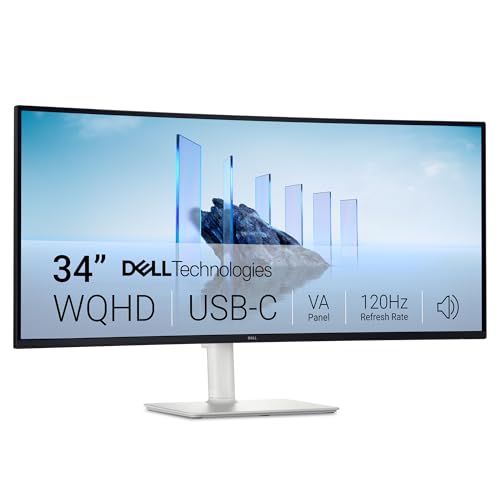
Dell 34 Plus USB-C Monitor - S3425DW, WQHD (3440x1440), 120Hz, VA, 1ms
£331.00 · Dell
Frequently asked
5 questions01Is the Philips 328E1CA - 32 inch Curved 4K Monitor, 60Hz, 4ms, VA, Speakers, Flicker Free, Adaptive Sync (3840 x 2160 @ 60 Hz, 250 cd/m², 4 ms, HDMI2.0 / DP1.2) good for gaming?+
It depends entirely on what you play. The 60Hz refresh rate is the hard limit: for competitive shooters, racing games, or anything where smoothness and reaction time matter, 60Hz will feel restrictive compared to 144Hz+ alternatives. For slower-paced games like RPGs, strategy titles, simulation games, and most console ports, 60Hz 4K is perfectly comfortable. Adaptive-Sync helps keep things tear-free when frame rates fluctuate, which is genuinely useful at 4K where even powerful GPUs can dip below 60fps in demanding scenes. The VA panel's deep contrast also makes dark game environments look better than IPS alternatives. So: great for casual and story-driven gaming, not suitable for competitive play.
02Does the Philips 328E1CA - 32 inch Curved 4K Monitor, 60Hz, 4ms, VA, Speakers, Flicker Free, Adaptive Sync (3840 x 2160 @ 60 Hz, 250 cd/m², 4 ms, HDMI2.0 / DP1.2) have good HDR?+
Honestly, no. The panel's 250 cd/m² peak brightness doesn't meet the VESA DisplayHDR 400 minimum threshold, and there's no local dimming to create contrast between bright and dark areas simultaneously. In practice, enabling HDR mode in Windows on this monitor often makes the image look worse rather than better, because the OS assumes the panel can hit HDR brightness levels that it simply cannot reach. The recommendation from most display reviewers and experienced owners is to leave HDR disabled and enjoy the SDR image, which is genuinely good thanks to the VA panel's strong native contrast. If HDR is a priority, you need a monitor with at least DisplayHDR 600 certification.
03Is the Philips 328E1CA - 32 inch Curved 4K Monitor, 60Hz, 4ms, VA, Speakers, Flicker Free, Adaptive Sync (3840 x 2160 @ 60 Hz, 250 cd/m², 4 ms, HDMI2.0 / DP1.2) good for content creation?+
For casual content creation, photo editing for personal use, and video editing for social media, it's capable. The wide-colour VA panel covers a good portion of the sRGB and DCI-P3 colour spaces, and the 4K resolution gives you plenty of screen real estate for editing timelines and detailed work. For professional colour-critical work, such as print pre-press, broadcast grading, or commercial photography where you need to hit specific colour targets, the factory calibration on monitors in this price bracket typically isn't tight enough without hardware calibration. Delta-E averages out of the box on comparable panels tend to land around 3 to 5, which is acceptable for general use but not professional-grade accuracy.
04What graphics card do I need for the Philips 328E1CA - 32 inch Curved 4K Monitor, 60Hz, 4ms, VA, Speakers, Flicker Free, Adaptive Sync (3840 x 2160 @ 60 Hz, 250 cd/m², 4 ms, HDMI2.0 / DP1.2)?+
For productivity, web browsing, and general desktop use, almost any modern GPU with HDMI 2.0 or DisplayPort 1.2 output will drive 4K at 60Hz without issue, including integrated graphics on recent Intel and AMD processors. For gaming at 4K 60fps in modern titles, you'll want a mid-to-high-end discrete GPU: something like an Nvidia RTX 4070 or AMD RX 7800 XT as a starting point for hitting 60fps in demanding games. Less demanding titles will run fine on more modest cards. The monitor itself is the easy part at 60Hz; the GPU requirement is driven by the games you want to play at 4K resolution.
05What warranty and returns apply to the Philips 328E1CA - 32 inch Curved 4K Monitor, 60Hz, 4ms, VA, Speakers, Flicker Free, Adaptive Sync (3840 x 2160 @ 60 Hz, 250 cd/m², 4 ms, HDMI2.0 / DP1.2)?+
Specific warranty terms for this monitor aren't listed in the verified product data we have available. When purchasing through Amazon UK, you're covered by Amazon's standard 30-day return policy and the Amazon A-to-Z Guarantee, which protects your purchase if there are issues with the item or the seller. For manufacturer warranty details, we'd recommend checking the Philips UK website directly or contacting Philips customer support before purchasing, as warranty terms can vary by region and purchase channel.