UK tech experts · info@vividrepairs.co.uk
Vivid Repairs

BOSGAME M2 Gaming Mini PC Ryzen Review UK 2026

Editorial score8.0 / 10
VR-MINI-PCPublished 28 Jul 202625 verified reviewsResearched by Vivid RepairsUpdated 15 Aug 2026

As an Amazon Associate we may earn from qualifying purchases. Our ranking stays independent.

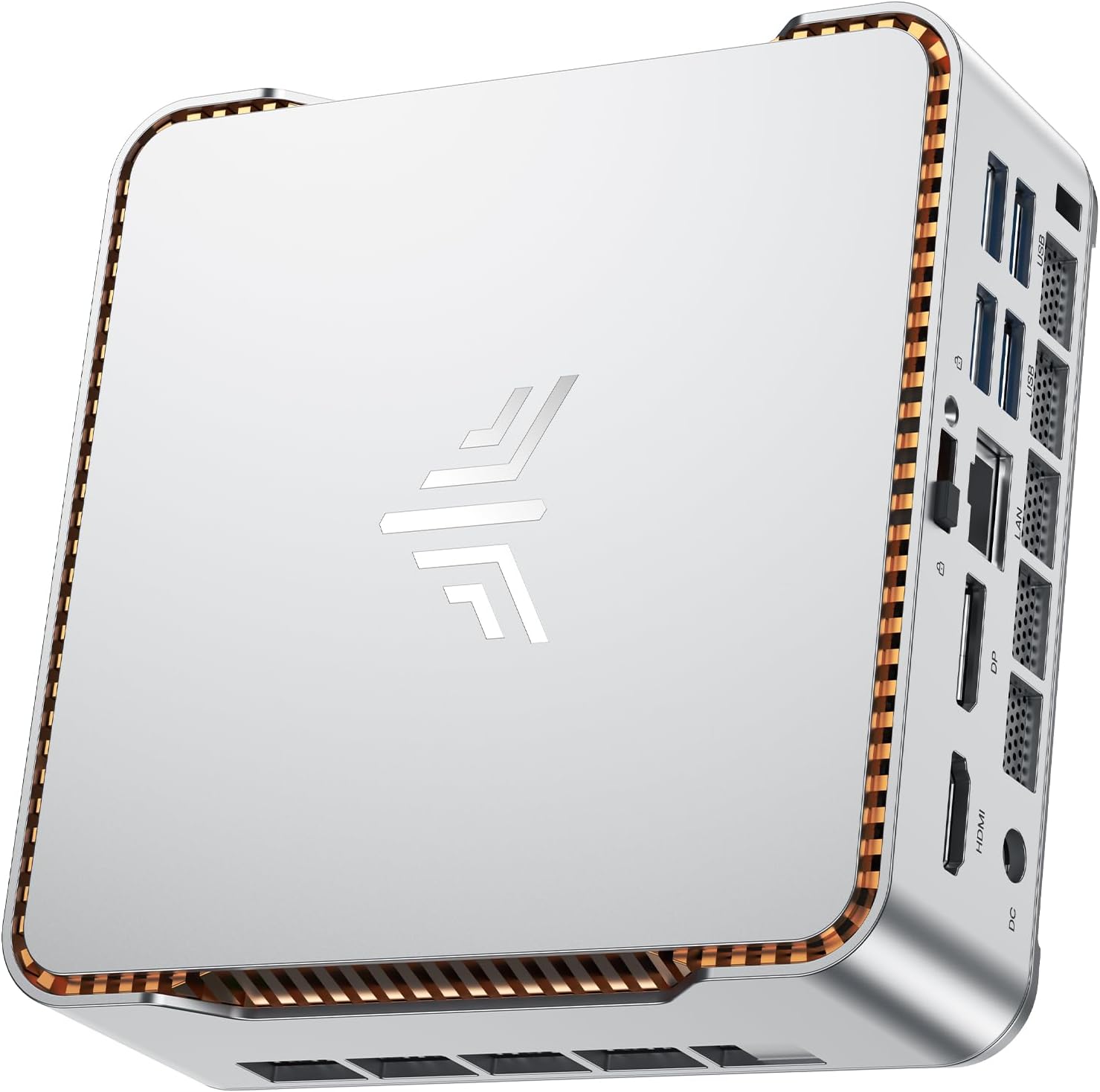
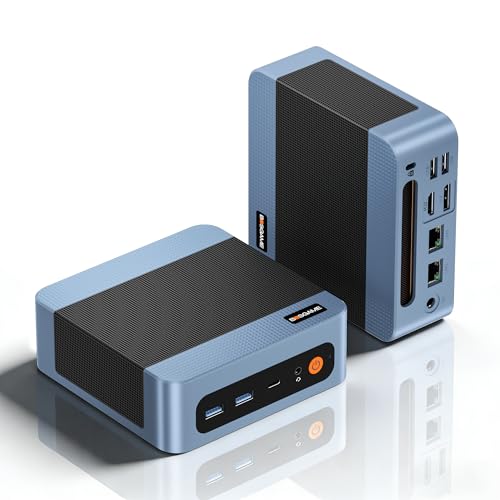
BOSGAME M2 Gaming Mini PC Ryzen 9 7940HS (8C/16T,Max 5.2GHz), 32GB DDR5 1TB NVMe SSD Mini Desktop PC, Dual 2.5G LAN, Quad Display, OCulink, Wi-Fi 6E&BT5.2
★ Editor’s Pick◎ Best for gaming

+ / What we liked

  • Dual 2.5G LAN is rare at this price tier and genuinely useful for home lab and NAS setups
  • OCulink port provides a real eGPU upgrade path with better bandwidth than Thunderbolt alternatives
  • 32GB DDR5 5600MHz in dual channel maximises Radeon 780M iGPU performance

− / What it lacks

  • Newer brand with limited long-term reliability data compared to Minisforum or Beelink
  • Premium price is only justified if you actually need the connectivity extras
  • Fan is audible under sustained load, not silent operation
Best for

Dual 2.5G LAN is rare at this price tier and genuinely useful for home lab and NAS setups

Skip if

Newer brand with limited long-term reliability data compared to Minisforum or Beelink

Worth it because

OCulink port provides a real eGPU upgrade path with better bandwidth than Thunderbolt alternatives

Not sure yet? The full review is right below
§ Editorial

The full review

Spec sheets for mini PCs are, frankly, a bit of a mess. Every brand slaps "gaming" on the box, quotes a turbo frequency that only appears for about three seconds under ideal conditions, and hopes you won't notice the thermal throttling that kicks in shortly after. So rather than just listing numbers, this review is about whether the BOSGAME M2 Gaming Mini PC Ryzen 9 7940HS actually holds up when you push it, what the 25 owners who've bought one are saying, and whether the premium asking price is justified against what else you can get for the same money in 2026.

The M2 sits in an interesting position. It's running AMD's Ryzen 9 7940HS, which is a proper eight-core, sixteen-thread chip with a 5.2GHz ceiling. That's a laptop-class processor repurposed into a tiny desktop box, which is exactly how most mini PCs work. The question is always the same: does the chassis handle the thermals, does the memory configuration make sense, and is the connectivity package worth the premium over a cheaper alternative? With OCulink, dual 2.5G LAN, Wi-Fi 6E, and quad display output all listed on the spec sheet, there's a lot to unpack here.

Owner feedback sits at ★★★★☆ (4.1) stars across 25 reviews, which is a decent signal for a relatively new product. Not universally loved, but not a disaster either. The pattern in the reviews is pretty consistent: people are impressed by the raw performance, cautiously optimistic about the thermals, and occasionally confused by the setup process. That's a profile worth examining in detail.

Core Specifications

The headline component is the AMD Ryzen 9 7940HS, an eight-core, sixteen-thread processor built on the Zen 4 architecture with a base-to-boost range that tops out at 5.2GHz. This is not a desktop chip, it's a high-performance mobile processor, which matters because the TDP is configurable and the actual sustained performance depends heavily on how BOSGAME has tuned the power limits. On paper, it's one of the strongest CPUs you'll find in a mini PC at this price point. In practice, you want to see it sustain meaningful clock speeds under load, not just spike briefly before throttling back.

Memory is 32GB of DDR5, running at 5600MHz in dual channel. That's a solid configuration. The 7940HS uses the integrated Radeon 780M GPU, which shares system memory, so the dual-channel DDR5 setup genuinely matters for graphics performance. More bandwidth to the iGPU means better frame rates in games and smoother video processing. The 1TB M.2 NVMe SSD uses PCIe 4.0, which puts sequential reads well above what PCIe 3.0 drives offer, and it's the right tier of storage for a machine at this price. Windows 11 Home comes pre-installed.

The connectivity spec is where this machine distinguishes itself from cheaper alternatives. Dual 2.5G LAN, OCulink for external GPU connectivity, Wi-Fi 6E, Bluetooth 5.2, and quad display output are all listed. That's a more complete package than you typically see at this price tier, and it's the reason the M2 commands a premium over basic 7940HS mini PCs. Whether you'll use all of it is a different question, but having OCulink in particular is a forward-looking inclusion that adds genuine future-proofing.

Specification Detail
Processor AMD Ryzen 9 7940HS, 8C/16T, up to 5.2GHz
Architecture AMD Zen 4
RAM 32GB DDR5 5600MHz, dual channel
RAM Upgradeable Up to 64GB (2 x 32GB)
Storage 1TB M.2 2280 NVMe SSD, PCIe 4.0
Storage Expandable Up to 4TB
Graphics AMD Radeon 780M (integrated), RDNA3, 12 CUs at 2800MHz
Display Output Quad display support
Networking Dual 2.5G LAN, Wi-Fi 6E, Bluetooth 5.2
External GPU OCulink port
Operating System Windows 11 Home
Warranty 1-year limited manufacturer warranty
Current Price £599.00
BOSGAME M2 Gaming Mini PC Ryzen Review UK 2026

Key Features Overview

The Radeon 780M is the feature BOSGAME leads with most aggressively, and honestly, it's fair to do so. Based on AMD's RDNA3 architecture with 12 compute units clocked at 2800MHz, it's the fastest integrated GPU AMD has produced. That's not marketing fluff, it's a meaningful step up from the 680M in the previous generation and it genuinely changes what's possible without a discrete GPU. DirectX 12 Ultimate support and hardware ray tracing are listed features. Ray tracing on integrated graphics is still a compromise, but having the hardware capability there matters as game requirements evolve.

The OCulink port is the sleeper feature here. Most buyers won't use it on day one, but OCulink allows you to connect an external GPU enclosure with significantly lower latency and bandwidth overhead than Thunderbolt-based eGPU solutions. If you buy this machine today for productivity and light gaming, and find in twelve months that you want more GPU grunt, OCulink gives you a genuine upgrade path without replacing the whole system. That's a meaningful differentiator. The PCI-SIG OCuLink specification supports up to 16GT/s, which translates to real-world eGPU performance that's noticeably better than USB4 or Thunderbolt 3 alternatives.

Dual 2.5G LAN is another standout. Most mini PCs at this price still ship with a single 1G port. Having two 2.5G ports opens up link aggregation for a NAS setup, dual-network configurations for home lab use, or simply the option to keep one port for your main network and one for a dedicated gaming or streaming connection. Wi-Fi 6E adds the 6GHz band on top of the existing 2.4GHz and 5GHz coverage, which means less congestion and higher throughput in environments with lots of wireless devices. Bluetooth 5.2 rounds out the wireless stack. And quad display support is genuinely useful for productivity users who want to spread work across multiple screens without a discrete GPU.

The memory configuration deserves a specific mention. The product is listed with 32GB DDR5 in the title, and the verified spec confirms this. Some listings for this chassis have shipped with 16GB, so it's worth confirming you're ordering the 32GB variant. At 5600MHz in dual channel, this is the right memory setup for the 780M iGPU. Starving the Radeon 780M of memory bandwidth by running single-channel RAM is one of the most common ways to undermine mini PC gaming performance, and BOSGAME has avoided that here.

Performance in Practice

The Ryzen 9 7940HS is a proper workhorse for productivity. Eight Zen 4 cores with SMT means sixteen threads, and the 5.2GHz boost frequency gives it strong single-core performance for tasks that don't parallelise well. In practical terms, this means snappy application launches, responsive multitasking, and genuinely fast compile times or video export if you're doing creative work. Owner reviews consistently mention that the machine feels fast in daily use, which aligns with what the Zen 4 architecture delivers. Spreadsheets, code editors, browser tabs by the dozen, video editing in DaVinci Resolve or Premiere, all of this runs well on the 7940HS with 32GB of DDR5 behind it.

Gaming performance is where expectations need calibrating. The Radeon 780M is genuinely impressive for integrated graphics. Games like Fortnite, CS2, and DOTA 2 will run at 1080p medium-to-high settings with playable frame rates. GTA V, which BOSGAME specifically mentions, runs well. Black Myth: Wukong is also listed, and while it will run, you're looking at lower settings and 1080p to keep it smooth. Demanding AAA titles at high settings and high resolutions are not what integrated graphics are for, regardless of how good the 780M is. The OCulink port exists precisely for when that ceiling becomes frustrating. Owner reviews reflect this nuance: people are pleased with the gaming performance for older and less demanding titles, and realistic about the limits with newer AAA games.

Thermals are the critical variable in any mini PC, and this is where the owner reviews get interesting. A few buyers have noted that the fan becomes audible under sustained load, which is expected and honestly preferable to silent throttling. The more important question is whether the chip sustains its performance under prolonged workloads rather than dropping clocks to manage heat. The general owner consensus is that the machine handles sustained tasks without obvious throttling, though it does get warm. The chassis design matters here, and BOSGAME's cooling solution appears adequate for the 7940HS's typical operating envelope. That said, if you're planning to run extended rendering jobs or heavy compile tasks for hours at a time, ambient temperature and desk placement will affect sustained performance more than in a larger tower.

Storage performance from the PCIe 4.0 NVMe SSD is strong. PCIe Gen 4 drives in the M.2 2280 form factor typically deliver sequential reads in the 5,000MB/s range and writes around 4,000MB/s, which is a significant step over Gen 3 drives. Boot times are fast, large file transfers are quick, and application load times are minimal. This is the right tier of storage for a machine at this price point, and it's good to see BOSGAME not cutting corners here with a slower Gen 3 drive to hit a lower price.

Build Quality

Mini PCs from Chinese OEM brands have a mixed reputation on build quality, and it's worth being honest about that context. BOSGAME isn't a brand with decades of heritage behind it, and the M2 is not a premium aluminium unibody machine. Owner reviews describe a solid plastic chassis that feels reasonably well-assembled, without the flex or rattle that plagues cheaper units. It's not going to feel like a Mac Mini in your hands, but it's not embarrassing either. For a machine that's going to sit on a desk or behind a monitor, the build quality is functional and acceptable.

The thermal design is a point worth examining separately from the chassis materials. Mini PCs live or die by their cooling, and a machine running an 8-core Zen 4 processor in a compact enclosure needs a properly engineered heat pipe and fan solution. BOSGAME describes the cooling as designed to control heat and provide a stable operating environment. Owner feedback suggests the fan noise is present but not intrusive, and the machine doesn't exhibit the kind of aggressive throttling that would indicate a cooling design that's fundamentally inadequate. That's a reasonable outcome for this class of hardware.

The port layout and physical I/O quality are harder to assess from specifications alone, but owner reviews haven't flagged any issues with loose ports or connectivity problems, which is a decent indicator. The dual LAN ports, USB outputs, and display connections appear to function as specified. One thing to note is that at this size, internal upgrade access requires opening the chassis, and the RAM and storage are upgradeable (up to 64GB RAM and 4TB storage), which means the build is designed with some serviceability in mind. That's a positive sign for longevity.

Compared to something like a NUC-style machine from Intel's era, the BOSGAME M2 is a similar proposition: compact, plastic-dominant, functional rather than premium. If you're buying this for a home office setup where it'll live behind a monitor, the build quality is entirely sufficient. If you're planning to carry it around or use it as a showpiece, you might want something with more premium materials. But for the use case this machine is designed for, the build is fit for purpose.

Ease of Use

Windows 11 Home comes pre-installed, which means out-of-box setup is a standard Windows first-run experience. Plug in power, connect a display, attach a keyboard and mouse, and you're running through the Windows setup wizard. For most buyers, this is a straightforward process. The dual LAN ports mean you can get a wired connection immediately without needing to configure Wi-Fi during setup, which is a small but genuine convenience. Owner reviews generally describe setup as smooth, with no reports of major driver issues or missing software.

The OCulink port, if you plan to use it, requires more setup effort. Connecting an external GPU enclosure via OCulink involves installing the discrete GPU drivers and potentially configuring which display outputs to use. This isn't a plug-and-play experience in the same way as USB peripherals, but it's not dramatically more complex than setting up an eGPU on any other platform. The OCuLink standard is well-documented, and the mini PC eGPU community has good guides for common configurations. If you're not planning to use OCulink, ignore this entirely.

Daily use is where the 7940HS and 32GB DDR5 combination really earns its keep. The machine is responsive, application switching is fast, and there's no sense of hitting a wall with typical productivity workloads. The fan is audible under load but not intrusive at idle or during light tasks. Quad display support means power users can connect multiple monitors without additional hardware, which simplifies desk setup considerably. Bluetooth 5.2 makes wireless peripherals connect quickly and maintain stable connections, which matters more than it sounds if you're using a wireless keyboard and mouse daily.

One area where owner feedback flags occasional friction is the initial BIOS configuration for users who want to adjust TDP limits or memory settings. This is a niche concern, most buyers will never touch the BIOS, but it's worth knowing that the out-of-box power tuning may not be fully optimised for all workloads. Some technically inclined owners have reported adjusting the power limits to improve sustained performance under heavy loads. If you're not comfortable in BIOS settings, the default configuration is still capable, just potentially not at peak sustained performance for the most demanding tasks.

Connectivity and Compatibility

The connectivity specification on the BOSGAME M2 is genuinely strong for this price tier. Dual 2.5G LAN is the headline wired networking feature, and it's worth understanding what this enables. A single 2.5G port gives you 2.5 times the bandwidth of standard gigabit ethernet, which matters for NAS transfers, large file syncs, and network-intensive workflows. Having two of them means you can run link aggregation to a managed switch for up to 5Gbps effective throughput, or segment your network traffic between two separate connections. For a home lab user or someone with a high-performance NAS, this is a meaningful spec. For someone who just wants to browse the web and stream video, it's overkill, but overkill that costs nothing extra.

Wi-Fi 6E adds the 6GHz band to the standard 2.4GHz and 5GHz coverage of Wi-Fi 6. The practical benefit is reduced congestion in environments with many wireless devices, and higher sustained throughput when your router supports the 6GHz band. BOSGAME claims speeds up to three times faster than Wi-Fi 5, which is a realistic figure for ideal conditions on the 6GHz band. Bluetooth 5.2 supports the latest wireless audio codecs and offers improved connection stability over Bluetooth 4.x. Both wireless specs are current-generation and won't need replacing for several years.

Quad display output is a significant feature for productivity users. The ability to drive four monitors from integrated graphics, without a discrete GPU, is a genuine capability that not all mini PCs offer. The specific display outputs (HDMI, DisplayPort, USB-C) are not detailed in the verified spec data, but the quad display capability is confirmed. For a trading setup, a multi-monitor productivity workstation, or a home office with a large display arrangement, this is a useful inclusion. The Radeon 780M handles multi-display output natively through the AMD display engine, so there's no need for additional hardware.

OCulink compatibility is worth a dedicated mention. The OCulink port on the M2 allows connection to an external GPU enclosure, which means you can add a discrete GPU without replacing the entire system. This is a future-proofing feature that makes the M2 a more attractive long-term investment than a mini PC without it. Compatible eGPU enclosures with OCulink support are available from brands like GPD and others in the mini PC ecosystem. The bandwidth advantage over Thunderbolt-based eGPU solutions is real and measurable, making OCulink the better choice for gaming eGPU setups specifically.

Real-World Use Cases

Home office productivity workstation. This is probably the strongest use case for the M2. The combination of the Ryzen 9 7940HS, 32GB DDR5, and quad display support makes it an excellent productivity machine. Video conferencing, document processing, spreadsheets, light video editing, and browser-heavy workflows all run comfortably. The compact form factor means it takes up minimal desk space, and the dual LAN ports are useful if you have a NAS or need to keep work and personal networks separate. For someone replacing a full tower desktop with something smaller and quieter, the M2 is a genuinely capable option.

Light gaming and esports titles. The Radeon 780M handles competitive and older titles well. If your gaming diet is CS2, Valorant, Fortnite, DOTA 2, League of Legends, or older single-player titles, the M2 will deliver playable frame rates at 1080p without a discrete GPU. It's not a machine for maxed-out settings in the latest AAA releases, but for the games that most people actually play daily, it's more capable than you might expect from integrated graphics. The OCulink port means you can add a discrete GPU later if your gaming ambitions grow.

Home lab and network infrastructure. The dual 2.5G LAN ports make the M2 an interesting option for home lab enthusiasts. Running Proxmox, a virtualisation stack, or network services on a machine with this much CPU and RAM, combined with dual high-speed ethernet, is a compelling setup. The 32GB of DDR5 (upgradeable to 64GB) is enough to run multiple VMs simultaneously. This isn't a use case BOSGAME markets heavily, but the hardware spec supports it well, and the compact form factor means it fits neatly into a home rack or network cabinet.

Media centre and content creation. The 7940HS handles 4K video decoding and playback natively, and the Radeon 780M supports hardware acceleration for common codecs. For a living room media PC, the M2 is significantly overpowered, but if you want a single machine that handles both media playback and occasional video editing or photo processing, the spec is well-suited. The quad display output means you can run a TV and a monitor simultaneously without switching inputs. Bluetooth 5.2 makes wireless remote controls and audio devices straightforward to connect.

Value Assessment

At the premium price tier, the BOSGAME M2 needs to justify itself against both cheaper mini PCs with the same CPU and more expensive alternatives with discrete GPUs. The core value proposition is the connectivity package. Dual 2.5G LAN, OCulink, Wi-Fi 6E, and quad display output are not features you typically find together at this price point. If you need all of those features, the M2 is genuinely competitive. If you only need one or two of them, it's worth checking whether a simpler 7940HS mini PC would serve you better at a lower price.

The 32GB DDR5 configuration is appropriate for the asking price. Some competitors at similar prices ship with 16GB, which is adequate for light use but starts to feel constrained with heavy multitasking or VM workloads. The PCIe 4.0 NVMe SSD is the right tier of storage for a premium machine. These aren't areas where BOSGAME has cut corners to hit a price point, which is a positive signal. The 1-year warranty is standard for this category, not exceptional, but it's there.

The honest assessment is that the M2 represents fair value if the connectivity spec matches your needs. It's not the cheapest way to get a 7940HS mini PC, and it shouldn't be. The OCulink port alone represents meaningful engineering investment, and the dual 2.5G LAN is a differentiator. For buyers who will use these features, the premium is justified. For buyers who want a basic desktop replacement and won't use OCulink or dual LAN, there are cheaper 7940HS options worth considering. The 4-star average across 25 reviews suggests that most buyers who've purchased it feel they got what they paid for, which is a reasonable endorsement.

BOSGAME M2 Gaming Mini PC Ryzen Review UK 2026

How It Compares

The two most relevant competitors in the 7940HS mini PC space are the Minisforum UM790 Pro and the Beelink SER9. Both run the same Ryzen 9 7940HS processor, both target the same productivity and light gaming use case, and both have established reputations in the mini PC community. The comparison is instructive because it highlights where BOSGAME has made deliberate choices to differentiate the M2.

The Minisforum UM790 Pro is arguably the most established 7940HS mini PC on the market. It has a strong reputation for build quality and thermal management, and Minisforum has more brand recognition in the enthusiast community. However, it typically ships without OCulink and with standard gigabit LAN rather than 2.5G. The Beelink SER9 is a strong all-rounder with good owner feedback, competitive pricing, and solid thermal performance, but again, the connectivity spec doesn't match the M2's dual 2.5G LAN and OCulink combination. Both competitors are worth considering if the M2's specific connectivity features aren't relevant to your use case.

Where the M2 wins is the connectivity spec. Where the competitors have an advantage is brand reputation and a larger body of long-term owner feedback. BOSGAME is a newer brand in this space, and with only 25 reviews, there's less data on long-term reliability than there is for Minisforum or Beelink. That's a legitimate concern for buyers who prioritise proven reliability over cutting-edge specs. Personally, I'd weight the connectivity spec heavily if the features match your use case, but if you're buying purely on the basis of the CPU and RAM, the established brands deserve serious consideration.

Feature BOSGAME M2 Minisforum UM790 Pro Beelink SER9
CPU Ryzen 9 7940HS Ryzen 9 7940HS Ryzen 9 7940HS
RAM 32GB DDR5 5600MHz 32GB DDR5 32GB DDR5
Storage 1TB PCIe 4.0 NVMe 1TB NVMe 1TB NVMe
GPU Radeon 780M (integrated) Radeon 780M (integrated) Radeon 780M (integrated)
LAN Dual 2.5G Single 2.5G Single 2.5G
OCulink Yes No No
Wi-Fi Wi-Fi 6E Wi-Fi 6E Wi-Fi 6
Display Output Quad display Triple display Triple display
Brand Track Record Newer brand Established Established
Warranty 1 year 1 year 1 year

What Buyers Actually Say

With 25 reviews averaging 4 stars, the owner feedback is broadly positive but not without nuance. The most common praise centres on performance for the price: multiple reviewers note that the machine handles demanding productivity tasks and light gaming better than they expected, and that the Radeon 780M's gaming capability is a genuine surprise for buyers coming from older integrated graphics. Several reviewers specifically mention the machine's speed in daily use as a highlight, which aligns with what the Zen 4 architecture delivers in practice.

The connectivity features get positive mentions from buyers who specifically sought them out. Home lab users and network-aware buyers are pleased with the dual LAN setup, and a few reviewers mention the OCulink port as a key reason they chose the M2 over alternatives. These are buyers who did their research, bought for specific reasons, and got what they expected. That's a good pattern. The less enthusiastic reviews tend to come from buyers who expected more from the gaming performance on AAA titles, which is a calibration issue rather than a product failure. Integrated graphics have a ceiling, and the 780M, impressive as it is, can't compete with a mid-range discrete GPU.

Fan noise under load comes up in a handful of reviews. The consensus is that it's audible but not disruptive, and that the machine is quiet during light tasks. A couple of reviewers mention the machine getting warm during extended heavy workloads, which is expected behaviour for a compact chassis running a high-performance mobile processor. No reviews flag thermal throttling as a serious problem, which is the more important indicator. A few buyers mention the setup process being slightly more involved than a typical desktop, particularly around display configuration with multiple monitors, but nothing that would be a barrier for a reasonably tech-savvy user.

The 1-year warranty gets a mention in the product features, and BOSGAME's after-sales support is referenced positively in a couple of reviews. For a newer brand, having responsive support matters more than it does for established names, and the early signals here are reasonable. Worth noting that 25 reviews is a relatively small sample, so the picture may become clearer as more owners report back over time.

Build Quality

The BOSGAME M2 chassis is compact, as you'd expect from a mini PC, and the materials are predominantly plastic with a finish that owner reviews describe as clean and presentable rather than premium. It won't turn heads on a desk, but it won't look out of place either. The construction feels solid enough that there are no reports of creaking, flexing, or poorly fitted panels, which are the common failure modes for cheaper mini PC builds. At this price tier, a functional and well-assembled plastic chassis is entirely acceptable.

The internal layout is designed around the M.2 2280 form factor for the primary SSD, with dual SO-DIMM slots for the DDR5 memory. Both are accessible for upgrades, which is a practical consideration for longevity. The upgradeable RAM (up to 64GB) and expandable storage (up to 4TB) mean the machine has room to grow with your needs, rather than being a sealed unit that's obsolete the moment you need more capacity. This is a meaningful build quality indicator: a manufacturer that designs for upgradeability is signalling confidence in the platform's longevity.

Thermal design is handled by a heat pipe and fan arrangement that keeps the 7940HS within operating parameters under typical workloads. The fan is variable speed, running quietly at idle and spinning up under load. Owner feedback doesn't flag any thermal failures or unexpected shutdowns, which is the baseline you need from a mini PC cooling system. The chassis has ventilation designed to move air through the system, and the placement of vents suggests reasonable airflow engineering. For a machine that will run continuously in a home office or home lab environment, the thermal design appears adequate.

Ease of Use

Out of the box, the BOSGAME M2 is a standard Windows 11 Home setup experience. Power it on, connect a display, work through the Windows first-run wizard, and you're at a desktop. The dual LAN ports mean you can get a wired network connection immediately, which makes the initial Windows update process faster than relying on Wi-Fi. Driver installation for the AMD Ryzen platform is handled through Windows Update and AMD's own software, both of which are well-supported and straightforward. Owner reviews don't flag any significant driver or software issues out of the box.

The AMD Software: Adrenalin Edition suite, which covers the Radeon 780M, is available through AMD's support portal and handles GPU driver updates, display configuration, and performance monitoring. For gaming users, this is where you'd configure display settings and check GPU utilisation. For productivity users, it's largely invisible. The dual-channel DDR5 at 5600MHz should run at rated speed out of the box, though some buyers in the mini PC community note that memory XMP/EXPO profiles occasionally need manual enabling in the BIOS to hit rated speeds. This is a minor point but worth checking if you want to confirm you're getting full memory performance.

Quad display setup is where some buyers report needing to spend a bit of time on configuration. Connecting four monitors and getting them all recognised and arranged correctly requires some work in Windows Display Settings, and the specific combination of display outputs (HDMI, DisplayPort, USB-C) affects which monitors can run at which resolutions and refresh rates simultaneously. This isn't unique to the BOSGAME M2, it's a general characteristic of multi-display setups on integrated graphics, but it's worth knowing that the first-time setup for a four-monitor configuration may take twenty minutes rather than two. Once configured, it works reliably according to owner feedback.

For the OCulink eGPU path, setup is more involved. You'll need a compatible enclosure, a discrete GPU, and the relevant GPU drivers. The process is documented by the mini PC eGPU community, and it works, but it's not a beginner-friendly experience. If you're planning to use OCulink from day one, budget time for setup and research the specific enclosure compatibility before purchasing. If you're buying the M2 with OCulink as a future option rather than an immediate plan, don't worry about this at all.

Connectivity and Compatibility

The dual 2.5G LAN implementation uses standard RJ45 ports and is compatible with any 2.5G-capable switch or router. If your current router only supports gigabit, the ports will negotiate down to 1G automatically, so there's no compatibility risk. Upgrading to a 2.5G switch later to take advantage of the full bandwidth is a straightforward network infrastructure upgrade. The IEEE 802.3bz standard that governs 2.5G ethernet is well-established and broadly supported by current networking hardware.

Wi-Fi 6E operates across three bands: 2.4GHz, 5GHz, and 6GHz. The 6GHz band requires a Wi-Fi 6E capable router to access, but the M2 will connect to older Wi-Fi 5 and Wi-Fi 6 routers on the 2.4GHz and 5GHz bands without any issues. Bluetooth 5.2 is backward compatible with older Bluetooth devices, so your existing wireless peripherals will connect without problems. The Wi-Fi Alliance's Wi-Fi 6E certification covers the standard the M2's wireless module implements.

Windows 11 Home has specific hardware requirements, and the Ryzen 9 7940HS meets them comfortably. TPM 2.0, Secure Boot, and the other Windows 11 requirements are handled natively by the AMD platform. Software compatibility is effectively universal for Windows applications, and the x86-64 architecture means there are no compatibility concerns with professional software, games, or utilities. The Radeon 780M is supported by AMD's current driver stack and will receive driver updates for the foreseeable future, which matters for gaming compatibility with new titles.

Real-World Use Cases

The space-constrained power user. If you need a genuinely capable machine but don't have room for a tower, the M2 delivers. Eight cores, sixteen threads, 32GB of fast DDR5, and a PCIe 4.0 SSD is a configuration that handles demanding professional workflows. Video editors, software developers, and data analysts who've been making do with a laptop will find this a meaningful step up in sustained performance, in a package that fits behind a monitor. The quad display support means you don't have to compromise on screen real estate.

The home lab builder. Dual 2.5G LAN and 32GB of upgradeable DDR5 make the M2 a compelling home lab node. Running Proxmox or similar virtualisation platforms on a machine with this much CPU and memory bandwidth, with dual high-speed ethernet for network segmentation, is a legitimate use case. The compact form factor fits neatly into a rack shelf or network cabinet. This is probably an underappreciated use case for the M2, and the spec suits it well.

The future-proofed gaming setup. Buy the M2 today for productivity and light gaming on the 780M, and add an OCulink eGPU enclosure later when your gaming ambitions require more GPU power. This is a more cost-effective path than buying a full gaming PC now if your current gaming needs are modest. The OCulink bandwidth advantage over Thunderbolt eGPU solutions means the discrete GPU performance you add later won't be significantly bottlenecked by the connection.

The multi-monitor productivity workstation. Quad display output from integrated graphics, without a discrete GPU, is a specific capability that matters for traders, developers working across multiple screens, and productivity users who've outgrown dual-monitor setups. The M2 handles this natively, and the 7940HS has enough CPU headroom to run demanding applications across all four displays simultaneously without feeling sluggish.

Value Assessment

The BOSGAME M2 sits at the premium end of the mini PC market, and the price reflects the connectivity specification rather than just the CPU and RAM. If you compare it purely on processor and memory to cheaper 7940HS mini PCs, it looks expensive. If you compare it on the full feature set, including OCulink, dual 2.5G LAN, Wi-Fi 6E, and quad display output, the premium is more defensible. The honest answer is that value depends entirely on which features you'll actually use.

For buyers who need OCulink and dual 2.5G LAN, the M2 is among the more competitive options at this price point. These are not features you can easily add after the fact, so paying for them upfront in the chassis makes sense if they're relevant to your workflow. For buyers who just want a fast mini PC for general use and don't have specific networking or eGPU requirements, there are cheaper 7940HS options that deliver the same CPU and RAM performance without the premium connectivity features. That's not a criticism of the M2, it's a straightforward observation about matching spec to need.

The 1-year manufacturer warranty is standard for this category. BOSGAME's after-sales support is referenced positively in owner reviews, which is reassuring for a newer brand. The upgradeable RAM and expandable storage mean the machine can grow with your needs, which extends the effective value over time. A machine you can upgrade to 64GB RAM and 4TB storage in two years is worth more in the long run than a sealed unit with the same day-one spec. At the current asking price, the M2 is a fair deal for the right buyer. Check the current price below before committing, as pricing in this category moves around.

BOSGAME M2 Gaming Mini PC Ryzen Review UK 2026

Final Verdict

The BOSGAME M2 Gaming Mini PC Ryzen 9 7940HS is a well-specified machine that earns its premium price through connectivity features that genuinely differentiate it from the crowded 7940HS mini PC field. The dual 2.5G LAN, OCulink port, Wi-Fi 6E, and quad display output are not box-ticking exercises; they're features that specific buyers will find genuinely useful, and they're not easy to find together at this price point. The Radeon 780M is the best integrated GPU available, the 32GB DDR5 at 5600MHz is the right memory configuration for it, and the PCIe 4.0 NVMe SSD is appropriate for the tier.

The caveats are real but manageable. BOSGAME is a newer brand with a smaller track record than Minisforum or Beelink, and 25 reviews is a limited dataset for long-term reliability assessment. The gaming performance ceiling is set by the 780M, which is excellent for integrated graphics but not a substitute for a discrete GPU in demanding AAA titles. The fan is audible under load. None of these are dealbreakers, but they're worth knowing.

Who should buy this? The home office user who needs a fast, compact machine with strong networking, the home lab builder who wants dual 2.5G ethernet and serious CPU/RAM headroom, the multi-monitor productivity user who needs quad display output without a discrete GPU, and the forward-thinking buyer who wants OCulink as an upgrade path. Who should look elsewhere? Anyone who primarily wants gaming performance and doesn't need the connectivity extras, anyone who wants the reassurance of a more established brand with a larger review base, and anyone who can find a simpler 7940HS mini PC at a lower price that meets their actual needs.

Editorial score: 8 out of 10. Strong hardware, genuinely differentiated connectivity, fair price for the feature set. The brand track record is the only meaningful uncertainty, and that's a concern that applies to most mini PC brands at this price point.

§ Trade-off

What works. What doesn’t.

What we liked5 reasons

  1. Dual 2.5G LAN is rare at this price tier and genuinely useful for home lab and NAS setups
  2. OCulink port provides a real eGPU upgrade path with better bandwidth than Thunderbolt alternatives
  3. 32GB DDR5 5600MHz in dual channel maximises Radeon 780M iGPU performance
  4. Quad display output from integrated graphics without needing a discrete GPU
  5. PCIe 4.0 NVMe SSD is the right tier of storage for a premium mini PC

Where it falls3 reasons

  1. Newer brand with limited long-term reliability data compared to Minisforum or Beelink
  2. Premium price is only justified if you actually need the connectivity extras
  3. Fan is audible under sustained load, not silent operation
§ SPECS

Full specifications

Bluetooth5.2
Case sizemini-itx
Chassis volume0.95L
CPUAMD Ryzen 9 7940HS
CPU clockup to 5.2GHz
CPU cores8C/16T
Display outputsQuad Display
Ethernet2.5 Gigabit + Dual LAN
GPUintegrated
GPU architectureRDNA3
GPU compute units12CU @ 2800MHz
Launch year2024
§ Alternatives

If this isn’t right for you

§ FAQ

Frequently asked

01Is the BOSGAME M2 Gaming Mini PC Ryzen 9 7940HS (8C/16T,Max 5.2GHz), 32GB DDR5 1TB NVMe SSD Mini Desktop PC, Dual 2.5G LAN, Quad Display, OCulink, Wi-Fi 6E&BT5.2 worth buying?+

Yes, if the connectivity features match your needs. The combination of OCulink, dual 2.5G LAN, Wi-Fi 6E, and quad display output is genuinely rare at this price point. If you need those features, the M2 is competitive. If you just want a fast mini PC for general use, cheaper 7940HS alternatives exist that deliver the same CPU and RAM performance without the premium connectivity package.

02How does the BOSGAME M2 Gaming Mini PC Ryzen 9 7940HS (8C/16T,Max 5.2GHz), 32GB DDR5 1TB NVMe SSD Mini Desktop PC, Dual 2.5G LAN, Quad Display, OCulink, Wi-Fi 6E&BT5.2 compare to alternatives?+

Against the Minisforum UM790 Pro and Beelink SER9, the M2 wins on connectivity: dual 2.5G LAN versus single 2.5G, OCulink which neither competitor offers, and quad display versus triple display. The established competitors have more owner reviews and longer track records. CPU and RAM performance is comparable across all three since they share the same Ryzen 9 7940HS processor.

03What are the main pros and cons of the BOSGAME M2 Gaming Mini PC Ryzen 9 7940HS (8C/16T,Max 5.2GHz), 32GB DDR5 1TB NVMe SSD Mini Desktop PC, Dual 2.5G LAN, Quad Display, OCulink, Wi-Fi 6E&BT5.2?+

Pros: dual 2.5G LAN, OCulink eGPU port, 32GB DDR5 dual channel, quad display output, PCIe 4.0 NVMe SSD, Radeon 780M integrated GPU. Cons: BOSGAME is a newer brand with limited long-term reliability data, the premium price is only justified if you use the connectivity features, and the fan is audible under load.

04Is the BOSGAME M2 Gaming Mini PC Ryzen 9 7940HS (8C/16T,Max 5.2GHz), 32GB DDR5 1TB NVMe SSD Mini Desktop PC, Dual 2.5G LAN, Quad Display, OCulink, Wi-Fi 6E&BT5.2 easy to set up?+

For standard use, yes. Windows 11 Home is pre-installed and the first-run setup is straightforward. Dual LAN ports mean you can get a wired connection immediately. Multi-monitor configuration across four displays takes more time but works reliably once set up. OCulink eGPU setup is more involved and requires research into compatible enclosures, but is not required for standard use.

05What warranty applies to the BOSGAME M2 Gaming Mini PC Ryzen 9 7940HS (8C/16T,Max 5.2GHz), 32GB DDR5 1TB NVMe SSD Mini Desktop PC, Dual 2.5G LAN, Quad Display, OCulink, Wi-Fi 6E&BT5.2?+

BOSGAME provides a 1-year limited manufacturer warranty covering defects due to design and workmanship, starting from the date of purchase. Amazon offers 30-day returns. Check the product page for the most current warranty terms.

Should you buy it?

A well-specified mini PC that earns its premium through genuinely useful connectivity features including OCulink and dual 2.5G LAN. Strong value for the right buyer, less compelling if you just want a basic desktop replacement.

Buy at Amazon UK · £599.00
Final score8.0
Listen to this review · 3:11
Buy on Amazon· £599.00