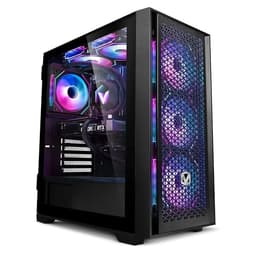
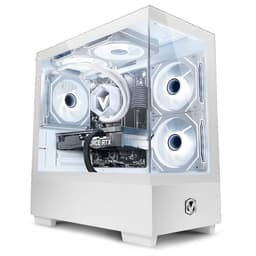
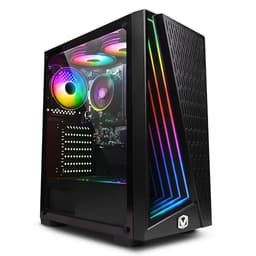
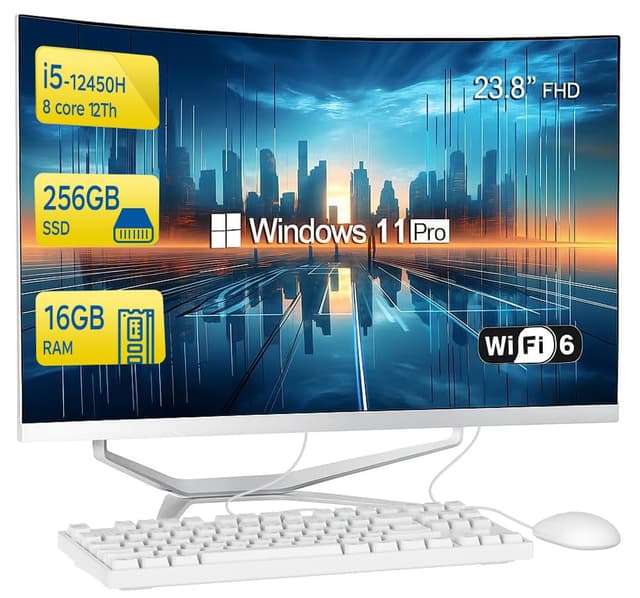
Vibox has carved out a solid reputation in the UK pre-built gaming PC market by offering factory-assembled machines that skip the complexity of self-building without demanding boutique-PC prices. Whether you are a first-time PC gamer looking for a reliable entry point or a seasoned player chasing 4K frame rates, there is a Vibox configuration aimed squarely at you. For 2026 the range has been refreshed with next-generation Nvidia RTX 50-series cards appearing across multiple tiers, making last year's GPU comparisons largely redundant. The arrival of the RTX 5060, RTX 5060 Ti and the flagship RTX 5090 inside Vibox chassis means buyers at every price point now have access to DLSS 4 and improved ray-tracing hardware. This guide covers six current Vibox desktops available in the UK, ranked by editorial merit, with detailed specs, honest pros and cons, and clear guidance on which machine suits which type of buyer.
Quick Verdict
Best Overall: Vibox VII-109 Gaming PC Bundle. The combination of an Intel Core i7-12700KF, the new RTX 5060 8GB and a complete monitor bundle at under £1,200 makes it the most balanced all-round package in the current Vibox lineup.
Best Value: Vibox II-109 Gaming PC. An RTX 5060 Ti paired with a Core i5-10400F delivers genuine 1080p and capable 1440p gaming for under a thousand pounds, making it the standout budget pick for 2026.
The Vibox VII-109 is the machine most buyers should look at first. It pairs Intel's capable Core i7-12700KF, which boosts to 5.0GHz and features twelve cores in a hybrid performance-plus-efficiency configuration, with Nvidia's brand-new GeForce RTX 5060 8GB. That GPU sits in the sweet spot of the RTX 50 series: it brings DLSS 4 with Multi Frame Generation, Ada-successor architecture improvements, and enough VRAM to handle 1440p gaming at high settings without compromise. The bundle nature of this listing means you also receive a monitor, keyboard and mouse in the box, which is genuinely useful if you are building a gaming setup from scratch and want to avoid the hassle of sourcing peripherals separately.
The Core i7-12700KF is a strong CPU choice for this price bracket. Its eight performance cores and four efficiency cores handle modern titles that are increasingly multi-threaded, and it remains competitive with newer-generation mid-range processors in gaming workloads. Paired with 16GB of RAM and a 1TB SSD, the system has enough headroom for a decent game library and fast load times. Windows 11 Home comes pre-installed, so you are ready to game out of the box.
Who is this for? It suits the buyer who wants a complete, no-fuss gaming setup capable of running current AAA titles at 1440p with high frame rates. The bundle peripherals make it especially good value for those upgrading from a console or building their first dedicated gaming space. Streamers and content creators who need a capable CPU for encoding alongside solid gaming performance will also find this machine punches above its price.
The main caveat is that the RTX 5060 carries 8GB of VRAM. While that is sufficient for 1440p today, some future titles at 4K ultra settings may push against that limit. The 1TB SSD is also on the modest side if you plan to install a large library of modern games, many of which exceed 100GB each. An external drive or second internal SSD would be a sensible addition down the line.
Verdict: The VII-109 bundle is the most rounded Vibox desktop available in 2026. It combines a genuinely modern GPU, a strong CPU, and a complete peripheral bundle at a price that undercuts many rivals. It earns the Best Overall award comfortably.
Pros
- RTX 5060 brings DLSS 4 and Multi Frame Generation for excellent 1440p frame rates
- Core i7-12700KF offers twelve cores for smooth gaming and multitasking
- Bundle includes monitor, keyboard and mouse, reducing total setup cost
Cons
- 8GB VRAM may feel limited at 4K ultra settings in future titles
- 1TB SSD fills quickly with a modern game library
At the top of the Vibox range sits the VIII-75, a machine built around the Intel Core i9-12900KF and the extraordinary Nvidia GeForce RTX 5090 32GB. This is unambiguously a flagship configuration. The RTX 5090 is the most powerful consumer graphics card Nvidia has ever produced, featuring a massive 32GB of GDDR7 VRAM and enough shader cores to deliver native 4K gaming at ultra settings in virtually every current title, often with frame rates that make a 144Hz or even 240Hz monitor worthwhile. The 32GB of GDDR7 also future-proofs the machine against the increasing VRAM demands of AI-assisted rendering and next-generation game engines.
The Core i9-12900KF remains a formidable processor. Its sixteen-core, twenty-four-thread configuration handles not just gaming but also video editing, 3D rendering, and streaming without breaking a sweat. Vibox has paired it with 32GB of RAM, which is the right amount for a machine at this price, and a 2TB NVMe SSD that provides both speed and meaningful storage capacity. Windows 11 comes pre-installed and the system ships ready to use.
Who is this for? The VIII-75 is aimed at buyers who refuse to compromise on performance. It suits 4K gamers, content creators who need GPU acceleration for video work, and enthusiasts who simply want the best Vibox can offer. It is also a sensible choice for anyone who wants to buy once and not think about upgrading for several years, as the RTX 5090 is unlikely to feel underpowered in gaming workloads for the foreseeable future.
The price is significant. At Check price, this is a serious investment, and buyers should be honest with themselves about whether they actually need RTX 5090 performance. If your monitor tops out at 1080p or 1440p, the GPU's capabilities will be underutilised. The machine also does not include a monitor bundle, so factor that into your total outlay. That said, for those who genuinely need this level of performance, the VIII-75 represents a well-assembled package from a brand with a track record of reliable UK pre-builds.
It is also worth noting that the Core i9-12900KF, while excellent, is a 12th-generation Intel chip rather than a current-generation processor. In CPU-limited scenarios, a newer architecture might edge ahead, though in practice the difference is negligible for gaming and most creative workloads.
Verdict: The VIII-75 is the most powerful desktop in the Vibox catalogue and justifies its price for buyers who need flagship 4K performance. It is overkill for casual gamers but a genuinely impressive machine for those who will use every ounce of it.
Pros
- RTX 5090 32GB delivers the fastest consumer gaming performance available in 2026
- 32GB RAM and 2TB NVMe SSD are genuinely future-proof specifications
- Core i9-12900KF handles demanding creative workloads alongside gaming
Cons
- High price makes it poor value for anyone gaming below 4K resolution
- No monitor or peripheral bundle included at this price point
- 12th-gen Intel CPU may feel dated compared to current-generation alternatives from rivals
The Vibox II-109 earns the Best Value award by slotting an Nvidia RTX 5060 Ti 8GB into a system priced under £1,000. The RTX 5060 Ti sits a step above the standard RTX 5060, offering higher shader counts and better rasterisation performance, which translates to noticeably higher frame rates at 1440p and a more comfortable 4K experience when DLSS 4 is enabled. For buyers who want next-generation GPU architecture without spending flagship money, this is a compelling proposition.
The processor is an Intel Core i5-10400F running at up to 4.3GHz. This is a 10th-generation chip, which means it is older than the 12th-gen processors found in other Vibox machines. In practice, the i5-10400F remains a capable six-core, twelve-thread processor that handles 1080p and 1440p gaming without significant bottlenecking. It is not a chip that will impress benchmark enthusiasts, but it does the job for the majority of gaming scenarios. The more important component in a gaming PC is the GPU, and the RTX 5060 Ti is genuinely strong.
Who is this for? The II-109 suits the budget-conscious buyer who wants the best possible GPU for the money and is willing to accept an older CPU. Students, younger gamers, and those upgrading from ageing systems will find this machine a substantial step forward. It is also a good choice for anyone who plans to upgrade the CPU themselves later, as the older platform may limit future upgrade paths but keeps the initial cost down.
The 16GB of RAM is appropriate for gaming in 2026, and the 1TB SSD provides adequate storage for a reasonable game library. Windows 11 is pre-installed. The absence of a monitor bundle means you will need to source a display separately, which is worth factoring into the overall budget. The older CPU is the primary long-term concern: as games become more CPU-intensive, the i5-10400F may become a bottleneck before the GPU does, which is an unusual situation given the GPU's strength.
Overall, the II-109 is a machine that makes a clear trade-off: a newer, faster GPU at the expense of CPU modernity. For pure gaming at 1080p and 1440p, that trade-off works in the buyer's favour. The RTX 5060 Ti will handle current titles with ease, and DLSS 4 helps maintain high frame rates even when the CPU is under pressure.
Verdict: If your primary goal is the best GPU performance per pound in the Vibox range, the II-109 delivers it. The older CPU is a compromise, but one that makes sense given the price and the GPU on offer.
Pros
- RTX 5060 Ti 8GB offers strong 1440p performance at under £1,000
- DLSS 4 support future-proofs the GPU for AI-assisted frame generation
Cons
- Core i5-10400F is a 10th-gen chip that may bottleneck the GPU in CPU-heavy titles
- No monitor or peripheral bundle included
- Older platform limits future CPU upgrade options
The Vibox V-196 is an interesting proposition in the 2026 lineup. It pairs an AMD Ryzen 5 5500 with an Nvidia GeForce RTX 4060 8GB, making it the only machine in the current Vibox range to feature a last-generation GPU rather than an RTX 50-series card. That might sound like a disadvantage, but the RTX 4060 remains a genuinely capable card for 1080p gaming and handles 1440p well when DLSS 3 is active. The price reflects the older GPU, and the bundle nature of the listing, which includes a monitor, keyboard and mouse, adds meaningful value.
The Ryzen 5 5500 is a solid mid-range processor. Its six cores and twelve threads, running up to 4.2GHz, provide a well-balanced platform for gaming and everyday productivity. AMD's Zen 3 architecture delivers good instructions-per-clock performance, and the 5500 does not bottleneck the RTX 4060 in any meaningful way. The pairing is coherent and well-matched. The 16GB of DDR4 RAM running at 3200MHz is appropriate for this tier, and the 1TB NVMe SSD is a welcome inclusion that ensures fast game load times.
Who is this for? The V-196 suits buyers who want a complete gaming setup, including a monitor, at a price that covers everything in one transaction. It is particularly well-suited to those moving from a console or an older PC who do not own any PC peripherals. The RTX 4060 handles 1080p at high to ultra settings in virtually every current game, and at 1440p it performs respectably with DLSS enabled. For esports titles, the frame rates are excellent.
The main consideration is the GPU generation. Buyers who are spending over £2,000 might reasonably expect an RTX 50-series card, and the absence of DLSS 4 and Multi Frame Generation is a genuine limitation compared to the VII-109 bundle, which costs less. The V-196 makes more sense if the bundle peripherals are genuinely needed and if the buyer is primarily a 1080p gamer who does not need the absolute latest GPU architecture.
Windows 11 is pre-installed, and the AMD platform offers a degree of upgrade flexibility for those who might want to step up to a Ryzen 7 5000-series processor in the future without changing the motherboard. The NVMe SSD is a particularly nice touch at this price, providing noticeably faster load times than a standard SATA SSD.
Verdict: The V-196 bundle is a complete, coherent gaming setup for 1080p to 1440p gaming. The RTX 4060 is capable if not cutting-edge, and the bundle value is real. It sits behind the VII-109 primarily because that machine offers a newer GPU at a lower price.
Pros
- Complete bundle with monitor, keyboard and mouse reduces overall setup cost
- 1TB NVMe SSD delivers fast load times across the whole game library
- Ryzen 5 5500 and RTX 4060 are a well-matched, coherent pairing for 1080p gaming
Cons
- RTX 4060 lacks DLSS 4 and Multi Frame Generation available on RTX 50-series cards
- Priced higher than the VII-109 bundle despite a less capable GPU
The Vibox VIII-544 presents an unusual configuration: it takes the powerful Intel Core i9-12900KF, the same flagship CPU used in the £1,789 VIII-75, and pairs it with an Nvidia GeForce RTX 3050 6GB. That is a significant mismatch between CPU and GPU capability. The i9-12900KF is a sixteen-core processor capable of handling virtually any workload you can throw at it, but the RTX 3050 6GB is a modest graphics card that sits at the bottom of Nvidia's current-generation stack and carries only 6GB of VRAM, which is becoming a constraint in modern titles.
The result is a machine that excels at CPU-intensive tasks but will feel GPU-limited in demanding games. At 1080p with medium to high settings, the RTX 3050 6GB delivers playable frame rates in most titles, but it struggles at 1440p in graphically demanding games and has no realistic path to 4K gaming. The 6GB VRAM limit is already causing texture streaming issues in some 2025 and 2026 titles at higher settings.
Who is this for? The VIII-544 makes most sense for buyers who have a specific non-gaming use case in mind alongside occasional gaming. If you need a powerful workstation for tasks such as software compilation, data processing, video encoding, or running multiple virtual machines, the i9-12900KF is an excellent choice and the RTX 3050 handles light gaming duties adequately. It is less suitable as a pure gaming machine, where the CPU-GPU imbalance means you are paying for CPU performance you may not fully use in games.
The 16GB of RAM and 1TB SSD are reasonable specifications for the price, and Windows 11 is included. The machine is well-assembled in the Vibox tradition, and the i9-12900KF will not be a bottleneck for years. The concern is purely the GPU: at £949.95, the VIII-544 sits between the II-109 and the VII-109 in price, both of which offer significantly more capable graphics cards. Unless the specific CPU-heavy workload justification applies, those machines represent better value for gaming.
It is worth noting that the RTX 3050 does support DLSS, which helps maintain frame rates in supported titles, and the card is energy-efficient, keeping power consumption and heat output lower than higher-tier GPUs. For a home office machine that doubles as a light gaming PC, those characteristics have some appeal.
Verdict: The VIII-544 is a niche pick suited to buyers who need serious CPU power for productivity work and only game casually. As a gaming-first machine, the GPU is underpowered relative to the price and the CPU it is paired with.
Pros
- Core i9-12900KF handles demanding professional and creative workloads with ease
- RTX 3050 keeps power draw and heat output low, suitable for quieter home office environments
Cons
- RTX 3050 6GB is underpowered relative to the CPU and the asking price
- 6GB VRAM causes texture streaming issues in some current titles at higher settings
- Poor CPU-to-GPU balance makes it a poor choice for gaming-first buyers
The Vibox I-7 is the entry-level option in the current range, built around an AMD Ryzen 3 3200G with integrated Radeon Vega 8 graphics. This is a fundamentally different type of machine from every other entry in this guide: it has no discrete graphics card. The Vega 8 integrated GPU is built into the Ryzen 3 3200G processor itself, which means gaming performance is limited to what integrated graphics can deliver. In 2026, that means low settings at 1080p in older or less demanding titles, and very limited performance in modern AAA games.
The Ryzen 3 3200G is a four-core, four-thread processor running at up to 4.0GHz. It is a capable chip for everyday computing tasks: web browsing, office applications, video streaming, and light productivity work all run smoothly. The 16GB of RAM is a generous allocation for a machine at this price and helps the integrated GPU, which shares system memory, perform better than it would with less RAM. The 1TB storage provides ample space for files, applications, and a modest game library of older or less demanding titles.
Who is this for? The I-7 is not a gaming PC in the conventional sense. It is better described as a general-purpose home or office computer that can handle light gaming on the side. It suits buyers who primarily need a reliable Windows 11 machine for everyday tasks and want to play older games, indie titles, or esports games such as League of Legends, CS2 at low settings, or Minecraft. It is also a reasonable choice for someone who plans to add a discrete graphics card later, as the platform supports GPU upgrades.
At £489.95, the I-7 is the most affordable Vibox desktop available. For buyers on a strict budget who need a functional PC rather than a gaming powerhouse, it fulfils that brief. However, anyone whose primary goal is gaming should stretch their budget to the II-109 if at all possible, as the RTX 5060 Ti in that machine represents a transformative upgrade in gaming capability.
The absence of a discrete GPU is the defining limitation. Integrated graphics have improved considerably in recent years, but Radeon Vega 8 is not a recent integrated GPU solution, and it falls behind even entry-level discrete cards by a significant margin in gaming benchmarks. For the right buyer with the right expectations, the I-7 is a sensible, affordable machine. For anyone who wants to play modern games at reasonable settings, it will disappoint.
Verdict: The I-7 is a budget-friendly general-purpose PC that handles light gaming and everyday computing. It is the right choice only for buyers with modest gaming expectations or those who plan to add a discrete GPU later.
Pros
- Most affordable Vibox desktop, suitable for tight budgets
- 16GB RAM is generous for an integrated-graphics machine and aids Vega 8 performance
Cons
- Radeon Vega 8 integrated graphics cannot handle modern AAA titles at acceptable settings
- Ryzen 3 3200G is a four-core chip that will feel limited as games become more CPU-intensive
- Poor long-term gaming value compared to even the cheapest discrete-GPU options
Buying Guide
GPU: the most important decision
In a gaming PC, the graphics card determines what resolution and settings you can play at. For 1080p gaming in 2026, an RTX 5060 or RTX 4060 is more than sufficient. For 1440p, the RTX 5060 Ti or RTX 5060 with DLSS 4 enabled will deliver high frame rates in virtually all current titles. For 4K gaming, the RTX 5090 is the only card in the Vibox range that handles it natively at ultra settings. Pay close attention to VRAM: 8GB is the practical minimum for 1440p in 2026, and 6GB cards are already showing limitations in some titles. If you are buying a machine you want to last three to four years, prioritise VRAM capacity alongside raw performance.
CPU: cores matter more than clock speed
Modern games increasingly use multiple CPU cores, so a six-core or higher processor is preferable. The Intel Core i7-12700KF and i9-12900KF in the upper Vibox models offer twelve and sixteen cores respectively, providing headroom for both gaming and background tasks such as streaming or recording. The Core i5-10400F in the II-109 is a capable six-core chip but represents an older architecture. The Ryzen 5 5500 is a strong mid-range choice with good gaming performance. For most buyers, any of the six-core-and-above processors in this range will be adequate for gaming through 2026 and beyond.
RAM: 16GB is the baseline
All Vibox machines in this guide ship with at least 16GB of RAM, which is the practical minimum for gaming in 2026. The VIII-75's 32GB is beneficial for content creation and future-proofing but not strictly necessary for gaming alone. DDR4 at 3200MHz, as found in the V-196, is a sensible speed for the Ryzen 5 5500 platform. If you plan to run memory-intensive applications alongside games, 32GB is worth considering.
Storage: NVMe SSD is the standard to aim for
NVMe SSDs load games and applications significantly faster than SATA SSDs or hard drives. Several Vibox machines include NVMe storage, which is the preferred option. 1TB is adequate for a moderate game library, but modern AAA titles can exceed 100GB each, so budget for an external drive or plan to manage your library actively. The VIII-75's 2TB NVMe SSD is the most generous allocation in the range.
Bundle value: genuine saving or marketing?
Vibox offers several machines as bundles with monitors, keyboards and mice included. These can represent genuine savings if you need all the components, particularly for buyers setting up a gaming space from scratch. However, if you already own a capable monitor, a standalone machine may offer better value at a lower price. The VII-109 bundle is particularly well-priced relative to its components.
DLSS generation: why it matters in 2026
Nvidia's DLSS 4 with Multi Frame Generation, available on RTX 50-series cards, can multiply effective frame rates significantly in supported titles. This means an RTX 5060 can deliver frame rates that would previously have required a much more expensive card. When comparing RTX 40-series and RTX 50-series machines, factor in this generational advantage: the newer GPU architecture offers more than just raw performance improvements.
The Vibox VII-109 Gaming PC Bundle is the overall winner. It brings a genuinely next-generation GPU in the RTX 5060 8GB, a strong twelve-core CPU in the Core i7-12700KF, and a complete monitor and peripheral bundle, all at a price that sits comfortably under £1,200. For most UK buyers in 2026, it offers the best combination of current performance, future-proofing through DLSS 4 support, and practical value. The II-109 earns the Best Value award for those on a tighter budget who want the strongest possible GPU for under £1,000. The VIII-75 is the right choice only for committed 4K enthusiasts who will genuinely use the RTX 5090's capabilities. The V-196 bundle suits buyers who need peripherals included and primarily game at 1080p. The VIII-544 is a niche pick for productivity-first users, and the I-7 is for those with very modest gaming expectations or a plan to add a GPU later.