Content creators demand more from a processor than almost any other type of PC user. Whether you are cutting 4K footage in DaVinci Resolve, rendering complex 3D scenes in Blender, exporting a podcast in Adobe Audition, or juggling a live stream alongside a game capture, your CPU is the single component that determines how long you wait and how smoothly your workflow runs. Since last year, AMD's Ryzen 9000 series has arrived on AM5 with improved efficiency and stronger single-threaded performance, while Intel's 14th-generation desktop line continues to offer high core counts at competitive prices. The result is a market where creators at every budget level have genuinely good options. This article covers six processors chosen specifically for creative workloads, from affordable entry-level chips for hobbyists to high-core-count workhorses for professionals who cannot afford to waste time waiting on exports.
Quick Verdict
Best Overall: AMD Ryzen 7 9700X. It delivers an excellent balance of single-threaded speed, multi-threaded throughput, and platform longevity on AM5, making it the most well-rounded pick for serious content creators without requiring a top-tier budget.
Best Value: AMD Ryzen 5 9600X. It brings next-generation AM5 architecture to a surprisingly accessible price point, offering meaningfully better performance-per-pound than older AM4 chips for creators who want a future-proof foundation.
The AMD Ryzen 7 9700X is the processor we would recommend to the majority of content creators building or upgrading a workstation in 2025. It sits at the intersection of affordability and genuine professional capability, and it does so on AMD's AM5 platform, which means DDR5 memory support and a socket that AMD has committed to supporting for years to come. For creators, that platform longevity matters: you can upgrade to a faster chip down the line without replacing your motherboard.
The 9700X uses AMD's Zen 5 architecture, which brings meaningful improvements in instructions-per-clock compared to Zen 4. In practical terms, this translates to noticeably faster single-threaded workloads, which matter more than many creators realise. Applications like Adobe Premiere Pro and Lightroom Classic are not purely multi-threaded; they rely heavily on fast single-core performance for timeline scrubbing, real-time previews, and certain export operations. The 9700X's 5.5 GHz maximum boost clock delivers exactly that kind of responsiveness.
With eight cores and sixteen threads, the 9700X handles multi-threaded rendering in Blender, Cinebench, and similar tools with genuine competence. It is not the fastest chip in this roundup for pure multi-threaded workloads, but it punches well above its core count thanks to the architectural efficiency of Zen 5. The 65W TDP is also remarkably low for a chip of this calibre, meaning you do not need an expensive 360mm AIO cooler, and your system will run cooler and quieter during long export sessions.
Creators who work with high-resolution photography in Capture One or Lightroom will appreciate the snappy single-core performance, while video editors working in 1080p or 4K will find the 9700X more than capable of handling complex timelines with multiple effects layers. It is also a strong streaming chip when paired with a dedicated GPU encoder, as the cores handle game capture and encoding simultaneously without significant frame rate penalties.
The one caveat is that AM5 motherboards and DDR5 memory add to the overall system cost compared to an AM4 build. However, given that AM4 is a mature and ageing platform, the investment in AM5 makes considerably more sense for anyone building a workstation intended to last three to five years.
Verdict: The best all-round CPU for content creators who want a fast, efficient, and future-proof processor without spending flagship money.
Pros
- Zen 5 architecture delivers excellent single-threaded and multi-threaded performance for creative apps
- 65W TDP keeps thermals and noise low during long export sessions
- AM5 platform ensures long-term upgrade path with DDR5 support
Cons
- AM5 motherboard and DDR5 RAM add to overall build cost versus AM4
- No integrated graphics, so a discrete GPU is required even for basic display output
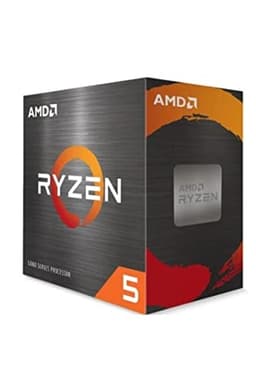
The AMD Ryzen 5 9600X is the best-value entry point into AMD's Zen 5 generation, and for content creators on a tighter budget it represents a genuinely compelling proposition. Six cores and twelve threads might sound modest in 2025, but the Zen 5 architecture wrings considerably more performance out of those cores than the equivalent Zen 4 or Zen 3 chips, and the 5.4 GHz maximum boost clock ensures that single-threaded tasks feel snappy and responsive.
For creators whose workloads are not massively parallelised, the 9600X is often surprisingly competitive. Photo editing in Lightroom or Photoshop, audio production in Ableton Live or Logic Pro (via Hackintosh notwithstanding), podcast editing in Audition, and even moderate video editing in Premiere Pro all benefit more from fast single-core performance than from a large number of slower cores. The 9600X delivers that fast single-core performance at a price that undercuts the 9700X by a meaningful margin.
Where the 9600X does show its limitations is in heavily parallelised workloads. Blender CPU renders, large Handbrake encodes, and complex multi-layer 4K timelines with heavy colour grading will complete noticeably faster on an eight-core chip. If your primary workflow involves long CPU render queues, the extra spend on the 9700X is justified. However, if you are a YouTuber cutting talking-head content, a photographer processing RAW files, or a podcaster doing audio work, the 9600X will handle your day-to-day tasks without complaint.
The chip also benefits from AM5's DDR5 memory bandwidth, which helps in memory-bandwidth-sensitive creative applications. It ships with AMD's Wraith Stealth cooler in some retail configurations, though for sustained workloads a modest aftermarket cooler is recommended to maintain peak boost clocks over extended periods.
The 9600X's 65W TDP means it is genuinely quiet under typical creator workloads, and the integrated Radeon graphics (present in some SKU variants, though not universally) can handle display output if you do not yet have a dedicated GPU. Overall, this is the chip to buy if you want next-generation architecture without stretching to an eight-core chip.
Verdict: The smartest budget pick for creators who want Zen 5 performance and AM5 platform longevity without the eight-core price tag.
Pros
- Zen 5 architecture offers a genuine generational leap in IPC over Zen 3 and Zen 4
- 65W TDP and efficient design keep system noise low during everyday creative tasks
- AM5 platform provides DDR5 bandwidth and a long-term upgrade path
Cons
- Six cores show their limits in heavily parallelised workloads like Blender CPU renders
- AM5 platform costs more to build on than a comparable AM4 system
The Intel Core i9-14900 is a formidable processor for content creators who need raw multi-threaded throughput above all else. With 24 cores, comprising eight performance cores and sixteen efficiency cores, it offers a thread count that few competing chips at any price can match. For workloads that scale well across many threads, such as Blender CPU rendering, large Handbrake video encodes, or running multiple virtual machines alongside a creative suite, the i9-14900 is genuinely impressive.
It is worth noting that this is the non-K variant, meaning it is not unlocked for overclocking and has a lower base TDP of 65W, though it can still boost to 219W under sustained multi-threaded load. In practice, this means you will want a capable cooler and a motherboard with solid power delivery to get the best out of it. The performance headroom is substantial: in Cinebench R23 multi-core, the i9-14900 competes with chips costing considerably more, and in real-world video export tests it consistently delivers fast completion times.
For video editors working in 4K or 8K, the i9-14900's combination of high core count and Intel's Quick Sync hardware video encoder, built into the integrated Intel UHD 770 graphics, is particularly useful. Quick Sync accelerates H.264, H.265, and AV1 encoding in supported applications including DaVinci Resolve and Premiere Pro, meaning exports that would take minutes on a pure CPU can complete in a fraction of the time. This is a meaningful real-world advantage for creators who export frequently.
The integrated graphics also provide a fallback display output if you are waiting on a GPU, which is a minor but practical benefit. The LGA1700 platform is mature and well-supported, with a wide range of motherboard options at various price points, and DDR4 compatibility keeps memory costs down compared to an AM5 build.
The downsides are real, however. Intel's 14th-generation chips have faced scrutiny over stability issues at high power levels, and the platform is approaching end-of-life as Intel moves to LGA1851. If you are building a workstation intended to last five years, the upgrade path on LGA1700 is limited. For creators who want maximum performance today and plan to do a full platform refresh in a few years, the i9-14900 makes a strong case.
Verdict: The best choice for creators who prioritise maximum multi-threaded throughput and value Intel's Quick Sync hardware encoding acceleration.
Pros
- 24 cores deliver class-leading multi-threaded performance for rendering and encoding workloads
- Intel Quick Sync hardware encoder dramatically accelerates video exports in supported apps
- Mature LGA1700 platform with wide motherboard choice and DDR4 compatibility
Cons
- LGA1700 platform is approaching end-of-life with limited future upgrade options
- Sustained multi-threaded workloads push power draw well above the 65W base TDP, requiring a capable cooler
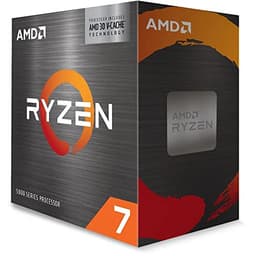
The AMD Ryzen 7 5800X3D occupies a genuinely unusual position in this roundup. It was designed primarily as a gaming chip, with AMD's 3D V-Cache technology stacking an additional 64MB of L3 cache on top of the standard die to create a total of 96MB of cache. This enormous cache primarily benefits games, where keeping more data close to the CPU cores reduces latency. However, certain creative workloads also benefit from large cache sizes, and the 5800X3D deserves consideration from creators who also game heavily on the same machine.
For content creation specifically, the 5800X3D performs broadly similarly to the standard Ryzen 7 5800X in most scenarios. Video editing, photo processing, and audio work are not typically cache-bound in the way that games are, so the 3D V-Cache provides limited uplift in those tasks. Where it does help is in certain simulation and scientific computing workloads, and in applications that process large datasets that benefit from reduced memory latency.
The chip's maximum boost clock of 4.5 GHz is lower than most of its AM4 contemporaries, as the additional cache layer adds heat and prevents AMD from pushing clock speeds as high. This means the 5800X3D can actually trail a standard Ryzen 5 5600X in lightly-threaded creative tasks that depend on raw clock speed. For a creator whose machine doubles as a gaming rig, this trade-off may be entirely acceptable, but for a dedicated workstation it is a consideration worth weighing.
The AM4 platform is mature and cost-effective, with a wide range of compatible motherboards available at competitive prices. DDR4 memory is inexpensive and widely available. However, AM4 is a legacy platform at this point, and anyone building from scratch should consider whether the AM5 ecosystem offers better long-term value despite the higher entry cost.
At its current price point, the 5800X3D is best suited to the creator-gamer hybrid: someone who wants a single machine that handles both demanding creative work and the latest games at high frame rates, without building two separate systems.
Verdict: The ideal pick for creators who also game seriously and want a single chip that excels at both without compromise on the gaming side.
Pros
- 96MB 3D V-Cache makes it one of the best gaming CPUs on AM4, ideal for dual-purpose creator-gamer builds
- Eight cores handle multi-threaded creative workloads competently alongside gaming duties
Cons
- Lower 4.5 GHz boost clock means it trails newer chips in clock-speed-sensitive creative tasks
- AM4 is a legacy platform with no meaningful upgrade path beyond existing chips
- 3D V-Cache premium adds cost without proportional benefit for pure creative workloads
The AMD Ryzen 5 5600X was one of the most celebrated mainstream processors of its generation when it launched, and even in 2025 it remains a capable and cost-effective option for content creators who are working with an existing AM4 platform or building a budget workstation on a strict spend limit. At its current price, it offers strong performance-per-pound for the kinds of creative tasks that do not require enormous core counts.
Six cores and twelve threads running at up to 4.6 GHz give the 5600X a solid foundation for photo editing, audio production, 1080p and light 4K video editing, and streaming. The Zen 3 architecture, while now two generations old, was a significant leap over Zen 2 in instructions-per-clock, and it still holds up well against competing chips at similar price points. For creators who are not yet ready to invest in an AM5 platform, the 5600X represents a sensible upgrade from older Ryzen 3000 or Intel 9th-generation chips.
The chip ships with AMD's Wraith Stealth cooler, which is adequate for everyday use but may throttle slightly under sustained heavy loads. An aftermarket cooler costing around £30 to £40 will unlock consistent peak performance during long Blender renders or Handbrake encodes. The 65W TDP keeps the system cool and quiet under typical creative workloads, which is a genuine quality-of-life benefit during long editing sessions.
Where the 5600X shows its age is in heavily parallelised workloads and in the raw IPC advantage that Zen 5 chips now offer. If you are doing serious 3D rendering, 8K video work, or running multiple creative applications simultaneously, the newer Ryzen 5 9600X offers meaningfully better performance at a similar price point. However, for creators upgrading an existing AM4 system, the 5600X is a straightforward and affordable improvement that requires no platform investment.
It is also worth noting that the used and refurbished market for 5600X chips is healthy, meaning savvy buyers can often find them at prices well below the new retail figure, stretching the value proposition even further.
Verdict: A reliable budget pick for creators on AM4 or those building a no-frills workstation, though newer AM5 options offer better long-term value at comparable prices.
Pros
- Excellent price-to-performance ratio for everyday creative tasks including photo editing and 1080p video work
- Includes Wraith Stealth cooler, reducing the total build cost for budget-conscious creators
- Wide AM4 motherboard compatibility makes it easy to drop into existing systems
Cons
- Zen 3 architecture is now two generations behind, with newer chips offering noticeably better IPC
- AM4 platform offers no meaningful upgrade path beyond existing Ryzen 5000 series chips
Buying Guide
Core Count vs Clock Speed
One of the most common misconceptions among creators buying their first workstation CPU is that more cores always means better performance. The reality is more nuanced. Many creative applications, including Adobe Lightroom, Capture One, and audio production software, are not fully multi-threaded and rely heavily on single-core performance. A chip with six fast cores will often outperform an eight-core chip with slower cores in these applications. Conversely, 3D rendering in Blender, video encoding in Handbrake, and certain effects-heavy export workflows in DaVinci Resolve scale well across many cores. Identify your primary workload before prioritising core count over clock speed.
Platform Choice: AM4 vs AM5 vs LGA1700
Platform choice has long-term implications beyond the CPU purchase itself. AM4 is a mature, cost-effective platform with a wide range of motherboards and cheap DDR4 memory, but it has no future upgrade path. AM5 is AMD's current platform, supporting DDR5 and offering a roadmap of future processors. LGA1700 is Intel's current mainstream socket, though it is expected to be replaced with LGA1851 for future generations. For a workstation you plan to keep for three to five years, AM5 offers the strongest upgrade path. For a budget build where you plan to replace the entire system in two years, AM4 remains cost-effective.
Integrated Graphics
Most AMD Ryzen chips aimed at creators do not include integrated graphics, meaning you need a discrete GPU for display output. The exceptions in this roundup are the Ryzen 5 7600 and Ryzen 5 9600X, which include Radeon integrated graphics. Intel's Core i9-14900 includes Intel UHD 770 with Quick Sync, which is particularly valuable for video creators as it accelerates hardware encoding. If you are building a workstation without a dedicated GPU, or if Quick Sync acceleration is important to your workflow, factor this into your decision.
Thermal Design and Cooling
Content creation workloads often involve sustained high CPU utilisation during long exports or renders. A chip with a 65W TDP like the Ryzen 7 9700X or Ryzen 5 9600X will maintain its boost clocks more easily under sustained load and will run quieter with a modest cooler. Higher-TDP chips like the Intel i9-14900 can draw over 200W under full multi-threaded load, requiring a more capable cooling solution and potentially a higher-rated power supply. Consider your working environment: a quiet office benefits from a lower-TDP chip even if it means slightly longer export times.
Memory Bandwidth
DDR5 memory, supported by AM5 and newer Intel platforms, offers higher bandwidth than DDR4. This matters for memory-bandwidth-sensitive creative tasks such as large-resolution image processing, 8K video editing, and certain machine learning acceleration workloads. If your work involves processing very large files or datasets, the bandwidth advantage of DDR5 is a genuine benefit rather than a marketing talking point. For most creators working in 1080p or 4K, DDR4 bandwidth is sufficient.
Budget Allocation
A common mistake is spending the majority of a workstation budget on the CPU at the expense of RAM and storage. For most creative workflows, 32GB of RAM is the practical minimum, with 64GB recommended for 4K video work or complex 3D scenes. Fast NVMe storage dramatically reduces project load times and preview cache performance. If you are choosing between a top-tier CPU with 16GB of RAM and a mid-range CPU with 32GB of RAM, the latter will almost always deliver a better real-world creative experience.
For the majority of content creators in 2025, the AMD Ryzen 7 9700X is the processor to buy. It combines the generational performance improvements of Zen 5 architecture with a 65W thermal profile that keeps systems quiet and cool during long sessions, eight cores that handle both single-threaded and multi-threaded creative workloads with genuine competence, and the long-term upgrade path of AMD's AM5 platform. It is not the cheapest option, and it is not the chip with the highest raw multi-threaded score, but it is the most balanced and future-proof choice for a creator who wants a workstation that will serve them well for years. Creators on a tighter budget should look seriously at the Ryzen 5 9600X, which brings Zen 5 to a lower price point and represents the best value in this roundup. Those who need maximum multi-threaded throughput for professional rendering work will find the Intel Core i9-14900 hard to ignore at its price, particularly given the Quick Sync hardware encoding advantage for video-heavy workflows.