Coding large codebases puts a very different set of demands on a processor compared to gaming or general productivity. When you are running incremental builds, full recompiles, static analysis tools, language servers, and multiple Docker containers simultaneously, raw core count, cache size, and memory bandwidth all matter far more than single-thread burst speed. Developers working in languages like C++, Rust, Java, or TypeScript with monorepo setups will feel the difference between a six-core and a sixteen-core chip every single working day. Since last year, AMD has pushed the AM5 platform further into the mainstream with the Ryzen 9000 series, bringing improved IPC and larger caches at competitive prices, while Intel's 14th-generation desktop line continues to offer strong multi-threaded throughput. This guide focuses on processors that deliver fast compile times, comfortable multitasking headroom, and good value for developers building, testing, and debugging large projects.
Quick Verdict
Best Overall: AMD Ryzen 7 9700X. Eight Zen 5 cores, a 65 W TDP, and excellent IPC make it the most balanced chip for sustained coding workloads in 2024. Best Value: AMD Ryzen 5 9600X. Six Zen 5 cores at a price that undercuts most of the competition while still delivering faster compile times than older generation equivalents.
The Ryzen 7 9700X is the processor we would recommend to most developers building large codebases in 2024. It sits on AMD's current AM5 platform, which means it has a long upgrade path ahead of it, and it brings AMD's Zen 5 architecture to eight cores and sixteen threads at a surprisingly modest 65 W TDP. That low thermal envelope is genuinely useful in a developer workstation: you can run it on a modest air cooler, keep noise levels low during long compile sessions, and slot it into a compact mid-tower without worrying about thermals.
For coding workloads specifically, the 9700X hits a sweet spot. The jump in IPC from Zen 4 to Zen 5 is meaningful, with AMD claiming roughly a 16 per cent improvement in instructions per clock. In practice, this translates to noticeably faster incremental builds in CMake-based C++ projects and quicker TypeScript compilation in large monorepos. The 40 MB of combined L2 and L3 cache keeps frequently accessed code and data close to the cores, which matters when a language server like clangd or rust-analyzer is constantly reading symbol tables and index files in the background.
Eight cores and sixteen threads means you can comfortably run a full parallel build with make -j16 or cargo build --jobs 16 while simultaneously keeping your IDE, a browser with documentation, and a running Docker container all active without any perceptible slowdown. Developers using JetBrains IDEs or VS Code with heavy extensions will appreciate the headroom. The 9700X also supports DDR5 memory natively, and pairing it with fast DDR5-6000 RAM will further improve compile throughput by reducing memory latency on large link steps.
The chip does not include integrated graphics, so you will need a discrete GPU or to choose a different processor if you are building a system without a dedicated card. It also commands a modest premium over the 9600X, though for developers who compile frequently, the extra two cores pay for themselves in time saved within weeks of daily use.
Verdict: The best all-round CPU for developers working on large codebases who want current-generation performance, a low power draw, and a platform with longevity.
Pros
- Zen 5 IPC improvements deliver genuinely faster compile times versus Zen 4 at the same core count
- 65 W TDP keeps the system cool and quiet during sustained build sessions
- AM5 socket provides a multi-year upgrade path without changing motherboard
Cons
- No integrated graphics, requiring a discrete GPU for display output
- Costs more than the 9600X for two additional cores that casual coders may not fully utilise
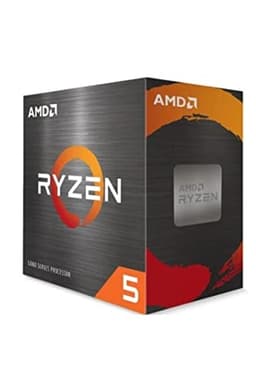
For developers who want the performance benefits of AMD's Zen 5 architecture without spending as much as an eight-core chip demands, the Ryzen 5 9600X is an exceptionally strong option. Six cores and twelve threads sounds modest compared to some of the other chips on this list, but the Zen 5 IPC improvements mean this processor outpaces the previous-generation Ryzen 5 7600 by a meaningful margin in compile-heavy workloads, and it comfortably beats older AM4 six-core chips that were considered fast just two years ago.
The 9600X runs at a 65 W TDP, making it one of the most thermally efficient processors available for serious development work. It boosts to 5.4 GHz on a single core, which helps with tasks that are inherently single-threaded, such as linking large binaries or running sequential test suites. The 38 MB of total cache is a significant upgrade over the 35 MB found in AM4 Ryzen 5 chips, and the improved cache hierarchy in Zen 5 means fewer cache misses during complex build graphs.
In day-to-day development, the 9600X handles parallel builds with -j12 without breaking a sweat. Running a language server, a hot-reloading dev server, and a test watcher simultaneously is well within its capabilities. Developers working primarily in interpreted or JIT-compiled languages like Python, JavaScript, or Java will find the 9600X more than adequate, since those workloads tend to be less parallelised than native compilation pipelines.
The chip also sits on the AM5 platform, which is an important consideration for long-term value. If you buy a 600-series or 800-series AM5 motherboard today, you can upgrade to a higher-core-count Ryzen chip in the future without replacing the board. The 9600X does not include integrated graphics, so a discrete card is required. For developers on a strict budget who do not need a GPU, the Ryzen 5 5600X on AM4 remains a viable alternative, but anyone building a new system should strongly consider the AM5 platform for its longevity.
Verdict: The best value CPU for coding large codebases in 2024, combining Zen 5 IPC, a 65 W TDP, and AM5 platform benefits at a price that suits most budgets.
Pros
- Zen 5 architecture delivers strong compile performance well above its price point
- 65 W TDP makes it easy to cool quietly, ideal for a focused development environment
- AM5 platform ensures compatibility with future higher-core-count upgrades
Cons
- No integrated graphics, so a discrete GPU is required
- Six cores may feel limiting when running very large parallel builds alongside multiple heavy applications simultaneously
The Ryzen 7 9800X3D is AMD's flagship consumer processor for 2024, combining eight Zen 5 cores with AMD's 3D V-Cache technology to deliver a staggering 104 MB of total cache. While it was primarily designed and marketed as a gaming chip, the enormous cache has a secondary benefit that is directly relevant to developers: it dramatically reduces cache misses during complex, data-intensive workloads. Large codebases involve reading and processing enormous amounts of symbol data, header files, and intermediate representations, and having more of that data resident in cache reduces the time spent waiting on memory.
In compile benchmarks, the 9800X3D trades blows with the standard 9700X. The larger cache helps on certain workloads, particularly those involving many small files and frequent random access patterns, which is characteristic of header-heavy C++ projects or large Rust workspaces with many crates. The chip boosts to 5.7 GHz, the highest single-core speed in AMD's current consumer lineup, which benefits linking and other sequential steps in the build pipeline.
The trade-off is power consumption. The 9800X3D has a 120 W TDP, nearly double that of the 9700X, and you will need a capable cooler and a well-ventilated case to keep it running at its best during sustained all-core workloads. It is also the most expensive processor in this guide, which means it is primarily suited to developers for whom compile time is a direct productivity bottleneck and who also use their workstation for gaming or other cache-sensitive tasks.
For a pure development machine where you will never game, the 9700X is a more sensible purchase. But if you want a single machine that doubles as a high-performance gaming rig and a fast development workstation, the 9800X3D is the only chip that genuinely excels at both without compromise. The 104 MB cache also benefits virtual machine workloads, which many developers use for testing across different operating systems or kernel versions.
Verdict: The best option for developers who also game, or who work with extremely cache-sensitive build pipelines and want the fastest possible single-chip solution.
Pros
- 104 MB of 3D V-Cache reduces cache misses in large, header-heavy C++ and Rust builds
- 5.7 GHz boost clock accelerates single-threaded linking and sequential build steps
- Doubles as the fastest gaming CPU available, making it ideal for a combined work and gaming machine
Cons
- 120 W TDP requires a more capable cooler and case than the 65 W alternatives
- Significantly more expensive than the 9700X for marginal compile time gains in most codebases
- No integrated graphics despite its premium price
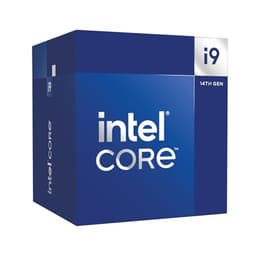
The Intel Core i9-14900 is the non-K variant of Intel's top consumer desktop processor, offering 24 cores split across eight Performance cores and sixteen Efficiency cores. For developers working on very large codebases where maximum parallel build throughput is the primary concern, the sheer core count of the i9-14900 is difficult to argue with. Running make -j32 or equivalent on a 24-core chip with hyperthreading produces a build thread count that no six or eight-core processor can match, and for genuinely massive C++ projects, the wall-clock time savings are substantial.
The hybrid architecture, combining P-cores for performance-sensitive tasks and E-cores for background work, is well suited to the mixed workload of a development machine. The operating system scheduler assigns foreground compile jobs to P-cores while E-cores handle background tasks like indexing, syncing, and running test watchers. In practice, this means the machine feels responsive even when a full rebuild is in progress, which is a quality-of-life improvement that developers who have experienced system slowdowns during builds will appreciate.
The i9-14900 has a base TDP of 65 W but can draw up to 219 W under sustained all-core turbo loads, so thermal management is important. You will need a high-quality air cooler or a 240 mm AIO liquid cooler to keep it running at full speed during long compile sessions. The LGA1700 platform is reaching the end of its life with Intel moving to LGA1851 for Arrow Lake, so this chip offers less future upgrade flexibility than an AM5 build.
It supports DDR4 and DDR5 memory, giving flexibility in platform choice. The 68 MB of total cache across all cores is substantial, though the per-core cache allocation is lower than on AMD's Zen 5 chips. For developers using Java or .NET ecosystems where the JIT compiler benefits from high single-thread performance alongside many background threads, the i9-14900 is a compelling option. It is also a strong choice for teams running CI pipelines locally or developers who frequently spin up multiple virtual machines simultaneously.
Verdict: The best choice for developers who need maximum parallel compile throughput and run very large all-core workloads, accepting higher power draw in exchange for core count.
Pros
- 24 cores deliver the highest parallel build thread count of any chip in this guide
- Hybrid P-core and E-core architecture keeps the system responsive during full rebuilds
- 68 MB total cache handles large intermediate build data effectively across all cores
Cons
- Can draw up to 219 W under all-core turbo, requiring a substantial cooler and good case airflow
- LGA1700 platform is end-of-life, limiting future upgrade options compared to AM5
The Ryzen 5 5600X was one of the most celebrated mainstream processors of its generation when it launched, and it remains a highly capable chip for development workloads in 2024, particularly for buyers who already own an AM4 motherboard or are building a budget system and want to minimise platform costs. Six Zen 3 cores and twelve threads, combined with AMD's mature 7 nm process and a 65 W TDP, deliver a combination of performance and efficiency that still holds up well against the competition at its current price point.
For coding large codebases, the 5600X is genuinely competent. The 35 MB of combined cache is sufficient for most build workloads, and the 4.6 GHz boost clock ensures that single-threaded steps in the build pipeline, such as linking or running a test suite sequentially, complete quickly. Developers working in Python, JavaScript, Ruby, or other interpreted languages will find the 5600X more than adequate, since those environments rarely saturate six cores during normal development activity.
Where the 5600X starts to show its age is in very large parallel C++ or Rust builds where all twelve threads are fully loaded for extended periods. In those scenarios, the newer Zen 5 chips pull ahead noticeably, both because of IPC improvements and because of better cache hierarchy. The 5600X also lacks integrated graphics, though this is consistent with most of the chips in this guide.
The strongest argument for the 5600X in 2024 is its price. It is available at a fraction of the cost of the Ryzen 9000 series chips, and for a developer who is upgrading an existing AM4 system or building a secondary development machine, it represents excellent value. It pairs well with affordable B450 and B550 motherboards, keeping total platform costs low. If you are starting from scratch and have no existing AM4 investment, the Ryzen 5 9600X on AM5 is the better long-term choice, but the 5600X remains a solid, proven option for budget-conscious buyers.
Verdict: The best budget option for developers on AM4 or those building a secondary machine, offering proven Zen 3 performance at a price that is hard to beat.
Pros
- Very low price makes it accessible for budget builds or secondary development machines
- Zen 3 IPC still competitive for most interpreted-language and incremental build workloads
- 65 W TDP keeps cooling requirements and running costs minimal
Cons
- Noticeably slower than Zen 5 chips in large parallel C++ or Rust full-rebuild scenarios
- AM4 platform is end-of-life, with no meaningful upgrade path beyond existing AM4 chips
Buying Guide
Core Count and Threading
For coding large codebases, more cores generally means faster parallel builds. Most modern build systems, including CMake, Cargo, Gradle, and Bazel, support parallel job execution, and they scale well up to the number of available threads. A six-core, twelve-thread processor is the practical minimum for a developer who compiles regularly. Eight cores and sixteen threads is the sweet spot for most professional developers, providing enough parallelism to saturate a build without paying the premium of a 24-core workstation chip. If you are working on an extremely large monorepo, such as a full Chromium or LLVM build, the highest core count you can afford will pay dividends.
Cache Size
Cache is often overlooked in consumer processor comparisons, but it is critically important for compile workloads. Large codebases involve reading thousands of header files, symbol tables, and intermediate representations. When this data fits in the processor's L3 cache, build times drop significantly compared to fetching the same data from RAM. AMD's Zen 5 chips have improved cache hierarchies compared to Zen 3, and the 9800X3D's 3D V-Cache takes this further still. As a general rule, prioritise chips with at least 32 MB of L3 cache for serious development work.
IPC and Clock Speed
Not all steps in a build pipeline parallelise well. Linking large binaries, for example, is often a single-threaded operation, and a faster single-core boost clock will reduce the time spent on that step. IPC improvements between processor generations mean that a newer chip at the same clock speed will complete single-threaded work faster. Zen 5 chips have a meaningful IPC advantage over Zen 3, which is worth factoring in when comparing chips across generations.
Memory Support and Bandwidth
DDR5 memory offers higher bandwidth than DDR4, which benefits large link steps and situations where the processor is reading large amounts of data from RAM. AM5 processors require DDR5, while AM4 and LGA1700 platforms support DDR4 and in some cases DDR5. If you are building a new system, DDR5 on AM5 is the recommended choice for future-proofing and performance.
Platform and Upgrade Path
AM5 is AMD's current platform and will be supported through at least 2027. LGA1700 is Intel's outgoing platform, being replaced by LGA1851. For a development workstation that you intend to keep for several years, AM5 offers the better upgrade path. AM4 remains a cost-effective option for budget builds but has no meaningful upgrade headroom beyond existing chips.
Thermal Design and Noise
Developers spend long hours at their machines, and a loud cooler running at high speed during a build is a genuine quality-of-life issue. Chips with lower TDPs, such as the 65 W AMD Ryzen 9000 series, can be cooled quietly with modest air coolers. Higher-TDP chips like the i9-14900 under all-core load require more substantial cooling solutions. Factor in the cost of an appropriate cooler when comparing prices.
The AMD Ryzen 7 9700X is the overall winner for coding large codebases in 2024. It combines AMD's latest Zen 5 architecture with eight cores, sixteen threads, and a 65 W TDP on the forward-looking AM5 platform. The IPC improvements over Zen 4 and Zen 3 are tangible in compile benchmarks, the low power draw keeps the system quiet and cool during long build sessions, and the AM5 platform ensures you can upgrade to a higher-core-count chip in the future without replacing your motherboard. For developers on a tighter budget, the Ryzen 5 9600X offers Zen 5 performance at a lower price and is the best value pick in this category. Those who need maximum parallel throughput for truly enormous codebases should consider the Intel Core i9-14900, while the Ryzen 7 9800X3D suits developers who also game and want the best of both worlds from a single chip.