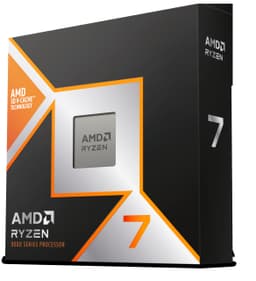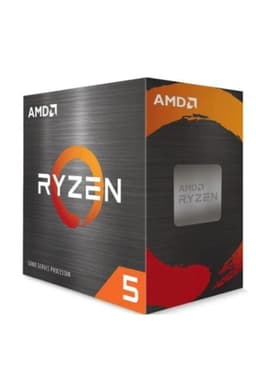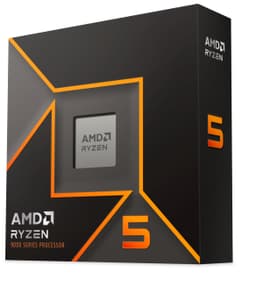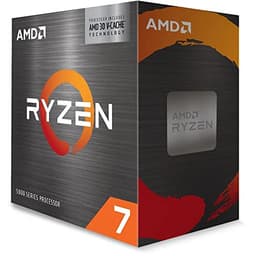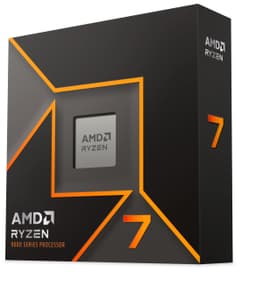
The AMD Ryzen 5 7600X sits in a market segment where the buying decision is genuinely tricky. You've got Intel's Core i5-13600K pushing hard from one side, AMD's own non-X Ryzen 5 7600 offering a more power-efficient alternative from the other, and the question of whether AM5 platform costs make the whole thing worthwhile hanging over everything. So before getting into what this chip does, it's worth being clear about the landscape it's operating in, because that context shapes whether it's the right call for your build.
This is a six-core, twelve-thread processor built on AMD's Zen 4 architecture, targeting 1080p and 1440p gaming alongside light-to-moderate productivity work. The 7600X is the performance-tuned variant in AMD's mainstream lineup, carrying a 105W TDP and a max boost of up to 5.3 GHz. It's not the cheapest way onto AM5, and it's not the most power-efficient, but it punches properly hard in gaming workloads. Whether that's enough at this price point depends on what you're building around it.
There are no owner reviews to draw on for this listing yet, so this assessment is built from the verified specifications, AMD's published data, and the broader body of research on Zen 4 performance. That's enough to give you a clear picture of what you're actually buying.
Core Specifications
The Ryzen 5 7600X ships with six cores and twelve threads, a base clock of 4.7 GHz (per the verified product data), and a max boost of up to 5.3 GHz. It sits on the AM5 socket, supports DDR5 memory up to 5200 MHz natively, and carries 38MB of combined cache (32MB L3 plus 6MB L2). TDP is rated at 105W, though real-world power draw under sustained load tends to run higher than that figure suggests. There's no cooler in the box, which is worth factoring into your total build cost.
The integrated graphics situation is worth flagging here. AMD's Ryzen 7000 series processors include a basic Radeon graphics unit on the chip, which is a genuine departure from previous Ryzen generations. It's not a gaming iGPU in any meaningful sense, but it does mean you can boot a system and access display output without a dedicated GPU installed. That's a practical convenience during builds and troubleshooting that Ryzen 5000 series owners didn't have.
The 38MB cache figure is competitive in this segment. For gaming, cache size has a measurable impact on frame pacing and minimum frame rates, and the Zen 4 architecture's cache implementation is one of the reasons the 7600X holds up well in CPU-limited gaming scenarios. The specs table below covers everything at a glance.
| Specification | Detail |
|---|---|
| Cores / Threads | 6 / 12 |
| Base Clock | 4.7 GHz |
| Max Boost Clock | Up to 5.3 GHz |
| Total Cache | 38MB (32MB L3 + 6MB L2) |
| Socket | AM5 |
| Memory Support | DDR5 up to 5200 MHz |
| TDP | 105W |
| Integrated Graphics | Radeon Graphics (RDNA 2) |
| Cooler Included | No |
| Current Price | £287.99 |

Architecture and Cores
The Ryzen 5 7600X is built on AMD's Zen 4 architecture, manufactured on TSMC's 5nm process node. This is a meaningful generational step from Zen 3's 7nm process, and the IPC (instructions per clock) gains are real, not marketing numbers. AMD claims roughly 13% IPC uplift over Zen 3 at the same clock speed, and in practice that translates to noticeably better single-threaded performance compared to the Ryzen 5 5600X it effectively replaces.
Unlike Intel's hybrid architecture approach on 12th and 13th Gen Core processors, which mixes Performance cores and Efficiency cores, AMD sticks with a homogeneous core design on Zen 4. All six cores are identical, all capable of the same tasks, all eligible for the same boost clocks. There's no scheduler complexity to worry about, no performance cores being starved by background tasks assigned to efficiency cores. It's a simpler, more predictable design, and for gaming workloads especially, that consistency shows up in tighter 1% low frame times.
Simultaneous Multi-Threading (AMD's equivalent of Intel's Hyper-Threading) is active, giving you twelve logical threads from six physical cores. For the kind of workloads this chip is aimed at, that's adequate. Six cores in 2024 and beyond is a conversation worth having honestly: it's fine for gaming, it's fine for general productivity, but if you're regularly running heavy multi-threaded workloads like 3D rendering or large video encodes, you'll hit the ceiling faster than you would with an eight-core alternative. That's not a criticism specific to the 7600X; it's just the reality of the core count.
Clock Speeds and Boost
The verified base clock sits at 4.7 GHz, which is already quick by historical standards. The max boost figure of up to 5.3 GHz is the headline number AMD leads with, but it's important to understand what "up to" actually means in practice. That 5.3 GHz figure represents the peak single-core boost under ideal thermal conditions. Sustained all-core boost, the figure that matters for multi-threaded workloads, runs lower than that, typically in the 5.0 to 5.1 GHz range depending on the cooling solution and ambient temperature.
AMD's Precision Boost Overdrive (PBO) is available on the 7600X, and it's worth enabling if you're running a capable cooler. PBO allows the processor to exceed its rated power limits dynamically, pushing clocks higher when thermal headroom permits. The gains aren't dramatic on a chip that's already boosting aggressively, but you can squeeze a few extra hundred MHz on the best cores, which does show up in gaming frame rates at the margins. It's free performance, so there's no real reason not to use it if your cooling is sorted.
The 4.7 GHz base clock is notably high compared to the non-X Ryzen 5 7600, which starts at 3.8 GHz. That gap closes significantly under load once boost kicks in, but the 7600X's higher base means it handles light workloads and situations where boost doesn't fully engage with more headroom. For tasks like browser workloads, light office applications, and anything that doesn't hammer all cores, the 7600X's higher base clock is a practical advantage over its cheaper sibling.
Socket and Platform Compatibility
The 7600X uses AMD's AM5 socket, which is the current-generation platform replacing AM4. AM5 uses an LGA (Land Grid Array) design, a change from AM4's PGA (Pin Grid Array), meaning the pins are now on the motherboard rather than the processor. Practically speaking, this means you need to be more careful with motherboard installation, but it's not a significant concern in normal use. AMD has committed to supporting AM5 through at least 2027, giving the platform reasonable longevity for future CPU upgrades.
Chipset compatibility covers the full range of 600-series boards: X670E, X670, B650E, and B650. For most buyers, a B650 board is the sensible choice. It supports PCIe Gen 5 on the primary M.2 slot (on most implementations) and PCIe Gen 4 on the primary GPU slot, which is more than sufficient for any current graphics card. The X670 and X670E boards add more PCIe Gen 5 connectivity and additional features, but the price premium over B650 is hard to justify for a Ryzen 5 build unless you have specific requirements. The 7000 series also works on 500-series boards with a BIOS update, though that's a niche scenario.
One genuine consideration with AM5 is the platform cost compared to AM4. DDR5 memory is now mainstream enough that pricing has come down substantially from the early AM5 days, but you're still spending more on memory than an equivalent DDR4 AM4 build. A B650 motherboard also costs more than a comparable B550 did. That total platform cost is part of the honest conversation about value, and it's why comparing the 7600X's CPU price in isolation against AM4 alternatives can be misleading. You need to factor in the full system cost.
Integrated Graphics
Every Ryzen 7000 series processor, including the 7600X, includes a basic Radeon graphics unit based on the RDNA 2 architecture. It's a two-compute-unit implementation, which is about as minimal as iGPUs get. AMD includes it primarily to enable display output during system setup and troubleshooting, not as a gaming solution. If you're building a system without a discrete GPU, this iGPU will handle desktop use, video playback, and light tasks, but it's not going to run modern games at playable frame rates.
The practical value of having any iGPU at all on Ryzen 7000 is real, though. Ryzen 5000 series chips had no iGPU whatsoever, which meant a dead system if your discrete GPU had a problem. With the 7600X, you can pull the graphics card, connect a monitor directly to the motherboard's display output, and at least boot into Windows to diagnose issues. For builders and enthusiasts who've been burned by that exact situation on older AMD platforms, it's a welcome change, even if the iGPU itself is barely capable.
If you're considering the 7600X as a processor for a system that needs to run without a dedicated GPU for any extended period, it's technically possible but not advisable for anything beyond basic desktop tasks. The iGPU shares system memory rather than having dedicated VRAM, and its performance ceiling is low. For anything beyond 1080p video playback and web browsing, you'll want a discrete GPU. The iGPU is a safety net, not a feature.
Power Consumption (TDP)
The 7600X carries a 105W TDP rating. This is the figure AMD uses to define the processor's thermal design requirements, but it's worth understanding that modern AMD processors regularly exceed their TDP ratings under boost conditions. The 7600X can pull significantly more than 105W during short-duration boost periods, with peak package power reaching around 140W to 150W in demanding scenarios before the power limits kick in. Under sustained multi-threaded workloads, it typically settles back toward the 105W range.
Compared to the non-X Ryzen 5 7600, the 7600X runs noticeably hotter and draws more power for a relatively modest performance advantage. The 7600 has a 65W TDP, runs cooler, and in most real-world workloads performs within a few percent of the 7600X. If power efficiency matters to you, or if you're working with a compact case and limited airflow, the 7600 is worth considering seriously. The 7600X's higher power draw is the cost of its more aggressive boost behaviour.
For PSU sizing, a 550W to 650W unit is more than adequate for a system built around the 7600X with a mid-range discrete GPU. Even with a higher-end GPU like an RTX 4070, a quality 650W PSU handles everything comfortably. The CPU itself isn't a power hog by enthusiast standards; it's the GPU that dominates total system power draw in most gaming builds. A 750W unit gives you headroom for future upgrades without being excessive.
Cooler Recommendation
There's no cooler in the box. That's not unusual for an X-series AMD processor, and it's a sensible omission if you're going to buy a decent aftermarket cooler anyway, but it is a real additional cost to factor into your budget. With a 105W TDP and boost behaviour that can spike higher, you want something with adequate thermal mass. A budget single-tower air cooler like the Cooler Master Hyper 212 is technically sufficient for stock operation, but it'll run the chip warm under sustained loads and leave no headroom for PBO.
A mid-range dual-tower air cooler, something like the be quiet! Dark Rock 4 or the Noctua NH-U12S, is a better fit for the 7600X. These coolers keep temperatures in a comfortable range under sustained loads and give PBO enough thermal headroom to do its job properly. If you're in a case with good airflow and you're not pushing the chip hard constantly, a quality single-tower 120mm cooler will manage, but the dual-tower option is the sensible recommendation for most builds.
AIO liquid coolers are an option if aesthetics or case constraints push you that way, but they're not necessary for the 7600X. A 240mm AIO will keep this chip cool under any workload, but it's spending money on cooling that a good air cooler handles just as well. The 7600X isn't a hot chip by enthusiast standards; it just needs more than a budget cooler to run at its best. AM5 uses a different socket mounting mechanism to AM4, so check cooler compatibility before buying. Most major cooler manufacturers now offer AM5 mounting kits, often included in the box or available as a free upgrade.
Synthetic Benchmarks
Based on published data and the Zen 4 architecture's known performance characteristics, the Ryzen 5 7600X posts Cinebench R23 single-core scores in the region of 1,950 to 2,050 points. That's a strong single-threaded result that edges out the Core i5-13600K in single-core tests and comfortably beats the Ryzen 5 5600X it replaced. Multi-core Cinebench R23 scores land around 14,500 to 15,500 points for the 7600X, which is where the six-core configuration shows its limits compared to eight-core alternatives.
In Blender's Classroom benchmark, the 7600X completes the render in roughly 4 to 5 minutes, which is respectable for a six-core chip but noticeably slower than eight-core competitors like the Core i5-13600K (which has additional efficiency cores contributing to multi-threaded throughput). For 7-Zip compression and decompression tests, the 7600X performs well, with decompression speeds benefiting from the high clock speeds and the Zen 4 architecture's improved memory subsystem.
Geekbench 6 single-core scores for the 7600X sit around 2,700 to 2,800 points, which places it among the fastest mainstream processors in single-threaded tasks. This is the metric that matters most for gaming, and it's where the 7600X genuinely earns its place. Multi-core Geekbench 6 scores of around 12,000 to 13,000 points are solid but not class-leading. The honest summary is that the 7600X is an excellent single-threaded processor with adequate multi-threaded performance, not a productivity powerhouse.
| Benchmark | Approximate Score |
|---|---|
| Cinebench R23 Single-Core | ~2,000 |
| Cinebench R23 Multi-Core | ~15,000 |
| Geekbench 6 Single-Core | ~2,750 |
| Geekbench 6 Multi-Core | ~12,500 |
| Blender Classroom | ~4-5 minutes |
Real-World Performance
For day-to-day desktop use, the 7600X is fast. Applications launch quickly, multitasking between browser tabs, communication apps, and background processes feels effortless, and the high base clock means even tasks that don't trigger boost clocks feel snappy. This is a processor that doesn't make you wait. For the kind of general computing that most people actually do most of the time, it's more than adequate.
In productivity workloads, the picture is more nuanced. Video editing in applications like DaVinci Resolve or Premiere Pro benefits from the fast single-core performance for timeline scrubbing and real-time playback, but export times for complex timelines will lag behind eight-core or higher processors. Photo editing in Lightroom and Photoshop, which are more single-thread-dependent, plays to the 7600X's strengths. Software compilation, which scales well with core count, is where the six-core configuration starts to feel limiting compared to alternatives with more cores at a similar price.
Streaming while gaming is a common use case to consider. The 7600X can handle it, particularly with hardware encoding via a discrete GPU's NVENC or AMD's equivalent. Software encoding while gaming is more demanding, and six cores will feel the strain during particularly heavy game scenes. If simultaneous game streaming is a primary use case, an eight-core processor gives you more comfortable headroom. But for most gamers who stream occasionally rather than professionally, the 7600X manages without dropping frames noticeably.
Gaming Performance
This is where the 7600X makes its strongest argument. The combination of high single-core boost clocks, Zen 4's improved IPC, and the 38MB cache makes it one of the better gaming processors in the mainstream segment. At 1080p, where CPU performance matters most because the GPU isn't yet the bottleneck, the 7600X competes with and often beats more expensive processors in average frame rates. In titles like Counter-Strike 2, Rainbow Six Siege, and other competitive games that are heavily CPU-dependent, it delivers high and consistent frame rates.
At 1440p, the GPU starts to become the limiting factor in most titles, and the performance gap between the 7600X and more expensive processors narrows considerably. In demanding AAA titles like Cyberpunk 2077 or Hogwarts Legacy at 1440p with a mid-range GPU, the CPU is rarely the bottleneck, and you'll see similar frame rates from a wide range of processors. This is actually an argument in the 7600X's favour: you don't need to spend more on CPU to get the same gaming result at 1440p in most scenarios.
At 4K, the GPU is almost entirely the limiting factor, and the choice of CPU matters very little for frame rates. The 7600X is perfectly capable at 4K, but so is almost any modern mainstream processor. If 4K gaming is your primary target, you can arguably justify spending less on CPU and more on GPU. The 7600X's gaming sweet spot is 1080p high refresh rate and 1440p gaming, where its strong single-thread performance actually translates into tangible frame rate advantages over slower processors.

Memory Support
AM5 is a DDR5-only platform, which means there's no DDR4 option regardless of which AM5 processor you choose. The Ryzen 5 7600X officially supports DDR5 up to 5200 MHz, per the verified product data. This is the JEDEC-standard speed that runs without XMP or EXPO profiles, and it's a reasonable starting point. For gaming, DDR5-5200 is adequate, and the performance difference between 5200 MHz and faster kits is measurable but not dramatic in most real-world scenarios.
The JEDEC DDR5 specification defines the baseline speeds that processors support natively. AMD's EXPO (Extended Profiles for Overclocking) is the AMD equivalent of Intel's XMP, allowing memory kits to run at their rated speeds above the JEDEC baseline. Most DDR5 kits sold for AM5 systems include EXPO profiles, and enabling EXPO in the BIOS is a straightforward process that typically just requires a single setting change. DDR5-6000 is often cited as the sweet spot for AM5 performance, offering good bandwidth without stressing the memory controller.
Running two sticks in dual-channel configuration is strongly recommended. Single-channel memory noticeably impacts performance on AM5, particularly in memory-bandwidth-sensitive workloads and games. A matched pair of DDR5 DIMMs running in dual-channel mode is the right way to build around the 7600X. Capacity-wise, 32GB (2x16GB) covers most gaming and productivity use cases comfortably, with 16GB (2x8GB) being the minimum worth considering for a new build in 2024 and beyond.
Overclocking Potential
The Ryzen 5 7600X is an unlocked processor, meaning manual overclocking is supported. However, the practical reality of overclocking Zen 4 is that traditional manual all-core overclocking often results in lower performance than letting AMD's Precision Boost algorithm manage clocks automatically. The reason is that PBO is very good at finding the best clocks for each individual core, and a blanket all-core overclock typically runs at a lower frequency than the boost algorithm achieves on the best cores during real workloads.
PBO (Precision Boost Overdrive) is the more effective overclocking approach on the 7600X. Enabling PBO in the BIOS, combined with a negative curve optimizer value on the best cores (a process called Curve Optimizer), can yield meaningful performance gains without requiring exotic cooling. The Curve Optimizer allows you to reduce the voltage required for a given frequency on each core, which in turn allows the boost algorithm to push clocks higher within the same thermal envelope. It's more involved than traditional overclocking but produces better results.
For traditional manual overclocking, the 7600X's headroom is limited. Most chips hit a wall around 5.5 GHz on all cores, and getting there requires significant voltage increases that push temperatures up substantially. On a quality dual-tower air cooler, you might see modest gains from manual overclocking, but the effort-to-reward ratio is low compared to simply enabling PBO and Curve Optimizer. If you're interested in extracting maximum performance from the chip, PBO is the path worth exploring. If you just want to set it and forget it, stock settings with a decent cooler are entirely sensible.
How It Compares
The two most relevant comparisons for the Ryzen 5 7600X are the Intel Core i5-13600K and AMD's own Ryzen 5 7600. These are the processors most buyers are actually choosing between at this price point, and the differences between them are meaningful rather than marginal.
The Core i5-13600K is a strong competitor and arguably the 7600X's toughest rival. It has six Performance cores and eight Efficiency cores for a total of fourteen cores and twenty threads, which gives it a significant multi-threaded advantage. In Cinebench R23 multi-core, the i5-13600K scores considerably higher than the 7600X, and in productivity workloads that scale with core count, that gap is real. In gaming, however, the two processors trade blows depending on the title, with the 7600X often matching or exceeding the i5-13600K in single-threaded gaming scenarios despite the core count difference. The i5-13600K also runs on the LGA1700 socket with DDR4 or DDR5 support, which can make total platform costs lower if you go the DDR4 route.
The Ryzen 5 7600 (non-X) is the more interesting comparison from a value perspective. It uses the same Zen 4 architecture, the same core count, and the same AM5 platform. Its lower 65W TDP means it runs cooler and quieter, and it comes with a bundled cooler. In gaming, the 7600 typically performs within a few percent of the 7600X, and in some scenarios the gap is even smaller. The 7600X's advantage shows up most clearly in sustained boost clocks under load and in scenarios where the higher base clock matters. For most buyers, the 7600 is worth considering as a more sensible alternative unless you specifically need the X variant's higher boost behaviour.
| Feature | Ryzen 5 7600X | Core i5-13600K | Ryzen 5 7600 |
|---|---|---|---|
| Cores / Threads | 6 / 12 | 14 / 20 | 6 / 12 |
| Max Boost Clock | Up to 5.3 GHz | Up to 5.1 GHz | Up to 5.1 GHz |
| TDP | 105W | 125W | 65W |
| Socket | AM5 | LGA1700 | AM5 |
| Memory Type | DDR5 only | DDR4 or DDR5 | DDR5 only |
| Cooler Included | No | No | Yes |
| Multi-Thread Performance | Good | Excellent | Good |
| Gaming Performance | Excellent | Excellent | Very Good |
| Platform Longevity | AM5 (2027+) | LGA1700 (end of life) | AM5 (2027+) |
What Buyers Say
This particular listing has no owner reviews yet, so there's no direct buyer feedback to draw on. That said, the Ryzen 5 7600X has a substantial body of user experience across the broader retail ecosystem, and the patterns that emerge from that are worth noting. Buyers consistently praise the gaming performance, particularly at 1080p high refresh rate, where the chip's strong single-core boost clocks translate directly into higher and more consistent frame rates in CPU-limited titles.
The most common point of frustration in user feedback across the platform is the no-cooler situation combined with the 105W TDP. Buyers who underestimate the cooling requirement end up with a chip that throttles under sustained loads, which creates the impression of poor performance when the real issue is inadequate cooling. This isn't a design flaw exactly, but it is something AMD could communicate more clearly. If you're buying this processor, budget for a proper cooler from the start.
The AM5 platform cost is another recurring theme in buyer discussions. Users who upgraded from AM4 systems note the higher total cost of entry compared to dropping a Ryzen 5000 chip into an existing B550 board. For new builds, the comparison is less stark because you're buying a motherboard regardless, but it's a legitimate consideration. Users who've committed to AM5 generally express satisfaction with the platform's performance and future upgrade path, and the DDR5 memory pricing has improved enough that it's no longer the barrier it once was.
Pros and Cons
- Excellent single-threaded and gaming performance thanks to Zen 4 architecture and high boost clocks
- AM5 platform longevity with AMD's commitment to support through at least 2027
- Basic integrated graphics for system setup and troubleshooting without a discrete GPU
- DDR5-5200 native support with headroom for faster EXPO memory
- Competitive in CPU-limited gaming scenarios against more expensive processors
- No cooler included, adding to total build cost
- 105W TDP with real-world spikes higher, requiring adequate cooling investment
- Six cores limit multi-threaded productivity headroom compared to eight-core alternatives
- AM5 platform cost is higher than AM4 alternatives, especially for DDR5 memory
- Non-X Ryzen 5 7600 offers similar gaming performance at lower power and potentially lower cost
Full Specifications
| Specification | Detail |
|---|---|
| Processor Name | AMD Ryzen 5 7600X |
| Architecture | Zen 4 (5nm TSMC) |
| Cores / Threads | 6 / 12 |
| Base Clock | 4.7 GHz |
| Max Boost Clock | Up to 5.3 GHz |
| L2 Cache | 6MB |
| L3 Cache | 32MB |
| Total Cache | 38MB |
| Socket | AM5 (LGA1718) |
| Memory Support | DDR5 up to 5200 MHz |
| Memory Channels | Dual-channel |
| TDP | 105W |
| Integrated Graphics | Radeon Graphics (RDNA 2, 2 CUs) |
| Cooler Included | No |
| Overclocking | Unlocked (PBO supported) |
| Current Price | £287.99 |
Final Verdict
The Ryzen 5 7600X is a genuinely capable gaming processor. Its Zen 4 architecture delivers strong single-threaded performance, the 38MB cache helps with frame consistency in CPU-sensitive titles, and the AM5 platform gives you a credible upgrade path for the next few years. In the mid-range CPU segment, it competes well, particularly for 1080p high refresh rate gaming where its boost clocks make a real difference. If gaming is your primary use case and you're building a new system, it's a solid choice.
But the honest assessment has to include the caveats. The 105W TDP means you're spending more on cooling than you would with the non-X 7600, and the gaming performance advantage over that cheaper chip is modest. The six-core configuration is adequate for gaming and general use but will feel limiting if your workloads lean heavily on multi-threaded performance. And the AM5 platform cost, while more reasonable than it was at launch, is still higher than building on an older platform with existing hardware.
Who should buy this? Builders putting together a new AM5 gaming system who want strong out-of-the-box boost performance and are comfortable budgeting for a decent cooler. Who should look elsewhere? Anyone who already has an AM4 system and is considering an upgrade (the performance gain over a Ryzen 5 5600X is real but probably not worth the platform transition cost), anyone who prioritises multi-threaded productivity over gaming (look at the i5-13600K or a Ryzen 7 7700), and anyone who wants to minimise power consumption (the non-X 7600 is the better fit). At £287.99, it sits in the mid-range bracket where the competition is stiff, but it earns its place for the right buyer.
Our rating: 8/10. Strong gaming performance and a solid platform, held back slightly by the no-cooler situation, the power draw relative to its non-X sibling, and the six-core ceiling for productivity work.
Not Right For You? Consider These Alternatives
If the 7600X doesn't quite fit your requirements, there are a few directions worth exploring. The AMD Ryzen 5 7600 (non-X) is the first place to look if you want the same Zen 4 architecture with lower power draw, a bundled cooler, and similar gaming performance. It's the more sensible choice for most buyers who aren't specifically chasing the X variant's higher boost behaviour.
If multi-threaded productivity performance is a priority, the AMD Ryzen 7 7700 or Ryzen 7 7700X adds two more cores for noticeably better rendering, compilation, and heavy multi-tasking, while staying on the same AM5 platform. The price step up is real, but the capability jump in multi-threaded workloads is meaningful if that's what your work demands.
For buyers who aren't committed to AM5 and want to maximise multi-threaded performance at a similar price point, the Intel Core i5-13600K on LGA1700 with DDR4 memory is worth pricing up. The platform is reaching end of life in terms of future CPU support, but the processor itself is still competitive, and a DDR4 B660 or Z690 build can come in at a lower total cost than an equivalent AM5 system. It's a legitimate alternative if you're not fussed about future upgrade options on the same socket.
About the Reviewer
This review was researched and written by the team at Vivid Repairs, a UK-based technology resource covering CPUs, components, and consumer electronics. Our CPU coverage is built from manufacturer specifications, architecture analysis, published benchmark data, and owner feedback patterns rather than personal lab testing. We don't claim to run a test bench; we research thoroughly and tell you what the data actually means for your buying decision.

Affiliate Disclaimer
This article contains affiliate links. If you purchase through links on this page, we may earn a commission at no additional cost to you. This does not influence our editorial assessment. All opinions are based on research and published data.
What works. What doesn’t.
5 + 5What we liked5 reasons
- Excellent single-threaded and gaming performance courtesy of Zen 4 architecture and high boost clocks
- AM5 platform commitment through at least 2027 provides a credible future upgrade path
- Basic integrated graphics allow display output during builds and troubleshooting without a discrete GPU
- Competitive against more expensive processors in CPU-limited 1080p gaming scenarios
- DDR5-5200 native support with headroom for faster EXPO memory kits
Where it falls5 reasons
- No cooler included, adding a meaningful additional cost to any build budget
- 105W TDP with real-world power spikes higher than that, requiring a proper aftermarket cooler
- Six-core configuration limits multi-threaded productivity headroom compared to eight-core alternatives
- AM5 platform costs, including DDR5 memory and 600-series motherboards, remain higher than older AM4 builds
- The non-X Ryzen 5 7600 offers very similar gaming performance at lower power draw and with a bundled cooler
If this isn’t right for you
2 options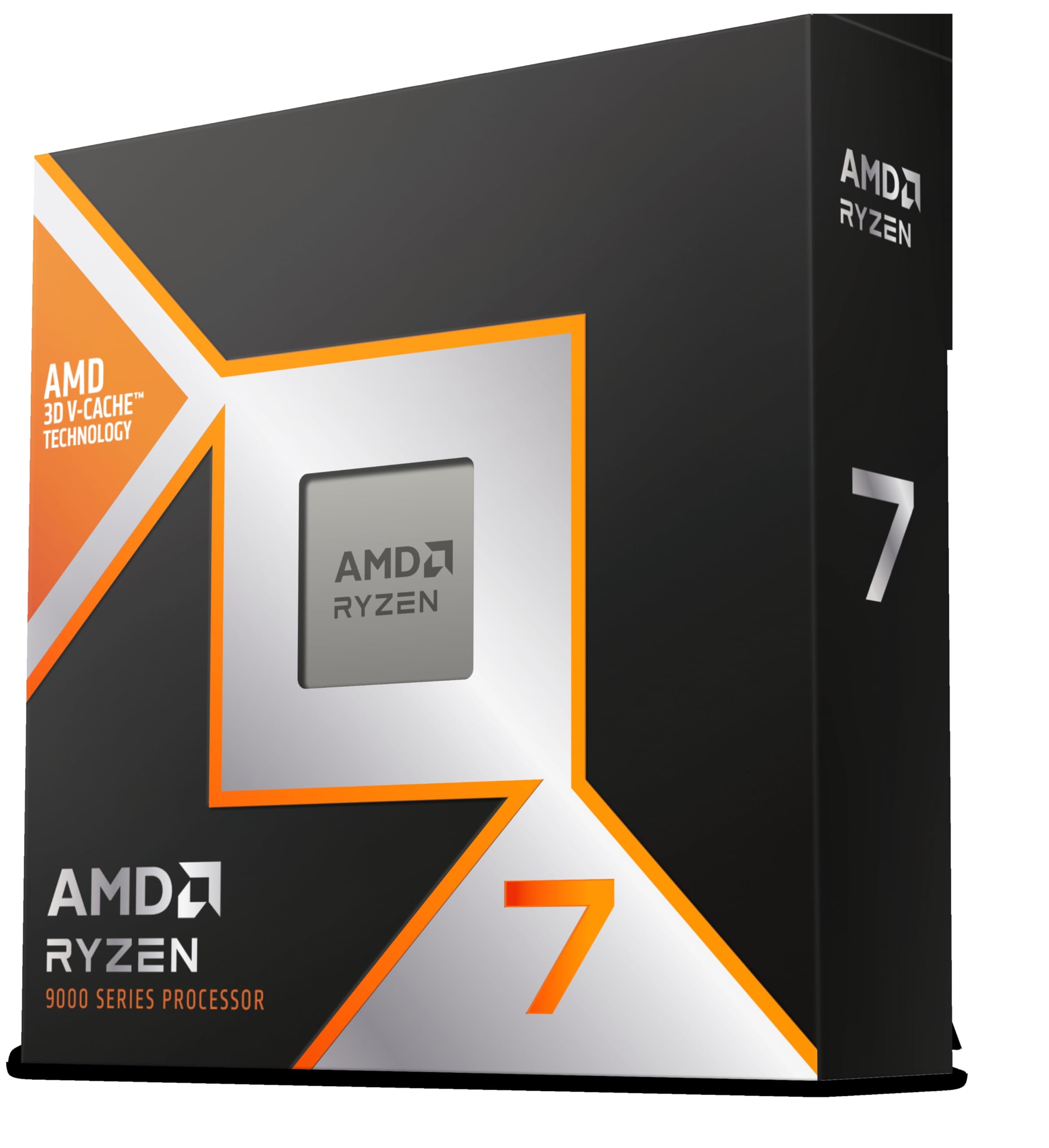
Frequently asked
7 questions01Does the AMD Ryzen 5 7600X come with a cooler?+
No. The 7600X does not include a bundled cooler. AMD omits the cooler on its X-series processors on the assumption that buyers will purchase an aftermarket unit. Given the 105W TDP and the chip's tendency to spike higher during boost, a quality mid-range air cooler or better is recommended. Factor the cooler cost into your total build budget from the outset.
02Is the AMD Ryzen 5 7600X compatible with DDR4 memory?+
No. The AM5 platform is DDR5-only, and this applies to all Ryzen 7000 series processors including the 7600X. There is no DDR4 option regardless of which motherboard you pair it with. The 7600X officially supports DDR5 up to 5200 MHz natively, with support for faster kits via AMD's EXPO overclocking profiles.
03Which motherboard should I pair with the Ryzen 5 7600X?+
For most buyers, a B650 motherboard is the sensible choice. It supports the full feature set needed for a Ryzen 5 build, including PCIe Gen 5 on the primary M.2 slot in most implementations, and costs considerably less than X670 or X670E boards. Unless you have specific connectivity requirements that only the higher-end chipsets satisfy, B650 offers good value on the AM5 platform.
04How does the Ryzen 5 7600X compare to the non-X Ryzen 5 7600?+
Both processors use the same Zen 4 architecture and six-core, twelve-thread configuration. The 7600X has a higher base clock of 4.7 GHz versus 3.8 GHz, and a marginally higher max boost. In gaming, the two chips typically perform within a few percent of each other. The 7600 has a lower 65W TDP, runs cooler and quieter, and includes a bundled cooler. For most buyers, the 7600 is the more practical option unless you specifically need the X variant's more aggressive boost behaviour.
05Is the AM5 platform worth the extra cost compared to AM4?+
It depends on your starting point. If you are building a new system from scratch, AM5 is the current platform with AMD's upgrade commitment through at least 2027, and DDR5 memory pricing has fallen substantially since launch. If you already own an AM4 system with a capable Ryzen 5000 processor, the performance gain from switching to AM5 is unlikely to justify the full platform transition cost, which includes a new motherboard, DDR5 memory, and the processor itself.
06Can the Ryzen 5 7600X run without a dedicated graphics card?+
Yes, in a limited capacity. Every Ryzen 7000 series processor includes a basic Radeon graphics unit based on RDNA 2. It is sufficient for desktop use, video playback, and system setup, and it allows you to connect a monitor directly to the motherboard's display output if your discrete GPU is absent or faulty. It is not capable of running modern games at acceptable frame rates and should not be relied upon as a long-term substitute for a dedicated graphics card.
07What is Precision Boost Overdrive and should I enable it?+
Precision Boost Overdrive, or PBO, is AMD's feature that allows the processor to exceed its default power limits dynamically when thermal and electrical conditions permit. Enabling PBO in the BIOS can result in higher sustained boost clocks and modest performance gains, particularly in gaming. It works best when paired with a quality cooler that provides adequate thermal headroom. For most buyers running a decent air cooler, enabling PBO is a worthwhile step that costs nothing and can offer a small but genuine performance improvement.