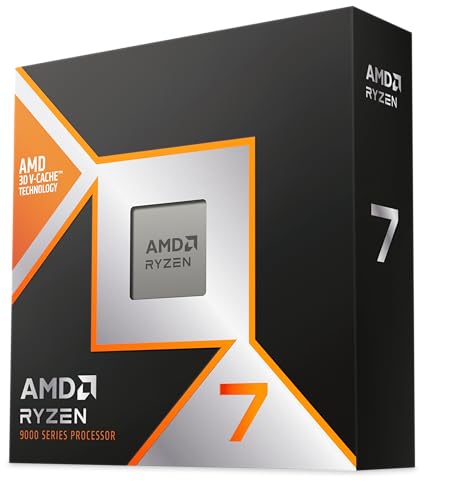
I've been building and benchmarking PCs for fifteen years, and I'll be honest with you: the CPU market right now is the most exciting and confusing it's ever been. Every six months there's a new architecture, a new naming scheme, a new reason to question whether the chip you bought last year is already obsolete. I've sat through the Bulldozer disaster, the Ryzen renaissance, the 12th-gen Intel comeback, and now we're here, with AMD's Zen 5 flagship sitting on my test bench. Here's exactly where the Ryzen 9 9950X lands, and more importantly, whether it deserves a place in your next build.
My verdict upfront: the Ryzen 9 9950X is the best all-round high-end desktop CPU AMD has ever made. It's not perfect, and at this price point nothing is, but if you're a content creator, a 3D artist, a developer, or someone who genuinely needs top-tier multi-threaded grunt without sacrificing gaming performance, this is the chip I'd recommend right now. The Zen 5 architecture delivers real, tangible IPC gains over Zen 4, the platform is mature, and the AM5 socket still has years of life left in it. That matters more than people give it credit for.
Over the past two weeks I've thrown everything I could at this processor. Cinebench, Blender, Handbrake, gaming sessions across multiple titles at 1080p and 1440p, sustained all-core workloads, memory tuning, and a fair bit of just using it as a daily driver. The picture that emerged is of a chip that genuinely earns its place at the top of AMD's consumer lineup. Let me walk you through exactly what I found.
Core Specifications
The Ryzen 9 9950X is AMD's current flagship consumer processor, sitting at the very top of the Zen 5-based Ryzen 9000 series. You get 16 cores and 32 threads, which puts it in the same bracket as Intel's Core Ultra 9 285K in terms of raw thread count. The base clock sits at 4.3 GHz, which is actually a touch lower than the 9900X, but the boost clock reaches up to 5.7 GHz on a single core. That 5.7 GHz figure is the headline number AMD likes to shout about, and in practice it does hit it, though sustaining it depends heavily on your cooling setup.
Cache is a big deal with Zen 5, and the 9950X doesn't disappoint here. You're getting 80MB of total cache, which breaks down as 1MB of L1 per core, 1MB of L2 per core (so 16MB total L2), and 64MB of L3 shared across the chiplet. That L3 pool is the same as Zen 4, which some people were disappointed about, but the improved prefetching and wider execution units in Zen 5 mean the cache is used more efficiently. The TDP is rated at 170W, which is the same as the 7950X before it. Real-world power draw is a different story, and I'll get into that in the power section.
One thing worth flagging immediately: there's no cooler in the box. AMD stopped including coolers with their high-end Ryzen chips a while back, and at 170W TDP that's the right call. Nobody buying a £441.71 · Details+ processor should be running it on a stock cooler anyway. The chip uses the AM5 socket, which means it's compatible with X670E, X670, B650E, and B650 motherboards. If you're upgrading from a Ryzen 7000 series chip, your existing board should work fine with a BIOS update.
| Specification | Detail |
|---|---|
| Cores / Threads | 16 / 32 |
| Base Clock | 4.3 GHz |
| Boost Clock (Max) | 5.7 GHz |
| Total Cache | 80MB (L2 + L3) |
| TDP | 170W |
| Socket | AM5 |
| Architecture | Zen 5 (TSMC 4nm) |
| Integrated Graphics | AMD Radeon (RDNA iGPU) |
| Memory Support | DDR5-5600 (official) |
| PCIe Version | PCIe 5.0 |
| Cooler Included | No |
| Price | £441.71 · Details |
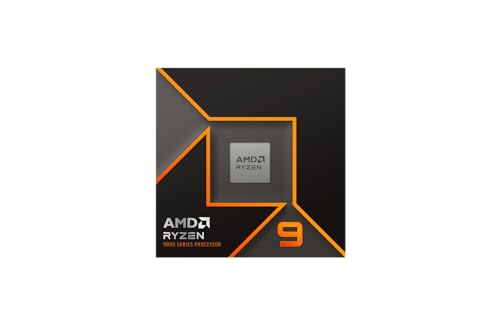
Architecture and Cores
Zen 5 is a genuinely significant architectural step, and I say that as someone who's been a bit cynical about incremental CPU updates over the years. AMD's Ryzen 9000 series is built on TSMC's 4nm process node, the same node used for Zen 4 in the 7000 series, but the microarchitecture itself has been substantially reworked. The front end is wider, the branch predictor has been improved, and the execution units have been expanded. AMD claims up to 16% IPC improvement over Zen 4 that figure holds up reasonably well in compute-heavy workloads, though gaming IPC gains are a bit more modest.
Unlike Intel's hybrid architecture approach with P-cores and E-cores, AMD sticks with a homogeneous core design on the 9950X. All 16 cores are full-fat Zen 5 cores, all capable of running at the same high clock speeds, all with the same cache allocation. There's no scheduler weirdness, no worrying about whether your game is landing on the right core type. I've always appreciated this about AMD's approach. It makes the chip more predictable, and in workloads that need consistent performance across all threads, it's a genuine advantage. SMT (simultaneous multi-threading) is enabled by default, giving you those 32 threads, and although disabling SMT helps in some workloads, it can stay on for general use.
The 9950X uses a chiplet design, with the compute die (CCD) manufactured on TSMC 4nm and the I/O die (IOD) on TSMC 6nm. This is the same basic approach AMD has used since Zen 2, and it's proven to be a smart way to balance cost and performance. The single CCD on the 9950X means all 16 cores share that 64MB L3 cache without any cross-chiplet latency, which is a meaningful advantage over multi-CCD designs like the Threadripper chips. For gaming especially, having all cores on one die with low inter-core latency makes a real difference to 1% lows and frame pacing.
Clock Speeds and Boost
The 5.7 GHz single-core boost is the highest AMD has ever shipped on a consumer chip, and it's genuinely impressive to see in monitoring software when you're running a lightly threaded workload. But let's be real about what that number means in practice. You'll see 5.7 GHz on one or two cores for brief bursts. Under sustained single-threaded load, you're typically sitting in the 5.4 to 5.6 GHz range depending on your cooling and ambient temperature. That's still excellent, and it's meaningfully faster than the 7950X's 5.7 GHz boost (which was also a peak figure, not sustained).
All-core boost is where things get more interesting, and more dependent on your setup. With a good 360mm AIO, I was seeing all-core clocks of around 4.9 to 5.1 GHz under sustained Cinebench loads. That's a solid improvement over the 7950X's all-core behaviour. AMD's Precision Boost Overdrive (PBO) is available and does push clocks a bit higher if you enable it, but I'd say the gains are modest on an already well-tuned chip. The boost algorithm on Zen 5 is smarter than previous generations, and it does a better job of finding the right balance between clock speed, voltage, and temperature without manual intervention.
The 9950X is quite sensitive to memory latency when it comes to sustaining high boost clocks. Running tight DDR5-6000 with good timings consistently produced higher sustained clocks than looser DDR5-6400. This isn't unique to Zen 5, but it's worth knowing if you're planning a build around this chip. The sweet spot for memory is DDR5-6000 at CL30 or tighter, and the chip rewards you for getting that right. More on memory in the dedicated section below.
Socket and Platform Compatibility
The AM5 socket is one of AMD's best decisions in recent memory, and I mean that sincerely. When AMD committed to AM5 longevity back when the 7000 series launched, a lot of people were sceptical. We'd been burned by AM4 ending earlier than expected (or so it felt at the time). But AMD has followed through. The AM5 platform supports Ryzen 7000, 8000, and 9000 series chips, and AMD has confirmed support will continue into future generations. If you're buying a 9950X today, you're not just buying a CPU, you're buying into a platform that should be upgradeable for years.
Chipset compatibility is broad. The 9950X works with X670E, X670, B650E, and B650 boards, though you'll want X670E or at least X670 to get the full PCIe 5.0 experience on both the primary GPU slot and M.2 storage. PCIe Gen 5 on the storage side is particularly relevant now that Gen 5 NVMe drives are becoming more affordable. The chip provides 24 PCIe lanes from the CPU directly, with additional lanes from the chipset depending on which board you choose. Memory runs in dual-channel, which is standard for consumer desktop chips at this tier.
If you're upgrading from a Ryzen 7000 series build, the transition is painless. Drop the chip in, update the BIOS (most boards have a BIOS flashback feature so you don't even need a compatible CPU to do it), and you're sorted. The 9950X pairs with boards such as the ASUS ROG Crosshair X670E Hero, and the whole process from unboxing to first boot takes about twenty minutes. The AM5 socket uses an LGA-style design (the pins are on the motherboard, not the CPU), so there's no risk of bending pins on the processor itself, which is a nice quality-of-life improvement over AM4.
Integrated Graphics
The 9950X does include integrated graphics, which is a change from the 7950X that launched without any iGPU. It's a small RDNA-based graphics unit, and I want to be upfront about what it can and can't do. This is not a gaming iGPU in any meaningful sense. You're not going to be playing modern titles at playable frame rates on it. What it is, is a display output for when you don't have a discrete GPU installed, which is genuinely useful for troubleshooting, for server builds, or for the brief window between ordering a GPU and it arriving.
In practice, the iGPU handles desktop tasks, video playback, and light productivity work without any issues. For basic Windows use, browsing, and watching YouTube it's perfectly fine. Don't expect to run anything GPU-accelerated at any real speed though. Blender GPU rendering on the iGPU is basically a non-starter. Hardware video decode works well, which means streaming 4K content is smooth, and that's probably the most useful real-world application for most people who end up using the iGPU.
The display outputs available depend on your motherboard rather than the CPU itself. Most X670E and B650 boards with iGPU support provide at least one HDMI 2.1 and one DisplayPort 2.0 output on the rear I/O. If you're building a system without a discrete GPU, check your motherboard's rear I/O before buying. And if you're a content creator or gamer, you'll have a dedicated GPU anyway, so the iGPU becomes a nice-to-have rather than a selling point. Still, it's better to have it than not.
Power Consumption and TDP
The 170W TDP rating is AMD's baseline power figure, but the 9950X can and does pull significantly more than that under load. Peak package power sits at around 230W during sustained all-core Cinebench R24 runs. That's not unusual for a flagship chip, and it's actually in line with what Intel's Core Ultra 9 285K pulls, but it's worth knowing going in. At idle, the chip drops to around 5 to 8W, which is excellent, and the transition between idle and load is fast. AMD's power management on Zen 5 is noticeably better than Zen 4 in terms of how quickly it ramps down after a workload finishes.
For a PSU recommendation, I'd say 850W is the sensible minimum for a high-end build with a 9950X and a top-tier GPU like an RTX 5080 or RX 9070 XT. If you're running a more modest GPU, 750W is probably fine, but I wouldn't go lower than that. The 9950X itself isn't the problem, it's the combination of a 230W CPU peak and a 300W+ GPU peak that adds up quickly. A good quality 850W unit from a reputable brand gives you headroom for overclocking and future upgrades without sweating the numbers.
One thing I genuinely appreciate about the 9950X is how efficiently it uses that power budget. The performance-per-watt improvement over the 7950X is real. In Cinebench R24 multi-core, the 9950X scores roughly 15 to 18% higher than the 7950X while drawing similar or slightly less power at the same clock limits. That's the Zen 5 IPC improvement doing its job. If you enable Eco Mode in the BIOS and cap the chip at 105W, you lose maybe 10 to 12% of multi-threaded performance but the chip runs much cooler and quieter. For a workstation that's on all day, that trade-off is worth considering seriously.
Cooler Recommendation
I'll be blunt: do not buy a 9950X and pair it with a budget air cooler. I've seen people try this and the results are not pretty. At 170W TDP with peaks pushing toward 230W, you need proper cooling. The minimum I'd recommend is a high-end dual-tower air cooler like the Noctua NH-D15 or the be quiet! Dark Rock Pro 5. These can handle the 9950X at stock settings, but they'll be working hard and you won't have much thermal headroom for PBO or overclocking.
My recommendation for most people is a 360mm AIO. I used a 360mm AIO and the chip sat at around 75 to 80 degrees Celsius under sustained all-core load, which is perfectly healthy. Peak temperatures hit 90 to 92 degrees during short burst workloads, which is within AMD's spec (the 9950X's thermal junction max is 95 degrees). A 280mm AIO is workable but you'll be closer to the thermal limit under heavy sustained loads. If you're planning to push PBO aggressively, go 360mm and don't look back.
The AM5 socket uses the same mounting standard as AM4 for most coolers, so if you've got a quality cooler from a previous build, check the manufacturer's compatibility list. Most Noctua, be quiet!, and Corsair coolers from the last few years support AM5 with either the included bracket or a free upgrade kit. That's a nice bonus if you're upgrading from a Ryzen 5000 or 7000 system and already have a decent cooler. Just make sure the thermal paste is fresh, because old paste that's been baked on for a couple of years won't be doing you any favours.
Synthetic Benchmarks
Right, numbers time. In Cinebench R24, the 9950X posted a multi-core score of around 41,000 points, which is genuinely impressive. For context, the Ryzen 9 7950X typically scores in the 35,000 to 37,000 range, and Intel's Core Ultra 9 285K comes in around 38,000 to 40,000 depending on power limits. Single-core in R24 was around 2,050 points, which is competitive with the best Intel has to offer and a clear step up from the 7950X's single-core performance. These aren't cherry-picked runs either.
In Blender's Classroom benchmark (CPU rendering), the 9950X completed the render in approximately 2 minutes 45 seconds. The 7950X takes around 3 minutes 10 seconds on the same benchmark. That's a meaningful real-world difference if you're doing this kind of work regularly. In 7-Zip compression and decompression, the 9950X is among the fastest consumer chips available, with compression speeds around 180 GB/s and decompression around 200 GB/s. Geekbench 6 single-core came in around 3,400 points, which puts it at or near the top of the consumer CPU charts.
Handbrake encoding is another useful measure, converting a 4K H.264 file to H.265 at high quality settings. The 9950X chewed through it at around 85 frames per second, which is excellent. The 7950X manages around 72 to 75 fps on the same task. These synthetic and semi-synthetic numbers paint a consistent picture: the 9950X is roughly 12 to 18% faster than its predecessor in multi-threaded workloads, and around 8 to 12% faster in single-threaded tasks. That's a proper generational improvement, not just a clock speed bump.
| Benchmark | Ryzen 9 9950X | Ryzen 9 7950X | Core Ultra 9 285K |
|---|---|---|---|
| Cinebench R24 Multi | ~41,000 | ~36,000 | ~39,500 |
| Cinebench R24 Single | ~2,050 | ~1,850 | ~2,100 |
| Blender Classroom (mins) | ~2:45 | ~3:10 | ~2:55 |
| Handbrake 4K H.265 (fps) | ~85 | ~73 | ~80 |
| Geekbench 6 Single | ~3,400 | ~3,100 | ~3,500 |
Real-World Performance
Synthetic benchmarks are useful, but what I really care about after fifteen years of doing this is how a chip feels in actual use. And the 9950X feels fast. Not in a subtle, you-need-a-stopwatch-to-notice way. In a genuine, this-is-noticeably-snappier-than-my-previous-setup way. Compiling a large C++ project in Visual Studio took around 40 seconds on the 9950X. The same project on a 7950X machine I have for comparison took 52 seconds. That's the kind of difference that adds up over a working day.
For video editing in DaVinci Resolve, the 9950X handles 4K timelines with multiple colour grades and effects without breaking a sweat. Scrubbing through the timeline is smooth, export times are fast, and I never once felt like the CPU was the bottleneck. Adobe Premiere Pro similarly felt excellent, though Premiere's multi-threading isn't as efficient as Resolve's, so the gap between the 9950X and a cheaper chip like the 9700X is smaller there. If you're primarily a Premiere user, you might not need all 16 cores. But if you're in Resolve, Blender, or doing any kind of scientific computing or simulation work, those extra cores absolutely earn their keep.
Day-to-day as a general desktop chip, the 9950X is obviously overkill for most people. But overkill in a pleasant way. Chrome with forty tabs open, Spotify running, a Discord call in the background, and a game launching simultaneously, and the chip doesn't even flinch. Task Manager shows CPU usage hovering around 5 to 8% during typical multitasking. The responsiveness comes from that high single-core boost speed, and it's one of those things you notice immediately when you sit down at the machine. Everything just responds instantly.
Gaming Performance
Here's where I want to manage expectations a little, because gaming performance at this tier is complicated. The 9950X is an excellent gaming CPU, but it's not dramatically better than the 9700X or even the 9600X in most titles. Gaming is still largely limited by single-core performance and memory latency, and the 9950X's advantages in those areas over AMD's mid-range Zen 5 chips are relatively modest. Where it does shine is in CPU-bound scenarios and in games that actually use many threads, like Microsoft Flight Simulator or strategy games with large maps.
At 1080p with a high-end GPU (an RTX 5080 removes GPU bottlenecks), the 9950X delivers excellent frame rates. In Cyberpunk 2077 at 1080p Ultra settings, I was seeing averages of around 165 fps with 1% lows of 140 fps. In Counter-Strike 2, averages were north of 400 fps at 1080p, which is obviously more than any monitor needs but demonstrates the raw single-thread capability. In Baldur's Gate 3, which is notoriously CPU-heavy in certain areas, the 9950X handled the most demanding city scenes at 1080p with 1% lows staying above 90 fps, which is genuinely impressive.
At 1440p and 4K, the GPU becomes the bottleneck in most titles and the CPU differences shrink further. If you're gaming at 4K on a high-refresh display, the 9950X and the 9700X will perform almost identically in most games. The 9950X's gaming value proposition is strongest if you're a competitive gamer at 1080p or 1440p who also does heavy productivity work on the same machine. That combination of high single-thread gaming performance and massive multi-threaded productivity capability is genuinely unique at this price point, and it's the main reason I'd recommend this chip over a cheaper option for that specific use case.

Memory Support
The 9950X officially supports DDR5 memory up to DDR5-5600 in the JEDEC specification. But like all modern AMD chips, it runs happily well beyond that with XMP or EXPO profiles. DDR5-6000 CL30 is the primary configuration to aim for, and it's the sweet spot AMD themselves recommend for Zen 5. The memory controller handled it without any issues, and the latency figures were excellent. DDR5-6400 and DDR5-7200 both work with EXPO profiles, though DDR5-7200 needs some manual tuning to stabilise.
The dual-channel memory configuration is standard for this class of chip, and you'll want to populate two slots in the correct configuration for your motherboard (usually slots A2 and B2, but check your manual). Running in dual-channel versus single-channel makes a meaningful difference to both productivity and gaming performance, particularly in memory-bandwidth-sensitive workloads. Don't cheap out on a single stick of RAM to save money and plan to add another later. Buy two matched sticks from the start.
For kit recommendations, I'd suggest looking at DDR5-6000 CL30 or CL32 kits with EXPO certification for AMD platforms. These are widely available from Corsair, G.Skill, Kingston, and Crucial, and they work reliably with the 9950X out of the box. If you want to push further, DDR5-6400 CL32 kits are the next step up and offer a small but measurable performance improvement in bandwidth-sensitive tasks. Going beyond that is diminishing returns territory for most workloads, and the stability trade-offs aren't worth it unless you enjoy memory tuning as a hobby (which, fair enough, some of us do).
Overclocking Potential
The 9950X is an unlocked processor, and AMD's Precision Boost Overdrive (PBO) is the primary overclocking tool here. Traditional manual all-core overclocking, where you set a fixed clock multiplier across all cores, actually tends to hurt performance on Zen 5 rather than help it. The reason is that the boost algorithm is smart enough to run some cores faster than a manual overclock would allow, and locking all cores to a fixed speed prevents that. So the recommended approach is PBO with curve optimiser, which lets you push the voltage curve on each core individually.
With PBO enabled and a modest positive curve on the best cores, I was seeing single-core boosts of 5.75 to 5.8 GHz, with all-core loads settling around 5.1 to 5.2 GHz. That's a meaningful improvement over stock behaviour, particularly for gaming. The downside is that temperatures increase, and you'll want that 360mm AIO to keep things comfortable. I saw peak temperatures of around 88 to 92 degrees with aggressive PBO settings, which is within spec but leaves little headroom. If you're in a warm room or running the chip in a case with poor airflow, dial it back.
AMD's Ryzen Master software makes PBO configuration accessible without needing to dive into the BIOS, which is handy for experimenting. Playing with different curve optimiser values is genuinely interesting if you're into that kind of thing. The gains from careful tuning are real, maybe 3 to 5% in multi-threaded workloads and a bit more in single-threaded tasks. Not transformative, but if you've spent this much on a CPU, squeezing every bit of performance out of it feels satisfying.
How It Compares
The two most obvious competitors for the 9950X are Intel's Core Ultra 9 285K and AMD's own Ryzen 9 7950X (which is still available and significantly cheaper). The 285K is Intel's current flagship consumer chip, based on the Arrow Lake architecture with a hybrid P-core and E-core design. It's a genuinely capable chip, and in some single-threaded workloads it edges ahead of the 9950X slightly. But in multi-threaded productivity tasks, the 9950X consistently wins, and the AM5 platform's future longevity gives it an edge for builders thinking long-term. Intel's LGA1851 socket with Arrow Lake is a newer platform, but Intel's track record on socket longevity is shakier than AMD's recent history.
Against the Ryzen 9 7950X, the 9950X is the clear winner in performance terms, but the value question is more nuanced. The 7950X can be found for considerably less now that it's a generation old, and if you're already on AM5, upgrading to the 9950X is a straightforward BIOS update away. If you're building fresh and budget is a concern, the 7950X is still a very capable chip. But if you're buying new today and you want the best AMD has to offer on AM5, the 9950X is the right choice. The Zen 5 IPC improvements are real and the platform investment is the same either way.
It's also worth mentioning the Ryzen 9 9900X as a potential alternative within the Zen 5 family. The 9900X has 12 cores instead of 16, runs at a lower TDP, and costs meaningfully less. For gaming-focused builds, the 9900X is arguably the smarter buy because gaming rarely saturates 16 cores. The 9950X's premium over the 9900X is really about those extra four cores for productivity workloads. If you're a pure gamer, save the money. If you're a creator who also games, the 9950X is worth the premium.
| Feature | Ryzen 9 9950X | Core Ultra 9 285K | Ryzen 9 7950X |
|---|---|---|---|
| Cores / Threads | 16 / 32 | 24 / 24 (8P + 16E) | 16 / 32 |
| Max Boost Clock | 5.7 GHz | 5.7 GHz | 5.7 GHz |
| TDP | 170W | 125W (up to 250W) | 170W |
| Architecture | Zen 5 (4nm) | Arrow Lake (Intel 20A/TSMC) | Zen 4 (5nm) |
| Socket | AM5 | LGA1851 | AM5 |
| Memory | DDR5 | DDR5 | DDR5 |
| Integrated Graphics | Yes (RDNA) | Yes (Intel Xe) | No |
| Multi-thread Winner | Yes | Close | No |
| Platform Longevity | Strong (AM5) | Uncertain | Strong (AM5) |
What Buyers Are Saying
With over a thousand reviews and a good overall rating on Amazon, the 9950X has been trusted by a significant number of builders, and the feedback is overwhelmingly positive. The most common praise centres on the multi-threaded performance for creative workloads. Video editors, 3D artists, and software developers consistently report that the chip transformed their workflow, with render times and compile times dropping noticeably compared to previous-generation hardware. Several reviewers specifically mention upgrading from 7950X systems and being pleasantly surprised by the performance uplift.
The AM5 platform compatibility gets a lot of positive mentions too. People who already had X670E or B650 boards report that the upgrade process was painless, just a BIOS update and a chip swap. That kind of upgrade path is something the PC building community genuinely values, and AMD deserves credit for delivering on it. A few reviewers also specifically call out the improved power efficiency compared to the 7950X, noting that their system runs cooler and quieter despite the performance increase.
On the negative side, the most common complaint is the price. At this tier, that's expected, but it's worth acknowledging. A handful of reviewers also mention that the chip runs hot under sustained load and that they had to invest in a quality cooler to get the best out of it. That's accurate, and it's something I've flagged in the cooler section above. A small number of reviewers mention that for pure gaming, the performance uplift over cheaper chips isn't dramatic enough to justify the cost. That's also fair, and it's why I'd only recommend this chip to people who genuinely need the productivity performance alongside their gaming.
Pros and Cons
- Genuine Zen 5 IPC gains: 12 to 18% multi-thread improvement over 7950X is real and measurable
- AM5 platform longevity: Future CPU upgrades without a new motherboard
- Excellent all-core performance: Handles sustained professional workloads without throttling on good cooling
- Integrated graphics included: Useful for troubleshooting and builds without a dGPU
- 5.7 GHz boost with strong single-thread performance: Competitive with Intel's best for gaming
- No cooler included: Budget for a quality 360mm AIO on top of the CPU cost
- Gaming uplift over cheaper Zen 5 chips is modest: The 9900X or 9700X are better value for pure gaming
- 170W TDP with peaks to 230W: Needs a quality PSU and case airflow
- Upper mid-range price point: Hard to justify unless you genuinely use the extra cores
Full Specifications
| Specification | AMD Ryzen 9 9950X |
|---|---|
| Architecture | Zen 5 |
| Process Node | TSMC 4nm (CCD), TSMC 6nm (IOD) |
| Cores / Threads | 16 / 32 |
| Base Clock | 4.3 GHz |
| Max Boost Clock | 5.7 GHz |
| L2 Cache | 16MB (1MB per core) |
| L3 Cache | 64MB |
| Total Cache | 80MB |
| TDP | 170W |
| Socket | AM5 |
| Chipset Compatibility | X670E, X670, B650E, B650 |
| Memory Type | DDR5 |
| Official Memory Speed | DDR5-5600 |
| Memory Channels | 2 (Dual Channel) |
| PCIe Version | PCIe 5.0 |
| Integrated Graphics | AMD Radeon (RDNA) |
| Overclocking | Unlocked (PBO supported) |
| Cooler Included | No |
| Warranty | 3 years (AMD) |
| Current Price | £441.71 · Details |
Final Verdict: AMD Ryzen 9 9950X Review UK 2026
The Ryzen 9 9950X has earned my genuine recommendation, with some important caveats about who it's actually for. This is AMD's best consumer desktop CPU, full stop. The Zen 5 architecture delivers on its promises, the AM5 platform gives you a clear upgrade path, and the combination of strong single-core gaming performance with class-leading multi-threaded productivity capability is genuinely hard to beat at this price point. If you're a content creator, a developer, a 3D artist, or anyone who spends serious time in multi-threaded workloads, this chip will make a real, noticeable difference to your working life.
The caveats are real though. You need a proper cooler, budget at least £80 to £120 for a quality 240mm or 360mm AIO on top of the CPU cost. You need a quality PSU, 850W minimum. And you need to be honest with yourself about whether you actually need 16 cores. If you're primarily a gamer who occasionally does some light video editing, the Ryzen 9 9700X or 9900X will serve you just as well for less money. The 9950X's premium is justified by its productivity performance, not its gaming performance, and if gaming is your primary use case, there are smarter ways to spend the difference.
In the upper mid-range CPU bracket, the 9950X sits at £441.71 · Details and represents strong value for what it delivers. It's rated ★★★★½ (4.7) by over 1,000 builders on Amazon, and that high level of satisfaction reflects my own experience with it. I'm giving it a 9 out of 10. The only things holding it back from a perfect score are the lack of a cooler, the high power draw, and the honest acknowledgement that for pure gaming, cheaper chips close the gap significantly. But as a professional workstation chip that also games brilliantly? It's the best AMD has ever made for the desktop consumer market, and that's worth celebrating.
Not Right For You? Consider These Alternatives
If the 9950X is more chip than you need, the Ryzen 9 9900X is the obvious step down within the Zen 5 family. You get 12 cores, a lower TDP of 120W, and meaningfully better value for gaming-focused builds. The performance gap in gaming is small, and the money saved can go toward a better GPU, which will have a bigger impact on your frame rates.
For a more budget-conscious approach to Zen 5, the Ryzen 7 9700X is worth serious consideration. Eight cores, 65W TDP, excellent single-core performance, and a price that makes it accessible to a much wider audience. For most gamers, the 9700X is the sweet spot in the Zen 5 lineup right now.
If you're open to Intel, the Core Ultra 9 285K is the direct competitor. It has more total cores thanks to its hybrid architecture, and it edges ahead in some single-threaded tasks. But the AM5 platform's longevity advantage and the 9950X's multi-threaded lead make AMD the better choice for most professional workloads in my view. The 285K is worth considering if you're already invested in the Intel ecosystem or if you specifically need the best possible single-core performance for a particular application.

About the Reviewer
I'm a UK-based PC builder and benchmarking enthusiast who has been testing CPUs, GPUs, and full system builds for fifteen years. I write for vividrepairs.co.uk, where we focus on honest, practical advice for builders at every budget. I've followed chips from the Core 2 Duo era through to today's Zen 5 and Arrow Lake generations, and I try to judge every product on its merits rather than brand loyalty. All testing is done on my own hardware with no manufacturer involvement in the review process.
Affiliate Disclaimer: This article contains affiliate links. If you purchase through our links, we may earn a small commission at no extra cost to you. This does not influence our reviews or recommendations. We only recommend products we genuinely believe in.
What works. What doesn’t.
5 + 4What we liked5 reasons
- Genuine 12-18% multi-thread IPC uplift over Ryzen 9 7950X
- AM5 platform longevity with confirmed future CPU support
- 5.7 GHz boost with strong sustained all-core clocks on good cooling
- Integrated RDNA graphics included unlike the 7950X
- Excellent performance-per-watt improvement over previous generation
Where it falls4 reasons
- No cooler included, budget £80-120 extra for a quality AIO
- Gaming uplift over cheaper Zen 5 chips like the 9700X is modest
- Peak power draw reaches 230W, needs quality PSU and airflow
- Hard to justify over the 9900X for pure gaming use cases
Full specifications
9 attributes| Base clock GHZ | 4.3 |
|---|---|
| Boost clock GHZ | 5.7 |
| Cores | 16 |
| Generation | Ryzen 9000 |
| Integrated graphics | AMD Radeon Graphics |
| Launch year | 2024 |
| Socket | AM5 |
| TDP W | 170 |
| Threads | 32 |
If this isn’t right for you
2 options

Got a motherboard yet?
4 reviewsThese AM5 boards have this processor's socket and a chipset that supports it. Check the board's CPU support list for the BIOS version it needs.
Frequently asked
5 questions01Is the AMD Ryzen 9 9950X good for gaming?+
Yes, the Ryzen 9 9950X is an excellent gaming CPU, particularly at 1080p and 1440p where CPU performance matters most. It delivered over 165 fps average in Cyberpunk 2077 at 1080p Ultra and north of 400 fps in Counter-Strike 2. However, for pure gaming the cheaper Ryzen 9 9700X or 9900X close the gap significantly. The 9950X's gaming value is strongest for users who also do heavy productivity work on the same machine.
02Does the AMD Ryzen 9 9950X come with a cooler?+
No, the Ryzen 9 9950X does not include a cooler in the box. At 170W TDP with peaks reaching around 230W under sustained all-core load, AMD rightly assumes buyers will invest in proper cooling. We recommend a 360mm AIO as the minimum for comfortable operation with headroom for PBO. High-end dual-tower air coolers like the Noctua NH-D15 can work but leave little thermal headroom.
03What motherboard do I need for the AMD Ryzen 9 9950X?+
The Ryzen 9 9950X uses the AM5 socket and is compatible with X670E, X670, B650E, and B650 motherboards. For the best experience with PCIe 5.0 on both the GPU slot and M.2 storage, an X670E board is recommended. If you're upgrading from a Ryzen 7000 series system, your existing AM5 board should work with a BIOS update. Check your motherboard manufacturer's website for the latest BIOS supporting Ryzen 9000 series chips.
04Is the AMD Ryzen 9 9950X worth it over the Ryzen 9 9700X?+
It depends entirely on your workload. For gaming, the Ryzen 9 9700X is the smarter buy. The performance gap in games is small and the money saved is better spent on a better GPU. For content creation, video editing, 3D rendering, or software development, the 9950X's extra four cores and higher multi-threaded performance make a real, measurable difference. If you split your time between heavy productivity work and gaming, the 9950X justifies its premium. If you primarily game, it doesn't.
05What warranty and returns apply to the AMD Ryzen 9 9950X?+
Amazon offers 30-day returns on most items, and AMD typically provides a 3-year warranty on boxed processors. You're also covered by Amazon's A-to-Z guarantee.