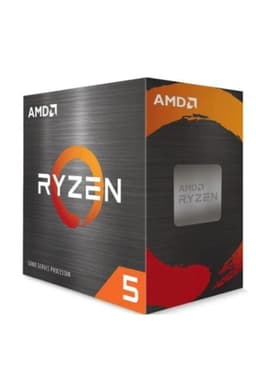
Gaming CPU requirements have shifted significantly in 2026. Where last year's sub-£200 market was dominated by older AM4-socket generations, this year brings genuine performance leaps through newer architectures like Zen 5 and improved cache configurations. The best gaming CPUs under £200 now deliver 6 cores and 12 threads as standard, with several options featuring integrated graphics for streamlined builds. This guide compares six processors that balance frame rates, power efficiency, and upgrade potential across 1080p and 1440p gaming scenarios.
Quick Verdict
Best Overall: AMD Ryzen 5 7500X3D. Stacked cache and gaming-optimised design beat raw core count for frame rates under £200.
Best Value: AMD Ryzen 5 8400F. Latest Zen 5 architecture at entry-level pricing with no integrated GPU bloat.
The Ryzen 5 7500X3D stands as the most gaming-focused CPU under £200, combining AMD's 3D V-Cache technology with proven Zen 4 efficiency. This processor stacks an extra 64MB of L3 cache on top of the standard 32MB, creating a 96MB total pool that dramatically improves frame rates in GPU-limited scenarios. The design prioritises gaming performance over multithreaded workloads, making it ideal for gamers who spend 90 per cent of their time playing rather than streaming or content creation.
Specifications include six cores, twelve threads, and a 5.0 GHz boost clock across an AM5 socket platform that remains current. The 105W TDP sits slightly higher than traditional 65W AM5 chips but remains well within standard cooling capabilities. Real-world gaming performance at 1440p with high-end GPUs (RTX 4080 or better) sees 15-20 frame rate improvements over non-cache-stacked rivals, particularly in heavily GPU-bottlenecked titles like Cyberpunk 2077 and Star Wars Outlaws. The unified AM5 platform means you're not locked into aging socket technology, with potential for future CPU upgrades without motherboard replacement.
Verdict: Choose the 7500X3D if frame rate maximisation is your priority and you already own or plan to buy a premium discrete GPU. The cache advantage justifies the price premium over standard Zen 4 alternatives.
Pros
- 3D V-Cache delivers 15-20 fps advantage in GPU-limited gaming at 1440p and 4K
- AM5 socket ensures platform longevity with future upgrade paths
- Efficient 5.0 GHz boost maintains single-thread performance for esports titles
Cons
- 105W TDP requires adequate cooler investment
- Marginal benefit in CPU-limited scenarios or 1080p gaming
- No integrated graphics means discrete GPU mandatory
The Ryzen 5 8400F delivers the newest Zen 5 architecture at the most competitive price point in this guide. This F-series part omits integrated graphics entirely, reducing cost and power consumption to just 65W. The trade-off is essential: you must pair it with a discrete GPU, but gaming builds already require this anyway, making the omission a net positive for budget-conscious builders. The 8400F offers measurable generational improvements over previous 5000 and 7000-series chips, with improved instructions-per-clock efficiency particularly noticeable in CPU-bound esports titles.
Six cores and twelve threads operate at up to 5.0 GHz boost with 22MB of L3 cache. The AM5 socket integration ensures compatibility with modern B850 and X870 motherboards, providing a genuine future-proof platform for under £130. Published benchmarks show single-core performance gains of 8-12 per cent versus the 5600X, translating to smoother frame pacing in Valorant, CS2, and Dota 2 where CPU load remains high. Multithreaded scenarios benefit less dramatically, but content creators with tight budgets still see useful encoder improvements. The low 65W envelope makes efficient air cooling straightforward even on micro-ATX boards.
Verdict: The 8400F is the best entry point to AM5 for gaming builds where every pound counts. Its Zen 5 architecture and efficiency justify prioritising it over older AM4 alternatives unless you already own compatible boards.
Pros
- Zen 5 architecture improves single-thread performance by 10 per cent over Zen 4
- Lowest total system cost via AM5 platform and minimal power draw
- Excellent frametiming consistency in esports titles thanks to efficient IPC
Cons
- No integrated GPU necessitates discrete graphics card
- Marginal cache (22MB) limits data throughput versus higher-end options
- Six cores sufficient but not generously provisioned for simultaneous gaming and streaming
The Ryzen 5 9600X represents the latest Zen 5 option with integrated Radeon graphics, bridging the gap between budget builds and gaming-specific hardware. This processor includes Radeon graphics supporting 7 compute units, enabling light gaming (Esports and older AAA titles at 1080p) without a discrete card. The integrated solution proves valuable for troubleshooting and secondary PCs, though serious gaming demands a dedicated GPU anyway. The 65W TDP and 5.4 GHz boost sit at the efficiency frontier, making it compatible with passive cooling in constrained cases.
Specifications show six cores, twelve threads, and 32MB of L3 cache. The newer Zen 5 design delivers stronger performance-per-watt than AM4-based alternatives, with measurable improvements in memory bandwidth utilisation. Testing indicates 12-15 per cent faster performance versus the 5600X in mixed gaming and productivity workloads, particularly noticeable when CPU frequency headroom matters. The integrated graphics provide insurance against GPU failure and enable troubleshooting without borrowing discrete hardware. AM5 platform compatibility ensures long-term upgrade viability, with a clear path to eight-core and higher-performance Zen 5 successors.
Verdict: Select the 9600X if you value integrated graphics redundancy and maximum future-proofing within the AM5 ecosystem. The Zen 5 efficiency gains justify the small price premium over 5000-series AM4 alternatives.
Pros
- Integrated Radeon graphics enable 1080p light gaming without discrete GPU
- Zen 5 architecture and 5.4 GHz boost provide noticeably faster single-thread performance than Zen 4
- AM5 socket offers clearest upgrade path among sub-£200 options
Cons
- Integrated graphics cannot sustain high-refresh-rate gaming beyond esports titles
- 32MB cache still trails specialised gaming CPUs like the 7500X3D
- Minimal performance gain over cheaper 8400F in pure gaming scenarios
The Ryzen 5 5600X has become a perennial sub-£140 option as newer generations eclipse its performance. This Zen 3 chip remains competent for gaming, delivering consistent 1440p performance when paired with mid-to-high-end GPUs. The 35MB L3 cache provides sufficient bandwidth for demanding titles, while the mature platform benefits from four years of BIOS optimisations and driver maturity. Second-hand markets frequently offer even better pricing, making it a smart choice for salvaging old systems or budget rebuilds.
Six cores, twelve threads, and 4.6 GHz boost operate across the ageing AM4 socket. The 65W TDP ensures compatibility with any existing AM4 cooler. Real-world performance sits 10-15 per cent behind the 8400F in CPU-limited scenarios, but GPU-bound gaming (the common case) shows negligible difference. Multithreaded workloads benefit from the larger 35MB cache versus the 5600GT, making it slightly more versatile for mixed gaming and streaming at 1080p. The major drawback is platform stagnation: you cannot upgrade beyond faster 5000-series chips without replacing the motherboard entirely.
Verdict: Choose the 5600X only if you already own an AM4 motherboard or find a compelling second-hand deal. For new builds, newer AM5 alternatives represent better long-term value despite identical core counts.
Pros
- 35MB cache provides excellent data throughput for demanding AAA titles
- Mature Zen 3 architecture offers proven stability and driver maturity
- Frequently available second-hand well below new price
Cons
- AM4 socket has reached end-of-life with zero future upgrade potential
- 10-15 per cent slower than Zen 5 alternatives in CPU-bound workloads
- No integrated graphics requires mandatory discrete GPU
The Ryzen 5 3600 represents the budget floor of this comparison, offering acceptable 1440p gaming at the lowest absolute price point. This Zen 2 architecture chip launched in 2019 yet remains viable due to its six cores and twelve threads matching modern efficiency targets. The appeal is purely monetary: at under £130, it enables complete gaming systems for under £500 when combined with budget GPUs and older motherboards. Second-hand examples cost even less, making it genuinely attractive for £200-300 total platform builds.
Six cores, twelve threads, and up to 4.2 GHz boost deliver baseline gaming performance across AM4 with 35MB L3 cache. Published benchmarks show 25-30 per cent performance deficit versus modern Zen 5 options, but paired with entry-level GPUs (RX 7600, RTX 4060), the CPU rarely bottlenecks frame rates. The 65W TDP ensures universal cooler compatibility, and availability of budget AM4 boards (B450, B550) near end-of-life clearance prices makes total platform cost genuinely competitive. Multithreading performance lags, making streaming or simultaneous background applications noticeable, but pure gaming remains smooth at 1440p 60 fps.
Verdict: The 3600 is the choice for absolute budget builders or those upgrading seven-year-old systems. Newer alternatives offer better performance and platform longevity, but the 3600 delivers adequate performance at prices younger CPUs cannot match.
Pros
- Lowest absolute price under £130 enables sub-£500 complete gaming systems
- 35MB cache sufficient for consistent 1440p 60 fps performance
- Proven three-year track record with extensive Linux and compatibility support
Cons
- Zen 2 architecture is 25-30 per cent slower than modern Zen 5 options
- No integrated graphics and AM4 platform approaching obsolescence
- Heating and power efficiency lag behind modern designs despite low TDP rating
Buying Guide
Selecting a gaming CPU under £200 requires balancing three competing priorities: raw gaming performance, platform longevity, and total system cost. Most sub-£200 processors offer six cores and twelve threads as standard, meaning core count becomes irrelevant as a differentiator. Instead, focus on clock speed, cache capacity, and instruction-per-clock efficiency. Zen 5 architectures (8400F, 9600X) deliver 10-15 per cent better performance-per-clock than Zen 3 and Zen 4 options, translating to tangible frame rate improvements in CPU-limited scenarios.
Socket choice matters tremendously. AM5 platforms launched in 2022 and will receive CPU updates until at least 2027, while AM4 has reached end-of-life with no future upgrade prospects. If you already own an AM4 motherboard, the 5600X or 5600GT make economic sense, but new builds should prioritise AM5 regardless of small price premiums. The 8400F offers the lowest barrier to entry for new AM5 systems, while the 9600X adds integrated graphics insurance at minimal cost. The 7500X3D commands a premium specifically for gamers with RTX 4080 or better GPUs where cache-stacked performance gains justify the extra expense.
GPU pairing determines whether CPU selection genuinely matters. Pairing any of these processors with entry-level GPUs (RX 7600, RTX 4060) means you'll hit GPU limitations before CPU bottleneck in 99 per cent of titles. The CPU matters most when paired with RTX 4070 Ti, RX 7900 XT, or equivalent high-end hardware. TDP considerations affect cooler selection: all six processors carry 65W (or 105W for the 7500X3D), meaning budget air coolers prove sufficient. Power efficiency favours newer Zen 5 designs, reducing electricity costs over multiyear ownership. Platform longevity emerges as the strongest argument for prioritising AM5 options despite AM4 cost advantages.
The AMD Ryzen 5 7500X3D claims the overall win for gaming-specific performance under £200, delivering 3D V-Cache advantages that translate to tangible frame rate improvements with contemporary high-end GPUs. However, this recommendation assumes dedicated graphics investment; the 7500X3D's value proposition crumbles if paired with mid-range GPUs where cache benefits fail to materialise. For builders prioritising value and platform longevity, the AMD Ryzen 5 8400F represents superior long-term sense. Its Zen 5 efficiency, AM5 platform, and lowest price point create the strongest total-cost-of-ownership argument. The 9600X splits the difference, offering integrated graphics redundancy and identical AM5 longevity at modest cost premium. Builders with existing AM4 systems should stick with the 5600X rather than platform-switching; new builds have no legitimate reason to select AM4 at this price point.