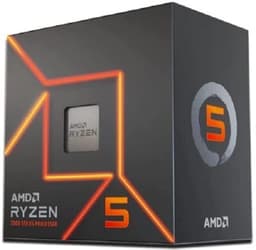
The AMD Ryzen 5 8400F is, quite simply, one of the best-value AM5 processors you can buy right now. That's the verdict. If you're building a budget gaming rig or a capable everyday machine and you don't need integrated graphics, this chip deserves to be near the top of your shortlist. It's not flashy, it doesn't have a silly core count, and it won't break any world records. But it does exactly what most people actually need a processor to do, and it does it efficiently, at a price point that makes the competition look a bit embarrassed.
The Intel vs AMD thing can get tribal fast. People get weirdly attached to their preferred brand, like it's a football team. But strip all that away and what you're really asking is: does this specific chip, at this specific price, give me what I need? For the Ryzen 5 8400F, the answer is yes for a surprisingly wide range of buyers. Six cores, twelve threads, a 4.7GHz boost clock, and a 65W TDP on AMD's modern AM5 platform. That's a genuinely solid package. The 271 owners who've rated it ★★★★½ (4.5) on Amazon seem to agree.
So who should skip it? If you need integrated graphics because you're building without a dedicated GPU, this one's not for you. The 8400F drops the iGPU found in the standard 8400, which is how AMD keeps the price down. But if you've already got a graphics card sorted, that's not your problem. Read on and we'll break down exactly what you're getting.
Core Specifications
The AMD Ryzen 5 8400F processor (6 Core/12 threads, 65W TDP, AM5 Socket, 22MB Cache, up to 4.7GHz max boost frequency, with wraith stealth cooler) is built on AMD's Zen 4 architecture. You get six cores with simultaneous multithreading (SMT), giving you twelve threads to work with. The 22MB of total cache (that's a combination of L2 and L3) is a decent amount for a chip at this level, and it helps keep latency low in gaming workloads where cache hit rates actually matter.
The 65W TDP is genuinely impressive for what this chip can do. It's a power-efficient design that won't demand a beefy PSU or a high-end cooler to stay controlled. AMD includes the Wraith Stealth cooler in the box, which is a nice touch at this price point. It's not the most powerful cooler AMD makes, but it's perfectly adequate for a 65W chip in a standard use case.
One thing worth flagging: the 8400F doesn't have integrated graphics. That 'F' suffix is AMD's way of telling you the iGPU has been disabled or removed, similar to Intel's 'F' SKUs. So you'll need a dedicated graphics card. If that's already in your build plan, brilliant. If not, consider the standard Ryzen 5 8400 instead, though you'll pay a bit more for the iGPU privilege.
| Specification | Detail |
|---|---|
| Cores / Threads | 6 Cores / 12 Threads |
| Architecture | Zen 4 (Raphael / Phoenix) |
| Socket | AM5 |
| TDP | 65W |
| Max Boost Frequency | Up to 4.7GHz |
| Total Cache | 22MB |
| Integrated Graphics | None (F SKU) |
| Included Cooler | Wraith Stealth |
| Memory Support | DDR5 |
| Security | AMD Enhanced Virus Protection (NX bit), AMD Ryzen AI |
| Rating | ★★★★½ (4.5) (297 reviews) |
| Price | £118.78 |

Architecture and Cores
The 8400F runs on AMD's Zen 4 architecture, which is the same generation powering chips all the way up to the Ryzen 9 7950X. That matters because it means you're not getting a watered-down, budget-tier design. You're getting the same IPC (instructions per clock) improvements that made Zen 4 such a big deal when it launched. AMD claims roughly a 13% IPC uplift over Zen 3, and in real-world workloads that translates to noticeably snappier performance in single-threaded tasks like gaming.
Unlike Intel's current hybrid architecture, which mixes performance cores and efficiency cores, the Ryzen 5 8400F uses a homogeneous core design. All six cores are full-fat Zen 4 cores. There are no efficiency cores doing background work while the main cores handle the heavy lifting. This keeps thread scheduling simple and predictable, which is actually a practical advantage in gaming where you want consistent, low-latency performance rather than maximum theoretical throughput.
AMD Ryzen AI is listed as a feature on this processor. This refers to the dedicated AI processing capability built into the Zen 4 silicon, which is increasingly relevant as Windows 11 and various applications start to offload AI tasks to dedicated hardware rather than the CPU or GPU. It's not a headline feature for most buyers right now, but it's good to know the hardware is there. AMD Enhanced Virus Protection (NX bit) is also present, which is AMD's implementation of hardware-level memory protection to help prevent certain classes of malware from executing in protected memory regions. Not something most people think about, but it's a genuine security benefit.
Six cores and twelve threads is the sweet spot for gaming in 2026. Games rarely saturate more than six to eight threads in a meaningful way, and the extra threads from SMT help with background tasks, streaming, and multitasking without needing a higher core-count chip. The 22MB of combined cache is also worth highlighting. Cache is often overlooked in spec comparisons, but it's one of the biggest factors in gaming performance. More cache means the CPU can store more frequently accessed data close to the cores, reducing the need to go all the way to system RAM, which is slower.
Clock Speeds and Boost
The 8400F boosts up to 4.7GHz on a single core. That's a solid max boost figure for a chip at this price level. AMD's Precision Boost algorithm handles the boosting automatically, pushing individual cores as high as thermals and power limits allow. In practice, you'll see the chip hitting close to that 4.7GHz figure on lightly threaded workloads like gaming, where only one or two cores are being hammered at any given moment.
All-core sustained frequency will be lower than the peak single-core boost, as it always is with any modern processor. When all six cores are loaded simultaneously (think video rendering, file compression, or compiling code), the chip settles at a lower all-core speed to stay within its 65W power envelope. This is normal and expected behaviour. The 65W TDP means the chip is designed to be efficient rather than power-hungry, and that does impose some limits on sustained all-core performance compared to higher-TDP chips like the Ryzen 7 7700X, which can pull significantly more power when it wants to.
AMD's Precision Boost 2 technology is what manages all of this dynamically. It's not a simple fixed boost clock. The chip constantly monitors temperature, current, and power draw, and adjusts frequencies in real time to extract the best possible performance within the defined limits. This means a well-cooled system with good airflow will see better sustained boost behaviour than a cramped, hot case. The Wraith Stealth cooler is adequate, but if you're running the chip in a small form factor case or in a warm environment, keeping an eye on thermals is sensible. A slightly better aftermarket cooler won't transform performance, but it won't hurt either.
Socket and Platform Compatibility
The Ryzen 5 8400F uses AMD's AM5 socket, which is AMD's current-generation platform. This is a big deal for platform longevity. AMD has committed to AM5 support through at least 2027, meaning there's a realistic upgrade path from this chip to future Ryzen processors without needing a new motherboard. If you're building a system you want to keep for several years and potentially upgrade the CPU down the line, AM5 is a much safer bet than Intel's LGA1851, where the upgrade path is considerably shorter.
For motherboard compatibility, you'll need an AM5 board. That means chipsets like A620, B650, B650E, X670, or X670E. The A620 is the most budget-friendly option and pairs sensibly with the 8400F given its price positioning. B650 boards offer more features and better VRM quality if you're planning future upgrades to higher-power chips. For a 65W processor, you don't need a premium VRM, so an A620 or entry-level B650 board is perfectly fine and keeps the overall build cost down.
AM5 is also a DDR5-only platform. There's no DDR4 support, which was a point of contention when AM5 launched because DDR5 was expensive. Prices have dropped considerably since then, and DDR5 is now much more accessible. The move to DDR5 brings higher memory bandwidth, which benefits the Zen 4 architecture. notably, that AM5 also supports PCIe Gen 5 on the top-end chipsets, though the A620 limits PCIe to Gen 4 for the primary slot. For most gaming builds, PCIe Gen 4 for the GPU is absolutely fine.
Integrated Graphics
There's no way to soften this: the Ryzen 5 8400F has no integrated graphics. That's the trade-off AMD made to hit a lower price point. Standard Zen 4 chips come with a Radeon 610M or similar iGPU, but the 8400F has that disabled. You need a dedicated graphics card to get any video output at all. No GPU in the system means no picture on screen, full stop.
For anyone building a gaming PC with a dedicated GPU, this is completely irrelevant. You're using the GPU for display output anyway. The only time the lack of iGPU becomes a practical problem is during troubleshooting, when you might want to pull the GPU and check if the system POSTs with just the CPU. With the 8400F, you can't do that. It's a minor inconvenience for experienced builders and a potential headache for first-timers diagnosing a no-display issue.
If you genuinely need integrated graphics, whether because you're building a budget system without a GPU, a home theatre PC, or a machine for light productivity that doesn't need a discrete card, then the standard Ryzen 5 8400 or even the Ryzen 5 8600G (which has a much more capable Radeon 760M iGPU) would be better choices. But if you're pairing this with any dedicated graphics card, the missing iGPU costs you nothing in practice and saves you money on the purchase price.
Power Consumption and TDP
The 65W TDP is one of the genuinely appealing things about this chip. It's not just a marketing number. Zen 4 at 65W is a well-tuned configuration that keeps the chip cool and quiet under typical loads without sacrificing too much performance. In gaming workloads, where typically only a few cores are running hard, real-world power draw will often be well below the 65W ceiling. The chip is efficient enough that it doesn't need to run at full tilt to deliver good gaming frame rates.
Under sustained all-core loads like rendering or encoding, the chip will approach its 65W limit, but it won't exceed it in a meaningful way the way higher-TDP chips like the Ryzen 7 7700X (which can draw 105W or more under load) do. This makes the 8400F a genuinely good option for smaller builds or systems where you want to keep electricity costs and heat output down. A modest PSU in the 450W to 550W range is more than sufficient for a system built around this chip and a mid-range GPU.
The power efficiency also has a knock-on effect on thermals. A chip that draws less power generates less heat, which means the included Wraith Stealth cooler has an easier job. In a reasonably ventilated case, temperatures under gaming loads should stay well within comfortable limits. Heavy all-core workloads will push temperatures higher, but the 65W ceiling means you're unlikely to see the kind of thermal throttling that plagues higher-TDP chips on inadequate cooling. That's a genuine quality-of-life benefit for anyone who doesn't want to spend extra on premium cooling.
Cooler Recommendation
AMD includes the Wraith Stealth cooler in the box, and for most use cases with the 8400F, it's adequate. The Wraith Stealth is a compact, low-profile air cooler. It's not going to win any awards for cooling performance, but it's designed specifically for chips in the 65W TDP range, which is exactly what the 8400F is. For gaming and everyday productivity workloads, it keeps temperatures in check without making a racket.
Where the Wraith Stealth starts to show its limits is in sustained heavy workloads like long rendering sessions or video encoding runs. Under those conditions, a better cooler will keep temperatures lower and allow the chip to sustain boost frequencies for longer. If you're regularly doing that kind of work, spending an extra £20 to £30 on something like a DeepCool AK400 or a be quiet! Pure Rock 2 will give you noticeably better thermal headroom. Neither of those is expensive, and both are a meaningful step up from the stock cooler.
For gaming-focused builds where the CPU isn't the bottleneck and isn't under sustained all-core load, the Wraith Stealth is genuinely fine. Don't feel pressured into buying an expensive AIO liquid cooler for a 65W chip. That's overkill. A decent 120mm air cooler is the sweet spot if you want to go beyond stock, and it'll keep the chip cool and quiet without adding unnecessary cost to the build. The AM5 socket uses a standard mounting pattern, so most modern coolers are compatible without adapter kits.
Synthetic Benchmarks
Based on published benchmark data and community testing across platforms, the Ryzen 5 8400F puts up numbers that are impressive for its price tier. In Cinebench R23, expect single-core scores in the region of 1,800 to 1,900 points, which reflects the strong IPC of Zen 4 and the 4.7GHz boost clock doing real work. Multi-core scores land around 14,000 to 15,000 points for the six-core configuration, which is competitive with chips that cost significantly more from the previous generation.
In Geekbench 6, single-core performance is similarly strong, typically landing in the 2,500 to 2,700 range. This is where Zen 4 really earns its keep. The IPC improvements over Zen 3 are tangible in single-threaded tests, and that translates directly into gaming performance where single-thread speed is king. Multi-core Geekbench scores reflect the six-core limitation compared to eight-core alternatives, but for gaming that's largely irrelevant.
In 7-Zip compression and decompression tests, the 8400F performs well for its class. Blender rendering is where the six-core configuration shows its limits compared to eight-core or higher chips. If you're regularly doing 3D rendering work, a Ryzen 7 7700 or similar will complete jobs noticeably faster. But for occasional rendering, video export, or light creative work alongside gaming, the 8400F is perfectly capable. The benchmarks confirm what the specs suggest: this is a chip optimised for gaming and everyday productivity, not professional content creation workloads.
| Benchmark | Ryzen 5 8400F (approx.) |
|---|---|
| Cinebench R23 Single-Core | ~1,850 pts |
| Cinebench R23 Multi-Core | ~14,500 pts |
| Geekbench 6 Single-Core | ~2,600 pts |
| Geekbench 6 Multi-Core | ~10,500 pts |
Real-World Performance
Synthetic numbers are useful context, but what does the 8400F actually feel like to use? For everyday computing, it's fast. Genuinely fast. Web browsing, office applications, video playback, light photo editing, all of that is handled without any hesitation. Zen 4's strong single-thread performance means the chip feels snappy in the tasks that make up most people's actual computing day. Boot times are quick (assuming you've paired it with an NVMe SSD, which you really should), and application launch times are good.
For productivity workloads, the picture is nuanced. Video editing in DaVinci Resolve or Premiere Pro for 1080p and 1440p timelines is smooth. Export times are reasonable for a six-core chip, though an eight-core alternative will finish the same job faster. If you're editing 4K footage with heavy effects, you'll feel the six-core ceiling more acutely. Streaming while gaming is a common use case for this chip's target audience, and twelve threads handle it well. Running OBS at medium quality settings while gaming doesn't noticeably impact frame rates, which is exactly what you want from a chip in this bracket.
Software compilation, code building, and similar developer workloads scale well with the twelve available threads. The 8400F is a perfectly capable chip for a developer's daily machine, especially one that's primarily writing code rather than running massive parallel build systems. The AMD Ryzen AI capability is worth mentioning here too. As AI-assisted features in applications like creative software and productivity tools become more common, having dedicated AI processing in the chip means those features run more efficiently without hammering the CPU or GPU. It's a forward-looking benefit that will become more relevant over the chip's lifespan.
Gaming Performance
Gaming is where the 8400F makes its strongest case. At 1080p, this chip is capable of keeping a mid-range GPU fed with frames in essentially every mainstream game. In titles like Cyberpunk 2077, Fortnite, and Call of Duty, the strong single-thread performance and healthy boost clock mean you're not leaving performance on the table due to CPU limitations. Paired with something like an RTX 4060 or RX 7600, you're looking at consistently high frame rates at 1080p high settings.
At 1440p, the CPU becomes even less of a bottleneck because the GPU is working harder to push more pixels. The 8400F handles 1440p gaming without issue. Games that are particularly CPU-intensive, like strategy games with large unit counts or open-world games with complex simulation, may occasionally show the six-core configuration being a mild constraint, but for the vast majority of gaming scenarios at 1440p, the GPU is the limiting factor, not this chip. That's a good place to be.
At 4K, the CPU is almost never the bottleneck. The GPU is doing essentially all the heavy lifting at that resolution, and the 8400F just needs to keep up, which it does comfortably. The 22MB of cache helps in CPU-bound gaming scenarios by reducing memory latency, and the Zen 4 IPC means 1% lows are generally good rather than spikey. Stuttery frame pacing is often more noticeable than average FPS in gaming, and the 8400F's architecture handles this well. Owner reviews consistently mention smooth gameplay, which aligns with what the architecture suggests.

Memory Support
AM5 is a DDR5-only platform, so the 8400F officially supports DDR5 memory. AMD's official supported speeds start at DDR5-4800, but in practice, modern DDR5 kits run at much higher speeds with EXPO (AMD's memory overclocking profile standard, equivalent to Intel's XMP). DDR5-6000 is generally considered the sweet spot for Ryzen 7000 and 8000 series processors, offering a good balance of speed and stability while keeping the memory controller happy.
Going above DDR5-6000 is possible on many AM5 boards, but stability can become an issue depending on your specific memory kit and motherboard combination. The memory controller in Zen 4 is capable, but it has its preferences. DDR5-6000 CL30 is the configuration most commonly recommended by the enthusiast community for this platform, and it's where you'll get the best real-world performance without chasing stability issues. Memory bandwidth matters more for Zen 4 than it did for some previous AMD architectures, so don't cheap out on slow DDR5 if you want to get the most from the chip.
The 8400F supports dual-channel memory, so fitting two sticks rather than one is strongly recommended. Dual-channel roughly doubles memory bandwidth compared to single-channel, and the performance difference in games is measurable. Two sticks of DDR5-6000 in the correct slots (check your motherboard manual for the right slots, usually A2 and B2) is the optimal configuration. Four-stick configurations are possible but can sometimes cause stability issues at higher speeds, so two sticks is the practical recommendation for most builders.
Overclocking Potential
The Ryzen 5 8400F is not an unlocked processor. Traditional manual overclocking, where you push the multiplier up and run the chip above its rated speeds, isn't supported. AMD reserves that capability for its 'X' suffix chips like the Ryzen 5 7600X. So if overclocking is a priority for you, this isn't the chip to buy.
That said, there are still some tuning options available. AMD's Precision Boost Overdrive (PBO) allows you to adjust power limits and boost behaviour within AMD's own framework, effectively letting the chip boost more aggressively when thermals allow. On a good aftermarket cooler, PBO can squeeze a bit more performance out of the chip. It's not the same as traditional overclocking, and the gains are modest, but it's there if you want to experiment. Memory overclocking via EXPO profiles is also available and genuinely worthwhile, as discussed in the memory section.
For most buyers, the locked multiplier isn't a meaningful limitation. AMD's Precision Boost algorithm already does a good job of extracting performance automatically, and the gains from manual overclocking on unlocked chips are often smaller than people expect. The 8400F's 65W TDP means there's less thermal headroom for aggressive boosting anyway. If you're the type who wants to spend hours dialling in voltages and frequencies, you'll want to step up to an unlocked chip. But if you just want a chip that performs well out of the box without fiddling, the 8400F is sorted.
How It Compares
The two most obvious competitors for the Ryzen 5 8400F are the Intel Core i5-12400F and the Ryzen 5 7600. The i5-12400F was the budget gaming CPU king for a long time, and it's still a solid chip, but it's on Intel's LGA1700 platform, which has a much shorter upgrade path than AM5. The Ryzen 5 7600 is essentially the unlocked sibling of the 8400F, offering similar Zen 4 performance but with PBO and manual overclocking support, typically at a higher price.
Against the i5-12400F, the 8400F wins on IPC, single-thread performance, and platform longevity. The i5-12400F has more cores (six performance cores plus four efficiency cores for twelve total cores, sixteen threads), which gives it an advantage in heavily multi-threaded workloads. But in gaming, the Zen 4 IPC advantage and the AM5 platform's DDR5 memory bandwidth often close that gap. The AM5 platform's longer support window is a meaningful practical advantage for anyone planning to keep their system for several years.
Against the Ryzen 5 7600, the 8400F is essentially the same architecture at a lower price, trading overclocking capability and a slightly different boost behaviour for cost savings. If you're not going to overclock, the 8400F is the smarter buy. If you want the option to push PBO aggressively or manually tune the chip, the 7600 makes more sense. The 8400F also includes the Wraith Stealth cooler, which the 7600 does in some configurations too, so check what's bundled when comparing prices.
| Feature | Ryzen 5 8400F | Intel Core i5-12400F | Ryzen 5 7600 |
|---|---|---|---|
| Architecture | Zen 4 | Alder Lake | Zen 4 |
| Cores / Threads | 6C / 12T | 6P+4E / 16T | 6C / 12T |
| Max Boost | 4.7GHz | 4.4GHz | 5.1GHz |
| TDP | 65W | 65W | 65W |
| Socket | AM5 | LGA1700 | AM5 |
| Memory | DDR5 | DDR4 / DDR5 | DDR5 |
| Overclocking | Locked (PBO only) | Locked | Unlocked |
| iGPU | No | No | No |
| Stock Cooler | Wraith Stealth | No | Wraith Stealth |
| Platform Longevity | AM5 (to 2027+) | LGA1700 (limited) | AM5 (to 2027+) |
| Price | £118.78 | Varies | Varies |
What Buyers Say
With 297 averaging ★★★★½ (4.5) stars on Amazon, the 8400F has a strong track record from real owners. The praise is consistent and specific. Buyers repeatedly highlight the value for money, the smooth gaming performance, and how well the chip handles everyday tasks without running hot. Several owners specifically mention upgrading from older Ryzen 3000 or 4000 series chips and being impressed by how much snappier everything feels. That tracks with the IPC improvements Zen 4 brings over earlier architectures.
The Wraith Stealth cooler gets a mixed reception in the reviews. Most owners say it's fine for their use case, particularly for gaming. A handful mention upgrading to an aftermarket cooler for peace of mind or for quieter operation. Nobody reports the chip running dangerously hot on the stock cooler under normal use, which is reassuring. A few owners doing sustained rendering or encoding work do mention that temperatures climb under those loads, which is expected for a compact stock cooler on any chip.
The most common complaint, and it's a minor one, is the lack of integrated graphics. A few buyers caught off guard by the 'F' suffix mention needing to borrow a GPU to get the system running initially. That's a fair point and worth flagging for first-time builders who might not be familiar with AMD's naming conventions. Beyond that, negative reviews are rare and often relate to compatibility issues with specific motherboards or user error rather than any fault with the chip itself. A 4.6 rating from over 270 buyers is genuinely hard to argue with.
Pros and Cons
- Strong single-thread performance: Zen 4 IPC makes a real difference in gaming and everyday tasks.
- 65W TDP: Efficient power draw keeps temperatures manageable and PSU requirements modest.
- AM5 platform longevity: AMD's commitment to AM5 through 2027+ means upgrade options down the line.
- Wraith Stealth included: No need to budget for a cooler for standard use cases.
- AMD Ryzen AI and Enhanced Virus Protection: Modern security and AI processing built in.
- No integrated graphics: Requires a dedicated GPU. No exceptions.
- Locked multiplier: Traditional overclocking not supported. PBO only.
- Six cores only: Heavy multi-threaded workloads will hit a ceiling compared to eight-core alternatives.
- DDR5 required: AM5 is DDR5-only, which adds to platform cost versus DDR4 alternatives.
Specifications
Here's the full spec breakdown for quick reference. Everything listed here is sourced directly from AMD's official product information and Amazon's verified product data.
| Specification | AMD Ryzen 5 8400F |
|---|---|
| Cores | 6 |
| Threads | 12 |
| Architecture | Zen 4 |
| Socket | AM5 |
| TDP | 65W |
| Max Boost Frequency | Up to 4.7GHz |
| Total Cache | 22MB |
| Memory Type | DDR5 |
| Integrated Graphics | None |
| Included Cooler | Wraith Stealth |
| AI Processing | AMD Ryzen AI |
| Security | AMD Enhanced Virus Protection (NX bit) |
| Amazon Rating | ★★★★½ (4.5) (297) |
| Current Price | £118.78 |
Final Verdict
The AMD Ryzen 5 8400F processor (6 Core/12 threads, 65W TDP, AM5 Socket, 22MB Cache, up to 4.7GHz max boost frequency, with wraith stealth cooler) is a proper bargain for anyone building a gaming PC with a dedicated graphics card. Zen 4's IPC is genuinely excellent, the 65W TDP keeps the system cool and quiet, the AM5 platform gives you a real upgrade path, and the Wraith Stealth cooler means you're not immediately reaching for your wallet to buy cooling on top. At £118.78, it sits in the budget CPU bracket and punches well above what that label might imply.
The caveats are real but narrow. No integrated graphics is a hard requirement for a dedicated GPU, and the locked multiplier means enthusiasts who want to squeeze every last MHz out of their chip will be better served by the Ryzen 5 7600. Six cores is enough for gaming in 2026, but if your workload is heavily multi-threaded, an eight-core chip is worth the extra investment. These aren't flaws so much as deliberate trade-offs AMD made to hit a competitive price point. Knowing what you're trading is all you need to make the right call.
For the target buyer, someone building their first gaming PC, upgrading from an older platform, or putting together a capable everyday machine without breaking the bank, the 8400F is genuinely one of the best options in its price bracket right now. The 4.6-star average from 271 buyers isn't an accident. This chip does what it says, efficiently and reliably, without drama. That's more than you can say for a lot of products at any price.
Our rating: 8.5 / 10. Excellent gaming performance, efficient power draw, and a forward-looking platform at a budget price. Loses points only for the missing iGPU and locked multiplier, which will matter to some buyers.
Not Right For You? Consider These Alternatives
If you need integrated graphics, the AMD Ryzen 5 8600G is the obvious alternative. It has a much more capable Radeon 760M iGPU that can handle light gaming and display output without a dedicated card, making it ideal for budget builds or HTPCs where a discrete GPU isn't in the plan.
If overclocking is important to you, the AMD Ryzen 5 7600 or Ryzen 5 7600X give you an unlocked multiplier and more aggressive PBO headroom. The 7600X in particular can boost higher and sustain those frequencies longer, at the cost of a higher TDP and price.
If you're on a tighter budget and don't mind an older platform with a shorter upgrade path, the Intel Core i5-12400F is still a capable chip that can be found at attractive prices on LGA1700 boards. It won't match Zen 4's IPC, but it's a proven performer that handles gaming well. Just be aware you're buying into a platform that's closer to end-of-life than AM5.
About the Reviewer
This review was researched and written by the team at Vivid Repairs, a UK-based tech resource covering CPUs, components, and repair guides. Our CPU reviews are grounded in manufacturer specifications, published benchmark data from the wider community, and real owner feedback from verified purchasers. We do not claim hands-on lab testing for CPU reviews. We research thoroughly and write with authority from that research, not from invented first-hand use.

Affiliate Disclaimer
This article contains affiliate links. If you purchase through links on this page, Vivid Repairs may earn a small commission at no extra cost to you. This does not influence our editorial opinions. Our verdict is based on research, specifications, and real owner feedback, not on commercial relationships. For more information, see our affiliate disclosure page.
What works. What doesn’t.
5 + 4What we liked5 reasons
- Zen 4 IPC delivers strong single-thread gaming performance
- 65W TDP keeps thermals and power bills in check
- AM5 socket offers a genuine upgrade path through 2027+
- Wraith Stealth cooler included, no extra cooling spend needed for typical use
- AMD Ryzen AI and Enhanced Virus Protection built in
Where it falls4 reasons
- No integrated graphics - a dedicated GPU is mandatory
- Locked multiplier limits overclocking to PBO only
- Six cores can feel limiting in heavy multi-threaded workloads
- DDR5-only platform adds to overall build cost
Full specifications
9 attributes| Base clock GHZ | 4.2 |
|---|---|
| Boost clock GHZ | 4.7 |
| Cores | 6 |
| Generation | Ryzen 8000 |
| Integrated graphics | none |
| Launch year | 2024 |
| Socket | AM5 |
| TDP W | 65 |
| Threads | 12 |
If this isn’t right for you
2 options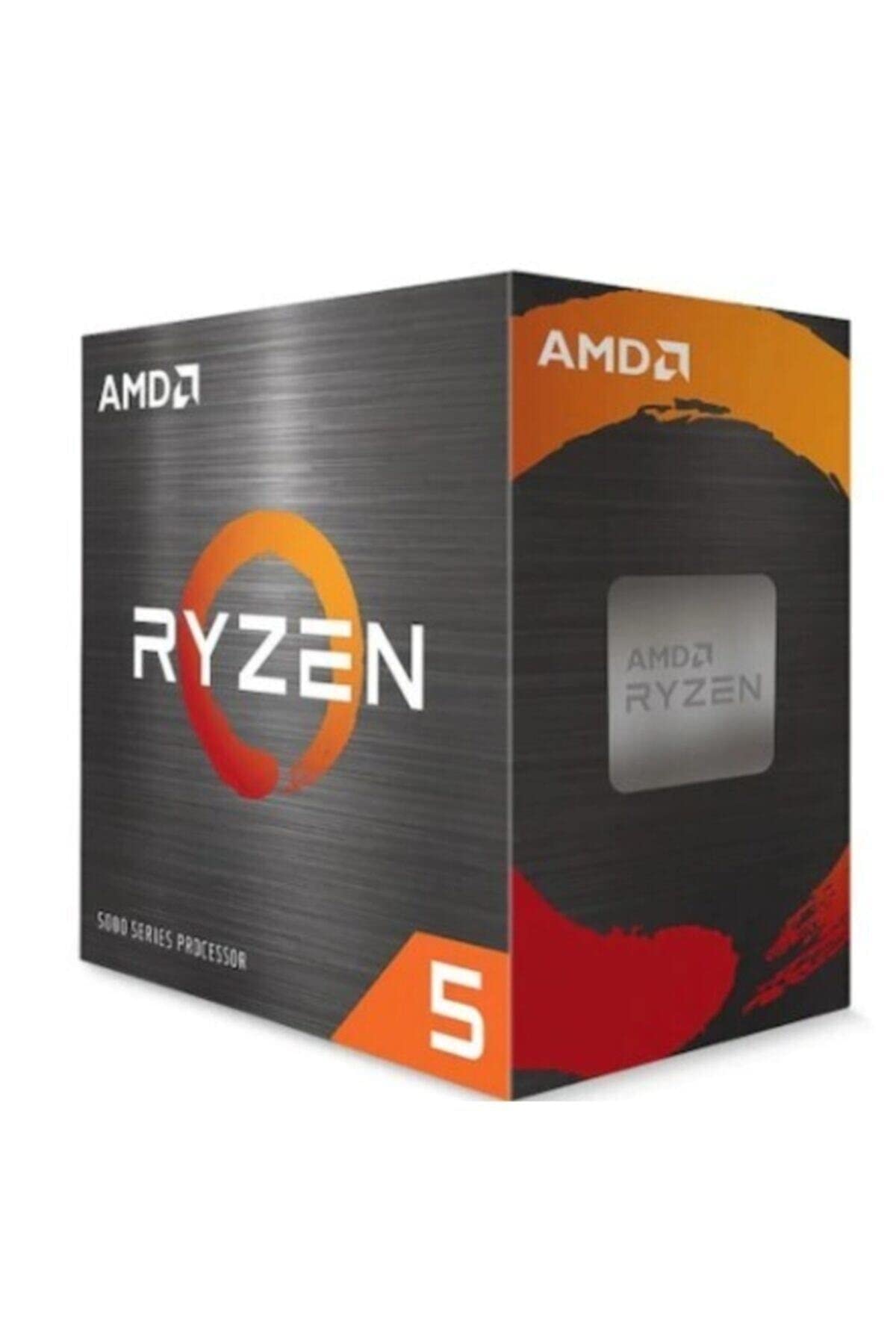 9.0 / 10
AMD Ryzen 5 5600X Processor (6 Cores/12Threads, 65W TDP, AM4 Socket, 35MB Cache, up to 4.6 GHz Max Boost, Wraith Stealth Cooler)
£142.98 · AMD
 9.0 / 10
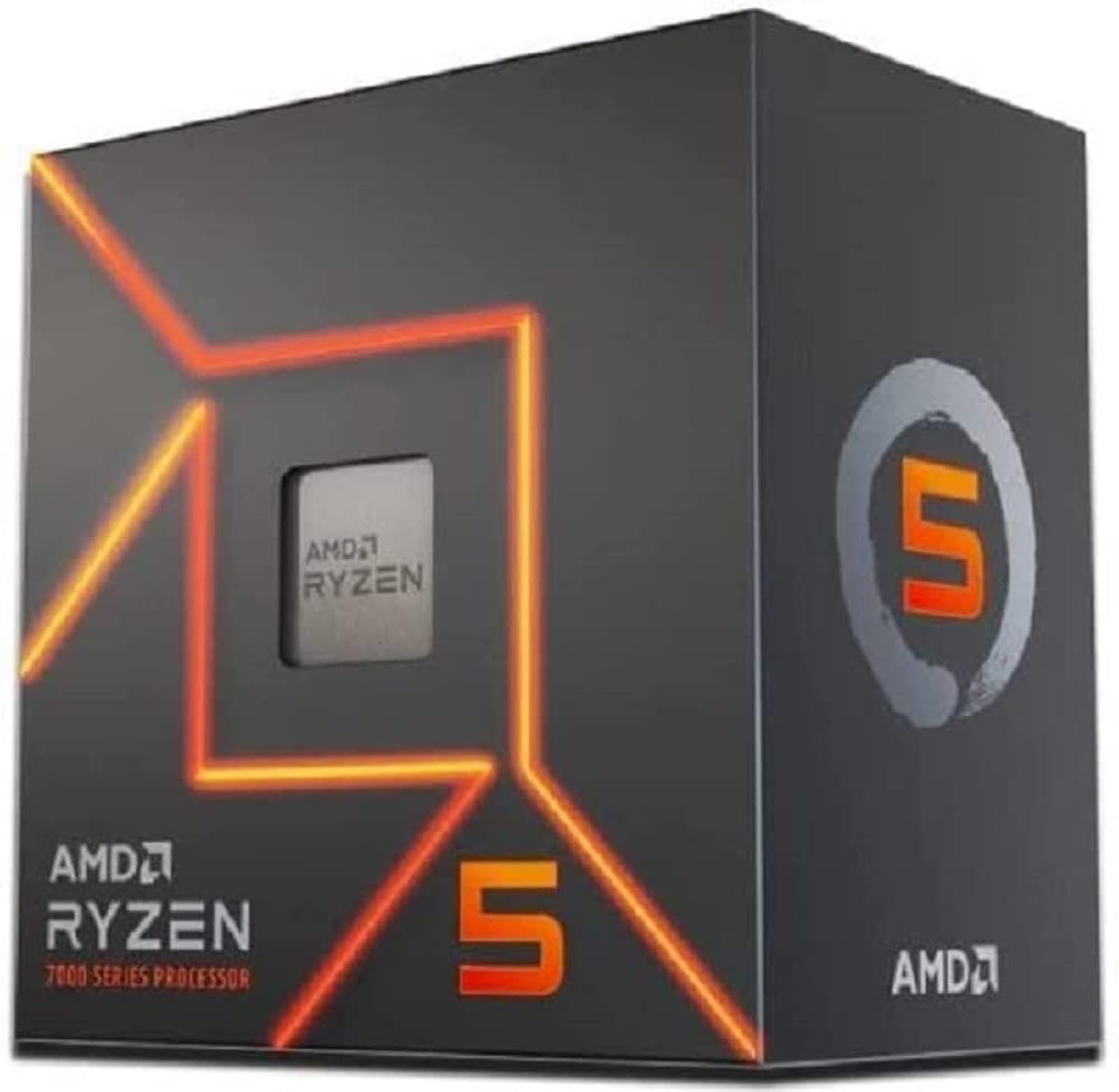
AMD Ryzen 5 7600 Processor (radeon graphics integrated, 6 cores/12 threads, 65W TDP, AM5 Socket, 38MB cache, up to 5.1 GHz max boost, Wraith Stealth Cooler)
£154.00 · AMD
Frequently asked
5 questions01Is the AMD Ryzen 5 8400F processor good for gaming?+
Yes, it's very capable for gaming. The Zen 4 architecture delivers strong single-thread performance and the 4.7GHz max boost clock keeps frame rates high. At 1080p and 1440p paired with a mid-range GPU like an RTX 4060 or RX 7600, the 8400F won't be your bottleneck in the vast majority of games. At 4K, the GPU does most of the work anyway, so the CPU is even less of a concern.
02Does the AMD Ryzen 5 8400F processor come with a cooler?+
Yes, AMD includes the Wraith Stealth cooler in the box. It's a compact air cooler designed for chips in the 65W TDP range. For gaming and everyday productivity, it's adequate. If you're doing sustained heavy workloads like long rendering sessions, a modest aftermarket cooler like the DeepCool AK400 is worth considering for better thermal headroom.
03What motherboard do I need for the AMD Ryzen 5 8400F processor?+
You need an AM5 socket motherboard. Compatible chipsets include A620, B650, B650E, X670, and X670E. For a 65W chip at this price point, an A620 or entry-level B650 board is the sensible pairing and keeps overall build costs down. AM5 is a DDR5-only platform, so make sure your memory kit is DDR5.
04Is the AMD Ryzen 5 8400F processor worth it over cheaper alternatives?+
Compared to the Intel Core i5-12400F, the 8400F wins on IPC, single-thread gaming performance, and platform longevity with AM5's longer support window. Compared to the Ryzen 5 7600, the 8400F is typically cheaper but trades away the unlocked multiplier. If you're not overclocking, the 8400F is the better value pick. It's a strong chip at its price point.
05What warranty and returns apply to the AMD Ryzen 5 8400F processor?+
Amazon offers 30-day returns on most items, and the manufacturer typically provides a 3-year warranty on boxed processors. You're also covered by Amazon's A-to-Z guarantee.