There's a question nobody asks when they're shopping for a surveillance or DVR hard drive: what actually happens when the thing has to run 24 hours a day, seven days a week, without a break, for years? Consumer drives aren't built for that. They're built for the kind of use where the PC sleeps half the day and nobody's writing video streams to it at two in the morning. The Western Digital AV-GP 1TB is built for exactly that scenario, and whether it's the right call for your setup depends entirely on what you're actually doing with it.
The verdict up front: this is a genuinely sensible drive for low-to-mid-tier surveillance systems, PVR/DVR boxes, and IPTV setups where always-on reliability matters more than raw speed. It's not a boot drive. It's not a gaming drive. It's not going to make your PC feel faster. But for the job it's designed for, the specs back it up and 1,293 owners averaging 4.4 stars suggest it mostly delivers. The frustration it solves is simple: sticking a standard desktop drive into an always-on DVR and watching it fail inside eighteen months because it was never rated for continuous operation. That's a real and annoying problem, and this drive addresses it directly.
So who should actually be reading this? If you're running a home CCTV system, a PVR, an IPTV box, or anything that needs a drive spinning continuously and writing video data around the clock, this is worth your attention. If you're looking for a fast general-purpose drive for a PC build, you're in the wrong place entirely, and you should probably be looking at NVMe options instead.
Core Specifications
The Western Digital AV-GP is a 3.5-inch desktop SATA hard drive aimed squarely at audio/video workloads. It's a spinning hard disk drive, not an SSD, so the usual SSD metrics like NAND type, controller, DRAM cache, TBW endurance ratings, and SLC cache behaviour don't apply here in the same way. What matters for a drive like this is rotational reliability, power management, vibration tolerance, and whether it's actually rated for continuous operation. WD's spec highlights make clear that it is.
The 1TB capacity sits at a sensible point for entry-level surveillance systems. WD's own feature list notes that the AV range covers 500GB and lower capacities for low-profile entry-level surveillance, which puts the 1TB version at the upper end of what this drive family is designed for. That's actually a good sign: you're not buying a drive that's being stretched beyond its design intent. The Western Digital AV-GP line is purpose-built for AV environments, not a consumer drive with a different sticker.
The IntelliPower feature is worth understanding properly. Rather than a fixed spin speed (the usual 5400rpm or 7200rpm you see on most drives), IntelliPower uses a tuned balance of spin speed, transfer rate, and caching algorithms to manage power consumption and performance together. It's not the fastest approach, but for a drive that's spinning continuously, keeping power draw and heat in check matters more than peak sequential throughput. IntelliSeek does something similar for seek operations, calculating optimum seek speeds to reduce power, noise, and vibration rather than always seeking at maximum speed.
| Specification | Detail |
|---|---|
| Capacity | 1TB |
| Form Factor | 3.5-inch desktop |
| Interface | SATA |
| Drive Type | HDD (spinning disk) |
| Designed Use | 24/7 AV, DVR, PVR, IPTV |
| Simultaneous HD Streams | Up to 16 (SilkStream) |
| Power Management | IntelliPower (variable spin speed) |
| Seek Management | IntelliSeek (optimised seek speed) |
| ATA Streaming | Compatible (SilkStream) |
| Rating | 4.4/5 from 1,293 reviews |
| Price | £47.32 |

Interface and Form Factor
This is a 3.5-inch SATA drive, full stop. No NVMe, no PCIe, no M.2. It connects via a standard SATA interface, which means it'll slot into any desktop PC, NAS enclosure, DVR box, or surveillance system with a SATA port and a 3.5-inch bay. That's essentially everything. Compatibility is not a concern here.
The SATA interface does cap maximum theoretical throughput at around 600MB/s, but that's completely irrelevant for this drive's intended purpose. Surveillance video streams, even multiple simultaneous HD streams, don't come close to saturating SATA bandwidth. The SilkStream feature is explicitly designed to handle up to 16 simultaneous HD streams smoothly, and the ATA streaming command set compatibility means DVR and CE hardware can manage error recovery and streaming priorities properly. That's the relevant performance metric here, not sequential read speed.
For anyone wondering whether to put this in a PC as a secondary storage drive: it'll work, and SATA is fine for bulk storage even in 2026. But you'd want to be clear-eyed about what you're getting. This is not a fast drive by any measure. It's a reliable, always-on-rated drive with power management tuned for continuous operation rather than burst performance. If you want a fast secondary drive for game installs or large file storage, a budget SATA SSD will wipe the floor with it on every performance metric. The AV-GP earns its place in a DVR enclosure or a dedicated surveillance system, not in a gaming rig.
Real-World Performance
Here's where you need to calibrate expectations properly. This is a spinning hard disk drive with IntelliPower variable speed management. It is not fast. It was never meant to be fast. The performance story for the Western Digital AV-GP is entirely about smooth, sustained, continuous video writing and playback, not about boot times, application launch speeds, or anything that benefits from the random I/O strengths of an SSD.
The SilkStream technology is the headline performance feature, and it's genuinely useful in context. Optimised for smooth, continuous digital video playback of up to 16 simultaneous HD streams, it's designed to prevent the kind of dropped frames and stuttering that happens when a drive is trying to handle multiple video streams while also doing seek-heavy random I/O for other tasks. The ATA streaming command set compatibility gives DVR and IPTV systems proper tools to manage stream priority and error recovery, which matters more than raw throughput when you've got 8 or 12 cameras all writing simultaneously.
Owner reviews back this up. The pattern across the 1,320 (averaging 4.4 stars) is consistent: people who bought this for DVR, CCTV, and IPTV use report solid reliability and no issues with continuous recording. People who expected desktop PC performance were disappointed, but that's a use-case mismatch rather than a product failing. For the job it's designed for, real-world performance is exactly what you'd want: steady, quiet, and continuous. Nobody's reporting dropped streams or recording failures in the majority of reviews, which is the actual test that matters for this drive.
Sustained Writes and Cache Behaviour
This is the section that matters most for SSD buyers, and it works slightly differently for a traditional HDD like the AV-GP. There's no SLC cache to fill and no cache cliff to worry about in the SSD sense. HDDs don't use NAND flash at all, so the whole TLC/QLC/SLC cache architecture simply doesn't apply. What you get instead is consistent, predictable write performance from the spinning platters, without the dramatic speed drops that happen when an SSD's cache exhausts.
That's actually one of the underrated advantages of a spinning drive for surveillance workloads. An SSD writing surveillance footage continuously will eventually exhaust its SLC write cache and drop to native NAND write speeds, which on QLC drives can be genuinely slow. A spinning HDD writes at a consistent rate determined by its rotational speed and data density. It's slower than an SSD in burst, but it doesn't fall off a cliff. For 24/7 continuous recording, that consistency matters more than peak speed.
The IntelliPower system does mean that write speeds aren't fixed at a single number. The drive balances spin speed, transfer rate, and caching to manage power and heat, which means sustained write performance is tuned for longevity rather than maximum throughput. For sequential video writes, which is what surveillance systems do, this is fine. The drive is purpose-built for this exact workload pattern. Where it would struggle is with heavy random I/O workloads, like an OS drive or a database, but nobody should be buying the AV-GP for those purposes anyway.
Controller, NAND and DRAM
As an HDD, the Western Digital AV-GP doesn't use NAND flash, doesn't have an SSD controller, and doesn't have a DRAM cache in the SSD sense. The relevant internal architecture here is the drive's firmware and the specific features WD has built for AV workloads. IntelliSeek and IntelliPower are the two key firmware-level features, and they work together to optimise the drive for continuous operation rather than peak performance.
IntelliSeek is worth understanding because it's not just a marketing term. On a standard desktop drive, the read/write head seeks at maximum speed to minimise latency. That's great for random I/O performance but generates more vibration and noise, and it's harder on the drive mechanics over time. IntelliSeek calculates the optimum seek speed for each operation, trading a small amount of latency for reduced vibration, lower power draw, and less mechanical stress. For a drive that's going to be seeking continuously for years, that's a sensible trade-off.
IntelliPower is similarly practical. Rather than spinning at a fixed 5400rpm or 7200rpm, the drive uses a tuned variable speed approach. This reduces power consumption and heat compared to a fixed high-speed drive, which matters for always-on use in enclosed DVR and surveillance enclosures that may not have great airflow. The trade-off is that peak sequential performance is lower than a 7200rpm desktop drive, but again, that's not the relevant metric for this use case. What matters is that the drive stays cool, stays reliable, and keeps writing without errors for years. The firmware is tuned for exactly that.
Endurance and Reliability
The 24/7 reliability rating is the single most important spec on this drive, and it's what separates the AV-GP from a standard desktop HDD. WD explicitly designed these drives for high-temperature always-on streaming environments including PVR/DVR and IPTV systems. That's not a vague marketing claim. It means the drive has been validated for continuous operation in ways that standard desktop drives haven't been.
Standard desktop drives are typically rated for something like 2,400 to 4,800 hours of operation per year, which works out to somewhere between 6 and 13 hours per day. Running them 24/7 in a DVR or surveillance system pushes them well beyond that, and the failure rates show it. The AV-GP is rated for 24/7 operation, which means the mechanics, firmware, and thermal management are all designed with continuous use in mind. That's a meaningful difference in expected lifespan for always-on applications.
Owner reviews tell a consistent story on reliability. The 4.4 average from 1,320 is solid for a drive in this category. Long-term owners report drives running continuously in DVR setups for multiple years without failure. There are negative reviews, as there always are with any mechanical drive (HDDs do fail, and that's just reality), but the failure rate pattern in the reviews doesn't suggest anything alarming. The recommendation is always the same regardless of how reliable a drive looks: back up anything you care about, because no single drive is a backup strategy.
Thermals
Thermals are a real concern for any drive running 24/7, and the AV-GP's design choices make sense in this context. The IntelliPower variable speed approach keeps power consumption lower than a fixed 7200rpm drive, which directly reduces heat output. For a drive sitting in a DVR enclosure or surveillance system that may have limited airflow, that matters. A drive running cooler runs more reliably over time, and heat is one of the primary causes of HDD failure in always-on applications.
The 24/7 reliability rating specifically calls out high-temperature always-on streaming environments. That phrasing suggests WD has validated the drive for operation in conditions where ambient temperatures are higher than a typical well-ventilated PC case. DVR enclosures and CCTV recorders often sit in cupboards, loft spaces, or utility rooms where airflow is minimal and temperatures can climb. A drive that's been tested and rated for those conditions is a better bet than one that hasn't.
There's no heatsink requirement or concern here in the way there is with modern Gen4 or Gen5 NVMe SSDs, which can hit temperatures that cause thermal throttling under sustained load. A spinning HDD generates heat differently and manages it through airflow rather than a heatsink. The main practical advice is to make sure whatever enclosure this goes into has at least some airflow, and to avoid situations where the drive is completely sealed with no ventilation at all. Beyond that, the drive's own power management handles the thermal side of things reasonably well.
Capacity Options and Price Per GB
The 1TB capacity is the focus here, and it sits at the upper end of what the WD AV range covers for low-profile surveillance systems. WD's own spec sheet notes that the AV drives offer 500GB and lower capacities for entry-level surveillance, which positions the 1TB version as suitable for setups with more cameras or longer retention periods. For a single-camera home CCTV setup with a week of retention, 1TB is plenty. For a four-camera system with two weeks of retention at HD resolution, you'd want to think carefully about whether 1TB is enough or whether you need to look at larger capacity options.
Price per GB on spinning HDDs is still considerably better than SSDs at this capacity, which is one of the reasons HDDs remain relevant for bulk storage and surveillance applications. You're not paying for NAND, controllers, or DRAM. You're paying for platters, mechanics, and firmware. For applications where you need lots of storage and speed doesn't matter much, that value proposition is real.
The honest comparison point here is that for pure bulk storage in a PC, a standard desktop HDD like the WD Blue or Seagate BarraCuda will offer similar or better price per GB without the AV-specific features. If you're not running a 24/7 surveillance system, you're paying a small premium for features you don't need. Conversely, if you are running a DVR or CCTV system and you buy a consumer desktop drive to save a few quid, you're taking a reliability risk that isn't worth it. Buy the right tool for the job.
Installation and Compatibility
Installation is about as straightforward as it gets. This is a standard 3.5-inch SATA drive. It uses a SATA data cable and a SATA power connector, both of which are present on every desktop PC, DVR, NVR, and most NAS enclosures made in the last fifteen years. There are no drivers to install, no special software required, and no firmware updates needed out of the box. Plug it in, format it in your DVR or surveillance software, and it's ready to go.
Compatibility with DVR and CCTV systems is the strong point here. The SilkStream ATA streaming command set compatibility means that CE devices (consumer electronics, which includes most DVR and IPTV hardware) can use standard streaming management and error recovery options with this drive. That's not guaranteed with a generic desktop drive. Some surveillance systems specifically recommend or require AV-rated drives, and the AV-GP ticks that box properly.
For PC users thinking about using this as a secondary storage drive, it'll work in any desktop with a free SATA port and a 3.5-inch bay. Laptops are out (they use 2.5-inch drives or M.2). External enclosures with USB-to-SATA bridges will work, though that's a slightly odd use case for an AV drive. There's no PS5 compatibility question here since the PS5 uses M.2 NVMe. The main compatibility gotcha to watch for is making sure your DVR or NVR firmware supports the 1TB capacity, though this is unlikely to be an issue with any system made in the last decade.
Who It's For
The Western Digital AV-GP 1TB is for anyone running a DVR, PVR, IPTV box, or CCTV/surveillance system that needs a drive to run continuously. That's the use case it was built for, and it's the use case where it makes genuine sense over alternatives. If you've got a home CCTV setup, a PVR recording TV shows overnight, or an IPTV system that needs local storage, this is a proper fit.
It also makes sense as a secondary storage drive in a desktop PC where you're storing large video files, particularly if the PC runs for extended periods. The 24/7 rating gives you more headroom than a standard consumer drive, and the IntelliPower and IntelliSeek features keep noise and vibration lower than a full-speed 7200rpm drive. For a home media server that's on most of the time, the AV-GP is a reasonable choice.
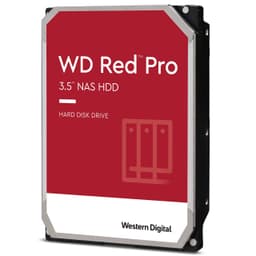
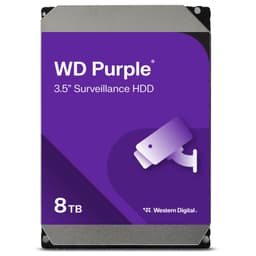
Who should look elsewhere? Anyone building a PC and wanting a boot drive or a fast secondary drive for games should not buy this. Get an NVMe SSD. The speed difference between a spinning HDD and even a budget NVMe drive is enormous for random I/O, which is what determines how fast a PC feels. Anyone who needs maximum storage capacity per pound and doesn't care about 24/7 reliability ratings should look at standard desktop HDDs, which will often be cheaper. And anyone running a large multi-camera surveillance system with high-resolution cameras and long retention requirements should look at WD's Purple drives, which are purpose-built for larger-scale surveillance workloads with higher capacity options.
How It Compares
The obvious competitors here are the Seagate SkyHawk and the WD Purple, both of which are purpose-built surveillance drives targeting similar use cases. The SkyHawk is Seagate's AV-specific line, and the WD Purple is WD's own higher-tier surveillance drive family with more focus on multi-camera NVR systems and higher capacities. Comparing the AV-GP against these two gives a clear picture of where it sits in the market.
The WD Purple is because it's from the same manufacturer and often comes up as a comparison. The Purple line is designed for more demanding surveillance setups with more cameras and longer retention requirements. It supports AllFrame technology for reducing frame loss, supports more simultaneous streams, and is validated for use with a wider range of NVR systems. If you're running a serious multi-camera setup, the Purple is the better tool. The AV-GP is the right call for simpler, lower-camera-count systems where the Purple's additional features aren't needed.
The Seagate SkyHawk competes directly with the WD Purple rather than the AV-GP, but it's it exists. For the AV-GP's intended use case, the main question is whether you need AV-specific features at all or whether a standard desktop drive would do. For 24/7 always-on use, the AV-GP's reliability rating justifies the choice. For occasional or intermittent recording, a standard drive might be fine and cheaper.
| Feature | Western Digital AV-GP 1TB | WD Purple 1TB | Seagate SkyHawk 1TB |
|---|---|---|---|
| Form Factor | 3.5-inch SATA HDD | 3.5-inch SATA HDD | 3.5-inch SATA HDD |
| 24/7 Operation | Yes | Yes | Yes |
| Target Use | DVR/PVR/IPTV, entry-level CCTV | Multi-camera NVR systems | Surveillance NVR systems |
| Simultaneous Streams | Up to 16 HD (SilkStream) | Up to 64 cameras | Up to 8 HD streams |
| AV Optimisation | SilkStream, IntelliSeek, IntelliPower | AllFrame, IntelliSeek, IntelliPower | ImagePerfect firmware |
| Price | £47.32 | Typically higher | Typically similar to Purple |

Final Verdict
The Western Digital AV-GP 1TB does exactly what it says on the tin. It's a 24/7-rated spinning hard drive built for DVR, PVR, IPTV, and entry-level surveillance systems where continuous operation and stream reliability matter more than speed. The SilkStream technology handles up to 16 simultaneous HD streams, the IntelliPower and IntelliSeek features keep power consumption and vibration sensibly low for always-on use, and the owner review pattern across 1,320 averaging 4.4 stars suggests it delivers on those promises in real-world use.
It's not a fast drive. It's not meant to be. If you put this in a PC as a boot drive or expect it to behave like an SSD, you'll be disappointed, and that disappointment will be entirely your fault for buying the wrong thing. But for the buyer running a home CCTV system, a PVR, or an IPTV box that needs reliable continuous storage, this is a proper fit and a sensible buy.
The honest don't-overspend line: if you're running a larger multi-camera NVR setup, the WD Purple is the better tool, with more simultaneous camera support and features designed for more demanding surveillance workloads. The AV-GP is the right call for simpler, lower-scale systems where the Purple's additional capabilities aren't needed and you'd rather not pay for them. Buy what fits your actual setup, not the most impressive-sounding spec sheet.
Overall verdict: 7 out of 10. Solid, purpose-built, and honest about what it is. Loses points only because it's a specialist product that many buyers will stumble onto by accident when they actually need something else entirely. If you're the right buyer, it's a very good buy. ★★★★☆ (4.4) from 1,320 owners broadly agrees.
What works. What doesn’t.
5 + 3What we liked5 reasons
- Rated for 24/7 always-on operation in high-temperature AV environments
- SilkStream handles up to 16 simultaneous HD streams smoothly
- IntelliPower and IntelliSeek reduce power, noise, and vibration for continuous use
- Strong owner satisfaction: 4.4 stars from over 1,200 reviews
- ATA streaming command set compatibility works with standard DVR and CE hardware
Where it falls3 reasons
- Not fast: not suitable as a boot drive or general PC storage
- IntelliPower variable speed means lower peak throughput than a 7200rpm desktop drive
- Overkill for intermittent recording; a cheaper standard HDD may suffice for light use
Full specifications
5 attributes| Capacity GB | 1000 |
|---|---|
| Form factor | 3.5" |
| Interface | SATA III |
| Type | HDD |
| Warranty years | 3 |
Frequently asked
5 questions01Is the Western Digital AV-GP 1TB fast enough for everyday use?+
Not in the way a PC user would want. This is a spinning hard disk drive with variable-speed IntelliPower management, designed for smooth continuous video streaming rather than fast random I/O. For DVR, PVR, and surveillance use it performs well, handling up to 16 simultaneous HD streams via SilkStream. For booting a PC, launching apps, or loading games, it will feel very slow compared to any SSD. It is the right tool for AV workloads and the wrong tool for general PC use.
02Does the Western Digital AV-GP slow down once a cache fills?+
As a traditional spinning HDD, the AV-GP does not use NAND flash and does not have an SLC write cache in the SSD sense. There is no cache cliff to worry about. Write performance is consistent and determined by the drive's rotational mechanics and IntelliPower tuning rather than a cache filling and exhausting. This is actually an advantage for continuous surveillance recording workloads, where consistent sustained write performance matters more than burst speed.
03Is the Western Digital AV-GP DRAM-less, and does that matter?+
The DRAM-less versus DRAM cache debate applies to SSDs, not to traditional spinning HDDs like the AV-GP. As an HDD, it uses a small onboard cache buffer (standard for HDDs) rather than the DRAM cache or Host Memory Buffer architecture found in SSDs. For the drive's intended AV and surveillance workloads, this is not a meaningful concern. The relevant features are IntelliSeek, IntelliPower, and SilkStream, all of which are firmware-level optimisations for continuous AV operation.
04How long will the Western Digital AV-GP 1TB last?+
WD rates the AV-GP for 24/7 always-on operation in high-temperature streaming environments, which means it is validated for continuous use in ways that standard desktop drives are not. Owner reviews across over 1,200 ratings show a consistent pattern of multi-year reliable operation in DVR and surveillance setups. No specific TBW endurance figure applies to HDDs in the same way as SSDs, but the 24/7 rating is a meaningful reliability signal. As with any mechanical drive, keep a backup of anything important.
05What warranty and returns apply to the Western Digital AV-GP 1TB?+
Warranty terms are not specified in the verified product data for this OEM drive. OEM drives sometimes carry shorter or more limited warranties than retail-boxed versions. Amazon's standard 30-day return policy and A-to-Z Guarantee apply to purchases through Amazon UK. Check the product listing for any warranty details provided by the seller, and contact WD directly if you need clarification on OEM warranty coverage.