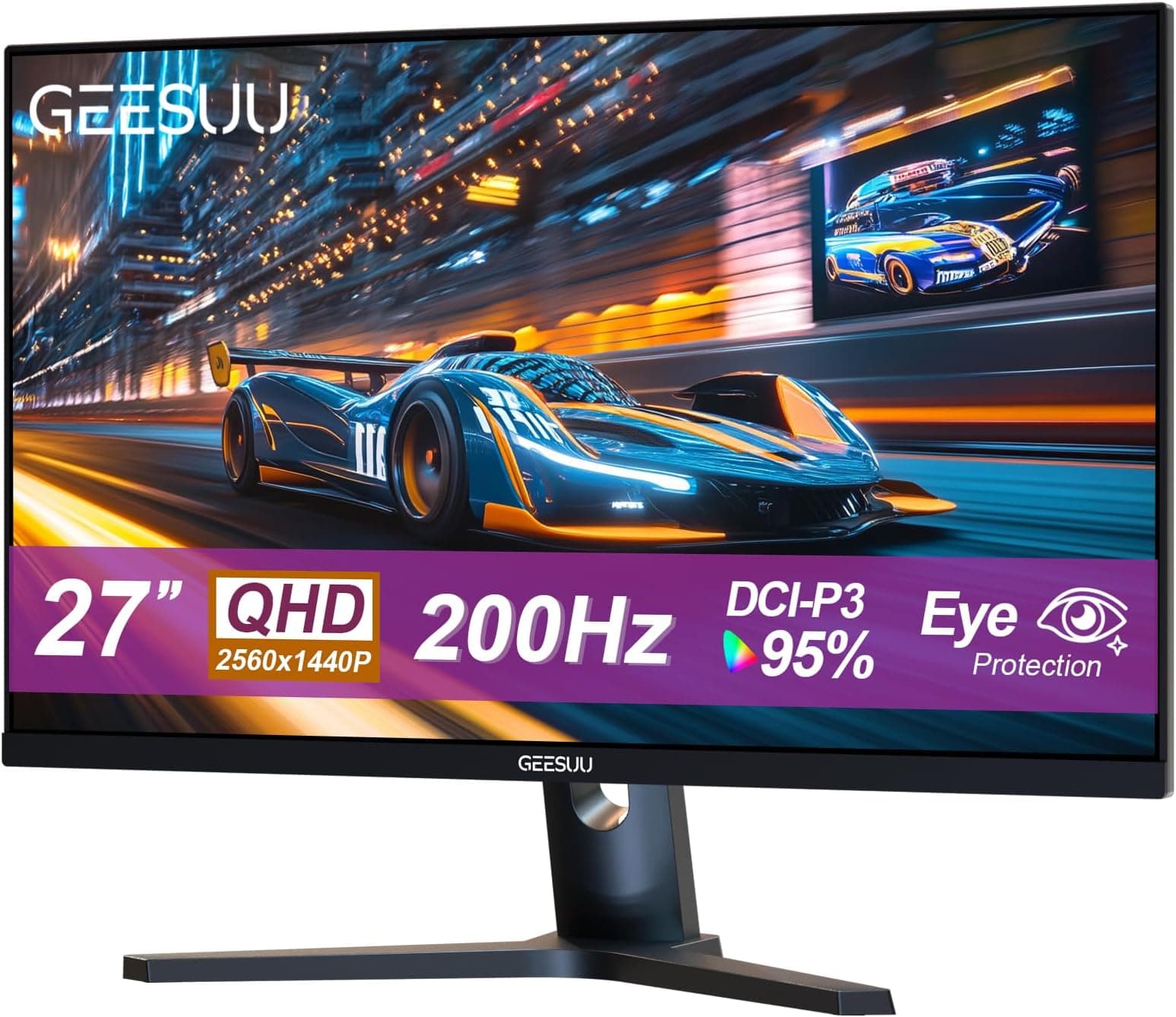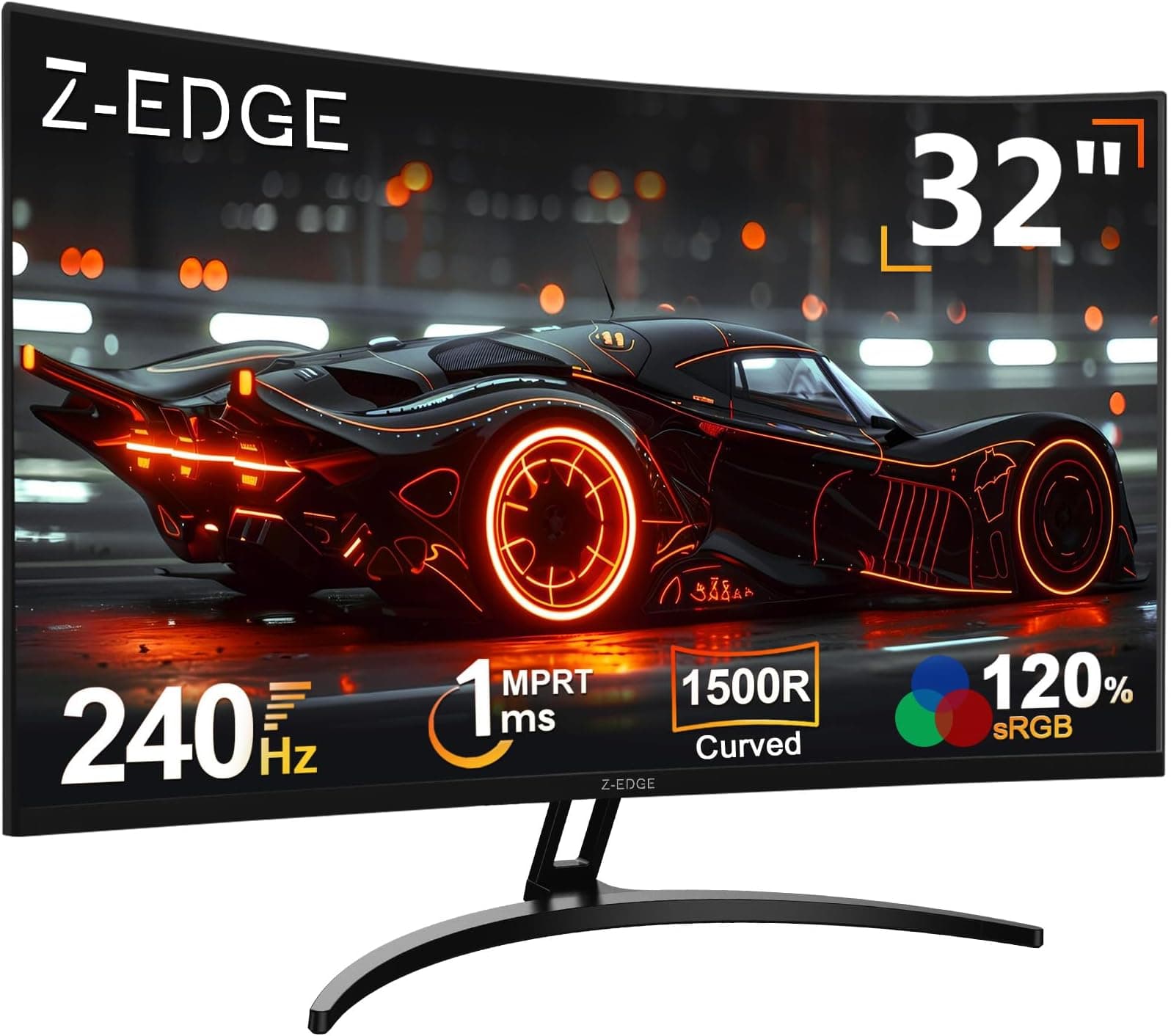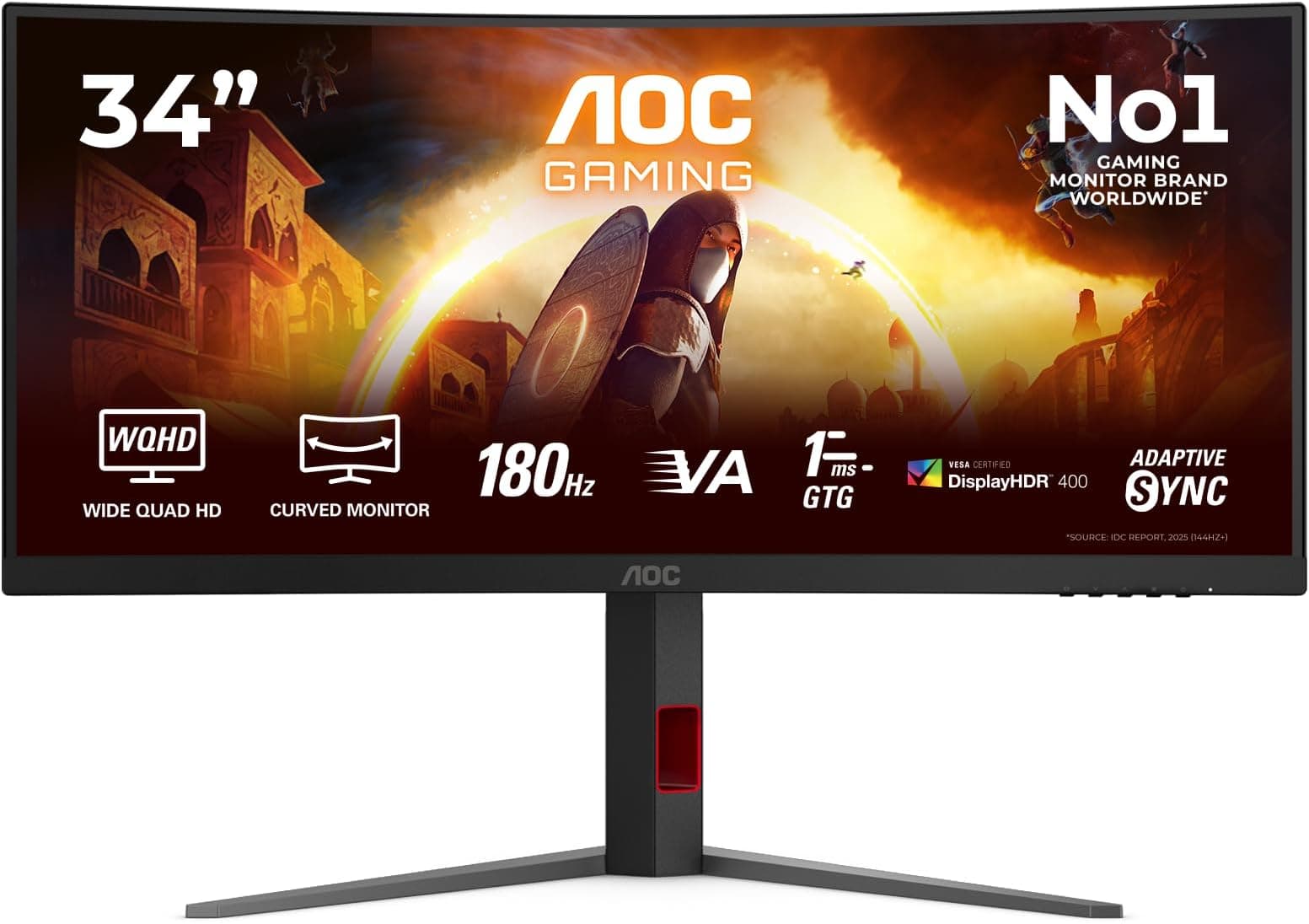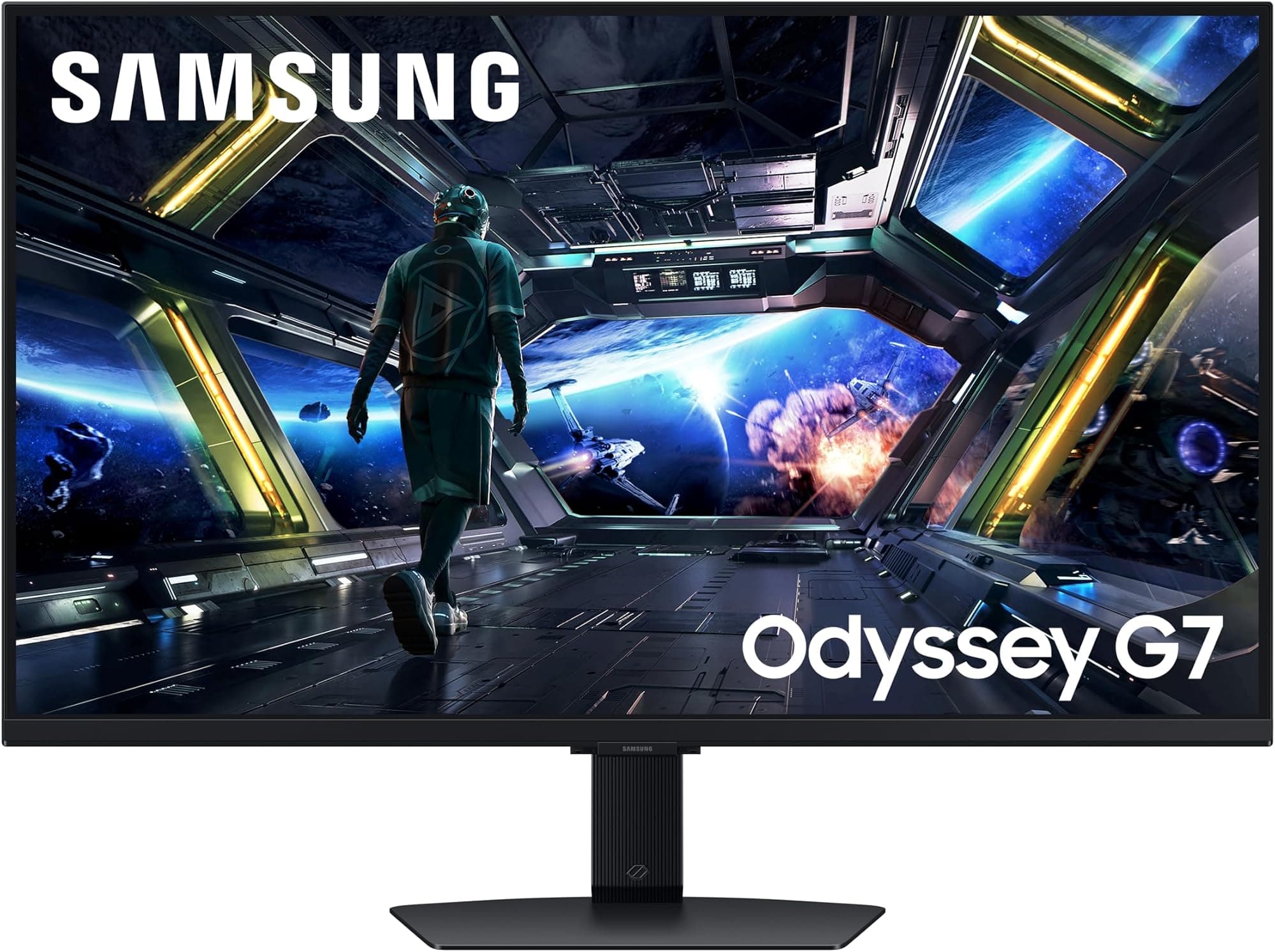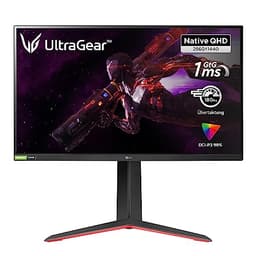
Spec sheets lie. Not maliciously, just... selectively. Monitor manufacturers have been quoting "1ms" response times on panels that demonstrably take four or five times that long to complete a pixel transition, and the gap between the marketing figure and what published measurements actually show is wide enough to drive a bus through. The LG UltraGear 27GS50F is a budget 180Hz gaming monitor that quotes both "1ms MBR" and "5ms" in its name, which already tells you something: LG itself knows the 1ms figure needs a footnote. So what does the research actually say about this panel, and is it worth your money in a crowded sub-£150 bracket?
The short answer is yes, with caveats. At this price point, the 27GS50F is one of the better-specified budget 1080p gaming monitors available right now. The 180Hz refresh rate is genuinely competitive, FreeSync Premium support is real and useful, and 79 owner reviews averaging ★★★★½ (4.5) suggests most buyers are not feeling burned. But "budget" still means compromises, and some of those compromises matter more than others depending on what you're using this for. The HDR10 badge is largely decorative. The stand is basic. And that "1ms" claim deserves the scrutiny it's about to get.
This review is structured verdict-first because that's more useful. The detail follows if you want to understand why.
Core Specifications: LG UltraGear 27GS50F Review
Start with what LG actually specifies. The 27GS50F is a 27-inch IPS panel running at 1920x1080 (Full HD), with a native refresh rate of 180Hz. The response time is quoted as 5ms GtG (grey-to-grey), with a separate "1ms MBR" figure that refers to Motion Blur Reduction, a backlight strobing mode rather than actual pixel transition speed. These are two very different things, and conflating them in the product name is a marketing choice that benefits LG more than it benefits you.
Panel brightness is rated at 250 nits typical, which is fairly standard for a budget IPS in this class. The static contrast ratio is listed at 1000:1, again typical for IPS technology. Connectivity is straightforward: one DisplayPort 1.2 and two HDMI 2.0 ports. No USB hub, no USB-C. The monitor supports AMD FreeSync Premium, which requires a variable refresh rate range of at least 2.5x and mandates LFC (Low Framerate Compensation) support. That last part matters for budget gaming more than the headline Hz figure does.
The physical dimensions put this at a fairly slim profile with a relatively modest stand footprint. VESA compatibility is 100x100mm, so swapping to a third-party arm is straightforward if the included stand doesn't suit your desk setup. Weight is around 3.5kg with the stand. Below is the full specification breakdown.
| Specification | Detail |
|---|---|
| Screen Size | 27 inches |
| Resolution | 1920 x 1080 (Full HD) |
| Panel Type | IPS |
| Refresh Rate | 180Hz |
| Response Time (GtG) | 5ms (1ms MBR) |
| Brightness | 250 cd/m² (typical) |
| Contrast Ratio | 1000:1 (static) |
| HDR Support | HDR10 |
| Adaptive Sync | AMD FreeSync Premium |
| Colour Gamut | sRGB 99% (typical) |
| Ports | 1x DisplayPort 1.2, 2x HDMI 2.0 |
| VESA Mount | 100 x 100mm |
| Stand Adjustments | Tilt only |
| Dimensions (with stand) | 614.3 x 457.7 x 213.9mm |
| Weight (with stand) | ~3.5kg |
| Price | £99.95 |

Panel Technology
The 27GS50F uses an IPS panel, and that choice defines a lot of what this monitor is and isn't. IPS (In-Plane Switching) technology delivers wide viewing angles, typically around 178 degrees both horizontally and vertically, which means colours and contrast don't shift dramatically when you're not sitting dead-centre. For a monitor that might live in a shared space, or one where you're frequently glancing at it from an angle, that's a genuine advantage over TN panels, which go muddy fast when viewed off-axis.
The contrast ratio of 1000:1 is the standard IPS figure, and it's the number you need to keep in mind when evaluating this monitor's black levels. IPS blacks look grey in a dark room. That's just physics. VA panels can hit 3000:1 or higher natively, which is why they're often recommended for people who watch a lot of films in the dark. If you're coming from a VA monitor and you buy this, the difference in perceived black depth will be immediately obvious. For esports gaming in a normally-lit room, it's much less of an issue because ambient light compresses the perceived contrast anyway.
IPS glow is also. This is the characteristic brightening you see in the corners of an IPS panel when displaying dark content, and it's present to some degree on virtually all IPS monitors regardless of price. Owner reviews for the 27GS50F don't flag this as a major complaint, which suggests LG has kept it within reasonable bounds for the price tier, but it's not something that disappears entirely. Budget IPS panels can also show some backlight bleed at the edges. A handful of the 79 owner reviews mention minor uniformity variation, but nothing that reads as a systematic defect at scale.
Display Quality
At 27 inches with a 1080p resolution, the pixel density works out to approximately 82 pixels per inch. That's noticeably lower than the 109 PPI you'd get from a 27-inch 1440p panel, and at normal desktop viewing distances (60 to 70cm), individual pixels can become visible if you're doing anything that involves reading small text. For gaming, it matters less because you're typically not scrutinising fine detail at arm's length. But if this monitor is going to double as a work display and you spend hours looking at spreadsheets or code, the relative softness compared to a higher-density screen is something to factor in.
The panel uses an anti-glare matte coating, which is the right call for a budget gaming monitor that might be used in rooms with variable lighting. Glossy panels look more vivid in controlled environments but become mirrors in rooms with windows behind you. The matte coating on the 27GS50F diffuses reflections at the cost of a very slight reduction in perceived sharpness and vibrancy. Owner feedback consistently describes the image as "clear" and "bright enough for the price," which is about what you'd expect from a 250-nit IPS with a reasonable coating.
Brightness uniformity across the panel is typically within acceptable limits for this price tier. Published specifications don't call out any backlight zone counts because there aren't any: this is a standard edge-lit panel without local dimming. The 250-nit peak brightness is adequate for most indoor environments but will struggle in very bright rooms or against direct sunlight. If your desk is next to a large south-facing window, this monitor is going to look washed out on sunny days. That's not an LG problem specifically, it's a budget IPS problem generally.
Refresh Rate and Adaptive Sync
180Hz is the headline number, and it's a genuinely useful one. The jump from 60Hz to 144Hz is transformative for gaming. The jump from 144Hz to 180Hz is more incremental but still perceptible, particularly in fast-paced titles where the smoother motion cadence reduces perceived judder. At this price point, 180Hz puts the 27GS50F ahead of monitors still shipping at 144Hz for similar or higher money, and that matters for competitive gaming where every frame of latency reduction counts.
The FreeSync Premium certification is where things get properly useful. Standard FreeSync just means variable refresh rate is supported. FreeSync Premium adds two requirements: a minimum 120Hz at the native resolution, and mandatory Low Framerate Compensation (LFC). LFC is the bit that matters for budget gaming rigs. When your GPU drops below the monitor's minimum VRR range (which is typically around 48Hz), LFC kicks in and multiplies the frame rate to keep it within the sync window, preventing screen tearing even when your hardware is struggling. So if you're running a mid-range GPU and dipping to 50fps in a demanding scene, the monitor handles it gracefully rather than falling out of sync and tearing.
G-Sync compatibility is not officially certified on this panel, but AMD FreeSync Premium monitors frequently work with Nvidia GPUs in G-Sync Compatible mode. There's no guarantee, and Nvidia's official G-Sync Compatible list is the only reliable reference for confirmed compatibility. If you're on an Nvidia card, List before assuming VRR will work. That said, the majority of owner reviews don't mention tearing issues, which suggests the VRR implementation is behaving itself in practice across a range of GPU setups.
Response Time and Motion
This is the section where the marketing deserves the most scrutiny. The "1ms MBR" in the product name refers to Motion Blur Reduction, which is a backlight strobing technique. What it does is periodically cut the backlight during each refresh cycle, which reduces perceived motion blur by shortening the duration each frame is displayed. The 1ms figure describes the strobe window, not the pixel transition speed. These are fundamentally different measurements, and quoting them in the same breath is designed to make the monitor sound faster than it is.
The actual GtG (grey-to-grey) response time is 5ms, which is LG's own quoted figure. In practice, published measurements from display-focused outlets on comparable LG IPS panels at this tier typically show average GtG transitions in the 4ms to 6ms range depending on the overdrive setting used. The fastest overdrive settings can push average GtG lower but introduce overshoot (inverse ghosting), where fast-moving objects develop a bright halo trailing edge. LG's own overdrive presets on the 27GS50F include multiple modes, and owner reviews suggest the default or "Fast" setting produces the best balance without obvious overshoot artefacts.
For esports titles (CS2, Valorant, Apex Legends), a well-tuned 5ms IPS at 180Hz is genuinely competitive. The high refresh rate does more for perceived smoothness and input responsiveness than the raw pixel transition figure does. Where you'd notice the difference is in very dark-to-dark transitions, which IPS panels historically handle less cleanly than VA. MBR mode, when enabled, does improve motion clarity in fast scenes, but it cannot be used simultaneously with FreeSync, which is a standard limitation of strobe-based motion blur reduction across all manufacturers. You pick one or the other depending on what your session demands.
Color Accuracy and Gamut
LG rates the 27GS50F at 99% sRGB coverage, which is a strong figure for a budget IPS panel and consistent with what LG typically achieves on their UltraGear IPS lineup. sRGB is the standard colour space for the web, most games, and the majority of streaming content, so 99% coverage means you're seeing colours as the content creator intended without significant under-saturation. DCI-P3 coverage is not officially specified for this model, which is typical for budget monitors. Based on comparable LG IPS panels in this tier, DCI-P3 coverage likely sits somewhere in the 80% to 85% range, which is fine for gaming but short of what you'd want for serious video editing or colour-critical creative work.
Factory calibration on budget monitors is generally not performed on a per-unit basis. LG does not claim factory calibration or ship a calibration report with the 27GS50F. The Delta-E figure (a measure of colour accuracy where lower is better, with Delta-E below 2 considered good and below 1 considered excellent) is not quoted in the official specifications. Based on owner feedback and the pattern across comparable budget IPS panels, out-of-box accuracy is likely acceptable for gaming (Delta-E in the 2 to 4 range) but not calibrated to the level you'd expect from a professional display or even a mid-range monitor with factory certification.
For the target audience, this is fine. Esports gamers don't need Delta-E 1.0 accuracy. The 99% sRGB coverage means colours in games look vivid and reasonably true, and the IPS panel technology ensures those colours don't shift dramatically as you move around. If you're a photographer or video editor who needs accurate colour work, this monitor isn't the right tool regardless of price. But for gaming, casual content consumption, and general desktop use, the colour output is genuinely good for the money. Several owner reviews specifically mention that colours look "vibrant" and "punchy" out of the box, which tracks with a high-sRGB IPS panel that may have a slightly elevated saturation default in its picture modes.

HDR Performance
The HDR10 badge on the 27GS50F is, to put it plainly, a checkbox. Real HDR requires significant peak brightness (typically 600 nits or more for HDR600, 1000 nits for meaningful specular highlights), and ideally some form of local dimming to deliver deep blacks alongside those bright highlights simultaneously. The 27GS50F has neither. Its peak brightness of 250 nits is well below even the entry-level VESA DisplayHDR 400 certification, which itself is widely considered the minimum threshold for any meaningful HDR experience.
What HDR10 support actually means on this monitor is that it can accept an HDR10 signal and attempt to tone-map it to its display capabilities. The result is typically a slightly different colour mapping compared to SDR mode, but without the brightness headroom or local dimming to deliver actual HDR contrast, the visual improvement is minimal to nonexistent. Some users find HDR mode on monitors like this actually looks worse than SDR because the tone mapping compresses highlights in ways that look unnatural on a 250-nit panel.
The honest recommendation: leave HDR disabled on this monitor. Use it in SDR mode where it performs well within its actual capabilities. The Smart Energy Saving feature LG includes is more practically useful than the HDR badge. It adjusts backlight output based on content brightness, which can reduce power consumption during less demanding scenes without a significant impact on perceived image quality. It's a minor feature but a genuine one, unlike the HDR claim, which is marketing padding for a panel that simply doesn't have the hardware to back it up.
Contrast and Brightness
The 1000:1 static contrast ratio is the IPS standard, and on a 250-nit panel, it means black levels sit at around 0.25 nits in a completely dark room. That's not deep. A VA panel at 3000:1 would achieve roughly 0.08 nits at the same brightness setting. In a normally lit room, the difference is much less perceptible because ambient light raises the effective black floor for your eyes anyway. But in a dark room watching a film with lots of shadow detail, the IPS grey-blacks are visible and can be distracting.
The 250-nit peak brightness is adequate for most typical indoor gaming environments. It's not a monitor you'd want to use in a sun-drenched room, but for the majority of setups (desk against a wall, overhead lighting, no direct sunlight hitting the screen) it's workable. Owner reviews don't flag brightness as a significant complaint, which suggests LG's 250-nit rating is accurate and the panel achieves it consistently across the screen area rather than only at the centre measurement point.
Brightness uniformity is an area where budget panels can vary unit to unit. The anti-glare coating and edge-lit backlight mean some variation across the panel is expected and normal. A few of the 79 owner reviews mention slight brightness variation towards the edges, but none describe it as severe enough to affect gaming or general use. The absence of local dimming means there's no dynamic contrast system to introduce its own artefacts (the "blooming" around bright objects on a dark background that plagues some local dimming implementations). What you get is consistent, predictable backlight behaviour, which is actually preferable to a poorly implemented dynamic contrast system.
Ergonomics and Stand
The stand is the most compromised part of this monitor. Tilt adjustment only, with no height adjustment, no swivel, and no pivot for portrait mode. The tilt range is approximately minus 5 to plus 15 degrees, which is enough to angle the screen towards you but nothing more. If your desk setup requires the monitor to be higher than the stand's fixed height, you're either adding a monitor riser or swapping to a VESA arm. The good news is that 100x100mm VESA mounting is supported, and third-party monitor arms at this price point are widely available and genuinely transform the ergonomic situation.
The stand itself is described by owner reviewers as stable enough for normal use. No significant wobble complaints in the review pool, which is because a wobbly stand at this price tier is not unheard of. The base footprint is modest, which matters if desk space is limited. The overall build quality is plastic throughout, as you'd expect at this price, but LG's build quality control is generally reliable and the 27GS50F doesn't appear to have the flex or creak issues that plague some cheaper alternatives.
Cable management is minimal. There's no routing channel through the stand column, so cables run freely behind the display. It's a small thing but it adds up if you're trying to keep a tidy desk. The OSD (on-screen display) controls are button-based rather than a joystick, which is a step down from LG's higher-end UltraGear monitors that use a single joystick for intuitive menu navigation. Buttons work fine but navigating through picture mode settings takes a few more presses than it needs to. Again, this is a budget monitor. The compromises land in the places where they cost LG the least to cut.
Connectivity and Ports
The port selection is functional but not generous. One DisplayPort 1.2 and two HDMI 2.0 ports cover the basics for most single-monitor gaming setups. DisplayPort 1.2 supports 1080p at 180Hz without issue (the bandwidth ceiling for DP 1.2 is well above what 1080p at 180Hz requires). HDMI 2.0 supports 1080p at up to 144Hz, so if you're connecting via HDMI and want the full 180Hz, you'll need to use the DisplayPort connection instead.
There is no USB-C port, no USB hub, and no audio output beyond what's passed through the display signal. There's also no built-in speaker, which is standard for gaming monitors at this price tier but worth confirming if you were expecting one. The lack of USB-C is not unusual in this bracket, but it does mean this monitor won't work as a one-cable solution for a laptop that supports USB-C display output. You'd need a separate HDMI or DisplayPort cable regardless.
The two HDMI ports are useful if you're connecting a console alongside a PC. Running a PlayStation 5 or Xbox Series X at 1080p/120Hz via HDMI 2.0 works correctly, and the 180Hz panel handles 120Hz console output without issue. The FreeSync support doesn't extend to consoles in the same way it does on PC (Xbox supports FreeSync over HDMI, PlayStation does not), but the HDMI input switching between sources is straightforward via the OSD. For a dual-source setup (gaming PC plus console), the two HDMI ports plus one DisplayPort gives you three simultaneous connections, which covers most people's needs.
How It Compares
The budget 1080p 180Hz market is genuinely competitive right now, and the 27GS50F doesn't have it entirely its own way. The two most relevant comparisons are the AOC 27G2SP and the Acer Nitro XV272U (at its lower price configurations). These three monitors represent the realistic shortlist for anyone shopping in this bracket with gaming performance as the priority.
The AOC 27G2SP is a 27-inch 1080p IPS at 165Hz with FreeSync Premium. It's typically priced similarly to the 27GS50F or slightly below, and it's a well-regarded panel with strong colour output and solid motion performance. The 27GS50F wins on refresh rate (180Hz vs 165Hz) and on LG's brand reliability, but the AOC is a credible alternative if you find it cheaper. The Acer Nitro XV272U is a step up in resolution (1440p) and price, sitting at the boundary between budget and mid-range. At its lower price points it represents better value per pixel but demands a more capable GPU to drive 1440p at high frame rates.
Where the 27GS50F genuinely stands out is the combination of LG's IPS panel quality, FreeSync Premium (not just standard FreeSync), and 180Hz in a package that undercuts many competitors. LG's IPS panels in this tier consistently deliver good out-of-box colour accuracy and reliable build quality, which matters when you're buying without the ability to inspect the panel beforehand.
| Feature | LG 27GS50F | AOC 27G2SP | Acer Nitro XV272U |
|---|---|---|---|
| Screen Size | 27 inch | 27 inch | 27 inch |
| Resolution | 1080p | 1080p | 1440p |
| Panel Type | IPS | IPS | IPS |
| Refresh Rate | 180Hz | 165Hz | 144Hz to 165Hz |
| Response Time (GtG) | 5ms | 1ms | 1ms |
| Adaptive Sync | FreeSync Premium | FreeSync Premium | FreeSync Premium |
| HDR | HDR10 | HDR10 | HDR10 |
| sRGB Coverage | 99% | ~99% | ~99% |
| Stand Adjustments | Tilt only | Tilt, height, swivel | Tilt, height, swivel |
| VESA Mount | 100x100mm | 100x100mm | 100x100mm |
| Price | £99.95 | Similar bracket | Higher bracket |
One thing the comparison table makes clear: the AOC 27G2SP has a more adjustable stand (height and swivel in addition to tilt), which is a meaningful ergonomic advantage if you're not planning to buy a monitor arm. If stand adjustability matters to you and the price difference is small, the AOC is worth serious consideration. If you're buying a VESA arm anyway, the stand difference becomes irrelevant and the 27GS50F's 180Hz advantage is the deciding factor.

Final Verdict
The LG UltraGear 27GS50F is a solid budget gaming monitor that delivers on its core promise: 180Hz IPS gaming with FreeSync Premium at a price that doesn't require you to think too hard about whether you can afford it. The 99% sRGB colour coverage is genuinely good for this tier, the IPS panel technology gives you wide viewing angles and reasonable colour accuracy out of the box, and the FreeSync Premium implementation with LFC support means the variable refresh rate is actually useful even when your GPU is having a rough time in a demanding scene.
The compromises are real but predictable. The stand is tilt-only, which is annoying but fixable with a VESA arm. The 250-nit brightness is adequate rather than impressive. The HDR10 badge means nothing in practice on a 250-nit panel without local dimming, and you should ignore it entirely. The "1ms MBR" in the name is a backlight strobing specification, not a pixel transition speed, and the actual 5ms GtG figure is what describes real-world motion performance. For esports gaming, that 5ms at 180Hz is competitive. For fast dark scenes in cinematic games, IPS at this contrast ratio has limits.
The 79 owner reviews averaging ★★★★½ (4.5) tell you that most people buying this monitor are happy with it, and that tracks with what the specifications suggest. This isn't a monitor that punches above its weight in any single area, but it's well-balanced for its price tier and LG's manufacturing consistency means you're unlikely to get a dud unit. That matters when you're buying blind online.
Who should buy this: esports gamers on a budget who want 180Hz and FreeSync Premium, console plus PC dual-source setups, students or first-time PC builders who need a capable 1080p display without spending mid-range money. Who should skip it: anyone who watches a lot of films in the dark (get a VA panel for the contrast), anyone who needs accurate colour for creative work (spend more and get a calibrated mid-range IPS), and anyone who needs ergonomic flexibility from the stand without buying a separate arm.
If your budget is genuinely tight and 180Hz feels like overkill for how you game, there are capable 144Hz IPS panels available for less. The 27GS50F's value proposition is strongest when you actually use the 180Hz and FreeSync Premium together, which means it's best suited to someone with a GPU that can consistently push high frame rates in their preferred titles. Pair it with a mid-range AMD or Nvidia card and it performs exactly as well as the specs suggest it should.
Score: 8 out of 10. Recommended for budget esports gaming. Not recommended as a primary display for content creators or film enthusiasts who prioritise contrast and HDR performance.
What works. What doesn’t.
5 + 5What we liked5 reasons
- 180Hz refresh rate with FreeSync Premium and Low Framerate Compensation makes for genuinely smooth, tear-free gaming even on mid-range GPUs
- 99% sRGB colour coverage is strong for this price tier, with IPS wide viewing angles that hold colour well off-axis
- Three simultaneous source connections (one DisplayPort, two HDMI) suit dual-source setups pairing a console and a gaming PC
- 100x100mm VESA compatibility makes it straightforward to swap the basic stand for a third-party arm
- Owner satisfaction is high, with 79 reviews averaging 4.5 out of 5, suggesting consistent build quality from LG
Where it falls5 reasons
- Stand offers tilt adjustment only, with no height, swivel, or pivot, which is a meaningful ergonomic limitation without a separate arm
- HDR10 badge is effectively decorative on a 250-nit panel with no local dimming; HDR mode delivers no real improvement over SDR
- The 1ms MBR marketing figure describes a backlight strobing mode, not pixel transition speed; real GtG response is 5ms
- 250-nit peak brightness is adequate for typical indoor use but struggles in brightly lit rooms or near windows
- 1080p at 27 inches produces only 82 PPI, which is noticeably soft for text-heavy desktop work compared to a 1440p panel at the same size
Full specifications
10 attributes| Panel type | VA |
|---|---|
| Aspect ratio | 16:9 |
| Curvature | flat |
| HDR | HDR10 |
| Launch year | 2024 |
| Refresh rate HZ | 180 |
| Resolution | 1920x1080 |
| Response time MS | 5 |
| Screen size IN | 27 |
| Vesa compatible | true |
If this isn’t right for you
2 options

Frequently asked
7 questions01Does the LG UltraGear 27GS50F support 180Hz over HDMI?+
No. HDMI 2.0, which is what this monitor provides, supports 1080p at a maximum of 144Hz. To use the full 180Hz refresh rate you must connect via the DisplayPort 1.2 input. If you are connecting a console such as a PlayStation 5 or Xbox Series X, those run at a maximum of 120Hz over HDMI 2.0, which the monitor handles without issue.
02What does the 1ms MBR specification actually mean?+
MBR stands for Motion Blur Reduction, which is a backlight strobing technique that periodically cuts the backlight during each refresh cycle to shorten the duration each frame is displayed. The 1ms figure describes the strobe window, not how quickly pixels change state. The actual grey-to-grey pixel response time is 5ms, as quoted separately by LG. MBR mode cannot be used at the same time as FreeSync, so you choose one or the other depending on your session.
03Is the HDR on the LG 27GS50F any good?+
In practice, no. Real HDR requires peak brightness of at least 600 nits for a meaningful experience, and ideally local dimming to deliver deep blacks alongside bright highlights simultaneously. The 27GS50F peaks at 250 nits and has no local dimming. It can accept an HDR10 signal and tone-map it, but the visual result is typically no better than SDR and can appear worse due to unnatural highlight compression. The recommendation is to leave HDR disabled and use the monitor in SDR mode.
04Will the LG 27GS50F work with an Nvidia graphics card?+
The monitor is AMD FreeSync Premium certified, not officially G-Sync Compatible. However, many FreeSync monitors function in G-Sync Compatible mode with Nvidia GPUs, and owner reviews do not report widespread tearing issues across different GPU setups. Nvidia maintains an official G-Sync Compatible list, and checking that before purchase is the only reliable way to confirm VRR will work correctly with your specific Nvidia card. Standard output at 180Hz via DisplayPort works regardless of GPU brand.
05Can I mount the LG 27GS50F on a monitor arm?+
Yes. The monitor supports 100x100mm VESA mounting, which is the most common standard for third-party monitor arms. Removing the included stand and fitting a VESA arm also resolves the main ergonomic limitation of the monitor, since the bundled stand offers tilt adjustment only with no height, swivel, or pivot.
06How does the 27GS50F compare to a VA panel for watching films?+
For film viewing in a dark room, a VA panel is a better choice. The 27GS50F's IPS panel has a static contrast ratio of 1000:1, which means blacks appear as a visible dark grey rather than true black in a dark environment. VA panels commonly achieve 3000:1 or higher natively, producing significantly deeper perceived blacks. The IPS advantage is wide viewing angles and more accurate colour, but in a dim viewing environment, contrast depth matters more than viewing angle, so a VA monitor would serve that use case better.
07Is 1080p on a 27-inch monitor too low a resolution?+
It depends on what you use the monitor for. At 27 inches, 1080p produces approximately 82 pixels per inch, which is noticeably softer than the 109 PPI of a 27-inch 1440p panel. For fast-paced gaming where you are not scrutinising fine detail, the lower density is rarely a problem. For hours of reading small text, spreadsheets, or code, the reduced sharpness compared to a higher-density screen becomes more apparent. The 27GS50F is well suited to gaming but less ideal as a primary productivity display if text clarity matters to you.