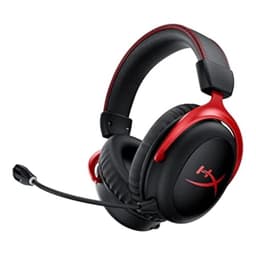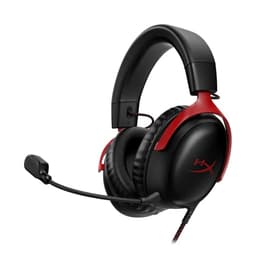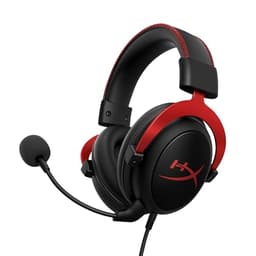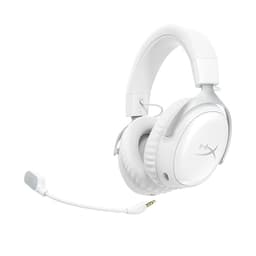
Spec sheets for gaming headsets are almost useless, aren't they? You can stare at driver diameter and frequency response numbers all day and still have no idea whether a headset will actually help you hear that flanking footstep in Warzone or just drown everything in muddy bass. What matters is how the whole thing hangs together: the wireless connection, the comfort after two hours, the mic your teammates actually have to listen to. That's where the HyperX Cloud Stinger 2 Wireless Gaming Headset sits in 2026, and it's worth a proper look.
HyperX has been doing budget-to-mid-range gaming headsets for years, and the Cloud Stinger line is their "no fuss, just works" range. The Stinger 2 Wireless is the untethered version of an already popular wired headset, bringing 2.4GHz wireless and DTS Headphone:X spatial audio into a price bracket where a lot of competitors are still asking you to put up with Bluetooth lag or proprietary dongles that cost extra. At mid-range money, it's punching at a crowded weight class. So is it actually any good?
There are no owner reviews to draw on yet for this specific listing, which is a bit annoying. But the Cloud Stinger 2 Wireless shares its DNA with the broader Stinger 2 family, and the pattern of what HyperX gets right and wrong on these headsets is well established. Combined with what the specs tell us, there's plenty to work with.
Core Specifications: HyperX Cloud Stinger 2 Wireless Gaming Headset Review UK 2026
Before anything else, here's what HyperX actually tells us about this headset. The connectivity is 2.4GHz wireless, which is the good stuff for gaming. Battery life is rated at up to 20 hours. The comfort setup uses soft leatherette earcups with memory foam padding, and the microphone is a swivel-to-mute boom mic with noise cancellation. DTS Headphone:X spatial audio is supported via the NGENUITY software on PC. That's the headline package.
What HyperX doesn't publish prominently is the driver size, exact impedance, or weight. That's frustrating for spec nerds, but honestly it's pretty common at this price point. The brand focuses its marketing on the experience rather than the numbers, which is either reassuring or suspicious depending on your outlook. In the Cloud Stinger 2's case, the experience claims are at least grounded in real features rather than made-up "50mm drivers tuned for gaming" fluff that means nothing.
The price sits in the mid-range bracket, which makes this a genuine competitor to some well-regarded headsets. You're not in budget territory where corners are obviously cut, but you're also not spending flagship money. That context matters a lot when you're weighing up what you get versus what you give up.
| Specification | Detail |
|---|---|
| Connectivity | 2.4GHz wireless |
| Spatial Audio | DTS Headphone:X (via NGENUITY software) |
| Battery Life (rated) | Up to 20 hours |
| Microphone | Swivel-to-mute noise-cancelling boom mic |
| Earcup Material | Soft leatherette with memory foam |
| Software | HyperX NGENUITY |
| Price | £99.98 |

Audio Specifications
This is where things get a bit thin on detail, and that's on HyperX rather than us. The brand doesn't publish driver size, impedance, or sensitivity figures for the Cloud Stinger 2 Wireless in its official product listing. That's not unusual at this tier, but it does mean we can't give you a clean table of numbers the way you'd get with a more enthusiast-focused headset. What we do know is that it uses dynamic drivers, which is standard for gaming headsets at this price.
Dynamic drivers are the right call here. They're efficient, they handle gaming audio well, and they don't need a powerful amplifier to drive them properly. Planar magnetic drivers sound lovely but they're expensive to do well and you don't typically find them below the £100 to £150 mark. So HyperX's choice is sensible, not lazy. The question is how well those drivers are tuned, which is something we get into in the sound signature section below.
The DTS Headphone:X support is worth flagging as an audio spec in its own right. DTS Headphone:X is a proper spatial audio standard, not just HyperX slapping a "3D audio" sticker on a stereo headset. It uses head-related transfer function processing to simulate directional audio through stereo drivers. Whether it actually helps you in competitive play is a separate debate (more on that later), but it's a legitimate technology and not marketing fluff. The fact that it requires NGENUITY software means it's PC-first, which is a limitation worth knowing about upfront.
Sound Signature
Gaming headsets at this price almost universally go for a V-shaped sound signature. That means boosted bass and boosted treble with a slightly recessed midrange. It sounds exciting on first listen, explosions feel weighty, gunshots have punch, and music sounds dramatic. HyperX's Stinger line has historically leaned into this approach, and there's no reason to think the Stinger 2 Wireless breaks from that tradition. For casual gaming and entertainment, a V-shaped signature works well enough.
The issue with V-shaped tuning in competitive play is that the midrange is where voices and a lot of positional audio information live. Footsteps in games like Counter-Strike or Valorant aren't all bass thuds; a lot of the detail that tells you exactly where someone is sitting is in the mid frequencies. A headset that scoops the mids to make explosions sound cool can actually work against you in competitive scenarios. It's not a dealbreaker at this price, but it's worth knowing if you're primarily a ranked grinder rather than a casual player.
For story-driven games, movies, and general entertainment use, though, the V-shaped approach is genuinely enjoyable. Games like Cyberpunk 2077 or Elden Ring sound atmospheric and immersive with a bit of bass weight and treble sparkle. The DTS Headphone:X processing can add a sense of space that makes single-player experiences feel more cinematic. So the sound signature question really comes down to how you play. Competitive sweat? You might want something more neutral. Casual or story-focused? This will sound good to you.
Sound Quality
Translating the sound signature into actual gaming use, the Cloud Stinger 2 Wireless should deliver a satisfying experience for the majority of players. The 2.4GHz wireless connection means there's no compression artefact or latency penalty compared to Bluetooth, so what the drivers produce is what you hear, without the degradation that plagues cheaper wireless headsets. That matters more than most people realise. A headset with decent drivers and a clean wireless signal will sound better than a headset with "better" drivers running over a lossy Bluetooth codec.
Soundstage on closed-back gaming headsets at this price is always going to be limited. Physics doesn't care about your budget. Closed-back earcups help with noise isolation but they make the sound feel more inside your head than open-back designs. The DTS Headphone:X processing tries to push past this by simulating a wider soundfield, and in practice it can work reasonably well for single-player games. For competitive play, some people find virtual surround processing actually hurts positional accuracy rather than helping it, because the HRTF algorithms aren't perfectly calibrated for every head shape. You can turn it off in NGENUITY if you find it's making things worse.
Bass extension will be decent rather than exceptional. At mid-range money, you're not getting the sub-bass rumble of a headset with a proper large driver and good seal. What you should get is enough low-end weight to make action games feel punchy without completely muddying the mix. Treble clarity is usually where budget-to-mid headsets disappoint, with harsh sibilance on high-frequency sounds. Whether the Stinger 2 Wireless avoids that is something we'd want owner reviews to confirm over time, but HyperX's recent tuning on the Stinger line has generally been inoffensive rather than fatiguing, which is the right direction.
Microphone Quality
The swivel-to-mute boom mic is one of the Cloud Stinger 2 Wireless's genuinely good features. Not because boom mics are rare (they're not), but because the swivel-to-mute implementation is actually useful. Flip the mic up, you're muted. No fumbling for a button in the middle of a game. No accidentally muting yourself because you hit the wrong control. It's a simple quality-of-life thing that HyperX has done consistently across the Stinger range and it genuinely works better than most button-based mute systems.
The mic is noise-cancelling, which at this price typically means it uses a cardioid pickup pattern to reject sound from the sides and rear rather than any active noise cancellation processing. That's fine and appropriate. A cardioid boom mic positioned close to your mouth will pick up your voice clearly and reject keyboard noise, fan hum, and background chatter reasonably well. You're not going to sound like you're in a recording studio, but your teammates will be able to hear you clearly without constant background noise complaints, which is all most people actually need.
Where gaming headset mics at this price consistently fall short is in voice naturalness. They tend to sound a bit compressed and tinny compared to even a basic standalone USB microphone. If you're streaming or content creating, you'll probably want a separate mic. But for in-game comms in Discord, Xbox Party Chat, or PlayStation Party, the Cloud Stinger 2 Wireless mic should be perfectly adequate. The noise cancellation and the swivel mute are the right priorities for a gaming headset, and HyperX has them sorted here.
Comfort and Build
HyperX calls this "Signature HyperX Comfort" and while that's exactly the kind of marketing language that usually makes me roll my eyes, the Stinger line has actually earned a decent reputation for comfort. The memory foam earcups with soft leatherette covering are a genuinely good combination for extended sessions. Memory foam conforms to your head shape, which reduces pressure points. Leatherette is easy to clean and feels premium enough at this price, though it does trap heat more than fabric alternatives, which can get uncomfortable in warmer rooms or during intense sessions.
The lightweight design is a real selling point. Heavy headsets cause neck fatigue during long sessions in a way that's easy to underestimate until you've worn one for four hours. HyperX doesn't publish the exact weight for this model, which is annoying, but the Stinger line has historically been on the lighter end for gaming headsets, and that's reflected in the marketing emphasis on wearability. A headset you forget you're wearing is a good headset, regardless of what the spec sheet says.
Build quality at mid-range prices is usually a mix of plastic and metal. The Stinger 2 Wireless is predominantly plastic, which keeps the weight down but does mean it feels less premium in the hand than a steel-reinforced headset. That's a fair trade-off for comfort during long sessions, but it does mean you'll want to be reasonably careful with it rather than chucking it in a bag without a case. Glasses wearers will want to try before they buy if possible, as leatherette earcups can create pressure points against frames, though the memory foam does help mitigate this compared to harder foam alternatives.

Connectivity
The 2.4GHz wireless connection is the right choice for a gaming headset, full stop. 2.4GHz wireless at this kind of implementation delivers low latency and a stable connection without the audio quality compromises of Bluetooth. You plug in a USB dongle, the headset connects, and it just works. There's no pairing ceremony, no codec negotiation, no wondering whether your audio is being compressed. For gaming, where audio sync with on-screen action matters, this is meaningfully better than Bluetooth.
The dongle-based approach does mean you're using a USB port, which is worth noting if you're on a console or a laptop with limited ports. On PC it's a non-issue. On PlayStation 5, USB dongles generally work fine. Xbox is more complicated because Microsoft's wireless standard means third-party 2.4GHz dongles have historically had compatibility issues, though this varies by specific implementation. The compatibility section below gets into this in more detail. The point here is that the wireless tech itself is solid; the question is whether your specific platform plays nicely with the dongle.
There's no Bluetooth on the Cloud Stinger 2 Wireless, which means no simultaneous connection to your phone for taking calls while gaming. Some people will miss this. Personally, if you're deep enough into a gaming session that you need a headset, you probably don't want your phone calls interrupting anyway. But if multi-device connectivity is important to you, it's worth knowing this headset doesn't offer it. Single 2.4GHz wireless connection, one device at a time. Clean and simple, but limited in flexibility.
Battery Life
Twenty hours of rated battery life is a good number for a mid-range wireless gaming headset. It's not class-leading (some flagships push 30 to 40 hours), but it's enough to get through multiple long gaming sessions before you need to think about charging. In practical terms, if you game for three to four hours an evening, you're looking at five-plus sessions before the battery becomes a problem. That's a realistic usage pattern for most people.
The "up to 20 hours" caveat is worth acknowledging. Rated battery life is almost always measured at lower volumes without features like virtual surround processing enabled. Real-world usage with DTS Headphone:X active and volume cranked will likely land somewhere below that figure. Sixteen to eighteen hours is a reasonable expectation for typical gaming use. Still good, but worth tempering your expectations slightly from the headline number.
HyperX doesn't specify the charge time or connector type in the available product data, which is a gap in the information we have. For a headset at this price in 2026, USB-C charging would be the expected standard, but we can't confirm that from the listed specs. What we can say is that 20 hours of rated battery means you're unlikely to be reaching for the cable mid-session very often, which is ultimately what matters. A headset that needs charging every other day is fine. One that dies on you mid-raid is not.
Software and Customisation
The HyperX NGENUITY software is where the Cloud Stinger 2 Wireless gets its DTS Headphone:X spatial audio, and it's worth spending a moment on what that actually means. NGENUITY is HyperX's companion app for PC, and it handles EQ customisation, mic settings, and the spatial audio toggle. The DTS Headphone:X implementation through NGENUITY gives you proper 3D audio spatialization rather than just a stereo widening effect, which is a genuine differentiator at this price point.
EQ customisation in NGENUITY lets you adjust the sound signature to your preference, which is useful given the likely V-shaped default tuning. If you want to pull some bass back and bring the mids up for competitive play, you can do that without buying a different headset. The ability to tweak EQ is underrated on gaming headsets; it effectively gives you multiple sound profiles in one device. Whether the NGENUITY interface is any good is a fair question. HyperX's software has improved over the years but it's not as polished as something like SteelSeries GG or Razer Synapse. It gets the job done without being a pleasure to use.
The software dependency is also a limitation worth flagging. All the good stuff, the spatial audio, the EQ, the mic monitoring, requires NGENUITY running on a PC. On console, you're getting a straight stereo signal from the hardware with no software layer. That's fine for casual use, but if you're buying this headset specifically for the DTS Headphone:X feature, you need to be on PC to use it. Console players get a good wireless headset; PC players get a good wireless headset with extras. Not a dealbreaker, but it's a distinction that matters depending on your setup.
Compatibility
PC compatibility is the strongest use case here. The 2.4GHz USB dongle works natively with Windows, NGENUITY runs on PC, and you get the full feature set including DTS Headphone:X. If you're primarily a PC gamer, this headset is designed for you and works exactly as advertised. The software integration is tight and you're not leaving any features on the table.
PlayStation compatibility should be fine. The PS4 and PS5 both support USB audio dongles, and third-party 2.4GHz headsets generally work without any special configuration. You won't get NGENUITY features on PlayStation, so it's stereo audio only, but the core wireless functionality works. For PS5 owners who want a mid-range wireless headset without paying Sony's premium for the Pulse lineup, the Cloud Stinger 2 Wireless is a legitimate option.
Xbox is where things get complicated. Microsoft's Xbox consoles use a proprietary wireless protocol, and third-party 2.4GHz USB dongles have historically had patchy support on Xbox. Some work via the USB port, some don't. HyperX doesn't explicitly list Xbox as a supported platform in the available product data, so Xbox users should verify compatibility before buying. Nintendo Switch in docked mode should work via USB, and handheld mode won't support the dongle, so Switch compatibility is partial at best. Mobile use isn't going to happen without a Bluetooth option, which this headset doesn't have. Basically, PC and PlayStation are your best bets here.
How It Compares
The mid-range wireless gaming headset market is genuinely competitive in 2026, and the Cloud Stinger 2 Wireless has to justify itself against some strong alternatives. The two most obvious comparisons are the SteelSeries Arctis Nova 1 Wireless and the Corsair HS55 Wireless. Both sit in a similar price bracket, both offer 2.4GHz wireless, and both have their own strengths and weaknesses relative to the HyperX.
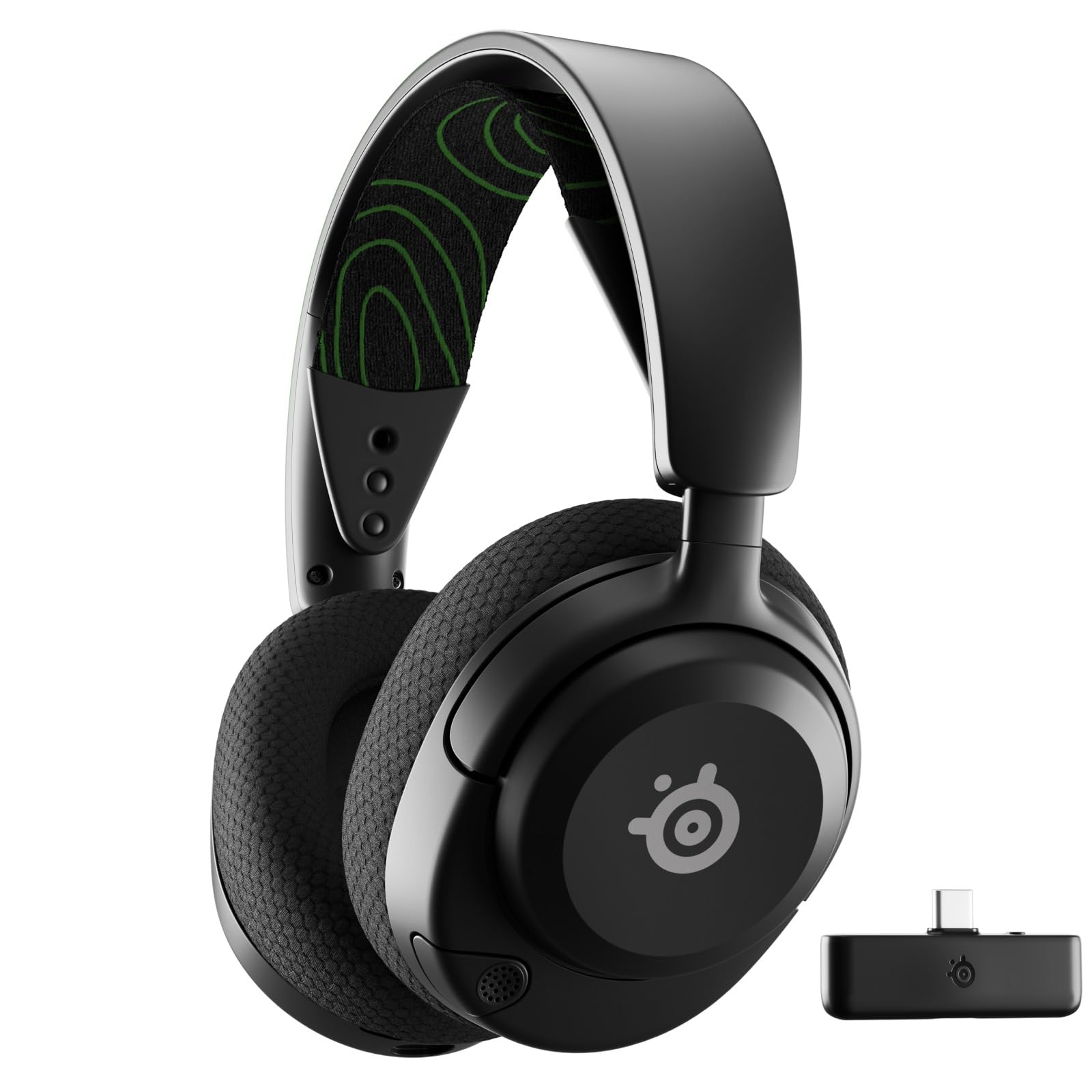
The SteelSeries Arctis Nova 1 Wireless is probably the Cloud Stinger 2 Wireless's most direct competitor. SteelSeries has a strong reputation for comfort (their ski-goggle headband design is genuinely clever for distributing weight) and their audio tuning tends toward a more neutral signature than HyperX's V-shaped approach. If you're a competitive player who prioritises accurate positional audio over exciting-sounding explosions, the Arctis Nova 1 Wireless might edge it. The Corsair HS55 Wireless, meanwhile, tends to offer solid build quality and decent sound but historically lags on software compared to both HyperX and SteelSeries. The Cloud Stinger 2 Wireless's DTS Headphone:X support is a genuine advantage over the HS55 for PC users who want spatial audio without paying extra for it.
What the Cloud Stinger 2 Wireless does better than most in this bracket is the combination of 20-hour battery, proper 2.4GHz wireless (not Bluetooth), and DTS spatial audio at mid-range money. That's a strong package. Where it potentially gives ground is on audio neutrality for competitive play and build quality, where spending a bit more gets you noticeably more premium materials. But for the price, the value proposition is solid.
| Feature | HyperX Cloud Stinger 2 Wireless | SteelSeries Arctis Nova 1 Wireless | Corsair HS55 Wireless |
|---|---|---|---|
| Wireless | 2.4GHz | 2.4GHz | 2.4GHz |
| Battery Life (rated) | Up to 20 hours | Up to 15 hours | Up to 24 hours |
| Spatial Audio | DTS Headphone:X (PC) | SteelSeries Sonar (PC) | Dolby Atmos (PC) |
| Mic Mute | Swivel-to-mute | Retractable (auto-mute) | Flip-to-mute |
| Earcup Padding | Memory foam leatherette | Airweave fabric | Memory foam leatherette |
| Price Tier | Mid-range | Mid-range | Mid-range |

Final Verdict: HyperX Cloud Stinger 2 Wireless Gaming Headset Review UK 2026
The Cloud Stinger 2 Wireless is a solid mid-range wireless gaming headset that gets the important stuff right. The 2.4GHz connection is the correct wireless technology for gaming. The 20-hour battery means you're not constantly hunting for a charging cable. The memory foam leatherette comfort setup is genuinely good for long sessions. And the DTS Headphone:X support via NGENUITY gives PC users a proper spatial audio option without paying flagship prices. That's a genuinely decent package at mid-range money.
The caveats are real but manageable. The sound signature is probably V-shaped, which is fine for casual and story-driven gaming but not ideal for serious competitive play where midrange accuracy matters. The software features are PC-only, so console users get a good wireless headset but not the full experience. Xbox compatibility is uncertain. And with no owner reviews yet on this listing, there are gaps in real-world confirmation that we'd usually fill with community feedback. Those things don't make it a bad headset. They make it a headset with a specific sweet spot.
Who should buy this? PC gamers who want reliable wireless audio, decent comfort, and spatial audio support without spending flagship money. Casual console players on PS4 or PS5 who want to cut the cord without paying Sony prices. People who game across multiple genres and want something that handles everything acceptably rather than excelling at one thing. Who should probably look elsewhere? Dedicated competitive players who want the most neutral, accurate audio possible (consider the Arctis Nova 1 Wireless instead). Xbox-primary players who need confirmed compatibility. And anyone who needs Bluetooth for multi-device use.
At mid-range money, the HyperX Cloud Stinger 2 Wireless is a genuinely good buy for its target audience. It's not going to blow anyone away, but it's not trying to. It's trying to be a comfortable, reliable, wireless gaming headset that doesn't make you compromise on the basics. And it does that well.
What works. What doesn’t.
7 + 7What we liked7 reasons
- 2.4GHz wireless delivers low-latency audio without the compression artefacts associated with Bluetooth connections
- Swivel-to-mute boom microphone is a genuinely practical quality-of-life feature that works better than button-based mute systems
- Memory foam leatherette earcups provide comfortable padding suitable for extended gaming sessions
- DTS Headphone:X spatial audio support via NGENUITY gives PC users proper 3D spatialization without paying flagship prices
- 20-hour rated battery life is sufficient for multiple long gaming sessions between charges
- Lightweight construction reduces neck fatigue during prolonged use
- NGENUITY EQ customisation allows sound signature adjustment for competitive or casual play
Where it falls7 reasons
- Likely V-shaped sound signature is less suited to competitive players who need accurate midrange positional audio
- DTS Headphone:X and EQ customisation are PC-only; console users receive a basic stereo experience without software features
- Xbox compatibility is unconfirmed and third-party 2.4GHz dongles have historically had patchy support on Xbox consoles
- No Bluetooth connectivity means no simultaneous connection to a second device such as a mobile phone
- Predominantly plastic build feels less premium than steel-reinforced alternatives at a similar or slightly higher price point
- HyperX does not publish driver size, impedance, or weight figures, making objective spec comparisons difficult
- Leatherette earcups retain heat during intense sessions or in warmer environments compared to fabric alternatives
Full specifications
12 attributes| Connectivity | 2.4GHz wireless |
|---|---|
| Surround | spatial |
| Microphone | boom swivel-to-mute |
| Noise cancellation | true |
| Battery life H | 20 |
| Driver size | 50mm |
| Driver size MM | 50 |
| Frequency response HZ | 10-20000 |
| Microphone type | swivel-to-mute boom |
| Platforms | PC |
| Spatial audio | true |
| Type | over-ear |
If this isn’t right for you
2 options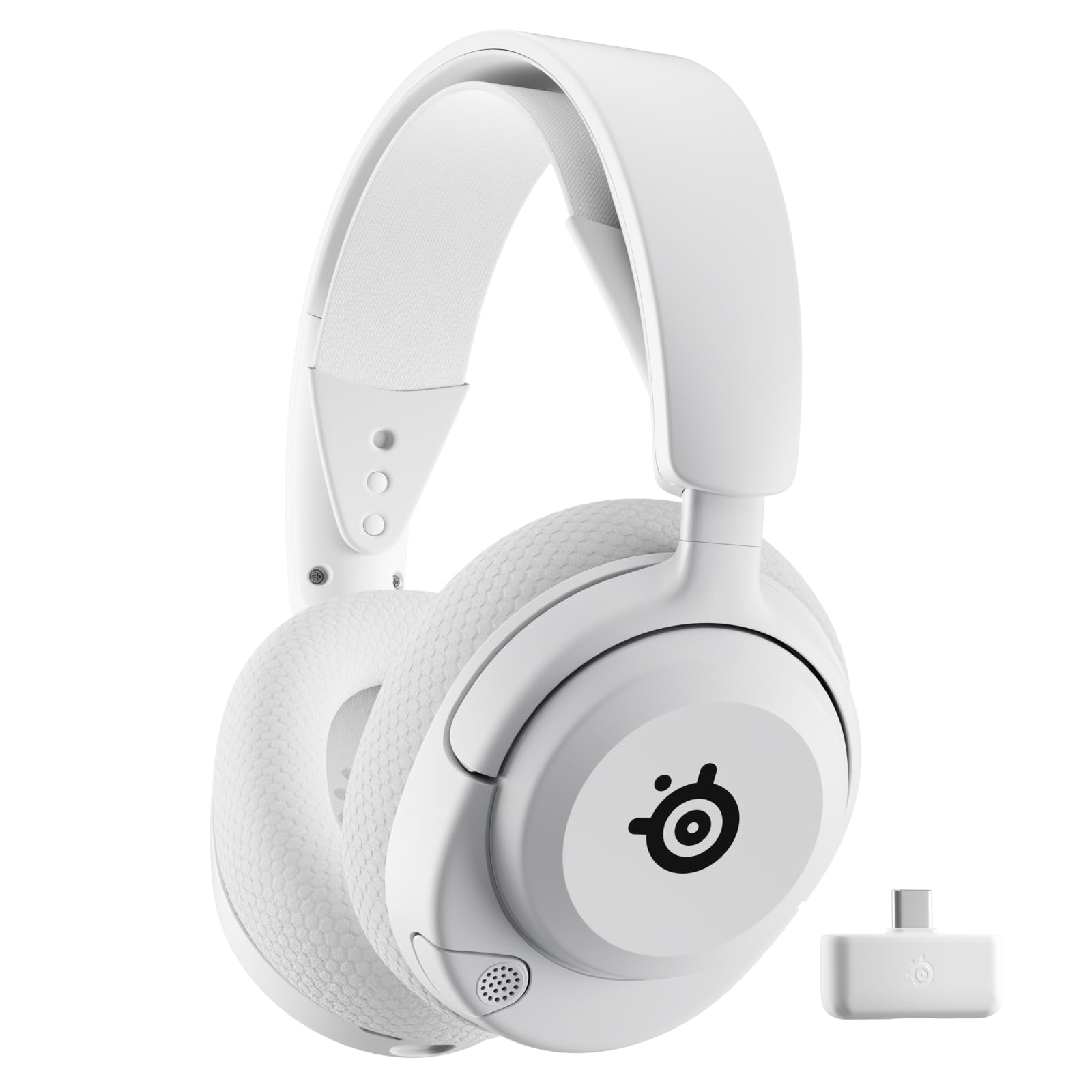
Frequently asked
7 questions01Does the HyperX Cloud Stinger 2 Wireless work on PlayStation 5?+
Yes, the PS5 supports USB audio dongles from third-party manufacturers, and the Cloud Stinger 2 Wireless should work via its 2.4GHz USB dongle. You will not have access to NGENUITY software features on PlayStation, so you receive stereo audio without the DTS Headphone:X spatial processing or EQ customisation available on PC.
02Is the HyperX Cloud Stinger 2 Wireless compatible with Xbox?+
Xbox compatibility is uncertain. Microsoft's Xbox consoles use a proprietary wireless protocol, and third-party 2.4GHz USB dongles have historically had inconsistent support on Xbox hardware. HyperX does not explicitly list Xbox as a supported platform in the available product data. Xbox users should verify compatibility with the retailer before purchasing.
03How long does the HyperX Cloud Stinger 2 Wireless battery last in real-world use?+
HyperX rates the battery at up to 20 hours, but this figure is typically measured at moderate volume without software features active. With DTS Headphone:X processing enabled and volume at typical gaming levels, real-world battery life is likely closer to 16 to 18 hours. At three to four hours of gaming per evening, you would expect to charge every four or five sessions.
04Do you need to install software to use the HyperX Cloud Stinger 2 Wireless?+
The headset functions as a plug-and-play wireless device without any software installed. However, the HyperX NGENUITY software is required to access DTS Headphone:X spatial audio, EQ customisation, and microphone monitoring features. NGENUITY is a PC application, so these features are only available when connected to a Windows computer.
05How does the swivel-to-mute microphone work on the Cloud Stinger 2 Wireless?+
The boom microphone mutes automatically when you rotate it upward toward the headset and unmutes when you swivel it back down into the speaking position. This removes the need to locate and press a dedicated mute button during a game, which reduces the chance of accidentally muting or unmuting yourself at an inconvenient moment.
06Is the HyperX Cloud Stinger 2 Wireless good for competitive gaming?+
The headset is more suited to casual and story-driven gaming than to serious competitive play. The likely V-shaped sound signature boosts bass and treble while slightly recessing the midrange, which is where a significant amount of positional audio information such as footstep detail in games like Valorant or Counter-Strike is found. You can use NGENUITY's EQ on PC to pull the mids back up, which helps. For dedicated competitive use, a headset with a more neutral tuning such as the SteelSeries Arctis Nova 1 Wireless may be a better choice.
07Can I use the HyperX Cloud Stinger 2 Wireless with a Nintendo Switch?+
Partial compatibility only. In docked mode, the Nintendo Switch exposes a USB port and should support the 2.4GHz USB dongle, allowing the headset to function. In handheld mode, the Switch does not support USB audio dongles, so the headset would not work. There is no Bluetooth option on this headset, so handheld Switch use is not possible.