Best Overall Value
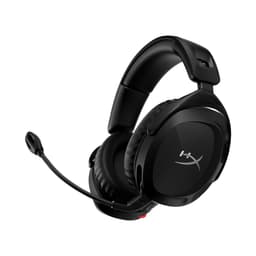
The Cloud Alpha has been around long enough that you might wonder if it still belongs at the top of a 2026 list. It does. Here's the thing: HyperX got the fundamentals so right with this headset that it has aged remarkably well. The dual-chamber driver design, which separates bass from mid and high frequencies, gives you a cleaner, more detailed soundstage than you would expect at this price. For gaming, that matters. You will hear footsteps, distant gunfire, and environmental audio with real clarity.
Comfort is another area where the Cloud Alpha genuinely excels. The leatherette earcups are well padded, the headband distributes weight evenly, and the aluminium frame feels solid without being heavy. Most people can wear this for three or four hours without it becoming uncomfortable. That is not always a given at this price point.
The detachable noise-cancelling microphone is a practical touch. Pull it out for gaming sessions, pop it off when you are just listening to music. The in-line volume control is simple and works well, though it does mean you are dealing with a cable. If you need wireless, look elsewhere in this list. But if wired is fine, the Cloud Alpha is hard to beat as a gaming headset under £60.
It works across PC, PS4, PS5, and Xbox via the 3.5mm connection, so platform flexibility is not an issue. The only real limitation is the lack of virtual surround sound, which the Cloud II above it in price does offer. For most gaming scenarios though, the stereo imaging on the Cloud Alpha is good enough that you will not miss it.
Pros
- Dual-chamber drivers deliver genuinely clear audio
- Exceptionally comfortable for long gaming sessions
- Solid aluminium build that feels premium
- Detachable microphone is a neat practical feature
- Works across all major platforms via 3.5mm
Cons
- Wired only, no wireless option
- No virtual surround sound
- Leatherette earcups can get warm in summer
Buy on Amazon£44.35
Best Under £100
The Cloud II is one of those headsets that has earned its reputation the hard way, by being consistently good over many years. It sits above the Cloud Alpha in price, and the main things you are paying for are the built-in USB sound card and virtual 7.1 surround sound support. For gaming, particularly in titles with complex audio environments like open-world games or competitive shooters, that surround sound processing can genuinely help with positional awareness.
The aluminium frame is a highlight. It feels noticeably more premium than a lot of headsets in this price range, and it gives you confidence that it will survive being chucked in a bag or knocked off a desk. The red colourway is bold and will not suit everyone, but it does look sharp.
Sound quality is strong. The 53mm drivers push out a full, warm sound signature that works well for gaming and music alike. The microphone is detachable, noise-cancelling, and performs well for voice chat. Teammates will hear you clearly without too much background noise bleeding through.
One thing to be aware of: the virtual 7.1 surround sound requires the USB sound card dongle, so if you are plugging into a controller or a 3.5mm port directly, you are getting standard stereo. That is still good, but it is worth knowing. For PC gaming specifically, the Cloud II is a proper solid choice under £100 and earns its place in any Best HyperX Gaming Headsets 2026 shortlist.
Pros
- Virtual 7.1 surround sound via USB dongle
- Aluminium frame feels genuinely premium
- Broad platform compatibility including PS5
- Strong microphone performance for voice chat
- Warm, detailed sound signature
Cons
- Surround sound only works via USB, not 3.5mm
- Wired only
- Red colourway is not for everyone
- Costs noticeably more than the Cloud Alpha
Buy on Amazon£48.23
Best Build Quality
Right, so the Cloud III S is the premium option in this roundup and it earns that status in a few specific ways. The headline number is the battery life: 120 hours on 2.4GHz wireless, and up to 200 hours on Bluetooth. That is not a typo. For context, most wireless gaming headsets manage 20 to 40 hours. The Cloud III S makes those figures look almost embarrassing. If you are the kind of person who forgets to charge things (most of us, honestly), this headset is a revelation.
The 53mm angled drivers are a step up from the standard configuration you find in most headsets. Angling the drivers means the sound hits your ears at a more natural angle, which improves the sense of space and direction in audio. For gaming, particularly anything with positional audio cues, this makes a real difference. The soundstage feels wider and more convincing than the Cloud Alpha or Cloud II.
You get both 2.4GHz and Bluetooth connectivity, which means you can use it with your PC on low-latency 2.4GHz for gaming, then switch to Bluetooth for your phone or tablet without any fuss. The 10mm detachable microphone is clear and the noise cancellation works well. Build quality is excellent throughout, with a premium feel that justifies the higher price.
The white colourway looks smart and the customisable elements give it a bit of personality. It is the most expensive headset in this Best HyperX Gaming Headsets 2026 roundup, but if you want the best wireless option HyperX currently makes, this is it. The battery life alone makes it worth serious consideration.
Pros
- Extraordinary battery life, up to 120hr on 2.4GHz
- 53mm angled drivers for a wide, natural soundstage
- Both 2.4GHz and Bluetooth connectivity
- Multi-platform support
- Premium build quality throughout
- Detachable 10mm microphone with good noise cancellation
Cons
- Most expensive option in this roundup
- White finish may show wear over time
- Overkill for casual or occasional gamers
Buy on Amazon£130.00
Best for Beginners
Getting wireless audio under £55 used to mean accepting some pretty grim compromises. The Cloud Stinger 2 Wireless changes that calculation, at least partially. It is not perfect, but for a first gaming headset or a budget upgrade, it does a lot right.
The swivel-to-mute microphone is genuinely clever. Swing it up and it mutes automatically. Swing it down and you are live. No fumbling for a button mid-game. For beginners especially, this kind of intuitive design removes friction and lets you focus on actually playing. The noise cancellation on the mic is decent too, handling most background noise without making your voice sound processed or distant.
Memory foam earcups are a welcome feature at this price. They are comfortable and do a reasonable job of passive noise isolation. The headset is lightweight, which helps during longer sessions, though the plastic construction does feel a bit less substantial than the Cloud Alpha or Cloud II. It is not dodgy, just clearly built to a budget.
The 20-hour battery life is the main practical limitation. It is fine for most gaming sessions, but if you are the type to forget charging it between uses, you will occasionally find it dead when you want to play. Compare that to the Cloud III S and the gap is stark. But then again, the price difference is significant too.
Sound quality is good for the price. Bass is present without being overwhelming, and voices in games come through clearly. It is not going to blow you away, but it is a proper step up from a cheap wired headset. For anyone new to gaming headsets or working with a tight budget, the Cloud Stinger 2 Wireless is a smart starting point in the Best HyperX Gaming Headsets 2026 lineup.
Pros
- Wireless under £55 is genuinely impressive
- Swivel-to-mute microphone is intuitive and practical
- Memory foam earcups are comfortable
- Lightweight design suits long sessions
- Simple setup, no software required
Cons
- 20-hour battery life is modest compared to rivals
- Plastic build feels less premium
- PC compatibility focus limits platform flexibility
- Sound quality, while good, does not match the Cloud Alpha
Buy on Amazon£81.32