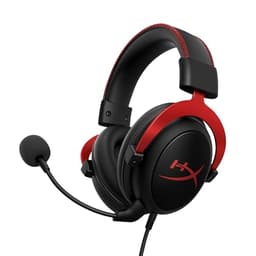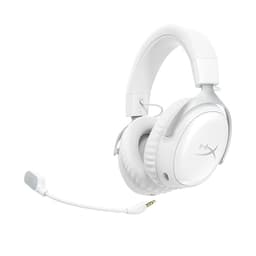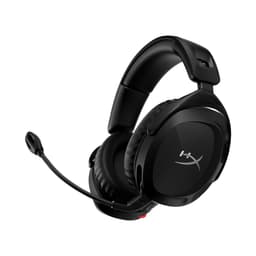
Gaming headsets are a minefield. For every genuinely good one, there are about fifteen that look impressive on a spec sheet, sound like you're gaming inside a baked bean tin, and develop a creak somewhere around the headband by month three. Finding the ones that actually deliver on audio quality, comfort, and build requires digging past the marketing copy and into the numbers, the driver specs, and what thousands of real owners are reporting back. The HyperX Cloud II Wireless is a headset that's been around long enough to have a proper track record, and with thousands of reviews and a positive overall rating, it's clearly doing something right. But does it hold up when you stack it against the competition in 2025?
HyperX has always occupied an interesting space in the gaming audio market. They're not pretending to be Sennheiser or Beyerdynamic, but they're also not churning out the kind of cheap plastic nonsense that dominates the budget end of the shelf. The Cloud line specifically has earned a reputation for being genuinely comfortable, reasonably well-built, and better-sounding than the price tag might suggest. The Cloud II Wireless takes the beloved Cloud II formula and cuts the cable, adding 2.4GHz wireless, DTS Headphone:X spatial audio, and a claimed 30-hour battery life. On paper, that's a strong package for a mid-range headset.
So who's this actually for? FPS players who want clean positional audio and a mic that doesn't make them sound like they're calling from a submarine? RPG fans who want something comfortable enough for six-hour sessions without their ears staging a protest? Or is this a jack of all trades that ends up being master of none? The spec sheet and owner feedback tell a pretty clear story, and we're going to go through all of it.
Core Specifications
The Cloud II Wireless runs 53mm dynamic drivers, which is notably larger than the 40mm units you'll find in most headsets at this price. Bigger drivers don't automatically mean better sound (that's a myth worth killing early), but they do give the transducer more physical area to move air, which generally helps with bass extension and overall loudness at lower impedance levels. The impedance here is 32 ohms, which is standard for headsets designed to run off USB dongles and console controllers rather than dedicated amplifiers. You're not going to need a headphone amp for this one.
The frequency response is rated at 15Hz to 21kHz, which is about as wide as you'd want for gaming use. That 15Hz lower end is doing a bit of marketing work, since you're unlikely to hear anything useful below 20Hz in most gaming content, but the extension into sub-bass territory does mean the headset has the physical capability to reproduce low-end content without rolling off early. Sensitivity is listed at 104dBSPL/mW, so these will get properly loud without straining the wireless dongle's output. Weight comes in at 309g, which is on the heavier side for wireless headsets but not outrageously so.
The connection is 2.4GHz wireless via a USB-A dongle, with no Bluetooth option. That's a deliberate choice by HyperX, prioritising low-latency wireless over multi-device convenience, and it's the right call for gaming use. The package includes the detachable noise-cancelling boom mic, a USB-A to USB-C charging cable, and the wireless dongle. No 3.5mm cable is included for wired fallback, which is worth knowing before you buy.
| Specification | Detail |
|---|---|
| Driver Size | 53mm dynamic |
| Frequency Response | 15Hz to 21kHz |
| Impedance | 32 ohms |
| Sensitivity | 104dBSPL/mW |
| Microphone Type | Detachable cardioid condenser boom |
| Microphone Frequency Response | 100Hz to 6.8kHz |
| Wireless Connection | 2.4GHz USB-A dongle |
| Battery Life (rated) | Up to 30 hours |
| Weight | 309g |
| Earcup Material | Memory foam with leatherette |
| Spatial Audio | DTS Headphone:X |
| Platform Compatibility | PC, PS5, PS4 |
| Charging | USB-C |
Audio Specifications
Those 53mm dynamic drivers are the headline audio spec and they deserve a proper look. Dynamic drivers work by using a voice coil attached to a diaphragm, moving back and forth in a magnetic field to produce sound. The larger the driver, the more air it can displace, which typically translates to more impactful bass and better low-end extension. At 53mm, the Cloud II Wireless is using one of the larger driver sizes you'll find in a consumer gaming headset, comparable to what you'd find in over-ear headphones aimed at music listening rather than gaming. For context, the HyperX Cloud II Wireless product page positions these drivers as a core differentiator, and it's not just marketing fluff.
The 32-ohm impedance is ideal for the use case. Lower impedance means the headset draws more current and is easier to drive from low-powered sources like USB dongles and console USB ports. You won't get the benefits of a dedicated DAC/amp with this headset in the way you might with a 250-ohm pair of Beyerdynamic DT 990 Pros, but that's entirely fine because this isn't that kind of headset. The 104dBSPL/mW sensitivity rating means it'll hit genuinely loud volumes without distortion from the wireless receiver, which matters when you want to hear distant footsteps in a game without cranking the volume to ear-damaging levels.
The mic's frequency response of 100Hz to 6.8kHz is worth examining honestly. Human speech sits primarily in the 300Hz to 3kHz range, so the mic is well-tuned for voice capture. The upper limit of 6.8kHz means you're not getting the full presence and air that a studio condenser would capture, but for gaming comms, Discord calls, and in-game voice chat, that range is more than adequate. What matters more than the upper frequency limit is the pickup pattern and noise rejection, which we'll get into in the microphone section.
Sound Signature
The Cloud II Wireless has a V-shaped sound signature. If you're not familiar with the term, that means the bass and treble are boosted relative to the midrange, which is a very common tuning choice for gaming headsets because it sounds exciting and "big" to most listeners. Explosions feel more impactful, gunshots have more crack, and the overall presentation feels more dramatic than a neutral headset. It's not the most accurate sound signature for music listening, but for gaming it works well, and the 53mm drivers mean the bass boost doesn't turn into a muddy, one-note rumble the way it does on cheaper headsets with smaller drivers trying to punch above their weight.
Owner feedback consistently backs this up. Across the thousands of reviews, the recurring positive themes are "great bass", "clear highs", and "sounds much better than I expected for the price". The midrange recession is real though, and a handful of more critical owners note that voices in games can sound slightly recessed compared to the overall mix. For competitive FPS gaming where you're listening for footsteps and environmental cues, that's less of an issue than it might be in a story-driven RPG where character dialogue is central to the experience.
One thing worth flagging: the DTS Headphone:X spatial audio processing, when enabled, does alter the sound signature further. Some owners love it for the sense of space it adds; others find it introduces a slightly artificial quality to the sound. The good news is it's optional, and most owners seem to land on using it for certain game types (open-world, battle royale) and switching it off for music and competitive play. That flexibility is genuinely useful rather than a gimmick you'll enable once and forget.
Sound Quality
For competitive gaming, the Cloud II Wireless performs well above what you'd typically expect at this price point. The large drivers produce a soundstage that's wider than most closed-back headsets manage, which is crucial for positional audio in FPS titles. Imaging (the ability to place sounds in 3D space) is solid in stereo mode, with owners consistently reporting that footsteps, environmental sounds, and directional audio cues are easy to pick out. In games like Warzone, Apex Legends, or Valorant, that matters enormously. A headset that blurs positional information is a competitive liability.
Bass extension is a genuine strength. The 53mm drivers can reach down into sub-bass territory without becoming overwhelmed, so explosions and heavy weapon impacts have weight without turning into a muddy mess. This is where a lot of cheaper headsets fall apart: they boost bass frequencies but the small drivers can't handle the demand cleanly, resulting in distortion and bloom. The Cloud II Wireless avoids that trap. Treble is present and reasonably detailed, though a small number of owners note it can get slightly sharp at higher volumes on certain content, particularly in older games with less refined audio mixing.
For music and film use, the V-shaped signature is enjoyable if not audiophile-accurate. Electronic music, hip-hop, and anything bass-forward sounds genuinely good. Rock and metal benefit from the treble extension. Classical and jazz, where midrange accuracy matters most, are less flattering territory for this headset's tuning. For films, the bass weight makes action sequences and sci-fi sound design feel properly cinematic. The DTS Headphone:X processing adds a sense of height and space to surround mixes that stereo headphones can't naturally reproduce, and while it's not magic, it's a better implementation than a lot of virtual surround systems that just add reverb and call it "7.1".
Microphone Quality
The mic is a detachable cardioid condenser boom, and "detachable" is the first thing worth celebrating. Being able to pull the mic off when you're not gaming and use the headset as regular headphones is a quality-of-life feature that not every headset at this price offers. The cardioid pickup pattern means it's designed to capture sound from directly in front (your mouth) while rejecting sound from the sides and rear. In practice, that translates to better rejection of keyboard noise, room echo, and background sounds compared to an omnidirectional mic.
Real-world mic quality reports from owners are generally positive but with some nuance. The consensus is that voice clarity is good for gaming comms, Discord, and casual streaming. Your teammates will hear you clearly, background noise is reasonably well-rejected, and the mic doesn't add the kind of harsh, tinny quality that plagues a lot of gaming headset mics. However, it's not a broadcast-quality microphone. Owners who've compared it to standalone USB mics like the Blue Yeti or HyperX's own QuadCast note a meaningful step down in richness and presence. That's entirely expected at this price and for this use case, but worth knowing if you're planning to stream seriously.
Mic monitoring (sidetone) is included, which lets you hear your own voice through the headset so you don't end up shouting. This is a feature that sounds minor until you've used a headset without it and found yourself yelling at your teammates because you can't hear yourself. The implementation here works well according to owner reports, with the sidetone level feeling natural rather than distractingly loud. One minor complaint that crops up occasionally is that the mic can pick up some handling noise if the boom is bumped, but that's a fairly common issue with boom mics and not specific to this headset.
Comfort and Build
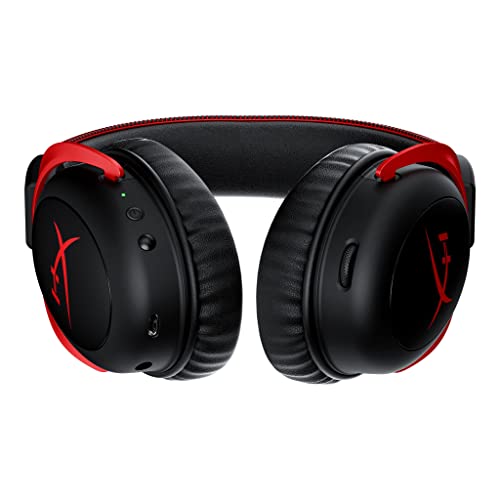
Comfort is where the Cloud line has always had a strong reputation, and the Cloud II Wireless doesn't break that tradition. The memory foam earcups with leatherette covering are consistently praised by owners for being soft and well-shaped. The earcups are large enough to fit most ears fully inside rather than resting on them, which makes a significant difference for long sessions. Over-ear headsets that actually sit around your ears rather than on them distribute pressure more evenly and cause less fatigue over time. This is basic headset ergonomics that a surprising number of manufacturers get wrong.
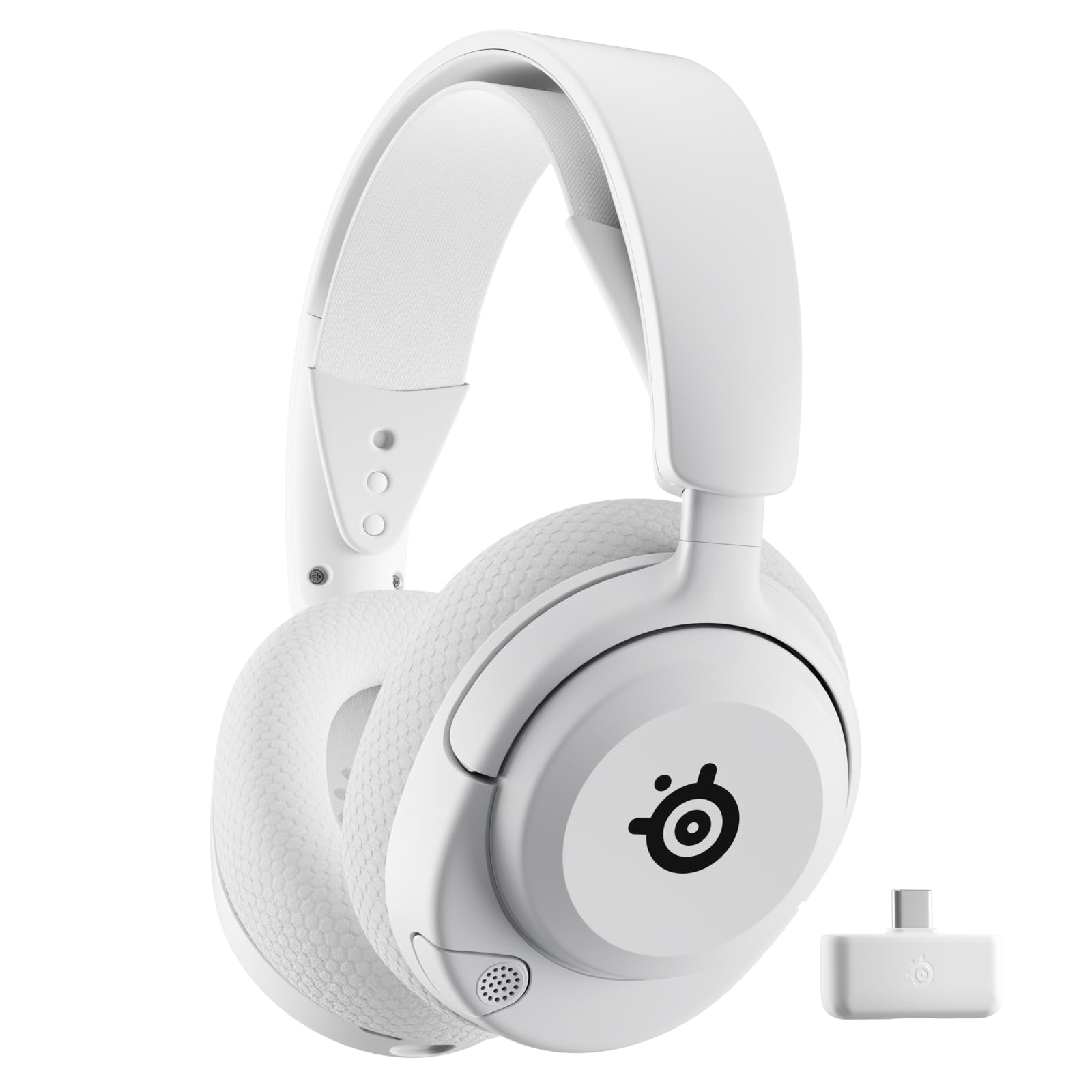
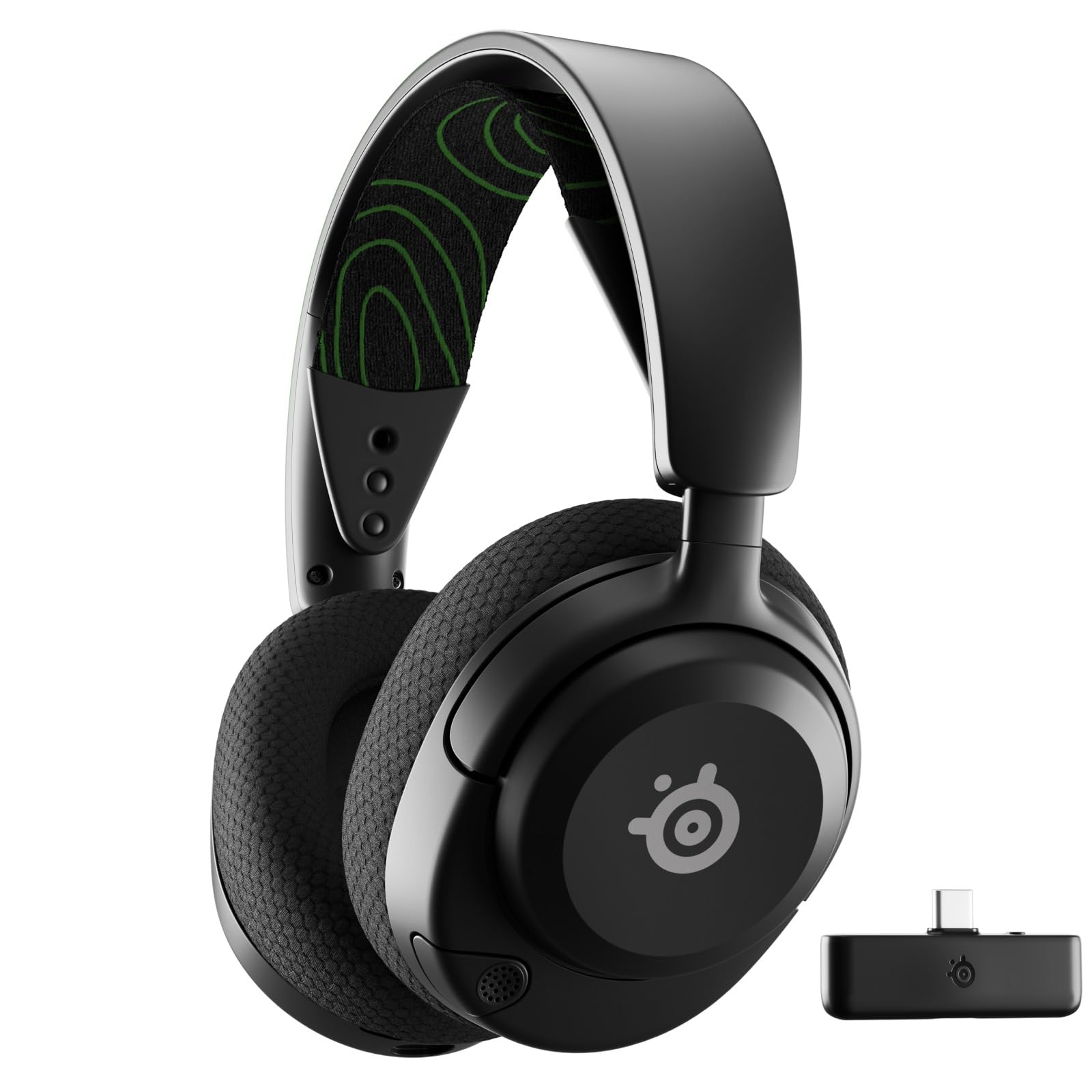
At 309g, it's not the lightest wireless headset on the market. The SteelSeries Arctis Nova 7, for example, comes in around 20g lighter, and you do notice headset weight over multi-hour sessions. That said, the weight distribution on the Cloud II Wireless is well-managed, with the headband spreading load across the top of the head rather than concentrating it at the crown. The adjustable headband has a decent range of extension, and owners with larger heads report a good fit. Glasses wearers (and there are a lot of us) generally report the headset as comfortable with glasses, which isn't always the case with headsets that have high clamping force.
Build quality feels solid for the price. The headband uses a steel slider mechanism rather than all-plastic construction, which is a meaningful durability upgrade. The earcups swivel to fold flat for storage, and the hinges feel sturdy rather than creaky. The plastic used for the earcup shells is reasonably thick. There's no RGB, which is either a plus or a minus depending on your setup, but it does mean HyperX hasn't had to compromise on battery life or weight to power light strips that serve no functional purpose. Owners who've had the headset for over a year generally report the build holding up well, with no widespread reports of the headband cracking or the earcup padding deteriorating quickly.

Connectivity
The Cloud II Wireless uses 2.4GHz wireless exclusively, transmitted via a USB-A dongle. There's no Bluetooth, full stop. For some people that'll be a dealbreaker; for others it's exactly what they want. The argument for 2.4GHz over Bluetooth is latency. Bluetooth audio, even with modern codecs, introduces more latency than a dedicated 2.4GHz wireless link. For gaming, where audio sync with on-screen action matters (particularly in competitive play), 2.4GHz is the right choice. The 2.4GHz band is crowded with Wi-Fi and other devices, but HyperX's implementation uses frequency hopping to minimise interference, and owners rarely report connectivity dropouts in normal home environments.
The USB-A dongle is small and unobtrusive. Plug it into your PC or PS5's USB port, and the headset pairs automatically. The range is rated at around 20 metres in open space, and real-world reports suggest it holds up well through walls and in typical living room or office setups. You're not going to be gaming from the kitchen while the PC is in the bedroom, but for any reasonable gaming setup, the range is more than adequate. One thing to note: the dongle is USB-A only. If your PC or laptop only has USB-C ports, you'll need an adapter, which HyperX doesn't include in the box.
There's no multi-device pairing, which is a direct consequence of the 2.4GHz-only approach. You can't pair the headset to your phone and PC simultaneously, or switch between PS5 and PC without replugging the dongle. If you want to take a call on your phone while gaming, you'll need to either use your phone's speaker or accept that this headset isn't designed for that workflow. For dedicated gaming use, none of this matters. But if you're looking for a headset that doubles as everyday headphones with Bluetooth versatility, look elsewhere.
Battery Life
HyperX claims up to 30 hours of battery life, and this is one of the claims that owner feedback actually supports rather than contradicts. Most wireless gaming headsets at this price point manage 15 to 20 hours in real-world use, so 30 hours is a genuine differentiator. Owners consistently report getting through multiple long gaming sessions on a single charge, with many saying they charge it once a week during regular use. That's proper, useful battery life rather than a marketing number that evaporates the moment you turn the volume up or enable spatial audio processing.
The charging is via USB-C, which is the right answer in 2025. Proprietary charging connectors are a design choice that belongs in the bin, and it's good that HyperX has moved to USB-C here. Charge time from flat is around four hours, which is on the slower side compared to some competitors, but given that most owners are charging overnight rather than doing a quick top-up between sessions, it's not a practical problem for most people. There's no fast-charge feature that gets you a few hours from a short charge, which is a minor omission but worth knowing.
There's no battery indicator beyond a LED on the headset that changes colour as the battery depletes. Some owners would prefer a more granular battery percentage readout, either in the software or via a voice prompt. The HyperX NGENUITY software does show battery level when the headset is connected, so PC users get that information, but console users are relying on the LED. Not a dealbreaker by any means, but a small quality-of-life gap compared to headsets like the Sony INZONE H7 that give you a proper percentage readout.
Software and Customisation
The Cloud II Wireless is compatible with HyperX NGENUITY software on PC, which gives you EQ customisation, mic monitoring level adjustment, and control over the DTS Headphone:X spatial audio. The EQ section offers a selection of presets (FPS, Music, Movie, and so on) as well as a custom curve option. The presets are a reasonable starting point, and the custom EQ is genuinely useful for dialling out the slight treble sharpness that some owners notice at higher volumes, or for boosting the midrange if the V-shaped signature feels too scooped for your tastes.
The DTS Headphone:X implementation is controlled through NGENUITY and toggleable via a button on the headset itself. DTS Headphone:X is a legitimate spatial audio technology, not just a marketing badge. It uses head-related transfer function (HRTF) processing to simulate surround sound from a stereo source, and the implementation here is better than the generic virtual surround you get on cheaper headsets. Whether you'll actually want to use it is personal preference, but the option is there and it's properly implemented rather than being a checkbox feature.
Firmware updates are handled through NGENUITY, which is worth mentioning because HyperX does actually push updates that address issues. A few owners noted early firmware had some minor mic monitoring quirks that were patched out. The software itself is reasonably well-regarded compared to competitors, though it's not as feature-rich as SteelSeries Engine or Corsair iCUE. On PS4 and PS5, there's no software companion, so you're working with the default EQ and whatever the console's own audio settings offer. That's standard for wireless gaming headsets on console, not a specific failing of this headset.
Compatibility
The Cloud II Wireless officially supports PC and PlayStation (PS4 and PS5). Xbox is notably absent from the compatibility list, and this is a real limitation worth understanding. Microsoft's Xbox platform uses a proprietary wireless protocol for headsets, which means 2.4GHz headsets using non-Xbox wireless dongles won't connect wirelessly to Xbox consoles. You can use the headset wired via 3.5mm on Xbox controllers that have a headphone jack, but there's no 3.5mm cable in the box. So for Xbox users, this headset is either a no-go or requires extra purchase of a cable, and even then you lose the wireless functionality entirely.
On PC, compatibility is essentially universal. Any PC with a USB-A port (or USB-C with an adapter) will work. The headset is plug-and-play without NGENUITY installed, defaulting to stereo audio. NGENUITY unlocks the EQ and spatial audio features. On PS5, the USB dongle plugs into the console's USB port and the headset pairs automatically, with spatial audio processing working through the headset's own DTS implementation rather than the PS5's Tempest 3D audio engine. Some owners note they prefer using the PS5's Tempest engine with wired headsets for 3D audio, but the DTS implementation on the Cloud II Wireless is a solid alternative.
Nintendo Switch compatibility in handheld mode is possible via the USB-C port with an appropriate adapter, though this isn't officially supported and results may vary. Docked mode allows the USB dongle to be used via the dock's USB ports. Mobile use without Bluetooth means you're not getting wireless audio from a smartphone, which is another reason to consider whether the 2.4GHz-only approach suits your overall device ecosystem. For pure PC and PlayStation gaming, the compatibility story is clean. For anyone with a more mixed setup, it requires some thought.
How It Compares
The mid-range wireless gaming headset market is genuinely competitive right now, and the Cloud II Wireless has to justify itself against some strong alternatives. The two most relevant competitors at similar price points are the SteelSeries Arctis Nova 7 and the Corsair HS80 RGB Wireless. Both offer 2.4GHz wireless, similar battery life claims, and broadly comparable audio quality. So where does the Cloud II Wireless actually stand?
Against the SteelSeries Arctis Nova 7, the Cloud II Wireless gives up Bluetooth multi-device pairing and a slightly more refined midrange tuning, but gains larger drivers and that exceptional battery life. The Arctis Nova 7 is lighter and has a more neutral sound signature that audiophile-leaning owners prefer, but it also costs more. The Corsair HS80 RGB Wireless is the closest competitor in terms of price and feature set, with similar 2.4GHz wireless and comparable build quality. The HS80 has a slightly warmer, less V-shaped sound signature, which some owners prefer for music and film use, but the Cloud II Wireless edges it on battery life and driver size.
Where the Cloud II Wireless wins most clearly is value. The combination of 53mm drivers, 30-hour battery, solid build, and a mic that actually works is hard to beat at the mid-range price point. It's not perfect: the lack of Bluetooth, the absence of Xbox wireless support, and the slightly heavy weight are real compromises. But the core proposition, good wireless audio with proper battery life and a comfortable fit, is delivered without fuss.
| Feature | HyperX Cloud II Wireless | SteelSeries Arctis Nova 7 | Corsair HS80 RGB Wireless |
|---|---|---|---|
| Driver Size | 53mm | 40mm | 50mm |
| Wireless | 2.4GHz only | 2.4GHz + Bluetooth | 2.4GHz only |
| Battery Life (rated) | 30 hours | 38 hours | 20 hours |
| Weight | 309g | ~290g | ~340g |
| Xbox Wireless Support | No | No | No |
| Spatial Audio | DTS Headphone:X | DTS Headphone:X | Dolby Atmos |
| Mic Type | Detachable boom | Retractable | Detachable boom |
| Charging | USB-C | USB-C | USB-C |
| Platform | PC, PS4, PS5 | PC, PS4, PS5, Switch | PC, PS4, PS5 |

Final Verdict
The HyperX Cloud II Wireless is a genuinely good wireless gaming headset that earns its positive overall rating across thousands of reviews. That's not a fluke. It delivers where it matters: the audio is engaging and well-suited to gaming, the battery life is among the best in its class, the mic is functional and clear, and the comfort is good enough for long sessions without the earcups turning into padded torture devices. The 53mm drivers give the bass and soundstage a solidity that smaller-driver competitors at this price struggle to match.
But it's not for everyone. If you play on Xbox, the lack of wireless compatibility is a proper problem. If you want Bluetooth so you can switch between your PC and phone without faffing about, this isn't the headset. If you're deeply invested in the midrange accuracy of your audio (for music listening as much as gaming), the V-shaped tuning will feel slightly coloured. And if weight is a concern for you, the 309g is noticeable compared to lighter alternatives like the Arctis Nova 7.
For PC and PlayStation gamers who want wireless audio that actually lasts, sounds good in competitive and casual play, and doesn't feel like it's about to fall apart, the Cloud II Wireless is one of the strongest options at the mid-range price point. The HyperX Cloud II Wireless sits in a sweet spot where the spec sheet and the real-world owner experience align more closely than they do for a lot of headsets competing for the same money. That alignment is rarer than it should be, and it's what makes this worth recommending without caveats for the right buyer.
Our rating: 8.5 out of 10. Strong audio, excellent battery, solid build. Loses points for no Bluetooth, no Xbox wireless, and the slight weight penalty. But for PC and PlayStation gaming, it's proper value at the mid-range price.
What works. What doesn’t.
6 + 6What we liked6 reasons
- 53mm dynamic drivers deliver genuine bass extension and a wider soundstage than most closed-back headsets at this price
- Rated battery life of up to 30 hours is among the best in the mid-range wireless category, with owner reports consistently backing the claim
- Memory foam leatherette earcups and a steel headband slider provide solid comfort and build quality suited to long gaming sessions
- Detachable cardioid boom microphone offers clear voice capture and reasonable background noise rejection for gaming comms and Discord
- USB-C charging and plug-and-play 2.4GHz wireless make setup straightforward on PC, PS4, and PS5
- DTS Headphone:X spatial audio is properly implemented and toggleable, adding genuine positional value in open-world and battle royale titles
Where it falls6 reasons
- No Bluetooth connectivity, making it unsuitable for users who want to switch between a PC and mobile device without replugging the dongle
- No native Xbox wireless support; Xbox users lose wireless functionality entirely and would need a separately purchased 3.5mm cable
- At 309g the headset is noticeably heavier than some rivals such as the SteelSeries Arctis Nova 7, which becomes apparent over very long sessions
- V-shaped sound signature recesses the midrange, which can make character dialogue feel slightly distant in story-driven games
- No fast-charge feature and no granular battery percentage readout on console, with only an LED indicator available outside of NGENUITY software
- No 3.5mm cable included in the box, limiting wired fallback options without an additional purchase
Full specifications
9 attributes| Connectivity | 2.4GHz wireless (USB dongle) |
|---|---|
| Noise cancellation | true |
| Battery life H | 30 |
| Driver size MM | 53 |
| Frequency response HZ | 15-20000 |
| Microphone type | detachable noise-cancelling boom |
| Platforms | PC, PS4, PS5, Nintendo Switch |
| Spatial audio | true |
| Weight G | 300 |
Frequently asked
7 questions01Does the HyperX Cloud II Wireless work with Xbox consoles?+
Not wirelessly. Microsoft uses a proprietary wireless protocol for Xbox headsets, so the Cloud II Wireless USB dongle cannot connect to an Xbox Series X, Series S, or Xbox One wirelessly. It can be used wired via a 3.5mm cable on controllers that include a headphone jack, but no 3.5mm cable is included in the box and you lose the wireless functionality entirely.
02Does the HyperX Cloud II Wireless have Bluetooth?+
No. The headset uses 2.4GHz wireless exclusively via a USB-A dongle. There is no Bluetooth option, which means you cannot pair it to a smartphone or switch between devices without physically replugging the dongle. This is a deliberate design choice to prioritise lower latency for gaming.
03How long does the battery actually last in real-world use?+
HyperX rates the battery at up to 30 hours, and owner feedback broadly supports that figure. Many users report completing multiple long gaming sessions across a week before needing to charge. Charging from flat takes approximately four hours via USB-C, and there is no fast-charge option.
04Is the DTS Headphone:X spatial audio worth using?+
It depends on the content and personal preference. The implementation is legitimate rather than a simple reverb effect, using HRTF processing to simulate surround positioning. Many owners use it for open-world and battle royale games where environmental awareness matters, and switch it off for competitive play and music. It is toggleable via a button on the headset and through the NGENUITY software, so experimenting costs nothing.
05Is the microphone good enough for streaming?+
The detachable cardioid condenser boom mic is well-suited to gaming comms, Discord calls, and casual streaming. Voice clarity is generally well-regarded by owners, and background noise rejection is reasonable. However, owners who have compared it to dedicated USB microphones such as the Blue Yeti or HyperX QuadCast note a clear step down in richness and presence. For serious streaming where audio quality is a priority, a standalone USB microphone would be a better choice.
06Can the HyperX Cloud II Wireless be used on Nintendo Switch?+
In handheld mode it is possible using a USB-C to USB-A adapter, though this is not officially supported and compatibility is not guaranteed. In docked mode the USB-A dongle can be plugged into the dock's USB ports. Results may vary, and HyperX does not list Switch as an officially supported platform for the Cloud II Wireless.
07How does the HyperX Cloud II Wireless compare to the SteelSeries Arctis Nova 7?+
The Arctis Nova 7 adds Bluetooth multi-device pairing, a slightly lighter build at around 290g, and a more neutral sound signature. The Cloud II Wireless counters with larger 53mm drivers compared to the Nova 7's 40mm units, and while the Nova 7 claims 38 hours of battery life the Cloud II Wireless's 30-hour real-world performance is consistently reported as excellent. The Nova 7 typically costs more. For users who value Bluetooth flexibility and a neutral tuning, the Nova 7 is worth the premium; for those focused on pure gaming use with strong battery life, the Cloud II Wireless offers compelling value.