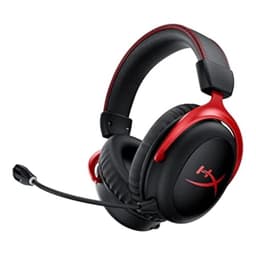
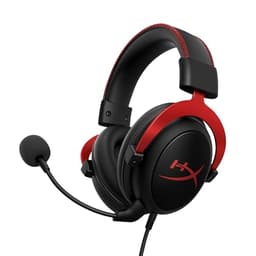
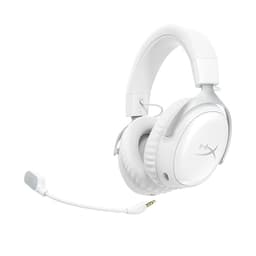
Funny thing about gaming headsets: some of the most expensive ones get absolutely roasted in owner reviews, while a mid-range wired headset quietly racks up thousands of five-star ratings from people who actually play games. The HyperX Cloud Alpha is exactly that kind of headset. It doesn't have a flashy wireless module or a light-up logo that would embarrass you in a well-lit room. What it has is good audio, solid build quality, and a fanbase that's been recommending it to mates for years.
Over 3,000 owners have rated this thing at ★★★★☆ (4.4). That's not a fluke. That's people finishing long gaming sessions, thinking "yeah, that was fine", and then going out of their way to say so online. For a wired gaming headset sitting in the mid-range price tier, that kind of sustained goodwill is harder to earn than it looks.
So is the HyperX Cloud Alpha actually worth your money in 2026? Short answer: probably yes, depending on what you need. Longer answer: read on, because there are a few things worth knowing before you click buy.
Core Specifications
The Cloud Alpha connects via a 3.5mm jack, which immediately tells you a few things. It's wired, it works everywhere that has a headphone socket, and you're not going to be hunting for a USB dongle or worrying about Bluetooth latency mid-match. The cable is braided and detachable, which is a genuinely useful feature that not every headset at this price point bothers with. If you sit on it or the dog chews through it, you're replacing a cable, not a headset.
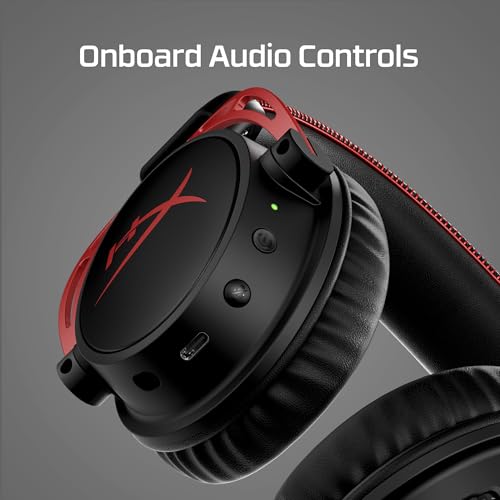
The aluminium frame is the other thing that stands out on paper. Most headsets at this price are plastic all the way through, and plastic headbands have a habit of creaking, flexing, and eventually snapping at the hinge. Aluminium doesn't do that. It's heavier, but it lasts. The expanded headband design is there to spread that weight, and from what owners report, it does a decent job of it. The in-line audio control on the braided cable lets you adjust volume and mute the mic without tabbing out or fumbling around in software.
The detachable noise-cancellation microphone is worth flagging too. You can pull it out when you're not gaming, which means this can double as a decent pair of headphones for music or commuting without looking like you're about to call in an airstrike. That kind of versatility matters if you don't want a dedicated pair of cans for every situation.
| Specification | Detail |
|---|---|
| Connection | 3.5mm (detachable braided cable) |
| Driver Technology | HyperX Dual Chamber Drivers |
| Sound Pressure Level | 98 dB SPL/mW at 1kHz |
| Frame Material | Aluminium |
| Microphone | Detachable, noise-cancelling |
| In-line Control | Volume and mic mute |
| Platform Compatibility | PC, PS4, PS5, Xbox One, Xbox Series X/S |
| Price | £64.32 |
| Rating | ★★★★☆ (4.4) (2,668 reviews) |
Audio Specifications
The headline audio spec here is the sound pressure level of 98 dB SPL/mW at 1kHz. That's a solid sensitivity figure. It means the headset will get genuinely loud from a standard 3.5mm output without needing an amplifier, which matters if you're plugging into a controller or a phone rather than a dedicated DAC. Some headsets at this price need a bit of help to get to comfortable listening volumes. The Cloud Alpha doesn't.
The star feature on the audio side is what HyperX calls Dual Chamber Drivers. The idea is that the driver housing is split into two separate chambers, physically isolating the bass frequencies from the mids and highs. In a conventional single-chamber driver, bass can bleed into and muddy the midrange. Separating them out reduces that distortion and gives each frequency range more space to do its thing properly. It's not a gimmick unique to HyperX, but it's a genuine engineering choice that costs money to implement, and you don't usually see it at this price point.
What this means in practice is that the Cloud Alpha tends to have more clarity in the mids than you'd expect from a gaming headset that also delivers decent bass. Footsteps, voice lines, and ambient sound effects don't get swamped by explosions. That's a real advantage in competitive gaming, where positional audio matters and bass-heavy tuning can actually work against you. The dual chamber design is the main reason this headset punches above its weight in audio quality comparisons.
Sound Signature
The Cloud Alpha sits somewhere between V-shaped and balanced. It's not flat or studio-neutral, which you wouldn't want from a gaming headset anyway. But it's also not the kind of aggressively bass-boosted tuning you get from headsets that are clearly designed to impress in a thirty-second demo rather than hold up over a four-hour gaming session. The bass is present and punchy without being overwhelming. The treble is clear without being fatiguing. The mids, thanks to those dual chambers, are more articulate than most.
For competitive gaming, this tuning is pretty much ideal. You want to hear footsteps in a battle royale. You want to catch the directional cues in an FPS. A headset that buries everything in bass sounds exciting for the first hour and then gets you killed repeatedly because you couldn't hear someone flanking. The Cloud Alpha doesn't do that. Owners consistently mention that positional audio feels accurate and that they can pick up on in-game sound cues reliably. That's the thing that actually matters in competitive play.
For music and movies, it's still a good listen. It's not going to satisfy someone who wants a flat reference sound for mixing, but that's not what this is for. Cinematic content sounds full and engaging. Music with a lot going on in the mids, like rock or acoustic, comes across well. Heavy electronic music with sub-bass emphasis is enjoyable without being the headset's strongest suit. If you mostly game and occasionally use your headset for everything else, the sound signature works across the board.
Sound Quality
Soundstage on a closed-back wired gaming headset is always going to have limits, and the Cloud Alpha doesn't magically transcend those limits. What it does do is present a soundstage that feels wider and more open than most closed-back headsets at this price. Owners frequently compare it favourably to headsets costing significantly more, which is either a testament to the Cloud Alpha or a mild indictment of the competition. Probably both.
Imaging is where this headset earns its reputation in competitive gaming circles. The dual chamber driver design contributes to cleaner separation between sounds at different frequencies, which translates to better instrument and effect placement in the stereo field. In an FPS, that means gunshots from the left sound distinctly left, footsteps above you sound above you (as much as stereo allows), and you're not just guessing at directions based on volume alone. It's not magic, and it's not a replacement for a good pair of open-back headphones if you're a serious competitive player, but it's genuinely better than average for a closed gaming headset.
Bass extension is good without being excessive. The low end hits with authority on explosions and action sequences without muddying the rest of the mix. Treble clarity is one of the Cloud Alpha's stronger suits, with high-frequency detail coming through cleanly on things like string instruments, high hats, and the crackle of in-game radio chatter. The overall impression from owner reviews is that this is a headset that sounds noticeably better than its price suggests, which is probably the nicest thing you can say about any piece of audio kit.
Microphone Quality
The microphone is detachable and noise-cancelling, which covers the basics. Detachable is good because boom mics on gaming headsets take a beating and having a replaceable one extends the life of the whole product. Noise-cancelling on a gaming headset mic typically means cardioid or unidirectional pickup, designed to reject sound coming from the sides and rear so your teammates hear your voice rather than your keyboard, your fan, or whatever's happening in the next room.
Owner feedback on the mic is generally positive but not glowing. Most people report that voice clarity is good enough for party chat and online multiplayer without complaint from teammates. It picks up voice clearly at normal talking distance and does a decent job of rejecting background noise. It's not going to make you sound like you're recording a podcast, and if you're a streamer who cares deeply about mic quality, you'll probably want a dedicated USB microphone on top. But for gaming communication, which is what this mic is actually for, it does the job without embarrassing you.
The in-line mute control is a nice touch here. Being able to cut the mic quickly without fumbling around in your system tray is one of those small quality-of-life features that you don't think about until you're in a game and someone starts talking in the background. The in-line control handles both volume and mute, so everything you need for basic audio management is right there on the cable. Some owners mention that the in-line remote feels solid and clicks satisfyingly, which is the kind of detail that matters when you're reaching for it without looking.
Comfort and Build
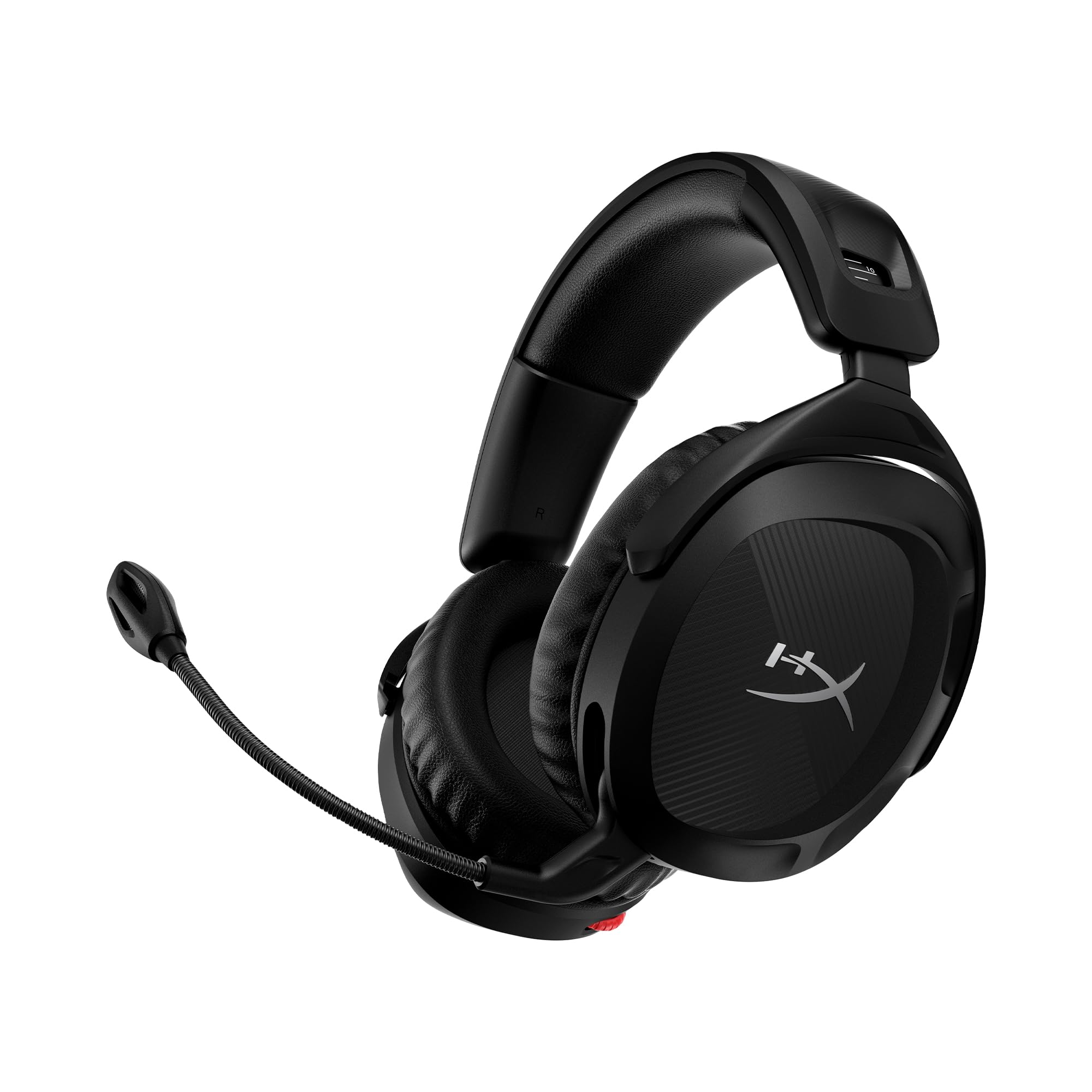
HyperX has been banging on about comfort being their thing for years, and with the Cloud Alpha, they've mostly backed that up. The aluminium frame is the structural backbone here, and it makes a real difference to long-term durability. Plastic headbands flex, creak, and eventually crack at stress points. Aluminium doesn't. It's a heavier material, but the expanded headband design distributes the weight across a wider area of your head, and owners generally report that it doesn't feel heavy during extended sessions.
The earcup padding is a common talking point in owner reviews, and mostly in a good way. HyperX uses memory foam with a leatherette covering, which is standard for gaming headsets but executed well here. The cups are large enough to fit around most ears rather than pressing on them, which is the difference between a headset you can wear for an hour and one you can wear for four. Glasses wearers have mixed reports, as is almost always the case with over-ear headsets, but the Cloud Alpha fares better than average in this regard because the clamping force isn't excessive.
Build quality is one of the Cloud Alpha's most praised attributes in owner reviews. People mention that it feels solid, that nothing rattles or flexes in a concerning way, and that the detachable cable mechanism is secure. The "no grey part visible" instruction in the product notes about the cable jack is a bit of an odd inclusion, but it's there because the detachable connection needs to be fully seated to work properly. It's worth paying attention to if you're having audio issues. Overall, this is a headset that feels like it was built to last, which at any price is something worth saying out loud.

Connectivity
The Cloud Alpha is a wired headset with a 3.5mm connection. Full stop. There's no wireless option, no Bluetooth, no USB audio processing. If you need wireless, this is not your headset. But if you're fine with a cable (and plenty of people are, especially at a desk), the 3.5mm connection is actually an advantage in a few ways. Zero latency. No battery to charge. No dongle to lose. Works with literally anything that has a headphone socket, which is most things.
The braided cable is detachable, which is the important bit. Braided cables are more durable than standard rubber ones and they don't tangle as aggressively. The detachable design means if you do somehow damage the cable, you're not writing off the entire headset. You buy a new cable and carry on. That's a genuinely sensible design choice that saves money in the long run and extends the useful life of the product considerably.
The 3.5mm standard also means compatibility is essentially universal. PC headphone jacks, console controllers, phones, tablets, laptops, the headphone output on your monitor if it has one. The 3.5mm TRS/TRRS standard has been around long enough that you're not going to find a modern gaming device that doesn't support it. For multi-platform players who switch between a PC and a console, this is genuinely more convenient than a USB headset that needs a different adapter for each platform.
Battery Life
The Cloud Alpha is wired, so there's no battery. Nothing to charge, nothing to run flat mid-session, no scrambling for a USB cable because you forgot to plug in the night before. If you've ever had a wireless headset die on you during a ranked match, you'll understand why this is a feature rather than a limitation for some people.
The trade-off is the cable, obviously. You're tethered to your device, and if you have a habit of spinning around in your chair or wandering away from your desk mid-game, that's going to be annoying. For desk-based PC gaming or couch console gaming where you're relatively stationary, the cable is a non-issue. For anything else, it might bother you.
There's also no USB-C charging port, no proprietary connector, no power management to think about. The headset either works or it doesn't, and if it doesn't, the problem is almost certainly the cable connection rather than a dead battery or firmware issue. From a reliability standpoint, wired headsets are just simpler, and simpler usually means fewer things to go wrong over time.
Software and Customisation
The Cloud Alpha works with HyperX NGenuity software on PC, which gives you access to EQ customisation and some additional audio settings. NGenuity is HyperX's main software platform for their peripherals, and it's reasonably straightforward to use without being particularly exciting. You can adjust the EQ to taste, though the default tuning is good enough that many owners never bother.
There's no virtual surround sound processing built into the headset itself, which is probably the right call. Software virtual surround on a stereo headset is one of those features that sounds impressive in a spec sheet and then actively makes things worse in practice for a lot of people. It can smear imaging and introduce processing artifacts. The Cloud Alpha skips it and just delivers clean stereo, which is the more honest approach. If you want virtual surround, you can enable Windows Sonic or Dolby Atmos for Headphones through your system settings, but it's not baked in.
On console, there's no software at all, which is fine because there's nothing to configure. Plug in, play, done. The in-line control handles volume and mute, which covers everything you actually need to adjust during a session without software. For most gamers, this level of simplicity is a feature. If you're someone who likes to spend an evening tweaking parametric EQ curves, you might want something with more configurability, but that's a pretty niche requirement at this price point.
Compatibility
The Cloud Alpha officially supports PC, PS4, PS5, Xbox One, and Xbox Series X/S. That's comprehensive multi-platform coverage from a single headset, and it works because 3.5mm is universal. On PlayStation, you plug into the controller. On Xbox, same thing. On PC, you plug into your motherboard's audio jack or a dedicated sound card. No adapters needed for any of these platforms, which is a genuine convenience that USB headsets can't always match without additional hardware.
Nintendo Switch compatibility isn't listed in the official spec sheet, but given that the Switch has a 3.5mm headphone jack in handheld mode, it's reasonable to assume it would work for audio. HyperX just hasn't certified it officially, so your mileage may vary. Mobile devices with 3.5mm jacks would similarly work for audio and mic use. Devices without a 3.5mm jack (most modern phones) would need a USB-C to 3.5mm adapter, which is a minor inconvenience but not a dealbreaker.
The multi-platform story here is genuinely one of the Cloud Alpha's strengths. If you own more than one gaming platform, having a single headset that works across all of them without faff is worth a lot. You're not buying a "PC headset" or a "PlayStation headset". You're buying a headset that goes wherever you do, which at this price tier is a pretty compelling proposition. The HyperX product page confirms the multi-platform support officially.
How It Compares
The Cloud Alpha's main competition in the mid-range wired gaming headset space comes from the SteelSeries Arctis 1 and the Corsair HS55. Both are wired, both hit a similar price point, and both have their own strengths. The Arctis 1 is lighter and has a ski-goggle-style headband that some people find more comfortable for long sessions. The HS55 has a slightly more premium feel and good passive noise isolation. Neither has the dual chamber driver design that HyperX uses in the Cloud Alpha.
Where the Cloud Alpha tends to win in comparisons is audio quality for the money. The dual chamber driver design genuinely does produce more separation and clarity than a standard single-driver setup, and owners who have tried multiple headsets in this range consistently rate the Cloud Alpha's audio above the competition. The aluminium frame also gives it a durability edge over fully plastic competitors. The detachable mic and cable add practical longevity that matters if you're buying something to last.
Where the Cloud Alpha loses ground is wireless. Both the Arctis 1 and HS55 have wireless variants at higher price points, and if wireless is a priority for you, you'd need to spend more with any brand. The Cloud Alpha doesn't have a wireless option at all, so if you're set on cutting the cord, this isn't the headset for you regardless of how good the audio is. For wired-first buyers, though, the comparison is firmly in HyperX's favour at this price.
| Feature | HyperX Cloud Alpha | SteelSeries Arctis 1 | Corsair HS55 |
|---|---|---|---|
| Connection | 3.5mm wired | 3.5mm wired | 3.5mm wired |
| Driver Design | Dual Chamber | Standard single | Standard single |
| Frame Material | Aluminium | Plastic/steel | Plastic |
| Detachable Cable | Yes (braided) | Yes | No |
| Detachable Mic | Yes | Yes (retractable) | No |
| In-line Control | Volume + mute | Volume + mute | Volume |
| Multi-platform | PC, PS4, PS5, Xbox One, Xbox Series X/S | PC, PS, Xbox, Switch | PC, PS, Xbox |
| Owner Rating | ★★★★☆ (4.4) (2,668) | Varies by retailer | Varies by retailer |

Final Verdict
The HyperX Cloud Alpha is one of those headsets that has stayed relevant for years because it does the fundamentals properly. Good audio quality from a genuinely clever driver design. Durable aluminium construction that should outlast most of the plastic competition. A detachable mic and cable that extend the product's useful life. Broad multi-platform compatibility from a single 3.5mm connection. And a 4.4-star rating from over 3,000 owners who had no reason to be charitable.
It's not perfect. There's no wireless option, which rules it out for people who need to move around or hate cables on principle. The software customisation is basic. And if you're a streamer or content creator who needs broadcast-quality mic audio, the detachable boom mic is good enough for gaming but you'll want something dedicated on top. These are real limitations, not excuses.
But for the target audience, which is someone who wants a proper gaming headset that sounds good, lasts a while, works across multiple platforms, and doesn't cost a fortune, the Cloud Alpha is a genuinely strong recommendation. The dual chamber driver tech gives it an audio quality edge that you'd normally have to spend more to get. The aluminium frame means you're not going to be replacing it because a hinge snapped. And the owner satisfaction rate suggests that people who buy it mostly end up happy they did. That's not nothing. That's actually quite a lot.
Mid-range price, above-average performance. Sorted.
What works. What doesn’t.
5 + 3What we liked5 reasons
- Dual chamber drivers deliver genuine audio clarity above the price point
- Aluminium frame is more durable than plastic competitors
- Detachable braided cable and mic extend product lifespan
- Works across PC, PS4, PS5, Xbox One, and Xbox Series X/S from one 3.5mm connection
- 4.4/5 from over 3,000 owners is sustained, credible social proof
Where it falls3 reasons
- No wireless option at any price point
- Mic is decent for gaming but not good enough for streaming or content creation
- Software customisation is fairly basic
Full specifications
12 attributes| Connectivity | 3.5mm |
|---|---|
| Surround | stereo |
| Microphone | detachable |
| Noise cancellation | false |
| Driver size | 50mm |
| Driver size MM | 50 |
| Frequency response HZ | 13-27000 |
| Microphone type | detachable boom |
| Platforms | PC, PS4, Xbox One, Switch, Mobile |
| Spatial audio | false |
| Type | over-ear |
| Weight G | 336 |
If this isn’t right for you
2 options
Frequently asked
5 questions01Is the HyperX Cloud Alpha, Gaming Headset with In-line volume control good for competitive gaming?+
Yes, it's well suited to competitive gaming. The dual chamber driver design produces cleaner separation between bass and mids, which means footsteps, voice lines, and directional audio cues come through clearly without being muddied by bass. Positional audio accuracy is consistently praised in owner reviews, making it a solid choice for FPS and battle royale players.
02Does the HyperX Cloud Alpha, Gaming Headset with In-line volume control have a good microphone?+
The detachable noise-cancelling microphone is good enough for gaming communication. Teammates can hear you clearly, and it rejects background noise reasonably well. It's not a broadcast-quality mic, so streamers or content creators who need professional voice audio will want a dedicated USB microphone on top. For party chat and online multiplayer, it does the job without complaint.
03Is the HyperX Cloud Alpha, Gaming Headset with In-line volume control comfortable for long sessions?+
Generally yes. The aluminium frame with expanded headband distributes weight well, and the memory foam earcups are large enough to fit around most ears rather than pressing on them. Owners consistently report being able to wear it for extended gaming sessions without discomfort. Glasses wearers fare better than average because the clamping force isn't excessive, though individual fit varies.
04Does the HyperX Cloud Alpha, Gaming Headset with In-line volume control work with PS5/Xbox?+
Yes. The Cloud Alpha officially supports PS4, PS5, Xbox One, and Xbox Series X/S, as well as PC. It connects via 3.5mm to the controller on both PlayStation and Xbox platforms, so no adapters are needed. This makes it a genuinely versatile option for multi-platform gamers.
05What warranty applies to the HyperX Cloud Alpha, Gaming Headset with In-line volume control?+
Amazon offers 30-day returns. Manufacturer typically provides 1-2 year warranty. Check the HyperX website for the most current warranty terms in your region.