3D rendering places unique demands on your processor. Unlike gaming, which favours single-threaded speed and GPU acceleration, rendering workloads in software like Blender, Cinema 4D, and Autodesk Maya benefit enormously from additional CPU cores and sustained multi-threaded performance. This year, AMD's Ryzen range has expanded significantly, offering compelling options at various price points for artists and studios looking to upgrade their render farms or workstation setups. We have assessed the latest options to help you choose the right CPU for your rendering pipeline.
Quick Verdict
Best Overall: AMD Ryzen 7 9800X3D, exceptional multi-core performance with 3D V-Cache technology, ideal for professional rendering studios.
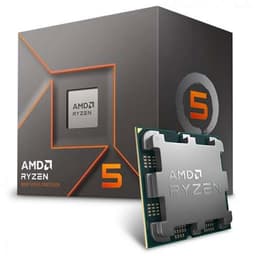
Best Value: AMD Ryzen 5 8400F, delivers solid six-core performance at a competitive price, perfect for freelancers and smaller workflows.
The Ryzen 7 9800X3D represents AMD's flagship for professional rendering work. Built on the Zen 5 architecture with 8 cores and 16 threads, this processor delivers exceptional multi-threaded performance that translates directly into faster render times. The headline feature is the 3D V-Cache technology, which adds an additional 96MB of cache on top of the standard 8MB L3, bringing total cache to 104MB. This massive cache pool dramatically improves performance on rendering workloads where repeated memory access patterns matter greatly.
Rendering applications like Blender's Cycles renderer, V-Ray, and Mental Ray benefit significantly from this architectural advantage. The 8-core design means you can tackle complex scenes with many objects and simulations simultaneously. The processor runs at up to 5.0 GHz boost speeds whilst maintaining excellent thermal efficiency with a 104W TDP, making it viable for professional workstations without requiring extreme cooling solutions. The AM5 socket means compatibility with modern motherboards and DDR5 memory platforms, future-proofing your investment.
This CPU suits professional rendering studios, VFX houses, and serious freelancers who render complex scenes regularly. The price point reflects its professional positioning, but the performance gains justify the investment for those whose income depends on render time. If you are running render farms or managing multiple simultaneous render jobs, this processor's efficiency and core count make it an excellent choice. Studios migrating from older generation systems will notice substantial reductions in turnaround times.
Pros
- 104MB total cache with 3D V-Cache technology dramatically accelerates rendering workloads
- 8 cores and 16 threads provide strong multi-threaded performance for complex scenes
- Excellent thermal efficiency at 104W TDP despite high performance levels
- AM5 socket offers modern platform with DDR5 and PCIe 5.0 support
Cons
- Premium pricing reflects professional positioning
- Requires compatible AM5 motherboard and DDR5 memory investment
- Overkill for hobbyists or casual rendering tasks
The Ryzen 7 9700X offers a more accessible route to eight-core rendering performance. With 8 cores and 16 threads running on Zen 5 architecture, this processor delivers solid multi-threaded rendering capability at a more moderate price than the 9800X3D. The 40MB cache and boost speeds up to 5.6 GHz provide respectable performance for most professional rendering scenarios. The 65W TDP is exceptionally efficient for an 8-core chip, making this an excellent choice for systems that need to stay cool and power-efficient.
This CPU excels in rendering workflows where scene complexity is moderate to high but not extreme. Blender, Cinema 4D, and Houdini all benefit from the extra cores without requiring the premium 3D V-Cache investment. The AM5 socket compatibility means you have access to current-generation motherboards with DDR5 support and PCIe 5.0 connectivity. Build costs remain reasonable because you are not paying for the exotic cache technology, allowing budget allocation to faster RAM or better storage solutions.
The Ryzen 7 9700X suits freelance 3D artists, small studios, and professionals who render regularly but do not require absolute peak performance. Educational institutions and training facilities benefit from the good performance-to-price ratio. If your work involves product visualisation, architectural rendering, or animation production at moderate complexity levels, this processor offers excellent value. The low power consumption also makes it ideal for always-on render machines that contribute to distributed render networks.
Pros
- 8 cores and 16 threads deliver strong multi-threaded rendering at reasonable cost
- 65W TDP is exceptionally low for eight-core performance
- AM5 platform provides modern DDR5 and PCIe 5.0 support
- Good balance between performance and price for professional work
Cons
- Lacks 3D V-Cache technology, missing performance uplift on cache-heavy workloads
- Requires matching AM5 motherboard and DDR5 memory investment
The Ryzen 5 9600X brings six-core, twelve-thread performance to the budget-conscious rendering market. Based on Zen 5 architecture with boost speeds reaching 5.6 GHz, this processor provides adequate performance for entry-level professional work and serious hobbyist rendering. The 32MB cache and 65W TDP make it an efficient choice that avoids thermal complications on modest workstation builds. Integrated Radeon graphics allow for basic display output without a dedicated graphics card, though most rendering workflows utilise dedicated GPUs anyway.
Six cores remain the practical minimum for professional rendering work, as most modern rendering engines scale reasonably up to eight threads. Blender's Cycles renderer, Arnold, and other CPU-based renderers show meaningful improvements with six cores compared to quad-core alternatives. The AM5 socket compatibility ensures you are building on a modern platform with DDR5 and future upgrade potential. The price point positions this CPU as an entry barrier for professionals transitioning to dedicated rendering setups.
This CPU suits freelance artists starting dedicated render machines, students learning professional rendering, and those with moderate project demands. Small design studios rendering product visualisations or architectural concepts find this processor sufficient. If your render jobs typically complete within acceptable timeframes with current equipment and you simply want to upgrade incrementally, the Ryzen 5 9600X provides genuine performance gains without wasteful expenditure on cores you cannot utilise. The integrated graphics also provide a safety net for basic system operation if discrete GPU issues occur.
Pros
- Six cores provide adequate performance for entry to mid-level rendering work
- Zen 5 architecture with 5.6 GHz boost delivers modern performance levels
- Integrated Radeon graphics included for basic display output
- 65W TDP keeps cooling costs minimal
Cons
- Six cores become limiting with highly complex scenes or heavy simulation work
- Requires AM5 motherboard and DDR5 memory for full platform upgrade
The Ryzen 5 8400F represents last-generation value, offering six cores and twelve threads on the Zen 4 architecture at a competitive price point. With 22MB cache and a 65W TDP, this processor delivers respectable performance for rendering work without premium pricing. The F variant lacks integrated graphics, which reduces cost slightly and improves silicon yields, making this an excellent budget option. The AM5 socket ensures modern platform compatibility with DDR5 memory, though you are on the previous architectural generation compared to Zen 5 chips.
Performance differences between Zen 4 and Zen 5 in rendering workloads are modest for six-core chips, typically 5-15 per cent in real-world rendering scenarios depending on scene complexity. The 8400F makes sense if you already have DDR5 memory or a compatible AM5 motherboard from a previous build. Blender users, V-Ray customers, and those using CPU-based rendering engines see genuine performance improvements over older quad-core systems. The removed iGPU slightly improves power delivery efficiency, which can help if you are using demanding discrete GPUs or multiple PCIe devices.
This processor targets budget-conscious professionals, freelancers upgrading from much older hardware, and those building render nodes for distributed networks where cost per node matters. Educational institutions on tight budgets benefit from the lower entry cost whilst still gaining modern platform connectivity. If you are not pushing into extremely heavy workloads and can benefit from the AM5 ecosystem compatibility, the Ryzen 5 8400F offers excellent value for transitional upgrades.
Pros
- Competitive pricing for six-core AM5 performance
- 22MB cache provides adequate performance for moderate rendering work
- AM5 socket compatibility with modern DDR5 platforms
- 65W TDP keeps power and cooling requirements minimal
Cons
- Zen 4 architecture is one generation older than latest Zen 5 options
- No integrated graphics limits flexibility in low-resource scenarios
- Performance gap widens against Zen 5 in heavily multi-threaded scenarios
The Ryzen 5 3600 is an older Zen 2 generation processor with six cores and twelve threads, now primarily found in budget clearance channels. With 35MB cache and a 65W TDP, this AM4 chip represents the baseline of older-generation technology. The architectural age and limited cache compared to newer options means rendering performance significantly trails contemporary alternatives. However, the extremely low price point attracts those building absolute budget systems or exploring rendering as a casual activity.
Performance in rendering workloads is substantially lower than even the 5600GT, with typical frame times 40-50 per cent slower than Zen 5 alternatives. The older architecture also means reduced instruction efficiency and higher memory latency, both problematic for rendering tasks. The 35MB cache provides some advantage over earlier Zen chips, but does not compensate for generational performance differences. This processor makes sense only for hobby experimentation or extremely constrained budgets where render times are not commercially important.
The Ryzen 5 3600 suits hobbyists exploring rendering as a casual activity, educational exercises where speed matters less than cost, or those building secondary machines for testing purposes. Professional workflows should avoid this chip due to excessive render time waste. Anyone using this processor regularly should plan upgrades within the year, as the performance penalty becomes frustrating quickly with any substantial rendering workload.
Pros
- Extremely low cost allows entry into rendering with minimal investment
- 35MB cache provides some performance for older-generation hardware
- 65W TDP ensures simple thermal solutions
- AM4 socket compatible with older platform components
Cons
- Zen 2 architecture is three generations old with significantly lower performance
- Rendering performance is 40-50 per cent slower than modern alternatives
- No upgrade path within AM4 platform to competitive modern chips
- Higher render times make this unsuitable for professional or time-sensitive work
Buying Guide
Selecting a CPU for 3D rendering requires understanding how your specific workload scales with processor resources. Rendering performance scales well with additional cores up to eight, and somewhat less efficiently beyond that on mainstream platforms. Most professional studios find six to eight cores the practical sweet spot for workstation rendering, with additional performance improvement diminishing beyond twelve cores unless you are managing large render farms where per-node economics matter differently.
Cache architecture affects rendering performance significantly. The 3D V-Cache technology in the Ryzen 7 9800X3D provides measurable advantages for memory-intensive rendering operations, particularly with highly detailed scenes or complex simulations. Standard cache configurations work adequately for most projects, and the performance difference becomes noticeable only with extremely complex scenes pushing the bounds of memory bandwidth. Zen 5 architecture improves rendering instruction efficiency compared to Zen 4, typically delivering 10-15 per cent performance gains in multi-threaded rendering even at identical clock speeds.
Platform investment matters substantially. AM5 socket processors support modern DDR5 memory with better bandwidth and lower latency than DDR4, directly improving rendering performance. PCIe 5.0 support on AM5 platforms allows faster GPU-to-CPU communication if you use GPU acceleration for viewport interaction or hybrid rendering pipelines. Migration costs become a factor if you already own AM4 components, but AM5 represents the safer long-term investment due to superior upgrade paths and newer platform features.
Thermal efficiency deserves consideration if you run render machines continuously. The 65W TDP options stay cool without expensive cooling solutions, important for 24/7 rendering nodes or stacked configurations. Professional render farms often favour lower-power chips due to electricity cost savings across hundreds of units. Thermal output also affects case airflow requirements and ambient working conditions if your workstation shares office space with other team members.
The AMD Ryzen 7 9800X3D emerges as the overall winner for professional 3D rendering work, combining cutting-edge performance, excellent thermal efficiency, and future-proof platform connectivity. The 3D V-Cache technology delivers real performance improvements for rendering workloads, and the eight cores provide ample headroom for complex scenes. The 104W TDP remains manageable on professional workstations, and AM5 platform support ensures years of upgrade potential and compatibility with modern memory and storage technologies.
For those on tighter budgets, the AMD Ryzen 7 9700X offers compelling value, delivering strong eight-core performance without premium pricing. The 65W TDP is exceptional for its performance level, making it ideal for render farms where power consumption matters. The Ryzen 5 9600X and 8400F provide competent six-core options for hobbyists and small studios, with the 9600X preferred for its latest architecture and integrated graphics flexibility.
Investment in rendering CPU hardware pays for itself quickly in professional environments where faster render times translate to quicker client turnaround and higher job throughput. Even the most expensive option, the Ryzen 7 9800X3D, costs significantly less than a single day of extra render time delays on a commercial project. Choose based on your scene complexity, render frequency, and whether you are building a single workstation or managing multiple render nodes, and your render farm will provide years of reliable service within these modern, efficient platforms.