3D rendering is one of the most demanding workloads a processor faces, and choosing the right CPU without breaking the bank has become significantly easier over the past twelve months. AMD's Zen 4 and Zen 5 architectures have pushed single-threaded and multi-threaded performance to levels that were unthinkable at these price points just a year ago, while older Zen 3 chips have dropped in price enough to offer remarkable value for hobbyists, students, and freelance artists on tighter budgets. This guide is aimed at anyone using Blender, Cinema 4D, V-Ray, KeyShot, or similar CPU-intensive renderers who wants to spend no more than £300 on a processor. Whether you are building a dedicated workstation from scratch or upgrading an existing AM4 system, the six picks below cover every realistic use case, from weekend hobbyist to part-time professional. Each chip has been evaluated on core count, clock speeds, platform costs, and real-world rendering throughput relative to its price.
Quick Verdict
Best Overall: AMD Ryzen 7 9700X. Eight Zen 5 cores, exceptional IPC, and a 65 W TDP make it the most balanced rendering CPU under £300 available today.
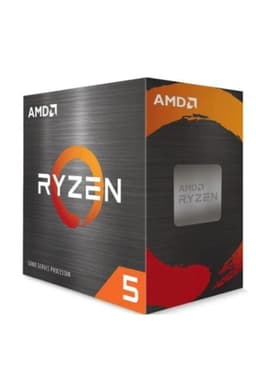
Best Value: AMD Ryzen 5 5600X. Still a class-leading six-core chip on the mature AM4 platform, and its street price has fallen to a level that makes it almost impossible to beat on a per-pound basis for Blender and V-Ray workloads.
The Ryzen 9 9900X sits right at the top of this budget ceiling and makes a compelling argument for spending every penny of your £300 allowance if 3D rendering is your primary workload. Built on AMD's Zen 5 architecture and manufactured on TSMC's 4 nm node, the 9900X delivers twelve cores and twenty-four threads with a peak boost clock of 5.6 GHz. That combination of high core count and exceptional IPC means it outperforms the previous-generation Ryzen 9 5900X by a meaningful margin in Blender's Classroom and Monster benchmarks, and it competes directly with chips that cost considerably more from Intel's current lineup.
For artists and visualisers working in Cinema 4D's Physical renderer, Chaos V-Ray, or Blender's Cycles engine, the 9900X's thread count translates directly into faster render times. A scene that takes eight minutes on a six-core chip can complete in under five minutes on twelve cores, and that kind of time saving adds up quickly on commercial deadlines. The chip uses the AM5 platform, which means you will need a compatible DDR5 motherboard, but AM5 boards have dropped significantly in price over the past year and entry-level options are now available for under £100.
Cooling is worth considering. The 9900X has a 120 W TDP in its default configuration, so AMD's stock cooler is not included and you will need to budget for an aftermarket solution. A mid-range tower cooler such as a 120 mm or 140 mm single-tower unit will keep temperatures well within safe limits. The chip does support AMD's Precision Boost Overdrive, which allows it to run above its rated TDP when thermal headroom permits, squeezing out additional rendering performance without manual overclocking.
Who is this for? Freelancers producing architectural visualisations, product renders, or animation frames who need the fastest CPU rendering throughput available under £300. If your workflow is predominantly CPU-bound and you render overnight jobs regularly, the 9900X's twelve cores justify the premium over the eight-core 9700X.
Verdict: The most powerful CPU renderer in this roundup. The twelve-core Zen 5 configuration is genuinely impressive at this price, though the AM5 platform investment and the need for a separate cooler mean total build costs are higher than AM4 alternatives.
Pros
- Twelve Zen 5 cores deliver the fastest CPU rendering throughput under £300
- 5.6 GHz boost clock ensures strong single-threaded performance for viewport work
- AM5 platform offers DDR5 support and a long upgrade path
Cons
- 120 W TDP requires a separate aftermarket cooler, adding to total cost
- AM5 motherboard investment raises overall build cost compared to AM4
- No integrated graphics, so a discrete GPU is essential during setup
The Ryzen 7 9700X is the pick that most 3D artists in the sub-£300 bracket will find hits the sweet spot between core count, clock speed, and platform cost. Eight Zen 5 cores running at up to 5.5 GHz, a 65 W TDP, and AMD's latest IPC improvements combine to make this chip noticeably faster than the previous-generation Ryzen 7 5800X3D in lightly threaded rendering tasks, and it closes the gap significantly in multi-threaded workloads despite having fewer cores than the 9900X.
The 65 W TDP is a genuine advantage here. Unlike the 9900X, the 9700X runs cool enough that a quality mid-range cooler, or even AMD's Wraith cooler if paired with a well-ventilated case, will keep it operating at full boost without throttling. In practice, this means you can invest the money saved on cooling into a faster storage drive or more RAM, both of which benefit rendering workflows. DDR5-6000 memory in particular pairs well with Zen 5's Infinity Fabric and can improve rendering throughput by a few percentage points over slower kits.
For Blender users, the 9700X scores impressively in the official Blender Benchmark suite. It handles the Monster, Junkshop, and Classroom scenes with render times that rival chips from Intel's Core i9 range that cost considerably more. In KeyShot and V-Ray, the story is similar: the combination of high clock speeds and strong per-core performance means complex scenes with global illumination and caustics complete faster than the core count alone would suggest.
The AM5 platform does require DDR5 memory and a compatible motherboard, but both have become more affordable. A solid B650 board can be found for around £100 to £120, and 32 GB of DDR5-6000 memory is available for similar money. Total platform costs are higher than AM4, but the upgrade path is longer and future Zen 6 chips will use the same socket.
Who is this for? Part-time 3D artists, motion graphics designers, and anyone who wants the best balance of rendering performance, power efficiency, and platform longevity available under £250 for the CPU alone.
Verdict: The best overall CPU for 3D rendering under £300. Eight Zen 5 cores, a sensible TDP, and strong real-world rendering performance make the 9700X the chip we would recommend to most readers building or upgrading a rendering workstation today.
Pros
- Eight Zen 5 cores with 5.5 GHz boost deliver excellent multi-threaded rendering throughput
- 65 W TDP runs cool enough for mid-range cooling solutions, keeping total build costs down
- AM5 socket provides a clear upgrade path to future Zen 6 processors
Cons
- No integrated graphics means a discrete GPU is required for initial setup
- AM5 platform costs more to enter than AM4 when factoring in DDR5 memory and motherboard
The Ryzen 5 9600X brings Zen 5 architecture to a six-core, twelve-thread configuration that sits at a compelling price point for anyone who wants the latest IPC improvements without committing to the higher cost of an eight or twelve-core chip. With a boost clock of 5.4 GHz and 38 MB of combined cache, the 9600X is a genuine step forward from the Ryzen 5 7600X it replaces, offering improved instructions-per-clock performance that translates into faster rendering times even at the same core count.
In Blender's Cycles renderer, the 9600X punches above its weight. The Zen 5 IPC gains mean it outperforms the previous-generation Ryzen 5 7600X by around ten to fifteen percent in CPU rendering benchmarks, and it closes the gap on the Ryzen 7 7700X from the generation before. For artists who primarily work on moderately complex scenes, product visualisations, or architectural exteriors with manageable polygon counts and lighting setups, the 9600X provides render times that are genuinely workable without the cost of an eight-core chip.
The 65 W TDP is a real strength. The 9600X runs cool under load, and AMD includes a Wraith Stealth cooler in the box, which is sufficient for moderate workloads and keeps the total cost of entry lower than the 9700X or 9900X. For heavier overnight rendering jobs, an upgrade to a 120 mm tower cooler is worthwhile, but it is not strictly necessary for occasional use.
One consideration is the AM5 platform requirement. As with all Zen 5 chips, the 9600X needs a DDR5 motherboard, which adds to the overall build cost. However, for someone building a new system from scratch, the AM5 platform's longevity and DDR5's performance advantages make it the sensible choice over AM4 for a new build in 2025.
Who is this for? Students, hobbyists, and part-time 3D artists who want the latest Zen 5 architecture at a more accessible price, and who work on scenes that do not demand more than six cores to complete in reasonable time.
Verdict: A strong six-core Zen 5 option that benefits from the latest IPC improvements. Not as fast as the 9700X in heavily threaded rendering, but a sensible choice for budget-conscious buyers who want a modern platform.
Pros
- Zen 5 IPC improvements deliver noticeably faster rendering than previous-generation six-core chips
- 65 W TDP and included Wraith Stealth cooler keep total build costs manageable
- 5.4 GHz boost clock ensures snappy viewport and single-threaded application performance
Cons
- Six cores limit rendering throughput on complex, heavily threaded scenes compared to the 9700X
- AM5 platform and DDR5 requirement increases total system cost over AM4 builds
The Ryzen 5 5600X has been one of the most recommended CPUs for budget 3D rendering since its launch, and despite being a Zen 3 chip on the ageing AM4 platform, it remains a genuinely excellent choice in 2025 for one simple reason: its price has fallen to a level that makes it the best value-per-pound option for CPU rendering in this entire roundup. Six cores, twelve threads, and a 4.6 GHz boost clock on Zen 3's mature and well-understood architecture deliver rendering performance that still competes with newer chips at higher prices.
In Blender's official benchmark, the 5600X scores well enough to handle the Monster, Junkshop, and Classroom scenes in times that are acceptable for hobbyist and student workflows. V-Ray and KeyShot users will find similar results: the chip handles moderately complex scenes without excessive render times, and its single-threaded performance is strong enough that viewport interaction in applications like Cinema 4D and Houdini remains fluid. The 35 MB of combined cache helps with complex scene data, reducing the frequency of cache misses that can slow rendering on chips with smaller cache allocations.
The AM4 platform is the 5600X's greatest practical advantage for existing users. If you already own an AM4 motherboard, upgrading to the 5600X from an older Ryzen 3 or first-generation Ryzen 5 chip is a straightforward BIOS update and drop-in swap. Even for new builds, AM4 motherboards are available at very low prices and DDR4 memory is cheaper than DDR5, meaning the total platform cost for a 5600X build is significantly lower than any AM5 alternative.
The chip does not include integrated graphics, so a discrete GPU is required. AMD's stock Wraith Stealth cooler is included in the box, which is adequate for the 65 W TDP under normal rendering loads, though heavy overnight rendering sessions benefit from an aftermarket cooler.
Who is this for? Anyone on a tight budget who wants strong CPU rendering performance without the platform costs of AM5, and existing AM4 users looking for a cost-effective upgrade that delivers a meaningful performance improvement.
Verdict: The best value pick in this roundup. The 5600X's combination of Zen 3 performance, low price, and affordable AM4 platform makes it the obvious recommendation for budget-first buyers.
Pros
- Lowest total platform cost of any chip in this roundup when combined with AM4 board and DDR4 memory
- Zen 3 IPC delivers rendering throughput that still competes with newer budget chips
- Wraith Stealth cooler included, reducing additional hardware spend
Cons
- AM4 platform has a limited upgrade path compared to AM5
- No integrated graphics requires a discrete GPU for display output
Buying Guide
What CPU is needed for 3D rendering?
3D rendering is a workload that scales almost perfectly with CPU core count and clock speed. Unlike gaming, which relies heavily on single-threaded performance and GPU capability, CPU rendering engines divide a scene into tiles or buckets and assign each one to a separate thread. This means that a twelve-core chip will render a scene in roughly half the time of a six-core chip running at the same clock speed, all else being equal. For serious rendering work, a minimum of six cores and twelve threads is recommended. Eight cores or more is preferable if your budget allows, and twelve cores represents a significant step up in throughput for complex scenes and animation work.
Core count versus clock speed
Both matter, but in different ways. Core count determines how many rendering threads can run simultaneously, which directly affects how quickly a scene completes. Clock speed and IPC determine how fast each individual thread processes its assigned work. For pure rendering throughput, core count is the more important factor. However, for viewport performance in applications like Blender, Cinema 4D, and Houdini, where you are interacting with the scene in real time, single-threaded clock speed and IPC become more significant. The best chips for a rendering workstation balance both: high clock speeds for responsive viewport interaction and enough cores to keep render times manageable.
Is 32 GB of RAM enough for 3D rendering?
For most hobbyist and professional rendering workloads, 32 GB of RAM is sufficient. Simple to moderately complex scenes in Blender, Cinema 4D, and V-Ray will fit comfortably within 32 GB, and this is the configuration most professional renderers recommend as a starting point. Very large scenes with high-resolution textures, dense geometry, and complex particle or fluid simulations can exceed 32 GB, at which point 64 GB becomes necessary. For students and hobbyists, 32 GB is the practical sweet spot: enough for the vast majority of projects without the added cost of a 64 GB kit.
AM4 versus AM5: which platform should you choose?
AM4 is the mature, lower-cost platform. Motherboards and DDR4 memory are cheap and widely available, and the platform has an enormous range of compatible chips. The downside is that AM4 has reached the end of its upgrade path: the Ryzen 5000 series represents the final generation for this socket. AM5 is AMD's current platform, supporting Zen 4 and Zen 5 chips with DDR5 memory. It costs more to enter but offers a longer upgrade path and access to the latest architectural improvements. For new builds in 2025, AM5 is the more future-proof choice. For existing AM4 users on a tight budget, upgrading within the platform remains excellent value.
Is RTX or GTX better for 3D rendering, and is an RTX 4060 enough?
For GPU-accelerated rendering in Blender Cycles, V-Ray GPU, or Octane, RTX cards are significantly better than GTX cards. RTX GPUs support NVIDIA's OptiX rendering engine, which uses dedicated RT cores to accelerate ray tracing calculations and delivers render times that are dramatically faster than GTX cards of similar compute performance. An RTX 4060 is a capable entry-level rendering GPU: it handles moderately complex scenes well and its 8 GB of VRAM is sufficient for most hobbyist projects. For professional work with high-resolution textures and dense geometry, an RTX 4070 or higher is preferable, but the 4060 is a reasonable starting point when paired with a strong CPU from this list.
Which processor is best for 3D modelling specifically?
3D modelling, as distinct from rendering, is primarily a single-threaded workload. Viewport performance in Blender, Maya, and Cinema 4D depends on single-core speed and IPC rather than core count. For modelling, the Ryzen 7 9700X and Ryzen 5 9600X are the strongest picks in this roundup due to their Zen 5 IPC improvements and high boost clocks. The Ryzen 9 9900X's additional cores add little benefit during the modelling phase but come into their own when you switch to CPU rendering.
For most readers, the AMD Ryzen 7 9700X is the chip to buy. Its eight Zen 5 cores, 5.5 GHz boost clock, and 65 W TDP combine to deliver the best balance of rendering throughput, power efficiency, and platform longevity available under £300. It outperforms every six-core chip in this roundup in multi-threaded rendering benchmarks while remaining cool enough to run on a mid-range cooler, and the AM5 platform provides a clear upgrade path to future Zen 6 processors.
If budget is the primary constraint, the AMD Ryzen 5 5600X remains the best value pick. Its Zen 3 architecture still delivers competitive rendering performance, the AM4 platform is cheap to build on, and the total cost of a 5600X system with a B450 or B550 motherboard and 32 GB of DDR4 is significantly lower than any AM5 build. For existing AM4 users, the 5600X is an easy recommendation. For those who need integrated graphics on AM4, the 5600GT is the practical alternative. For buyers who want the absolute maximum rendering throughput this budget allows and are happy to invest in AM5, the Ryzen 9 9900X's twelve Zen 5 cores are the answer.