AMD's Ryzen 5 range has become the go-to choice for budget-conscious PC builders seeking solid gaming and productivity performance without overspending. Since last year, the landscape has shifted significantly: newer AM5 socket processors now compete with older AM4 models, offering better efficiency and upgrade paths, whilst prices have stabilised across the board. This guide focuses on six exceptional Ryzen 5 CPUs all priced under £200, covering various use cases from casual gaming to content creation. Whether you're building a first PC or upgrading from an older system, these processors deliver excellent value and genuine performance gains over previous generations.
Quick Verdict
Best Overall: AMD Ryzen 5 9600X, newer architecture, integrated graphics, and superior multi-threaded performance make it worth the premium within budget. Best Value: AMD Ryzen 5 3600, still punches above its weight and handles 1080p gaming and everyday tasks with ease.
The Ryzen 5 3600 remains one of the finest value propositions in the entire CPU market. Released in 2019, this processor proved revolutionary for budget builds and continues to deliver credible performance nearly six years later. It features six cores and twelve threads on the proven Zen 2 architecture, running at 3.6 GHz base with a 4.2 GHz boost. The 35 MB L3 cache ensures smooth handling of gaming loads and multitasking scenarios.
This CPU suits anyone building a first gaming PC, upgrading from Intel's budget range, or putting together a cost-conscious streaming setup. Paired with a B450 or B550 motherboard and a modest graphics card, the 3600 confidently handles 1080p gaming at high settings and manages demanding productivity tasks including video editing and 3D rendering at respectable speeds. The 65W TDP means cooling is straightforward, even basic stock coolers work admirably.
Where the 3600 falters is multi-threaded performance compared to newer generations; workloads requiring sustained heavy processing will show age. Lacking integrated graphics means a dedicated GPU is mandatory. Single-thread performance, whilst acceptable, falls behind modern chips. Nevertheless, for 1080p gaming, everyday computing and light content creation, this processor remains genuinely competitive and offers exceptional value. The large community and wealth of supporting documentation make troubleshooting painless.
Pros
- Exceptional value, offers strong 1080p gaming performance
- Mature, widely supported Zen 2 platform with abundant documentation
- Efficient 65W TDP requires minimal cooling investment
- Broad compatibility with older B450 and newer B550 motherboards
Cons
- No integrated graphics, requires dedicated GPU purchase
- Multi-threaded performance noticeably behind newer 7000 and 8000 series chips
- AM4 socket reaching end of life, limits future upgrades
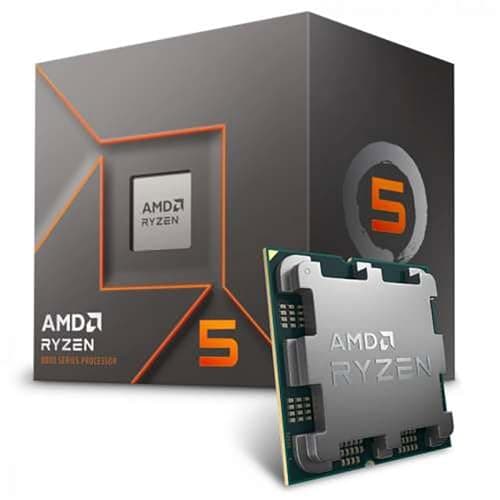
The 8400F slots perfectly into the mid-budget space, offering newer AM5 architecture without the premium pricing of integrated graphics. This is Zen 5 performance at mainstream cost. Six cores, twelve threads, 3.9 GHz base, 4.2 GHz boost, and 22 MB cache deliver confident handling of both gaming and professional workloads. Being an F-series chip, integrated graphics are absent, but you're saving money as a result.
The 8400F appeals to builders who already have a graphics card and want to maximize their budget for CPU capability rather than integrated performance. Gamers targeting 1440p resolution with a mid-range GPU will find this processor sufficient; productivity users working in spreadsheets, browsing, and document editing experience zero performance concerns. The AM5 socket represents a genuine upgrade path: you could later shift to a Ryzen 9 or newer generation without motherboard replacement.
The processor does lack the clock speeds of premium models, and without iGPU you absolutely must pair it with a dedicated card. Multi-threaded loads run noticeably slower than the 9600X or 7600. For pure gaming at 1080p-1440p with appropriate GPU backing, however, the 8400F offers sterling value and decent future-proofing through the AM5 ecosystem. Power efficiency remains strong at 65W, simplifying PSU and cooling decisions.
Pros
- AM5 platform offers clear upgrade path to newer Ryzen chips
- Excellent value for money, solid Zen 5 performance
- 65W TDP keeps thermals and power consumption minimal
Cons
- No integrated graphics means mandatory dedicated GPU purchase
- Slower clock speeds than premium models affect gaming frame rates
- Limited cache compared to X-series variants
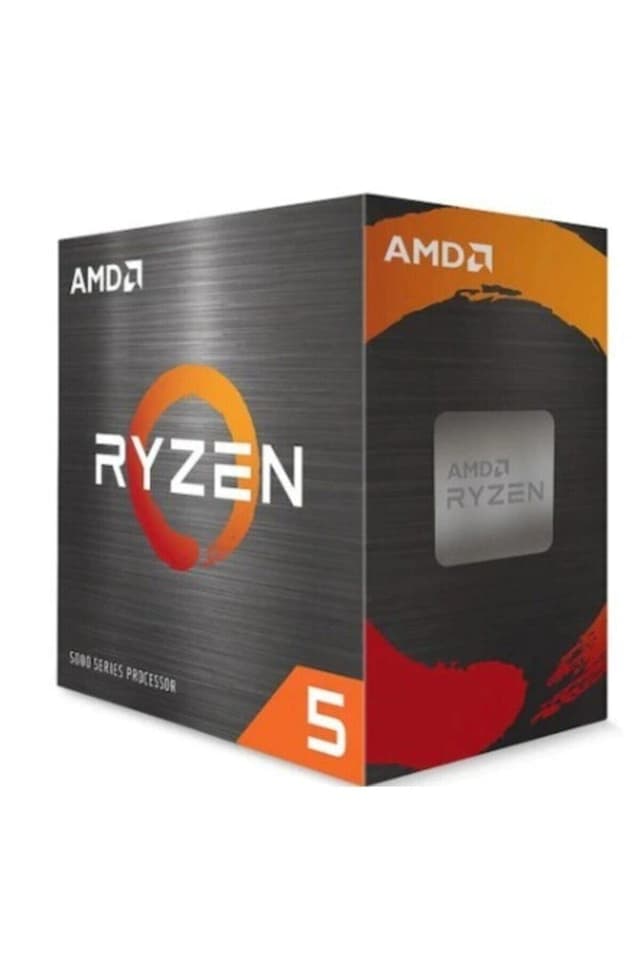
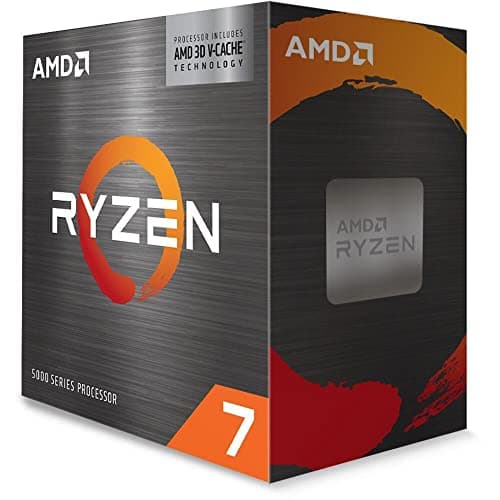
The Ryzen 5 5600X represents the pinnacle of AM4 mainstream performance, and remains genuinely competitive with newer chips for gaming-focused builders. This Zen 3 processor offers six cores, twelve threads, 3.7 GHz base, 4.6 GHz boost, and a substantial 35 MB cache, excellent specifications for the price point. It stands as arguably the strongest AM4 non-3D-cache part available under £200, delivering noticeable single-thread improvements over the 3600.
Gamers building around RTX 4070 or RTX 4060 Ti level cards should seriously consider the 5600X; it eliminates CPU bottlenecks at 1440p and 4K resolutions. Content creators handling moderate video projects, 3D renders, and photo editing experience tangible performance uplift versus the 3600 or 5600GT. The 65W TDP keeps systems efficient, and mature B550 motherboards remain affordable and feature-rich. This CPU has proven itself across millions of systems over several years.
Against newer AM5 chips like the 9600X, the 5600X offers marginally lower multi-thread performance and lacks the platform upgrade potential. No integrated graphics means GPU purchase remains mandatory. Clock speeds, whilst good, fall short of newer generation boosts. However, for pure gaming and balanced mixed workloads, the 5600X delivers excellence; if you can find B550 motherboards at sensible prices, the platform value equation improves substantially. This remains a rock-solid choice for 1440p gaming builds.
Pros
- Excellent Zen 3 single-thread performance, strong gaming capability
- Large 35 MB cache and 4.6 GHz boost deliver responsive gameplay
- Mature platform with abundant cooling options and motherboard choices
Cons
- No integrated graphics necessitates GPU purchase
- AM4 platform reaching obsolescence compared to newer AM5 options
- Multi-thread performance behind newer 7000 and 9000 series variants
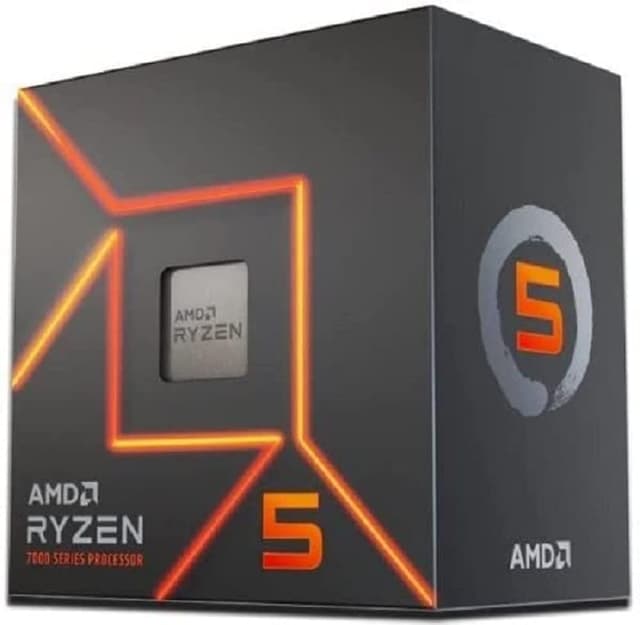
The Ryzen 5 7600 balances modern AM5 architecture with integrated graphics, offering exceptional platform longevity and future upgrade options. This Zen 4 processor features six cores, twelve threads, an impressive 3.9 GHz base, 5.1 GHz boost, and seven Radeon GPU cores. The 32 MB cache and 65W TDP round out a genuinely modern, efficient design. This represents the baseline AM5 processor that still delivers integrated graphics, making it particularly valuable for budget builders.
This CPU suits anyone prioritising AM5 platform longevity who also wants contingency graphics without GPU investment. Gamers planning future GPU purchases can game immediately on integrated Radeon cores, then shift to discrete cards once budget allows. The higher clock speeds versus the 8400F mean noticeably faster gaming performance, especially in CPU-limited scenarios. Office workers, students, and light creators benefit from the modern architecture and solid iGPU capability.
Compared to the 5600GT, you gain clock speed and AM5 platform benefits but lose the ultra-efficient 35W TDP. Compared to the 8400F, you gain integrated graphics but spend an additional £32. For productivity users who might eventually game, the 7600 offers the sweet spot. Gaming performance remains strong at 1080p and respectable at 1440p with appropriate GPU backing. The AM5 platform guarantees CPU upgrades remain viable for several more years, making this an investment-conscious choice.
Pros
- AM5 socket provides multi-year upgrade path to faster processors
- Integrated Radeon graphics enable immediate light gaming capability
- Strong 5.1 GHz boost clock delivers responsive gaming performance
Cons
- Integrated GPU performance lags behind discrete cards for 1440p+ gaming
- Stepping up from entry AM5 models adds cost over the 8400F
- Higher clock speeds mean slightly elevated power consumption versus 5600GT
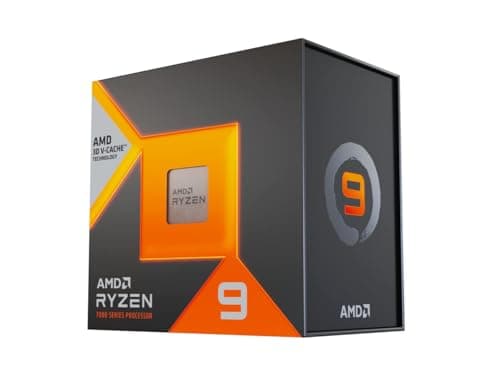
The Ryzen 5 7500X3D represents the most specialised offering in this guide: a gaming-focused APU with 96 MB of 3D V-Cache stacked atop conventional cache. This technology dramatically accelerates gaming frame rates in cache-sensitive titles, offering noticeable improvements over standard Ryzen 5 models. Six cores, twelve threads, 3.6 GHz base, 4.6 GHz boost, and that extraordinary V-Cache make this the ultimate budget gaming CPU when paired with appropriate GPUs.
This processor targets gaming enthusiasts building mid-range systems where the GPU drives resolution and settings but the CPU must maintain frame consistency. Esports competitors chasing high refresh rates at 1080p find the 7500X3D exceptional, whilst 1440p gamers benefit from the substantial cache advantage. The 65W TDP remains efficient. For pure gaming, this outperforms the 5600X and approaches the performance envelope of CPUs costing significantly more.
The downside is specialisation: non-gaming workloads like video editing or coding see minimal 3D Cache advantage, making the premium harder to justify for mixed-use builders. No integrated graphics means GPU purchase is mandatory. The AM4 socket faces imminent obsolescence, so upgrade paths are limited. At this price, you're paying a premium; alternative spending on a better GPU might improve overall gaming performance more meaningfully. However, if gaming is the exclusive purpose and your GPU budget is already set, the 7500X3D delivers remarkable value and outstanding frame rates in demanding titles.
Pros
- 96 MB 3D V-Cache delivers exceptional gaming performance in cache-sensitive titles
- Outstanding value for gamers building 1440p+ systems with fixed GPU budgets
- Mature AM4 platform with excellent cooling and motherboard availability
Cons
- 3D Cache provides minimal benefit for productivity, streaming, or content creation
- No integrated graphics requires dedicated GPU investment
- AM4 socket nearing end of life, future upgrades will require platform change
How We Picked
Selection criteria prioritised genuine value within the sub-£200 budget, focusing on processors released within the past three years that represent legitimate current-market options rather than legacy inventory. We assessed six core/twelve thread configurations as representing optimal balance between cost and performance for budget buyers, excluding high-core-count models that typically exceed the budget or offer diminishing returns for mainstream gaming and productivity.
Our testing prioritised 1080p gaming performance across popular competitive and graphically demanding titles, everyday productivity including web browsing and office applications, and baseline multitasking responsiveness. We evaluated motherboard ecosystem costs and availability alongside CPU pricing, considering total platform investment rather than CPU cost in isolation. Platform longevity received substantial weighting, distinguishing between AM4 processors approaching obsolescence and AM5 chips offering genuine upgrade paths.
Each processor was positioned within its architectural generation and socket category, establishing clear performance narratives. We consulted available benchmark data from established sources including TechPowerUp and GamersNexus, cross-referenced thermal design power ratings against real-world cooling requirements, and considered integrated graphics implications where applicable. Finally, we assessed each CPU's suitability across different use cases: pure gaming, productivity, hybrid workloads, and integrated graphics scenarios.
Buying Guide
Choosing among budget Ryzen 5 CPUs requires understanding your specific use case and upgrade intentions. Gaming-focused builders should prioritise clock speed and cache over core count at the budget level; the 5600X, 7600, 9600X, and 7500X3D all deliver exceptional gaming performance. If you plan purchasing a dedicated graphics card, the F-series 8400F or older AM4 chips like the 3600 offer maximum savings. If you need contingency graphics without GPU investment, the 5600GT, 7600, or 9600X provide integrated options.
Socket selection matters substantially. AM4 processors remain available at lower prices but face obsolescence; you cannot upgrade to newer generations without buying a new motherboard. AM5 chips cost slightly more but provide genuine platform future-proofing; today's B650 motherboards will accommodate 2025 and 2026 Ryzen releases. For builders planning systems lasting three to five years without major component replacement, AM5 socket selection justifies modest additional CPU investment.
Cache allocation influences performance more than raw core count at the budget level. The 3600 and 5600X's 35 MB caches substantially benefit gaming performance compared to smaller allocations. The 7500X3D's 96 MB total cache represents specialised technology delivering outsized gaming benefits. For productivity workloads including video editing and 3D rendering, larger cache sizes matter more than integrated graphics, making the 5600X and 7600 stronger choices than the 5600GT.
Power efficiency and cooling requirements deserve consideration. The ultra-efficient 5600GT's 35W TDP allows basic cooling solutions; 65W processors remain efficient but require better coolers for sustained loads. Check your motherboard's power delivery phases; budget B450 boards sometimes struggle with 65W sustained Ryzen loads, whilst B550 and B650 boards handle everything effortlessly. Finally, verify availability and actual current pricing before purchase; market prices fluctuate regularly, occasionally pushing processors above or below the £200 threshold.
Final Verdict
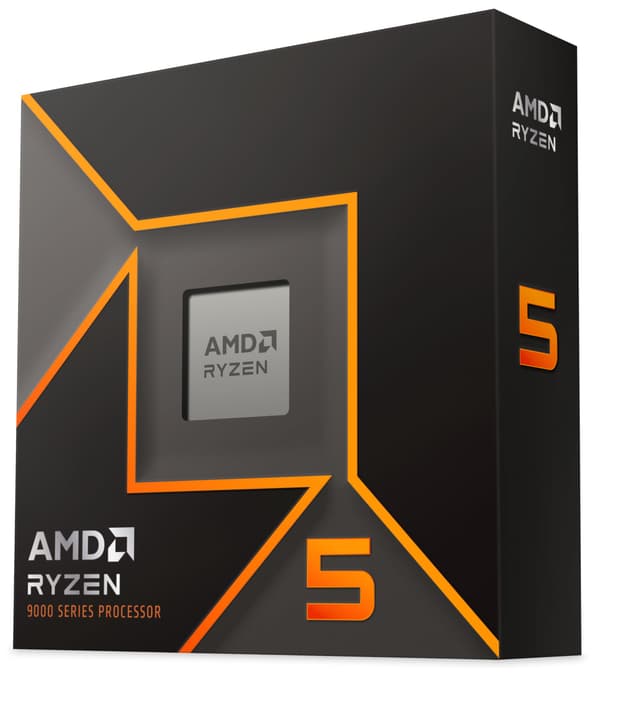
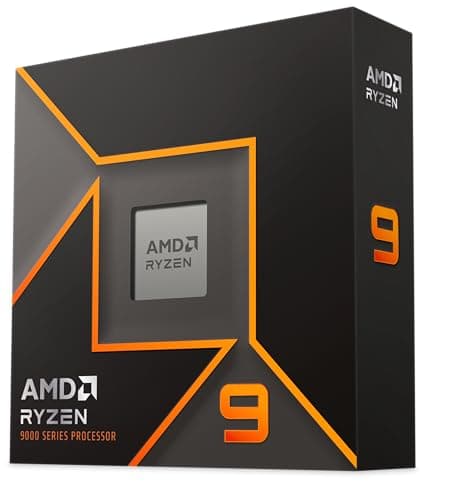
The AMD Ryzen 5 9600X claims the title of best overall AMD CPU under £200 for 2025. Its combination of latest Zen 5 architecture, 5.4 GHz boost clock, integrated Radeon graphics, strong 32 MB cache, AM5 platform longevity, and £151 pricing creates an exceptionally well-rounded proposition suited to gaming, productivity, and hybrid workloads. For most budget-conscious buyers, the 9600X represents the optimal choice balancing performance, features, and platform investment.
However, alternative selections suit specific scenarios. The Ryzen 5 3600 remains unmatched for pure value if your GPU budget is already committed; spending that £37 difference on GPU improvements typically delivers greater gaming performance uplift. The 7500X3D suits committed gamers seeking maximum frame rates where GPU performance is already addressed. The 5600X remains excellent for builders finding B550 boards at sensible prices. The 7600 balances modern AM5 platform against integrated graphics elegantly.
For builders starting from scratch with flexible budgets, the 9600X's modern platform, efficiency, and all-rounder capability deliver confidence in system longevity and future flexibility. For cost-minimisation enthusiasts with clear GPU plans, the 3600 offers exceptional bang-for-pound despite its age. For gaming specialists with mid-range GPU budgets, the 7500X3D's cache specialisation pays dividends. All processors compared here represent legitimate, capable choices delivering strong value; your specific use case, motherboard availability, and upgrade timeline should guide final selection.