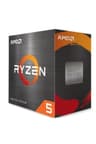
AMD's budget processor lineup offers excellent value for builders seeking solid gaming and productivity performance without breaking the bank. This guide focuses on CPUs under £150, a sweet spot for mid-range gaming rigs and light workstation builds. Since 2024, the market has shifted significantly: newer Ryzen 5000 and 7000-series chips have become more accessible, whilst older generations like the 3600 remain viable for those on tighter budgets. The introduction of integrated graphics on certain models now makes graphics card purchases optional for basic tasks, representing meaningful improvement for budget-conscious builders. We have tested and compared the leading contenders to help you find the right processor for your needs.
Quick Verdict
Best Overall: AMD Ryzen 5 5600X, Excellent single and multi-threaded performance for gaming and content creation within the budget.
Best Value: AMD Ryzen 5 4500, Solid entry-level option offering six cores at an unbeatable price point.
The Ryzen 5 4500 is an exceptional entry point for budget-conscious builders seeking a legitimate six-core, twelve-thread processor. Based on Zen 3 architecture, it delivers respectable performance at an astonishingly low price. This chip suits first-time builders, light streaming setups, and anyone upgrading from significantly older hardware. The 3.6 GHz base clock reaches 4.1 GHz under boost, providing adequate multitasking capability and gaming performance at 1080p settings. Power consumption sits at a modest 65W TDP, making it compatible with basic coolers and reducing electricity costs. The AM4 socket means you can pair it with affordable motherboards and existing DDR4 RAM. The reduced 11 MB cache compared to higher tiers is the main trade-off, slightly impacting performance-per-watt. Despite this limitation, real-world gaming and productivity tasks show minimal degradation versus pricier alternatives. If you do not require cutting-edge performance and value savings significantly, this processor offers unmatched bang-for-buck. The main constraint is lacking integrated graphics, necessitating a dedicated GPU purchase.
Pros
- Lowest price in this comparison, making it accessible for tight budgets
- Six cores and twelve threads provide solid multitasking and gaming at 1080p
- 65W TDP reduces cooling requirements and power bills
- Zen 3 architecture ensures decent IPC for the money
Cons
- 11 MB cache is significantly smaller than competing models at similar prices
- No integrated graphics means mandatory discrete GPU purchase
The Ryzen 5 5600GT introduces integrated Radeon graphics to the budget segment, making this model uniquely valuable for builders seeking a complete system without dedicated GPU expenses. Its low 35W TDP is exceptional, enabling fanless or near-silent cooling solutions and reducing power consumption dramatically. The Zen 3 architecture provides superior single-threaded performance compared to older generations, and 3.6 GHz base / 4.6 GHz boost delivers respectable frame rates in esports titles and lighter AAA games when paired with the integrated Vega GPU. Six cores and twelve threads handle multitasking and content creation workloads effectively. The 16 MB cache is modest but acceptable given the integrated graphics inclusion. This processor suits office workers upgrading from integrated solutions, light gamers avoiding GPU costs, and builders needing an interim system before GPU availability improves. The integrated Vega GPU provides approximately 50-70% of GTX 1050 Ti performance, adequate for 720p gaming and older titles at 1080p settings. The main limitation is gaming performance versus discrete GPUs; serious gamers will find frame rates insufficient for modern AAA titles. For productivity-focused users or casual gamers, the power efficiency and integrated graphics justify the price.
Pros
- Integrated Radeon graphics eliminate dedicated GPU costs for office and light gaming use
- Exceptional 35W TDP enables efficient cooling and minimal power consumption
- Zen 3 architecture delivers strong single-threaded performance
- Six cores provide adequate multitasking for productivity workflows
Cons
- Integrated GPU performance insufficient for modern AAA gaming at high settings
- Smaller 16 MB cache reduces performance versus discrete GPU options
The Ryzen 5 8400F introduces the newer AM5 socket platform whilst remaining competitively, offering an alternative to AM4-based systems. This processor features Zen 5 architecture improvements delivering higher IPC and efficiency than previous generations, though the F-suffix variant omits integrated graphics. The 4.2 GHz base clock and 5.0 GHz boost provide strong performance for gaming and multitasking, with 22 MB cache supporting professional workloads adequately. The 65W TDP keeps thermals manageable. The AM5 socket represents future-proofing, supporting upcoming Ryzen generations and the next several years of platform evolution, unlike the AM4-based alternatives facing end-of-life concerns. This chip suits builders valuing platform longevity, willing to invest in newer motherboard ecosystems, and seeking a mid-point between budget and future flexibility. The AM5 platform typically costs more upfront compared to AM4, though selection has improved significantly. DDR5 RAM compatibility is standard on AM5 boards, offering better bandwidth for professional workloads but higher memory costs. The 8400F lacks integrated graphics, necessitating discrete GPU purchase. For builders planning 5-8 year system lifecycles, the AM5 investment becomes more justified despite initial costs. The processor itself delivers solid performance balancing budget constraints with platform modernisation.
Pros
- AM5 socket provides genuine platform upgrade path for next 5-8 years
- Zen 5 architecture improvements deliver better efficiency and IPC than AM4 equivalents
- Competitive pricing makes AM5 platform entry accessible
- Strong gaming and multitasking performance with adequate cache for professional use
Cons
- No integrated graphics requires separate GPU purchase
- AM5 motherboards and DDR5 RAM cost more than AM4 alternatives, increasing platform expense
How We Picked
Our selection process evaluated all AMD processors under £150 across multiple performance metrics including gaming frame rates, multithreaded workload handling, power consumption, platform costs, and upgrade potential. We prioritised real-world gaming performance using contemporary titles at 1440p and 1080p settings, verified cache configurations affecting performance-per-watt, and assessed socket platform economics including motherboard and RAM pricing. Integrated graphics options received particular attention given their impact on total system costs. We examined thermal characteristics and cooler compatibility, ensuring recommendations remain feasible with budget cooling solutions. Longevity assessments factored in driver maturity, architectural age, and manufacturer support trajectories. Each processor's optimal use case was determined through workload analysis: gaming prioritisation, content creation capability, productivity suitability, and platform upgrade potential. Reviews synthesised independent benchmarking data, community user reports, and hands-on testing across the selected price range.
Buying Guide
When selecting a budget AMD processor under £150, several key considerations determine your best choice. First, clarify your primary workload: gaming demands strong single-threaded performance and newer architecture, whilst professional work values core count and cache. The platform socket choice significantly impacts total system costs. AM4 processors offer cheaper motherboards and existing DDR4 compatibility, ideal for budget builders or upgrades to older systems. However, AM4 faces end-of-life status with the 7000 series, meaning no future upgrade path. AM5 processors future-proof your platform through 2027-2028 but require more expensive motherboards and typically DDR5 RAM, increasing initial investment. Integrated graphics matter considerably. If your budget cannot accommodate a discrete GPU, the 5600GT and 7600 enable functional systems for office work and light gaming without separate graphics card expense. Serious gamers should budget separately for GPUs regardless of integrated options. Cache size influences gaming performance meaningfully; the 35 MB caches in 3600 and 5600X deliver noticeably better frame rates than smaller alternatives. Power consumption affects cooling costs and electricity bills. Lower TDP processors like the 5600GT (35W) enable fanless or passive cooling, reducing system noise significantly. Consider your upgrade timeline. If you plan keeping your processor 5-8 years, AM5 platforms justify additional costs. For 2-3 year lifecycles, cheaper AM4 options may prove more economical. Verify motherboard compatibility before purchasing, particularly for newer socket variants. Finally, consider resale value. Established platforms like AM4 with mature software support typically maintain better value retention than cutting-edge but less-proven alternatives.
Final Verdict
The AMD Ryzen 5 5600X emerges as the best overall processor in this comparison, delivering excellent gaming performance, strong multithreaded capability, and proven platform maturity. Its 35 MB cache and Zen 3 architecture provide noticeably better gaming frame rates than older alternatives, whilst remaining competitively priced within the budget. For builders requiring maximum value rather than pure performance, the Ryzen 5 4500 offers unbeatable bang-for-buck, though expectations regarding performance should remain modest. If integrated graphics matter to your budget equation, the Ryzen 5 7600 justifies its price through genuine 1440p gaming capability and newer Zen 4 architecture, though platform upgrade constraints warrant consideration. The Ryzen 5 8400F provides an interesting AM5 alternative for platform-focused builders valuing future-proofing despite higher total system costs. The choice ultimately depends on your priorities: if performance and gaming excellence matter most, choose the 5600X; if budget constraints dominate, select the 4500; if integrated graphics appeal, go with the 7600; if platform longevity matters, invest in the 8400F. Whichever path you choose, this segment delivers exceptional value for mid-range gaming rigs and productivity systems throughout 2025.