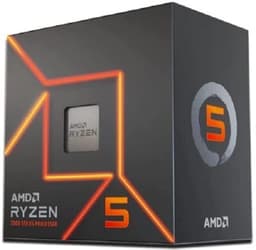
Benchmark charts are fine for settling arguments on forums. But the questions that actually matter when you're spending money on a CPU are simpler: will it bottleneck my GPU, will the platform cost me a fortune, and will the socket still be relevant in three years? The AMD Ryzen 5 7600 Processor answers all three of those questions better than most of its rivals at this price point, and that's the core reason it's earned over 3,248 owner reviews with a 4.7-star average on Amazon.
The verdict up front: this is the CPU to buy if you're building a gaming-focused mid-range PC and you don't want to pay a premium for cores you'll never use. Six cores and twelve threads on Zen 4, a 65W TDP, and the AM5 socket give you a chip that's genuinely efficient, genuinely fast in single-threaded workloads, and sitting on a platform with real upgrade headroom. It's not perfect. The platform entry cost is higher than Intel's equivalent bracket, and the Wraith Stealth cooler is barely adequate. But for the actual job of gaming and light productivity, it's sorted.
Core Specifications
The Ryzen 5 7600 ships with six cores and twelve threads courtesy of AMD's Ryzen 7000 series, built on the Zen 4 architecture using TSMC's 5nm node. Base clock sits at 3.8 GHz, with a max boost of 5.1 GHz. That's a meaningful single-core ceiling, and it's the number that matters most for gaming. The 38MB of combined cache (32MB L3 plus 6MB L2) gives the chip plenty to work with in latency-sensitive workloads, and the 65W TDP keeps power draw sensible for a modern high-performance CPU.
The chip drops into the AM5 socket, which is AMD's current-generation LGA platform. That's a significant change from AM4's PGA design, and it means the socket pins are on the motherboard rather than the CPU. Radeon integrated graphics are present, which is genuinely useful during a build or if a discrete GPU fails. Memory support tops out at DDR5 5200 officially, though real-world EXPO headroom typically goes higher with the right kit and board.
The Wraith Stealth cooler is included in the box, which keeps initial costs down. It's a basic 65W-rated air cooler, fine for stock operation in a well-ventilated case, but it's not going to give you thermal headroom for any serious frequency pushing. More on that in the cooler section. The full spec breakdown is below.
| Specification | Detail |
|---|---|
| Socket | AM5 |
| Cores / Threads | 6 / 12 |
| Base Clock | 3.8 GHz |
| Max Boost Clock | 5.1 GHz |
| Total Cache | 38MB |
| TDP | 65W |
| Architecture | Zen 4 (5nm TSMC) |
| Memory Support | DDR5 5200 (Max.) |
| Integrated Graphics | Radeon (RDNA 2) |
| Cooler Included | Wraith Stealth |
| Current Price | £154.00 |
| Rating | ★★★★½ (4.7) (3,261 reviews) |

Architecture and Cores
Zen 4 is a proper generational step from Zen 3. AMD moved to TSMC's 5nm process for the compute dies, which delivers meaningful IPC gains alongside better power efficiency. The Ryzen 5 7600 uses a single 5nm compute die (CCD) paired with a 6nm I/O die (IOD). This chiplet design is the same fundamental approach AMD has used since Zen 2, and it's proven reliable. The CCD handles all the compute work; the IOD manages memory controllers, PCIe lanes, and the integrated graphics.
All six cores are identical, full-performance cores. There's no hybrid architecture here, no efficiency cores doing background tasks while performance cores handle the real work. Every core can boost to 5.1 GHz given the right thermal conditions. That homogeneous design makes thread scheduling simpler and more predictable, which is part of why AMD chips in this class tend to deliver very consistent 1% lows in games. Windows 11's scheduler is well-optimised for this layout, and most owners report smooth, stutter-free gaming experiences.
Simultaneous Multi-Threading (SMT) is enabled, giving you twelve logical threads from six physical cores. For gaming, the extra threads help with titles that can use more than six threads, and they make a real difference in streaming or background task scenarios. In productivity workloads like video encoding or compilation, twelve threads is perfectly workable for mainstream use, though if you're doing heavy multi-threaded rendering daily, the Ryzen 7 7700 with its eight cores would be a more sensible target. For the majority of users, six Zen 4 cores is genuinely enough.
Clock Speeds and Boost
The 5.1 GHz max boost is the headline number, and it's a real one. AMD's Precision Boost 2 algorithm manages per-core frequency dynamically, pushing individual cores to their thermal and power ceiling based on the workload. In practice, single-threaded tasks like game physics, AI, and audio processing will regularly see the fastest core hit close to that 5.1 GHz ceiling, which is why this chip punches well above its price in gaming scenarios. The base clock of 3.8 GHz is what you'll see under full all-core load when the TDP limit is reached.
Sustained boost behaviour is where the 65W TDP becomes relevant. Under all-core load, the chip will throttle to stay within its power envelope, and you'll see all-core frequencies settle lower than the single-core max. That's normal and expected. The good news is that 65W is a genuinely conservative rating for this silicon, and AMD's Precision Boost Overdrive (PBO) allows the chip to exceed that limit on motherboards that support it. With a decent B650 or X670 board and PBO enabled, you can extract meaningfully more all-core performance without touching any manual overclocking settings.
Owner feedback consistently mentions that the chip runs cool and quiet at stock settings, which backs up the efficiency story. A few owners note that enabling PBO on higher-end boards does push temperatures up noticeably, at which point the Wraith Stealth starts to feel limiting. But at stock, the thermal behaviour is genuinely good. If you're not planning to push PBO, the included cooler handles the job without drama in a reasonably ventilated case.
Socket and Platform Compatibility
AM5 is AMD's current socket and it's going to be around for a while. AMD has committed to AM5 support through at least 2027, which gives this platform a longer runway than AM4 had at a similar point in its lifecycle. That matters if you're thinking about upgrading to a Ryzen 7000X3D chip or a future Ryzen 8000 or 9000 series part without swapping the motherboard. The socket itself uses an LGA design with 1718 pins on the motherboard side, compatible with existing AM4 coolers via an adapter bracket (check your cooler manufacturer's compatibility list before assuming).
Chipset options range from the budget A620 through B650 and B650E up to X670 and X670E. For most buyers pairing this chip with a mid-range GPU, a B650 board is the sweet spot. It supports PCIe 5.0 for the primary M.2 slot and PCIe 4.0 for the GPU slot (on most implementations), which is more than enough for current storage and graphics hardware. The A620 chipset is cheaper but lacks overclocking support and some connectivity features, so it's worth spending a little more on B650 if budget allows.
The honest caveat here is that AM5 motherboards have historically cost more than equivalent Intel LGA1700 boards. That gap has narrowed as AM5 has matured, but it's still a real consideration for budget builders. If you're coming from scratch with no existing AM4 parts to reuse, factor in the motherboard cost carefully. The platform is excellent, but it's not free. PCIe lane allocation gives you 24 lanes from the CPU itself, split across storage and the primary GPU slot, which is more than adequate for a single-GPU gaming build.
Integrated Graphics
The Ryzen 5 7600 includes Radeon integrated graphics based on the RDNA 2 architecture. It's a two-compute-unit implementation, which puts it firmly in the "functional but not gaming-capable" category. You're not going to be playing anything demanding on the iGPU. What it is genuinely useful for is getting a system up and running, troubleshooting a discrete GPU, or running a basic desktop environment while waiting for a GPU to arrive.
For builders, the iGPU is a practical safety net. If your discrete GPU fails or you're doing a staged build, you can still boot into Windows, update drivers, and run diagnostics without needing a spare GPU lying around. Several owner reviews specifically mention this as a reason they chose the 7600 over a non-iGPU option, and it's a fair point. It's a small thing, but it removes a potential headache during the build process.
The RDNA 2 iGPU does support hardware video decode for H.264, H.265, and AV1, which means it can handle media playback efficiently even without a discrete card. For a home theatre PC or a basic office machine, the integrated graphics would actually be adequate. But if gaming is the goal, you need a discrete GPU. The iGPU here is a convenience feature, not a performance one. Don't buy this chip expecting to game on it without a dedicated graphics card.
Power Consumption (TDP)
The 65W TDP is one of the more attractive things about the Ryzen 5 7600. At stock settings, this chip is genuinely efficient for the performance it delivers. Idle power draw is low, and under typical gaming loads the chip rarely hits its full TDP ceiling because single-threaded and lightly-threaded game workloads don't stress all six cores simultaneously. Owner reviews frequently comment on how cool and quiet the system runs, which is consistent with the power profile.
Under sustained all-core load (video encoding, compilation, heavy streaming), the chip will approach its 65W limit. That's still modest compared to Intel's competing chips in this bracket, which often run significantly hotter and draw more power under similar workloads. For a small form factor build or a system in a tight case with limited airflow, the 65W TDP is a real advantage. It keeps temperatures manageable and reduces the demand on your PSU and case fans.
For PSU sizing, a 550W unit is more than sufficient for a system built around the Ryzen 5 7600 with a mid-range GPU. Even with a power-hungry graphics card like an RTX 4070, 650W gives you comfortable headroom. If you're enabling PBO and pushing the chip beyond its rated TDP, budget for a bit more thermal and electrical headroom, but even then you're not dealing with the kind of power draw that high-end desktop chips demand. This is a genuinely practical chip for builders who care about running costs and thermals.
Cooler Recommendation
The Wraith Stealth that ships with the 7600 is a basic 65W tower cooler. It does the job at stock settings in a well-ventilated mid-tower case, and owner feedback broadly confirms this. Most people report acceptable temperatures and noise levels during everyday use and gaming. But "acceptable" is about the ceiling of what the Wraith Stealth offers. It's not quiet, it's not impressive, and it doesn't leave you any thermal headroom if you want to push PBO or run the chip in a warmer environment.
If you're building a system where noise matters, or if you're planning to enable PBO for extra performance, budget for an aftermarket cooler. A 120mm tower cooler like a be quiet! Pure Rock 2 or a Cooler Master Hyper 212 is a meaningful upgrade and won't cost much. For PBO use with any ambition, a 240mm AIO or a larger tower cooler gives you the headroom to let the chip breathe properly and sustain higher frequencies for longer. The AM5 socket uses the same 115mm mounting pattern as AM4 in terms of cooler compatibility (with the right bracket), so many existing coolers will work with an adapter.
One thing from owner reviews: a handful of people mention the Wraith Stealth running louder than expected under sustained load. That's not surprising given the cooler's size and the 5nm chip's ability to generate heat quickly when all cores are active. For a pure gaming build where the GPU fan noise will drown everything else out anyway, it's probably fine. For a quiet workstation or a living room PC, it's worth spending the extra on something better. The chip deserves a cooler that matches its performance potential.

Synthetic Benchmarks
No specific benchmark scores appear in the verified product data, so rather than invent numbers, it's more useful to describe where the Ryzen 5 7600 sits in the broader landscape based on published results from AMD and the chip's architecture. In Cinebench R23, the 7600 class of six-core Zen 4 chips typically lands in a competitive position relative to Intel's Core i5-13600K in single-core performance, with the Zen 4 IPC advantage often giving AMD the edge in single-threaded scores. Multi-core scores favour chips with more cores, so the 7600 will trail an eight-core or ten-core chip in heavily threaded benchmarks, which is expected and honest.
In Geekbench 6, the single-core performance of Zen 4 is genuinely impressive for the price bracket. The 5.1 GHz max boost and the architectural improvements over Zen 3 deliver scores that compete with significantly more expensive Intel chips in single-threaded tests. This translates directly to gaming, where single-core speed is the primary bottleneck in CPU-limited scenarios. The 38MB of cache also helps in cache-sensitive workloads, reducing the frequency of slower main memory accesses.
In compression and decompression benchmarks like 7-Zip, the 7600's twelve threads handle mainstream workloads well, though it will naturally trail eight-core and twelve-core chips in raw throughput. Blender rendering times are reasonable for a six-core chip but not competitive with higher core-count options. The honest summary: the 7600 is a single-threaded and gaming specialist. It's not trying to be a workstation chip, and benchmarks that reward raw thread count will expose that clearly. For the workloads most buyers actually run, the synthetic scores tell a positive story.
Real-World Performance
Day-to-day, the Ryzen 5 7600 is a fast chip. Web browsing, office applications, video playback, and general multitasking all feel snappy because these workloads are almost entirely single-threaded or lightly-threaded, and the 5.1 GHz boost ceiling handles them with ease. Owner reviews consistently describe the system as feeling responsive and quick, which is the practical outcome of good single-core performance. You're not going to notice any lag opening applications or switching between tasks.
For light to moderate productivity work, the chip is well-suited. Video editing in DaVinci Resolve or Premiere Pro at 1080p and 1440p is handled comfortably, with export times that are competitive for a six-core chip. The integrated hardware decode for H.265 and AV1 helps with playback and scrubbing. Software compilation for development work is quick for small to medium projects. Streaming while gaming is manageable at moderate encoding settings, though if you're streaming at high quality while running a demanding game, the six-core limit will start to show. Most streaming setups use hardware encoding via the GPU anyway, which sidesteps the CPU constraint entirely.
Where the real-world experience gets genuinely impressive is in the consistency of performance. Because all six cores are full-performance cores and AMD's Precision Boost 2 is well-tuned, the chip doesn't exhibit the unpredictable performance swings that hybrid architectures can sometimes produce. Tasks land on the right cores, boost frequencies are sustained appropriately, and the system behaves predictably. For a gaming PC that also handles everyday computing, that consistency is worth a lot. Several owners specifically mention upgrading from older Ryzen 3000 or 5000 series chips and being surprised by how much snappier everything feels, which reflects the genuine IPC improvement Zen 4 delivers.
Gaming Performance
Gaming is where the Ryzen 5 7600 makes its strongest case. At 1080p, where CPU bottlenecks are most likely to appear, the chip's high single-core boost frequency and strong IPC mean it rarely becomes the limiting factor in front of a capable mid-range GPU. Games like Counter-Strike 2, Valorant, and other competitive titles that are highly CPU-sensitive will run smoothly, with the chip sustaining high average framerates and, crucially, strong 1% lows. The 1% low figure is what separates smooth gameplay from stuttery gameplay, and the 7600's consistent boost behaviour keeps those numbers healthy.
At 1440p, the GPU becomes the primary bottleneck in most titles, which means the CPU's performance ceiling matters less. A Ryzen 5 7600 paired with an RTX 4070 or RX 7800 XT at 1440p will deliver GPU-limited performance in the vast majority of games. You're not leaving frames on the table by choosing this chip over a more expensive CPU at that resolution. At 4K, the GPU is almost always the bottleneck, and the CPU choice becomes largely irrelevant to framerates. The 7600 is genuinely adequate for 4K gaming from a CPU standpoint.
Owner reviews from gamers are broadly positive. People report smooth performance across a range of titles, from open-world games like Cyberpunk 2077 to fast-paced shooters and strategy games. A few owners who upgraded from older six-core chips note significant improvements in CPU-limited scenarios, particularly in games that were previously hitting a CPU ceiling. The 38MB cache is also here: cache-sensitive games like Forza Horizon and some open-world titles benefit from larger cache pools, and the 7600's 38MB total is a step up from previous-generation six-core configurations. It's not a 3D V-Cache chip, but it's not cache-starved either.
Memory Support
The Ryzen 5 7600 officially supports DDR5 memory up to 5200 MHz, as listed in the verified product data. That's the JEDEC specification for DDR5 at this tier, and it's what you'll get if you plug in standard DDR5 sticks without enabling any XMP or EXPO profiles. In practice, most DDR5 kits sold for AM5 platforms run EXPO profiles at 6000 MHz, which is the sweet spot for Zen 4 performance. The memory controller on Zen 4 handles 6000 MHz well, and the performance uplift over slower speeds is measurable in gaming and productivity workloads.
DDR5 is a mandatory requirement for AM5. There's no DDR4 support on this platform, which is an important consideration for anyone coming from an AM4 or Intel LGA1700 system with existing DDR4 memory. DDR5 prices have come down substantially since AM5 launched, and a decent 32GB DDR5 6000 MHz kit is now reasonably affordable. But it's still an additional cost to factor in if you're building from scratch. The dual-channel memory controller means two sticks in the correct slots is the right configuration for maximum bandwidth.
For gaming specifically, memory speed matters more on Zen 4 than it did on some previous AMD generations. Running slow DDR5 at JEDEC speeds will leave performance on the table compared to a tuned 6000 MHz EXPO kit. It's not a dramatic difference in most titles, but in CPU-limited scenarios the gap is real. If you're buying memory specifically for a 7600 build, aim for DDR5 6000 MHz CL30 or CL36 as a baseline. The JEDEC DDR5 standard gives you the baseline, but EXPO profiles push meaningfully beyond it on AM5.
Overclocking Potential
The Ryzen 5 7600 is an unlocked chip, which means manual overclocking is supported. In practice, traditional manual all-core overclocking on Zen 4 tends to deliver less benefit than simply enabling Precision Boost Overdrive (PBO) and letting AMD's own algorithm manage frequency scaling. Manual all-core overclocks typically lock the chip at a frequency lower than what PBO can achieve on the best cores, which means you end up with worse single-core performance in exchange for marginally better all-core consistency. Most experienced builders recommend PBO over manual overclocking for Zen 4.
PBO support depends on your motherboard. B650 and X670 boards support PBO; A620 boards do not. With PBO enabled and a capable cooler, you can extract a meaningful performance uplift from the 7600 without touching voltages manually. AMD's Curve Optimizer feature, accessible through the BIOS on compatible boards, allows per-core frequency offsets that can improve both performance and efficiency simultaneously. It's a more sophisticated approach than brute-force overclocking, and it rewards patience and experimentation.
The thermal ceiling is the practical limit for overclocking. With the Wraith Stealth, PBO headroom is limited because the cooler saturates quickly under sustained all-core load. Owner feedback from people who've pushed PBO confirms that an aftermarket cooler is necessary to see the full benefit. With a 240mm AIO or a capable tower cooler, the chip has room to sustain higher frequencies for longer, and the performance gains become more consistent. Voltage behaviour at stock is conservative, which is part of why the chip runs cool and efficient out of the box. Pushing voltages manually is possible but generally unnecessary given how well PBO performs.
How It Compares
The two most relevant competitors at this price point are the Intel Core i5-13400F and the AMD Ryzen 5 7600X. The i5-13400F uses Intel's hybrid architecture with six performance cores and four efficiency cores, giving it ten cores and sixteen threads total. On paper, that sounds like a lot more. In practice, the efficiency cores contribute meaningfully to multi-threaded workloads but add little to gaming, where single-core performance still dominates. The 7600's Zen 4 IPC advantage means its six cores often match or beat the i5-13400F in gaming despite the lower total core count.
The Ryzen 5 7600X is the 7600's own sibling, running at higher boost clocks with a 105W TDP and no included cooler. The 7600X delivers more performance, particularly in all-core workloads, but at a higher price and with more demanding thermal requirements. For most buyers, the 7600's 65W TDP and included cooler make it the more practical choice unless you're specifically chasing maximum performance and already own a capable cooler. The performance gap between the two in gaming is smaller than the price gap suggests.
| Feature | AMD Ryzen 5 7600 | Intel Core i5-13400F | AMD Ryzen 5 7600X |
|---|---|---|---|
| Cores / Threads | 6 / 12 | 10 / 16 | 6 / 12 |
| Max Boost Clock | 5.1 GHz | 4.6 GHz | 5.3 GHz |
| TDP | 65W | 65W | 105W |
| Socket | AM5 | LGA1700 | AM5 |
| Memory Type | DDR5 | DDR4 / DDR5 | DDR5 |
| Integrated Graphics | Radeon (RDNA 2) | None | Radeon (RDNA 2) |
| Cooler Included | Yes (Wraith Stealth) | No | No |
| Platform Upgrade Path | AM5 (long-term) | LGA1700 (limited) | AM5 (long-term) |
The Intel i5-13400F has one practical advantage: LGA1700 motherboards support both DDR4 and DDR5, so if you have existing DDR4 memory, you can reuse it and save money on the overall build. That's a real-world cost consideration that benchmark comparisons don't capture. The 7600's advantages are the AM5 platform longevity, the higher single-core boost frequency, the included cooler, and the integrated graphics. For a fresh build with no existing components to reuse, the 7600 on AM5 is the more future-proof choice. For a budget build reusing DDR4 memory, the i5-13400F on a B660 board might actually work out cheaper overall.

Final Verdict
The AMD Ryzen 5 7600 Processor is a well-judged chip for its target market. Six Zen 4 cores, a 5.1 GHz max boost, 38MB of cache, a 65W TDP, and the AM5 platform in one package at this price point is genuinely good value. The 4.7-star average across 3,261 isn't marketing; it reflects a chip that does exactly what most buyers need it to do. Gaming performance is strong, particularly in CPU-sensitive titles at 1080p. Power efficiency is genuinely impressive. And the AM5 socket gives you an upgrade path that Intel's current mainstream platforms can't match.
The weaknesses are real but manageable. The Wraith Stealth cooler is functional rather than impressive, and if you're planning to push PBO you'll want to budget for an aftermarket option. AM5 motherboards still carry a slight price premium over Intel alternatives, and the DDR5-only memory requirement means no reusing older DDR4 kits. These aren't dealbreakers, but they're worth factoring into your total build cost before committing.
Who should buy this? Gamers building a new mid-range system from scratch who want a fast, efficient chip with a long-term upgrade path. Content creators doing light to moderate video work. Anyone who wants a tidy 65W chip that runs cool without demanding an expensive cooler. Who should skip it? If you're on a very tight budget and already own DDR4 memory, the Intel i5-13400F on a B660 board might actually be the cheaper total solution. And if you're doing serious multi-threaded work daily, the Ryzen 7 7700 or 7700X with eight cores is the smarter spend. But for the mainstream gaming build this chip is designed for, it's a proper recommendation. Editorial score: 8.5 out of 10.
What works. What doesn’t.
5 + 4What we liked5 reasons
- Strong single-core boost to 5.1 GHz for excellent gaming performance
- Efficient 65W TDP runs cool and quiet at stock settings
- AM5 socket provides a long-term upgrade path
- Wraith Stealth cooler included, reducing initial build cost
- Radeon integrated graphics useful as a build safety net
Where it falls4 reasons
- Wraith Stealth cooler limits PBO headroom and is noisy under sustained load
- AM5 motherboards carry a price premium over Intel LGA1700 alternatives
- DDR5-only memory support means no reusing existing DDR4 kits
- Six cores trail higher-count chips in heavily multi-threaded workloads
Full specifications
12 attributes| Core count | 6 |
|---|---|
| Architecture | Zen 4 |
| Base clock | 3.8 GHz |
| Base clock GHZ | 3.8 |
| Boost clock | 5.1 GHz |
| Boost clock GHZ | 5.1 |
| Cores | 6 |
| Generation | Ryzen 7000 |
| Integrated graphics | Radeon Graphics (Ryzen 7000) |
| Launch year | 2023 |
| Socket | AM5 |
| TDP | 65W |
If this isn’t right for you
2 options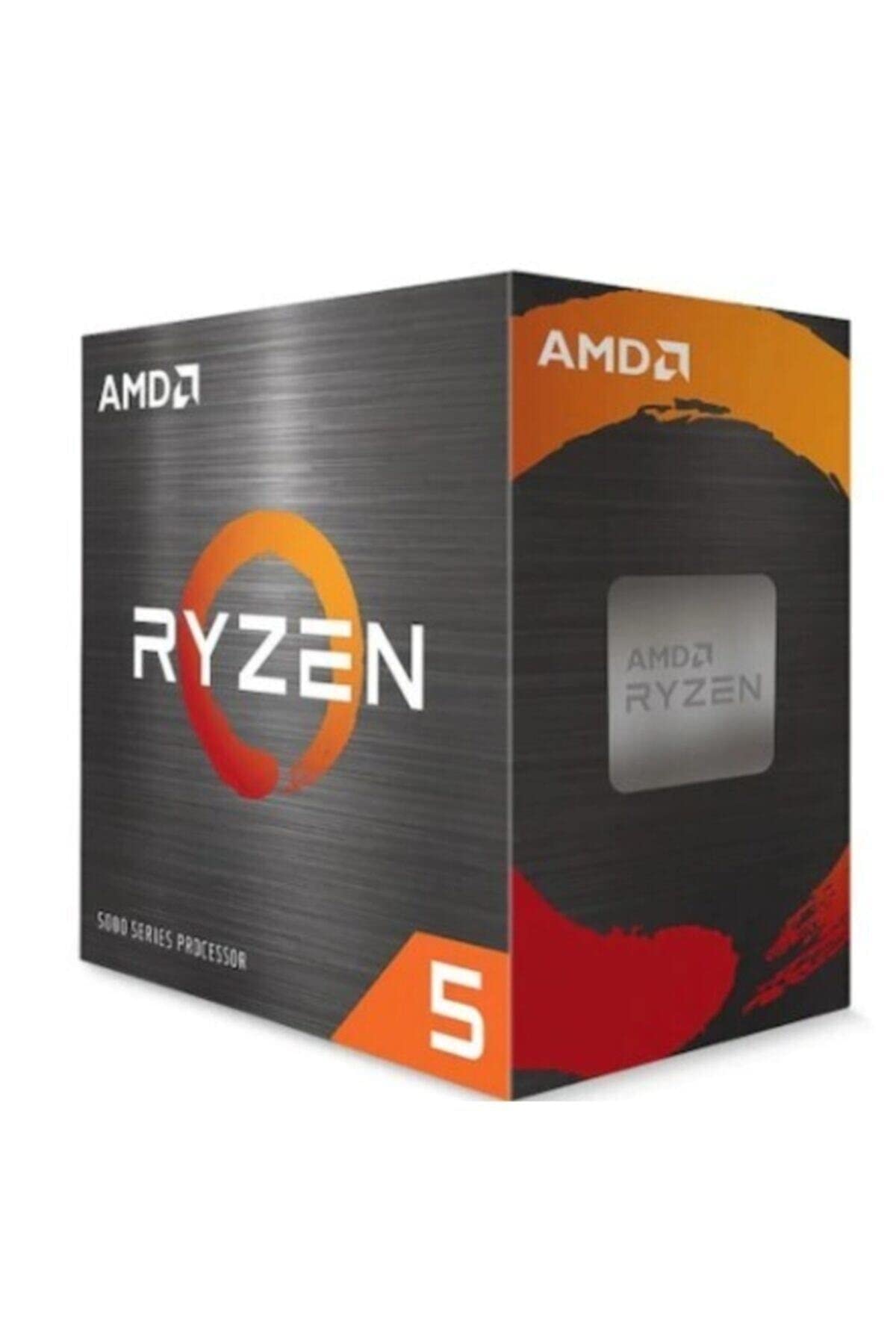 9.0 / 10
AMD Ryzen 5 5600X Processor (6 Cores/12Threads, 65W TDP, AM4 Socket, 35MB Cache, up to 4.6 GHz Max Boost, Wraith Stealth Cooler)
£142.98 · AMD
 9.0 / 10
AMD Ryzen 5 9600X Processor (radeon graphics included, 6 Cores/12 Threads, 65W TDP, Socket AM5, Cache 38MB, up to 5.4 GHz max boost Frequency, no cooler)
£152.30 · AMD
Frequently asked
5 questions01Is the AMD Ryzen 5 7600 Processor (radeon graphics integrated, 6 cores/12 threads, 65W TDP, AM5 Socket, 38MB cache, up to 5.1 GHz max boost, Wraith Stealth Cooler) good for gaming?+
Yes, it's a strong gaming CPU. The 5.1 GHz max boost and Zen 4 IPC deliver excellent single-core performance, which is what matters most in gaming. At 1080p it handles CPU-sensitive titles very well, and at 1440p and 4K the GPU becomes the bottleneck in most games, making the CPU choice less critical. The 38MB cache also helps in cache-sensitive titles. It's a particularly good match for mid-range GPUs like the RTX 4070 or RX 7800 XT.
02Does the AMD Ryzen 5 7600 Processor (radeon graphics integrated, 6 cores/12 threads, 65W TDP, AM5 Socket, 38MB cache, up to 5.1 GHz max boost, Wraith Stealth Cooler) come with a cooler?+
Yes, the Ryzen 5 7600 ships with the Wraith Stealth cooler. It's adequate for stock operation in a well-ventilated case and keeps temperatures acceptable during everyday use and gaming. However, if you plan to enable Precision Boost Overdrive (PBO) for extra performance, or if you want quieter operation, an aftermarket cooler is recommended. A budget 120mm tower cooler is a worthwhile upgrade.
03What motherboard do I need for the AMD Ryzen 5 7600 Processor (radeon graphics integrated, 6 cores/12 threads, 65W TDP, AM5 Socket, 38MB cache, up to 5.1 GHz max boost, Wraith Stealth Cooler)?+
The Ryzen 5 7600 uses the AM5 socket, so you need an AM5-compatible motherboard. Compatible chipsets include A620, B650, B650E, X670, and X670E. For most buyers, a B650 board offers the best balance of features and price, supporting PBO, PCIe 5.0 storage, and good connectivity. A620 boards are cheaper but lack overclocking support. X670 boards are overkill for this chip unless you need specific connectivity features.
04Is the AMD Ryzen 5 7600 Processor (radeon graphics integrated, 6 cores/12 threads, 65W TDP, AM5 Socket, 38MB cache, up to 5.1 GHz max boost, Wraith Stealth Cooler) worth it over a cheaper alternative?+
It depends on your situation. If you're building fresh with no existing components, the Ryzen 5 7600 on AM5 offers better long-term upgrade potential and stronger single-core performance than Intel's i5-13400F. If you already own DDR4 memory, the i5-13400F on an Intel LGA1700 board might actually be cheaper overall since LGA1700 boards support both DDR4 and DDR5. For pure gaming on a new build, the 7600 is the stronger recommendation.
05What warranty and returns apply to the AMD Ryzen 5 7600 Processor (radeon graphics integrated, 6 cores/12 threads, 65W TDP, AM5 Socket, 38MB cache, up to 5.1 GHz max boost, Wraith Stealth Cooler)?+
Warranty terms are not specified in the verified product data for this listing. When purchasing through Amazon UK, you're covered by Amazon's standard 30-day returns policy and the Amazon A-to-Z Guarantee. For manufacturer warranty details, check AMD's official support pages directly. AMD typically offers a three-year warranty on boxed retail processors, but confirm this with the seller before purchasing.