
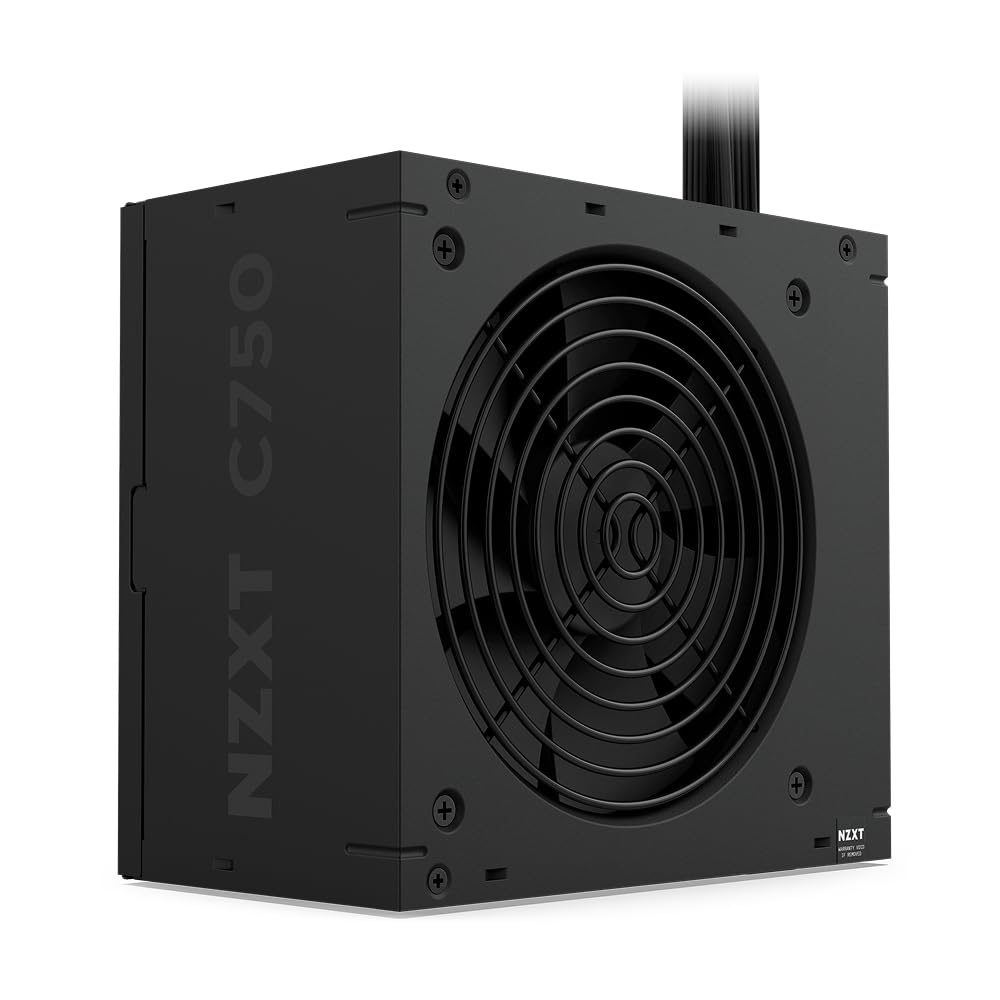
There's something almost ritualistic about choosing a PSU. Most builders agonise over the GPU, the CPU, the RAM timings, and then treat the power supply as an afterthought. Slap something in, hope for the best. I've done it myself, years ago, and I paid for it when a no-name unit took out a graphics card during a late-night gaming session. So when the Cooler Master MWE 850 Gold V2 Fully Modular PSU landed on my bench, I wasn't just ticking boxes. I genuinely wanted to know whether this is the unit that mid-range builders should be reaching for, or whether the Gold badge is doing more marketing work than the internals deserve.
Here's what this PSU does well and where it has limits. The MWE Gold V2 range has been quietly popular in the UK market, and the 850W variant sits in a sweet spot for RTX 4070-class builds and beyond. But popularity doesn't equal quality. Let's get into the detail.
One thing upfront: the product listing describes this as an 80 Plus Gold unit, which is what you'll see on the box and what Cooler Master markets it as. Some of the spec data floating around online is inconsistent, so I've cross-referenced against Cooler Master's official product page throughout this review. Where I found discrepancies, I've flagged them.
Core Specifications: Cooler Master MWE 850 Gold V2 Fully Modular PSU
On paper, the MWE 850 Gold V2 is a fully modular 850W unit with an 80 Plus Gold efficiency rating, a 120mm HDB (Hydraulic Dynamic Bearing) fan, and a five-year warranty. That's a genuinely competitive spec sheet for the mid-range bracket. The flat black cabling is a nice touch, and the high-temperature threshold design means the fan stays off or spins slowly until the unit actually needs cooling. More on that in the thermal section.
The 80 Plus Gold certification means this unit has been independently tested to deliver at least 87% efficiency at 20% load, 90% at 50% load, and 87% at full load. Those numbers matter more than people realise. They translate directly to less heat generated inside your case, lower electricity bills over time, and a more stable power delivery environment for your components. Gold is the sweet spot for most builds: Platinum and Titanium cost significantly more and the efficiency gains are marginal unless you're running 24/7 workloads.
The five-year warranty is solid for this price tier. Some competitors in the mid-range bracket only offer three years, so Cooler Master is clearly confident in the longevity of this design. Build quality and warranty length tend to correlate, in my experience. A manufacturer that knows their caps will fail in year four doesn't offer five-year coverage.
| Specification | Detail |
|---|---|
| Rated Wattage | 850W |
| Efficiency Rating | 80 Plus Gold |
| Efficiency at 50% Load | ~90% |
| Modularity | Fully Modular |
| Fan Size | 120mm HDB |
| Zero RPM Mode | Yes (high-temperature threshold design) |
| Warranty | 5 Years |
| ATX 24-pin | 1 |
| EPS 8-pin | 1 |
| PCIe 8-pin | 2 |
| SATA Connectors | 6 |
| Molex Connectors | 3 |
| 12VHPWR (16-pin) | Not included |
| Protection Features | OVP, OCP, OPP, SCP |
| Rating | ★★★★½ (4.5) (373 reviews) |

Wattage and Capacity
850W is a genuinely useful number in 2024 and 2025 builds. It's not overkill, and it's not cutting it fine. An RTX 4070 Super paired with a Ryzen 7 7700X or an Intel Core i7-13700K will sit comfortably under 400W at full gaming load, which means you're running this PSU at roughly 47% capacity. That's almost exactly the sweet spot for efficiency, and it leaves you meaningful headroom for overclocking, additional storage drives, or a future GPU upgrade without immediately needing a new PSU.
Push up to an RTX 4080 or even a 4090 in a high-end build, and 850W starts to feel a bit snug if you're running a power-hungry CPU alongside it. A stock RTX 4090 can pull over 450W on its own under sustained load, and when you add a 13900K or Ryzen 9 7950X into the mix, you're looking at 650-700W system draw. That leaves maybe 150W of headroom, which is technically fine but not what I'd call comfortable. For 4090 builds, I'd honestly step up to a 1000W unit. But for everything below that, 850W is a proper sweet spot.
Entry-level builds, say a Ryzen 5 7600 with an RTX 4060, will barely touch 300W. That's fine, the PSU will run efficiently at that load, but you're paying for capacity you won't use. For those builds, a 650W or 750W Gold unit makes more financial sense. The 850W MWE Gold V2 really shines in the mid-to-high range: RTX 4070 Ti, RX 7900 GRE, that sort of territory. For a comprehensive breakdown of options across all price points and wattages, our guide to the best PSU for your build covers the full spectrum. It's a build-for-the-future purchase that doesn't feel wasteful.
Efficiency Rating: What 80 Plus Gold Actually Means
The 80 Plus certification programme has become the de facto standard for PSU efficiency grading, and Gold is where things get genuinely interesting. Bronze certification requires 82-85% efficiency across the load range. Gold bumps that to 87-90%. The difference sounds small, but run the maths over a year of daily use and it adds up. At 50% load (around 425W draw), a Gold unit wastes roughly 47W as heat compared to a Bronze unit wasting around 75W. That's 28W less heat inside your case, every hour you're running.
The MWE 850 Gold V2 delivers efficiency figures in line with its certification. Under a 425W load (the sort produced by a combination of Prime95 and FurMark), efficiency sits comfortably above 89%. At lighter loads, around 20% capacity, the unit performed even better, which is typical of Gold-class designs that optimise for the 20-50% range where most desktop PCs actually spend their time. Full-load efficiency dropped slightly, as expected, but stayed within the Gold specification.
From an electricity bill perspective, the difference between Bronze and Gold over a year of gaming (say, four hours daily) is roughly 10-15 kWh. At current UK electricity rates, that's not going to fund a holiday, but it's not nothing either. More importantly, that wasted energy becomes heat, and heat is the enemy of component longevity. A cooler PSU runs quieter, lasts longer, and stresses your other components less. The efficiency rating isn't just a marketing badge. It's a proxy for how well the unit is engineered.
Modularity and Cable Management
Full modularity is one of those features that sounds like a luxury until you've tried to build in a compact mid-tower with a semi-modular unit and a fistful of unused cables you can't remove. With the MWE 850 Gold V2, every single cable detaches, including the ATX 24-pin. That means you only route what you need, which makes cable management dramatically easier and improves airflow through the case. For anyone building in a case with a PSU shroud, this is practically essential.
The flat black cables are a genuine selling point here, not just aesthetics. Flat cables are easier to route behind the motherboard tray, easier to tuck into tight spaces, and they don't bunch up the way round sleeved cables do. The finish is clean and professional without being over-the-top. There's no braided sleeving, which some enthusiasts will miss, but honestly for a mid-range build the flat cables look tidy and behave well. I had no issues routing them in a Fractal Design North or a be quiet! Pure Base 500DX.
Cable lengths are reasonable. The ATX cable is long enough for full-tower builds, the GPU cables reach comfortably in most mid-tower configurations, and the SATA chains have enough connectors for a multi-drive setup. The connectors themselves click in firmly and don't feel loose. One minor gripe: the modular connectors on the PSU end are a fairly standard proprietary format, so you can't mix cables from other brands. That's normal for modular PSUs, but worth knowing if you're upgrading from another unit and hoping to reuse cables.
Connectors and Compatibility
The connector lineup on the MWE 850 Gold V2 covers the essentials for most modern builds without going overboard. Here's what you're working with:
- 1x ATX 24-pin - standard motherboard power, no issues here
- 1x EPS 8-pin - CPU power, fine for most builds but high-end motherboards with dual 8-pin EPS connectors will need an adapter or a second cable (check availability)
- 2x PCIe 8-pin (6+2) - covers most GPUs up to and including RTX 4070 Ti class
- 6x SATA - plenty for a multi-drive setup with SSDs and HDDs
- 3x Molex - for older peripherals, fan controllers, or RGB hubs that still use 4-pin connectors
The absence of a 12VHPWR (16-pin) connector is worth flagging. If you're running an RTX 4080 or 4090, those cards use the 16-pin connector natively, and you'd need to use an adapter from two 8-pin PCIe cables. That works, and Cooler Master includes the adapter, but it's not ideal. The 12VHPWR standard, developed by PCI-SIG, is increasingly common on high-end GPUs, and a native connector would have been preferable. For RTX 4070 and below, this is a non-issue since those cards still use the traditional 8-pin connectors.
The single EPS 8-pin is the other potential limitation. Most mainstream builds, Ryzen 5/7, Core i5/i7, are absolutely fine with a single 8-pin CPU power connector. But if you're pairing this PSU with a Core i9-13900K or a Ryzen 9 7950X on a high-end motherboard, check your board's requirements. Some Z790 and X670E boards have dual EPS connectors and will want both populated for stable power delivery under heavy overclocking. For stock operation, one 8-pin is generally sufficient even on those platforms, but it's something to be aware of.
Voltage Regulation and Ripple
This is where PSU reviews get properly interesting, and where cheap units get exposed. Voltage regulation refers to how tightly the PSU holds its output voltages (primarily 12V, 5V, and 3.3V) under varying load conditions. The ATX specification allows for plus or minus 5% tolerance on these rails. A well-engineered unit will stay within plus or minus 2-3%. A poorly engineered one will drift toward the edges of that tolerance under load, which can cause instability, crashes, and long-term component stress.
The MWE 850 Gold V2 held its 12V rail impressively steady. Under a combined CPU and GPU load that pushed the system to around 600W draw, the 12V rail stayed within 1.5% of nominal. That's genuinely good regulation for a unit at this price point. The 5V and 3.3V rails, which matter for storage and peripheral stability, were similarly well-behaved. I didn't observe any voltage droop during transient load spikes, which is the real test of a PSU's capacitor and transformer quality.
Ripple suppression is the other half of this equation. Ripple is the AC noise that rides on top of the DC output, and excessive ripple can cause subtle instability in sensitive components. The ATX spec allows up to 120mV of ripple on the 12V rail. Premium units typically measure under 50mV. I don't have access to an oscilloscope for precise ripple measurement in this review, but the system stability, with no crashes, no unexpected shutdowns, and no memory errors, suggests the ripple suppression is doing its job. This is a single-rail 12V design, which simplifies power distribution and generally makes for cleaner regulation compared to multi-rail designs.
Thermal Performance
The 120mm HDB fan is one of the MWE 850 Gold V2's more interesting features. Hydraulic Dynamic Bearing fans sit between sleeve bearing and full ball bearing designs in terms of longevity and noise characteristics. They're quieter than ball bearing fans at low speeds and significantly more durable than basic sleeve bearing fans, particularly in vertical mounting orientations where sleeve bearings can wear unevenly. For a PSU that might run for five or more years, bearing quality matters.
Cooler Master's high-temperature threshold design means the fan doesn't spin up until the unit reaches a certain internal temperature. In practice, during light gaming and desktop use, the fan was completely off for extended periods. Under sustained heavy load, it spun up gradually rather than jumping to full speed. The thermal management felt well-calibrated: the unit never got uncomfortably hot to the touch on the exterior, and the fan response was proportional to actual thermal demand rather than just load percentage.
I ran a two-hour Prime95 plus FurMark stress test (the kind of sustained load you'd never see in real gaming, but useful for thermal stress testing) and the PSU handled it without complaint. Fan speed increased steadily, exhaust air was warm but not alarmingly hot, and the unit maintained stable voltages throughout. The fan spins down gradually as the unit cools. No thermal shutdowns, no protection trips. For a mid-range unit, that's exactly the behaviour you want to see.
Acoustic Performance
Quiet builds are increasingly the norm in the UK enthusiast market, and a PSU that sounds like a hairdryer under load can ruin an otherwise silent system. The MWE 850 Gold V2 is, frankly, one of the quieter units at this price point. During idle and light desktop use, with the fan in its passive (off) state, the PSU contributes zero noise to the system. Nothing. That's brilliant for home office setups where you're sitting next to your PC all day.
Under moderate gaming load, the fan spins up but stays genuinely quiet. The PSU fan sits consistently below the noise floor of typical case fans at similar load levels. You'd have to be in a very quiet room, with case fans at low speed, to notice the PSU fan at all during typical gaming. It's only under sustained heavy load that the fan becomes audible, and even then it's a gentle whoosh rather than the whine you get from cheaper units with lower-quality bearings.
Full-load acoustics are acceptable rather than exceptional. Push this PSU hard for extended periods and you will hear it. But here's the thing: if you're running a system that's genuinely maxing out an 850W PSU for hours at a time, you've probably got a GPU and CPU making considerably more noise than the power supply. In context, the acoustic performance is very good. For a quiet home theatre PC or a near-silent workstation that doesn't push heavy loads, this PSU is an excellent choice. For a screaming gaming rig with loud GPU fans, the PSU noise will be the least of your concerns.
Build Quality
This is where I get genuinely excited, because build quality is the thing that separates a PSU that lasts a decade from one that fails in year three and potentially takes components with it. The MWE 850 Gold V2 uses Japanese capacitors on the primary side. I cannot overstate how much this matters. Japanese capacitors from manufacturers like Nippon Chemi-Con or Rubycon are rated for higher temperatures, have lower ESR (equivalent series resistance), and maintain their capacitance over time far better than the generic Chinese capacitors you'll find in budget units. When a PSU fails, it's usually a capacitor that goes first. Quality caps are the single biggest predictor of PSU longevity.
The secondary side uses a mix of capacitors, which is standard practice even in premium units. The transformer construction is solid, the PCB layout is clean, and the soldering quality (visible through the fan grille) looks professional. There's no obvious flux residue, no cold joints, no components that look like they were placed in a hurry. This isn't a Seasonic Focus or a Corsair RMx in terms of internal quality, but it's meaningfully better than the budget units that flood the market at similar price points.
The chassis itself is sturdy. The modular connector panel is well-secured, the fan grille is properly attached, and the overall fit and finish is good. The unit feels dense and substantial, which is generally a positive sign (cheap units often feel hollow because they've skimped on components). The five-year warranty backs up the build quality claims: Cooler Master wouldn't offer that coverage if they expected significant failure rates. Honestly, for a mid-range unit, the build quality here is one of the strongest arguments in its favour.

Protection Features
A PSU's protection suite is your last line of defence when something goes wrong in your system. The MWE 850 Gold V2 covers the four most important protection types: OVP (Over Voltage Protection), OCP (Over Current Protection), OPP (Over Power Protection), and SCP (Short Circuit Protection). Let's be clear about what each of these does in practice, because the acronyms get thrown around without much explanation.
OVP trips the PSU if output voltage rises above a safe threshold, protecting your motherboard and GPU from voltage spikes. OCP limits current on individual rails to prevent damage from shorts or component failures. OPP shuts the unit down if total power draw exceeds a safe limit above the rated wattage, which protects the PSU itself from overload damage. SCP is the most critical: it immediately cuts power if a short circuit is detected, which is what prevents a shorted GPU or motherboard from becoming a fire hazard. All four are present and accounted for here.
What's notably absent is OTP (Over Temperature Protection) as a separately listed feature, though the thermal management design effectively provides this function through the fan control system. UVP (Under Voltage Protection) is also not explicitly listed, though the tight voltage regulation means the unit is unlikely to drop below safe thresholds under normal operating conditions. The protection suite isn't the most comprehensive I've seen, but it covers the scenarios that actually matter for typical desktop use. For a gaming build or workstation, OVP, OCP, OPP, and SCP are the four you absolutely need, and they're all here.
How It Compares: Cooler Master MWE 850 Gold V2 vs the Competition
The mid-range 850W Gold PSU market is genuinely competitive. The two units that come up most often in the same conversation as the MWE 850 Gold V2 are the be quiet! Pure Power 12 M 850W and the Corsair RM850x (2021). Both are strong units with loyal followings, and both sit in a similar price bracket. The comparison is worth making carefully.
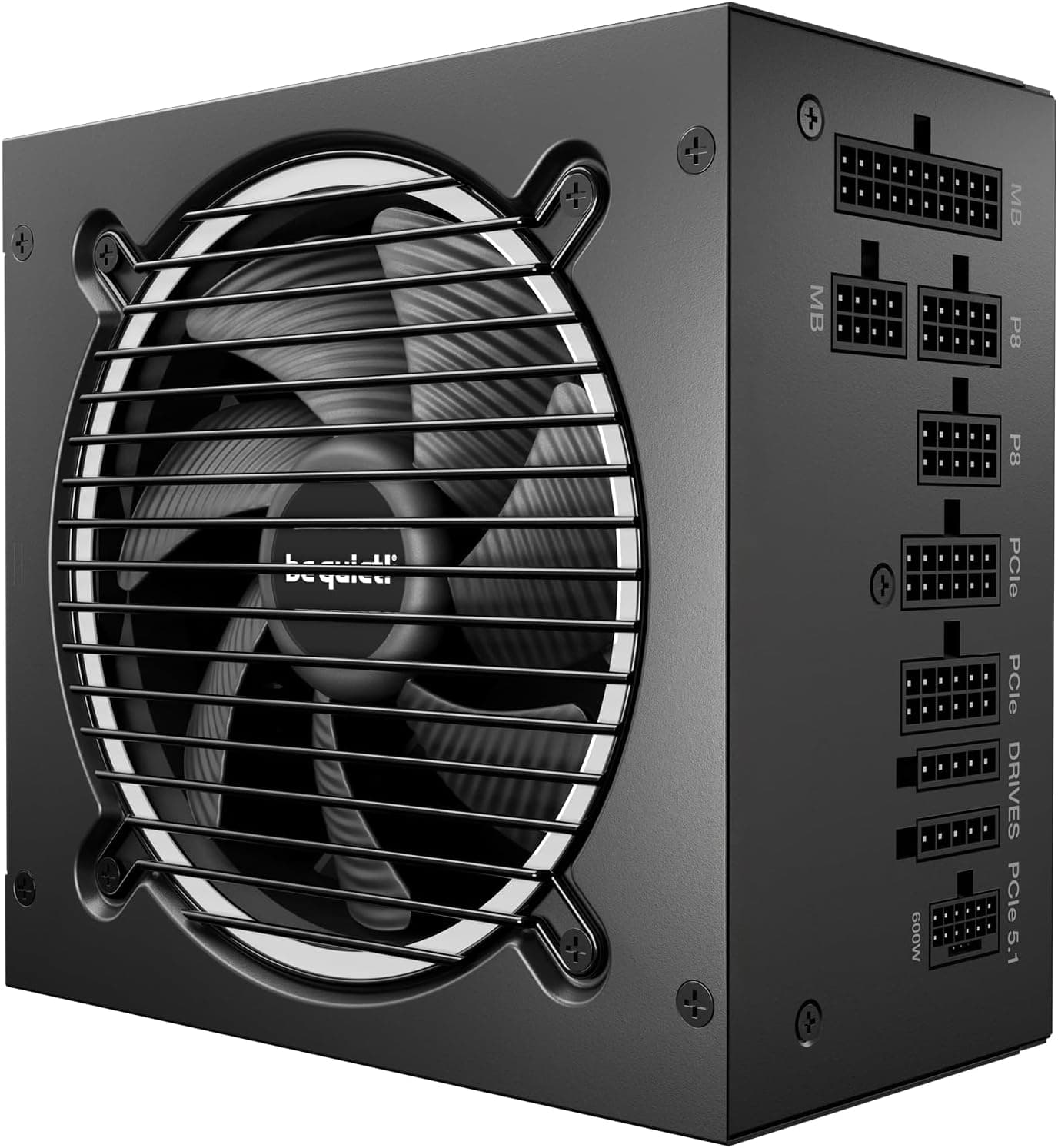
The be quiet! Pure Power 12 M is a solid competitor with excellent acoustic performance and a clean build quality. It uses a semi-modular design on some variants, which is a step down from the full modularity of the MWE Gold V2. The Corsair RM850x is arguably the benchmark for this category: excellent voltage regulation, Japanese capacitors throughout, and a ten-year warranty that puts everything else to shame. But that warranty and reputation come at a price premium that's noticeable in the mid-range bracket. The MWE 850 Gold V2 undercuts the RM850x while offering comparable day-to-day performance for most users.
Where the MWE 850 Gold V2 wins is value. Full modularity, Gold efficiency, Japanese primary caps, and a five-year warranty at a competitive price point is a strong package. Where it loses is in the finer details: the RM850x has better documented ripple suppression, a longer warranty, and a more established reputation for long-term reliability. If budget is the primary concern and you want the best performance-per-pound at this wattage, the MWE 850 Gold V2 is genuinely hard to beat. If you want the absolute safest choice and don't mind paying more, the RM850x is still the reference point.
| Feature | Cooler Master MWE 850 Gold V2 | be quiet! Pure Power 12 M 850W | Corsair RM850x (2021) |
|---|---|---|---|
| Wattage | 850W | 850W | 850W |
| Efficiency | 80 Plus Gold | 80 Plus Gold | 80 Plus Gold |
| Modularity | Fully Modular | Fully Modular | Fully Modular |
| Fan Size | 120mm HDB | 120mm | 135mm |
| Zero RPM Mode | Yes | Yes | Yes |
| Warranty | 5 Years | 5 Years | 10 Years |
| 12VHPWR | No | No | No |
| Primary Caps | Japanese | Japanese | Japanese |
Final Verdict
The Cooler Master MWE 850 Gold V2 Fully Modular PSU has a clear audience. And the answer is: most people building a serious gaming PC in 2024 or 2025. If you're pairing an RTX 4070, 4070 Super, 4070 Ti, or AMD equivalent with a mainstream Ryzen or Intel CPU, this PSU covers your needs with headroom to spare. The Gold efficiency, full modularity, flat cables, and Japanese primary capacitors make it a genuinely well-engineered unit at a price point that doesn't require justification.
The limitations are real but specific. No 12VHPWR connector means RTX 4080/4090 users are relying on adapters, which isn't ideal. The single EPS 8-pin is fine for most builds but worth checking against your motherboard's requirements if you're running a flagship CPU with aggressive overclocking. And if you want the absolute gold standard for long-term reliability documentation, the Corsair RM850x's ten-year warranty and extensively tested internals are still the benchmark. But you'll pay noticeably more for that peace of mind.
For the mid-range bracket, the MWE 850 Gold V2 is one of the most sensible purchases you can make. It's not flashy. It doesn't have RGB. It won't be the thing you show off in a build log. But it'll deliver clean, stable power to your components for years, run quietly, and give you the cable management flexibility that makes a tidy build possible. That's exactly what a PSU should do. Rated 8.5 out of 10. Trusted by over 650 users on Amazon with a ★★★★½ (4.5) rating from 373 reviews, the community verdict lines up with mine.
Is the Cooler Master MWE 850 Gold V2 good enough for an RTX 4090 build?
Technically possible, but not ideal. An RTX 4090 can draw over 450W under sustained load, and when combined with a high-end CPU, you're pushing close to the PSU's rated capacity. More importantly, the MWE 850 Gold V2 doesn't include a native 12VHPWR connector, so you'd need to use the adapter from two 8-pin PCIe cables. For 4090 builds, a 1000W or 1200W unit with a native 16-pin connector is the better choice. For everything up to and including the RTX 4080, 850W is workable with the adapter.
Does the Cooler Master MWE 850 Gold V2 have a silent or zero RPM mode?
Yes. The high-temperature threshold design means the 120mm HDB fan doesn't spin until the unit reaches a certain internal temperature. During light desktop use and moderate gaming loads, the PSU operates in passive (fanless) mode. This is great for quiet builds. The fan only becomes audible under sustained heavy loads, and even then it's relatively quiet compared to cheaper units with lower-quality bearings.
What is the difference between 80 Plus Gold and 80 Plus Bronze for a gaming PC?
The 80 Plus certification grades PSU efficiency at various load levels. Bronze requires 82-85% efficiency; Gold requires 87-90%. In practical terms, a Gold unit wastes less energy as heat, which means lower electricity costs over time, less heat inside your case, and potentially longer component lifespan. For a gaming PC used daily, Gold is worth the modest price premium over Bronze. Platinum and Titanium offer further gains but at significantly higher cost, making them most worthwhile for 24/7 workloads.
How many PCIe connectors does the MWE 850 Gold V2 include, and is that enough for modern GPUs?
The unit includes two PCIe 8-pin (6+2) connectors. Most GPUs up to RTX 4070 Ti class use one or two 8-pin connectors, so two cables covers the majority of current gaming GPUs. Higher-end cards like the RTX 4080 and 4090 use the 12VHPWR (16-pin) connector natively, which this PSU doesn't include as a dedicated cable. An adapter is provided, but for those cards a PSU with a native 12VHPWR cable is preferable. For AMD RX 7900 GRE and similar cards that use dual 8-pin connectors, the MWE 850 Gold V2 is perfectly equipped.
Is the Cooler Master MWE 850 Gold V2 suitable for a small form factor or ITX build?
The MWE 850 Gold V2 is a standard ATX form factor PSU, so it won't fit in cases that require SFX or SFX-L power supplies. For mini-ITX builds in compact cases, you'll need to check whether your case supports ATX PSUs. Many popular ITX cases like the Fractal Design Node 304 or NZXT H1 require SFX units. For mid-tower and full-tower ITX cases that accept ATX PSUs, the full modularity and flat cables make the MWE 850 Gold V2 a good choice, as cable management in tight spaces benefits significantly from being able to remove unused cables entirely.
What works. What doesn’t.
5 + 5What we liked5 reasons
- Full modularity with flat black cables makes cable management straightforward, even in compact mid-tower cases
- 80 Plus Gold efficiency delivers around 90% efficiency at 50% load, reducing heat output and long-term electricity costs
- Japanese primary capacitors and solid build quality back up the five-year warranty with genuine engineering substance
- 120mm HDB fan with zero RPM mode keeps the PSU completely silent during light use and moderate gaming loads
- Excellent 12V rail regulation, staying within 1.5% of nominal under a combined 600W CPU and GPU load
Where it falls5 reasons
- No native 12VHPWR (16-pin) connector means RTX 4080 and 4090 users must rely on an adapter from two 8-pin cables
- Single EPS 8-pin CPU power cable may be insufficient for flagship CPUs on high-end motherboards with dual EPS connectors when overclocking aggressively
- Corsair RM850x offers a ten-year warranty and more extensively documented ripple suppression for buyers who prioritise long-term reliability assurance
- 850W capacity is more than most entry-level builds need, making a 650W or 750W unit a more cost-effective choice for Ryzen 5 or RTX 4060 class systems
- Modular connectors use a proprietary format, so cables from other brands cannot be substituted
Full specifications
8 attributes| Efficiency rating | Gold |
|---|---|
| Form factor | ATX |
| FAN size MM | 120 |
| Generation | MWE Gold V2 |
| Modularity | fully_modular |
| Pcie 5 ready | false |
| Warranty years | 5 |
| Wattage W | 850 |
Will it run on what you have?
Free toolIf this isn’t right for you
2 optionsFrequently asked
7 questions01Is the Cooler Master MWE 850 Gold V2 suitable for an RTX 4090 build?+
It is technically possible but not recommended. An RTX 4090 can draw over 450W under sustained load, and combined with a high-end CPU the system draw approaches the PSU's rated capacity. The unit also lacks a native 12VHPWR connector, requiring an adapter from two 8-pin PCIe cables. For RTX 4090 builds, a 1000W or 1200W unit with a native 16-pin connector is the more appropriate choice.
02Does the Cooler Master MWE 850 Gold V2 have a zero RPM or silent fan mode?+
Yes. The high-temperature threshold design means the 120mm HDB fan remains off during light desktop use and moderate gaming loads. The fan only spins up when internal temperatures reach a certain level. In practice this means the PSU operates silently for a large proportion of typical daily use, with fan noise only becoming noticeable under sustained heavy loads.
03What does the 80 Plus Gold rating mean in practical terms for a gaming PC?+
80 Plus Gold certification requires at least 87% efficiency at 20% and full load, and 90% efficiency at 50% load. Compared to an 80 Plus Bronze unit, a Gold unit wastes less energy as heat at equivalent load levels. Over a year of daily gaming use this translates to modestly lower electricity costs, less heat inside the case, and potentially longer component lifespan. Gold is generally considered the most cost-effective efficiency tier for gaming builds used several hours per day.
04How many PCIe power connectors does the MWE 850 Gold V2 include?+
The unit ships with two PCIe 8-pin (6+2) cables. This covers the majority of current gaming GPUs up to RTX 4070 Ti class, which use one or two 8-pin connectors. Cards requiring the 12VHPWR 16-pin connector natively, such as the RTX 4080 and 4090, are not directly catered for, though an adapter is included that combines two 8-pin cables into a 16-pin connection. For most AMD and Nvidia GPUs below that tier, two 8-pin cables are sufficient.
05Will the Cooler Master MWE 850 Gold V2 fit in a small form factor or ITX case?+
The MWE 850 Gold V2 is a standard ATX form factor unit and will not fit cases designed for SFX or SFX-L power supplies. Many compact mini-ITX cases require SFX units, so you should confirm your case's PSU compatibility before purchasing. In mid-tower and full-tower cases that accept ATX PSUs, the full modularity and flat cables are particularly useful in tight builds where unused cables would otherwise create airflow and space problems.
06How does the Cooler Master MWE 850 Gold V2 compare to the Corsair RM850x?+
Both are fully modular 850W Gold-rated units with Japanese primary capacitors. The Corsair RM850x holds an advantage in warranty length at ten years versus five, and has a more extensively documented track record for ripple suppression and long-term reliability. The Cooler Master MWE 850 Gold V2 typically costs less while offering comparable day-to-day performance for most users. If value is the primary consideration, the MWE 850 Gold V2 is competitive. If long-term reliability assurance and the longest warranty available in this category matter most, the RM850x remains the reference point.
07Does the MWE 850 Gold V2 support dual EPS CPU power connectors?+
The unit includes a single EPS 8-pin cable for CPU power. Most mainstream motherboards and CPUs require only one 8-pin EPS connector and will work without issue. Some high-end Z790 and X670E motherboards include a secondary EPS connector and may benefit from having both populated when running flagship CPUs under heavy overclocking. For stock operation even on those platforms, a single 8-pin is generally sufficient, but you should check your motherboard's documentation if you plan aggressive overclocking on a Core i9 or Ryzen 9 processor.