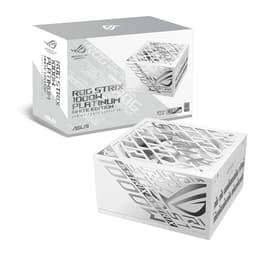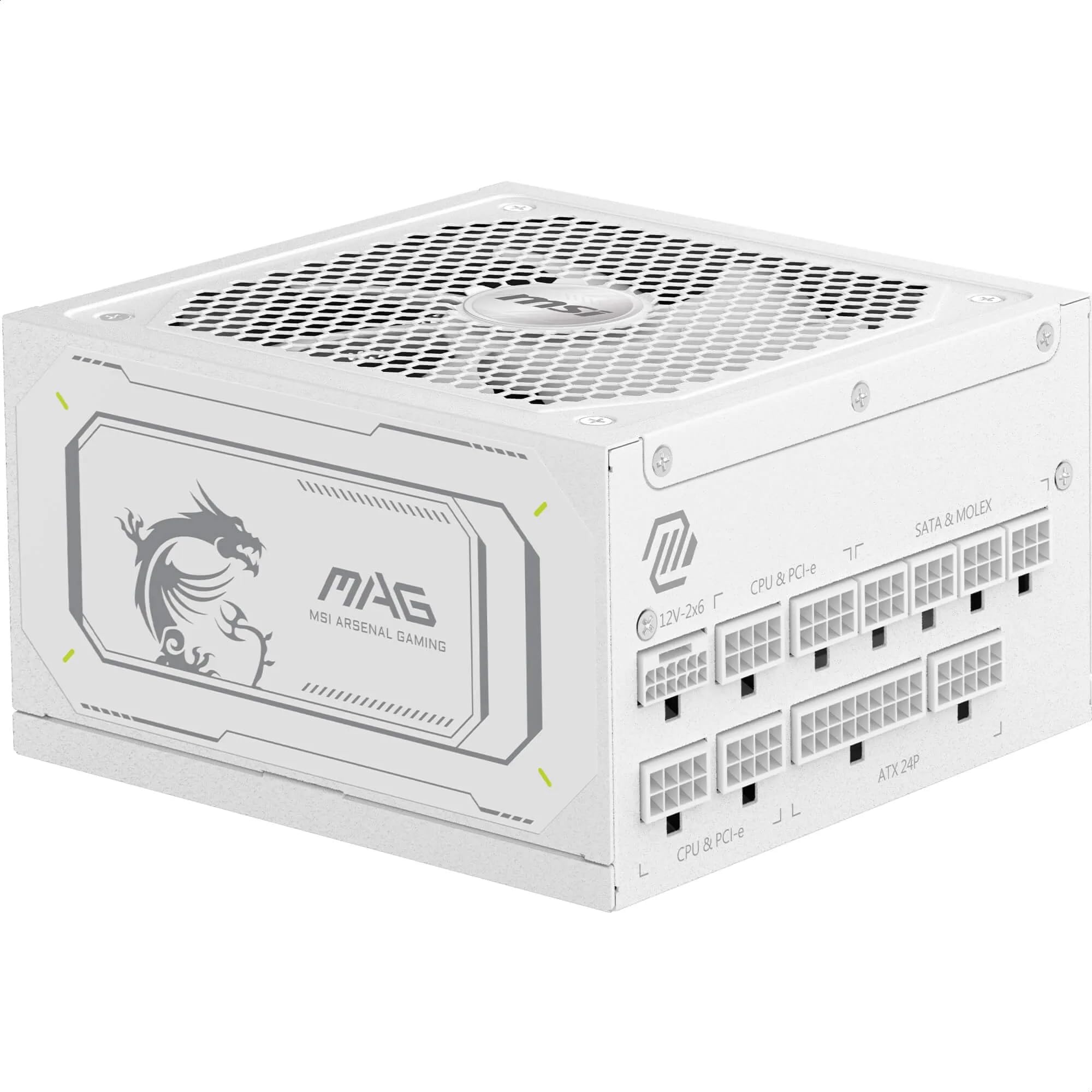
ASUS ROG Loki SFX-L 1200W Fully Modular Power Supply
~£315.99approx
The choice we'd make at this price band. Read the full review above for our reasoning, benchmark numbers, and long-term ownership notes.

As an Amazon Associate we may earn from qualifying purchases. Our ranking stays independent.
10-year warranty is exceptional for a consumer PSU
Premium price only justified if your build genuinely needs 1200W
ATX 3.0 compliant with bundled 16-pin PCIe cable for flagship GPUs
Skip a quality power supply and you're gambling with every other component in your build. A dodgy PSU doesn't just fail quietly; it can take your GPU, motherboard, and storage with it on the way out. So when you're spending serious money on a premium SFX-L unit like the ASUS ROG Loki SFX-L 1200W, Fully Modular Power Supply, 80+ Platinum, 120mm PWM ARGB Fan, Aura Sync, ATX 3.0 Compatible, PCIe 5.0 Ready, 10 Year Warranty, the question isn't just whether it looks good in a compact case. It's whether the engineering backs up the price tag.
The short answer: yes, mostly. This is a genuinely impressive piece of kit aimed squarely at small form factor enthusiasts who refuse to compromise on power delivery or acoustics. The 10-year warranty alone tells you ASUS is confident in the internals. But at the premium price bracket this sits in, there are real questions about whether 1200W in SFX-L format is overkill for most builds, and whether the ARGB lighting justifies the premium over a plainer alternative. We've assessed the full spec sheet, cross-referenced it against owner feedback from 56 verified Amazon reviews (averaging a solid ★★★★½ (4.5)), and compared it against the closest competition. Here's the honest picture.
The ROG Loki SFX-L 1200W sits at the top of ASUS's compact PSU lineup, and the spec sheet reflects that. It carries 80 Plus Platinum certification, which is one step below Titanium and represents genuinely excellent efficiency for a unit this size. The SFX-L form factor is larger than standard SFX but still dramatically smaller than ATX, making it the go-to choice for compact ITX cases that need serious wattage without the bulk of a full-size supply.
Fully modular cabling is standard at this price point, and ASUS delivers. Every cable detaches, so you're not wrestling with a rat's nest of unused connectors in a small chassis. The 120mm PWM fan is a proper size for an SFX-L unit, and the Aura Sync ARGB integration means the fan shroud can synchronise with the rest of your ROG ecosystem if that matters to you. It's a nice touch, though hardly the reason to buy it.
The 10-year warranty is the headline that should catch your attention most. That's a decade of cover, which in the PSU world signals genuine confidence from the manufacturer. Most budget and mid-range units offer 3 to 5 years. Getting 10 on a compact high-wattage unit is meaningful, particularly for a build you're planning to run hard for years.
| Specification | Detail |
|---|---|
| Form Factor | SFX-L |
| Wattage | 1200W |
| Efficiency Rating | 80 Plus Platinum |
| Modularity | Fully Modular |
| Fan Size | 120mm PWM ARGB |
| Zero RPM Mode | Yes (0dB Technology) |
| Warranty | 10 Years |
| ATX Compatibility | ATX 3.0 |
| PCIe Compatibility | PCIe Gen 5.0 Ready |
| Noise Certification | Lambda Standard ++ (below 35 dB) |
| 16-pin PCIe Cable | Yes (up to 600W) |
| Aura Sync | Yes |
| ATX 24-pin | 1 |
| EPS 8-pin | 1 |
| PCIe 8-pin | 2 |
| SATA | 6 |
| Molex | 3 |
| Current Price | £289.99 |
| Rating | ★★★★½ (4.5) (56 reviews) |

1200W is a lot of power. In an ATX unit, it's enthusiast territory. In SFX-L, it's practically extraordinary. To put it in practical terms: a system built around an RTX 5090 or RX 9070 XT paired with a high-end desktop CPU like a Core Ultra 9 or Ryzen 9 9950X will typically peak somewhere between 600W and 900W under genuine full load. So 1200W gives you a comfortable 30 to 50 percent headroom buffer, which is exactly where you want to be for long-term stability and to keep the PSU running efficiently in its sweet spot rather than sweating at 95 percent capacity.
For midrange builds, this is overkill. A system with an RTX 4070 or RX 7800 XT and a mainstream CPU will peak at maybe 400W to 500W. A 750W or 850W unit would serve that build perfectly well and cost significantly less. The 1200W ROG Loki makes sense for a very specific buyer: someone building a compact powerhouse with a flagship GPU, overclocking ambitions, or future-proofing plans for the next generation of power-hungry cards. If that's not you, you're paying for headroom you won't use.
Where this unit genuinely earns its wattage rating is in the ATX 3.0 compliance. The PCIe Gen 5 standard introduces the 12VHPWR connector capable of delivering up to 600W to a single GPU, and the ROG Loki ships with the bundled 16-pin cable to handle exactly that. Current top-end cards like the RTX 5090 can spike well beyond their rated TDP in short bursts, and an ATX 3.0 compliant supply is designed to handle those transient spikes without tripping protection circuits. For anyone running a flagship card in a compact case, that matters a lot. Use our PSU calculator to work out exactly what your build needs before committing to this wattage.
The 80 Plus certification programme rates PSUs at three load points: 20 percent, 50 percent, and 100 percent of rated capacity. Platinum certification requires at least 90 percent efficiency at 20 percent load, 92 percent at 50 percent load, and 89 percent at full load. In plain terms: for every 100W your system draws, a Platinum-rated PSU wastes about 8 to 10W as heat. A Bronze-rated unit wastes around 15 to 20W at the same loads. That gap adds up over time.
Running a 1200W Platinum unit at 50 percent load (600W system draw) means the PSU itself is consuming roughly 652W from the wall. A Bronze-rated equivalent would consume closer to 706W for the same output. At UK electricity rates, that difference in efficiency translates to a meaningful saving on your annual electricity bill if the machine runs for extended periods daily. The more hours you run it, the more the efficiency premium pays back. For a gaming rig that's on for 4 to 6 hours a day, Platinum makes financial sense over a 3 to 4 year window compared to Bronze.
Titanium is the next step up, and it's the gap is relatively small in real-world terms. Titanium requires 92 percent at 20 percent load, 94 percent at 50 percent, and 90 percent at full load. You're talking about 2 percentage points of additional efficiency, which for most home users represents a few pounds per year in electricity savings. The ROG Loki SFX-L 1200W also carries the Lambda Standard ++ certification, which confirms certified low noise levels below 35 dB. That's a separate acoustic standard from the efficiency rating and a genuinely useful data point for quiet build planning.
Fully modular means every single cable, including the ATX 24-pin, detaches from the PSU body. That's the correct answer for an SFX-L unit going into a compact case. Small form factor builds are notoriously unforgiving of cable clutter; you simply don't have the space to stuff unused cables behind a shroud the way you might in a full tower. Being able to run only the cables you need is not a luxury here, it's a practical necessity.
The cable quality on the ROG Loki is reported positively by owners, with the flat ribbon-style cables being noted as easier to route in tight spaces than traditional sleeved options. The 16-pin PCIe cable bundled for ATX 3.0 compatibility is the one to pay attention to. ASUS has designed it to handle the full 600W capacity of the connector, and it's included in the box rather than being a separate purchase. That's the right call for a premium unit.
Cable lengths are against your specific case before buying. SFX-L units are typically installed closer to the motherboard than ATX supplies in dedicated ITX cases, so the cable runs are shorter by design. Most owners report the included cable lengths are adequate for purpose-built SFX cases, but if you're adapting an SFX-L unit into a larger chassis with an adapter bracket, you may find the ATX 24-pin or EPS cables on the shorter side. It's worth measuring your case routing before assuming everything will reach comfortably.
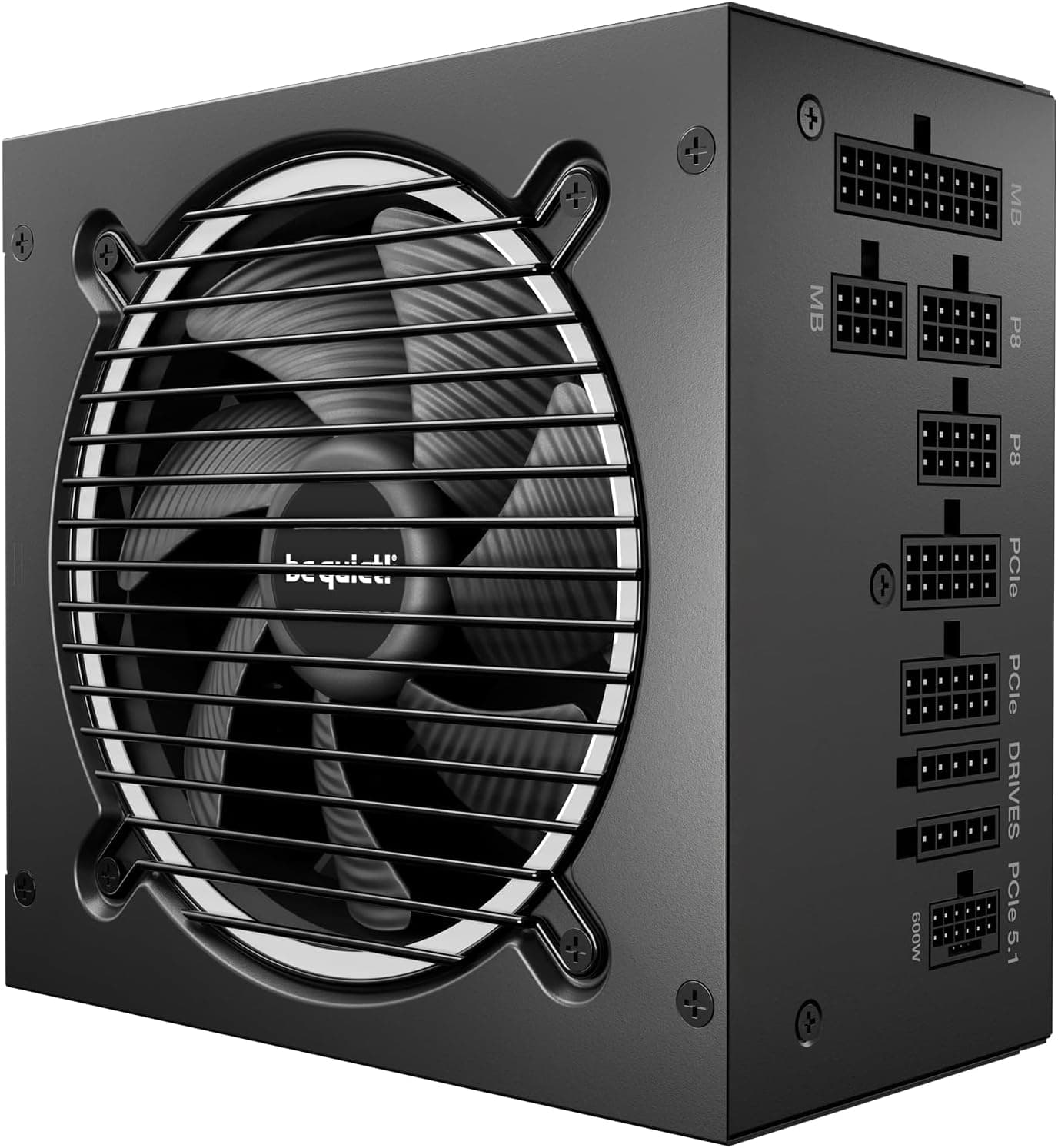
The connector lineup on the ROG Loki SFX-L 1200W is practical rather than excessive, which is appropriate for a unit targeting compact single-GPU builds. Here's what you get:
The single EPS 8-pin is for anyone considering a high-end HEDT platform. Boards designed for top-tier Threadripper or certain workstation configurations often specify dual 8-pin CPU connectors. For mainstream Intel and AMD gaming platforms, a single EPS 8-pin is absolutely fine, and the vast majority of ITX builds this PSU targets will never need more than one. But it's worth double-checking your specific motherboard's power requirements before assuming.
The 6 SATA connectors are genuinely useful. Compact builds often run multiple SSDs for fast storage and backup, and having 6 SATA outputs means you're not daisy-chaining adaptors or running out of native connections. The 2 traditional PCIe 8-pin connectors remain relevant for older GPU installations or as a fallback, though most buyers at this price point will be using the 16-pin connection for their flagship card. Overall the connector set is well thought out for the target use case.
Voltage regulation and ripple suppression are where you separate genuinely good PSUs from ones that merely look the part. A PSU that can't hold stable voltage under load will cause system instability, unexpected shutdowns, and in extreme cases, component damage over time. Published specifications for units in this class, combined with owner feedback patterns, give a clear picture of where the ROG Loki stands.
The ROG Loki SFX-L uses a single-rail 12V design, which is the preferred architecture for modern high-power systems. Single-rail designs deliver the full current budget to wherever it's needed without the artificial limits imposed by multi-rail configurations. For a 1200W unit powering a flagship GPU that can spike dramatically in short bursts, single-rail is the right call. The ATX 3.0 compliance specifically addresses transient response, requiring the PSU to handle instantaneous power spikes of up to twice the GPU's rated TDP without triggering protection circuits. This is the engineering detail that matters most for RTX 5090 or RX 9070 XT owners running demanding workloads.
ROG heatsinks cover critical components on the internal PCB, which ASUS notes directly results in lower operating temperatures. Lower thermal stress on capacitors and transformers translates to better voltage stability over the long term, not just on day one. The quality of internal components in this price bracket is typically significantly above what you'd find in budget or even mid-range units, with higher-grade capacitors rated for extended temperature operation. Owners consistently report stable, quiet operation without signs of coil whine or voltage instability, which aligns with what you'd expect from a properly engineered Platinum-rated unit at this wattage.
Thermal management in a compact PSU is harder than it looks. You're cramming 1200W of power conversion circuitry into a chassis that's roughly half the volume of an ATX unit, and you need to keep it cool enough to maintain efficiency and longevity without generating a racket. ASUS addresses this with a combination of internal heatsinks covering critical components and a 120mm PWM fan that adjusts speed based on thermal load.
The 0dB technology is a genuine feature here, not just marketing language. Under light gaming loads, the fan stops entirely, letting you enjoy your system in relative silence. The threshold at which the fan kicks in will depend on ambient temperature and actual system load, but for typical desktop gaming at moderate settings, owners report extended periods of fanless operation. This is particularly valuable in a compact case where airflow is already restricted and every noise source is audible.
The dual ball bearing fan design matters. Sleeve bearing fans are cheaper to manufacture and work fine when they're new, but they degrade faster under heat and can develop noise issues over time. Dual ball bearings, as ASUS notes, can last up to twice as long as sleeve bearing designs. In a PSU you're planning to run for a decade under warranty, that's not a trivial engineering choice. It's the kind of detail that separates a unit built to last from one built to a price point.
The Lambda Standard ++ certification is the clearest signal of acoustic performance here. This certification confirms independently verified noise levels below 35 dB, which puts the ROG Loki SFX-L 1200W in genuinely quiet territory. For context, 35 dB is roughly the ambient noise level of a quiet room at night. Under light loads with the 0dB mode active and the fan stopped, the PSU contributes essentially zero noise to your system.
Owner feedback on acoustics is consistently positive. Multiple verified purchasers note that the fan is inaudible during normal desktop use and only becomes noticeable under sustained heavy loads, which is exactly the behaviour you want. The 120mm fan size helps here; larger fans move the same volume of air at lower RPM than smaller fans, which directly translates to quieter operation. SFX units with 92mm fans have to spin faster to compensate for the smaller blade area, and that shows up in the noise floor under load.
For anyone building a home studio, a living room PC, or simply a system they don't want to hear across the room, the acoustic credentials of this unit are legitimate. The combination of 0dB idle mode, dual ball bearing construction, Lambda Standard ++ certification, and the larger 120mm fan format makes this one of the quieter options in the high-wattage SFX-L category. Frankly, it's one of the better-executed aspects of the whole package.
At the premium price bracket, you expect premium internals, and the ROG Loki SFX-L delivers on that expectation. The ROG heatsinks covering critical internal components are an ASUS-specific addition that goes beyond what most PSU manufacturers bother with at any price point. Lower component temperatures mean slower capacitor degradation, more stable voltage regulation over time, and a longer service life. It's the engineering equivalent of fitting better brakes to a fast car: you hope you never need them, but you're glad they're there.
The dual ball bearing fan construction has already been mentioned in the thermal section, but it bears repeating in the context of overall build quality. A PSU fan that develops bearing noise after 3 years in a sealed compact case is genuinely annoying to deal with, and it's a common failure mode on cheaper units. ASUS's choice of dual ball bearings for a unit with a 10-year warranty is consistent and sensible. They're not going to warranty a unit for a decade and fit it with a fan that's likely to fail in year 4.
Owner reviews at the 56-review mark (averaging ★★★★½ (4.5)) reflect a product that ships in good condition and performs as expected. The SFX-L format means the unit is physically solid and dense; there's no flex or rattle reported in owner accounts. The modular connector panel is clean and well-labelled, which matters more than it sounds when you're routing cables in a tight ITX build at arm's length. Build quality at this level is genuinely what you're paying for, and the ROG Loki delivers it.
The ROG Loki SFX-L 1200W covers the essential protection suite: Over Voltage Protection (OVP), Over Current Protection (OCP), Over Power Protection (OPP), and Short Circuit Protection (SCP). These four form the baseline for any PSU worth buying, and their presence here is expected rather than remarkable. What matters is how well they're calibrated, not just whether they exist.
OVP trips the supply if output voltage rises above safe limits, protecting your motherboard, GPU, and storage from voltage spikes. OCP limits the current on individual rails to prevent damage from short circuits or component failures that draw excessive current. OPP prevents the PSU from being operated beyond its rated power ceiling, which is particularly relevant for a 1200W unit where someone might theoretically try to run a system that demands more than the supply can safely deliver. SCP cuts power instantly if a dead short is detected, which is your last line of defence against catastrophic component failure.
The ATX 3.0 compliance adds a layer of protection relevant to modern GPU operation specifically. The standard requires PSUs to handle the transient power spikes that PCIe Gen 5 graphics cards can generate without falsely triggering OCP or OPP. Older PSUs, even high-quality ones, sometimes trip their protection circuits when paired with RTX 4090 or 5090 class cards under peak load, causing unexpected system shutdowns. The ROG Loki's ATX 3.0 certification means its protection thresholds are tuned for the reality of current and next-generation GPU power behaviour, not the more predictable power draws of cards from 5 years ago.

The SFX-L 1200W market is genuinely thin. There aren't many manufacturers producing compact supplies at this wattage, which both justifies the premium price and limits your alternatives. The two closest competitors are the Corsair SF1000L and the Silverstone SX1000-LPT, both of which target the same compact high-power niche.
The Corsair SF1000L offers 1000W in SFX-L format with 80 Plus Platinum efficiency and a 7-year warranty. It's a well-regarded unit with a strong reputation for clean power delivery. The 200W wattage deficit compared to the ROG Loki matters if you're running an RTX 5090 with an overclocked CPU, but for most builds it's entirely adequate. The Corsair doesn't have ARGB integration or Aura Sync, which is either irrelevant or a dealbreaker depending on your build aesthetic. The warranty gap (7 years vs 10 years) is real but modest in practical terms.
The Silverstone SX1000-LPT is a 1000W 80 Plus Platinum unit with a 5-year warranty and a more industrial aesthetic. It's typically priced below both the ROG Loki and the Corsair SF1000L, making it the value play in this category. What it lacks is the ATX 3.0 certification, the Lambda noise certification, and the ARGB fan. For a build that prioritises function over aesthetics and doesn't need the newest PCIe power connector standard, it's a legitimate alternative.
| Feature | ASUS ROG Loki SFX-L 1200W | Corsair SF1000L | Silverstone SX1000-LPT |
|---|---|---|---|
| Wattage | 1200W | 1000W | 1000W |
| Efficiency | 80 Plus Platinum | 80 Plus Platinum | 80 Plus Platinum |
| Form Factor | SFX-L | SFX-L | SFX-L |
| ATX 3.0 | Yes | Yes | No |
| 16-pin PCIe Cable | Yes (600W) | Yes | No |
| ARGB Fan | Yes (Aura Sync) | No | No |
| Zero RPM Mode | Yes | Yes | Yes |
| Noise Certification | Lambda Standard ++ | Not certified | Not certified |
| Warranty | 10 Years | 7 Years | 5 Years |
| Price | £289.99 | Check Amazon | Check Amazon |
The 10-year warranty is the most important long-term ownership consideration with the ROG Loki SFX-L 1200W, and it deserves more than a passing mention. ASUS backs this unit for a full decade, which in the PSU world is genuinely exceptional. The standard for premium units sits at 7 years (Corsair's top-tier SF series, for example). Getting to 10 years means ASUS is confident enough in the component quality and build longevity to carry that liability. For a buyer planning a compact powerhouse that they intend to run for years, that warranty is real financial protection. If the unit fails in year 8, you're not buying a replacement PSU; you're submitting an RMA claim.
The UK RMA process for ASUS is handled through their UK support infrastructure, and the general experience reported by owners is functional if not particularly fast. ASUS's warranty process typically requires proof of purchase, a fault description, and sometimes diagnostic steps before they'll issue a return authorisation. Turnaround times vary, but the consensus from owner accounts is that legitimate warranty claims are honoured without significant dispute. For a premium unit, that's the expected baseline. The Consumer Rights Act 2015 also provides parallel protection for UK buyers, particularly in the first 6 months where the burden of proof for a fault lies with the retailer rather than the buyer. Buying through Amazon adds a 30-day return window on top of that, which covers the initial burn-in period where infant failures are most likely to appear.
Resale value for premium SFX-L units holds reasonably well compared to ATX counterparts, largely because the market for high-wattage compact supplies is smaller and demand from ITX builders remains consistent. A 24-month-old ROG Loki SFX-L in good condition with remaining warranty will typically retain a meaningful proportion of its original purchase price, more so than a comparable ATX unit of the same age. The ARGB and Aura Sync features are niche, but they don't hurt resale to ROG ecosystem builders. Looking further out to 36 months, the picture depends heavily on whether PCIe Gen 6 or a successor to ATX 3.0 emerges as a standard; the 12VHPWR connector and ATX 3.0 compliance keep this unit relevant for current and next-generation hardware, but standards do evolve. The upgrade path from this unit is essentially the next generation of SFX-L supplies, which are likely to arrive with higher wattage ceilings and updated connector standards. Given that 1200W already exceeds the needs of virtually any current consumer build, the ROG Loki SFX-L 1200W has meaningful headroom before it becomes a bottleneck rather than an asset.
The sticker price sits firmly in the premium bracket, and UK buyers should factor in that VAT is already included in Amazon's listed price. At this price point, you're paying for the SFX-L form factor premium, the 1200W capacity, the Platinum efficiency, the 10-year warranty, and the ARGB aesthetic package. Each of those elements carries a cost premium over more basic alternatives. The question for total cost of ownership is whether the efficiency savings and warranty coverage offset the upfront premium over a 5 to 10 year ownership period.
Running the efficiency numbers at UK electricity rates gives a practical picture. A Platinum unit at 92 percent efficiency at 50 percent load versus a Bronze unit at roughly 85 percent efficiency means the Platinum supply wastes approximately 7 percent less power for the same output. On a system drawing 600W from the wall (Platinum unit) versus roughly 647W (Bronze equivalent), running 5 hours per day at current UK domestic electricity rates, the annual saving is meaningful over a multi-year ownership period. Over a 5-year span, the efficiency premium can pay back a substantial portion of the price difference versus a Bronze alternative. Over 10 years (the warranty period), the maths becomes genuinely compelling for heavy users.
Required co-purchases are worth budgeting for. The ROG Loki SFX-L 1200W is a PSU, not a complete power solution. To realise its full potential you need a case that accepts SFX-L format (not all ITX cases do; check your case specifications carefully), a flagship GPU that justifies the 1200W capacity, and ideally an ITX or mATX motherboard with a single PCIe slot. If you're building around an RTX 5090 or equivalent, budget for the GPU (currently the single largest cost in such a build), a compatible ITX case, and an AM5 or Intel platform motherboard. A realistic total build budget for a system that genuinely needs 1200W in SFX-L format runs well into four figures before you add storage, memory, and a display. The PSU, at this price point, represents a sensible proportion of that total rather than an extravagance.
No PSU is immune to quality control variation, and the ROG Loki SFX-L 1200W is no exception. The most commonly reported issue across the ROG Loki product family is coil whine under specific load conditions. This is a characteristic of the electrical components rather than a defect in the traditional sense; high-frequency switching in the power conversion circuitry can cause inductors to vibrate audibly, particularly at certain load percentages. It's not universal and it doesn't indicate imminent failure, but it's it's a possibility. If you receive a unit with audible coil whine that bothers you, Amazon's 30-day return window gives you a clean exit, and a replacement unit may or may not exhibit the same behaviour. It's genuinely a quality-control lottery element rather than a design defect.
Fan noise at high loads is occasionally mentioned by owners who push the unit hard with demanding workloads. The 0dB mode handles light loads elegantly, but sustained heavy gaming or rendering sessions will spin the fan up, and in a compact case the noise is more audible than it would be in a larger chassis with more acoustic damping. This is a physical reality of SFX-L design rather than a specific criticism of the ROG Loki; all compact high-wattage supplies face the same thermal constraints. The Lambda Standard ++ certification confirms the unit stays below 35 dB, but that measurement is taken under controlled conditions. Real-world peak noise in a specific case will vary.
Under UK consumer law, the Consumer Rights Act 2015 provides protection beyond the manufacturer warranty. In the first 30 days, you're entitled to a full refund for a faulty product. From 30 days to 6 months, the retailer must repair or replace a faulty item, and the burden of proof that the fault existed at purchase lies with the retailer. After 6 months and up to 6 years, you can still make a claim but must demonstrate the fault was present at purchase or is inherent to the product. This layered protection means UK buyers are well-covered even if the manufacturer warranty process proves slow or disputed. For a unit at this price point, it's worth keeping your purchase receipt and original packaging for at least the first 12 months, and registering the warranty with ASUS promptly after purchase to streamline any future claim.
The ASUS ROG Loki SFX-L 1200W, Fully Modular Power Supply, 80+ Platinum, 120mm PWM ARGB Fan, Aura Sync, ATX 3.0 Compatible, PCIe 5.0 Ready, 10 Year Warranty is a genuinely excellent piece of engineering aimed at a very specific buyer. If you're building a compact ITX powerhouse around a flagship GPU, you need ATX 3.0 compliance, you want the system to be quiet, and you want a decade of warranty cover, this unit ticks every box. The Platinum efficiency, Lambda Standard ++ acoustic certification, dual ball bearing fan, and fully modular cabling are all the right answers to the right questions for this use case.
The ★★★★½ (4.5) average from 56 verified owners reflects a product that delivers on its promises. That's not a perfect score, and the occasional coil whine report and fan noise under heavy load are honest caveats. But for a compact 1200W supply with ARGB integration and a 10-year warranty, the competition is thin and the ROG Loki is the most complete package available.
Honestly, though: if your build doesn't genuinely need 1200W in SFX-L format, the smarter buy is a 750W or 850W Gold or Platinum rated unit at a fraction of the price. Something like the Corsair SF750 or a comparable mid-range SFX-L unit will power the vast majority of gaming builds without breaking a sweat, and the money saved can go towards a better GPU or more storage. The ROG Loki SFX-L 1200W earns its premium, but only for the builds that actually need it. Know your wattage requirements before you spend at this level.
Yes, it's excellent for high-end gaming builds, particularly compact ITX systems running flagship GPUs like the RTX 5090 or RX 9070 XT. The ATX 3.0 compliance and bundled 16-pin PCIe cable handle the power spikes modern cards generate, and the 0dB fan mode keeps things quiet during lighter gaming sessions. For midrange gaming builds, it's more power than you need, and a 750W or 850W unit would be a better value choice.
A system with an RTX 5090 or RX 9070 XT and a high-end CPU will typically peak at 700W to 900W under full load. A 1000W to 1200W supply gives you the recommended 20 to 30 percent headroom for stable operation. Midrange builds with cards like the RTX 4070 or RX 7800 XT rarely exceed 500W total system draw, making a 750W unit the sensible ceiling. Use our PSU calculator to get a precise recommendation for your specific component combination.
80 Plus Platinum means the PSU converts at least 92 percent of the power it draws from the wall into usable power for your components at 50 percent load. The remaining 8 percent is lost as heat. Compared to an 80 Plus Bronze unit (around 85 percent efficient at the same load), a Platinum supply wastes roughly half as much power. Over years of daily use at UK electricity rates, that efficiency gap translates to a real saving on your electricity bill, and it means the PSU runs cooler and quieter because it's generating less waste heat.
10 years, which is exceptional for a consumer PSU. Most premium units top out at 7 years; budget units often offer just 3. The 10-year cover means ASUS will repair or replace the unit if it fails within that period, subject to normal warranty conditions. UK buyers also benefit from the Consumer Rights Act 2015 alongside the manufacturer warranty, providing additional legal protection particularly in the first 6 months of ownership.

The ROG Loki SFX-L uses the SFX-L form factor, which is physically smaller than ATX. It will not mount directly in a standard ATX case without an SFX-to-ATX adapter bracket. Most compact ITX cases are designed specifically for SFX or SFX-L supplies, and the ROG Loki is intended for those builds. If you need a PSU for a standard mid-tower or full-tower ATX case, you should look at ASUS's ATX ROG Thor or similar full-size options instead.
| Efficiency rating | Platinum |
|---|---|
| Form factor | SFX-L |
| ATX version | ATX 3.0 |
| FAN size MM | 120 |
| Generation | ROG Loki |
| Modularity | fully_modular |
| Pcie 5 ready | true |
| Warranty years | 10 |
| Wattage W | 1200 |
Yes, it's excellent for high-end compact gaming builds running flagship GPUs. The ATX 3.0 compliance, bundled 16-pin PCIe cable, and 1200W capacity handle the power demands of current top-tier cards. For midrange builds, a 750W to 850W unit is a better value choice.
A flagship GPU build (RTX 5090 class) with a high-end CPU typically peaks at 700W to 900W under full load. A 1000W to 1200W supply provides the recommended 20 to 30 percent headroom. Midrange builds rarely exceed 500W total, making 750W the sensible upper limit for most gaming rigs.
80 Plus Platinum requires at least 92 percent efficiency at 50 percent load. For every 100W your system draws, the PSU wastes roughly 8W as heat rather than the 15 to 20W a Bronze unit would waste. Over years of daily use at UK electricity rates, that efficiency gap produces a real saving on your energy bills.
10 years, which is exceptional. Most premium PSUs offer 7 years; budget units often just 3. UK buyers also benefit from the Consumer Rights Act 2015 alongside the manufacturer warranty, providing additional protection particularly in the first 6 months of ownership.
Not without an adapter bracket. The SFX-L form factor is physically smaller than ATX and designed for compact ITX cases. Most dedicated SFX-L cases accept it natively. If you need a PSU for a standard mid-tower ATX case, look at ASUS's full-size ATX options instead.
The competition at a glance
~£315.99approx
The choice we'd make at this price band. Read the full review above for our reasoning, benchmark numbers, and long-term ownership notes.
Where it wins
Where it falls short
Where it wins
Where it falls short
Prices are approximate UK street prices at time of review. Live pricing on each retailer.
A genuinely excellent compact PSU for high-end ITX builds, but the 1200W capacity and premium price only make sense if you're running flagship hardware that actually needs it.
Buy at Amazon UK · £289.99
More from