Mini-ITX PC building is one of those things that looks straightforward until you're three hours deep, cursing at a 170W CPU that's thermal throttling because the board underneath it has the power delivery of a budget office machine. That's the problem nobody talks about loudly enough. The form factor gets all the love for being compact and elegant, and then you shove a Ryzen 9 7950X in there and wonder why it's struggling. The motherboard is doing the quiet, unglamorous work of keeping your CPU fed, stable, and alive, and in a Mini-ITX chassis where airflow is already compromised, a weak VRM isn't just a performance problem. It's a slow disaster waiting to happen.
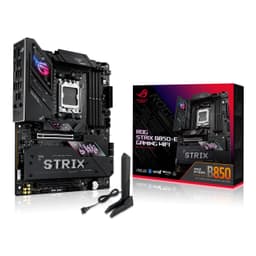
The ASUS ROG Strix B850-I Gaming WiFi is ASUS's answer to the question: what if a Mini-ITX board didn't have to compromise? It's built on AMD's B850 chipset, it supports the full AM5 platform including Ryzen 9000 series, and it packs a 10+2+1 power stage configuration into a board the size of a hardback novel. There's WiFi 7, dual PCIe 5.0 M.2 slots, USB 20Gbps Type-C on the rear, and enough RGB to make your case window glow like a nightclub. On paper, it reads like someone took a full-size enthusiast board and somehow squeezed it down without cutting the things that actually matter.
But paper specs are easy. The real question is whether ASUS has actually pulled off the engineering, or whether this is a premium-priced board that looks impressive in the spec sheet and then falls apart when you stress it. Given the price sits firmly in the upper mid-range bracket, the expectations are high. So here's what you actually need to know.
Core Specifications
The B850-I Gaming WiFi is a Mini-ITX board, which means 170mm x 170mm of PCB real estate to fit everything. ASUS has the AMD AM5 socket here, which uses the LGA1718 pin layout, and it supports DDR5 memory across two slots. You're looking at a single PCIe 5.0 x16 slot for your GPU, two M.2 slots (both PCIe 5.0), and the full suite of connectivity that ASUS has packed into the rear I/O. The board ships with a pre-mounted I/O shield, which sounds like a small thing but is genuinely appreciated when you're building in a tight ITX case with limited visibility.
For rear I/O, ASUS has included a USB 20Gbps Type-C port alongside five additional USB 10Gbps ports, which is a genuinely impressive port count for a board this size. There's also an HDMI output for Ryzen processors with integrated graphics, Intel 2.5Gb Ethernet, and the WiFi 7 antenna connectors. The ROG SupremeFX audio solution uses an ALC4080 codec paired with a Savitech SV3H712 amplifier, and there's Dolby Atmos support baked in. Analogue audio outputs are present on the rear I/O panel.
The front panel connectivity includes a USB 10Gbps Type-C header, which means your case's front USB-C port will actually run at proper speeds rather than the embarrassing USB 2.0 speeds some budget boards sneak in. There are also two addressable Gen 2 RGB headers for lighting. The BIOS FlashBack button, Clear CMOS button, and the FlexKey button are all present, which matters a lot on an AM5 board where you might be flashing BIOS to support a new CPU without needing a processor already installed.
| Specification | Detail |
|---|---|
| Form Factor | Mini-ITX (170mm x 170mm) |
| Socket | AMD AM5 (LGA1718) |
| Chipset | AMD B850 |
| CPU Support | Ryzen 9000, 8000, 7000 series |
| Memory Slots | 2x DDR5 |
| M.2 Slots | 2x PCIe 5.0 |
| PCIe x16 Slot | 1x PCIe 5.0 (SafeSlot) |
| Rear USB | 1x USB 20Gbps Type-C, 5x USB 10Gbps |
| Front Panel USB | 1x USB 10Gbps Type-C header |
| Networking | Intel 2.5Gb Ethernet, WiFi 7 (802.11be) |
| Audio | ROG SupremeFX ALC4080 + Savitech SV3H712, Dolby Atmos |
| RGB | Aura Sync, 2x Addressable Gen 2 headers |
| VRM | 10+2+1 power stages, rated 70A per stage |
| Video Output | HDMI |

Socket and CPU Compatibility
AM5 is AMD's current-generation platform, and it's the right foundation to build on right now. The socket uses an LGA pin layout (the pins are on the motherboard, not the CPU), which is a change from AM4 but brings AMD in line with Intel's approach. The B850-I supports Ryzen 7000, 8000, and 9000 series desktop processors, which covers everything from budget Ryzen 5 parts right up to the Ryzen 9 9950X if you're feeling ambitious and your wallet can take the hit. That's a proper range of CPU options, and it means you're not buying a board that's already obsolete before you've even built the machine.
One thing worth understanding about AM5 and newer Ryzen generations is the BIOS situation. If you're planning to drop a Ryzen 9000 series chip into any AM5 board, you need to make sure the BIOS is up to date. The good news here is that ASUS has included a BIOS FlashBack button on the rear I/O, which means you can update the BIOS without a CPU installed at all. You just load the BIOS file onto a USB drive, plug it in, hold the button, and wait. For anyone upgrading to a brand new CPU generation, this is genuinely useful rather than a marketing bullet point. It saves you the awkward situation of needing to borrow an older CPU just to flash the firmware.
The AM5 platform also brings PCIe 5.0 connectivity directly from the CPU, which is why this board can offer a PCIe 5.0 x16 slot and PCIe 5.0 M.2 slots without relying entirely on chipset lanes. AMD has committed to AM5 as a long-term platform, which is a meaningful statement when you're spending upper mid-range money on a board. The reasonable expectation is that future Ryzen generations will continue to support AM5, giving this board a longer useful life than you'd get from a platform that's already at end-of-life. That longevity argument matters more on a Mini-ITX build where swapping the motherboard is a significant undertaking.
Chipset Features
The B850 chipset sits in the middle of AMD's current lineup, above B650 and below X870. The key practical difference between B850 and X870 is that X870 mandates USB4 and PCIe 5.0 for M.2 slots as platform requirements, while B850 offers these features but they're not mandatory. In practice, the B850-I delivers both anyway, so the distinction is largely academic for this specific board. What B850 does give you over B650 is better overclocking support, including full support for EXPO memory profiles (AMD's version of XMP) and CPU overclocking, which B650 also supports but B850 handles with slightly more headroom in terms of chipset features.
In terms of connectivity lanes, the B850 chipset provides additional USB and storage bandwidth beyond what the CPU itself offers. The combination of CPU lanes and chipset lanes is what enables this board to run two PCIe 5.0 M.2 slots simultaneously while also feeding a full-bandwidth PCIe 5.0 x16 GPU slot. That's a meaningful achievement on a Mini-ITX board where lane management is always a tighter engineering challenge than on ATX designs. ASUS has clearly done the work here rather than cutting corners on lane allocation.
It's also worth noting that B850 supports memory overclocking beyond JEDEC standard speeds, which matters for DDR5 builds where the performance gap between stock speeds and properly tuned memory can be significant. The AI Overclocking and AEMP features that ASUS has implemented on this board are designed to automate that process, which is genuinely useful for builders who want performance without spending hours in the BIOS manually tuning subtimings. Whether the AI profiles match what an experienced overclocker would achieve manually is debatable, but for most people building a compact gaming or workstation machine, the automated approach gets you most of the way there with minimal effort.
VRM and Power Delivery
This is the section that separates the boards worth buying from the ones that look impressive until your CPU starts thermal throttling under sustained load. On a Mini-ITX board, VRM thermal management is even more critical than on full-size ATX designs because the heatsink footprint is constrained by the board dimensions and airflow is typically worse in compact cases. So when ASUS specifies a 10+2+1 power stage configuration rated at 70A per stage, that's a number worth paying attention to.
The 10+2+1 configuration means 10 phases for the CPU Vcore, two for the SoC, and one for miscellaneous. At 70A per stage, the Vcore section alone is rated for 700A of theoretical current delivery. In practice you'll never need anything close to that, but the headroom matters because it means the stages are running well within their rated capacity under normal load, which keeps temperatures down and longevity up. A board where the VRM stages are running near their thermal limits is a board that will degrade faster and potentially cause stability issues as it ages. ASUS has paired these stages with ProCool power connectors, which are designed to handle higher current loads with better contact quality than standard ATX connectors.
The thermal solution uses massive heatsinks with an integrated I/O cover and high-conductivity thermal pads. For a Mini-ITX board, the heatsink coverage sounds impressive, and it needs to be because there's no spare PCB space to spread the heat across. The key question for real-world use is whether those heatsinks have adequate mass and contact quality to keep the VRM stages cool when you're running a Ryzen 9 9950X at sustained all-core loads in a compact case. Based on the specs and ASUS's track record with ROG Strix designs, the engineering appears to be there, but this is exactly the kind of thing you'd want to verify with a proper thermal probe if you're planning to push the absolute limits of a high-TDP chip in a small chassis.
Memory Support
DDR5 only, two slots, and that's your lot on a Mini-ITX board. The two-slot limitation is a Mini-ITX reality rather than a B850-I specific complaint, and it means your maximum configuration is two DIMMs running in dual-channel. The upside is that DDR5 kits have become much more affordable and widely available since AM5 launched, and a 32GB DDR5 kit at decent speeds is no longer the luxury purchase it was in 2022. If you need 64GB, you can get there with two 32GB DIMMs.
EXPO support is confirmed, which means DDR5 kits from reputable manufacturers with EXPO profiles should enable correctly and give you the advertised speeds with a single toggle in the BIOS. The AEMP feature that ASUS mentions covers Intel's XMP profiles as well, so if you happen to have an XMP-rated DDR5 kit, that should also work. The AI Overclocking feature can attempt to push memory beyond the EXPO profile if you want to experiment, though as always with memory overclocking, results vary depending on the specific ICs on your DIMMs and the silicon lottery on your CPU's memory controller.
DDR5 on AM5 has matured considerably since the platform launched. Early AM5 boards had some well-documented memory compatibility issues, particularly with higher-speed kits, but BIOS updates over the past couple of years have addressed most of those problems. A board launching now with current BIOS revisions should handle DDR5 memory much more cleanly than the early AM5 experience suggested. If you're building fresh on this platform, check ASUS's memory compatibility list for the B850-I and stick to a kit that's on there, and you should have a smooth experience rather than the compatibility lottery some early adopters dealt with.
Storage Options
Two M.2 slots, both running PCIe 5.0, on a Mini-ITX board. That's genuinely impressive and it's one of the headline features that sets the B850-I apart from cheaper ITX options that might offer PCIe 4.0 on the second slot or only one M.2 slot at all. PCIe 5.0 M.2 drives are now available from multiple manufacturers and offer sequential read speeds that were unimaginable a few years ago, though for most workloads the real-world difference between PCIe 4.0 and PCIe 5.0 NVMe is less dramatic than the spec sheet suggests. Still, having the option is better than not having it, and future-proofing matters when you're spending upper mid-range money on a platform you expect to use for several years.
One of the two M.2 slots is cooled by a large heatsink, which ASUS specifically calls out for maximising performance. PCIe 5.0 NVMe drives run hot, and without thermal management they'll throttle under sustained sequential workloads. The heatsink on the primary slot addresses this directly. The second slot is described as being for additional storage, which suggests it may have less aggressive thermal management, but having two PCIe 5.0 slots even with different heatsink arrangements is a strong offering for a board this size.
ASUS has also implemented M.2 Q-Slide and M.2 Q-Latch on this board, which are their tool-free or reduced-tool installation mechanisms for M.2 drives. In a Mini-ITX build where you're often working in a cramped space with limited tool access, not having to fiddle with tiny screws to secure an M.2 drive is a quality-of-life improvement that sounds minor until you've dropped one of those screws into a fully assembled ITX case and spent 20 minutes trying to retrieve it. Small things like this genuinely matter in the real-world building experience.
Expansion Slots and PCIe
Mini-ITX means one PCIe x16 slot, full stop. That's the form factor reality and it's not a criticism of this board specifically. The slot on the B850-I runs at PCIe 5.0 x16, which is the full bandwidth specification and means current and next-generation GPUs will have no bandwidth limitations from the slot itself. ASUS has reinforced this slot with their SafeSlot design, which uses additional solder points and a metal reinforcement layer to prevent the GPU from physically damaging the slot under the weight of large modern graphics cards. In a Mini-ITX case where the GPU is often held in place by the PCIe slot alone rather than a secondary bracket, this reinforcement is more than cosmetic.
The PCIe Slot Q-Release Slim is another practical feature worth mentioning. Standard PCIe retention clips can be genuinely difficult to access when a large GPU is installed, particularly in compact cases where your fingers can barely fit between the card and the case wall. The Q-Release Slim mechanism allows you to release the GPU without needing to reach the retention clip directly, which makes GPU removal significantly less frustrating. Anyone who has ever tried to remove a three-slot GPU from a Mini-ITX build while swearing under their breath will appreciate this.
Beyond the primary x16 slot, the B850-I doesn't offer additional PCIe expansion slots, which is again a Mini-ITX constraint rather than a board-specific limitation. If you need additional PCIe expansion, you're looking at a different form factor. For a compact gaming or workstation build where the GPU, NVMe storage, and WiFi cover all your expansion needs, the single reinforced PCIe 5.0 x16 slot is exactly what you need and nothing more than what the form factor can physically accommodate.
Connectivity and Rear I/O
The rear I/O on the B850-I is where ASUS has clearly put serious thought into what Mini-ITX builders actually need. The headline is a USB 20Gbps Type-C port on the rear, which at this speed is fast enough for external NVMe enclosures, Thunderbolt-adjacent use cases, and high-speed peripheral connectivity. Alongside that, there are five additional USB 10Gbps ports, which is a significant count for a board this size. Most of your USB devices will saturate at USB 10Gbps speeds anyway, so having five of them on the rear plus the 20Gbps Type-C gives you a genuinely usable port layout without needing a USB hub.
The HDMI output is present for processors with integrated graphics, which covers the Ryzen 8000 series (which includes integrated RDNA graphics) and allows for display output without a discrete GPU. This is useful during initial setup, troubleshooting, or for builds where a dedicated GPU isn't required. The Q-Dashboard feature, which ASUS lists as part of the DIY-friendly design, provides additional diagnostic information during the build and troubleshooting process, complementing the Q-LED indicators that show POST status for CPU, memory, GPU, and boot device.
The BIOS FlashBack button and Clear CMOS button on the rear I/O are both genuinely useful features rather than checkbox items. BIOS FlashBack in particular is something that matters more on AM5 than it did on older platforms, because the rapid pace of Ryzen CPU releases means there's a realistic chance you'll buy a board and a new CPU that requires a BIOS update before it'll POST. Having the ability to flash without a compatible CPU installed removes a significant potential headache. The pre-mounted I/O shield is another small but welcome detail, because fighting with a loose I/O shield while trying to slide a motherboard into a tight ITX case is one of those build experiences nobody needs.
WiFi and Networking
WiFi 7 (802.11be) is the current top-tier wireless standard, and having it on a Mini-ITX board makes particular sense because compact builds are often placed in locations where running Ethernet is impractical. WiFi 7 brings multi-link operation, 320MHz channel support, and significantly higher theoretical throughput than WiFi 6E, though the real-world benefits depend heavily on your router also supporting WiFi 7. If you're still on a WiFi 5 or WiFi 6 router, you won't see the full benefit, but the card will negotiate down gracefully and you'll still have a solid wireless connection. Future-proofing your wireless for the next router upgrade is a reasonable argument for having WiFi 7 on the board.
The Intel 2.5Gb Ethernet is the wired networking solution, and Intel's networking silicon has a well-earned reputation for driver stability and low CPU overhead compared to some alternatives. 2.5Gb is the right speed for a board at this price point. Gigabit Ethernet is increasingly a bottleneck for NAS access and fast internet connections, while 10Gb remains expensive and overkill for most home and small office scenarios. 2.5Gb hits the sweet spot, and if your router or switch supports 2.5Gb (which many mid-range networking products do now), you'll notice the difference when transferring large files across your local network.
The Q-Antenna system for the WiFi antennas is part of ASUS's DIY-friendly design approach. WiFi antenna installation on Mini-ITX boards can be awkward because the connectors are small and the rear I/O area is crowded. The Q-Antenna system simplifies the connection process, which is another of those small quality-of-life improvements that add up when you're building in a compact case. The AI Networking II feature that ASUS mentions is their software-side network optimisation, which prioritises gaming traffic and attempts to reduce latency on the wireless connection. Whether you find that kind of software intervention useful or prefer to manage your network settings manually is a matter of personal preference.
BIOS and Overclocking
ASUS's UEFI BIOS has been one of the better implementations in the market for a while now, and the ROG Strix line gets the full treatment. The interface offers both an EZ Mode for quick setup and an Advanced Mode for people who want to dig into voltage, frequency, and timing controls. The EZ Mode is actually useful rather than just a dumbed-down front end that forces you into Advanced Mode immediately, which is more than can be said for some competing BIOS implementations. Fan curve controls are accessible and flexible, which matters a lot in a Mini-ITX build where you're often trying to balance noise against thermals in a constrained environment.
The AI Overclocking feature attempts to automatically determine safe overclocking settings based on your specific CPU and cooling solution. It's not a replacement for manual tuning if you know what you're doing, but for builders who want a performance boost without the time investment of learning to overclock properly, it's a reasonable starting point. The AEMP implementation for memory is similarly automated, and combined with the EXPO profile support, getting your DDR5 kit running at its rated speed should be a straightforward BIOS toggle rather than a manual configuration exercise.
The Q-LED indicators deserve a mention here because they're one of the most practically useful features for troubleshooting. Four LEDs indicate the status of CPU, DRAM, VGA, and boot device during POST, which means when your new build doesn't post the first time (and statistically, some percentage of new builds don't), you have an immediate indication of where to look rather than having to guess. The FlexKey button adds additional functionality for things like safe boot and BIOS recovery. For a board aimed at enthusiasts building compact systems where troubleshooting access is limited, these diagnostic features are genuinely valuable rather than feature-padding.

Build Quality and Aesthetics
ROG Strix branding means you're getting ASUS's enthusiast-tier build quality rather than their mainstream Prime or TUF lines. The integrated I/O cover and heatsink design gives the board a clean, finished look that suits the ROG aesthetic without being garish. The Aura Sync RGB lighting is present, and the two addressable Gen 2 headers let you extend the lighting to compatible case fans and strips. If you're building a showcase system with a windowed case, the RGB integration is done tastefully by ASUS's standards. If you hate RGB, you can disable it entirely in the BIOS or software.
The heatsink design on a Mini-ITX board is always a compromise between coverage and physical space, but ASUS has clearly prioritised thermal management here. The massive heatsinks with high-conductivity thermal pads are designed to pull heat away from the VRM stages efficiently, and the integrated I/O cover gives the rear of the board a unified, premium appearance. The ProCool power connectors are a detail that matters for longevity, as standard ATX power connector designs can develop contact resistance over time under high current loads, which the ProCool design addresses with improved contact geometry.
The overall build quality impression from the B850-I is of a board that's been engineered with genuine care for the Mini-ITX use case rather than being a shrunken ATX design. The tool-free and reduced-tool installation features (Q-Slide, Q-Latch, Q-Release Slim) suggest that someone at ASUS actually thought about what it's like to build in a compact case with limited tool access. These details don't show up in synthetic benchmarks, but they make the actual building experience noticeably better, and on a platform you might be working with for five or more years, the quality of that experience matters.
How It Compares
The B850-I's main competition in the Mini-ITX AM5 space comes from the ASRock X870I Lightning WiFi and the Gigabyte B650I AORUS Ultra. The ASRock X870I steps up to the X870 chipset, which brings mandatory USB4 support and some additional platform features, but it also commands a premium price that puts it in a different bracket entirely. The Gigabyte B650I AORUS Ultra sits below the B850-I on the B650 chipset, which means less overclocking headroom and potentially fewer platform features, though it offers a more accessible entry point into Mini-ITX AM5 building.
The B850-I's dual PCIe 5.0 M.2 slots are a genuine differentiator against B650-based competition, where you're more likely to find one PCIe 5.0 slot and one PCIe 4.0 slot. The WiFi 7 implementation is also ahead of boards that are still shipping with WiFi 6E. The VRM specification at 10+2+1 with 70A per stage is competitive against both alternatives, though the ASRock X870I also offers a strong power delivery solution. Where the B850-I makes its case most convincingly is in the combination of features at its price point, rather than any single specification that stands out in isolation.
| Feature | ASUS ROG Strix B850-I | ASRock X870I Lightning WiFi | Gigabyte B650I AORUS Ultra |
|---|---|---|---|
| Chipset | B850 | X870 | B650 |
| Socket | AM5 | AM5 | AM5 |
| VRM Phases | 10+2+1 (70A/stage) | 14+2+1 | 8+2+2 |
| M.2 Slots | 2x PCIe 5.0 | 2x PCIe 5.0 | 1x PCIe 5.0, 1x PCIe 4.0 |
| WiFi | WiFi 7 | WiFi 7 | WiFi 6E |
| Ethernet | Intel 2.5Gb | 2.5Gb | 2.5Gb |
| USB Rear (max speed) | 20Gbps Type-C | 20Gbps | 10Gbps |
| PCIe x16 Slot Gen | PCIe 5.0 | PCIe 5.0 | PCIe 5.0 |
| BIOS FlashBack | Yes | Yes | Yes |
| Price Tier | Upper mid-range | Premium | Mid-range |
Build Experience
Building with a Mini-ITX board is always a test of patience, and the quality of the board design directly affects how frustrating that process is. ASUS has packed in a genuinely impressive set of builder-friendly features on the B850-I. The pre-mounted I/O shield eliminates the step that causes more muttered profanity during ITX builds than almost anything else. The PCIe Slot Q-Release Slim means you can remove your GPU without performing contortionist moves to reach the retention clip. The M.2 Q-Latch and Q-Slide make drive installation faster and less likely to end with a tiny screw bouncing across your desk and into the carpet.
The Q-Antenna system for WiFi antenna installation is another practical detail. WiFi antenna connectors on the rear I/O are notoriously fiddly, and in a completed ITX build where the board is already installed in the case, having a simplified connection mechanism makes a real difference. The Q-Dashboard feature provides additional system status information that's useful during initial setup and troubleshooting, complementing the Q-LED POST indicators that help you identify problems quickly when a new build doesn't behave as expected.
The overall impression from the B850-I's design is that ASUS has thought carefully about the Mini-ITX building experience rather than just shrinking a larger board design. The FlexKey button adds versatility for different build scenarios and troubleshooting situations. The BIOS FlashBack capability means you can prepare the board for a new CPU before the CPU arrives, which is useful forward planning when you're buying into a platform you expect to upgrade over time. None of these individual features is revolutionary, but together they add up to a board that's noticeably more pleasant to work with than cheaper alternatives that skip these quality-of-life details.
What Buyers Say
The B850-I is a relatively new product and there are currently no owner reviews available to draw on for this section. That's not unusual for a board that's just launched, and it means the assessment here is based on the specification, ASUS's track record with the ROG Strix line, and the broader context of how B850 and AM5 Mini-ITX boards have performed in the market. ASUS's ROG Strix boards have generally attracted positive feedback for build quality and BIOS usability, with the main criticism historically being price rather than performance or reliability.
The AM5 platform broadly has seen its early growing pains addressed through BIOS updates, and boards launching now benefit from that accumulated firmware development. Memory compatibility, which was a pain point for some early AM5 adopters, has improved significantly. Stability with high-speed DDR5 kits is better than it was at platform launch, and the EXPO support on B850 means getting your memory running at rated speeds is a much smoother experience than it was in 2022. These platform-level improvements benefit the B850-I directly, even though they represent work done across the ecosystem rather than specific to this board.
Based on ASUS's pattern with similar ROG Strix Mini-ITX releases, the most likely real-world feedback will centre on the BIOS being polished and feature-complete, the VRM handling even demanding CPUs without thermal issues in properly ventilated cases, and the overall build quality feeling premium for the price. The areas where compact builds sometimes generate complaints, specifically WiFi antenna placement and the physical challenge of cable routing in tight cases, are addressed by ASUS's Q-Antenna and the thoughtful connector placement that ROG Strix boards typically feature. As owner reviews accumulate, this section will be worth revisiting.
Value Analysis
The question is whether the specification justifies that position against cheaper B650I alternatives and whether it offers enough over premium X870I options to make the X870 step-up unnecessary. The honest answer is that for most Mini-ITX AM5 builds, the B850-I hits a sweet spot. The dual PCIe 5.0 M.2 slots, WiFi 7, USB 20Gbps Type-C, and 10+2+1 VRM at 70A per stage are features you'd expect to pay significantly more for on a full-size ATX board, and having them on a Mini-ITX design at this price point is genuinely good value.
The comparison to B650I alternatives is where the value case becomes clearest. A B650I board at a lower price point typically gives you one PCIe 5.0 M.2 slot and one PCIe 4.0, WiFi 6E rather than WiFi 7, and a weaker VRM configuration. For a budget build with a mid-range Ryzen 5 or Ryzen 7 CPU, those compromises are perfectly acceptable. But if you're spending serious money on a Ryzen 9 processor or planning to run a fast PCIe 5.0 NVMe drive in both M.2 slots, the B850-I's specification is the right foundation rather than an extravagance.
Against the X870I options, the B850-I makes its case on price-to-feature ratio. The X870 chipset adds mandatory USB4 and some additional platform features, but if the B850-I already delivers the connectivity you need at a lower price, the X870 premium is hard to justify purely on chipset tier. The B850-I's Intel 2.5Gb Ethernet, WiFi 7, USB 20Gbps Type-C, and dual PCIe 5.0 M.2 cover the connectivity needs of virtually any Mini-ITX build scenario. Spending more for X870 makes sense if you specifically need USB4 or if you're building the most demanding possible compact workstation and want every platform feature available. For gaming and general high-performance use, the B850-I's upper mid-range positioning is well-judged.
Pros and Cons
- Dual PCIe 5.0 M.2 slots on a Mini-ITX board is genuinely impressive and future-proofs your storage options
- 10+2+1 VRM at 70A per stage is serious power delivery for a compact board and should handle high-TDP Ryzen chips without complaint
- WiFi 7 and Intel 2.5Gb Ethernet cover both wireless and wired networking at the current best available standard
- USB 20Gbps Type-C on the rear plus five USB 10Gbps ports is an excellent port count for the form factor
- Builder-friendly features including Q-Release Slim, Q-Latch, Q-Slide, and BIOS FlashBack make the building and maintenance experience noticeably better
- AM5 platform longevity means this board should support future Ryzen generations and remain relevant for several years
- ROG SupremeFX audio with ALC4080 and Savitech amplifier is a proper audio solution rather than the bare-minimum codec many boards ship with
- Two DDR5 slots only, which is a Mini-ITX constraint rather than a board flaw but limits maximum memory capacity and eliminates redundancy
- Single PCIe x16 slot, again a form factor reality, means no multi-GPU or additional PCIe expansion cards
- Premium price for the Mini-ITX segment means this isn't the right choice for budget-conscious builds where a B650I alternative would serve adequately
- No owner reviews yet to validate real-world performance claims, though ASUS's ROG Strix track record is generally strong
Full Specifications
| Category | Specification |
|---|---|
| Form Factor | Mini-ITX |
| Dimensions | 170mm x 170mm |
| Socket | AMD AM5 (LGA1718) |
| Chipset | AMD B850 |
| Compatible CPUs | AMD Ryzen 9000, 8000, 7000 series |
| Memory Type | DDR5 |
| Memory Slots | 2 |
| Memory OC Support | EXPO, AEMP (XMP) |
| Primary M.2 | PCIe 5.0, with large heatsink |
| Secondary M.2 | PCIe 5.0 |
| PCIe x16 Slot | 1x PCIe 5.0 SafeSlot |
| VRM Configuration | 10+2+1 power stages |
| VRM Current Rating | 70A per stage |
| Rear USB Type-C | 1x USB 20Gbps |
| Rear USB Type-A | 5x USB 10Gbps |
| Front Panel USB-C Header | USB 10Gbps |
| Ethernet | Intel 2.5Gb |
| WiFi | WiFi 7 (802.11be) |
| Audio Codec | ROG SupremeFX ALC4080 |
| Audio Amplifier | Savitech SV3H712 |
| Spatial Audio | Dolby Atmos |
| Video Output | HDMI |
| RGB | Aura Sync, 2x ARGB Gen 2 headers |
| Special Buttons | BIOS FlashBack, Clear CMOS, FlexKey |
| I/O Shield | Pre-mounted |
Final Verdict
The ASUS ROG Strix B850-I Gaming WiFi is the answer to the Mini-ITX power delivery problem that this review opened with. It takes the compact form factor seriously, delivers a VRM solution that won't embarrass itself with a high-TDP Ryzen 9 processor, and packs in a feature set that genuinely competes with full-size boards rather than asking you to accept Mini-ITX compromises across the board. The dual PCIe 5.0 M.2 slots, WiFi 7, USB 20Gbps Type-C, and the 10+2+1 power stage configuration are all specifications that matter in the real world rather than just looking impressive on a spec sheet.
This board is for the builder who wants a compact, high-performance AM5 system and refuses to accept that small means compromised. If you're building a living room gaming PC, a compact workstation, or a portable LAN party rig and you want to drop a proper Ryzen 9 or Ryzen 7 processor in there without worrying about whether the board can handle it, the B850-I is a very strong choice. The AM5 platform's longevity argument also works in its favour. You're buying into a socket and chipset that should support future Ryzen generations, which extends the useful life of the investment beyond the initial build.
Who should skip it? If you're building a budget compact system with a Ryzen 5 processor and you don't need dual PCIe 5.0 M.2 or WiFi 7, a B650I board at a lower price point will serve you perfectly well and leave money for a better GPU or more memory. The B850-I's upper mid-range pricing is justified by its specification, but that specification is overkill for modest builds. And if you specifically need USB4 or want every platform feature that AM5 can offer, the X870I options are worth the additional outlay. But for the broad middle ground of enthusiast Mini-ITX builds where you want serious performance in a compact package without paying premium X870 prices, this is where the B850-I earns its place.

Not Right For You?
If the B850-I's upper mid-range price point is more than your build requires, the B650I segment offers solid AM5 Mini-ITX options at a lower cost. You'll typically sacrifice one of the PCIe 5.0 M.2 slots (getting PCIe 4.0 on the second slot instead), drop from WiFi 7 to WiFi 6E, and work with a lighter VRM configuration. For a Ryzen 5 or mainstream Ryzen 7 build, those trade-offs are entirely reasonable.
If you want to go the other direction and maximise the AM5 Mini-ITX platform, the X870I options from ASRock and ASUS themselves bring the X870 chipset with mandatory USB4 support and additional platform features. The price premium is real, but for the most demanding compact workstation or content creation builds where USB4 connectivity and every available platform feature matters, the step up can be justified.
And if Mini-ITX isn't a hard requirement, moving to Micro-ATX opens up significantly more options at every price point. A Micro-ATX B850 board gives you more PCIe slots, more M.2 options, better VRM heatsink coverage, and typically costs less than a comparable Mini-ITX design. The trade-off is a larger case, but if portability and compactness aren't your primary drivers, the Micro-ATX format offers better value per feature in almost every comparison.
Review research completed July 2026. Specifications sourced from ASUS ROG official product page and Amazon product listing. Pricing is dynamic and subject to change. The AMD Ryzen AM5 platform specification and CPU compatibility information is sourced from AMD directly. WiFi 7 standard information from the Wi-Fi Alliance. PCIe 5.0 specification details available via Wikipedia's PCI Express article and the PCI-SIG. JEDEC DDR5 and EXPO memory specification information from JEDEC.
Vividrepairs.co.uk participates in the Amazon Associates programme. If you purchase through links on this page, we may earn a commission at no additional cost to you. This does not influence our editorial assessment.
What works. What doesn’t.
7 + 4What we liked7 reasons
- Dual PCIe 5.0 M.2 slots on a Mini-ITX board is a genuine rarity and future-proofs storage options considerably
- 10+2+1 VRM rated at 70A per stage provides serious power delivery headroom for high-TDP Ryzen 9 processors in a compact chassis
- WiFi 7 and Intel 2.5Gb Ethernet deliver current best-in-class wired and wireless connectivity
- USB 20Gbps Type-C on the rear plus five USB 10Gbps Type-A ports is an impressive port count for the form factor
- Builder-friendly details including Q-Release Slim, Q-Latch, Q-Slide, BIOS FlashBack, and pre-mounted I/O shield make building and maintenance noticeably less frustrating
- AM5 platform longevity and ongoing AMD support means this board should remain relevant through future Ryzen generations
- ROG SupremeFX ALC4080 paired with a Savitech SV3H712 amplifier and Dolby Atmos is a properly considered audio solution
Where it falls4 reasons
- Only two DDR5 slots, which is a Mini-ITX platform constraint but limits maximum memory capacity and removes any redundancy
- Single PCIe x16 slot means no multi-GPU configurations or additional PCIe expansion cards, again inherent to the form factor
- Upper mid-range pricing makes this poor value for modest builds where a B650I board would serve equally well
- No published owner reviews at launch, so long-term real-world reliability data is not yet available
Full specifications
12 attributes| Socket | AM5 |
|---|---|
| Chipset | B850 |
| Form factor | Mini-ITX |
| Bios flashback | true |
| M2 slots | 2 |
| MAX RAM GB | 192 |
| Network | 2.5GbE + Wi-Fi 7 |
| Pcie 5 slots | 1 |
| Pcie slots | 1x PCIe 5.0 x16 |
| RAM slots | 2 |
| RAM type | DDR5 |
| Usb4 | false |
If this isn’t right for you
2 options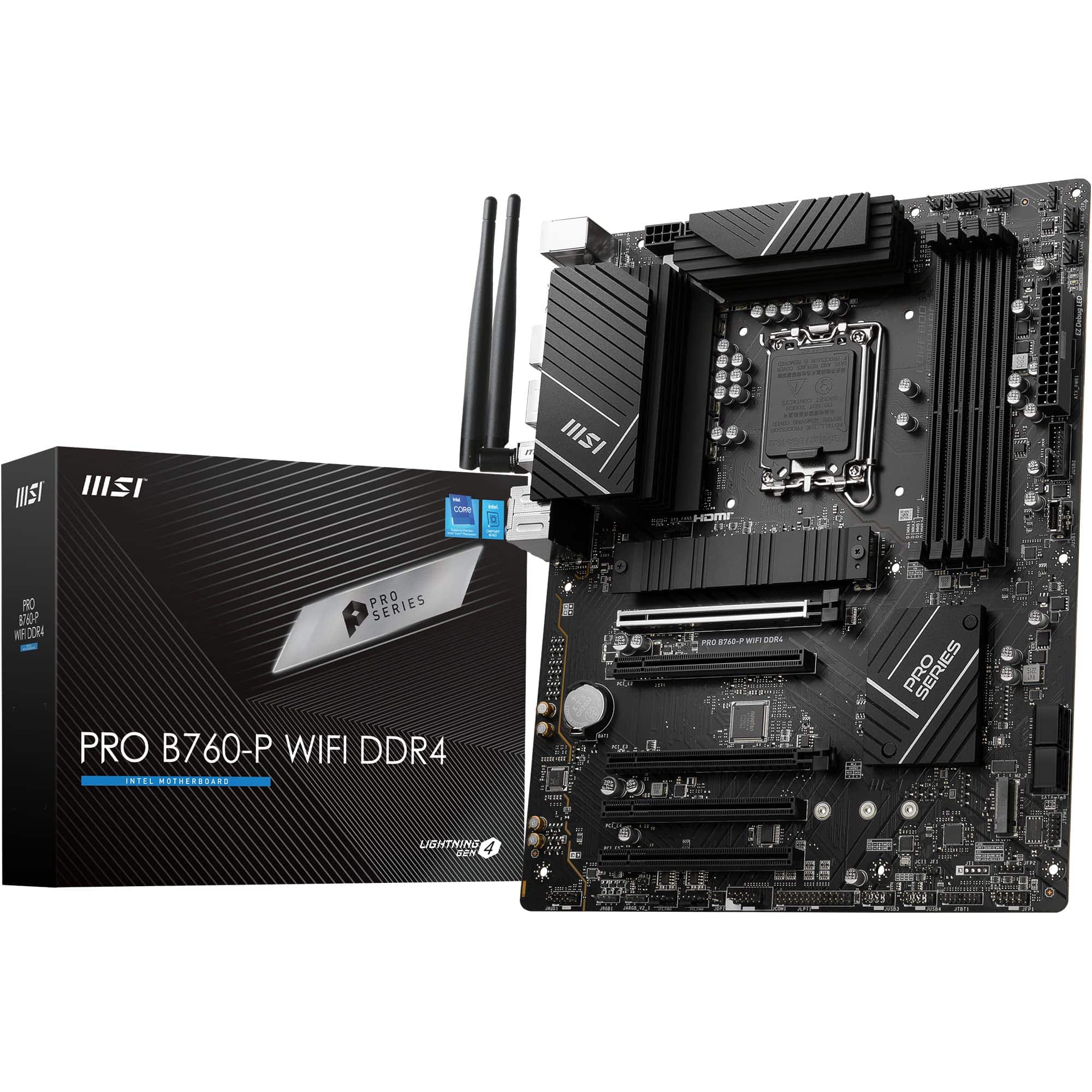 8.5 / 10
MSI PRO B760-P WIFI DDR4 Motherboard, ATX - Supports Intel 14th, 13th & 12th Gen Core Processors, LGA 1700 - DDR4 Memory Boost 5333+MHz/OC, PCIe 4.0 x16 Slots, M.2 Gen4 Slots, 2.5G LAN, Wi-Fi 6E
£129.95 · MSI
 8.5 / 10
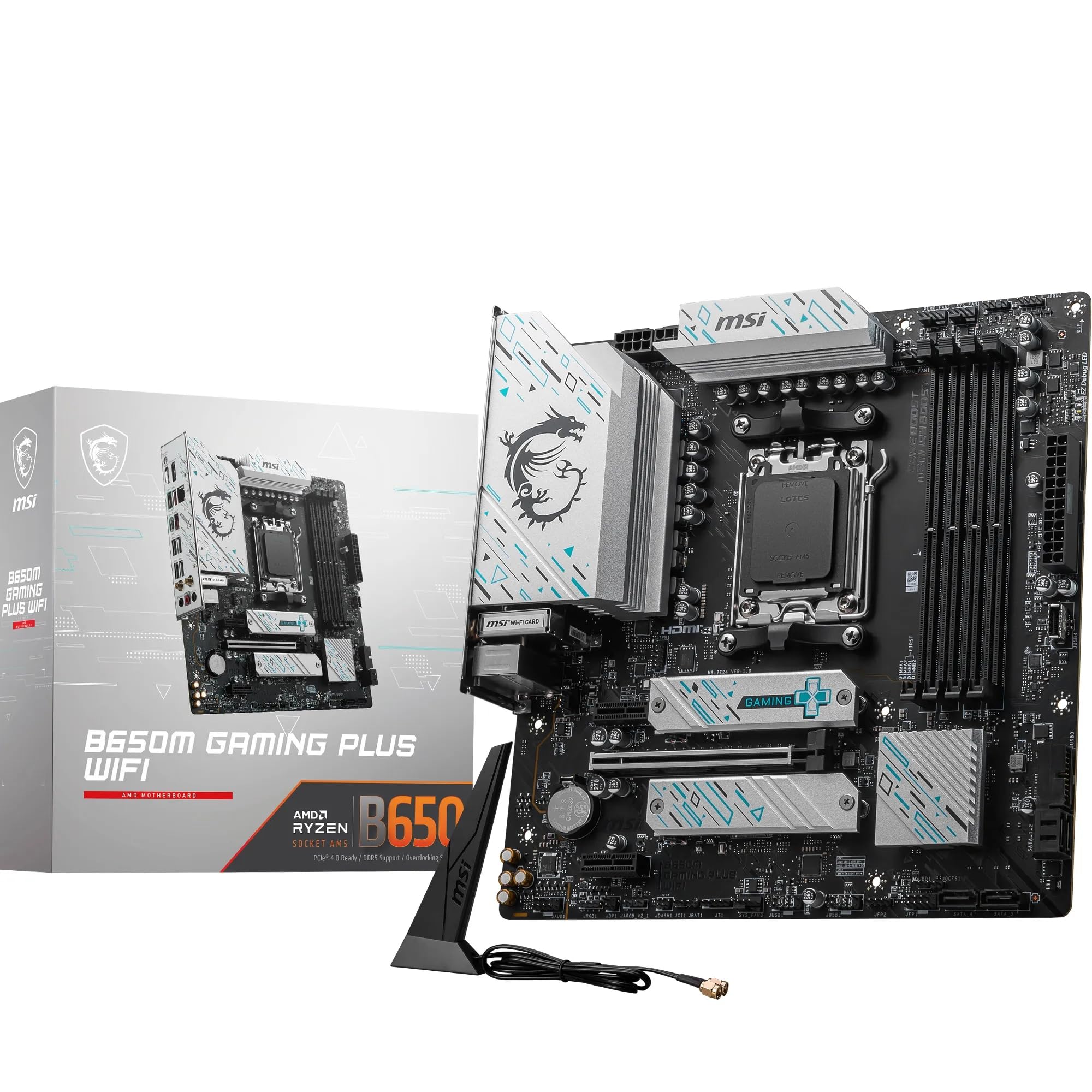
MSI B650M GAMING PLUS WIFI Motherboard, mATX - Supports AMD Ryzen 9000/8000 / 7000 Series Processors, AM5 - DDR5 Memory Boost 7800+ MHz/OC, PCIe 4.0 x16, M.2 Gen4, Wi-Fi 6E
£142.89 · MSI
Frequently asked
7 questions01Which AMD processors are compatible with the ASUS ROG Strix B850-I Gaming WiFi?+
The board supports AMD Ryzen 7000, 8000, and 9000 series desktop processors on the AM5 socket. This covers everything from entry-level Ryzen 5 parts up to the Ryzen 9 9950X. If you are installing a Ryzen 9000 series chip, ensure the BIOS is updated first; the BIOS FlashBack button allows you to do this without a compatible CPU already installed.
02Does the B850-I support DDR4 memory?+
No. The B850-I is DDR5 only, with two memory slots. This is standard for the AM5 platform. DDR5 kits have become considerably more affordable since AM5 launched, and a 32GB dual-channel kit at a respectable speed is now a reasonable purchase. Maximum capacity is achieved with two 32GB DIMMs for a 64GB total.
03What is the difference between the B850 and X870 chipsets, and does it matter for this board?+
X870 mandates USB4 and PCIe 5.0 M.2 support as platform requirements, whereas B850 offers these features without mandating them. In practice, the B850-I delivers dual PCIe 5.0 M.2 slots and strong connectivity regardless, so the chipset distinction is largely academic for this specific board. The main reason to choose an X870I over the B850-I is if you specifically require USB4 connectivity.
04Can I install a Ryzen 9000 series CPU without updating the BIOS first?+
You may need a BIOS update before a Ryzen 9000 series CPU will POST, depending on what firmware version the board ships with. The B850-I includes a BIOS FlashBack button on the rear I/O that allows you to flash the firmware from a USB drive without any CPU installed at all. Download the correct BIOS file from ASUS, place it on a USB drive, and hold the FlashBack button to initiate the update.
05How does the B850-I compare to the Gigabyte B650I AORUS Ultra?+
The B650I AORUS Ultra uses the older B650 chipset and typically offers one PCIe 5.0 M.2 slot and one PCIe 4.0 slot, WiFi 6E rather than WiFi 7, and a lighter VRM configuration. For a budget or mid-range build with a Ryzen 5 or mainstream Ryzen 7 processor, the Gigabyte board is a capable and more affordable option. The B850-I's dual PCIe 5.0 M.2, WiFi 7, and stronger VRM make it the better choice for demanding builds pairing high-TDP processors with fast storage.
06Is the WiFi antenna installation difficult on a Mini-ITX board?+
WiFi antenna connectors on compact boards can be awkward, particularly once the motherboard is installed in the case. ASUS has included a Q-Antenna system on the B850-I to simplify the connection process, which reduces the fiddliness compared to standard SMA-style connectors. If your case design allows rear I/O access after installation, the Q-Antenna mechanism makes connecting the antennas noticeably easier.
07Will the B850-I handle a Ryzen 9 9950X without thermal throttling in a compact case?+
The 10+2+1 VRM rated at 70A per stage provides significant headroom for even the highest-TDP AM5 processors. The Vcore section alone is rated for 700A of theoretical current delivery, meaning the stages operate well within their rated limits under normal load. ASUS has paired the power stages with large heatsinks and high-conductivity thermal pads. In a well-ventilated Mini-ITX case, the VRM should handle sustained all-core loads without issue. In a poorly ventilated or passively cooled chassis, thermal management will be a broader challenge beyond the board itself.