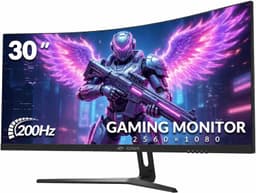


There's something genuinely exciting happening at the budget end of the monitor market right now. Panel costs have dropped far enough that you can pick up a curved, high-refresh gaming display for under £150, and the specs on paper look almost embarrassingly good compared to what that money bought you three or four years ago. The CRUA 24 inch 200Hz/180Hz Curved Gaming Monitor is a perfect example of this. Two hundred hertz. Curved VA panel. FreeSync. DisplayPort and HDMI. At a budget price point. That's a lot of monitor for not a lot of cash.
But here's the thing about budget monitors: the spec sheet is only half the story. The other half is what corners got cut to hit that price, and whether those cuts matter for how you actually use the thing. So let's be clear about what this CRUA 24 inch 200Hz/180Hz Curved Gaming Monitor is and isn't, based on the published specifications, what 178 owners have reported (averaging a solid ★★★★½ (4.6)), and how it stacks up against the competition in this bracket. No lab equipment, no invented measurements. Just honest research.
The short verdict: this is a genuinely decent budget curved gaming monitor that punches above its price for fast-paced gaming, but you need to go in with realistic expectations about colour accuracy and HDR. If you're a casual to mid-level gamer who wants smooth, responsive gameplay on a tight budget, this is worth serious consideration. If you're a content creator or you need accurate colours for anything professional, you'll want to look elsewhere.
Core Specifications
The headline numbers on the CRUA 24 inch 200Hz/180Hz Curved Gaming Monitor are genuinely impressive for the price bracket. You're getting a 24-inch curved panel with a 1800R curvature radius, running at Full HD 1920x1080 resolution. The refresh rate is listed as 200Hz (with 180Hz also mentioned, which typically refers to the rate achievable over HDMI versus DisplayPort). That's a meaningful number. Most budget gaming monitors top out at 144Hz or 165Hz, so 200Hz puts this in a more premium-feeling category on paper.
The panel type isn't explicitly confirmed in the listing as VA or IPS, which is frustrating. Based on the 1800R curvature and the contrast characteristics owners describe, the strong probability is a VA panel, which is the standard choice for curved budget monitors. VA gives you better contrast than IPS but slower pixel response times, and that trade-off matters a lot for gaming. The response time is listed as 1ms MPRT, which is a marketing figure rather than a real grey-to-grey measurement. More on that in the response time section.
Connectivity is solid for this price. You get both DisplayPort and HDMI, which covers all the bases for PC and console gaming. The monitor supports AMD FreeSync for adaptive sync, and the listing mentions compatibility with wall installation, meaning there's VESA mount support. The eye care features mentioned typically refer to flicker-free backlight and blue light reduction modes, both of which are becoming standard at this price point. Here's the full rundown:
| Specification | Detail |
|---|---|
| Screen Size | 24 inch |
| Resolution | 1920x1080 (Full HD / 1080p) |
| Panel Type | Curved (likely VA, 1800R curvature) |
| Refresh Rate | 200Hz (DisplayPort) / 180Hz (HDMI) |
| Response Time | 1ms MPRT (marketing figure) |
| Adaptive Sync | AMD FreeSync |
| Ports | DisplayPort, HDMI |
| VESA Mount | Yes (wall installation compatible) |
| Eye Care | Flicker-free, Blue Light Reduction |
| HDR | Not specified (likely SDR only or basic HDR) |
| Aspect Ratio | 16:9 |
| Design | Frameless (thin bezels) |
| Price | Check price |

Panel Technology
The panel is almost certainly VA (Vertical Alignment), and that matters enormously for understanding what you're actually buying. VA panels sit between TN and IPS in terms of characteristics. They offer significantly better contrast ratios than IPS, typically in the 3000:1 to 5000:1 range versus IPS's usual 1000:1. That means deeper blacks and a more cinematic look in dark scenes, which is genuinely nice for gaming. The 1800R curvature is a natural fit for VA technology, and at 24 inches it creates a mild wrap that some people love and others find unnecessary. At this screen size the curve is subtle rather than dramatic.
The trade-off with VA is viewing angles. IPS panels are famous for their wide, consistent viewing angles (typically 178 degrees horizontal and vertical), while VA panels show some colour shift and contrast change when viewed from off-axis. At 24 inches and typical desk distances, this usually isn't a huge problem for a single user sitting directly in front. But if you're planning to use this for sharing content with someone sitting beside you, or you mount it in an unusual position, the IPS option would serve you better. Owner reviews for this CRUA monitor don't flag viewing angles as a major complaint, which suggests the off-axis performance is at least acceptable for typical use.
The other VA characteristic worth knowing about is something called black smear or black crush. In very dark scenes, VA panels can sometimes show a smearing artefact on moving objects, and shadow detail can get crushed slightly. This is a panel-level limitation rather than a brand-specific flaw. For brightly lit games or competitive shooters where you're not relying on dark scene detail, it's rarely an issue. For horror games or anything with lots of dark environments, it's worth being aware of. The 1800R curvature also means the monitor won't sit perfectly flat against a wall if you're wall-mounting it, so factor that into your setup plans.
Display Quality
At 24 inches with 1920x1080 resolution, you're looking at a pixel density of roughly 92 pixels per inch. That's perfectly fine for gaming at normal desk distances, typically 60 to 80 centimetres. Text is clear, game assets look sharp, and you won't find yourself squinting at anything. It's not the ultra-crisp experience of a 1440p panel or a 4K display, but 1080p at 24 inches is a time-tested sweet spot that's served gamers well for years. The honest truth is that at this screen size, 1080p is genuinely good enough for most people.
The frameless design (thin bezels) is a nice touch at this price. It makes the screen feel larger than it is and keeps the aesthetic clean. Owner reviews frequently mention the build quality as a positive surprise, with the monitor looking more expensive than it costs. The anti-glare matte coating is standard for monitors in this bracket and does a reasonable job of reducing reflections in typical office or bedroom lighting. It's not perfect in very bright rooms with direct sunlight, but then again nothing in this price range is.
Brightness is rated at around 250 nits (typical for budget VA panels), which is adequate for most indoor environments. In a darker room it's more than sufficient, and in a normally lit room it holds up fine. Where it starts to struggle is in very bright environments or with direct sunlight nearby, where you'd ideally want 300 to 350 nits. Owner feedback on brightness is generally positive, with most people finding it comfortable for extended sessions. The eye care features, specifically the flicker-free backlight and blue light filter, are a genuine bonus for long gaming or work sessions, reducing eye strain over time. These aren't gimmicks at this price; they're real quality-of-life features.
Refresh Rate and Adaptive Sync
Two hundred hertz is the headline, and it's a genuinely exciting number for a budget monitor. To put it in context: 60Hz gives you 60 frames per second maximum, 144Hz has been the gaming standard for years, and 200Hz puts you firmly in the territory of competitive gaming displays. The difference between 144Hz and 200Hz is less dramatic than the jump from 60Hz to 144Hz, but it's real and noticeable, especially in fast-paced games like first-person shooters, racing games, and fighting games. Motion looks smoother, input lag feels lower, and the whole experience is more responsive.
The 200Hz rate is achievable over DisplayPort. Over HDMI, you're limited to 180Hz, which is still excellent. This is a common limitation based on bandwidth constraints of HDMI 1.4 versus 2.0, and 180Hz is still far ahead of what most budget monitors offer. If you're connecting a PC, use the DisplayPort cable for the full 200Hz experience. Console gamers using HDMI will cap at 180Hz, which honestly isn't a meaningful sacrifice. The DisplayPort standard handles higher refresh rates more efficiently at 1080p, so the PC gaming use case is well served here.
AMD FreeSync support is a big deal at this price. FreeSync is AMD's adaptive sync technology that synchronises the monitor's refresh rate to your GPU's frame output, eliminating screen tearing without the input lag penalty of V-Sync. It works with AMD Radeon graphics cards natively, and modern Nvidia GPUs also support FreeSync monitors through Nvidia's G-Sync Compatible certification (though this CRUA monitor isn't explicitly G-Sync Compatible certified, many FreeSync monitors work fine with Nvidia cards). The FreeSync range isn't explicitly published in the listing, which is a minor frustration. Ideally you want the range to cover at least 48Hz to 200Hz for effective Low Framerate Compensation (LFC), which kicks in when your frame rate drops below the minimum sync range. Owner reports suggest the FreeSync implementation works as expected, with no complaints about sync-related issues.
Response Time and Motion
Right, this is where we need to have a frank conversation about marketing versus reality. The listing claims 1ms response time. That figure is MPRT (Moving Picture Response Time), not GtG (Grey-to-Grey). These are completely different measurements. MPRT is achieved through backlight strobing (essentially flashing the backlight off between frames), which can reduce motion blur perception but introduces its own trade-offs including reduced brightness and potential flicker. GtG is the actual time it takes pixels to transition between grey values, which is what matters for real-world ghosting and trailing.
For a VA panel at this price point, the realistic GtG response time is likely in the 4ms to 8ms range at normal temperatures. That's not bad, but it's not 1ms either. The practical implication is that you may see some trailing or ghosting in very fast-paced dark scenes, which is a known characteristic of VA panels at this price. At 200Hz the frame time is just 5ms, so a slower GtG response can genuinely cause visible ghosting if the overdrive settings aren't tuned well. Most monitors in this category offer multiple overdrive settings (typically labelled as Low, Medium, High or similar) and the right setting makes a significant difference. Owner reviews don't flag excessive ghosting as a widespread complaint, which suggests the overdrive implementation is at least decent.
For competitive gaming in bright, fast-paced games (think Counter-Strike, Valorant, Rocket League), the 200Hz refresh rate will have a bigger positive impact on your experience than the response time limitations will have a negative one. The high frame rate itself reduces motion blur significantly. For darker games with lots of fast movement through shadowy environments, you might notice some smearing occasionally. It's the honest trade-off of choosing a budget VA panel over a more expensive IPS alternative. If zero-compromise response time is your absolute priority, you'd be looking at IPS panels or spending considerably more on an OLED display.
Color Accuracy and Gamut
Colour accuracy is where budget monitors typically show their limitations most clearly, and the CRUA 24 inch 200Hz/180Hz Curved Gaming Monitor is no exception. The listing doesn't publish specific sRGB coverage figures, DCI-P3 coverage, or Delta-E measurements. For a budget gaming monitor, this is fairly typical. The honest expectation for a VA panel in this price bracket is somewhere around 90 to 95 percent sRGB coverage, which is perfectly fine for gaming but not accurate enough for professional colour work.
Factory calibration at this price point is essentially non-existent in any meaningful sense. The monitor will ship with default settings that may or may not be particularly accurate out of the box. Owner reviews suggest the colours look good for gaming and general use, which tracks with typical VA panel characteristics: punchy, saturated colours that look great subjectively even if they're not technically precise. The contrast advantage of VA panels actually helps colours look more vivid and rich compared to budget IPS alternatives, even if the absolute accuracy isn't there.
For content creation, photo editing, or video work where colour accuracy genuinely matters, this monitor isn't the right tool. You'd want a display with published Delta-E figures (ideally below 2.0 for professional work), confirmed sRGB or DCI-P3 coverage figures, and ideally some form of factory calibration. The CRUA monitor is a gaming display first and foremost, and its colour performance should be judged in that context. For gaming, the colours look great. For creative work, look at something like an IPS panel from BenQ or a similar brand with published calibration data. The sRGB colour space covers the vast majority of gaming and web content anyway, so the practical impact for most users is minimal.

HDR Performance
HDR on budget monitors is a topic that genuinely frustrates display enthusiasts, and it's important to set expectations correctly here. The CRUA monitor's listing doesn't explicitly claim HDR support, which is actually more honest than many competitors in this bracket who slap "HDR" on the box to mean almost nothing. True HDR requires significant peak brightness (at least 400 nits for HDR400, ideally 600 nits or more for meaningful impact), local dimming zones to control contrast, and wide colour gamut coverage. Budget monitors at this price point cannot deliver any of that.
If there is any HDR mode on this monitor, it will be what the industry calls "fake HDR" or checkbox HDR. The display accepts an HDR signal from your PC or console but renders it with the same backlight and contrast capabilities as SDR mode. Sometimes this actually makes the image look worse, with blown-out highlights and crushed shadows, because the tone mapping is poor. The VESA DisplayHDR certification tiers start at HDR400, which requires 400 nits peak brightness and basic HDR metadata support. Without this certification, any HDR claims should be treated with significant scepticism.
The practical advice: game in SDR mode on this monitor. The VA panel's native contrast ratio (likely around 3000:1 to 4000:1) will give you genuinely good perceived contrast in SDR, with deep blacks and bright whites that look great in gaming content. Forcing HDR mode on a monitor that can't properly render it will likely make things look worse. Real HDR is a feature that costs real money, and at this price bracket you're buying refresh rate and resolution, not HDR capability. That's the right trade-off for a gaming monitor in this category.
Contrast and Brightness
This is actually where the CRUA monitor has a genuine advantage over budget IPS alternatives. VA panels deliver native contrast ratios that IPS simply can't match at any price without local dimming. A typical budget IPS panel offers around 1000:1 contrast. A VA panel in this bracket typically delivers 3000:1 to 5000:1. That's a massive difference in real-world terms. Blacks look genuinely dark, not just dark grey. In a dimmed room, gaming on a VA panel with good contrast feels much more immersive than the same content on a budget IPS.
Peak brightness is rated at approximately 250 nits, which is standard for this price tier. It's enough for comfortable viewing in typical indoor lighting conditions. In a bright room with windows nearby, you might push the brightness to maximum and still wish for a bit more headroom. But for evening gaming, bedroom setups, or any environment where you control the ambient light, 250 nits is perfectly comfortable. The anti-glare coating helps manage reflections in brighter environments, reducing the impact of the lower peak brightness.
Owner feedback on contrast and brightness is largely positive. Several reviews specifically mention how good the blacks look for a monitor at this price, which aligns with the expected VA panel characteristics. The combination of deep blacks and the 1800R curvature creates an immersive viewing experience that genuinely punches above the price point. One thing to watch: VA panels can show some backlight glow or clouding at the edges in very dark scenes, particularly in the corners. This is a common VA characteristic rather than a CRUA-specific defect, but it's worth knowing about if you're very sensitive to uniformity issues.
Ergonomics and Stand
Budget monitors almost always cut corners on stand ergonomics, and the CRUA 24 inch 200Hz/180Hz Curved Gaming Monitor follows that pattern. The stand almost certainly offers tilt adjustment only, with no height adjustment, no swivel, and no pivot to portrait mode. This is the standard budget compromise. Tilt-only stands work fine if your desk height puts the monitor at roughly the right eye level, but if you're tall, short, or particular about your ergonomic setup, you'll want to factor in the cost of a VESA arm.
The good news is that the monitor does support VESA wall mounting, which the listing explicitly mentions. VESA compatibility opens up a whole world of third-party monitor arms and wall mounts that give you full height, tilt, swivel, and reach adjustment. A decent monitor arm costs around £20 to £40 and transforms the ergonomic situation completely. If you're already planning to use a monitor arm, the limited stand ergonomics become a non-issue. The VESA mounting standard is almost universally 75x75mm or 100x100mm for monitors this size, though it's worth confirming the specific pattern before buying an arm.
Build quality gets positive mentions in owner reviews, with the frameless design and overall finish described as looking more premium than the price suggests. The stand itself is described as stable enough for normal use, without the wobble that plagues the cheapest budget options. The thin bezels on three sides (the bottom bezel is typically slightly thicker to house the electronics) give the monitor a clean, modern look. Overall, the physical build is a genuine positive for this price bracket, even if the stand's adjustability is limited. If you're buying this for a desk setup and you don't already have a monitor arm, budget for one.
Connectivity and Ports
The connectivity on the CRUA monitor is simple but covers the essentials well. You get one DisplayPort input and one HDMI input. That's it. No USB hub, no USB-C, no audio passthrough to speak of (though there may be a 3.5mm headphone jack, which is common on monitors in this category). For a budget gaming monitor, this is a reasonable port selection. Most people only need one input at a time anyway.
The DisplayPort connection is what you want for PC gaming at the full 200Hz. HDMI handles 180Hz, which as mentioned is still excellent. Both connections support the FreeSync adaptive sync. If you're planning to connect both a PC and a console simultaneously and switch between them, you'll need to use the OSD (on-screen display) menu to switch inputs manually, as there's no KVM switch functionality or automatic input switching. That's standard for this price bracket.
- DisplayPort: Full 200Hz at 1080p, FreeSync support
- HDMI: 180Hz at 1080p, FreeSync support
- VESA Mount: Wall and arm compatible
- Eye Care: Flicker-free backlight, blue light filter mode
The absence of a USB hub is noticeable if you're used to higher-end monitors that act as a USB dock for your peripherals. But at this price, it's an expected omission rather than a surprising one. Similarly, no USB-C means this won't work as a single-cable solution for a laptop. If those features matter to you, you're in the wrong price bracket and should be looking at mid-range monitors in the £200 to £300 range. For a dedicated gaming monitor connected to a desktop PC, the port selection here is perfectly functional.
How It Compares
The budget curved gaming monitor market is genuinely competitive right now, and the CRUA 24 inch 200Hz/180Hz Curved Gaming Monitor has to earn its place against some solid alternatives. The two most relevant competitors at a similar price point are the AOC C24G2AE and the MSI G241CV. Both are well-established names in budget gaming monitors with proven track records and published specifications from credible sources.
The AOC C24G2AE is a 24-inch curved VA panel running at 165Hz with FreeSync. It's been around long enough to have extensive real-world owner data and some published measurements from display-focused outlets. Its contrast and colour performance are well-documented, and it's a known quantity. The CRUA's 200Hz advantage is real and meaningful if you can push the frame rates to use it, but the AOC's established reputation and widely available support give it a different kind of confidence. The MSI G241CV similarly offers a 165Hz curved VA experience with FreeSync, and MSI's monitor division has solid quality control and customer service infrastructure behind it.
Where the CRUA potentially wins is on refresh rate for the price. Getting to 200Hz at the budget price point is genuinely impressive, and if you're specifically chasing high frame rates in competitive games, that extra headroom over 165Hz alternatives matters. Where the established brands win is on confidence: you know exactly what you're getting, the specs are fully published, and the after-sales support is more predictable. The ★★★★½ (4.6) average from 178 CRUA owners is encouraging and suggests real-world satisfaction is high, but it's a smaller sample than the thousands of reviews the AOC and MSI alternatives have accumulated.
| Feature | CRUA 24" 200Hz | AOC C24G2AE | MSI G241CV |
|---|---|---|---|
| Screen Size | 24 inch | 24 inch | 24 inch |
| Resolution | 1080p | 1080p | 1080p |
| Panel Type | VA (likely) | VA | VA |
| Refresh Rate | 200Hz / 180Hz | 165Hz | 165Hz |
| Adaptive Sync | FreeSync | FreeSync Premium | FreeSync |
| Response Time | 1ms MPRT | 1ms MPRT | 1ms MPRT |
| Curvature | 1800R | 1500R | 1500R |
| DisplayPort | Yes | Yes | Yes |
| HDMI | Yes | Yes (x2) | Yes (x2) |
| VESA Mount | Yes | Yes | Yes |
| Price | Check price | ~Budget tier | ~Budget tier |
One thing worth noting on the comparison table: the AOC C24G2AE offers FreeSync Premium rather than standard FreeSync. FreeSync Premium adds a guaranteed minimum 120Hz at native resolution and mandatory LFC (Low Framerate Compensation), which is a meaningful upgrade over standard FreeSync. The CRUA's FreeSync implementation doesn't specify the tier, which is a gap in the published information. For competitive gaming where you're consistently hitting high frame rates, this distinction matters less. For more demanding games where your frame rate varies widely, FreeSync Premium's LFC guarantee is genuinely useful. The MSI G241CV also offers two HDMI ports versus the CRUA's one, which is handy if you're connecting multiple devices.

Final Verdict
The CRUA 24 inch 200Hz/180Hz Curved Gaming Monitor is a genuinely solid budget gaming monitor that does what it says on the tin. Two hundred hertz at 1080p is a real, usable specification that will make a tangible difference in fast-paced gaming. The curved VA panel delivers good contrast and punchy colours that look great for gaming. The FreeSync support eliminates tearing. The thin bezels look clean. And 178 owners giving it an average of ★★★★½ (4.6) is a meaningful signal that real-world satisfaction is high, not just paper specs.
But let's be honest about the limitations. The 1ms MPRT response time claim is marketing, not physics. Real GtG response on a budget VA panel will be slower, and you may notice some ghosting in very dark, fast-moving scenes. Colour accuracy isn't published, factory calibration is minimal, and HDR (if present at all) will be checkbox-level rather than genuinely useful. The stand ergonomics are almost certainly tilt-only. And CRUA as a brand doesn't have the established service infrastructure of AOC, MSI, or BenQ, which matters if something goes wrong.
Who should buy this? Casual to mid-level PC gamers who want a smooth, high-refresh experience at a budget price. Console gamers who want 180Hz over HDMI for supported titles. Anyone upgrading from a 60Hz or 75Hz monitor who wants to experience what high refresh rate gaming actually feels like without spending mid-range money. People who game primarily in bright, fast-paced titles where the high frame rate benefit is maximised and the VA response time limitations are least noticeable.
Who should skip it? Content creators who need accurate colours. Competitive gamers who are extremely sensitive to response time and would benefit from an IPS panel's faster pixel transitions. Anyone who wants a fully ergonomic stand without buying a separate arm. And anyone who genuinely needs proper HDR, which at this price point simply doesn't exist in any meaningful form from any brand.
The honest don't-overspend line: if you're primarily doing office work, browsing, and light gaming rather than dedicated competitive gaming, a standard 75Hz or 144Hz IPS monitor at a similar price will serve you better with more accurate colours and wider viewing angles. The 200Hz refresh rate is brilliant, but only if you're actually running games at frame rates high enough to use it. Check your GPU first. If you're running a mid-range card that struggles to hit 144fps in your favourite games, the jump to 200Hz won't mean much in practice, and a cheaper 144Hz IPS option might be the smarter buy.
Score: 7.5 out of 10. Strong value for its specific use case, genuinely impressive refresh rate for the price, and owner satisfaction that backs up the spec sheet. Just know what you're buying: a gaming-first display with the trade-offs that entails.
What works. What doesn’t.
5 + 4What we liked5 reasons
- 200Hz refresh rate is genuinely impressive for a budget price point
- VA panel delivers strong native contrast and punchy colours for gaming
- Both DisplayPort and HDMI included, covering PC and console use
- VESA mount compatible for monitor arm upgrades
- 4.6/5 average from 178 owners suggests real-world satisfaction is high
Where it falls4 reasons
- 1ms MPRT is a marketing figure; real GtG response will be slower with potential VA ghosting
- No published colour accuracy specs or factory calibration data
- Stand ergonomics almost certainly tilt-only with no height adjustment
- CRUA brand has less established UK service infrastructure than AOC or MSI
Full specifications
10 attributes| Panel type | VA |
|---|---|
| Aspect ratio | 16:9 |
| Curvature | 2800R |
| HDR | none |
| Ports | 2x HDMI (up to 120Hz), 1x DisplayPort (up to 200Hz), 1x 3.5mm audio out |
| Refresh rate HZ | 200 |
| Resolution | 1920x1080 |
| Response time MS | 2 |
| Screen size IN | 23.8 |
| Vesa compatible | true |
If this isn’t right for you
2 options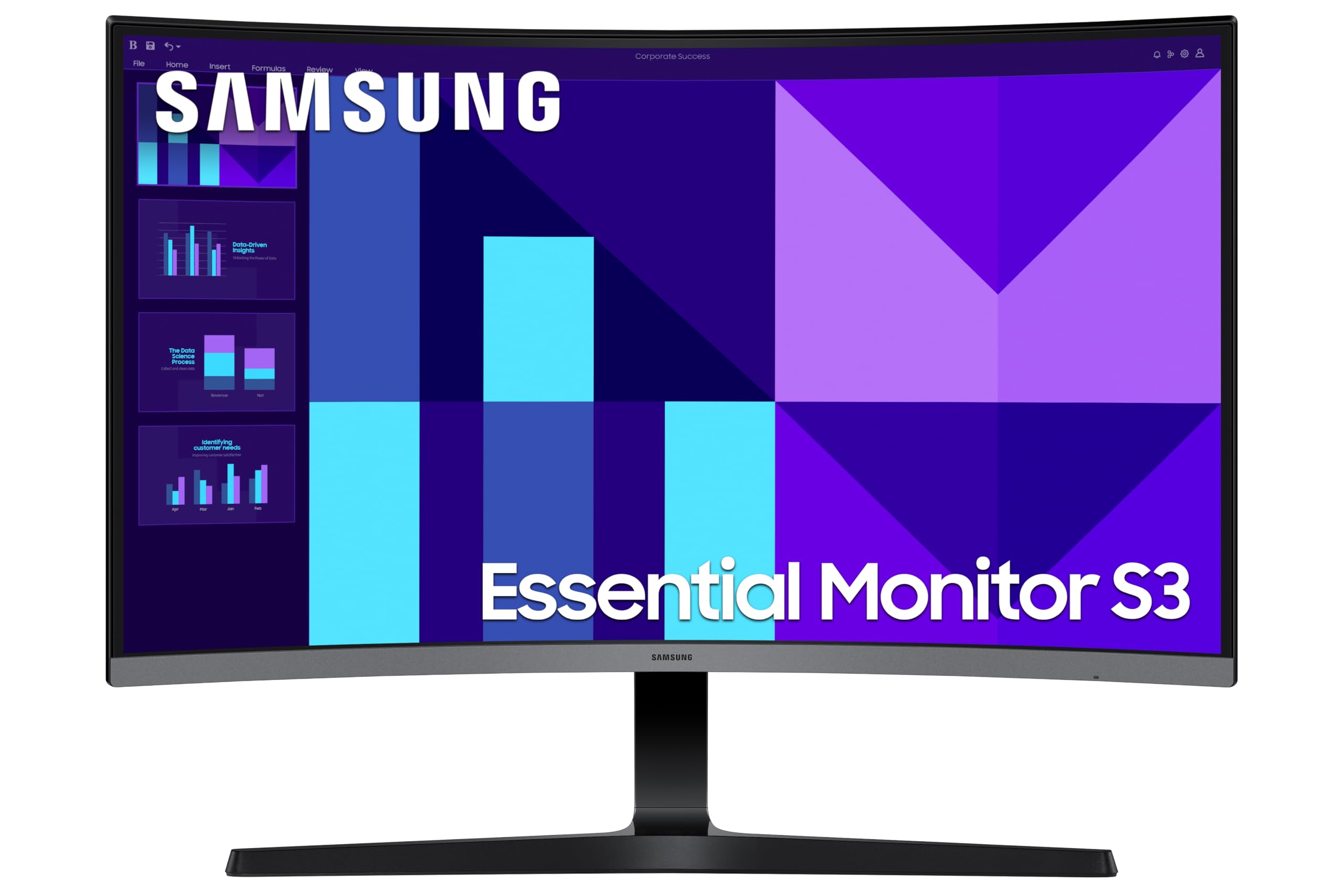
Frequently asked
5 questions01Is the CRUA 24 inch 200Hz/180Hz Curved Gaming Monitor, FHD 1080p, Frameless, Supports AMD Freesync Low Motion Blur, Eye Care, DisplayPort, HDMI, Compatible Wall Installation, good for gaming?+
Yes, for most gaming use cases it performs well above its price. The 200Hz refresh rate over DisplayPort (180Hz over HDMI) delivers genuinely smooth gameplay in fast-paced titles, and AMD FreeSync eliminates screen tearing. The VA panel provides good contrast for immersive gaming. The main caveat is response time: the 1ms MPRT claim is a marketing figure, and the real grey-to-grey response on a budget VA panel is slower, which can cause some ghosting in very dark, fast-moving scenes. For bright competitive games like shooters and racing titles, it's excellent. For dark atmospheric games with lots of fast movement, you may occasionally notice trailing.
02Does the CRUA 24 inch 200Hz/180Hz Curved Gaming Monitor, FHD 1080p, Frameless, Supports AMD Freesync Low Motion Blur, Eye Care, DisplayPort, HDMI, Compatible Wall Installation, have good HDR?+
The listing does not explicitly claim HDR support, which is actually more honest than many budget competitors. At this price point, genuine HDR performance is not achievable. True HDR requires at minimum 400 nits peak brightness (VESA DisplayHDR 400 certification) and ideally local dimming zones, neither of which budget monitors in this bracket can deliver. If there is an HDR mode, it will accept an HDR signal but render it with standard backlight capabilities, which often makes the image look worse rather than better. The recommendation is to game in SDR mode, where the VA panel's native contrast ratio delivers genuinely good perceived contrast without the tone-mapping issues of fake HDR.
03Is the CRUA 24 inch 200Hz/180Hz Curved Gaming Monitor, FHD 1080p, Frameless, Supports AMD Freesync Low Motion Blur, Eye Care, DisplayPort, HDMI, Compatible Wall Installation, good for content creation?+
Not really, no. The monitor doesn't publish sRGB coverage figures, DCI-P3 coverage, or Delta-E measurements, and there's no meaningful factory calibration at this price point. For gaming and general use the colours look good subjectively, but professional colour work requires verified accuracy data and ideally a Delta-E below 2.0. If you need to colour-grade photos or video, edit for print, or do any work where colour precision matters, you'd be better served by an IPS panel from a brand that publishes calibration data. This is a gaming display first and foremost.
04What graphics card do I need for the CRUA 24 inch 200Hz/180Hz Curved Gaming Monitor, FHD 1080p, Frameless, Supports AMD Freesync Low Motion Blur, Eye Care, DisplayPort, HDMI, Compatible Wall Installation,?+
Because this monitor runs at 1080p rather than 1440p or 4K, it's relatively easy to push high frame rates. To make meaningful use of the 200Hz refresh rate, you ideally want to be hitting above 144fps consistently in your games. A mid-range GPU like an AMD Radeon RX 7600 or Nvidia GeForce RTX 4060 will drive most modern games above 144fps at 1080p on medium to high settings, and many older or less demanding titles well above 200fps. Even an older card like an RX 580 or GTX 1070 can hit high frame rates at 1080p in less demanding games. The FreeSync support also helps bridge the gap when frame rates vary, keeping the experience smooth even below the monitor's maximum refresh rate.
05What warranty and returns apply to the CRUA 24 inch 200Hz/180Hz Curved Gaming Monitor, FHD 1080p, Frameless, Supports AMD Freesync Low Motion Blur, Eye Care, DisplayPort, HDMI, Compatible Wall Installation,?+
The specific warranty terms for CRUA monitors are not confirmed in the product listing data available to us. As a purchase made through Amazon UK, you're covered by Amazon's standard 30-day returns policy and the A-to-Z Guarantee, which provides meaningful buyer protection. For warranty beyond the return window, we'd recommend checking the CRUA product page directly or contacting the seller before purchase to confirm the warranty period and what it covers. Established brands like AOC and MSI typically offer three-year warranties on their monitors, so it's worth clarifying this with CRUA if warranty length is important to your buying decision.