



Finding the best PC cases for ASUS TUF Gaming RTX 5070 12GB GDDR7 OC GPU is not as simple as picking the prettiest box on Amazon. This card measures around 336mm long, runs a triple-slot cooler and needs proper airflow to stay cool under load. Get the case wrong and you'll be dealing with thermal throttling, dodgy cable routing and a build you're not proud of. Get it right and the whole system sings. This guide covers seven compatible cases, from premium dual-chamber designs to budget-friendly options, so you can find the right fit for your build and your wallet.
Key Takeaways
- The ASUS TUF Gaming RTX 5070 is approximately 336mm long with a triple-slot cooler, so you need a case with at least 340mm of GPU clearance
- The NZXT H9 Flow is our top overall pick thanks to its dual-chamber airflow design and generous 435mm GPU clearance
- Fractal Design North cases offer a brilliant blend of aesthetics and airflow at a mid-range price point
- The MSI MAG PANO 110R PZ is the most affordable option here that still fits the RTX 5070 comfortably
- Avoid cases with solid front panels or restricted airflow paths as the RTX 5070 runs warm under sustained load
| Product | Form Factor | GPU Clearance | Price | Rating |
|---|---|---|---|---|
| NZXT H9 Flow Dual-Chamber ATX Mid-Tower PC Gaming Case CM-H91FW-01 | ATX Mid-Tower | 435mm | Check price | ★★★★½ (4.8) |
| Fractal Design North XL Charcoal Black TG | E-ATX Full Tower | 460mm | £157.99 · Details | ★★★★½ (4.8) |
| Fractal Design North Charcoal Black Tempered Glass Dark | ATX Mid-Tower | 431mm | Check price | ★★★★½ (4.7) |
| Corsair iCUE 5000D RGB AIRFLOW Mid-Tower Case | ATX Mid-Tower | 420mm | £206.36 · Details | ★★★★½ (4.6) |
| Fractal Design North Charcoal Black Mesh | ATX Mid-Tower | 431mm | £122.99 · Details | ★★★★½ (4.7) |
| NZXT H9 Flow RGB+ (2025) | ATX Mid-Tower | 435mm | £169.99 · Details | ★★★★½ (4.7) |
| MSI MAG PANO 110R PZ Mid-tower Gaming PC Case | ATX Mid-Tower | 400mm | £79.99 · Details | ★★★★½ (4.7) |
Check Today's Prices
Amazon UK prices update frequently. Click below to see live prices for our recommended products.
Check availability Check Fractal Design North XL Charcoal Black TG PriceCompatibility Guide: Best PC Cases for ASUS TUF Gaming RTX 5070 12GB GDDR7 OC GPU
Before you buy a case, you need to understand what makes the ASUS TUF Gaming RTX 5070 12GB GDDR7 OC a slightly demanding card to house. It is not enormous by modern standards, but it is not small either. Here is what matters.
GPU length. The ASUS TUF RTX 5070 OC measures around 336mm from bracket to the end of the PCB. That is your hard minimum clearance requirement. In practice, you want at least 340mm to 350mm of rated clearance so the card is not wedged against a drive cage or fan bracket. Every case in this guide clears that comfortably.
Slot width. This card uses a triple-slot cooler design. That means it physically occupies three PCIe expansion slot positions on your case's rear panel. If you are using a motherboard with multiple PCIe slots and plan to add other cards later, check spacing carefully. Most ATX mid-towers handle this without issue.
Form factor. ATX is the most common motherboard standard and the most case-compatible. Full-tower E-ATX cases give you the most room but are physically large. mATX cases can work but check GPU clearance specs carefully as some tighter designs cut it close. ITX cases are generally not recommended for this GPU.
How to measure GPU clearance in your case. If you already own a case and are upgrading, measure from the inside face of the side panel (or the GPU bracket) to the front of any obstruction, like a drive cage or fan mount. That distance is your effective GPU clearance. Compare it to the 336mm length of the RTX 5070 and add a few millimetres for the power connector.
Airflow matters more than you think. The RTX 5070 has a TDP of around 200W. Under sustained gaming loads it generates real heat. Cases with mesh front panels, open top panels and multiple fan positions will keep temperatures lower and your GPU happier. Solid front panels with small vent holes restrict intake air and can cause GPU temperatures to climb by 5 to 10 degrees Celsius compared to a well-ventilated design. For a card like this, airflow is not optional. It is essential.
For more detail on the GPU itself, ASUS's official RTX 5070 TUF Gaming product page lists full dimensions and power requirements. And TechPowerUp's GPU database is a brilliant resource for cross-referencing specs.
Who Should Buy What
For Gamers
Priority: Maximum airflow, clean aesthetics, RGB lighting
Recommended: NZXT H9 Flow RGB+ (2025)
For Creators
Priority: Spacious interior, quiet operation, premium build
Recommended: Fractal Design North XL Charcoal Black TG
Budget Builders
Priority: Value, GPU clearance, essentials covered
Recommended: MSI MAG PANO 110R PZ, or explore our guide to best PC cases under £100 for more budget options
NZXT H9 Flow Dual-Chamber ATX Mid-Tower PC Gaming Case CM-H91FW-01 - Best Overall

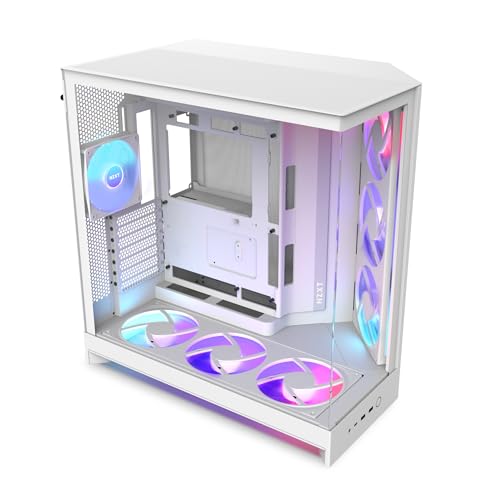
The NZXT H9 Flow is the case we keep coming back to when someone asks what to pair with a high-end GPU. Its dual-chamber design physically separates the GPU and CPU cooling zones from the PSU and cable clutter, which means airflow is cleaner and more direct. GPU clearance sits at a generous 435mm, well above the 336mm you need for the RTX 5070. The perforated top panel and tempered glass front work together to pull cool air through the system efficiently. Cable management is genuinely sorted, not just an afterthought. See our full NZXT H9 Flow review.
Pros
- Dual-chamber design delivers exceptional thermal separation
- 435mm GPU clearance with plenty of headroom for the RTX 5070
- Supports 360mm radiators for AIO liquid cooling
Cons
- Premium price point compared to competitors
- White version can show dust more visibly over time
Fractal Design North XL Charcoal Black TG - Premium Pick

If you want a full-tower that looks stunning and breathes brilliantly, the Fractal Design North XL is hard to argue with. It ships with three 140mm Aspect PWM fans already installed, supports E-ATX motherboards and offers around 460mm of GPU clearance. That is more than enough for the ASUS TUF RTX 5070. The tempered glass side panel shows off your build nicely, and the Type-C front panel connector is a welcome modern touch. It is a bigger case physically, so make sure your desk or floor space can handle it. See our full Fractal Design North XL review for build quality notes.
Pros
- Three 140mm PWM fans included out of the box
- E-ATX support for high-end platform builds
- 460mm GPU clearance is outstanding
Cons
- Large physical footprint, not ideal for compact setups
- Higher price than the standard North
Fractal Design North Charcoal Black Tempered Glass Dark - Runner Up

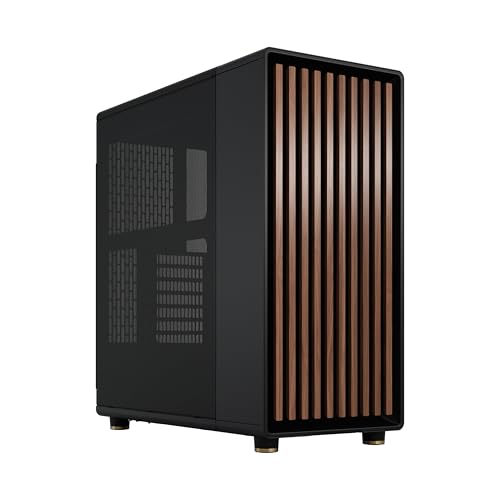
The Fractal Design North with tempered glass is one of the best-looking mid-tower cases you can buy right now. That walnut wood front panel is genuinely distinctive. It is not just cosmetic either. The case supports 431mm GPU clearance, includes two 140mm Aspect PWM fans and has a proper Type-C front panel port. The glass side panel lets you show off the RTX 5070's TUF armour styling. Airflow is good thanks to the mesh-compatible design, though the glass side does restrict side panel intake slightly compared to the mesh version. See our full Fractal Design North TG review for a direct comparison.
Pros
- Stunning walnut wood front panel design
- 431mm GPU clearance handles the RTX 5070 easily
- Two quality 140mm PWM fans included
Cons
- Glass side panel limits side intake airflow
- Slightly pricier than the mesh version
Corsair iCUE 5000D RGB AIRFLOW Mid-Tower Case - Best Value

Corsair's iCUE 5000D RGB AIRFLOW is a proper enthusiast case at a price that does not feel completely outrageous. It comes with three AF120 RGB Elite fans pre-installed and an iCUE Lighting Node PRO controller, so your RGB setup is sorted from day one. GPU clearance is 420mm, which is more than enough for the RTX 5070. The RapidRoute cable management channel on the right side of the motherboard tray makes routing cables genuinely easy. If you are already in the Corsair ecosystem with iCUE peripherals or RAM, this case fits right in.
Pros
- Three RGB fans and lighting controller included
- RapidRoute cable management is genuinely useful
- 420mm GPU clearance with strong airflow design
Cons
- iCUE software can be resource-heavy
- Slightly bulkier than some competitors at this price
Fractal Design North Charcoal Black Mesh - Best Budget

The mesh-sided version of the Fractal Design North is the one to pick if airflow is your top priority and you want to keep costs down relative to the TG version. The mesh side panels allow significantly more direct airflow to the GPU compared to tempered glass, which matters when you are running a card like the RTX 5070 under sustained load. You still get the walnut wood front panel, two 140mm Aspect PWM fans and the Type-C port. GPU clearance is the same 431mm as the TG model. It is a proper decent case at a slightly lower price point. See our full Fractal Design North Mesh review for airflow comparisons.
Pros
- Mesh side panels maximise GPU airflow
- Lower price than the TG version with same GPU clearance
- Walnut front panel looks premium despite the price
Cons
- No side panel window to show off internal components
- Mesh panels collect dust faster than glass
NZXT H9 Flow RGB+ (2025)

The 2025 refresh of the NZXT H9 Flow adds seven RGB fans to the already excellent dual-chamber platform. You get six 140mm and one 120mm fan, all RGB, plus a control hub to manage them without needing extra software dongles. Radiator support goes up to 420mm, which is brilliant for anyone planning a full custom or AIO cooling loop. Back-connect motherboard support is a nice touch for clean builds. GPU clearance is 435mm. This is the case for gamers who want the NZXT thermal performance but also want their build to look spectacular through the glass panels. See our full NZXT H9 Flow RGB+ 2025 review.
Pros
- Seven RGB fans included, ready to use immediately
- Back-connect motherboard support for ultra-clean builds
- 420mm radiator support for serious cooling setups
Cons
- Higher price than the standard H9 Flow
- Seven fans can create a lot of cable management work
MSI MAG PANO 110R PZ Mid-tower Gaming PC Case
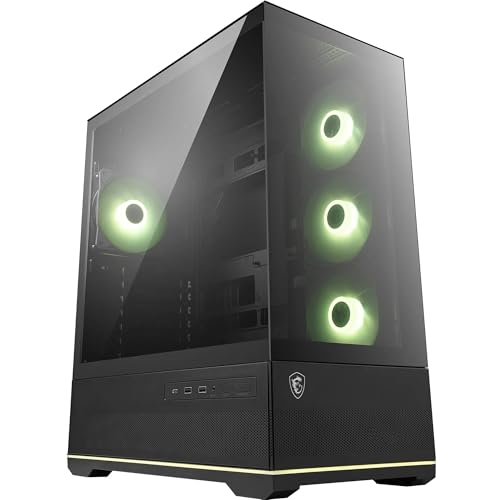
The MSI MAG PANO 110R PZ is the most affordable case in this guide that still fits the ASUS TUF RTX 5070 properly. For a detailed comparison of how it stacks up against premium alternatives like the NZXT H Flow case roundup, check our dedicated guide. It supports up to 400mm GPU length, which clears the 336mm card with room to spare. Back-connect ATX and micro-ATX motherboard support is a feature you would not normally expect at this price point. The USB 20Gbps Type-C front port is fast and modern. Removable dust filters make maintenance straightforward. It is not the most glamorous option here, but if budget is the primary concern and you still need solid GPU clearance, this does the job without any nonsense. See our full MSI MAG PANO 110R PZ review for build quality notes.
Pros
- Most affordable case in this guide with adequate GPU clearance
- Back-connect motherboard support at a budget price
- USB 20Gbps Type-C front port is genuinely fast
Cons
- 400mm clearance is the tightest in this guide for the RTX 5070
- Build quality reflects the lower price point
Understanding GPU Clearance and Airflow for Large Graphics Cards
Here is the thing: GPU clearance numbers in case specs can be misleading. A case might advertise 400mm of GPU clearance, but that measurement is taken from the GPU bracket to the front fan mount or drive cage. If you have a 240mm radiator installed at the front, that clearance shrinks considerably. Always check whether the clearance figure assumes a radiator is present or not.
Form factors, briefly explained. ATX is the standard for most desktop builds, covering motherboards up to 305mm by 244mm. E-ATX goes larger, up to around 305mm by 330mm, and needs a full-tower case like the Fractal North XL. Micro-ATX is smaller at 244mm by 244mm and fits in most mid-tower cases. Mini-ITX at 170mm by 170mm is the compact option, but ITX cases rarely offer enough GPU clearance for a card this size.
Slot thickness matters too. The ASUS TUF RTX 5070 OC uses a triple-slot cooler. That means it covers three expansion slot positions on your case rear panel. Most mid-tower cases have seven slots, so triple-slot cards are not a problem. But if you are using a smaller case or a motherboard with multiple PCIe devices, check that nothing is blocked.
Airflow configurations. Positive pressure (more intake fans than exhaust) reduces dust ingress but can raise temperatures slightly. Negative pressure (more exhaust than intake) runs cooler but pulls dust through every gap. Balanced airflow, equal intake and exhaust, is the sweet spot for most builds with a card like the RTX 5070. The NZXT H9 Flow and Fractal Design North cases are both designed with balanced airflow in mind, which is part of why they perform so well with high-TDP GPUs.
Common Mistakes to Avoid
- Mistake: Buying a case based on looks alone without checking GPU clearance specs.
Instead: Always verify the case's GPU clearance figure against your card's length (336mm for the ASUS TUF RTX 5070) before purchasing. - Mistake: Choosing a case with a solid front panel to get a cleaner look.
Instead: Prioritise mesh or perforated front panels for a GPU with a 200W TDP. Restricted intake airflow will push temperatures up noticeably. - Mistake: Forgetting to account for radiator installation when measuring GPU clearance.
Instead: If you plan to install a front-mounted AIO radiator, check the GPU clearance figure with the radiator in place, not just the baseline spec. - Mistake: Assuming all ATX cases support E-ATX motherboards.
Instead: Check the motherboard compatibility list in the case specs. E-ATX support requires a specifically wider case interior. - Mistake: Ignoring cable management when building with a large GPU.
Instead: Poor cable routing behind the GPU can block airflow to the intake fans. Use the cable management channels and tie-down points your case provides.
Final Verdict: Best PC Cases for ASUS TUF Gaming RTX 5070 12GB GDDR7 OC GPU
When it comes to the best PC cases for ASUS TUF Gaming RTX 5070 12GB GDDR7 OC GPU, the NZXT H9 Flow is our clear top recommendation. Its dual-chamber design, 435mm GPU clearance and excellent cable management make it the ideal home for this card. If you want more space and E-ATX support, the Fractal Design North XL is the premium step up. For a balance of looks and airflow at a mid-range price, either version of the Fractal North is a proper decent choice. And if budget is tight, the MSI MAG PANO 110R PZ covers the basics without compromise on GPU clearance.
Our #1 Pick: NZXT H9 Flow Dual-Chamber ATX Mid-Tower PC Gaming Case CM-H91FW-01 - High-Airflow Perforated Top Panel Tempered Glass Front & Side Panels 360mm Radiator Support Cable Management White
- Top Rated: Best-reviewed pairing in this guide
- Amazon 30-Day Returns: Not happy? Return it hassle-free
- Prime Delivery: Get it delivered fast
Affiliate Disclosure: Vivid Repairs participates in the Amazon Associates Programme. We earn from qualifying purchases at no extra cost to you. This doesn't influence our recommendations.


