01
01 / Our pick
Samsung LS32FM703UUXXU 32" 4K Ultra HD HDR10 Smart Monitor
- Screen size: 32
- Panel type: VA
- Resolution: 4K
Rated 4.2 by 25 owners. No editorial score for this one yet.

Best of · UK · Field of 4
Find the best monitors for professional architects in 2025. We compare 4K, ultrawide and QD-OLED displays for CAD, BIM and design work.
As an Amazon Associate we may earn from qualifying purchases. We have not handled these products. Everything below is judged on published specifications, the owner ratings on the UK listings and our own product reviews, and the ranking stays independent of what any of them pay.
Illustration · Vivid RepairsMonitor / 2026
Our pick
Samsung LS32FM703UUXXU 32" 4K Ultra HD HDR10 Smart Monitor
Samsung LS32FM703UUXXU 32" 4K Ultra HD HDR10 Smart Monitor with Speakers - White - 3840x2160, USB-C, HDMI, WiFi, Bluetooth, Smart Hub for TV streaming, Catch Up Apps and Gaming Hub
Amazon confirms the live price, seller, stock and delivery. Prices here are read from the live listing daily and dead stock is dropped overnight.
Ranked on fit for the job in the title, not on raw specification. Tap any one to jump to the argument for it. Prices are the live Amazon UK figure, read today.
01 / Our pick
Rated 4.2 by 25 owners. No editorial score for this one yet.
02 / Best Premium
Where it gives up
100Hz is a modest ceiling for gaming-focused buyers in 2026. VA black smearing on dark-to-dark transitions is a real characteristic.
Rated 4.6 by 144 owners. Our review scores it 7.5.
Amazon confirms the live price, seller, stock and delivery. · Read the full LG UltraWide Curved PC Monitor 34WR50QK review
03 / Best Build Quality
Where it gives up
HDR performance is checkbox-level at 300 cd/m² with no local dimming. VA dark-scene smearing is a real risk in fast, dark games.
Rated 4.5 by 561 owners. Our review scores it 8.0.
Amazon confirms the live price, seller, stock and delivery. · Read the full AOC Gaming CU34G2XPD review
Every one of these still earns a place. Shorter entries because the decision is simpler: they do one job well and they tell you what they can’t do.
 04
04Best Budget · Under £200Our review scores it 8.5. ★★★★½ 4.6 from 417 ratings.
The rules this ranking ran under, in plain sight: what we read, what we weighed and what no merchant can move.
How we picked
Our editors evaluated 4 Monitor options against the criteria readers actually weigh up: price, real-world performance, build quality, warranty, and UK availability. Picks lean toward what we'd recommend to a friend buying today, not specs-on-paper winners.
§ Editorial · The full guide · three proofs, nothing hidden
The shortlist told you what we picked; this zone shows the working. Come in through whichever doubt you’re carrying, or read straight down; we’d rather you checked us than trusted us.
Proof A · What the numbers mean
↑ All doubts“I can read a spec sheet myself.”
You can, and you should. What follows is the part a sheet can’t do: the working between what these products have and what your desk actually needs, kept word for word.
Professional architects spend long hours scrutinising fine line weights, material hatches, and colour-coded layer stacks in AutoCAD, Revit, ArchiCAD, and Adobe Creative Cloud. The wrong monitor costs you accuracy, eye strain, and ultimately client confidence. Since last year, QD-OLED panels have dropped in price to genuinely competitive territory, ultrawide 34-inch displays have become the de-facto standard for multi-viewport BIM workflows, and 4K VA panels have improved their out-of-box colour calibration enough to challenge IPS in professional settings. This guide focuses on monitors that deliver high pixel density for legible annotation text, wide colour gamuts for accurate material rendering, and enough screen real estate to keep your drawing canvas, layer panel, and reference images open simultaneously. Budget-oriented gaming monitors with 1080p resolution have been excluded because 1920x1080 at 27 inches or larger simply cannot render fine architectural linework with the clarity the profession demands.
Best Overall: Samsung LS32FM703UUXXU 32" 4K HDR10 Smart Monitor. True 4K resolution on a 32-inch panel gives architects the pixel density needed for precise CAD linework and detailed BIM views, with HDR10 support for realistic material visualisation.
Best Value: LG UltraWide 34WR50QK. At its price point, this 34-inch 3440x1440 ultrawide delivers the wide-format canvas that architects need for multi-viewport workflows without breaking the project budget.
| Monitor | Price | Panel Type | Resolution | Screen Size | Refresh Rate | Key Ports |
|---|---|---|---|---|---|---|
| Samsung LS32FM703UUXXU 32" 4K HDR10 | Check price | VA | 3840x2160 (4K) | 32" | Not specified | Smart Monitor (Wi-Fi, Bluetooth) |
| LG UltraWide 34WR50QK | £429.00 | VA | 3440x1440 | 34" | 100Hz | 2x HDMI 2.0, 1x DP 1.4 |
| AOC Gaming CU34G2XPD | Check price | VA | 3440x1440 | 34" | 180Hz | 2x HDMI 2.0, 2x DP 1.4, USB-B, 4x USB-A, 3.5mm |
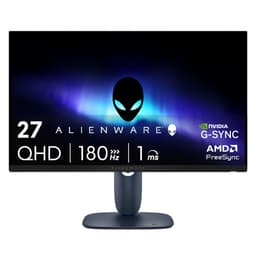
| Alienware AW2725DM | Check price | Fast IPS | 2560x1440 | 27" | 180Hz | 2x HDMI, 1x DP, 3x USB |
The Samsung LS32FM703UUXXU is the standout choice for architects who prioritise pixel density and colour depth above all else. At 32 inches with a native 4K (3840x2160) resolution, this panel delivers approximately 138 pixels per inch, which is enough to render 0.18mm hairlines in AutoCAD at 1:1 without aliasing artefacts. That level of sharpness matters enormously when you are checking whether a wall thickness annotation is correctly positioned or reviewing a site plan with dense contour lines.
The VA panel technology brings deep blacks and strong contrast ratios, which helps when reviewing rendered elevations or photorealistic visualisations produced in Lumion, Enscape, or V-Ray. HDR10 support means the monitor can display a wider dynamic range, which is increasingly relevant as real-time rendering engines push towards photorealism in client presentations. The built-in Smart Monitor functionality, with Wi-Fi and Bluetooth connectivity, also means architects working in hybrid environments can use the screen as a standalone display without a PC tethered, useful for presentation rooms or site offices.
The white finish is a deliberate aesthetic choice that suits architectural studio environments, where clean, minimal hardware is the norm. At 32 inches, the screen is large enough to comfortably display a full A1 drawing at a readable scale alongside a layer panel, without requiring constant panning. The VA panel's colour accuracy is well-suited to material palette work in Photoshop or Illustrator, though those requiring strict sRGB or DCI-P3 calibration for print-matched output should verify calibration against a hardware colorimeter before relying on it for colour-critical deliverables.
This monitor is best suited to architects running a single-screen setup who want the maximum pixel count available, or those adding a primary high-resolution display to complement a secondary ultrawide reference screen. The HDR10 capability also makes it a practical choice for practices that produce video walkthroughs or animated fly-throughs for planning submissions.
Verdict: The best all-round monitor for architects who need maximum resolution on a single screen, with smart connectivity as a practical bonus for studio and presentation use.
The LG 34WR50QK makes a compelling case as the best-value monitor for professional architects, particularly those who work with multi-viewport BIM layouts or need to keep a drawing canvas, properties panel, and reference browser open simultaneously without constantly switching windows. The 34-inch 21:9 ultrawide format at 3440x1440 resolution gives you roughly 34% more horizontal screen real estate than a standard 27-inch 16:9 monitor, which translates directly into fewer mouse clicks and less cognitive load during a working day.
The VA panel delivers a solid contrast ratio, which aids in distinguishing between closely related layer colours in complex Revit models or AutoCAD drawings. The 100Hz refresh rate is more than adequate for architectural software, which rarely pushes frame rates above 60fps even in real-time navigation of large BIM models. The 5ms response time is a non-issue for non-gaming professional use.
The port selection covers the essentials: two HDMI 2.0 ports and one DisplayPort 1.4. This allows connection of a laptop and a desktop workstation simultaneously, or a workstation plus a secondary device such as a tablet or second computer for reference. The curved panel design, while primarily associated with gaming monitors, has a practical benefit for architects: the gentle curve reduces the distance variation between the centre and edges of the screen, which means less refocusing as your eyes scan across a wide drawing.
At its price point, the LG 34WR50QK undercuts many comparable ultrawide monitors while delivering the resolution and screen size that architectural workflows genuinely benefit from. It is the recommended starting point for architects upgrading from a standard 1080p or 1440p 16:9 display who want to experience ultrawide productivity without a premium price tag. Larger practices equipping multiple workstations will find the value proposition particularly strong.
Verdict: The best-value ultrawide for architects, delivering the wide-format canvas that multi-viewport BIM and CAD workflows demand at a price that makes multi-monitor studio setups financially realistic.
The AOC CU34G2XPD shares the same 34-inch 3440x1440 ultrawide format as the LG above but differentiates itself in two meaningful ways for professional architects: a significantly more comprehensive port selection and a higher 180Hz refresh rate. While the refresh rate advantage is largely academic for AutoCAD or Revit, the port array is genuinely useful in a professional studio environment.
The connectivity specification is the most generous in this selection: two HDMI 2.0 ports, two DisplayPort 1.4 outputs, a USB-B upstream port, four USB-A downstream ports, and a 3.5mm audio output. In practical terms, this means the monitor can function as a USB hub, connecting a keyboard, mouse, drawing tablet, and external drive directly, reducing desktop cable clutter significantly. The dual DisplayPort outputs are also useful if you want to daisy-chain a second monitor in certain configurations, or simply have the flexibility to connect multiple high-bandwidth sources.
The VA panel at 3440x1440 delivers the same fundamental resolution benefits as the LG: enough horizontal space to keep multiple application windows open, sufficient pixel density for legible annotation text at standard viewing distances, and a contrast ratio that helps distinguish layer colours in complex drawings. The 1500R curvature is slightly tighter than some ultrawide panels, which some users find more immersive but others find slightly distorting at the edges when working with straight architectural lines. This is worth considering if you work primarily with orthographic plan views where edge distortion could be a concern.
The AOC CU34G2XPD suits architects who need a single monitor to act as both display and connectivity hub, particularly those working with multiple input devices or who regularly connect a laptop alongside a desktop workstation. The four USB-A ports make it especially practical for practices using USB drawing tablets such as Wacom devices, which are common in architectural visualisation workflows.
Verdict: The best-connected ultrawide in this selection, with four USB-A ports and dual DisplayPort inputs making it the most practical choice for architects running a USB-heavy peripheral setup or multiple input devices.
The Alienware AW2725DM is the most compact and portable option in this selection, and its Fast IPS panel technology makes it the most colour-accurate non-OLED display in the group. Fast IPS panels combine the wide viewing angles and colour fidelity of standard IPS with improved response times, making them well-suited to professional creative work where colour consistency across the panel is important. For architects who frequently present work on a monitor that colleagues or clients view from off-axis angles, IPS technology ensures colours do not shift as viewers move around the screen.
At 2560x1440 on a 27-inch screen, the pixel density is the same as the MSI QD-OLED, at around 109 PPI. This is sufficient for most architectural drawing work, though those regularly working with very fine annotation text at small point sizes may notice the difference compared to a 4K panel. The 180Hz refresh rate is well above what any current architectural software requires, but it does mean the monitor handles real-time rendered walkthroughs smoothly, which is increasingly relevant as practices adopt real-time visualisation tools.
The port selection includes two HDMI ports, one DisplayPort, and three USB ports, covering the standard connectivity requirements for a professional workstation. The three USB ports are useful for connecting peripherals directly to the monitor rather than to the PC tower, which is a practical convenience in tidy studio setups.
The Alienware AW2725DM suits architects who work primarily at a fixed desk with a single high-performance workstation, value colour consistency for presentation and visualisation work, and prefer a 27-inch form factor over the wider ultrawide format. It is also a good secondary monitor choice for architects who already have a large primary display and want a secondary screen with accurate colour for reference imagery or material boards.
Verdict: A reliable, colour-accurate Fast IPS option for architects who prefer a compact 27-inch form factor with solid connectivity and consistent colour reproduction for both technical and creative work.
Resolution is the single most important specification for professional architects. AutoCAD, Revit, and ArchiCAD render linework at the native pixel level of your display, which means a higher pixel density directly translates to sharper, more legible drawings. At 27 inches, 1440p (2560x1440) gives you approximately 109 PPI, which is adequate for most professional work. At 32 inches, 4K (3840x2160) gives you approximately 138 PPI, which is noticeably sharper for fine annotation text and hairline weights. For architects who regularly work with dense site plans, detailed section drawings, or complex BIM models with many visible layers, the jump from 1440p to 4K is meaningful rather than marginal.
1080p at 27 inches or larger (approximately 82 PPI) is genuinely insufficient for professional architectural drawing work. Text becomes slightly blurry, fine linework shows visible aliasing, and the overall impression of the drawing on screen does not match what will be plotted. If your current monitor is 1080p and you are upgrading, even moving to 1440p will be a significant improvement.
VA panels offer the best contrast ratios, which helps when distinguishing between closely related colours in layer-heavy BIM models. Their weakness is colour accuracy at wide viewing angles, which can be a problem if you frequently present work to colleagues or clients from the side of the screen. IPS and Fast IPS panels offer better colour consistency across viewing angles and generally more accurate out-of-box colour reproduction, making them preferable for colour-critical work such as material palette development or rendered imagery. QD-OLED panels, as seen in the MSI MAG 272QP, offer the best of both worlds: per-pixel illumination for true blacks and infinite contrast, combined with wide colour gamut coverage that rivals dedicated professional displays. The caveat with OLED technology is the theoretical risk of burn-in with static UI elements, though modern OLED panels include mitigation features and the risk in normal professional use is low.
The 34-inch 21:9 ultrawide format has become genuinely popular in architectural practices for good reason. Keeping a drawing canvas, layer panel, properties inspector, and reference image open simultaneously on a single screen reduces context switching and speeds up complex modelling tasks. If your workflow involves frequent reference to external documents, material libraries, or specification sheets alongside your drawing software, ultrawide is worth serious consideration. Standard 16:9 at 27 or 32 inches remains valid for architects who use a dual-monitor setup, with one screen for the drawing and one for reference material.
Professional architects typically work with at least two devices: a desktop workstation for heavy BIM and rendering tasks, and a laptop for site visits and client meetings. A monitor with dual HDMI or dual DisplayPort inputs allows you to switch between both without unplugging cables. USB hub functionality, as offered by the AOC CU34G2XPD with its four USB-A ports, is a practical convenience for studios where drawing tablets, external drives, and input devices need to be connected. Height adjustment, tilt, and swivel stands are worth checking, as architects often work in shared studio spaces where desk and chair heights vary between users. VESA mount compatibility is useful if you plan to use a monitor arm, which is common in studios where desk space is at a premium.
Architectural workstation monitors represent a long-term investment. A display used for eight or more hours daily for three to five years has a low effective cost per hour, which justifies spending more upfront for better resolution and colour accuracy. The LG 34WR50QK represents the value entry point for serious professional use, while the Samsung 4K and MSI QD-OLED represent the upper tier of this selection with genuinely professional-grade specifications.
For professional architects, the Samsung LS32FM703UUXXU 32-inch 4K HDR10 Smart Monitor is the overall winner. True 4K resolution at 32 inches delivers the pixel density that makes a tangible difference to drawing legibility, annotation clarity, and the overall quality of the on-screen representation of your work. HDR10 support adds value for practices producing rendered visualisations, and the Smart Monitor connectivity makes it versatile across studio and presentation environments. Those who prioritise colour accuracy for rendered imagery above all else should look seriously at the MSI MAG 272QP QD-OLED, which offers the most visually accurate panel in this selection. Architects on a tighter budget or those upgrading a multi-monitor studio setup will find the LG 34WR50QK delivers exceptional value, bringing the genuine productivity benefits of the ultrawide format without a premium price.
Proof B · Method & disclosure
↑ All doubts“You’re paid to say this.”
This page carries affiliate links; they never set the order. We don’t lab-test: rankings come from published specifications, the owner ratings on the UK listings and our own reviews.
Selecting monitors for professional architects requires a different set of priorities to consumer or gaming display reviews. Resolution and pixel density were the primary filters: 1080p panels at 27 inches or larger were excluded because they cannot render fine CAD linework or small annotation text with sufficient clarity. Panel technology was assessed for colour accuracy and viewing angle consistency, with QD-OLED and Fast IPS rated above standard VA for colour-critical work. Screen real estate was evaluated both in terms of raw pixel count and physical format, with ultrawide 21:9 panels assessed for their practical benefit in multi-viewport BIM and CAD layouts. Port selection was reviewed for professional connectivity requirements, including simultaneous multi-device connection and USB hub functionality. Pricing was considered relative to the feature set, with value-for-money assessed against the specific needs of architectural practice rather than gaming or general consumer use. All specifications used are drawn from verified manufacturer data.
Proof C · The verdict
↑ All doubts“Every guide crowns something.”
A crown that can’t be argued with isn’t proof of quality; it’s proof nobody checked. So rather than restate the winner’s virtues, we defend the crown against the strongest cases to take it.
Samsung LS32FM703UUXXU 32" 4K Ultra HD HDR10 Smart Monitor
Cross-examination · Three challengers, taken seriously
It’s £219.46 on the live listing today. Owners rate it 4.6 from 144 ratings. Our review scores it 7.5. The crown holds on the ranking rules: the order above was set before any link was attached, and its case is argued in full in the write-up above.
It’s £249.90 on the live listing today. Owners rate it 4.5 from 561 ratings. Our review scores it 8.0. The crown holds on the ranking rules: the order above was set before any link was attached, and its case is argued in full in the write-up above.
It’s £167.16 on the live listing today. Owners rate it 4.6 from 417 ratings. Our review scores it 8.5. The crown holds on the ranking rules: the order above was set before any link was attached, and its case is argued in full in the write-up above.
The original verdict, preserved in full
We read everything, we hide nothing, and we sign what we publish. Corrections are welcome and printed when we’re wrong.
The Vivid Repairs desk
Vivid Repairs · 14 September 2026
End of the full guide · Back to the doubt index ↑ · The FAQ is next ↓
For most professional architectural work, 1440p at 27 inches is adequate for CAD and BIM tasks, though 4K at 32 inches offers noticeably sharper annotation text and finer linework. If you regularly work with very dense drawings, small text labels, or detailed section views, the upgrade to 4K is worthwhile. For colour-critical visualisation work, panel technology matters as much as resolution.
Ultrawide monitors offer a seamless, uninterrupted screen surface without the bezel gap of a dual-monitor setup, which is particularly useful for panoramic rendered views and wide drawing canvases. However, a dual-monitor setup allows you to have two independent full-resolution screens, which some architects prefer for keeping reference material on one screen and the drawing on the other. The choice depends on your workflow and desk space.
Yes, many gaming monitors are entirely suitable for professional architectural use, provided they meet the resolution and colour accuracy requirements. The monitors in this selection are marketed as gaming displays but offer specifications, particularly resolution and panel quality, that are well-matched to architectural workflows. The high refresh rates are not relevant to CAD software but do not cause any problems.
Static UI elements such as toolbars, layer panels, and menu bars in AutoCAD or Revit are theoretically at risk of burn-in on OLED panels over very long periods. Modern QD-OLED panels include pixel-shift and screen-saver mitigations that significantly reduce this risk in normal professional use. If you work with the same application open for eight or more hours daily without breaks, it is worth enabling the monitor's built-in burn-in prevention features.
Colour accuracy matters most for architects who produce rendered visualisations, material boards, or branded presentation documents where on-screen colours need to match printed or projected output. For pure CAD and BIM work, colour accuracy is less critical than resolution and screen real estate. Practices that produce client-facing rendered imagery should prioritise IPS or QD-OLED panels and consider hardware calibration for print-matched output.
Guide
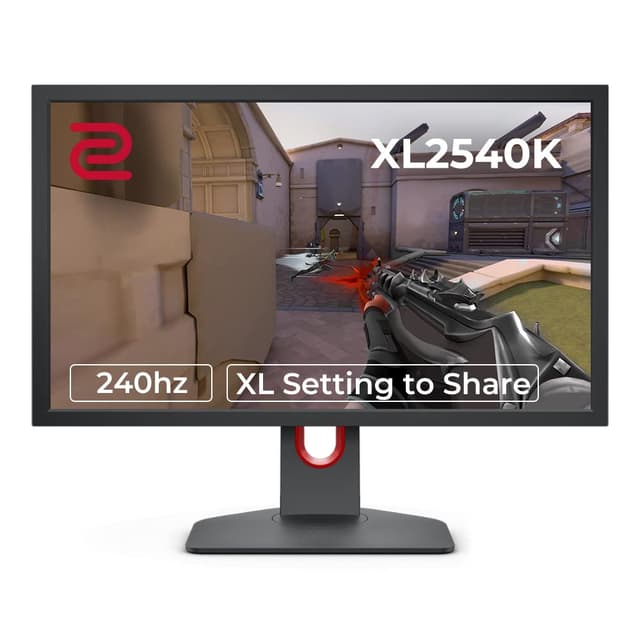
BenQ Zowie XL2540K Review: 240Hz TN Built for Competitive
Read the guide →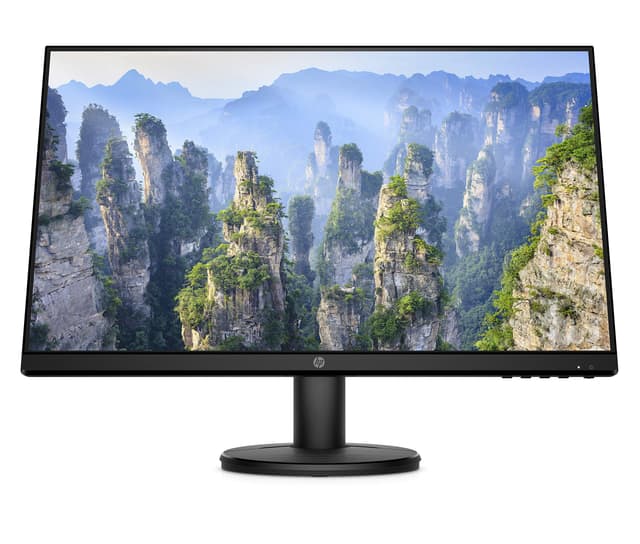
Guide
HP v24i Monitor Review UK (2026)
Read the guide →
Guide
Dell SE2419HR Review UK (2026)
Read the guide →
Guide
Z-Edge 27 inch 4K 120Hz monitor Review UK (2026)
Read the guide →
Guide
ASUS ProArt PA278QV Review UK (2026)
Read the guide →
Head-to-head
Best Monitors for junior CAD designers
Read the guide →§ Sign-off
That’s the field: four monitors for professional architects, ranked for the job in the title and nothing else. We read the published specifications, the owner ratings and our own reviews; we haven’t handled these products, and no maker moves the order. Figures checked against the live Amazon UK listings, page updated 14 September 2026.
The Vivid Repairs desk
