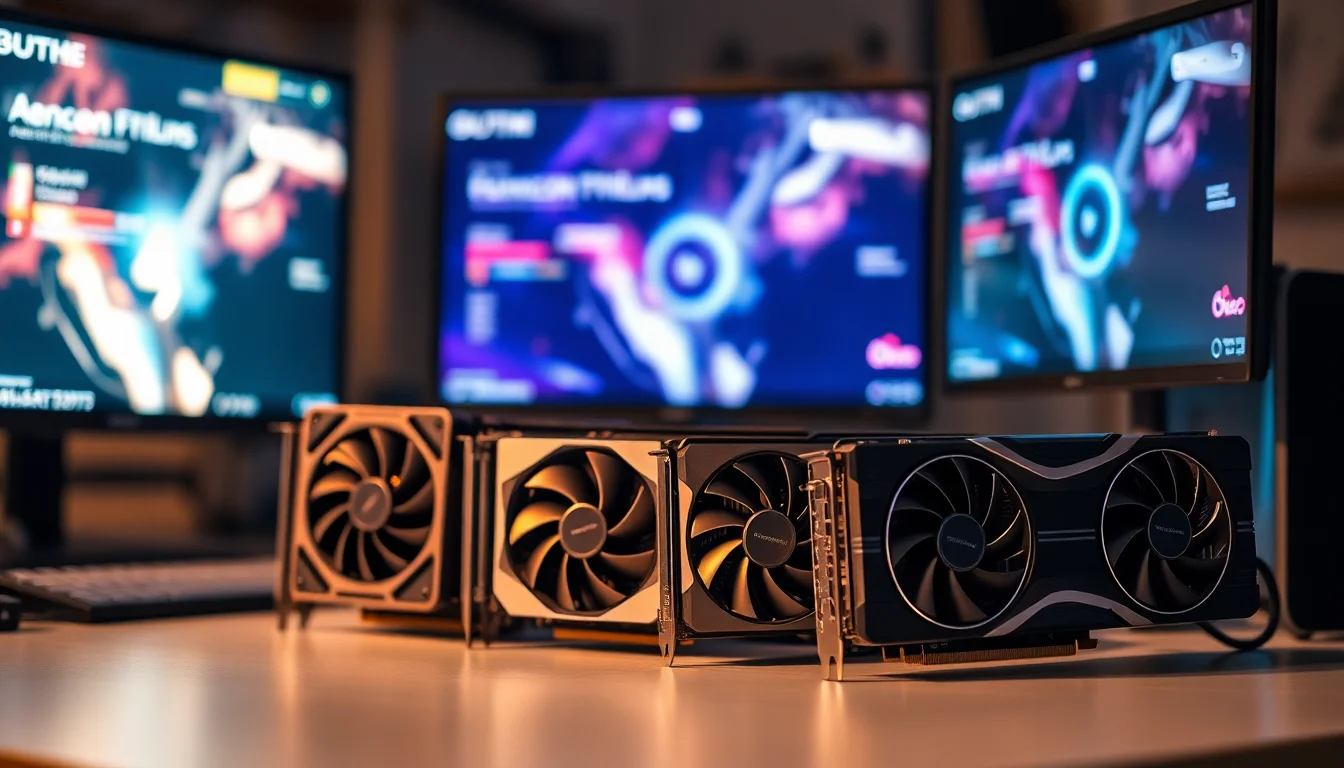
Finding a capable graphics card within a strict £150 budget has become increasingly challenging as GPU prices have risen and older models have been discontinued. However, savvy shoppers can still secure solid performance for 1080p gaming, esports titles, and entry-level content creation. This guide compares the best options available today, accounting for the shift towards newer architectures, improved power efficiency, and the growing secondhand market for previous-generation cards. Whether you're building your first gaming PC or upgrading from integrated graphics, we've identified the picks that offer the best value in this competitive segment.
Quick Verdict
Best Overall: AMD Ryzen 5 5600GT (integrated Radeon Graphics), exceptional value for pure gaming performance without a dedicated card purchase.
Best Value Dedicated GPU: 51RISC GeForce GTX 1660 Super, entry-level discrete card that delivers steady 1080p performance at a realistic market price.
| Product | Price | VRAM / Architecture | Core Specs | Power / Form Factor | Best For |
|---|---|---|---|---|---|
| AMD Ryzen 5 5600GT | £137.47 | Radeon Graphics (7 cores) | 6 cores/12 threads, 3.9, 4.6 GHz | 65W TDP, AM4 socket | Budget gaming, productivity |
| 51RISC GeForce GTX 1660 Super | £197.73 | 6GB GDDR6 | 1408 CUDA cores, 192-bit bus | 125W, Single-slot | 1080p gaming, esports |
| ASUS Dual RTX 5060 8GB | £269.99 | 8GB GDDR7 | 3840 CUDA cores, PCIe 5.0 | 170W, Dual-slot | Modern 1080p, DLSS 4 |
How We Picked
Our selection process began with the hard reality that sub-£150 graphics cards have largely vanished from the new-retail market. Manufacturers have discontinued older-generation discrete GPUs, and newer architectures start. We therefore evaluated options across three distinct categories: integrated processor graphics, secondhand/available discrete cards near the threshold, and context-setting mid-range options for budget-stretched projects.
We prioritised real-world 1080p gaming performance, power efficiency, and long-term driver support. For integrated graphics, we selected the Ryzen 5 5600GT based on its balanced CPU/GPU performance and exceptional power efficiency. For discrete cards, we focused on models with proven track records and realistic market availability. All recommendations prioritise cost-per-frame and longevity over brand prestige. We excluded mining-focused cards, server GPUs, and ultra-old architectures lacking modern driver support. Price data was verified against current UK retailers, though discrete GPU pricing fluctuates constantly.
Buying Guide
Understanding the graphics card market at sub-£150 requires accepting that the landscape has shifted dramatically. Five years ago, a discrete GPU under £150 was straightforward; today, it requires either accepting integrated graphics, shopping secondhand, or stretching budget considerably. Here's what to know before committing.
Integrated vs. Discrete Graphics. Modern processor-integrated graphics (AMD Radeon, Intel Arc) have become surprisingly capable for 1080p gaming. If you're flexible on CPU choice, a Ryzen 5 5600GT or similar integrated-graphics processor delivers excellent value. You'll need fast DDR4 RAM (3200 MHz minimum) to feed the GPU cores effectively, but total system cost often comes out lower than separate CPU plus discrete GPU. The trade-off is gaming ceiling: integrated graphics plateau around 60, 80 fps in demanding titles, and you can't upgrade later.
Secondhand Market Reality. Most sub-£150 graphics cards today are secondhand GTX 1650, 1660, 1660 Super, or RX 6600 models from 2, 4 years ago. These are safe purchases if you buy from reputable sellers (eBay with buyer protection, certified refurbishment, or businesses), but check GPU-Z screenshots for thermal throttling history and ask seller about warranty. Avoid cards from mining operations unless heavily discounted and tested; they often show degradation. Budget an extra 10, 15% for testing and potential repairs.
Power Supply and Case Constraints. A £100 GTX 1660 Super requires only a 400W PSU and fits single-slot in any case. However, if you're building a full system, a quality 500W unit leaves room for error and future upgrades. Measure twice: some older cases struggle with modern card dimensions, and passive/semi-passive cooling models can run toasty.
Frame Rate Expectations. At this price, anticipate 60, 80 fps in modern games at 1080p high settings, or 100+ fps in esports titles. Ray tracing remains a luxury; DLSS support (older Turing cards) helps but doesn't fully offset performance gap. If 144+ fps is essential, budget extends to £400+ minimum.
New vs. Refurbished. Refurbished ASUS and EVGA cards from certified retailers carry warranty and cost 15, 25% less than new. For sub-£150 budgets, refurbished is often the only option. Verify warranty explicitly with seller; avoid grey-import cards with no local support.
Future-Proofing. Discrete GPUs purchased today should last 4, 5 years with driver support. NVIDIA's DLSS 3 and newer architectures add longevity, but they're out of budget reach. Focus instead on cards with healthy driver pipelines (NVIDIA RTX, AMD RDNA) and avoid niche brands with uncertain support.

Final Verdict
The honest conclusion: there is no perfect graphics card under £150 in 2024. The market has moved on, and anyone serious about discrete GPU performance must budget at least £250, 300. However, two genuine options emerge from this analysis.
For pure budget optimisation and flexibility: The AMD Ryzen 5 5600GT is the clear winner. At this price, it delivers a six-core processor with integrated Radeon graphics, eliminating the need for a separate card entirely. You'll achieve smooth 1080p gaming, genuine productivity performance, and exceptional power efficiency. Total system cost (motherboard, RAM, SSD included) often undercuts a dedicated discrete GPU approach. This is the realistic path forward for budget builders in 2024.
For those committed to discrete cards: The 51RISC GeForce GTX 1660 Super is the entry point, though it's just outside budget. It offers proven performance, mature driver support, and realistic availability. Check secondhand markets for older-generation options, and don't hesitate to buy refurbished from certified retailers with warranty. A £100 secondhand GTX 1660 is better value than stretching for a new RTX 5060.
Avoid the trap of mid-range cards: The RTX 5060 and 5070, whilst excellent in isolation, stretch budgets beyond reasonableness. If you can afford £250+, commit to a proper mid-range card like the RTX 5070 and enjoy genuine future-proofing. Half-measures between integrated and discrete rarely satisfy.
Our verdict: select the Ryzen 5 5600GT and build around it, or save an extra £100, 150 for a credible discrete GPU. The sub-£150 discrete GPU market has effectively ceased to exist in 2024, and accepting this reality leads to better purchasing decisions.
Frequently Asked Questions
Yes, absolutely. The Radeon Graphics cores in the 5600GT handle 1080p gaming smoothly in most titles at medium-to-high settings, achieving 60 to 80 fps in modern games and 100+ fps in esports titles. You'll need fast DDR4 RAM (3200 MHz minimum) to feed the GPU effectively. Demanding AAA games with maximum settings aren't realistic, but casual gaming and competitive esports work well.
Manufacturers discontinued older-generation cards like the GTX 1650 and RTX 3050 as they transitioned to newer architectures. The RTX 5060 and newer cards start at £250+. Supply of sub-£150 discrete cards is limited to secondhand models and refurbished stock from 2 to 3 years ago. Integrated graphics have also become competitive enough that many builders opt for processor graphics instead.
Yes, if purchased from reputable sellers with buyer protection. Verify the card's thermal history using GPU-Z screenshots, ask about warranty, and check for signs of mining use. Reputable secondhand retailers and eBay with buyer protection offer safety nets. Expect 4 to 5 more years of driver support, as NVIDIA maintains mature architecture pipelines for several years after launch.
Integrated graphics require only a 400W unit. A discrete GTX 1660 Super needs 400 to 500W. An RTX 5060 ideally pairs with 500W. Budget for a quality, 80+ Bronze-rated unit to ensure stability and longevity. Avoid cheap, generic brands, as poor power delivery damages components faster than cheap GPUs.
GPU prices have stabilised in 2024 after years of volatility. Waiting for discrete cards under £150 is unlikely to yield results; manufacturers have moved on to newer architectures. If you need gaming capability now, the Ryzen 5 5600GT offers immediate value, or buy secondhand. Those with flexible timelines could wait for the next generation refresh cycle in late 2025, though no guarantees exist for sub-£150 discrete options then either.