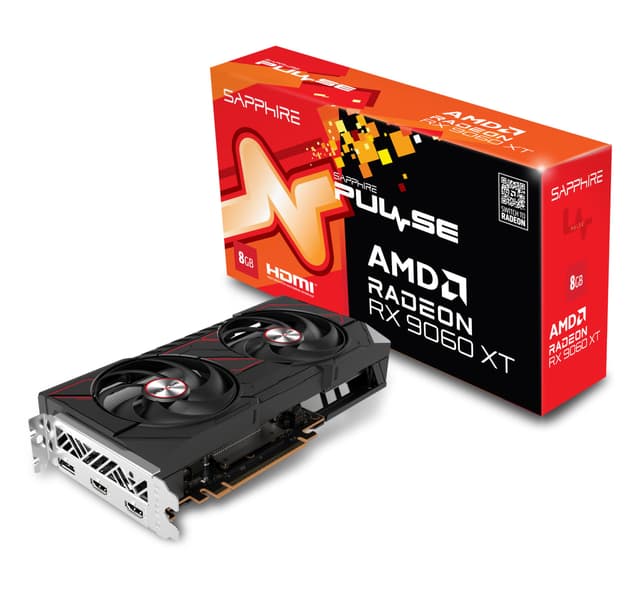
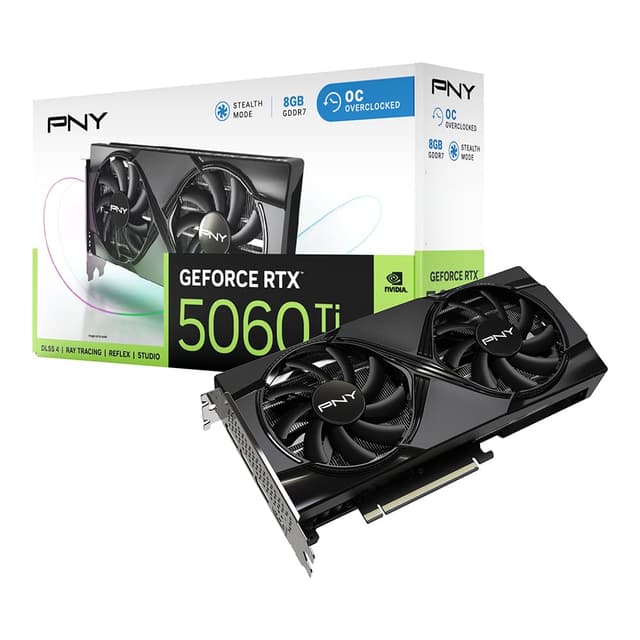
Budget 1080p gaming is in a genuinely interesting place heading into 2025. The arrival of NVIDIA's RTX 50-series has pushed prices on older mid-range cards downward, meaning buyers spending under £250 now have access to hardware that would have cost significantly more just twelve months ago. This guide is aimed at PC builders and upgraders who want smooth, high-detail 1080p performance, whether that means hitting 60 fps in demanding AAA titles or pushing 144 fps in competitive shooters, without spending the kind of money that a 1440p or 4K card demands. Since last year, the most notable change is the appearance of the RTX 5060 LP in this price bracket, bringing GDDR7 memory and PCIe 5.0 connectivity to a sub-£250 card for the first time. Alongside it, the RX 6600 and RTX 3050 continue to represent strong value, while the RX 580 remains a surprisingly capable option for those on the tightest budgets.
Quick Verdict
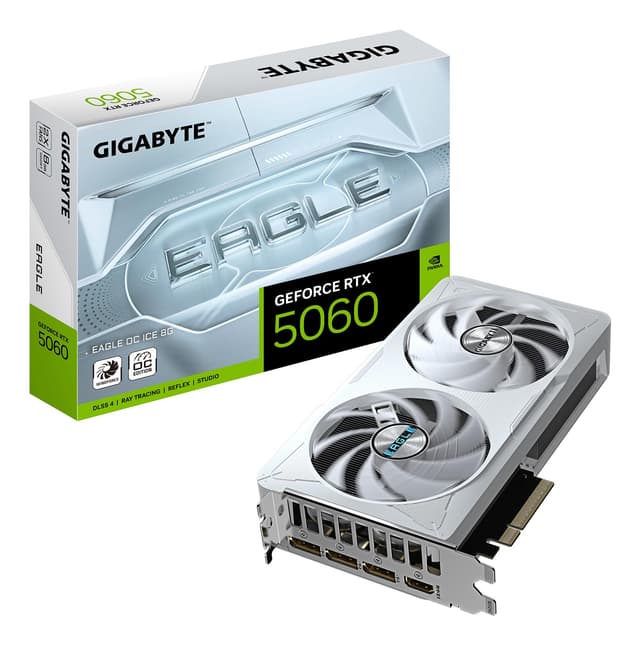
Best Overall: ASUS GeForce RTX 5060 LP BRK 8GB, the most modern GPU in this roundup with GDDR7 memory, DLSS 4 support, and genuine headroom beyond 1080p. Best Value: XFX RX 6600 8GB SPEEDSTER, which delivers the best rasterisation performance per pound for pure 1080p gaming without the premium of the latest generation.
The XFX RX 6600 SPEEDSTER occupies the sweet spot of this roundup for buyers who want the best possible rasterisation performance at 1080p without spending at the very top of the budget. Built on AMD's RDNA 2 architecture, the RX 6600 was designed from the ground up as a 1080p card, with a 32MB Infinity Cache that dramatically reduces the penalty of the card's relatively narrow 128-bit memory bus. The result is a card that punches above its bandwidth figures in real-world gaming scenarios.
The boost clock of approximately 2,491 MHz is among the highest in this price bracket, and RDNA 2's instructions-per-clock efficiency means those clock speeds translate into competitive frame rates. In practice, the RX 6600 typically delivers 10 to 20 per cent more frames than the RTX 3050 in rasterisation workloads at 1080p, making it a meaningfully faster card for traditional gaming. In titles like Cyberpunk 2077, Assassin's Creed Valhalla, and Forza Horizon 5, the RX 6600 comfortably achieves high-detail settings at 60 fps or above, and in less demanding titles it can push toward 100 fps with settings adjustments.
The XFX SPEEDSTER variant uses a compact dual-fan cooler that keeps temperatures well under control. The card's 132W TDP is modest for the performance on offer, and the single 8-pin power connector makes installation straightforward in any mid-range build. The SWIFT210 cooler uses a zero RPM mode at low loads, meaning the card is completely silent during desktop use and light gaming.
Connectivity is excellent for the price: HDMI 2.1 and three DisplayPort 1.4 outputs give you flexibility for multi-monitor setups or high-refresh-rate displays. AMD's FidelityFX Super Resolution (FSR) is available across a wide range of titles and works on any GPU, including NVIDIA cards, so there is no exclusivity concern. However, FSR's image quality at its Performance preset lags behind DLSS 4, which is worth considering if you plan to rely heavily on upscaling.
Ray tracing performance on RDNA 2 is functional but not a strength of the architecture. If ray tracing is a priority, the RTX 5060 is the better choice. For buyers who primarily play games that do not use ray tracing, or who are happy to disable it for the frame rate gains, the RX 6600 is the faster card in traditional rasterisation and represents outstanding value at its current price point.
This card is best suited to gamers building a dedicated 1080p rig on a strict budget who want maximum frames in the titles they actually play, rather than the latest feature set. It is also a strong choice for those upgrading from a GTX 1060 or RX 580 who want a significant generational step without spending over £230.
Pros
- Strongest rasterisation performance per pound in this roundup, typically 10-20% faster than the RTX 3050 at 1080p
- 32MB Infinity Cache compensates effectively for the 128-bit bus, delivering strong real-world bandwidth
- Zero RPM fan mode means completely silent operation during desktop use and light loads
Cons
- RDNA 2 ray tracing performance is noticeably weaker than NVIDIA's Ampere or Blackwell equivalents
- No equivalent to DLSS 4's Multi Frame Generation, relying instead on FSR which has lower image quality at aggressive presets
- 132W TDP is higher than the RTX 5060, which matters in compact or poorly ventilated cases
Buying Guide
What to Look for in a 1080p Gaming GPU Under £250
VRAM: 8GB is the Minimum in 2025
A few years ago, 4GB was sufficient for 1080p gaming. That is no longer true. Several titles released in 2023 and 2024, including Hogwarts Legacy, The Last of Us Part I, and Alan Wake 2, exceed 4GB VRAM usage at high texture settings even at 1080p. Every card in this roundup carries 8GB, which should remain adequate for the next two to three years of 1080p gaming. If you encounter a card outside this list offering 4GB at a tempting price, avoid it.
Architecture Generation Matters More Than Clock Speed
A higher boost clock does not automatically mean better performance if the underlying architecture is older. The RTX 5060's Blackwell architecture delivers more work per clock than Ampere, which in turn is more efficient than Polaris. When comparing cards, look at real-world benchmark results rather than headline clock speeds in isolation.
Upscaling Technology
DLSS (NVIDIA) and FSR (AMD) both allow cards to render at a lower internal resolution and upscale to 1080p, recovering significant performance. DLSS 4 on the RTX 5060 is the most advanced implementation available, with Multi Frame Generation capable of multiplying frame rates in supported titles. FSR 3 is available on AMD cards and works on NVIDIA hardware too, but its image quality at aggressive presets is lower than DLSS. If you play many titles that support DLSS, this is a meaningful reason to favour NVIDIA cards.
Is a 4070 Overkill for 1080p?
Yes, in most cases. The RTX 4070 is a 1440p card that will deliver very high frame rates at 1080p, but you are paying for performance headroom you will rarely use at that resolution. For pure 1080p gaming, the cards in this roundup offer much better value. The 4070 makes sense if you plan to upgrade to a 1440p monitor in the near future.
Is the RTX 5080 Overkill for 1080p?
Significantly so. The RTX 5080 is a flagship 4K card costing several times more than anything in this roundup. Running it at 1080p would be an enormous waste of its capabilities. Save the 5080 for 4K or high-refresh 1440p gaming.
GTX 1650 vs GTX 1080: Which is Better?
The GTX 1080 is faster in most scenarios despite being older, thanks to its larger shader count and wider memory bus. However, the GTX 1650 uses significantly less power and runs cooler. Neither card is recommended for a new purchase in 2025 when 8GB GDDR6 options like the RTX 3050 and RX 6600 are available at competitive prices.
RTX 3060 vs GTX 1080: Which Wins?
The RTX 3060 is faster than the GTX 1080 in modern titles, particularly those that benefit from Ampere's improved shader architecture and larger VRAM (12GB on the 3060 vs 8GB on the 1080). The 3060 also supports DLSS and ray tracing, which the GTX 1080 does not. For a new purchase, the RTX 3060 is the stronger choice, though it falls outside the £250 budget covered in this guide.
Is the RTX 3070 Still Good for 1080p?
Yes, the RTX 3070 remains very capable at 1080p and can handle 1440p comfortably too. However, it typically sells above £250 on the second-hand market and is outside the scope of this guide. If you can find one within budget, it is an excellent option.
Power Supply Requirements
The RTX 5060 and RX 6600 will run comfortably on a 450W PSU. The RTX 3050 similarly requires a modest power supply. The RX 580 is the exception, drawing up to 185W and requiring at least a 500W PSU with two 8-pin connectors. Always check your PSU capacity before purchasing a new GPU.
PCIe Slot Compatibility
All cards in this roundup use standard PCIe x16 slots. The RTX 5060 uses PCIe 5.0, but it is fully backwards compatible with PCIe 4.0 and 3.0 motherboards without any performance penalty for 1080p gaming. You do not need to upgrade your motherboard to use a PCIe 5.0 card.
For the majority of buyers, the ASUS GeForce RTX 5060 LP BRK 8GB is the card to buy. It is the only GPU in this roundup built on current-generation architecture, it brings GDDR7 memory and DLSS 4 to under £250, and its low-profile form factor opens up build options that no other card here can match. The performance ceiling for 1080p gaming is high, and the feature set will remain relevant for longer than any of the alternatives. If you are building in a standard ATX case and want the absolute best frame rates per pound in traditional rasterisation without paying for the latest generation, the XFX RX 6600 SPEEDSTER is the Best Value pick, delivering consistently strong 1080p performance at a lower price point. The MSI RTX 3050 suits NVIDIA loyalists and white build enthusiasts who want DLSS support. The Sapphire RX 580 is a last resort for the tightest budgets, but the step up to the RX 6600 or RTX 3050 is worth saving for if at all possible.