Finding a reliable monitor under £200 has become easier thanks to ASUS's expanding budget range. Whether you need a display for everyday office work, creative tasks or casual gaming, ASUS offers compelling options that balance performance with affordability. This guide focuses on the best ASUS monitors currently available under the £200 threshold, updated for 2024 with new models that have entered the market and specification improvements across the range. We've excluded older stock and focused on current availability to ensure you get genuine value from your purchase.
Quick Verdict
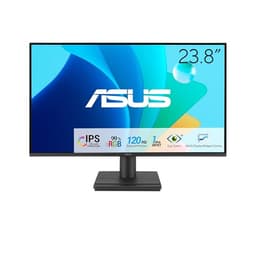
Best Overall: ASUS VA24EHE, A 24-inch IPS monitor offering crisp text, reliable colour accuracy and solid connectivity for office and general use at around £150-170.
Best Value: ASUS VP28UQG, A 28-inch 4K display delivering exceptional pixel density and vibrant visuals, often available under £200, ideal for content creators and productivity-focused users.
The VA24EHE stands as one of ASUS's most reliable and enduring budget monitors. This 24-inch IPS panel has remained popular with office workers, students and casual users for good reason. The 1920×1080 resolution provides adequate pixel density at this screen size, delivering sharp text for document work and spreadsheets. ASUS equips this model with their trademark reliability, backed by a three-year warranty standard across most EU markets.
Who it suits: Office workers, students, and anyone needing a secondary monitor for productivity tasks. If you spend most of your time in spreadsheets, email or document editing, the VA24EHE delivers excellent value.
The IPS panel ensures consistent colour and brightness when viewed from wider angles, important if you share your desk space or use the monitor while moving around. At 5ms response time, it handles basic everyday work comfortably, though it is not optimised for gaming. Connectivity includes D-Sub, DVI and HDMI inputs, making it compatible with virtually any device from the past decade. The stand offers basic height and tilt adjustment, and the monitor can be mounted on a standard VESA bracket for flexible desk setups.
Brightness reaches 250 nits, more than adequate for indoor office environments, and the anti-glare matte finish reduces screen reflections without creating excessive grain. Colour accuracy is respectable rather than exceptional, with 72% NTSC coverage suitable for everyday tasks but not colour-critical work like professional photo editing or video grading. Power consumption is modest at around 24W during normal use.
Verdict: The VA24EHE is a dependable, no-nonsense monitor that prioritises value and reliability. It does exactly what it promises without frills, making it an intelligent choice for budget-conscious buyers who want a second or primary work display.
Pros
- Excellent build quality and reliability with industry-leading warranty support
- Wide viewing angles from IPS panel technology
- Flexible connectivity with D-Sub, DVI and HDMI inputs
- Low power consumption reduces electricity costs
Cons
- Basic 1920×1080 resolution feels dated compared to 1440p alternatives
- 5ms response time unsuitable for gaming or fast-motion content
- No USB hub or modern features like USB-C
For users wanting maximum screen real estate and pixel density within a £200 budget, the VP28UQG represents exceptional value. This 28-inch 4K monitor packs 3840×2160 pixels into a TN panel, delivering pixel density of approximately 157 PPI. That density makes individual pixels imperceptible to the human eye at normal viewing distances, resulting in crisp, detailed visuals. The 4K resolution is particularly beneficial when working with multiple windows simultaneously, as you can comfortably fit more content on screen without scaling.
Who it suits: Content creators, data analysts, traders, and anyone working with dense information who values screen real estate. Designers, photographers and video editors will appreciate the extra screen space, though colour accuracy is compromised by the TN panel technology.
The TN panel delivers excellent contrast and deep blacks, compensating somewhat for narrower viewing angles typical of this technology. Colour reproduction is adequate for general use, though professional colour-critical work demands IPS or VA panels. Response time of 1ms makes this monitor suitable for casual gaming and fast-paced applications. However, brightness caps at around 250 nits, potentially limiting visibility in bright environments.
Connectivity includes DisplayPort and HDMI inputs, essential for supporting 4K at 60Hz. The stand provides tilt adjustment, and VESA mounting is supported. Colour gamut covers 99% sRGB, ensuring vibrant visuals for everyday content consumption. The monitor consumes approximately 35-45W under normal operation, reasonable for a 28-inch 4K display.
One consideration: achieving 4K quality is demanding on graphics systems. You'll need either a reasonably modern integrated GPU or a dedicated graphics card to run applications at 4K resolution smoothly. Older computers may struggle with scaling and rendering at native resolution.
Verdict: The VP28UQG offers remarkable value for users prioritising screen space and resolution density. It sacrifices some colour accuracy and viewing angles in exchange for exceptional pixel-level sharpness and workspace expansion.
Pros
- 4K resolution provides exceptional clarity and pixel density at 157 PPI
- Generous 28-inch screen expands visible workspace for multitasking
- 1ms response time suitable for gaming and dynamic content
- Excellent contrast and black levels from TN panel technology
Cons
- TN panel limits viewing angles, colour shifts noticeable from sides
- 4K rendering demands modern graphics hardware
- No USB inputs or advanced connectivity features
The PA247CV enters ASUS's ProArt range whilst maintaining budget-friendly pricing. This 24-inch IPS monitor targets creative professionals and content creators who refuse to compromise on colour accuracy despite budget constraints. The designation indicates this display has undergone factory calibration to Delta E <2, meaning colour accuracy is within professional standards and suitable for confident colour-critical decision making.
Who it suits: Photographers, graphic designers, video editors, and anyone producing content where accurate colour representation directly impacts final output quality. This monitor suits creative freelancers and small studios where budget does not permit premium display investment.
The 1920×1080 resolution combined with 24-inch size delivers a comfortable 92 PPI pixel density, balancing clarity with system performance demands. The IPS panel ensures colours remain consistent across viewing angles, essential when collaborating with colleagues or presenting work to clients. ASUS equips this model with a USB-C input, a genuinely useful feature allowing single-cable connection from modern laptops whilst simultaneously delivering video and charging power.
Brightness reaches 250 nits, adequate for controlled office environments where ambient light is managed. Colour gamut covers 99% Adobe RGB and 100% sRGB, the standard for digital content creation workflows. Response time of 5ms handles general creative work comfortably, though it is not designed for gaming.
The monitor includes a height-adjustable stand with swivel, pivot and tilt functions, allowing users to position the display for optimal ergonomics. Standard VESA mounting is supported, providing further flexibility. On-screen controls are straightforward, and the menu system includes preset colour profiles for different content types.
Power consumption is modest at around 23W, and the monitor supports energy-saving features reducing consumption further during periods of disuse. The build quality meets professional standards, with robust construction and a semi-matte anti-glare coating balancing visibility with image clarity.
Verdict: The PA247CV delivers professional-grade colour accuracy at budget-monitor pricing. For creative professionals with limited budgets, this represents genuine value and removes the burden of post-production colour correction.
Pros
- Factory-calibrated for Delta E <2 colour accuracy, suitable for professional work
- USB-C input allows single-cable connection with charging capability
- Comprehensive stand adjustments including height, swivel, pivot and tilt
- Excellent colour gamut covering 99% Adobe RGB
Cons
- 1920×1080 resolution feels limited for creative workflows
- 5ms response time unsuitable for gaming or dynamic video playback
- Premium pricing relative to non-colour-managed alternatives
The VA27EHE scales the successful VA24EHE formula up to 27 inches, providing the same value-focused approach in a larger package. This model prioritises affordability without sacrificing display quality, targeting office workers and general users wanting larger screen real estate without premium pricing. The 1920×1080 resolution at 27 inches delivers approximately 82 PPI, which is less dense than 24-inch equivalents but still acceptable for typical office viewing distances.
Who it suits: Office-based workers, traders, data entry specialists, and anyone wanting a larger secondary monitor on a restrictive budget. The bigger screen helps reduce eye strain for users working extended hours at their desk.
The IPS panel provides consistent colours and brightness across wide viewing angles, important in shared office environments. Colour accuracy is suitable for everyday tasks without professional requirements. The 5ms response time handles office work competently, and colour coverage of approximately 72% NTSC is adequate for document work and spreadsheets.
Brightness reaches 250 nits, appropriate for typical indoor office lighting. The anti-glare matte coating reduces reflections without introducing excessive grain. Connectivity includes D-Sub, DVI and HDMI inputs, ensuring compatibility with virtually any computer or device. The base stand offers tilt adjustment, and VESA mounting is supported for wall mounting or multi-monitor arms.
Power consumption is around 29W during normal operation, making this a cost-effective monitor for budget-conscious IT managers outfitting office spaces. The three-year warranty matches ASUS's budget-range standard. Build quality is dependable, designed to withstand the rigours of 24/7 office use.
The larger 27-inch screen compared to 24-inch alternatives means each interface element and text appears slightly larger, which some users find more comfortable for extended work sessions. However, at 1920×1080 resolution, the pixel density is lower than 24-inch 1440p alternatives, which might feel less sharp to users accustomed to higher-density displays.
Verdict: The VA27EHE is an excellent large-screen budget option for office and productivity use. It prioritises screen size and value above cutting-edge specifications, making it ideal for users who spend most time in business applications.
Pros
- Large 27-inch screen reduces text scaling needs and eases eye strain
- IPS technology ensures colour consistency across viewing angles
- Robust build quality suitable for continuous office use
- Comprehensive connectivity supports older and newer devices
Cons
- 1920×1080 at 27 inches results in relatively low pixel density
- No USB ports or modern connectivity features
- 5ms response time unsuitable for gaming
The VP249HE combines the compact 24-inch form factor with a modest 75Hz refresh rate, positioning itself as a light-touch gaming and productivity hybrid. The upgrade from standard 60Hz is subtle but noticeable when working with fast-moving content, animations or casual gaming. The 1920×1080 resolution ensures mainstream graphics cards can handle gaming at high detail settings and smooth frame rates.
Who it suits: Casual gamers, productivity users wanting a smoother experience with scrolling and animations, and anyone seeking a compact monitor with light gaming capability without premium pricing. Students and casual users will appreciate the fluid motion when playing indie games or fast-paced titles.
The IPS panel delivers accurate colours and wide viewing angles, preventing colour shift when viewing from side angles. Brightness reaches 250 nits, adequate for typical indoor environments. The 5ms response time is acceptable for casual gaming, though competitive gamers would prefer 1ms alternatives. Colour gamut covers approximately 75% NTSC, suitable for general use.
Connectivity is practical if less comprehensive than higher-end models, including D-Sub and HDMI inputs. The stand provides basic tilt adjustment, and VESA mounting is supported. Power consumption is around 24W during normal operation, similar to other 24-inch budget models. The monitor includes an integrated power supply, eliminating the need for an external power brick.
Build quality is solid, consistent with ASUS's budget-range reputation. The anti-glare matte finish reduces screen glare without introducing grain. On-screen controls are straightforward, accessed via buttons on the monitor bezel.
One consideration: the 75Hz refresh rate is a modest improvement over 60Hz. Users coming from 144Hz or 165Hz gaming monitors will notice the frame rate ceiling. However, for casual gaming and general computing, 75Hz is surprisingly smooth.
Verdict: The VP249HE offers excellent value for users wanting a touch of gaming performance without premium pricing. The 75Hz upgrade is subtle but appreciated, making it more versatile than standard 60Hz office monitors.
Pros
- 75Hz refresh rate provides smoother scrolling and casual gaming performance
- IPS panel ensures wide viewing angles and colour accuracy
- Compact 24-inch form factor suits smaller desks or secondary monitor use
- Integrated power supply reduces cable clutter
Cons
- 75Hz falls short of competitive gaming requirements above 100Hz
- 5ms response time inadequate for competitive online gaming
- Limited connectivity with no USB inputs or USB-C
The VA32UQ stretches the budget with a 32-inch 4K IPS panel, representing the largest and most feature-rich option within our selection. The substantial screen real estate combined with 4K resolution makes this monitor suitable for professional workstations where screen space directly impacts productivity. The VA panel technology balances the narrow viewing angles of TN panels with the slower response times typical of IPS, delivering solid performance across multiple use cases.
Who it suits: Video editors, 3D artists, data visualisation specialists, software developers, and anyone whose work benefits from expansive screen real estate combined with accurate colours. Design studios and post-production facilities will appreciate the professional credentials.
The 3840×2160 resolution at 32 inches delivers approximately 163 PPI, providing crisp detail whilst remaining manageable for most modern graphics systems. The VA panel produces excellent contrast and black levels superior to IPS alternatives, beneficial for visual media where depth and contrast matter. Colour accuracy is respectable with 99% Adobe RGB coverage, though professional colour grading benefits from calibrated displays.
Brightness reaches 300 nits, significantly higher than smaller budget monitors, ensuring visibility even in brightly lit environments. Response time of 4ms is acceptable for creative work, though gaming performance will feel sluggish for users accustomed to faster displays. Connectivity is comprehensive, including HDMI, DisplayPort and USB-C inputs, accommodating modern creative devices.
The stand provides height adjustment, swivel, pivot and tilt functions, allowing proper ergonomic positioning for extended work sessions. VESA mounting is supported for multi-monitor and wall-mounting configurations. USB-C input is particularly valuable for modern laptop connectivity, delivering video, power and data over a single connection.
Power consumption reaches approximately 50-60W during normal operation, higher than smaller models but reasonable for a 32-inch 4K display. The monitor includes built-in USB hub functionality, providing convenient connection points for peripherals without requiring separate hub hardware.
One consideration: this monitor approaches the upper limit of the £200 budget, and availability under this price point may be limited depending on sales and regional pricing. Monitor stands take considerable desk space, though the alternative is wall mounting.
Verdict: The VA32UQ is a capable professional monitor at an unusually aggressive price. For creative professionals requiring large screen real estate and 4K resolution, the value proposition is compelling.
Pros
- Expansive 32-inch 4K display provides immense workspace for creative professionals
- VA panel produces excellent contrast and black levels superior to IPS alternatives
- Comprehensive connectivity including USB-C, HDMI and DisplayPort
- Built-in USB hub adds practical functionality for desk organisation
- 300 nits brightness ensures visibility in bright working environments
Cons
- 4ms response time and VA panel create minor ghosting in fast-motion content
- 4K resolution demands powerful graphics hardware for optimal performance
- Limited availability at or below £200 price point
Buying Guide
When selecting a budget monitor under £200, several practical considerations should guide your decision.
Panel Technology Matters: IPS panels provide superior colour accuracy and wide viewing angles, ideal for office work and creative tasks. VA panels offer excellent contrast and black levels, beneficial for video and visual design. TN panels are fastest but have the narrowest viewing angles. For under £200, most budget monitors use IPS or VA technology, with TN reserved for gaming-focused models.
Resolution and Screen Size Balance: Higher resolutions deliver sharper pixels but demand more powerful graphics hardware. A 1920×1080 24-inch monitor is the efficiency sweet spot, balancing sharpness with system demands. 27-inch 1080p monitors offer more workspace but lower pixel density. 4K displays under £200 require capable graphics systems but reward users with exceptional clarity. Match resolution to your graphics capability: integrated graphics suit 1080p, discrete GPUs handle 1440p and 4K.
Connectivity Requirements: Budget monitors typically offer HDMI and D-Sub inputs. USB-C is increasingly valuable for laptop users, allowing single-cable connection with charging. DisplayPort is essential for high-refresh 4K content. Verify your device has matching inputs before purchasing.
Refresh Rate Considerations: Standard 60Hz monitors are adequate for office work and general computing. 75Hz provides noticeably smoother scrolling and light gaming. 144Hz and above demands gaming-focused hardware and pricing above our budget.
Colour Accuracy for Your Work: Office and general users need modest colour accuracy, handled well by standard IPS panels. Creative professionals should seek monitors with factory calibration and colour gamut specifications, typically covering 99% Adobe RGB or similar standards. Don't rely on factory profiles alone; consider external calibration for colour-critical work.
Ergonomics and Adjustment: Verify the monitor offers height adjustment, tilt and swivel functions matching your desk setup. VESA mounting compatibility provides flexibility if planning multi-monitor or wall-mounted configurations. Poor ergonomics accumulate into neck and back pain across extended work sessions.
Warranty and Support: ASUS typically offers three-year warranties on budget models sold in the UK. Verify warranty coverage includes your country and covers hardware replacement without excessive shipping costs. EU regulations mandate two-year manufacturer warranty as baseline.
Future-Proofing: Budget monitors under £200 are inherently temporary solutions. Select based on current needs rather than hypothetical future applications. The rapid pace of monitor technology means today's budget model becomes tomorrow's obsolete specification. Budget accordingly for eventual replacement.
The ASUS VA24EHE emerges as the overall winner for most users seeking a budget monitor under £200. It combines ASUS's legendary reliability, sensible feature set, and genuine value in a package that has proven itself over years of continuous availability. The 24-inch IPS panel delivers accurate colours for general work, whilst comprehensive connectivity ensures compatibility with any device. The three-year warranty provides confidence in long-term reliability.
However, the best choice depends on your specific requirements. Content creators should select the ASUS PA247CV for its factory-calibrated colour accuracy. Users prioritising screen real estate should choose the ASUS VA27EHE or VP28UQG depending on whether colour accuracy matters. Casual gamers will appreciate the 75Hz boost of the VP249HE. Professionals requiring maximum workspace and 4K clarity should stretch to the VA32UQ despite its premium positioning.
ASUS has earned its reputation as a reliable monitor manufacturer through consistent product quality and practical feature implementation. The brand competes effectively against Dell and Samsung in the budget segment, offering comparable quality at similar pricing. ASUS's manufacturing includes facilities across Asia with designs optimised for commercial reliability rather than cutting-edge features. This philosophy makes ASUS monitors dependable workhorses rather than aspirational products.
Before finalising your purchase, verify current pricing on major UK retailers, as budget monitor costs fluctuate based on stock and regional promotions. Check that your graphics system matches the monitor's capabilities, particularly if considering 4K options. Inspect reviews from multiple sources to confirm specific models match current specifications, as budget manufacturers frequently revise components without changing model numbers.