There's a specific kind of frustration that comes from buying a high-refresh-rate monitor only to discover the panel can't actually keep up with the number printed on the box. Ghosting, inverse ghosting, smearing in dark scenes, these are the real killers of gaming immersion, and no amount of spec-sheet heroics covers for them. So when a brand you've probably never heard of turns up claiming 4K at 160Hz and FHD at 320Hz on the same panel, for mid-range money, the right response isn't excitement. It's scepticism followed by careful research.
Here's where the Amzfast AMZG27F6U lands after digging through the specs, the manufacturer's claims, and over 3,331 owner reviews averaging 4.5 stars: it's genuinely interesting. Not perfect, not a hidden gem that embarrasses everything else, but a legitimately capable Fast IPS panel with a dual-mode trick that makes it more flexible than most rivals at this price. The HDR400 badge is the usual checkbox nonsense, the built-in speakers won't impress anyone, and Amzfast as a brand is still earning its reputation. But the core display? Solid. For anyone who wants 4K sharpness for productivity and can drop to FHD when they need competitive frame rates, this is one of the more honest propositions in the mid-range bracket right now.
This Amzfast 4K gaming monitor 27 inch review breaks down exactly what you're getting, where the compromises are, and whether the alternatives make more sense for your specific setup.
Core Specifications
The headline specs on the AMZG27F6U are ambitious for the price bracket, and they hold up to scrutiny better than you might expect from an unfamiliar brand. You're looking at a 27-inch Fast IPS panel running at native 4K UHD (3840x2160) resolution at up to 160Hz, with a secondary mode that drops to FHD (1920x1080) to unlock 320Hz. That dual-mode approach isn't unique, LG and Asus have done similar things, but it's still relatively rare at this price point, and it genuinely expands the monitor's usefulness.
Connectivity is properly sorted for a 2026 gaming monitor. Two HDMI 2.1 ports and two DisplayPort 1.4 connections means you can have a PS5 and a PC plugged in simultaneously without juggling cables, which is something a lot of monitors in this bracket still get wrong. HDMI 2.1 supports 4K at 120Hz from consoles, so PS5 and Xbox Series X owners will be able to use the full 4K resolution without being bottlenecked by the port. DisplayPort 1.4 carries enough bandwidth for 4K at 160Hz with DSC compression, which is how this panel achieves its headline refresh rate.
The 1ms MPRT figure needs context immediately. MPRT (Moving Picture Response Time) is a motion blur reduction metric tied to backlight strobing, not a measurement of how fast pixels actually transition. The real-world GtG (grey-to-grey) response time on Fast IPS panels like this typically sits somewhere between 1ms and 5ms depending on overdrive settings, with faster settings risking overshoot. We'll get into that properly in the response time section. The 93% DCI-P3 colour coverage and HDR400 certification round out the key specs. Height adjustment is included, which sounds obvious but isn't guaranteed at this price.
| Specification | Detail |
|---|---|
| Screen Size | 27 inches |
| Resolution | 3840x2160 (4K UHD) |
| Panel Type | Fast IPS |
| Refresh Rate (4K Mode) | 160Hz |
| Refresh Rate (FHD Mode) | 320Hz |
| Response Time | 1ms MPRT |
| HDR | HDR400 |
| Colour Gamut | 93% DCI-P3 |
| Ports | HDMI 2.1 x2, DisplayPort 1.4 x2 |
| Ergonomics | Height, tilt adjustable |
| Speakers | Built-in |
| Model Number | AMZG27F6U |
| Price | £221.99 |

Panel Technology
Fast IPS is a specific category of IPS panel that's worth understanding properly. Standard IPS panels have always offered excellent colour accuracy and wide viewing angles but historically struggled with response times compared to TN panels. Fast IPS (sometimes called Nano IPS or Rapid IPS depending on the manufacturer) addresses this by using a different liquid crystal alignment that allows faster pixel transitions. The trade-off compared to VA panels is contrast, IPS panels typically deliver native contrast ratios around 1000:1, whereas VA can hit 3000:1 or higher. But VA panels have their own motion problems, particularly in dark scenes where smearing can be visible. For gaming, Fast IPS is generally the right call unless you're heavily into dark atmospheric games where black depth really matters.
The viewing angles on IPS panels are genuinely good, typically 178 degrees horizontally and vertically, and the AMZG27F6U is no exception. Owner reviews consistently mention that colours stay accurate when viewed off-axis, which matters if you're sharing a screen or have a non-central seating position. IPS glow is the unavoidable downside, that faint luminous haze you see in the corners when displaying dark content. It's inherent to the technology and not a defect, but it's about before you buy if dark room gaming is your primary use case. Several owners in the review pool mention it, though the consensus is that it's within normal expectations for an IPS panel.
What's notable here is the "Fast" designation. The panel in the AMZG27F6U is engineered for lower GtG transition times than a standard IPS, which is what enables the 320Hz FHD mode to be useful rather than a gimmick. A standard IPS panel running at 320Hz would serve up so much motion blur that the high refresh rate would be largely wasted. The Fast IPS implementation here is what makes the dual-mode proposition actually credible. IPS panel technology has come a long way since the days when 60Hz was the ceiling, and modern Fast IPS is genuinely competitive with TN for motion clarity while leaving TN in the dust for colour quality and viewing angles.
Display Quality
At 27 inches with a 4K resolution, the pixel density on the AMZG27F6U works out to approximately 163 PPI. That's noticeably sharper than 1440p at the same screen size (which sits around 109 PPI), and the difference is visible in everyday use, not just in side-by-side comparisons. Text rendering is crisp, fine detail in games and photos is genuinely impressive, and the overall impression is of a premium-feeling display. This is one area where 4K at 27 inches has a real advantage over 4K at 32 inches, where the pixel density drops to around 140 PPI. Sharper is better, and 163 PPI is sharp.
The panel uses an anti-glare matte coating, which is the sensible choice for a gaming monitor that might be used in varied lighting conditions. Glossy panels look stunning in controlled lighting but become mirrors the moment any light source is behind you. The matte coating on the AMZG27F6U reduces reflections at the cost of a very slight reduction in perceived contrast and colour vibrancy compared to glossy alternatives. Owner reviews suggest the coating is well-implemented, not the grainy, hazy finish you sometimes get on budget panels, but a fine anti-glare treatment that doesn't significantly soften the image.
Brightness uniformity is harder to assess without published measurements for this specific model, but Fast IPS panels generally perform well here compared to VA, which can suffer from DSE (dirty screen effect) and brightness inconsistencies across the panel surface. The manufacturer rates the peak brightness at 400 nits (tied to the HDR400 certification), with typical SDR brightness likely sitting lower. Several owners report the display looks good in bright rooms without needing to push brightness to maximum, which suggests the panel performs adequately in realistic office or living room environments. A few reviews mention the factory brightness default feels a bit high and recommend dialling it back to around 60 to 70 percent for comfortable daily use.
Refresh Rate and Adaptive Sync
The dual-mode setup is the most interesting thing about this monitor, and it deserves a proper explanation. In 4K mode, you're running at 3840x2160 at up to 160Hz via DisplayPort 1.4. This requires Display Stream Compression (DSC), a visually lossless compression standard that allows DisplayPort 1.4's bandwidth to carry 4K at 160Hz. DSC is widely supported by modern GPUs from both Nvidia and AMD, so this shouldn't cause compatibility issues on any recent card. Switch to FHD mode, and the panel runs at 1920x1080 at up to 320Hz, which is a genuinely competitive refresh rate for esports titles where frame rates can exceed 200fps on mid-range hardware.
Adaptive sync support is listed as FreeSync compatible, which means it'll work with AMD GPUs natively and with Nvidia GPUs via G-Sync Compatible mode (Nvidia validated FreeSync monitors for G-Sync Compatible status starting with the RTX 20 series). The VRR range matters here, a wide range, ideally down to 48Hz or lower with Low Framerate Compensation (LFC), means tear-free gaming even when your frame rate dips. The manufacturer's listing doesn't specify the exact VRR range, which is a gap in the available information. Owner reviews don't flag VRR issues specifically, suggesting the implementation is at least functional, but the absence of a published lower lim.
For the 320Hz FHD mode specifically, adaptive sync becomes even more important. At that refresh rate, you're targeting very high frame rates in competitive titles, and any tearing or stuttering is more noticeable, not less. The good news is that FHD at 320Hz is much easier to drive than 4K at 160Hz, even a mid-range GPU like an RTX 4070 can push well over 200fps in most esports titles at 1080p, so you'll actually be in the VRR range regularly rather than just theoretically. That makes the 320Hz mode genuinely useful rather than a number printed on a box for marketing purposes.
Response Time and Motion
Right, this is where we need to be straight about marketing numbers versus reality. The 1ms MPRT figure on the box refers to Moving Picture Response Time, which is achieved through backlight strobing (similar to BenQ's ULMB or Asus's ELMB). When the backlight strobes, it effectively reduces perceived motion blur by only illuminating the panel during the brief moment when pixels have finished transitioning. The result is a cleaner-looking motion presentation, but it comes at the cost of reduced brightness and can cause eye strain during extended sessions. MPRT of 1ms does not mean pixels transition in 1ms. It's a different measurement entirely.
The actual GtG (grey-to-grey) pixel transition time on Fast IPS panels like this is typically in the 1ms to 5ms range depending on the overdrive setting used. At the fastest overdrive setting, you risk inverse ghosting (bright halos trailing behind moving objects), which is arguably worse than regular ghosting. The sweet spot is usually a medium overdrive setting that keeps GtG below 4ms without introducing visible overshoot. Owner reviews for the AMZG27F6U don't flag significant ghosting issues, which is encouraging. A handful of reviews mention experimenting with overdrive settings to find the right balance, which is normal behaviour for any gaming monitor and suggests the overdrive implementation gives you enough control to tune it properly.
In practical terms, the motion performance of this panel should be genuinely good for both the 4K 160Hz mode and the FHD 320Hz mode. Fast IPS at these refresh rates is competitive with TN panels for motion clarity while being significantly better for colour accuracy. For competitive FPS gaming in FHD mode, the combination of 320Hz and a well-implemented Fast IPS panel should produce clean, sharp motion. For 4K gaming at 160Hz, you're getting a substantial improvement over 60Hz or even 144Hz panels. The jump from 144Hz to 160Hz is modest, but 160Hz is noticeably smoother than 144Hz in motion-heavy scenes.
Color Accuracy and Gamut
The 93% DCI-P3 colour coverage is one of the stronger selling points of the AMZG27F6U, and it's worth understanding what that means in practice. DCI-P3 is the wide colour gamut standard used in digital cinema, covering a significantly larger colour space than sRGB. 93% DCI-P3 coverage translates to roughly 130% sRGB coverage, meaning colours are richer and more saturated than a standard sRGB monitor. For gaming, this produces more vivid, punchy visuals. For content creation, it means you can work in a wider colour space without the monitor being the bottleneck.
The manufacturer doesn't publish Delta-E figures or factory calibration data, which is typical for monitors in this price bracket. Delta-E is the measurement of colour accuracy, a Delta-E below 2 is considered good enough that most people can't spot the error with the naked eye, below 1 is excellent. Without published measurements for this specific model, we're relying on the owner review pool and the general performance expectations of Fast IPS panels at this spec level. Owner reviews are positive about colour quality, with multiple mentions of vivid, accurate-looking colours out of the box. No significant complaints about colour casts or obvious inaccuracy appear in the review pool.
For content creators, 93% DCI-P3 is genuinely useful, but notably, that wide gamut panels need proper colour management in your workflow. If you're editing photos or video for sRGB delivery (which is most web content), you want your software to be colour-managed and your display profile set correctly, otherwise the wide gamut will cause oversaturation in your output. Most professional creative software handles this automatically. For gaming and general use, the wider gamut just makes everything look better without any workflow considerations needed. It's one of those specs that sounds technical but has an immediately visible real-world benefit.

HDR Performance
HDR400 is the entry-level tier of VESA's DisplayHDR certification programme, and it's honest to say upfront that it's not proper HDR in the way that HDR600 or HDR1000 monitors deliver it. HDR400 requires a peak brightness of just 400 nits and does not mandate local dimming. Local dimming, where different zones of the backlight can be independently controlled to produce deeper blacks in dark areas of the image while maintaining bright highlights elsewhere, is what makes HDR actually look different from SDR. Without it, HDR on this monitor amounts to enabling a wider colour volume and slightly higher peak brightness, but the contrast ratio stays the same as SDR mode.
That's not a disaster, but it is a limitation worth being clear about. Games and content mastered for HDR will still display correctly in terms of colour volume, and the 93% DCI-P3 coverage means the wider colour gamut of HDR content is actually rendered rather than clipped. But the dramatic contrast between bright highlights and deep shadows that makes HDR genuinely impressive on an OLED or a proper Mini-LED panel with full-array local dimming simply isn't achievable here. If you've ever seen a good OLED monitor running HDR content, this will look noticeably less impactful in that specific regard.
Owner reviews don't tend to complain specifically about HDR performance, which suggests two things: either buyers in this price bracket have realistic expectations about HDR400, or they're primarily using the monitor in SDR mode where it performs well. Probably both. The honest advice here is to treat the HDR functionality as a bonus rather than a headline feature. The monitor's real strengths are its 4K sharpness, the dual-mode flexibility, and the Fast IPS motion performance. HDR is there if you want it, and it's not completely useless, but it's not going to blow your mind if you've experienced proper HDR implementation elsewhere.
Contrast and Brightness
Native contrast on Fast IPS panels sits around 1000:1, and the AMZG27F6U is unlikely to deviate significantly from this. For context, VA panels typically deliver 3000:1 to 4000:1 native contrast, while OLED panels offer effectively infinite contrast ratios because pixels that should be black are simply turned off. At 1000:1, blacks on an IPS panel in a dark room look dark grey rather than true black, and this is the fundamental limitation of the technology. In a normally lit room, it's not noticeable. In a completely dark room watching a film with lots of dark scenes, you'll see it.
The peak brightness of 400 nits (as specified for HDR operation) is adequate for most indoor environments. SDR brightness is likely rated around 300 to 350 nits, which is comfortable for typical office lighting and most gaming setups. It won't compete with premium panels that hit 600 to 1000 nits in SDR, but it's not going to leave you squinting in a bright room either. The anti-glare coating helps significantly here, a well-implemented matte coating can make a 350-nit panel feel more usable in bright conditions than a glossy 400-nit panel that's reflecting the room back at you.
Owner feedback on brightness is generally positive, with the main recurring note being that the default brightness setting is higher than most people want for daily use. This is actually common across gaming monitors, which tend to ship with aggressive settings to look impressive in retail environments. Dialling the brightness down to a comfortable level is a five-second job in the OSD, and several reviewers specifically mention that after adjusting settings, the panel looks great for extended use. No significant complaints about brightness uniformity appear in the review pool, which is encouraging for an IPS panel at this price point.
Ergonomics and Stand
Height adjustment is included, which genuinely matters and isn't universal in this price bracket. Being able to raise or lower your monitor to the correct eye level without resorting to a stack of books or a separate arm is basic ergonomics that some manufacturers still treat as a premium feature. The stand also offers tilt adjustment, which is standard. Swivel and pivot (portrait rotation) aren't mentioned in the spec sheet, so it's reasonable to assume those aren't included, if you need portrait mode for coding or document work, you'd want to verify this or plan for a VESA arm.
VESA mount compatibility is listed, which is good news if you want to use a monitor arm or wall mount. The standard VESA 100x100 pattern is the most common, and most third-party arms support it. Using a quality monitor arm like those from Ergotron or similar brands completely transforms the ergonomic flexibility of any monitor, so even if the included stand's range isn't perfect for your setup, you've got options. Owner reviews don't flag significant stand stability issues, which suggests the stand is solid enough for everyday use without wobble or flex during typing.
Build quality impressions from owner reviews are generally positive, with the monitor described as feeling solid and well-assembled. The bezels are slim on three sides, which is the modern standard and makes the display feel more immersive. A few owners mention the OSD (on-screen display) controls, with the general consensus being functional if not the most intuitive implementation. This is another common pattern with monitors from newer brands, the hardware is often better than the software/firmware experience. Nothing deal-breaking in the review pool, but that you might spend a few minutes getting familiar with the menu system when you first set it up.
Connectivity and Ports
The port selection on the AMZG27F6U is genuinely good. Two HDMI 2.1 ports and two DisplayPort 1.4 connections gives you four video inputs, which is more than most monitors in this price range offer. HDMI 2.1 supports 4K at 120Hz with full bandwidth, making it ideal for PS5 and Xbox Series X connections. DisplayPort 1.4 with DSC handles the 4K 160Hz and FHD 320Hz modes from a PC. Having two of each means you can have a PS5 and a PC connected simultaneously, or a desktop and a laptop, without needing a switch.
- HDMI 2.1 x2 (4K 120Hz from consoles, 4K 144Hz from PC)
- DisplayPort 1.4 x2 (4K 160Hz and FHD 320Hz from PC with DSC)
- Built-in speakers (2x stereo)
- Audio output (headphone jack assumed from speaker inclusion)
What's absent is. There's no USB-C port with DisplayPort Alt Mode, which would be useful for laptop users who want a single-cable connection. There's no USB hub functionality, which means no USB-A ports on the monitor itself for plugging in peripherals. These are features you'd typically find on office-oriented monitors or premium gaming panels, so their absence here isn't surprising, but if you were hoping for USB-C connectivity or a built-in hub, this isn't the monitor for it. For a pure gaming display, the four video inputs are more valuable than USB-C would be.
The built-in speakers are present and that's about the most positive thing that can be said about them. Monitor speakers in this price bracket are universally poor, and there's no reason to expect the AMZG27F6U to be an exception. They'll work for video calls and casual YouTube watching, but for gaming or music, any headset or external speakers will be a significant improvement. Treat them as an emergency backup rather than a feature. The audio output jack is more useful, plug in your headphones or desktop speakers and ignore the built-ins entirely.
How It Compares
The main competitors at this price point are the LG 27GP850-B (27-inch, 1440p, 165Hz, Nano IPS) and the AOC Q27G3XMN (27-inch, 1440p, 180Hz, VA panel). Neither of these is 4K, which is the key differentiator for the Amzfast. If 4K resolution is your priority and you're in the mid-range budget bracket, the AMZG27F6U is competing against itself more than anything else, because genuine 4K at 160Hz for this money is genuinely rare. Most 4K gaming monitors either sit above this price point or compromise on refresh rate, stopping at 60Hz or 144Hz.
The LG 27GP850-B is a well-established monitor with published measurements showing excellent colour accuracy, a genuine 1ms GtG response time at optimal overdrive, and LG's Nano IPS panel quality. It's 1440p rather than 4K, which means it's easier to drive and more suitable if your GPU isn't top-tier. The AOC Q27G3XMN is interesting because it uses a VA panel with a 180Hz refresh rate and offers better native contrast than either IPS option, but VA panels have their own motion trade-offs that make them less ideal for fast-paced gaming. The Amzfast's 4K resolution and dual-mode flexibility are its genuine advantages over both.
The honest comparison is that if you don't need 4K, the LG is the safer buy with a more established track record and published measurements to back up its performance claims. If 4K is the goal and mid-range money is the budget, the Amzfast AMZG27F6U is doing something genuinely unusual and doing it at a price that established brands haven't matched. The 3,331 owner reviews and 4.5-star average suggest it's delivering on its core promises for the vast majority of buyers.
| Feature | Amzfast AMZG27F6U | LG 27GP850-B | AOC Q27G3XMN |
|---|---|---|---|
| Resolution | 4K UHD (3840x2160) | 1440p (2560x1440) | 1440p (2560x1440) |
| Panel Type | Fast IPS | Nano IPS | VA |
| Max Refresh Rate | 160Hz (4K) / 320Hz (FHD) | 165Hz | 180Hz |
| HDR | HDR400 | HDR400 | HDR400 |
| Colour Gamut | 93% DCI-P3 | 98% DCI-P3 | ~90% DCI-P3 |
| HDMI 2.1 | Yes (x2) | No (HDMI 2.0) | Yes (x1) |
| USB-C | No | No | No |
| Price | £221.99 | Mid-range bracket | Mid-range bracket |

Final Verdict
The Amzfast AMZG27F6U is a legitimately good monitor that's doing something the established brands haven't quite managed at this price: genuine 4K at 160Hz with a Fast IPS panel, dual-mode 320Hz FHD for competitive gaming, and two HDMI 2.1 ports for console connectivity, all for mid-range money. The over 3,331 owner reviews averaging 4.5 stars aren't a fluke. For the price, this is a strong performer.
The caveats are real but not deal-breakers. HDR400 is checkbox HDR, not transformative HDR. The built-in speakers are there because the spec sheet needed a line item, not because they're good. Amzfast is a newer brand without the decades of published measurements and established reputation that LG or ASUS bring, which means you're relying more on owner feedback and spec analysis than on a body of independent benchmark data. The absence of published GtG measurements and VRR range specifics is a gap in the available information. These are honest limitations.
But here's the thing: if your goal is 4K gaming at a refresh rate that actually feels smooth, with the flexibility to drop to FHD when you need maximum competitive frame rates, the AMZG27F6U is one of very few monitors in the mid-range bracket that actually delivers this combination. The 4K sharpness at 27 inches is genuinely impressive, the Fast IPS panel handles motion well, and the colour coverage at 93% DCI-P3 makes it capable for light creative work too. It's a flexible, capable display that punches above its price point in the specs that matter most for gaming.
Who should skip it? If you're primarily a competitive FPS player who doesn't care about 4K and wants the absolute best motion performance, a dedicated 1440p 165Hz Nano IPS monitor like the LG 27GP850-B has a more established performance track record and is likely available at a similar or lower price. The 4K resolution is wasted in competitive play where you'll want to run FHD anyway for the frame rates, and a monitor with more published benchmark data gives you more confidence about what you're buying. Similarly, if you want proper HDR, save up for an OLED or a Mini-LED panel with full-array local dimming. HDR400 won't satisfy anyone who's experienced real HDR.
For everyone else, the PC gamer who wants 4K for productivity and gaming, the console player who wants HDMI 2.1 and proper 4K, the person who switches between competitive and cinematic gaming and wants a monitor that handles both, this is a genuinely compelling mid-range option. It's not perfect. But at this price, with this spec sheet and this many satisfied owners behind it, it's hard to argue with.
What works. What doesn’t.
5 + 4What we liked5 reasons
- Genuine 4K at 160Hz for mid-range money, rare at this price
- Dual-mode 320Hz FHD adds real competitive gaming flexibility
- Two HDMI 2.1 ports for multi-device and console setups
- 93% DCI-P3 colour coverage is strong for gaming and light creative work
- Height-adjustable stand included as standard
Where it falls4 reasons
- HDR400 is checkbox HDR, no local dimming, no real HDR impact
- Amzfast lacks the published benchmark history of established brands
- No USB-C or USB hub functionality
- Built-in speakers are present but not worth using
Full specifications
11 attributes| Panel type | IPS |
|---|---|
| Aspect ratio | 16:9 |
| Curvature | flat |
| HDR | HDR400 |
| Launch year | 2026 |
| Ports | 2x HDMI 2.1, 2x DisplayPort 1.4 |
| Refresh rate HZ | 160 |
| Resolution | 3840x2160 |
| Response time MS | 1 |
| Screen size IN | 27 |
| Vesa compatible | true |
If this isn’t right for you
2 options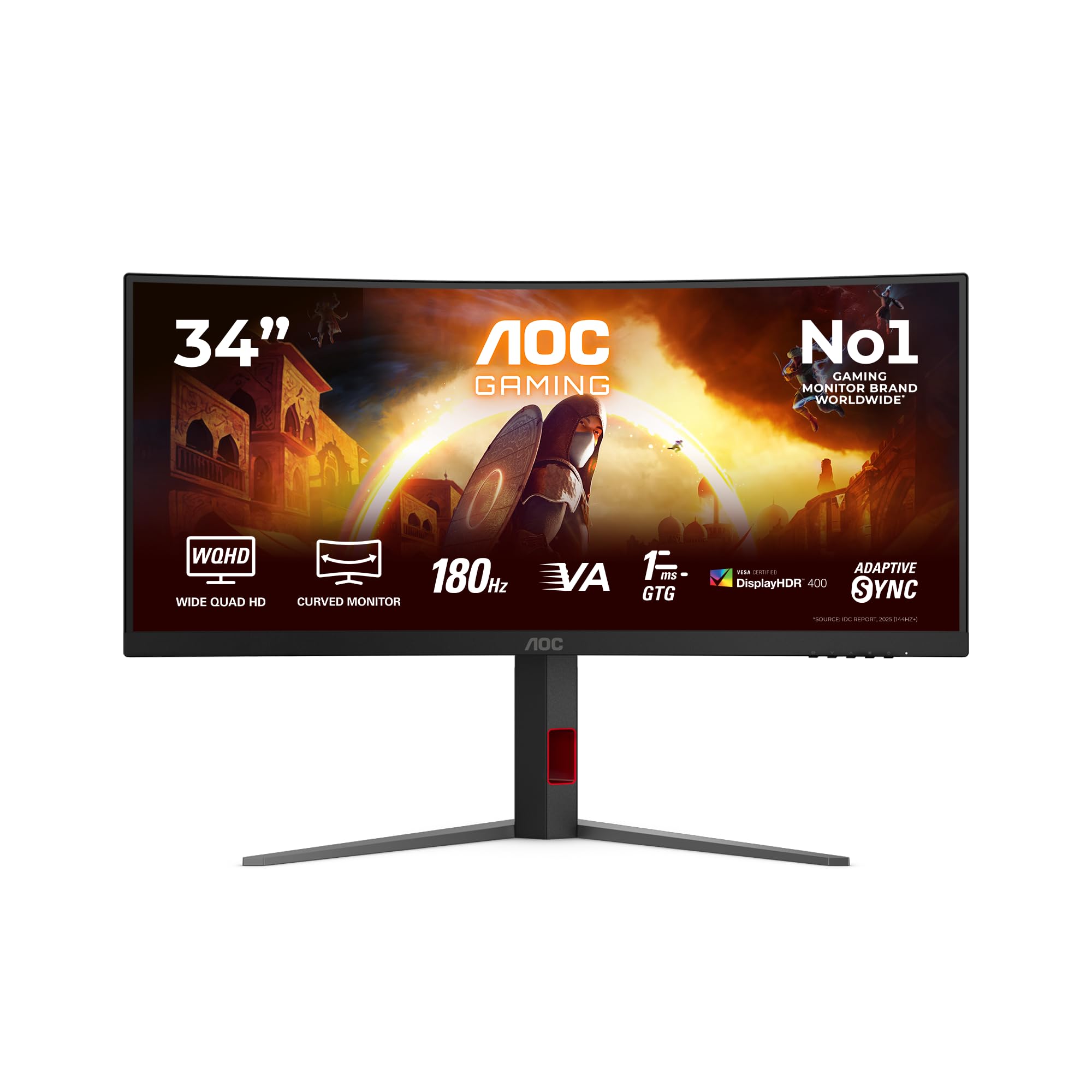 8.0 / 10
AOC CU34G4CA 34 inch UW-QHD Monitor Curved, 180Hz, Fast VA Panel, 1ms GtG, Adaptive Sync, HDR400, FreeSync, Height Adjustment, (3440x1440 HDMI 2x 2.0 DP 1x 1.4 USB Hub) Black
£288.97 · AOC
 7.5 / 10
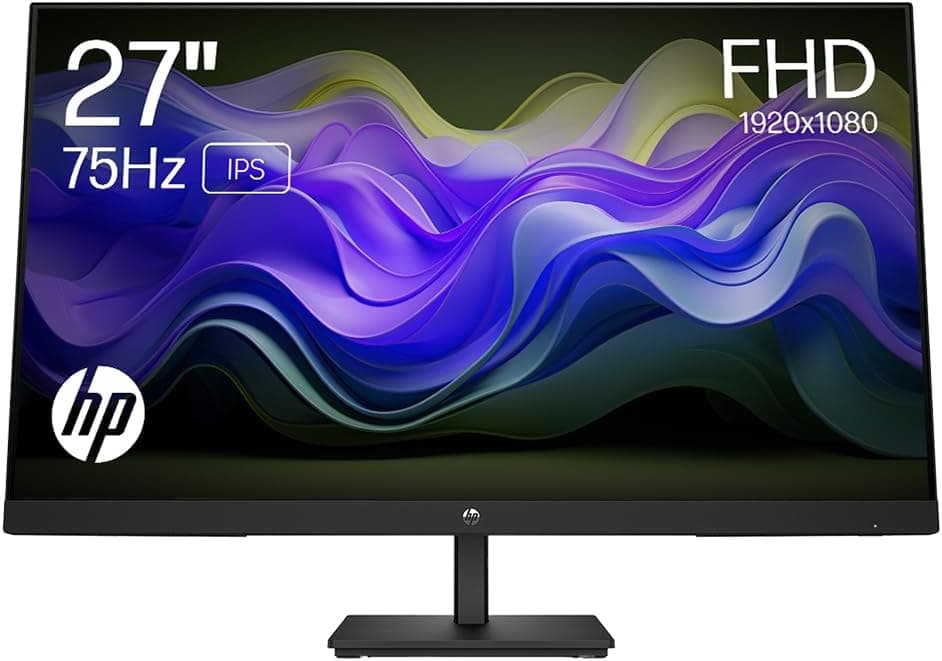
HP 27 Inch FHD Monitor | Full HD IPS LCD | 75hz Refresh Rate | 250 Nits Brightness | 1000:1 Contrast Ratio | AMD FreeSync | Adjustable Tilt | 1x HDMI 1.4, 1x DisplayPort 1.2, 1x VGA | Black | V27ie G5
£149.95 · HP
Frequently asked
5 questions01Is the Amzfast 4K Gaming Monitor 27 Inch, 4K UHD 3840x2160 Fast IPS, Dual Mode 4K@160Hz/FHD@320Hz, 1ms MPRT, HDR400, 93% DCI-P3, HDMI2.1x2 & DP1.4x2, Height Adjustable, Built-in Speakers, AMZG27F6U good for gaming?+
Yes, genuinely so, with the right GPU. In 4K mode at 160Hz, you get sharp, smooth gaming that's a significant step up from 60Hz or 144Hz panels. In FHD mode at 320Hz, the Fast IPS panel delivers competitive motion performance suitable for fast-paced FPS titles. The dual HDMI 2.1 ports also make it a strong choice for PS5 and Xbox Series X gaming at 4K 120Hz. You'll need a capable GPU (RTX 4070 or better is recommended for 4K gaming at high settings) to make the most of the 4K 160Hz mode, but for FHD 320Hz, a mid-range GPU will push the frame rates needed.
02Does the Amzfast 4K Gaming Monitor 27 Inch, 4K UHD 3840x2160 Fast IPS, Dual Mode 4K@160Hz/FHD@320Hz, 1ms MPRT, HDR400, 93% DCI-P3, HDMI2.1x2 & DP1.4x2, Height Adjustable, Built-in Speakers, AMZG27F6U have good HDR?+
Honestly, no, not in any meaningful sense. HDR400 is the lowest tier of VESA's DisplayHDR certification, requiring only 400 nits peak brightness and no local dimming. Without local dimming, the monitor can't produce the deep blacks alongside bright highlights that make HDR content look genuinely different from SDR. The wide colour gamut (93% DCI-P3) means HDR colour volume is rendered correctly, but the contrast performance stays at the standard IPS level of around 1000:1. If HDR quality is important to you, you need a panel with HDR600 or higher certification and full-array local dimming, or an OLED.
03Is the Amzfast 4K Gaming Monitor 27 Inch, 4K UHD 3840x2160 Fast IPS, Dual Mode 4K@160Hz/FHD@320Hz, 1ms MPRT, HDR400, 93% DCI-P3, HDMI2.1x2 & DP1.4x2, Height Adjustable, Built-in Speakers, AMZG27F6U good for content creation?+
It's capable for light to moderate creative work. The 93% DCI-P3 colour coverage is genuinely useful for photo and video editing, covering a wider colour space than standard sRGB monitors. The 4K resolution at 27 inches gives you 163 PPI, which is sharp enough for detailed editing work. The main limitation is the absence of published Delta-E accuracy data and factory calibration information, professional colour-critical work really needs verified colour accuracy figures. For general photo editing, social media content creation, and video work for web delivery, it's a solid choice. For broadcast or print colour-critical work, a professionally calibrated monitor with published Delta-E below 2 is the right tool.
04What graphics card do I need for the Amzfast 4K Gaming Monitor 27 Inch, 4K UHD 3840x2160 Fast IPS, Dual Mode 4K@160Hz/FHD@320Hz, 1ms MPRT, HDR400, 93% DCI-P3, HDMI2.1x2 & DP1.4x2, Height Adjustable, Built-in Speakers, AMZG27F6U?+
It depends on which mode you're using. For 4K at 160Hz gaming at high settings, you'll want an RTX 4070 Ti Super or RX 7900 GRE at minimum, 4K is demanding, and maintaining 100fps-plus at high settings in modern titles requires serious GPU power. For 4K at medium settings or in less demanding games, an RTX 4070 is workable. For FHD at 320Hz, the requirements are much lower, an RTX 4060 or RX 7600 can push well over 200fps in esports titles like CS2 or Valorant at 1080p. The dual-mode design means you can pair this monitor with a mid-range GPU and use FHD 320Hz for competitive gaming while enjoying 4K resolution for productivity and slower-paced games.
05What warranty and returns apply to the Amzfast 4K Gaming Monitor 27 Inch, 4K UHD 3840x2160 Fast IPS, Dual Mode 4K@160Hz/FHD@320Hz, 1ms MPRT, HDR400, 93% DCI-P3, HDMI2.1x2 & DP1.4x2, Height Adjustable, Built-in Speakers, AMZG27F6U?+
Specific warranty terms for the AMZG27F6U aren't confirmed in the verified product data available to us. When buying through Amazon UK, you're covered by Amazon's standard 30-day return policy and the A-to-Z Guarantee, which provides meaningful buyer protection regardless of the manufacturer's own warranty terms. For manufacturer warranty details, check the product listing or contact Amzfast directly before purchasing if this is a key factor in your decision.