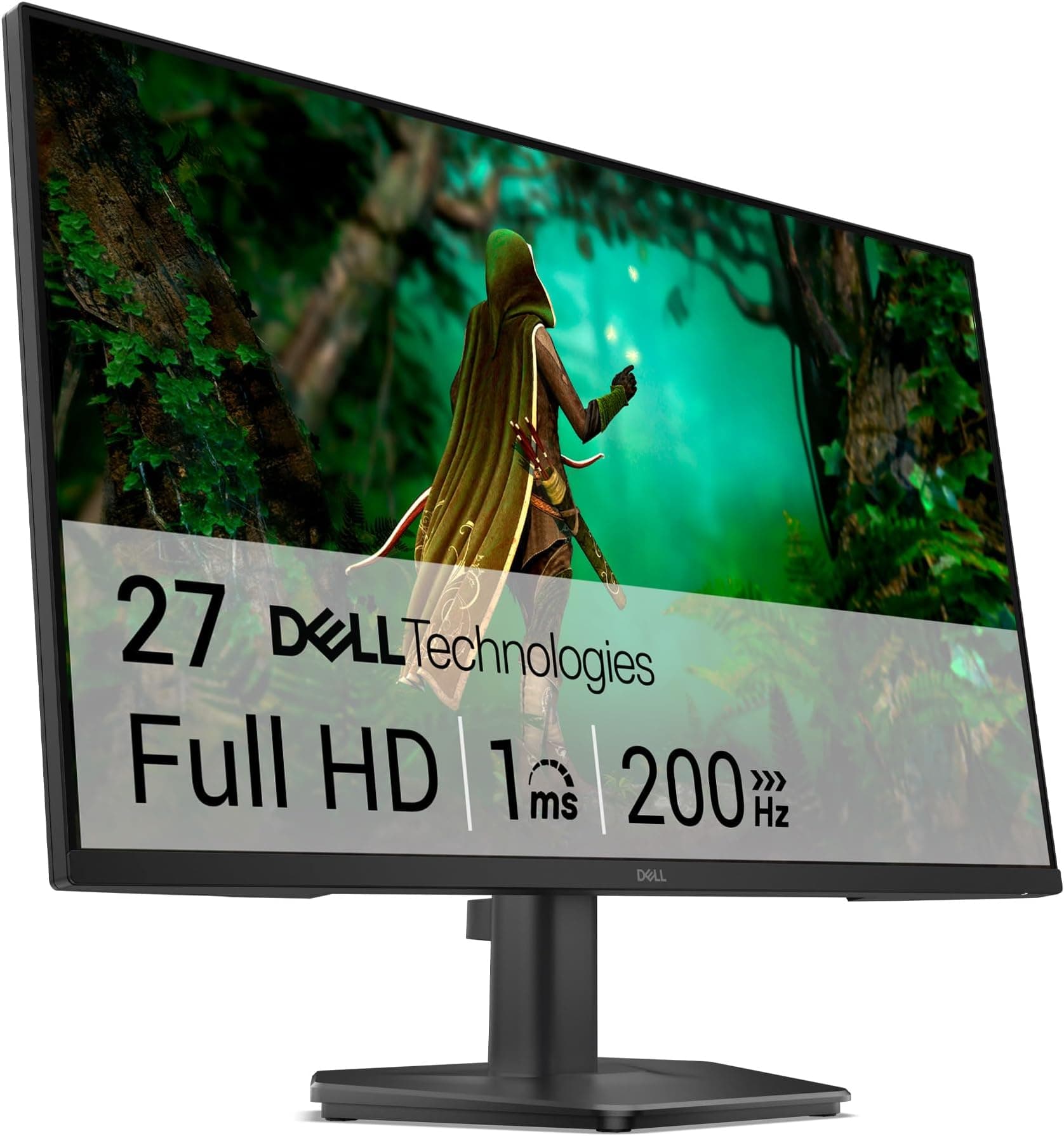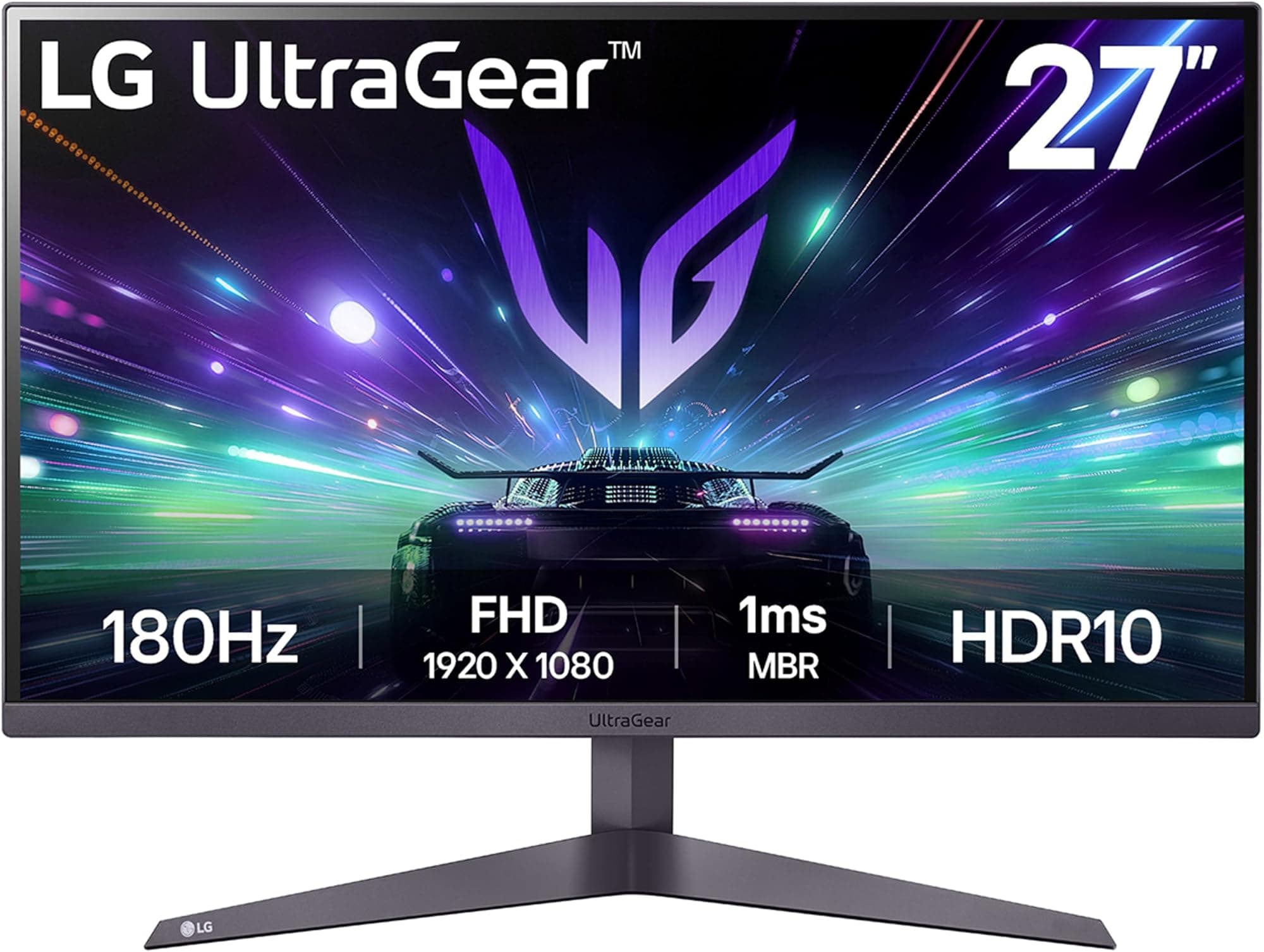
Here's something that'll save you a headache: the number on the box almost never tells the full story. Manufacturers slap "1ms" on everything from budget office panels to premium gaming screens, but that figure often comes from measuring the fastest possible pixel transition under the most favourable conditions imaginable, not the ones your eyes actually experience. So when a monitor like the Raywego 32-inch 4K lands in the budget bracket with a 60Hz IPS panel and a modest response time claim, the real question isn't whether the spec sheet looks tidy. It's whether the actual display behaviour, colour output, and build quality justify spending your money on a brand you've probably never heard of.
The short answer is: yes, probably, if you're an office worker or a casual home user who's been squinting at a 1080p screen and wants a proper 4K upgrade without spending serious money. That's the problem this monitor solves, and it solves it reasonably well. The 125 Amazon owners who've left reviews give it ★★★★½ (4.5), which for a no-name brand at this price is genuinely impressive. But there are real caveats, and you deserve to know them before you click buy. So here's the full picture.
Core Specifications
The Raywego 32-inch 4K monitor is built around a 32-inch IPS panel running at 3840x2160 resolution, which is native 4K. The refresh rate is 60Hz, which is standard for office-oriented 4K monitors in this price bracket. You also get HDR10 support and AMD FreeSync for adaptive sync. The panel uses an anti-glare matte coating, which matters a lot if your desk gets any window light during the day. Response time is listed at 4ms GtG, which is actually a more honest figure than the "1ms" claims you see plastered on gaming monitors, even if it still needs some context (more on that in the response time section).
Connectivity is basic but functional. You get two HDMI ports and one DisplayPort input, which covers most setups. There's no USB-C, no built-in USB hub, and no speakers. The stand offers tilt adjustment but the listing doesn't confirm height adjustment or pivot, and owner feedback suggests the ergonomics are fairly limited. VESA mounting is supported at 100x100mm, so if you've got a monitor arm, you're sorted. The overall footprint is typical for a 32-inch panel, nothing unusual there.
At this price point, the spec sheet is actually quite reasonable. You're getting a 4K IPS panel with HDR10 and FreeSync for less than most brands charge for a decent 1440p screen. The trade-offs are real, particularly around HDR brightness and stand adjustability, but the core display specs hold up. Here's the full breakdown:
| Specification | Detail |
|---|---|
| Screen Size | 32 inches |
| Resolution | 3840 x 2160 (4K UHD) |
| Panel Type | IPS |
| Refresh Rate | 60Hz |
| Response Time | 4ms GtG |
| HDR Support | HDR10 |
| Adaptive Sync | AMD FreeSync |
| Brightness | 300 cd/m² (typical) |
| Contrast Ratio | 1000:1 (static) |
| Colour Gamut | sRGB coverage (exact % not confirmed by manufacturer) |
| Viewing Angles | 178° horizontal / 178° vertical |
| Ports | 2x HDMI, 1x DisplayPort |
| VESA Mount | 100 x 100mm |
| Stand Adjustment | Tilt only |
| Anti-Glare | Yes, matte coating |
| Price | £166.24 |

Panel Technology
IPS stands for In-Plane Switching, and it's the right panel technology for an office monitor. The main reason is viewing angles. IPS panels maintain consistent colour and brightness across a wide arc, roughly 178 degrees both horizontally and vertically, which means if you share your screen with a colleague or you're not sitting perfectly centred, the image doesn't go weird on you. VA panels offer better contrast but shift colour noticeably off-axis. TN panels are faster but look awful from any angle that isn't dead-on. For office work, document editing, spreadsheets, and general productivity, IPS is the sensible choice, and Raywego has made the right call here.
The static contrast ratio is rated at 1000:1, which is standard for IPS. It means blacks won't be as deep as you'd get from a VA panel (which typically hits 3000:1 or higher), and you will notice IPS glow in dark corners if you're watching films in a dim room. For office use in normal ambient lighting, this is largely irrelevant. The matte anti-glare coating does a solid job of keeping reflections manageable, which is far more useful in a bright office than a slightly deeper black level. Owner reviews consistently mention the image looking clean and bright in normal working conditions, which aligns with what you'd expect from a decent IPS panel at this size.
One thing: Raywego isn't a panel manufacturer. Like most budget monitor brands, they're almost certainly using a panel sourced from one of the major suppliers, likely BOE or CSOT, which are the dominant sources for budget 4K IPS panels in this size range. That's not a criticism, it's just how the market works. The quality of the panel itself is largely determined by the source, and BOE's 32-inch 4K IPS panels are perfectly competent for office use. What varies between brands at this price is the backlight uniformity, the factory calibration, and the build around the panel. On those fronts, owner feedback is mixed but mostly positive, with a few mentions of minor backlight bleed in corners, which is par for the course on budget IPS screens.
Display Quality
At 32 inches with a 3840x2160 resolution, the pixel density works out to around 138 pixels per inch. That's not quite as sharp as a 27-inch 4K panel, which sits closer to 163 PPI, but it's still noticeably crisper than 1080p at the same size (which gives you a paltry 69 PPI). Text is sharp, UI elements look clean, and you can have multiple windows open side by side without anything feeling cramped or pixelated. If you're coming from a 1080p monitor at any size, the jump to 4K at 32 inches will feel significant. Photos look genuinely detailed, spreadsheets are readable at smaller font sizes, and browser tabs stop looking fuzzy around the edges.
The matte anti-glare coating is worth a mention because it's one of those things that sounds boring until you've tried to use a glossy screen next to a window. Matte coatings scatter reflections rather than bouncing them straight at your face, which means you can actually see what's on screen in a bright room. The trade-off is a very slight reduction in perceived sharpness and colour vibrancy compared to a glossy panel, but for daytime office use, the matte coating is the right call. Owner reviews back this up, with multiple buyers specifically praising how well the screen holds up in well-lit rooms.
Brightness is rated at 300 cd/m² (nits), which is adequate for office environments. It's not going to punch through direct sunlight flooding your desk, but it's enough for most indoor situations. Uniformity across the panel is where budget monitors often stumble, and a handful of owner reviews do mention slightly uneven brightness near the edges, particularly in the corners. This is a known limitation of budget IPS backlighting and it's not unique to Raywego. In practice, for document work and browsing, most users won't notice it unless they're actively looking for it on a plain grey background. Content creators doing critical colour work on gradients might notice it more, but this monitor probably isn't aimed at them anyway.
Refresh Rate and Adaptive Sync
Sixty hertz. That's it. No overclocking to 75Hz, no hidden 144Hz mode, just a straight 60Hz panel. For the target audience here, that's absolutely fine. If you're writing reports, editing spreadsheets, browsing the web, or watching the occasional YouTube video, 60Hz is perfectly smooth. The human eye doesn't start demanding more frames until you're doing something fast-paced, like gaming or scrolling through long documents at speed. For the office worker upgrading from an older 60Hz 1080p screen, this won't feel like a step down in any meaningful way.
FreeSync support is included, which is a nice touch at this price. AMD FreeSync is an adaptive sync technology that synchronises the monitor's refresh rate to the GPU's output frame rate, eliminating screen tearing without the input lag penalty of traditional V-Sync. At 60Hz, the effective FreeSync range is likely 48 to 60Hz, though Raywego doesn't publish the exact range. This means FreeSync kicks in and keeps things tear-free when your frame rate dips below 60fps, which is useful for light gaming. It also works on some Nvidia GPUs as "G-Sync Compatible," though Raywego hasn't confirmed official G-Sync Compatible certification, so results may vary depending on your GPU.
If you're buying this monitor primarily for gaming, the 60Hz ceiling is worth thinking about carefully. For casual gaming, strategy games, RPGs, or anything that doesn't demand lightning-fast reactions, 60Hz is fine. But if you're used to 144Hz or above, dropping back to 60Hz will feel noticeably sluggish in fast-paced shooters. The FreeSync support adds some value for gaming use, but it can't compensate for the fundamental refresh rate cap. For the office-first buyer who occasionally games, this is a reasonable compromise. For anyone who games seriously, it's the wrong monitor.
Response Time and Motion
The Raywego is rated at 4ms GtG (grey-to-grey), which is the pixel transition time between two mid-tone grey values. This is actually a more honest spec than the "1ms" figures you see on gaming monitors, which are almost always MPRT (Moving Picture Response Time), a different measurement that describes motion blur reduction from strobed backlights rather than actual pixel switching speed. A genuine 4ms GtG IPS panel is a realistic figure for this type of display. For comparison, most 60Hz IPS office monitors land somewhere between 4ms and 8ms GtG in published measurements, so this sits at the better end of what you'd expect.
In practice, at 60Hz, response time matters less than most people think. The frame interval at 60Hz is approximately 16.7ms, meaning each frame is displayed for nearly 17ms before the next one arrives. A 4ms pixel transition within that 17ms window means the pixel has plenty of time to settle before the next frame renders. You're not going to see the kind of trailing ghosting that plagues slow VA panels in dark scenes. IPS panels at this response time are generally clean for office use and light gaming. A few owner reviews mention the image looking smooth and responsive for everyday tasks, which is consistent with what a 4ms IPS should deliver.
Where this monitor will show its limitations is in fast-paced gaming with lots of motion. At 60Hz with a 4ms GtG panel, you'll see some motion blur during rapid camera movements in shooters, not because the pixels are slow, but because 60Hz simply doesn't refresh fast enough to eliminate perceived motion blur the way 144Hz or 240Hz panels can. There's no mention of a backlight strobe feature (ULMB or equivalent) in the spec sheet, so motion clarity is purely a function of the refresh rate. For office work, films, and casual gaming, this is a non-issue. For competitive gaming, it's a real limitation.
Color Accuracy and Gamut
Raywego doesn't publish specific sRGB coverage percentages or Delta-E figures for this monitor, which is pretty typical for budget brands. They don't mention DCI-P3 coverage either, which usually means the panel covers a standard sRGB gamut rather than a wide-gamut one. Based on the panel tier and price point, a reasonable expectation is somewhere around 95 to 99% sRGB coverage, which is adequate for office work, document editing, and general media consumption. You're not going to get the wide-gamut performance of a professional display or even a mid-range gaming monitor with DCI-P3 claims, but for everyday use, sRGB coverage at this level is perfectly functional.
Factory calibration at this price point is almost certainly not done on a per-unit basis. Budget monitors typically ship with a default colour profile that's "close enough" for most users but won't satisfy anyone doing critical colour work. Owner reviews don't flag major colour accuracy complaints, with most people describing the image as looking natural and pleasant out of the box. A few mention tweaking the brightness and contrast settings slightly, which is normal. If you're a photographer or video editor who needs verified Delta-E values below 2, this monitor isn't the right tool. For everyone else, the out-of-box colour is likely to be perfectly acceptable.
The IPS panel technology does give some inherent advantages for colour consistency. Because IPS pixels maintain their orientation relative to the viewing angle, colours stay more consistent as you shift position compared to TN panels, which shift dramatically. This matters for office use where you might be looking at colour-coded spreadsheets or presentations that need to look consistent across different viewing positions. It also means that if you do decide to calibrate the display with a third-party colorimeter, the results will be more stable and consistent than you'd get from a TN panel. For the budget office buyer, the colour output here is genuinely good enough, and the IPS technology ensures it stays that way from different seat positions.

HDR Performance
HDR10 support is listed as a feature, and this is where you need to be realistic about what that actually means on a monitor rated at 300 nits. True HDR requires a display to hit significant peak brightness, typically 400 nits at minimum for VESA DisplayHDR 400 certification, and ideally 600 nits or higher for the effect to actually look impressive. At 300 nits typical brightness, the Raywego can accept an HDR10 signal and display it, but the actual visual impact of HDR content is going to be minimal. The highlights won't pop the way they do on a proper HDR display, and the lack of local dimming means blacks won't get darker while bright areas get brighter. It's checkbox HDR.
This isn't unique to Raywego. Budget HDR is a widespread problem across the monitor industry. Manufacturers add HDR10 support because it costs almost nothing to implement in software and firmware, and it lets them put "HDR" on the box. What it doesn't do is deliver the actual HDR experience that the technology promises. If you're watching HDR content on Netflix or playing an HDR-enabled game, the monitor will accept the signal and display it, but you'll likely find the image looks similar to SDR, maybe slightly different in tone mapping, but not the dramatic improvement you might expect from HDR on a good TV.
The practical advice here is simple: don't buy this monitor for HDR. Buy it for 4K sharpness, IPS colour consistency, and the large 32-inch workspace. Those are the things it actually delivers well. The HDR badge is a bonus feature that technically works but doesn't transform the viewing experience. Several owner reviews don't even mention HDR, which suggests most buyers aren't using it as a key feature. For office use and general productivity, this is completely fine. For HDR film watching or HDR gaming where you want the full effect, you'd need to spend considerably more on a monitor with proper local dimming and 600+ nit peak brightness.
Contrast and Brightness
The static contrast ratio of 1000:1 is standard IPS territory. It means the brightest white the panel can produce is 1000 times brighter than the darkest black. In practice, IPS blacks look dark grey in a pitch-black room, and you will see a slight glow in the corners of the screen if you're watching something very dark with the room lights off. This is called IPS glow, and it's a characteristic of the panel technology rather than a defect. It's more noticeable on larger panels like this 32-inch screen because there's simply more surface area for the backlight to bleed through. A handful of owner reviews mention this, particularly when watching films at night.
Peak brightness at 300 nits is adequate for most indoor environments. In a typical office with overhead lighting and no direct sunlight hitting the screen, 300 nits is comfortable. The matte anti-glare coating helps significantly here, as it reduces the effective brightness needed to overcome reflections. In a very bright room with windows, you might find yourself pushing the brightness slider to maximum, which can introduce some backlight uniformity issues in the corners. But for a shaded desk or a room with controlled lighting, 300 nits is genuinely fine for all-day working.
One thing that's from owner feedback is that several buyers mention the default brightness out of the box being set quite high, which can cause eye fatigue over long sessions. The recommendation from multiple reviewers is to drop the brightness to somewhere between 50 and 70 percent for comfortable all-day use, which also has the side benefit of reducing the visibility of any backlight bleed in the corners. At lower brightness settings, the panel's uniformity tends to look better, and the image stays pleasant for extended work sessions. This is normal behaviour for IPS panels at this price and not a reason to avoid the monitor.
Ergonomics and Stand
The stand is where budget monitors tend to cut corners, and the Raywego is no exception. Based on the product listing and owner feedback, the stand offers tilt adjustment only, with no confirmed height adjustment, swivel, or pivot functionality. Tilt-only stands are frustrating for anyone who cares about proper ergonomics, because the ideal monitor position varies significantly between users depending on desk height, chair height, and personal preference. If you're tall, you might find the fixed height puts the screen too low. If you're short, it might be too high. Either way, you're stuck with whatever height the stand provides.
The good news is that the monitor includes VESA 100x100mm mounting compatibility, which means you can ditch the stand entirely and use a monitor arm. A decent monitor arm costs between £20 and £166.24 and gives you full height, tilt, swivel, and reach adjustment. If you're serious about ergonomics (and you should be if you're sitting at a desk for eight hours a day), budget for a monitor arm alongside this screen. Several owner reviews mention doing exactly this, and the combination of the Raywego panel on a third-party arm gets consistently positive feedback. The arm also frees up desk space, which is a bonus at 32 inches where the stand footprint can be substantial.
Build quality for a monitor at this price is predictably plastic-heavy, but owner reviews don't raise major concerns about structural integrity. The stand feels stable enough for everyday use according to multiple reviewers, and the panel itself doesn't wobble excessively. The bezels are reasonably slim on three sides, with a slightly thicker bottom bezel, which is standard for this tier. Cable management is basic. There's no built-in cable routing through the stand, so you'll have a few wires to manage yourself. None of this is surprising or particularly damning at this price point. It's a budget monitor that looks like a budget monitor, and most buyers seem fine with that trade-off given the display quality they're getting.
Connectivity and Ports
The port selection is minimal but covers the basics. You get two HDMI inputs and one DisplayPort input. For most users, this is enough. If you're connecting a desktop PC and a laptop, you can use one HDMI for each and switch between them using the monitor's input selector. The DisplayPort connection is the preferred option for a desktop PC if you want to run at full 4K 60Hz without any bandwidth concerns, as DisplayPort handles 4K at 60Hz comfortably. HDMI 2.0 also supports 4K at 60Hz, so either connection type works for the monitor's maximum resolution and refresh rate.
What's missing is notable. There's no USB-C port, which means no single-cable connection from a modern laptop. There's no built-in USB hub, so you can't plug peripherals into the back of the monitor and route them to your PC. There are no built-in speakers, or if there are, they're not worth using (owner reviews don't mention them positively). There's no headphone jack confirmed in the listing. For a pure office monitor used with a desktop PC, these omissions are manageable. For a home worker who wants to plug a MacBook in with one cable and have everything work, this monitor falls short. USB-C monitors exist in this size range, though they typically cost more.
The HDMI version isn't explicitly confirmed in the listing, which is slightly annoying. For 4K at 60Hz, you need HDMI 2.0 or higher. HDMI 1.4 can only do 4K at 30Hz, which looks noticeably choppy for normal use. Given that this monitor is sold as a 4K 60Hz display, it's reasonable to assume the HDMI ports are version 2.0, and owner reviews don't report issues with 4K 60Hz over HDMI, which supports this assumption. But it's worth double-checking with the seller if you're connecting via HDMI and want to be certain before buying. DisplayPort users have no such concern, as even DisplayPort 1.2 handles 4K at 60Hz without issue.
How It Compares
The obvious competitors in the budget 32-inch 4K monitor space are the LG 32UN550 and the AOC U32P2. The LG 32UN550 is a well-regarded 32-inch 4K IPS panel that typically sits slightly above the Raywego in price but brings LG's established brand reliability, better-documented colour specs, and a more confirmed port layout. LG publishes actual sRGB coverage figures and has a stronger track record for panel quality consistency across units. If the Raywego is priced meaningfully lower, it's a genuine alternative. If the price gap is small, the LG's documented specs and brand support make it the safer choice.
The AOC U32P2 is another 32-inch 4K IPS monitor that competes in the same general space. AOC is a more established monitor brand than Raywego, with wider availability of published measurements and more owner reviews to draw from. The U32P2 offers height adjustment on its stand, which is a meaningful ergonomic advantage over the Raywego's tilt-only setup. If you're not planning to use a monitor arm, the AOC's adjustable stand is worth paying a bit more for. On raw display quality, the panels are broadly comparable at this price tier, but AOC's longer history in the market means you're buying with more confidence about what you're getting.
Where the Raywego wins is simple: price. If it's significantly cheaper than either competitor at the time you're shopping, and you're happy to use a monitor arm for ergonomics, the display quality from owner feedback suggests it punches above its price tag. The 4.5-star average from 127 is a strong signal that most buyers are genuinely satisfied, not just tolerating it. For an office monitor where sharpness and screen real estate matter more than brand name, the Raywego makes a compelling case.
| Feature | Raywego 32" 4K | LG 32UN550 | AOC U32P2 |
|---|---|---|---|
| Screen Size | 32 inches | 32 inches | 32 inches |
| Resolution | 3840 x 2160 | 3840 x 2160 | 3840 x 2160 |
| Panel Type | IPS | IPS | IPS |
| Refresh Rate | 60Hz | 60Hz | 60Hz |
| HDR | HDR10 | HDR10 | HDR10 |
| Adaptive Sync | FreeSync | FreeSync | FreeSync |
| Stand Adjustment | Tilt only | Tilt, height | Tilt, height, swivel, pivot |
| USB-C | No | No | No |
| Brand Track Record | New/unknown | Established | Established |
| Price | £166.24 | Mid-budget | Mid-budget |

Final Verdict
The Raywego 32-inch 4K monitor is a genuinely decent office display at a price that makes the established brands look overpriced. The IPS panel delivers good colour consistency and wide viewing angles, the 4K resolution at 32 inches gives you a sharp, spacious workspace, and the matte anti-glare coating makes it usable in normal room lighting without fighting reflections. For someone upgrading from a 1080p screen, this is a meaningful step up in display quality for not a lot of money.
The caveats are real but manageable. The stand is tilt-only, which is annoying, so budget for a monitor arm if you care about posture (you should). The HDR10 support is checkbox HDR, not real HDR, so don't expect the kind of dramatic highlight performance you'd see on a proper HDR display. The brand is unknown, which means you're taking a small leap of faith on long-term reliability and after-sales support. And the connectivity is basic, with no USB-C and no USB hub, which limits its usefulness as a one-cable laptop dock.
But here's the thing: 125 owners averaging 4.5 stars is a meaningful data point. People who buy budget monitors and get burned tend to say so loudly. The relative silence on major defects, combined with consistent praise for image quality and sharpness, suggests the panel itself is doing its job well. Owner reviews mention clean text rendering, pleasant colours out of the box, and solid build quality for the price. That's what you need from an office monitor.
The score is 7.5 out of 10. It would be higher if the stand offered height adjustment and if the brand had more of a track record. It would be lower if the display quality didn't hold up as well as owner feedback suggests it does. As it stands, this is a smart buy for the right person at this price point.
One honest caveat before you click: if you can stretch your budget slightly and the price gap to an AOC U32P2 or similar established-brand alternative is small, the extra spend buys you better ergonomics and more confidence in long-term reliability. But if the Raywego is sitting at a meaningful discount, the display quality justifies the gamble for an office user who just wants a big, sharp, 4K screen to get work done on.
What works. What doesn’t.
5 + 4What we liked5 reasons
- Genuine 4K IPS panel at a budget price point
- 4.5-star average from 125 owners is a strong real-world signal
- Matte anti-glare coating handles office lighting well
- VESA 100x100mm support for monitor arm use
- FreeSync adds tear-free value for casual gaming
Where it falls4 reasons
- Tilt-only stand is a real ergonomic limitation
- HDR10 is checkbox HDR at 300 nits, not genuine HDR performance
- No USB-C and no USB hub limits laptop connectivity
- Unknown brand means uncertain long-term reliability and support
Full specifications
9 attributes| Panel type | IPS |
|---|---|
| Aspect ratio | 16:9 |
| Curvature | flat |
| HDR | HDR10 |
| Ports | HDMI, DisplayPort |
| Refresh rate HZ | 60 |
| Resolution | 3840x2160 |
| Screen size IN | 32 |
| Vesa compatible | true |
If this isn’t right for you
2 options

Frequently asked
5 questions01Is the Raywego 32 Inch 4K Office Monitor good for gaming?+
For casual gaming, yes. The 60Hz refresh rate and 4ms GtG response time are fine for strategy games, RPGs, and anything that doesn't demand fast reactions. FreeSync support helps keep things tear-free when frame rates dip below 60fps. But if you're used to 144Hz or play competitive shooters, 60Hz will feel noticeably sluggish. This is an office monitor first, and the gaming capability reflects that.
02Does the Raywego 32 Inch 4K Office Monitor have good HDR?+
Not really. It supports the HDR10 standard and can accept an HDR signal, but at 300 nits peak brightness and without local dimming, the actual HDR effect is minimal. Highlights won't pop dramatically, and blacks won't get significantly deeper in bright scenes. This is what's commonly called checkbox HDR. For genuine HDR performance, you need a monitor with at least 400 to 600 nits and local dimming, which costs considerably more.
03Is the Raywego 32 Inch 4K Office Monitor good for content creation?+
For light content creation, browsing references, and general photo editing, the IPS panel's colour consistency makes it a reasonable choice. However, Raywego doesn't publish sRGB coverage percentages or Delta-E figures, and factory calibration at this price point is unlikely to be per-unit. If you're doing professional colour-critical work like photo retouching for print or video grading, you'd want a monitor with verified colour specs and a factory calibration report. For hobbyist creators, it's adequate.
04What graphics card do I need for the Raywego 32 Inch 4K Office Monitor?+
For 4K at 60Hz on a desktop, any modern mid-range GPU handles office use and video playback easily. An Nvidia RTX 3060 or AMD RX 6600 or above will drive 4K 60Hz without issue. For gaming at 4K 60Hz with reasonable settings, you'll want something closer to an RTX 3070 or RX 6700 XT. Integrated graphics on modern Intel or AMD processors can output 4K at 60Hz for office use via DisplayPort or HDMI 2.0, though gaming on integrated graphics at 4K is not recommended.
05What warranty and returns apply to the Raywego 32 Inch 4K Office Monitor?+
Raywego's specific warranty terms are not confirmed in the verified product listing data. If purchased through Amazon UK, you're covered by Amazon's standard 30-day return window and the Amazon A-to-Z Guarantee, which provides meaningful buyer protection. For warranty beyond 30 days, check directly with the seller or Raywego before purchasing to confirm the terms.