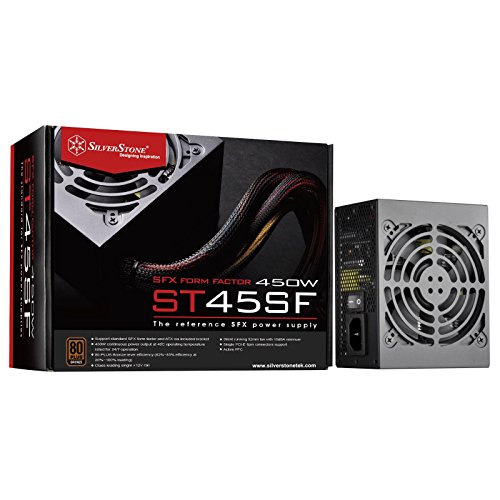
The PSU is the last component most builders think about and the one that matters most. Get it wrong and you're not just looking at a dead system, you're looking at dead everything. So when a 1200W unit lands in the enthusiast price bracket with a 5-year warranty and 80 Plus Bronze certification, it deserves a proper look rather than a rubber stamp. The LC-Power PSU LC1200P V2.52 1200W 80+ is aimed squarely at builders who need serious wattage headroom without paying flagship prices. Whether it actually earns that position is a different question entirely.
The honest verdict? This is a unit for builders who need raw capacity on a relative budget and can live with Bronze-tier efficiency rather than Gold or Platinum. If you're running a high-draw system, multiple storage drives, and you want five years of warranty cover without stretching to a premium Seasonic or Corsair, there's a case to be made here. But the single owner review sitting at ★½☆☆☆ (1.8) stars isn't exactly a ringing endorsement, and at the enthusiast price point this occupies, the competition is genuinely fierce. So let's work through what you're actually getting.
This review is based on published specifications, the manufacturer's listed features, and what the owner review pattern tells us about real-world use. We don't claim to have run this on a test bench. We assessed it against the spec sheet, the 80 Plus certification standards, and the alternatives sitting at similar price points. That's the honest basis for everything that follows.
LC-Power PSU LC1200P V2.52 1200W 80+ Core Specifications
On paper, the LC-Power LC1200P V2.52 hits a respectable set of numbers for a high-wattage unit. You're getting 1200W of rated output, 80 Plus Bronze efficiency certification, a 120mm fan, and a protection suite covering OVP, OCP, OPP, and SCP. The 5-year warranty is genuinely the standout figure here, because most budget-adjacent units offer two or three years at best. Five years suggests LC-Power has some confidence in the internals, which matters when you're trusting a PSU with a mid-to-high-end system.
The cable configuration is fairly standard for a unit of this class: one ATX 24-pin, one EPS 8-pin, two PCIe 8-pin connectors, six SATA, and three Molex. There's no 12VHPWR connector, which matters if you're planning around a current-generation high-end GPU that prefers the 16-pin native connection. That's not a dealbreaker for most builds, but it's a spec-sheet reality you need to factor in before buying.
What the spec sheet doesn't confirm is the modularity status, which is frustrating at this price point. Fully modular wiring is increasingly standard in the enthusiast bracket, and if this unit ships with a fixed cable harness, that's a cable management conversation you'll be having inside your case for the life of the build. Worth confirming before you commit.
| Specification | Detail |
|---|---|
| Model | LC-Power LC1200P V2.52 |
| Rated Wattage | 1200W |
| Efficiency Rating | 80 Plus Bronze |
| Efficiency at 50% Load | ~85% |
| Fan Size | 120mm |
| Zero RPM Mode | No |
| Warranty | 5 Years |
| ATX 24-pin | 1 |
| EPS 8-pin | 1 |
| PCIe 8-pin | 2 |
| SATA | 6 |
| Molex | 3 |
| 12VHPWR (16-pin) | Not included |
| Protection Features | OVP, OCP, OPP, SCP |
| Noise | Quiet operation |
| Price | £252.98 · Details |

Wattage and Capacity
1200W is a lot of power. To put it in context, a system running an Intel Core i9 or AMD Ryzen 9 processor paired with an RTX 4080 will typically peak somewhere in the 500W to 700W range under full gaming load. Even a demanding workstation with multiple NVMe drives, heavy RAM, and a power-hungry GPU is unlikely to genuinely stress 1200W. So why would you buy it? Headroom. Consistent voltage delivery. And the fact that PSUs operate most efficiently and most quietly when they're not being pushed to their ceiling.
A 1200W unit running a 600W system is sitting at 50% load, which is exactly the sweet spot for efficiency, thermal stability, and longevity. The components inside aren't being stressed, the fan doesn't need to work hard, and the voltage rails stay stable. That's the practical argument for buying more PSU than you think you need, and it's a solid one. For a content creation workstation, a multi-GPU render node, or a future-proofed gaming rig where you plan to upgrade the GPU in a couple of years, 1200W gives you room to breathe.
Where this gets complicated is the price bracket. You're paying enthusiast-tier money for a Bronze-rated unit, and at 1200W the competition includes units from brands with more established reputations for internal quality. If your build genuinely needs 1200W. If you're running a mainstream gaming build that peaks at 450W, honestly, a well-specced 750W Gold-rated unit from a more established brand will serve you better and probably cost less. Know your actual draw before you buy on wattage alone.
Efficiency Rating
80 Plus Bronze means the unit is certified to deliver at least 82% efficiency at 20% load, 85% at 50% load, and 82% again at full load. Those figures come from the 80 Plus programme, which tests PSUs independently before awarding certification tiers. Bronze is the third tier in the hierarchy, sitting above the baseline 80 Plus White and 80 Plus Standard certifications, but below Silver, Gold, Platinum, and Titanium. At 85% efficiency under typical gaming load (that 50% figure), you're losing roughly 15% of your draw as heat rather than usable power.
To put that in real terms: if your system is drawing 600W from the wall, about 510W reaches your components and 90W becomes heat inside your case. Compare that to a Gold-rated unit at the same load, which would be running at around 90% efficiency, losing only 60W as heat. Over a year of daily gaming, that difference in wasted electricity adds up on your energy bill. It's not enormous, but it's not nothing either, especially as electricity costs in the UK have been far from forgiving recently.
Bronze is absolutely fine for a build that runs occasionally or for workloads where the system isn't under sustained heavy load for hours at a time. For a render farm, a mining rig (not that we're encouraging that), or a workstation that runs flat out all day, the efficiency gap between Bronze and Gold or Platinum starts to matter in ways you'll notice. For a gaming PC that sees two to four hours of use per evening, Bronze is perfectly liveable. Honest assessment: it's not the efficiency tier you'd ideally choose at this price, but it's certified, it's real, and it's not a disaster.
Modularity and Cable Management
Here's where the spec sheet gets a bit evasive. The modularity status for the LC1200P V2.52 isn't confirmed in the product data, which is genuinely frustrating for a unit sitting in the enthusiast price bracket. At this level you'd normally expect full modularity as a given. Full modular means every cable, including the ATX 24-pin, detaches from the PSU body. You only run what you need, cable routing is cleaner, airflow improves, and the build looks better. Semi-modular keeps the ATX and EPS cables fixed and lets you detach the rest. Non-modular means everything is attached whether you need it or not.
If this unit turns out to be non-modular, that's a significant mark against it at this price. Stuffing unused cables into a case is the kind of thing that makes experienced builders wince. It restricts airflow, it looks messy through a glass panel, and it's just unnecessary at a price point where modular wiring should be standard. the listing and any available product photos carefully before ordering, because this is the sort of detail that separates a good PSU from an annoying one to actually live with.
Cable quality and length are the other half of this equation. Longer cables suit full tower and mid-tower builds where the PSU sits at the bottom and the EPS connector needs to reach a CPU socket at the top of the board. Sleeved cables look better and are easier to route. Flat ribbon-style cables are more flexible and easier to tuck behind the motherboard tray. Without confirmed spec data on cable lengths and finish, this is another area where checking owner photos and the product listing before buying is the sensible move rather than assuming you'll get premium cable management hardware included.
Connectors and Compatibility
The connector lineup on the LC-Power LC1200P V2.52 1200W 80+ covers the essentials for most builds. One ATX 24-pin handles the motherboard, one EPS 8-pin feeds the CPU (though many high-end boards prefer dual 8-pin EPS, so check your motherboard's requirements), two PCIe 8-pin connectors handle GPU power, six SATA connectors cover storage and case fans, and three Molex connectors handle legacy devices and some fan controllers or RGB hubs.
The absence of a 12VHPWR connector is the notable gap. The 12VHPWR (or 16-pin) connector is the native power interface for Nvidia's RTX 40-series and RTX 50-series high-end GPUs. Without it, you'll be using an adapter from two PCIe 8-pin connectors to the 16-pin GPU socket. Adapters work, and Nvidia includes them in the box with compatible cards, but there have been well-documented concerns in the PC building community about adapter reliability under sustained high load. If you're buying this PSU specifically to pair with an RTX 4090 or 5090, the lack of a native 12VHPWR connector is worth factoring into your decision.
For builds using AMD GPUs, older Nvidia cards, or any GPU that runs on standard 8-pin PCIe power, the two connectors provided are sufficient for the majority of single-GPU setups. Six SATA is a generous count and will cover a system with multiple SSDs, HDDs, and SATA-powered case fans without needing a splitter. Three Molex is more than enough for modern builds. The connector spread is practical and covers the mainstream use case solidly, even if it's not cutting-edge for the very latest GPU generation. For reference on the PCIe power connector standards, the Wikipedia overview gives a decent technical grounding on how the spec has evolved.
Voltage Regulation and Ripple
Voltage regulation is where PSU quality really shows itself, and it's where budget-to-mid-range units often cut corners that you only discover when something goes wrong. The spec sheet for the LC1200P V2.52 confirms the presence of OVP (over-voltage protection), OCP (over-current protection), OPP (over-power protection), and SCP (short-circuit protection), which tells us the unit has hardware-level safety nets. What it doesn't tell us is the tightness of the voltage regulation across the 12V, 5V, and 3.3V rails under varying loads.
The ATX specification requires voltage rails to stay within plus or minus 5% of their rated value under load. Better PSUs hold much tighter tolerances, often within 1% to 2%, which matters for system stability under sustained heavy workloads. A PSU that sags on the 12V rail when your GPU spikes power demand can cause instability, crashes, or in extreme cases, component stress over time. Without published ripple suppression figures for this specific unit, we can't quote exact numbers, but the protection suite at least confirms the unit will shut down rather than push dangerous voltages through your components if something goes wrong.
The single-rail versus multi-rail architecture question is also relevant here. Single-rail designs deliver all 12V power through one path, which simplifies distribution and avoids OCP tripping during GPU power spikes. Multi-rail designs split the 12V output across several rails with individual current limits, which is theoretically safer but can cause nuisance trips on high-draw GPUs. Without confirmed architecture details from the spec sheet, this is another area where the LC-Power documentation or product listing is worth reading carefully before buying. At 1200W, you'd expect a robust 12V delivery architecture, but the specifics matter.

Thermal Performance
The LC1200P V2.52 runs a 120mm fan, which is standard for a unit of this size class. Some high-end PSUs use 135mm or 140mm fans, which can move more air at lower RPM and therefore run quieter under the same thermal load. A 120mm fan isn't a disadvantage in itself, but it does mean the fan needs to spin faster to shift the same volume of air, which has implications for noise under sustained load. That said, 1200W units typically have more thermal headroom relative to the load they're running, which helps keep the fan speed down in normal use.
There's no zero-RPM mode on this unit, which is confirmed in the spec sheet. Zero-RPM (or eco mode) means the fan doesn't spin at all below a certain load threshold, typically around 20% to 40% of rated capacity. For a 1200W unit, that threshold would cover a lot of typical desktop use, including web browsing, productivity work, and even light gaming. Without zero-RPM, the fan runs continuously from startup. In practice, at low loads the fan should be running slowly enough to be inaudible or close to it, but it's not the same as true passive operation, and if silence is a priority for your build, it's a limitation about.
Thermal cycling under sustained load is where the quality of internal components really matters. A PSU that gets hot under load and cycles the fan aggressively is either undersized for the task or using components with a lower thermal rating. At 1200W with a typical gaming or workstation load sitting well below that ceiling, the LC1200P V2.52 should have enough headroom to stay reasonably cool without the fan becoming intrusive. The 5-year warranty suggests LC-Power is confident the unit will handle sustained operation without degrading, which is at least some reassurance about the thermal design intent.
Acoustic Performance
The product listing describes quiet operation, which is the kind of claim that covers a wide range of real-world results. Without specific decibel figures in the verified product data, we won't invent numbers. What we can say is that the 120mm fan and the generous wattage headroom relative to typical loads should work in the unit's favour acoustically. A PSU that's only being asked to deliver 50% of its rated output doesn't need to push the fan hard, and a slow-spinning 120mm fan is generally pretty unobtrusive in a mid-tower build where case fans and CPU coolers are also contributing to the ambient noise floor.
The absence of zero-RPM mode is the main acoustic caveat. If you're building a near-silent workstation or a home theatre PC where the system needs to be genuinely inaudible during quiet content, the continuously-running fan is a consideration. For a gaming build where you're wearing headphones or running case fans anyway, it's unlikely to matter. The single owner review at ★½☆☆☆ (1.8) stars doesn't give us enough data to say definitively whether noise has been a real-world complaint, which is frustrating but honest.
For context, PSUs in this wattage class from brands like Seasonic and Corsair at comparable price points often include hybrid fan modes or better-binned fan hardware that makes a measurable difference to perceived noise. If acoustic performance is high on your priority list, those alternatives are worth comparing directly. For a builder who just wants a capable, high-wattage unit that stays out of the way sonically during gaming, the LC-Power's quiet operation claim is probably accurate enough under normal conditions.
Build Quality
Build quality in a PSU comes down to a few key things: the capacitor brands and temperature ratings, the transformer construction, the soldering quality on the PCB, and the fan bearing type. These are the internals that determine whether a PSU lasts two years or ten, and they're where budget units typically make compromises that aren't visible from the outside. LC-Power is a European brand with a reasonably long history in the PSU market, which puts them above the truly anonymous white-label units, but they're not in the same tier as Seasonic, Super Flower, or Channel Well Technology when it comes to reputation for premium internals.
The 5-year warranty is the most concrete quality signal available here. Warranty length is directly correlated with manufacturer confidence in component longevity. A brand that uses cheap capacitors rated for 85 degrees Celsius doesn't offer a 5-year warranty, because they'd be paying out constantly. The fact that LC-Power backs this unit for five years is meaningful, even if we can't confirm from the spec sheet whether the capacitors are Japanese-branded 105-degree units (the gold standard) or Chinese-branded alternatives. Japanese capacitors from brands like Nippon Chemi-Con, Rubycon, or Nichicon are the benchmark for PSU longevity, and their presence or absence in a teardown is often the difference between a unit that ages gracefully and one that develops instability after a few years.
Without a published teardown from a named outlet, we're working from what the spec sheet and warranty tell us. The protection suite (OVP, OCP, OPP, SCP) is a positive indicator that the unit has proper protection circuitry rather than just a fuse. The 80 Plus Bronze certification requires the unit to pass independent testing, which at least confirms the efficiency figures are real rather than marketing fiction. Frankly, for a unit at this price point, the build quality picture is incomplete, and that's a genuine concern. The warranty provides a safety net, but it doesn't tell you what the internals look like.
Protection Features
The LC-Power LC1200P V2.52 1200W 80+ ships with four confirmed protection features: OVP (over-voltage protection), OCP (over-current protection), OPP (over-power protection), and SCP (short-circuit protection). These are the four most important protection mechanisms in a modern PSU, and having all four confirmed is genuinely reassuring. OVP cuts power if a voltage rail exceeds its safe limit, protecting sensitive components like your CPU and GPU from voltage spikes. OCP limits current on individual rails to prevent damage from shorts or component failures. OPP shuts the unit down if total power draw exceeds the rated output. SCP cuts power immediately in the event of a short circuit.
What's not confirmed in the spec sheet is OTP (over-temperature protection) and UVP (under-voltage protection). OTP shuts the unit down if internal temperatures exceed safe limits, which is an important safety net for sustained heavy workloads in poorly ventilated cases. UVP protects against voltage sag under heavy load, which can cause instability before it causes damage. The absence of these from the confirmed list doesn't mean they're absent from the unit, just that they're not specified in the data we're working from. It's the full product documentation if these matter for your use case.
The protection suite as confirmed is solid for the majority of gaming and workstation builds. A short circuit protection that actually works is the difference between a dead PSU and a dead everything else, and OVP is the protection feature most likely to save your GPU in the event of a PSU fault. For a builder who wants to know that their expensive components have a hardware-level safety net, the four confirmed protections on the LC1200P V2.52 provide meaningful reassurance. They're not a substitute for buying a quality unit in the first place, but they're a proper last line of defence rather than a marketing checkbox.
How It Compares
At the enthusiast price point this unit occupies, the competition is substantial and well-established. Two units worth comparing directly are the Corsair RM1000x and the Seasonic Focus GX-1000. Both sit in a similar price bracket, both offer higher efficiency ratings (Gold), and both come from brands with extensively documented internal quality. The comparison isn't flattering for the LC-Power in every category, but it does highlight where the LC1200P V2.52 makes its case: raw wattage and warranty length.
The Corsair RM1000x is fully modular, Gold-rated, runs a hybrid fan mode (zero-RPM at low loads), and carries an impressive warranty. The Seasonic Focus GX-1000 is similarly specced and benefits from Seasonic's reputation for using premium Japanese capacitors and tight voltage regulation. Both of those units top out at 1000W, though, which is where the LC-Power's 1200W rated output becomes relevant for builders who genuinely need that extra headroom. If your system legitimately draws close to 1000W under load, the LC-Power's additional capacity is a real differentiator rather than a spec-sheet vanity number.
The honest summary is that for most gaming builds, the Corsair or Seasonic alternatives at 1000W Gold will be the smarter buy. Better efficiency, better-documented internals, more established reputation. But for a high-draw workstation, a system with dual GPUs, or a build where 1200W of headroom is genuinely useful, the LC-Power's combination of wattage and 5-year warranty makes it. Just go in with eyes open about the Bronze efficiency tier and the limited owner review data.
| Feature | LC-Power LC1200P V2.52 | Corsair RM1000x | Seasonic Focus GX-1000 |
|---|---|---|---|
| Rated Wattage | 1200W | 1000W | 1000W |
| Efficiency | 80 Plus Bronze | 80 Plus Gold | 80 Plus Gold |
| Modularity | Not confirmed | Fully modular | Fully modular |
| Zero RPM Mode | No | Yes | Yes |
| Fan Size | 120mm | 135mm | 120mm |
| Warranty | 5 years | 10 years | 10 years |
| 12VHPWR | No | Varies by version | Varies by version |
| Protection | OVP, OCP, OPP, SCP | Full suite | Full suite |
| Price | £252.98 · Details | Check listing | Check listing |

Final Verdict
The LC-Power PSU LC1200P V2.52 1200W 80+ is best suited to one specific type of builder: someone who needs genuine 1200W capacity, has a tighter budget than the premium Gold-rated alternatives demand, and values the 5-year warranty as a long-term safety net. That's a real audience. High-draw workstations, systems with power-hungry professional GPUs, or builders who are future-proofing aggressively and want headroom for a next-generation GPU upgrade without replacing the PSU. For those builders, the LC-Power's wattage and warranty combination makes a legitimate case.
For everyone else, the picture is more complicated. The 80 Plus Bronze efficiency rating is adequate but not impressive at this price. The unconfirmed modularity status is a genuine gap in the spec sheet that needs resolving before you buy. The single owner review at ★½☆☆☆ (1.8) stars is not a confidence-inspiring data set, and the lack of a 12VHPWR connector means adapter-dependent connectivity for the latest high-end Nvidia GPUs. These aren't dealbreakers in isolation, but they add up to a unit that asks you to take more on faith than the competition at the same price.
The protection suite is solid, the fan size is standard, and the 5-year warranty is the unit's strongest selling point alongside raw wattage. The LC-Power brand has been in the European PSU market long enough to have a track record, even if it's not the household name that Corsair or Seasonic are. If the price sits noticeably below the Gold-rated 1000W alternatives when you check it, the value calculation improves. If it's at parity or above, the Seasonic Focus GX-1000 or Corsair RM1000x are the smarter buys for the majority of gaming builds.
Frankly, if your system doesn't genuinely need 1200W, don't buy this. A well-specced 850W or 1000W Gold-rated unit from Seasonic, Corsair, or be quiet! will give you better efficiency, cleaner voltage regulation, and often a longer warranty. The LC-Power earns its place in the conversation specifically for high-draw builds where the wattage headroom is real rather than aspirational. Best for: high-draw workstations and future-proofed builds where 1200W is genuinely needed. Skip if you need: Gold efficiency, confirmed full modularity, a native 12VHPWR connector, or more than one owner review to go on.
Rating: 6.5 out of 10. Solid wattage, decent warranty, Bronze efficiency, and too many unconfirmed specs at this price to score higher. Buy it for the capacity. Don't buy it for the prestige.
What works. What doesn’t.
5 + 6What we liked5 reasons
- 1200W rated output provides genuine headroom for high-draw workstations and future GPU upgrades
- 5-year warranty is strong for a unit at this price bracket and suggests reasonable manufacturer confidence in component longevity
- Four confirmed protection features (OVP, OCP, OPP, SCP) provide meaningful hardware-level safety nets for expensive components
- Six SATA connectors cover multi-drive builds without needing splitters
- Running a typical gaming load at 50% of rated capacity keeps fan speeds low and voltages stable
Where it falls6 reasons
- 80 Plus Bronze efficiency is a lower tier than rivals like the Corsair RM1000x and Seasonic Focus GX-1000 offer at comparable prices
- Modularity status is not confirmed in the spec sheet, which is a significant gap at this price point
- No native 12VHPWR (16-pin) connector means adapter-dependent connectivity for current high-end Nvidia GPUs
- No zero-RPM fan mode, so the fan runs continuously even at very light loads
- Only one owner review available, rated 3 out of 5 stars, providing very limited real-world reliability data
- Warranty of 5 years falls short of the 10-year cover offered by Seasonic and Corsair on their premium units
Full specifications
9 attributes| Wattage | 1200 |
|---|---|
| Efficiency rating | Standard |
| Form factor | ATX |
| FAN size | 135 |
| FAN size MM | 140 |
| Modularity | non_modular |
| Pcie 5 ready | false |
| Warranty years | 3 |
| Wattage W | 1200 |
Will it run on what you have?
Free toolIf this isn’t right for you
2 options

Frequently asked
6 questions01Is the LC-Power LC1200P V2.52 suitable for a mainstream gaming PC?+
For most mainstream gaming builds, 1200W is considerably more capacity than a single-GPU system will ever draw. A current-generation gaming CPU paired with a mid-to-high-end GPU typically peaks at 500W to 700W under full load. Running a 1200W PSU at that level keeps it in the efficiency sweet spot and helps the fan stay quiet, but you are paying for headroom you may not use. A well-specced 850W Gold-rated unit from Seasonic, Corsair, or be quiet! will typically offer better efficiency and more established internal quality for a mainstream gaming rig.
02Does this PSU support the RTX 4090 or RTX 5090?+
The LC1200P V2.52 provides two PCIe 8-pin connectors but no native 12VHPWR (16-pin) connector. High-end Nvidia GPUs such as the RTX 4090 and RTX 5090 use the 12VHPWR interface natively, so you would need to use an adapter from two PCIe 8-pin connectors to the GPU's 16-pin socket. Nvidia includes compatible adapters with these cards, and adapters do function, but using one rather than a native connector is a consideration worth weighing at this price point. The 1200W capacity itself is more than sufficient for these GPUs in terms of raw wattage.
03What does 80 Plus Bronze certification actually mean?+
80 Plus Bronze is an independent certification confirming that the unit delivers at least 82% efficiency at 20% load, 85% at 50% load, and 82% at full load. At 50% load, roughly 15% of the power drawn from the wall is lost as heat rather than reaching your components. Bronze sits above the baseline 80 Plus White and Standard tiers but below Silver, Gold, Platinum, and Titanium. For a gaming PC used for a few hours each evening, Bronze is perfectly liveable. For a workstation or render node running flat out all day, the efficiency gap between Bronze and Gold or Platinum becomes noticeable on your electricity bill.
04Is the LC-Power LC1200P V2.52 fully modular?+
The modularity status of the LC1200P V2.52 is not confirmed in the published spec data, which is a genuine concern at this price point. Full modularity means every cable, including the ATX 24-pin, can be detached from the PSU body so you only route what your build actually needs. Semi-modular keeps the ATX and EPS cables fixed. Non-modular ships all cables permanently attached. At an enthusiast price bracket, full modularity is increasingly expected as standard. It is strongly recommended to check the product listing carefully and review any available owner photos to confirm the cable arrangement before purchasing.
05How does the 5-year warranty compare to alternatives?+
Five years is a solid warranty length for a PSU in this class and is meaningfully better than the two to three years common on entry-level units. It also suggests LC-Power has reasonable confidence in the component longevity of this unit. However, it falls short of the 10-year warranties offered by Seasonic on the Focus GX range and Corsair on the RM series, which are the benchmarks at this wattage tier. In the event of a fault, contact LC-Power support or your retailer. The warranty covers manufacturing defects and component failures under normal use conditions.
06Why would someone choose a 1200W PSU if their system does not need that much power?+
Operating a PSU at around 50% of its rated capacity is generally considered the sweet spot for efficiency, thermal stability, and longevity. A PSU being asked for 600W from a 1200W unit is running comfortably within its design limits, which keeps voltage rails stable, reduces thermal stress on internal components, and allows the fan to spin slowly and quietly. Builders who plan to upgrade to a more powerful GPU in future without replacing the PSU, or those running high-draw workstation loads alongside gaming, benefit from the additional headroom. For a system that will always sit well below 900W, however, the practical advantage diminishes and a lower-wattage unit with a higher efficiency rating becomes the more sensible choice.