YouTube content creators have a specific set of demands that differ from gamers or office workers. You need accurate colour reproduction so your thumbnails and footage look the same to your audience as they do on your desk, enough resolution to edit 1080p or 4K timelines without squinting at compressed previews, and enough screen real estate to keep your editing software, browser preview and asset panels open simultaneously. The market has shifted noticeably since last year: QD-OLED panels have dropped in price, ultrawide formats have become more accessible below the £400 mark, and 4K smart monitors with built-in streaming apps now make sense as dual-purpose editing and viewing screens. Whether you are a solo vlogger working from a bedroom studio or a semi-professional creator running a full editing suite, the five picks below cover the range from budget-friendly colour-accurate IPS panels to premium QD-OLED displays that will make your colour grading genuinely easier.
Quick Verdict
Best Overall: MSI MAG 272QP QD-OLED X50. Its Quantum Dot OLED panel delivers near-perfect colour volume, true blacks and a wide colour gamut that makes colour grading and thumbnail design far more accurate than any VA or standard IPS panel in this price bracket.
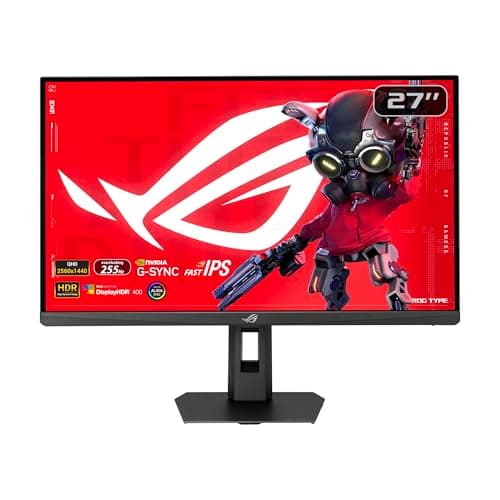
Best Value: Alienware AW2725DM. A Fast IPS QHD panel at an aggressive price point, with excellent out-of-box colour accuracy and a well-built stand, making it the most sensible step up from a basic 1080p screen for creators on a tighter budget.
The Alienware AW2725DM occupies a compelling position in the market: a 27-inch QHD Fast IPS panel from a brand known for build quality and out-of-box calibration, available at a price that undercuts many of its direct rivals. For YouTube creators who are moving up from a basic 1080p screen and want a meaningful improvement in colour accuracy and workspace without committing to the premium asked for QD-OLED, this is the most logical step.
Fast IPS panels are a significant improvement over standard IPS for creator use. They retain the wide viewing angles and generally better colour accuracy of IPS technology while reducing the response time, which means less smearing when scrubbing through video timelines or reviewing fast-motion footage. The 2560x1440 resolution at 27 inches gives you a pixel density that makes text, icons and video previews noticeably sharper than 1080p at the same size, and most editing software scales well at this resolution without needing to reduce the interface to tiny proportions.
The 180Hz refresh rate is more than sufficient for smooth desktop use and video playback, and it means the display does not feel sluggish when you are working across multiple applications. Alienware's colour calibration at the factory level is generally well regarded, and the AW2725DM typically arrives with good Delta-E performance out of the box, meaning you may not need to invest in a hardware colorimeter immediately, though doing so is always recommended for professional colour work.
The port selection is practical: two HDMI inputs, one DisplayPort, and three USB ports, which gives you enough connectivity for a PC, a secondary source such as a streaming device or games console, and peripheral connections for a keyboard, mouse or external drive without needing a separate hub. The stand is a genuine highlight, offering height, tilt and swivel adjustments that make it easy to position the screen ergonomically during long editing sessions.
The VA panel alternative at this price point would offer higher contrast, but Fast IPS wins on colour accuracy and viewing angle consistency, both of which matter more for creator work. The main limitation is that the colour gamut, while good, does not match the breadth of a QD-OLED panel, so if you are doing high-end colour grading for clients, you will eventually want to step up.
Verdict: The best value monitor for YouTube creators who want a meaningful upgrade from 1080p, with reliable colour accuracy, a practical port layout and a well-built stand at a competitive price.
Pros
- Fast IPS panel delivers wide viewing angles and better colour accuracy than VA alternatives at this price
- Three USB ports reduce the need for a separate hub in a typical creator desk setup
- Adjustable stand with height, tilt and swivel makes long editing sessions more ergonomically comfortable
Cons
- Colour gamut does not match QD-OLED panels, limiting suitability for professional-grade colour grading
- No USB-C input, which can be inconvenient for creators who regularly connect a laptop or tablet
The AOC CU34G2XPD is a 34-inch ultrawide curved monitor with a 3440x1440 resolution, and it makes a strong case for creators who want more horizontal screen space to run a wider editing timeline, keep a browser preview open alongside their editing software, or work across multiple application windows without a dual-monitor setup. At its price point, it is one of the most affordable ways to get into the ultrawide format with a meaningful resolution.
The 21:9 aspect ratio is genuinely useful for video editing. Most professional editing applications, including DaVinci Resolve, Adobe Premiere Pro and Final Cut Pro (via a Windows workaround or on a Mac with a compatible display), benefit from wider timelines. You can have your timeline, preview window and asset browser all visible simultaneously without constantly resizing panels or switching workspaces. This workflow benefit is difficult to overstate for creators who spend hours in editing software each week.
The VA panel delivers a higher native contrast ratio than IPS alternatives, which means deeper blacks and a more dramatic image when watching back your finished videos. This is useful for checking how your content will look on consumer televisions and monitors, many of which are also VA-based. However, VA panels have historically shown some colour shift when viewed from off-axis, which is less of a concern when you are sitting directly in front of a large curved screen, as the curve itself compensates for the viewing angle to some degree.
The port selection is one of the strongest in this comparison: two HDMI 2.0, two DisplayPort 1.4, four USB-A ports and a 3.5mm audio output. For a creator who needs to connect a PC, a laptop, an external drive and a pair of headphones without a hub, this panel handles it all natively. The 180Hz refresh rate is a bonus for gaming use, and the 1ms response time keeps motion clean when reviewing footage.
The curvature (1500R) is pronounced enough to be noticeable and helps with immersion, but some creators find that a curved panel introduces slight distortion when checking straight lines in graphic design work. This is a minor concern for most video creators, but worth noting if you do significant motion graphics or architectural work.
Verdict: The best ultrawide option for creators who want a wider editing workspace at a reasonable price, with excellent connectivity and a useful port selection for a multi-device desk setup.
Pros
- 3440x1440 ultrawide resolution provides a genuinely wider editing timeline and multi-panel workspace
- Four USB-A ports and dual DisplayPort inputs reduce the need for additional hubs or adapters
- 180Hz refresh rate and 1ms response time keep the panel versatile for gaming alongside creator work
Cons
- VA panel shows some colour shift at off-axis viewing angles, which can affect colour accuracy assessments
- Pronounced 1500R curvature may introduce slight distortion when checking straight lines in graphic design tasks
The LG 34WR50QK offers another route into the ultrawide format, this time from a brand with a strong reputation in the monitor market and a slightly more measured specification sheet that prioritises everyday creator use over gaming performance. At 34 inches with a 3440x1440 resolution, it delivers the same fundamental workspace advantage as the AOC ultrawide above, but with a different balance of features and a different price positioning.
LG's panel quality at this resolution is generally well regarded. The VA panel used here offers solid contrast performance for a creator who wants to check how their videos look with good black depth, and the 100Hz refresh rate, while not as high as the AOC's 180Hz, is more than sufficient for video editing and desktop work. For YouTube creators, 100Hz is perfectly adequate: you are not gaming at high frame rates on this display, and video playback at 24, 25 or 30fps looks smooth at any refresh rate above 60Hz.
The 5ms response time is slower than the AOC's 1ms, which means there is some potential for minor ghosting when scrubbing through fast-motion footage quickly. In practice, for most creator workflows this is not a significant issue, as you are rarely scrubbing at the speeds that would make this visible. Where the LG differentiates itself is in its brand reputation for panel consistency and its generally reliable out-of-box colour accuracy, which is important for creators who do not want to spend time on manual calibration.
The port selection is more modest than the AOC: two HDMI 2.0 and one DisplayPort 1.4. This covers the basics for a single-PC setup with one additional source, but creators who need to connect multiple devices simultaneously may find it limiting. There are no USB hub ports on the monitor itself, which means a separate hub is likely necessary for a fully connected creator desk.
The 34-inch size and ultrawide format make this a genuinely comfortable editing environment. LG's curved ultrawide panels typically have a gentle curve that reduces the distortion concern present on more aggressively curved panels, and the build quality is solid, with a stand that offers adequate height and tilt adjustment for most desk setups.
Verdict: A solid ultrawide option for creators who prioritise LG's panel reliability and brand trust over maximum refresh rate or port count, and who work primarily from a single PC without needing extensive built-in connectivity.
Pros
- 34-inch 3440x1440 ultrawide format provides a wide editing workspace with LG's reliable panel consistency
- Gentle curvature reduces the distortion risk present on more aggressively curved ultrawide panels
Cons
- No USB hub ports on the monitor, requiring a separate hub for a fully connected creator desk setup
- 5ms response time can produce minor ghosting when scrubbing quickly through fast-motion footage
- Only three input ports in total, which limits multi-device connectivity compared to rivals
Buying Guide
Panel Type: Why It Matters More Than Refresh Rate for Creators
For YouTube content creators, panel type is the single most important specification to understand. IPS panels offer wide viewing angles and generally better colour accuracy than VA panels, making them a reliable choice for colour-critical work. VA panels offer higher native contrast ratios, which means deeper blacks and a more dramatic image, but they can show colour shift when viewed from off-axis and sometimes exhibit slower pixel response in darker tones. QD-OLED panels, as seen in the MSI pick above, combine the self-emissive pixel structure of OLED with Quantum Dot colour enhancement, delivering the widest colour gamut, true per-pixel blacks and excellent peak brightness. For creators who take colour grading seriously, QD-OLED is the most capable technology currently available at consumer price points.
Resolution and Screen Size
The relationship between resolution and screen size determines pixel density, which affects both image sharpness and the amount of workspace available in editing software. At 27 inches, 1440p (2560x1440) is the practical minimum for comfortable creator use, offering enough sharpness for clear text and video previews while providing more workspace than 1080p at the same size. At 32 inches, 4K becomes more relevant, as the larger screen size means 1440p pixel density drops to a level where some creators find it less sharp than they would like. Ultrawide formats at 3440x1440 offer a different advantage: more horizontal space for wider editing timelines and multi-panel layouts, which can significantly improve editing workflow efficiency.
Colour Gamut and Calibration
YouTube content is viewed on a vast range of devices, from OLED smartphones to budget VA televisions. A monitor with a wide colour gamut, ideally covering a significant portion of DCI-P3 or Adobe RGB, allows you to make more informed colour decisions. However, a wide gamut monitor that is not properly calibrated can actually make your content look worse on standard displays. If you are serious about colour accuracy, investing in a hardware colorimeter such as those from Datacolor or X-Rite is worthwhile regardless of which monitor you choose.
Connectivity for a Creator Desk
Consider how many devices you need to connect. A typical creator desk might include a PC or laptop, a camera or capture card, an external hard drive and a pair of headphones or monitors. A monitor with multiple HDMI inputs, a DisplayPort, USB hub ports and a 3.5mm audio output covers all of these without additional hardware. USB-C connectivity is increasingly useful for creators who use a laptop as a secondary device or for reviewing footage from a portable recorder.
Ergonomics and Long-Session Comfort
Editing sessions for YouTube creators can run for many hours. A monitor with a height-adjustable, tiltable and swivelling stand makes it significantly easier to maintain a comfortable posture throughout. VESA mount compatibility is worth checking if you prefer a monitor arm, which frees up desk space and allows more flexible positioning. Screen size also plays a role in comfort: a larger screen at a comfortable viewing distance reduces the need to lean forward to read small text or see fine detail in your footage.
The MSI MAG 272QP QD-OLED X50 is the overall winner for YouTube content creators. Its QD-OLED panel technology delivers a combination of colour accuracy, contrast depth and colour gamut width that no VA or standard IPS panel in this price range can match. For a creator who spends significant time colour grading footage, designing thumbnails and checking how their content will look across different devices, the panel quality advantage is meaningful and directly translates to better creative decisions. The HDMI 2.1 ports and USB-C connectivity add practical versatility for a modern creator desk. If the budget is tighter, the Alienware AW2725DM offers the most sensible step up from a basic 1080p screen, with reliable Fast IPS colour accuracy, a practical port layout and a well-built stand that will serve a creator well through many long editing sessions.