Small business owners need monitors that earn their place on the desk every single day. Whether you are processing invoices, editing marketing images, joining video calls or managing spreadsheets across multiple windows, the right screen can meaningfully reduce eye strain and improve how much you get done in a working day. The market has shifted noticeably over the past twelve months: QD-OLED panels have dropped in price, ultrawide curved displays are now genuinely affordable, and 4K smart monitors with built-in apps are arriving at mainstream price points. That means there has never been a better time to upgrade from a basic 1080p panel. This guide focuses on monitors that balance image quality, connectivity, ergonomics and value for money, rather than chasing the highest refresh rate for gaming. We have selected five picks from across the price spectrum so that sole traders on a tight budget and growing teams with more to spend can both find something suitable.
Quick Verdict
Best Overall: MSI MAG 272QP QD-OLED X50. Its QD-OLED panel delivers colour accuracy and contrast that genuinely helps with design, photography and video work, and the 27-inch 1440p size is ideal for a single-monitor business setup.
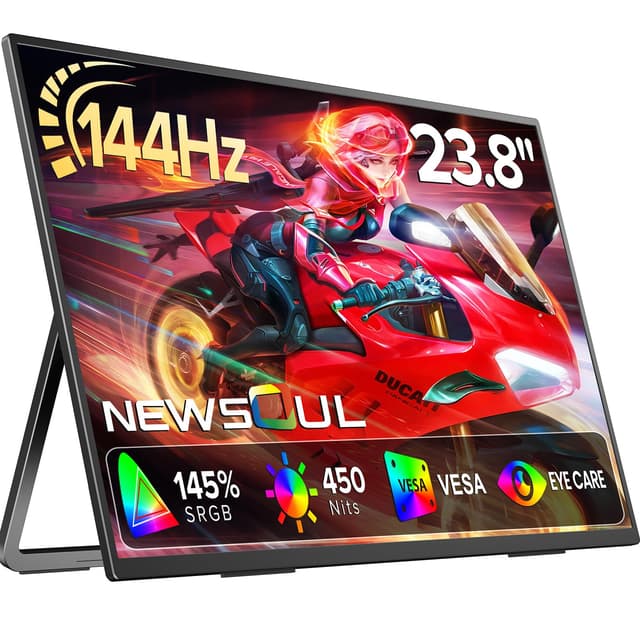
Best Value: Amazon Basics 23.8-inch 120 Hz FHD Monitor. For sole traders or start-ups that simply need a reliable, clear screen without spending much, this IPS panel covers the basics at a price that is hard to argue with.
The Alienware AW2725DM might carry gaming branding, but its specification sheet reads very well for small business use. Alienware monitors are built to a high standard of quality control, and the AW2725DM's Fast IPS panel at 2560x1440 resolution on a 27-inch screen is one of the most practically useful combinations available for professional productivity work.
Fast IPS panels combine the wide colour gamut and excellent viewing angles of standard IPS technology with faster pixel response times. For business use, the wide viewing angle is the most important benefit: colours and brightness remain consistent when viewed from slightly off-axis, which matters during collaborative working sessions or when a client is sitting beside you reviewing work on screen. The 2560x1440 resolution at 27 inches hits a pixel density that makes text crisp without requiring display scaling, which keeps the interface feeling natural and reduces the cognitive load of reading for extended periods.
The 180 Hz refresh rate is well beyond what any business application demands, but it is a side effect of the panel's fast response time rather than a feature you need to actively use. What it does mean in practice is that cursor movement, scrolling through long documents and switching between windows all feel exceptionally smooth, which subtly reduces fatigue during long working days. The 1ms response time specification reinforces this.
Connectivity is well thought out for a business context. Two HDMI ports allow connection of a laptop and a secondary device such as a docking station or a second computer. The DisplayPort input handles a primary desktop connection. Three USB ports on the monitor itself are particularly useful: you can connect a keyboard, mouse and USB drive directly to the monitor rather than reaching around to the back of a tower PC, which is a small but genuinely appreciated quality-of-life improvement in a busy working environment.
Alienware's build quality is generally excellent, with solid stands that offer good ergonomic adjustment. The brand's reputation for quality control means dead pixels and backlight bleed are less common than on budget alternatives. At its price point, the AW2725DM competes directly with mainstream professional monitors from established brands, and it holds its own on image quality.
Verdict: An excellent choice for small business owners who want a high-quality IPS display with strong connectivity and the reassurance of a premium brand's quality standards, without paying for features they will not use.
Pros
- Fast IPS panel provides wide viewing angles and accurate colours for collaborative working
- Three USB ports on the monitor reduce cable clutter at the desk
- 2560x1440 resolution at 27 inches gives crisp, naturally scaled text for long reading sessions
Cons
- Gaming aesthetic with Alienware branding may feel out of place in a formal client-facing office
- No USB-C input listed, which limits single-cable laptop connectivity
The LG UltraWide 34WR50QK makes a compelling case for the ultrawide format in a small business context. At 34 inches with a 3440x1440 resolution, it provides the horizontal screen real estate equivalent of running two 27-inch monitors side by side, but without the physical gap in the middle and with a single display cable to manage. For business owners who regularly work across multiple applications simultaneously, this format can be transformative.
The practical benefits of an ultrawide display for business work are significant. You can have a spreadsheet open on the left, a browser with reference data in the centre and an email client on the right, all without any overlap or window juggling. Video editors and content creators benefit from longer timeline views. Developers can have a code editor and a preview window open simultaneously. Even for general office work, the extra width reduces the number of times you need to alt-tab between applications, which adds up to meaningful time savings over a working week.
LG's 34WR50QK uses a VA panel, which provides good contrast ratios for a monitor at this price point. The 100 Hz refresh rate is entirely adequate for business applications, providing smooth scrolling and responsive cursor movement without the higher cost associated with faster panels. The 5ms response time is similarly appropriate for non-gaming use. The gentle curve of the panel, at a radius suited to a 34-inch screen, means the edges of the display are equidistant from your eyes, reducing the need to refocus when looking from one side of the screen to the other.
Connectivity covers the essentials with two HDMI 2.0 ports and one DisplayPort 1.4. This allows connection of a laptop and a desktop simultaneously, or a laptop and a video conferencing camera hub. The absence of USB-C is a minor limitation for owners of modern thin-and-light laptops that rely on USB-C for video output, though an adapter resolves this.
LG's monitor software and build quality are well regarded, and the brand's after-sales support is generally reliable, which matters for a business-critical piece of equipment. The price sits at a mid-range level that makes the ultrawide format accessible without requiring a significant budget commitment.
Verdict: The best pick for small business owners who want to replace a dual-monitor setup with a single, clean ultrawide display. The 34-inch 3440x1440 format genuinely improves multitasking efficiency for most business workflows.
Pros
- 3440x1440 ultrawide format replaces a dual-monitor setup with a single, gap-free screen
- Dual HDMI 2.0 inputs allow two devices to be connected simultaneously without a KVM switch
- Gentle curve reduces eye refocusing effort across the wide panel
Cons
- No USB-C input, which requires an adapter for modern thin-and-light laptops
- VA panel has slower pixel response than IPS at this price, though this is imperceptible in business use
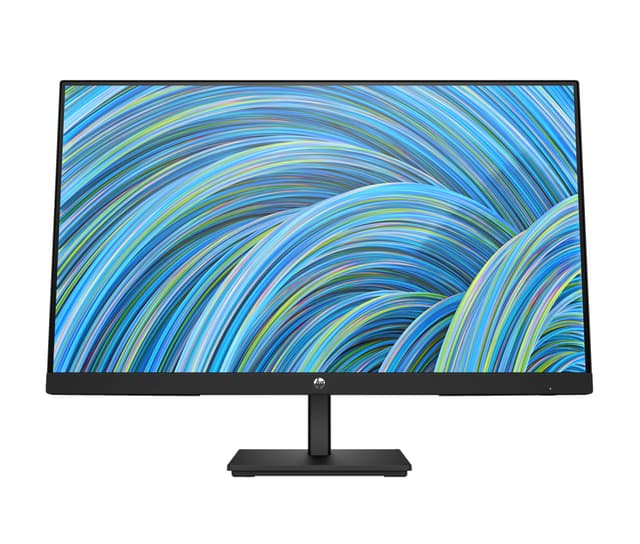
The Amazon Basics 23.8-inch monitor is the pragmatic choice for small business owners who need a reliable, functional display without spending more than necessary. Start-ups equipping multiple workstations, sole traders replacing a broken screen or businesses that need a secondary display for a reception desk or meeting room will all find this monitor does exactly what is required at a price that is difficult to fault.
The IPS panel at 1920x1080 resolution is the key specification here. IPS technology at this price point means you get decent colour accuracy and wide viewing angles, which are more important for business use than the high contrast ratios of VA panels or the extreme speed of gaming-oriented displays. Text is clear and readable at 1080p on a 23.8-inch screen, and the panel handles the standard colour profiles used by most office applications, web browsers and video conferencing software without any obvious colour cast or inaccuracy.
The 120 Hz refresh rate is a step above the 60 Hz that was standard on budget monitors until recently. In practice, this means scrolling through long documents, moving windows around the desktop and switching between applications all feel noticeably smoother than on an older 60 Hz panel. It is not a feature that most business owners will consciously notice, but it contributes to a more comfortable working experience over the course of a long day.
Connectivity covers HDMI, DisplayPort and VGA, which is a notably broad range for a monitor at this price. VGA support is particularly useful for businesses that still operate older desktop computers or need to connect legacy equipment such as older projectors or secondary machines. VESA mount compatibility means the monitor can be attached to a monitor arm or wall mount, which is useful for businesses trying to maximise desk space in a small office.
Build quality is functional rather than premium: the stand offers tilt adjustment but is unlikely to provide the full range of height and swivel adjustment found on more expensive options. For a fixed desk position where ergonomic adjustment is handled by a separate monitor arm, this is not a significant limitation. The bezel is reasonably slim, which keeps the footprint compact and allows the monitor to sit neatly in a small workspace.
For businesses equipping multiple desks, the low unit price means that buying two of these monitors for a dual-display setup costs less than a single mid-range alternative, which is a genuinely useful consideration for budget-conscious owners.
Verdict: The best value pick in this selection. It covers all the practical requirements of a business display at a price that makes it accessible to any budget, and the IPS panel and 120 Hz refresh rate keep it above the very bottom of the market in terms of daily usability.
Pros
- IPS panel provides accurate colours and wide viewing angles at a very low price point
- VGA, HDMI and DisplayPort connectivity covers both modern and legacy equipment
- VESA mount compatibility allows use with a monitor arm to free up desk space
Cons
- 1080p resolution on a 23.8-inch panel is adequate but noticeably less sharp than 1440p alternatives
- Stand offers tilt only, with no height or swivel adjustment without a separate arm
Buying Guide
Panel Technology
The panel type is one of the most important decisions when choosing a business monitor. IPS panels are generally the safest choice for most business owners: they offer wide viewing angles, which means colours and brightness remain consistent when viewed from slightly off-centre, and they provide good colour accuracy for design, photography and marketing work. VA panels offer higher contrast ratios, which can make them more comfortable in darker office environments and better for displaying dark-themed interfaces, but their viewing angles are narrower and they can show colour shift when viewed from the side. QD-OLED panels, as seen in the MSI pick above, represent the premium tier: true blacks, exceptional colour volume and outstanding contrast, but at a higher price and with some long-term burn-in risk if the same static interface elements are displayed for many hours every day without screen savers or automatic brightness adjustment.
Resolution and Screen Size
For a single monitor used as the primary display, 1440p at 27 inches is the sweet spot for most business owners in 2025. It provides noticeably sharper text than 1080p without requiring display scaling, and it is sharp enough for detailed design work. 4K on a 32-inch panel is excellent for owners who work with high-resolution images or video, or who simply want the most detailed view of complex spreadsheets and documents. 1080p remains perfectly functional for general office work, email and web browsing, and it is the right choice when budget is the primary constraint. Ultrawide formats at 3440x1440 are worth serious consideration for anyone who currently uses or is considering a dual-monitor setup, as they provide similar horizontal screen real estate without the physical gap between panels.
Connectivity
Think carefully about how many devices you need to connect. Most small business owners have at least a laptop and a desktop, or a laptop and a docking station. A monitor with two HDMI inputs or one HDMI and one DisplayPort allows both to be connected simultaneously, with switching handled by the monitor's input selector rather than by physically swapping cables. USB-C with power delivery is increasingly important for owners of modern thin-and-light laptops: a single USB-C cable carries the display signal and charges the laptop simultaneously, which dramatically reduces desk clutter. USB hub functionality built into the monitor, as seen on the Alienware pick, allows peripherals to be connected to the monitor rather than directly to the computer, which makes switching between two connected computers much simpler.
Ergonomics
A monitor that cannot be positioned correctly for your height and working posture will cause neck and shoulder strain regardless of how good the panel is. Look for a stand that offers height adjustment of at least 100mm, tilt adjustment and ideally swivel. If the stand is limited, check that the monitor is VESA compatible so that a third-party monitor arm can be used. Monitor arms are a worthwhile investment for any business owner who spends more than four hours a day at their desk, as they allow precise positioning and free up desk surface area.
Budget Considerations
Set a realistic budget based on how central the monitor is to your daily work. If you spend six or more hours a day in front of the screen, investing in a higher-quality panel pays for itself in reduced eye strain and improved productivity. If the monitor is for occasional use, a secondary display or a reception desk screen, the Amazon Basics option provides everything necessary at minimum cost. For a primary business display, the 1440p IPS or QD-OLED options in this guide represent better long-term value than the cheapest 1080p alternatives, even if the upfront cost is higher.
The MSI MAG 272QP QD-OLED X50 is the overall winner for small business owners who want the best display experience for daily professional work. Its QD-OLED panel delivers colour accuracy and contrast that benefits creative, design and marketing work, while the 27-inch 1440p size and USB-C connectivity make it practical for a modern business setup. The Alienware AW2725DM is the closest alternative for those who want IPS reliability and strong USB hub functionality at a similar price. For owners who work across many applications simultaneously and want to replace a dual-monitor setup, the LG UltraWide 34WR50QK's 34-inch ultrawide format is the most practical choice. The Samsung 32-inch 4K Smart Monitor suits home-based owners who want a large, versatile display that doubles as a smart hub. For any business where budget is the primary concern, the Amazon Basics 23.8-inch IPS monitor delivers reliable, comfortable daily performance at a price that leaves more of the budget for other business essentials.