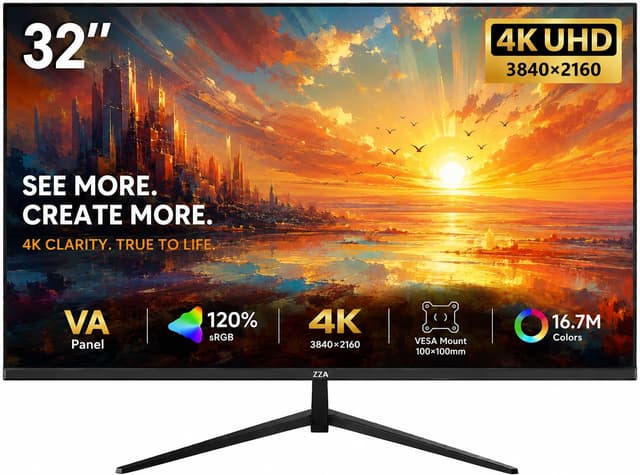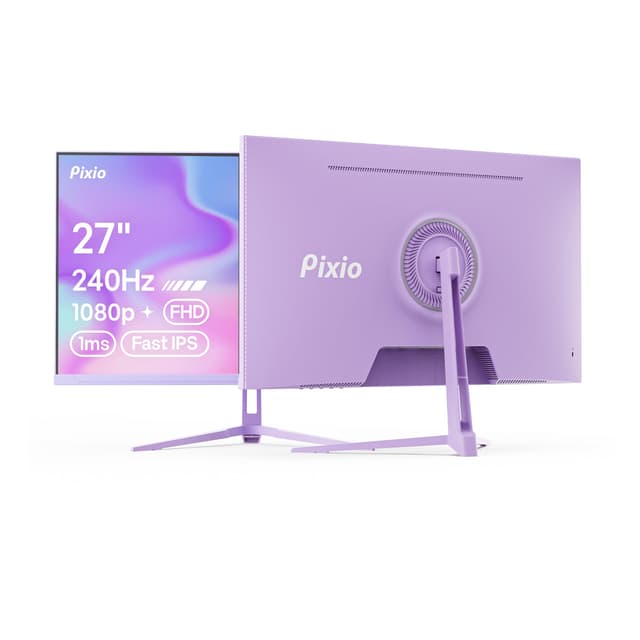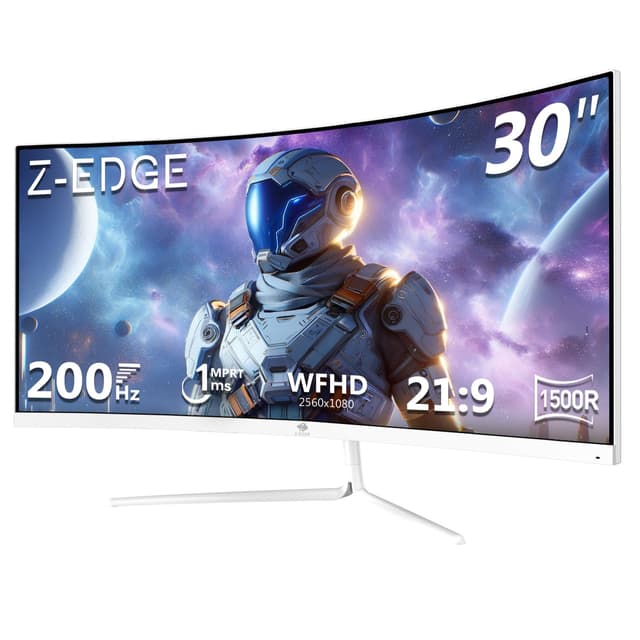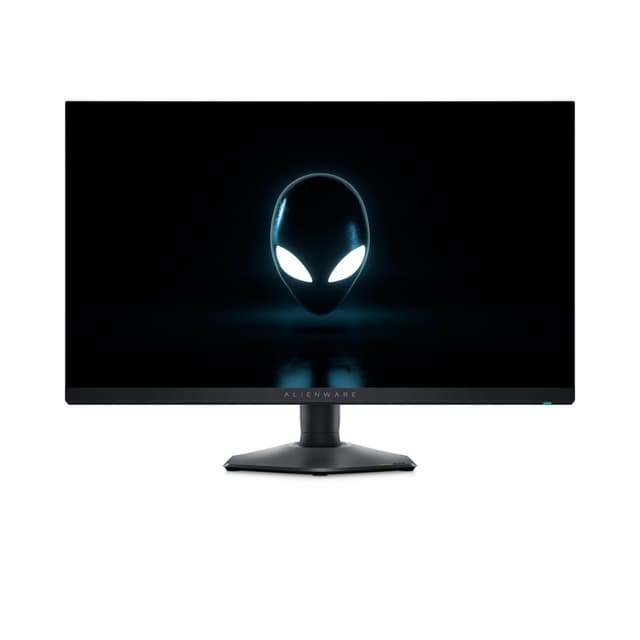
Programmers spend eight or more hours a day staring at text, terminals and browser windows, so the right monitor matters far more than most buyers realise. Unlike gaming, where raw refresh rate is king, coding prioritises pixel density for crisp text, accurate sRGB colour for UI and web work, a wide enough panel for split-screen layouts, and ergonomic features that reduce eye strain over a long session. Since last year the market has shifted noticeably: QD-OLED panels have dropped in price, ultrawide curved monitors now start under £200, and 4K IPS displays are increasingly affordable for home offices. This guide covers eight monitors drawn from the current UK catalogue, ranging from a £69 entry-level IPS screen to a £379 34-inch ultrawide, each evaluated against the specific demands of software development. For a more comprehensive overview of best PC accessories and monitors to complete your setup, see our full buyer's guide. Whether you are a student on a tight budget, a full-stack developer who needs two code windows open simultaneously, or a senior engineer who wants the sharpest possible text rendering, there is a pick here for you.
Quick Verdict
Best Overall: LG UltraWide 34BA75QE. Its 34-inch IPS ultrawide panel, built-in USB-C with power delivery, RJ45 Ethernet and integrated speakers make it the most complete single-monitor workstation for developers who want real estate without a dual-monitor setup.
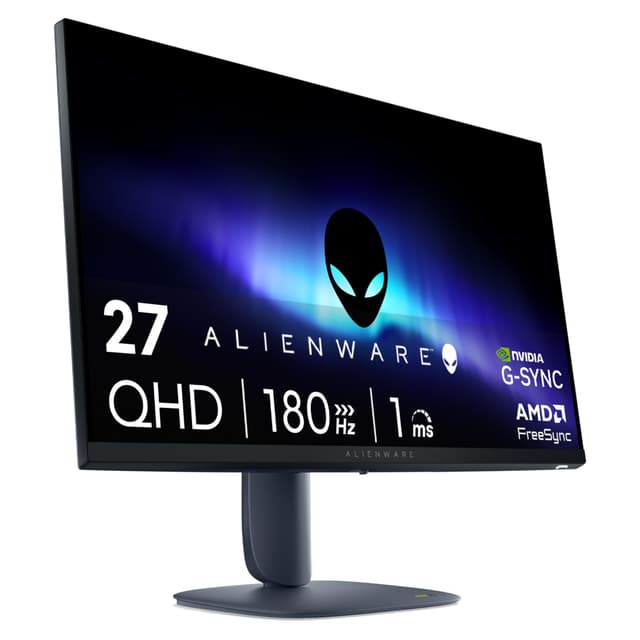
Best Value: Alienware AW2725DM. You get a 27-inch QHD Fast IPS panel with superb colour accuracy, 180 Hz for the occasional gaming session, and a premium build that punches well above its price bracket.
Budget Pick: Amazon Basics 23.8-inch. For developers who simply need a reliable second screen or a first monitor on a shoestring, this IPS panel at £89.26 is hard to argue with.
| Monitor | Price | Resolution | Panel | Screen Size | Refresh Rate | Key Ports |
|---|---|---|---|---|---|---|
| LG UltraWide 34BA75QE | Check price | 3440x1440 | IPS | 34 inch | 60 Hz | USB-C, RJ45, HDMI, DP 1.4, USB hub, speakers |
| Alienware AW2725DM | Check price | 2560x1440 | Fast IPS | 27 inch | 180 Hz (DP), 144 Hz over HDMI | 2x HDMI 2.1, 1x DP 1.4, 2x USB-A (1x USB-B upstream) |
| Philips Evnia 27M2N3800A | 3840x2160 (4K) | IPS | 27 inch | 160 Hz | Not specified in verified specs | |
| AOC CU34G2XPD | £259.99 | 3440x1440 | VA | 34 inch | 180 Hz | 2x HDMI 2.0, 2x DP 1.4, 4x USB-A, 3.5mm |
| MSI MAG 272QPW QD-OLED | £368.99 | 2560x1440 | QD-OLED | 27 inch | 280 Hz | 2x HDMI 2.1, 1x DP 1.4a, 1x USB-C (15W PD) |
| Amazon Basics 23.8-inch | £89.26 | 1920x1080 | IPS | 23.8 inch | 120 Hz | HDMI, DP, VGA, VESA |
| Acer SB242Y H1bi | Check price | 1920x1080 | IPS | 23.8 inch | Not specified | 1x HDMI 1.4, 1x VGA |
1. LG UltraWide Monitor 34BA75QE
The LG UltraWide 34BA75QE is the monitor that most experienced developers will want on their desk. It combines a 34-inch IPS panel at 3440x1440 resolution with a connectivity suite that is genuinely designed around productivity rather than gaming. The inclusion of USB-C with power delivery means you can connect a modern laptop with a single cable, charge it simultaneously, and keep your desk tidy. The built-in RJ45 Ethernet port is a rarity at this price and is enormously useful for developers who need a stable wired connection for SSH sessions, Docker pulls or remote debugging. The integrated USB hub and built-in speakers round out a package that effectively replaces a docking station for many users.
The IPS panel delivers the wide colour gamut and accurate sRGB reproduction that matters when you are working on front-end code, reviewing design assets or checking that your web app renders correctly across colour profiles. IPS also provides better off-axis viewing than VA, which is important if you sit slightly to the side of your monitor or share your screen during pair programming sessions. The 3440x1440 resolution at 34 inches gives a pixel density of roughly 110 PPI, which is comfortable for most developers without requiring display scaling. You can comfortably fit a full-width code editor, a browser preview and a terminal side by side, which is the core productivity argument for ultrawide over dual-monitor setups.
The 60 Hz refresh rate is the one concession compared to gaming-focused ultrawide monitors, but for coding, documentation reading and video calls it is entirely sufficient. The 5ms response time is similarly unimportant for productivity work. The HDR10 support adds some versatility for media consumption during breaks. This is not a monitor for someone who also wants to play fast-paced games at their desk, but for a developer who is serious about their working environment and wants to pair it with best gaming peripherals, it is the most complete package in this roundup.
Verdict: The best all-round programming monitor in this selection, combining ultrawide real estate, a productive connectivity suite and an accurate IPS panel at a justifiable price.
Pros
- USB-C with power delivery and RJ45 Ethernet eliminate the need for a separate dock
- 34-inch 3440x1440 IPS panel fits three coding panes side by side with accurate colour
- Built-in speakers and USB hub reduce desk cable clutter significantly
Cons
- 60 Hz refresh rate rules it out for developers who also game seriously
- At Check price it is the most expensive pick in this roundup
2. Alienware AW2725DM
The Alienware AW2725DM is the best value monitor in this selection for developers who want a premium experience without committing to an ultrawide footprint. Its 27-inch Fast IPS panel at 2560x1440 (QHD) resolution delivers a pixel density of approximately 109 PPI, which is the sweet spot for crisp text rendering at native scaling on a standard desk distance. Fast IPS combines the colour accuracy and wide viewing angles of traditional IPS with significantly improved response times, making this a genuinely dual-purpose panel for developers who also game in the evenings.
The 180 Hz refresh rate is overkill for coding but means the monitor will not bottleneck you if you play games, and the smooth scrolling through long codebases is a genuine quality-of-life improvement that developers who have used high-refresh monitors rarely want to give up. The QHD resolution is the ideal middle ground between 1080p (which can feel cramped on a 27-inch panel) and 4K (which requires scaling on most operating systems and can introduce rendering artefacts in some IDEs). At QHD, Windows and macOS both render text cleanly at 100 per cent scaling.
Alienware's build quality is a step above most monitors at this price. The stand offers full height, tilt and swivel adjustment, which matters enormously for ergonomics during long coding sessions. The two USB-A downstream ports connect peripherals; the USB-B upstream port connects the hub to your computer. The two HDMI ports and one DisplayPort give you flexibility to connect a desktop and a laptop simultaneously, switching between them without unplugging cables. Colour accuracy out of the box is strong for an IPS panel at this price, covering a wide sRGB gamut that is suitable for web development and UI work without calibration.
The main limitation is the absence of USB-C connectivity, which means laptop users will need a separate adapter or dock. The 27-inch size is also a matter of personal preference: some developers prefer the larger canvas of a 32 or 34-inch screen, while others find 27 inches easier to take in at a glance without moving their head.
Verdict: The best value pick for a dedicated programming monitor, offering QHD IPS quality, a premium stand and useful USB ports at a competitive price.
Pros
- QHD Fast IPS panel renders code text crisply at 100 per cent scaling without calibration
- Full ergonomic stand adjustment with height, tilt and swivel for long coding sessions
- Two USB-A downstream ports connect peripherals, and dual HDMI lets a desktop and a laptop share the monitor
Cons
- No USB-C port, so modern laptop users need a separate adapter or dock
- 27-inch size may feel limiting for developers accustomed to ultrawide or dual-monitor setups
3. Philips Evnia 27M2N3800A
The Philips Evnia 27M2N3800A is the most pixel-dense monitor in this roundup, packing a 4K (3840x2160) IPS panel into a 27-inch chassis. At roughly 163 PPI, this is the closest you will get to Retina-quality text rendering on a Windows or Linux machine without moving to a specialist display. For developers who spend their days reading dense documentation, reviewing code diffs or working with fine-detail design assets, the improvement in text clarity over a QHD or 1080p panel at the same size is immediately apparent and difficult to give up once experienced.
The IPS panel technology ensures wide colour gamut coverage and accurate sRGB reproduction, which is important for front-end developers, anyone who works with colour-sensitive assets, and users seeking monitors for colour-blind users. The 160 Hz refresh rate at 4K is a remarkable technical achievement for a monitor at this price point, and while 160 Hz is not necessary for coding, it does mean the display can handle smooth scrolling through large files and will serve double duty for gaming without compromise. The panel also supports FHD at 320 Hz via a dual-mode feature, making it genuinely versatile.
The key consideration with a 27-inch 4K monitor is display scaling. At native 4K resolution on a 27-inch panel, UI elements are very small and most users will run Windows at 150 per cent or 200 per cent scaling, or macOS at its equivalent HiDPI mode. At 200 per cent scaling, the effective working resolution is 1920x1080, which is the same as a 1080p monitor but with significantly sharper text rendering because the pixels are smaller. This is exactly how Apple's Retina displays work, and the result is noticeably crisper text. However, some older applications and IDEs do not scale perfectly, which is worth testing with your specific toolchain before committing.
At this is one of the more affordable 4K 27-inch monitors available in the UK, making it an attractive option for developers who prioritise text quality above all else.
Verdict: The sharpest text rendering in this roundup, ideal for developers who prioritise pixel density and are comfortable managing display scaling on their operating system.
Pros
- 163 PPI pixel density delivers noticeably crisper text than any QHD or 1080p alternative
- IPS panel with accurate sRGB colour suits front-end and design-adjacent development work
- 160 Hz at 4K makes it genuinely capable for gaming without a separate display
Cons
- 4K on 27 inches requires display scaling, which can cause rendering issues in some older IDEs
- Verified port specifications are limited, so connectivity options need confirming before purchase
4. AOC Gaming CU34G2XPD
The AOC CU34G2XPD is the most affordable 34-inch ultrawide in this selection, and it makes a compelling case for developers who want the productivity benefits of a wide canvas without the premium price of the LG UltraWide. At £259.99 it undercuts the LG by a substantial margin while still delivering 3440x1440 resolution across a 34-inch curved VA panel. The 1500R curvature is gentle enough that it does not distort straight lines in code editors or browser windows, which is a legitimate concern with more aggressively curved displays.
The connectivity on the AOC is genuinely impressive for the price. Two HDMI 2.0 ports, two DisplayPort 1.4 outputs, a USB-B upstream port and four USB-A downstream ports give you a hub-like setup that suits a developer who switches between machines or connects multiple peripherals. The 3.5mm audio output is useful if you use wired headphones or desktop speakers. The 180 Hz refresh rate and 1ms response time are gaming specifications that have no meaningful impact on coding productivity, but they do mean the monitor handles smooth scrolling through large files without any perceptible lag.
The VA panel technology is the main trade-off compared to the IPS panels on the LG and Alienware picks. VA panels typically offer higher contrast ratios, which can make dark themes in code editors look particularly striking with deep blacks. However, they have narrower viewing angles than IPS, meaning colour accuracy degrades if you sit off-axis, and they can exhibit some glow in the corners of the screen. For a developer who sits directly in front of their monitor and uses a dark IDE theme, these trade-offs are minimal. For someone who shares their screen frequently or works with colour-critical assets, IPS remains preferable.
The curved form factor also helps with the ultrawide experience, drawing the edges of the screen slightly closer to your peripheral vision and reducing the need to move your head to see content at the extremes of the panel. FreeSync Premium support is included, which is useful for the occasional gaming session.
Verdict: The best budget ultrawide for programming, offering genuine 34-inch 1440p real estate and an impressive port selection at a price that is hard to match.
Pros
- Four USB-A ports and dual DisplayPort 1.4 create a practical hub for multi-device setups
- 3440x1440 at 34 inches fits three full-width panes of code without squinting
- Significantly cheaper than IPS ultrawide alternatives at the same resolution
Cons
- VA panel has narrower viewing angles than IPS, which matters for colour-critical front-end work
- No USB-C port means modern laptop users need an adapter for single-cable connectivity
5. MSI MAG 272QPW QD-OLED
The MSI MAG 272QPW is the most technically advanced panel in this roundup, using Quantum Dot OLED technology to deliver contrast ratios and colour accuracy that no IPS or VA display can match. For developers who work with colour-critical assets, UI design or simply want the most visually impressive display they can get for coding, the QD-OLED panel is a revelation. Each pixel is self-emissive, meaning blacks are truly black rather than backlit grey, and the colour volume across the DCI-P3 gamut is exceptional.
The 27-inch 2560x1440 panel at 280 Hz is, on paper, a gaming monitor. The refresh rate is far beyond anything useful for productivity work. However, the QD-OLED panel technology brings real benefits to programming beyond gaming: the near-infinite contrast ratio makes dark IDE themes look stunning, the wide colour gamut is useful for web and UI developers who need to see accurate colours, and the pixel-perfect sharpness at QHD on a 27-inch panel gives excellent text clarity without requiring display scaling.
The connectivity includes two HDMI 2.1 ports, one DisplayPort 1.4a and a USB-C port with 15W power delivery. The USB-C is useful for connecting a laptop, though 15W is only enough to slow a laptop's battery drain rather than charge it at full speed. Developers with power-hungry laptops will still want a separate charger. The HDMI 2.1 ports future-proof the monitor for next-generation graphics cards and consoles.
The main concern with OLED panels for programming is burn-in risk. Static elements such as taskbars, IDE toolbars and always-visible status bars can, over time, cause permanent image retention on OLED displays. MSI includes pixel-shift and screen-saver features to mitigate this, but it is a legitimate long-term consideration that IPS and VA panels do not share. At £368.99 it is also the second most expensive pick here, which is harder to justify purely on productivity grounds when the Alienware QHD IPS offers similar text clarity at a lower price.
Verdict: The most visually spectacular panel in this roundup, best suited to developers who also game or work with colour-critical assets and are aware of OLED burn-in considerations.
Pros
- QD-OLED panel delivers true blacks and exceptional colour volume that IPS cannot match
- HDMI 2.1 and DisplayPort 1.4a future-proof connectivity for next-generation hardware
- 280 Hz makes it the most capable dual-purpose coding and gaming monitor in the selection
Cons
- OLED burn-in risk from static IDE elements is a genuine long-term concern for heavy coding use
- USB-C power delivery at 15W is insufficient to fully charge most modern laptops
6. Amazon Basics 23.8-inch Monitor
The Amazon Basics 23.8-inch monitor is the budget pick in this roundup, and it earns its place by offering an IPS panel at a price that is genuinely difficult to beat. At £89.26 it is the most affordable display here, and the IPS panel technology means it punches above its weight on colour accuracy and viewing angles compared to budget VA alternatives. For a developer setting up their first workstation, adding a second screen to an existing setup, or equipping a home office on a strict budget, this monitor delivers the essentials without unnecessary compromise.
The 1920x1080 resolution at 23.8 inches gives a pixel density of approximately 93 PPI, which is adequate for coding but noticeably less sharp than QHD or 4K alternatives. On a 23.8-inch panel at a standard desk distance, 1080p text is readable and comfortable, but developers who are used to higher pixel density displays may find it slightly soft. The 120 Hz refresh rate is a genuine bonus at this price, providing smooth scrolling through long files and a noticeably more fluid experience than 60 Hz budget monitors.
The port selection includes HDMI, DisplayPort and VGA, covering essentially every connection scenario including older machines with VGA outputs. VESA mounting compatibility means it can be used with a monitor arm, which is important for ergonomics in a serious coding setup. The combination of IPS colour accuracy, 120 Hz smoothness and VESA compatibility makes this a more considered product than its price might suggest.
The limitations are straightforward: 1080p resolution is the ceiling, there is no USB hub, no USB-C and no ergonomic stand adjustment beyond basic tilt. For a primary monitor on a professional development setup, these limitations become frustrating over time. As a secondary display or a starter screen, they are entirely acceptable.
Verdict: The best budget monitor for programming in this roundup, offering IPS quality and 120 Hz smoothness at a price that leaves budget for other hardware.
Pros
- IPS panel delivers accurate colour and wide viewing angles at a price most budget VA monitors cannot match
- 120 Hz refresh rate provides smooth scrolling through large codebases, rare at this price
- HDMI, DisplayPort and VGA ports cover virtually every connection scenario including legacy machines
Cons
- 1080p resolution at 23.8 inches is noticeably less sharp than QHD alternatives at similar desk distances
- No height adjustment or USB hub limits ergonomic and connectivity flexibility for a primary workstation
7. Acer SB242Y H1bi
The Acer SB242Y H1bi is a professional home office monitor that prioritises simplicity and value over feature richness. At Check price it sits just above the Amazon Basics pick in price while offering a similar 23.8-inch IPS panel at 1920x1080 resolution. The IPS technology means accurate colour reproduction and wide viewing angles, which are the two most important panel characteristics for a developer who is not chasing pixel density or refresh rate.
Acer positions this monitor explicitly for professional and home office use, which aligns well with the needs of developers who want a no-nonsense display that does its job without distracting features. The slim bezels make it a good candidate for a dual-monitor setup, where thin borders between screens reduce the visual interruption when moving your eyes from one panel to the other. For a developer who runs two monitors side by side, matching a pair of slim-bezel displays is a significant ergonomic improvement over thicker-framed alternatives.
The port selection is minimal: one HDMI 1.4 and one VGA. The absence of DisplayPort is a limitation compared to the Amazon Basics pick, which includes DisplayPort alongside HDMI and VGA. HDMI 1.4 is sufficient for 1080p at 60 Hz, but developers who want to run the monitor at higher refresh rates or connect via DisplayPort will need to look elsewhere. The VGA port is useful for legacy machine compatibility but is otherwise irrelevant for modern setups.
The monitor's strengths are its IPS panel quality, slim design and explicit professional positioning. For a developer who needs a reliable, accurate display for a home office setup and is not concerned with gaming, high refresh rates or extensive connectivity, the Acer SB242Y H1bi is a sensible, understated choice. It lacks the extras that make other picks in this roundup more exciting, but it does the fundamentals correctly.
Verdict: A clean, professional 1080p IPS monitor for developers who want a reliable home office display without gaming features or premium pricing.
Pros
- IPS panel provides accurate sRGB colour and wide viewing angles suitable for front-end development
- Slim bezels make it well suited to side-by-side dual-monitor configurations
Cons
- Only HDMI 1.4 and VGA ports, with no DisplayPort, limits refresh rate and connectivity options
- No height or swivel adjustment on the stand reduces ergonomic flexibility for long coding sessions
- 1080p resolution is the lowest pixel density in this roundup, which becomes apparent on a 23.8-inch panel
How We Picked
Every monitor in this roundup was evaluated against criteria specific to programming rather than gaming or general consumer use. The primary factors were: panel type and colour accuracy, since developers working on front-end code or design assets need reliable sRGB reproduction; pixel density and text rendering, because crisp characters reduce eye strain over long sessions; screen real estate and resolution, with particular attention to how many code panes can be displayed simultaneously at a comfortable size; connectivity, including USB-C power delivery, USB hubs and Ethernet for laptop-centric workflows; and ergonomic stand adjustment, which is essential for maintaining correct posture during eight-hour coding days. Refresh rate and gaming features were noted but weighted lower than productivity-focused specifications. Price-to-value ratio was assessed across the full range from budget to premium, ensuring each pick justifies its position in the lineup. All specifications used are drawn from verified manufacturer data.
Buying Guide
Resolution and Pixel Density
Resolution is arguably the most important specification for a programming monitor. At 24 inches, 1080p gives roughly 93 PPI, which is adequate but noticeably soft compared to higher-density alternatives. At 27 inches, 1440p (QHD) delivers approximately 109 PPI, which is the sweet spot for most developers: sharp text at 100 per cent scaling without the complexity of display scaling management. At 27 inches, 4K gives 163 PPI, which is genuinely Retina-class sharpness but requires 150 to 200 per cent scaling on most operating systems, which can cause rendering issues in some IDEs and terminal emulators. At 34 inches, 3440x1440 gives approximately 110 PPI, similar to 27-inch QHD, with the added benefit of a much wider canvas.
Panel Type
IPS panels are the default recommendation for developers. They offer wide viewing angles, accurate colour reproduction and consistent brightness across the panel, all of which matter for long sessions and colour-sensitive work. VA panels offer higher contrast ratios, which can make dark IDE themes look more striking, but they have narrower viewing angles and can exhibit colour shift when viewed from the side. QD-OLED delivers the best contrast and colour of any technology but carries a burn-in risk from static UI elements, which is a legitimate concern for developers who leave their IDE open for hours at a time.
Screen Size and Ultrawide vs Dual Monitor
The choice between a single ultrawide and a dual-monitor setup is one of the most common decisions for developers. A 34-inch ultrawide at 3440x1440 gives roughly the same horizontal resolution as two 1080p monitors side by side, but without the bezel gap in the middle. This is particularly useful for developers who use split-pane editors or reference documentation alongside their code. Dual monitors offer more flexibility, as each screen can be independently positioned and rotated. A single 27 or 32-inch monitor is the simplest setup and suits developers who prefer to focus on one window at a time.
Connectivity
For developers who use laptops, USB-C with power delivery is the most valuable connectivity feature available. A single cable that carries video, data and power dramatically simplifies the desk setup. USB hubs built into the monitor reduce the number of cables running to your machine. RJ45 Ethernet, as found on the LG UltraWide, is a bonus for developers who need a stable wired connection. HDMI and DisplayPort are both necessary for connecting desktop machines; DisplayPort is generally preferable as it supports higher refresh rates and resolutions.
Ergonomics
A monitor with a height-adjustable stand is not a luxury for a developer, it is a necessity. Incorrect monitor height is a leading cause of neck and shoulder strain during long coding sessions. Look for stands that offer at least 100mm of height adjustment, tilt, and ideally swivel. VESA compatibility (75x75mm or 100x100mm) allows you to replace the stand with a monitor arm if needed, which gives even greater flexibility. Eye-care features such as flicker-free backlighting and low blue light modes are worth considering for developers who work late into the evening.
Budget Allocation
A programming monitor is a long-term investment. Most developers keep their monitor for five to seven years, making the per-day cost of a premium display very low. Spending an extra £100 to move from 1080p to QHD, or from a VA to an IPS panel, is almost always worthwhile when spread over years of daily use. The budget picks in this roundup are genuinely good value, but if your budget allows, prioritising resolution and panel quality over refresh rate will pay dividends in comfort and productivity over the long term.
Final Verdict
The LG UltraWide 34BA75QE is the overall winner for programming. Its 34-inch IPS panel at 3440x1440 provides the ideal combination of screen real estate, text clarity and colour accuracy for software development. The USB-C with power delivery, built-in RJ45 Ethernet, USB hub and integrated speakers mean it functions as a complete docking solution for laptop users, reducing desk clutter and simplifying the daily setup and teardown routine. For developers who need a single monitor that handles everything from terminal work to front-end design review to video calls, it is the most complete package in this roundup.
If the price is a barrier or you prefer a 27-inch form factor, the Alienware AW2725DM is the best value pick, delivering QHD IPS quality, a premium ergonomic stand and useful USB ports at a competitive price. For those on a tight budget, the Amazon Basics 23.8-inch offers IPS quality and 120 Hz smoothness at a price that leaves room for other hardware investments. And for developers who want the absolute sharpest text rendering and are comfortable managing display scaling, the Philips Evnia 27M2N3800A's 4K IPS panel is a compelling choice at its current price point.
Frequently Asked Questions
It depends on your screen size and how much you value pixel density. On a 22 to 24-inch panel, 1080p is readable and comfortable for most developers. On a 27-inch panel, 1080p starts to look noticeably soft compared to QHD alternatives. If your budget allows, moving to 1440p or higher will reduce eye strain over long sessions and allow more code to be visible without scrolling.
For most developers, yes. A 34-inch 3440x1440 ultrawide allows you to have a code editor, browser preview and terminal open simultaneously without overlapping windows. The lack of a bezel gap in the middle is a genuine advantage over dual-monitor setups for developers who use split-pane layouts. The main drawbacks are cost and desk space requirements.
IPS is the safer choice for most developers. It offers wider viewing angles, more consistent colour accuracy and better performance for colour-critical work such as front-end development and UI design. VA panels have higher contrast ratios, which can make dark IDE themes look more dramatic, but the narrower viewing angles and potential for colour shift are trade-offs that matter in a professional context.
Not for coding itself, but there are indirect benefits. A 120 Hz or higher panel provides noticeably smoother scrolling through long files, which is a genuine quality-of-life improvement during a long session. If you also game on your monitor, a higher refresh rate becomes more important. For a dedicated programming monitor used only for work, 60 Hz is sufficient, though 120 Hz is preferable if available at the same price.
It depends on your primary machine. If you use a modern laptop as your main development machine, USB-C with power delivery is extremely valuable, allowing a single cable to carry video, data and power simultaneously. This simplifies your desk setup and reduces the number of cables. If you use a desktop machine, USB-C on the monitor is less critical, and you can prioritise other features such as resolution or panel quality.