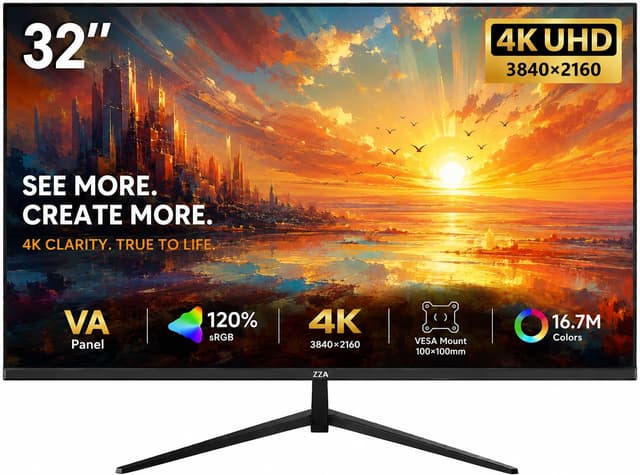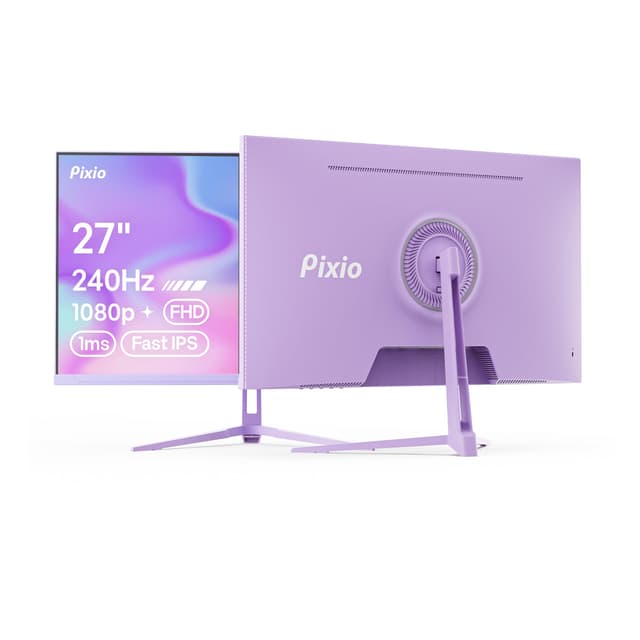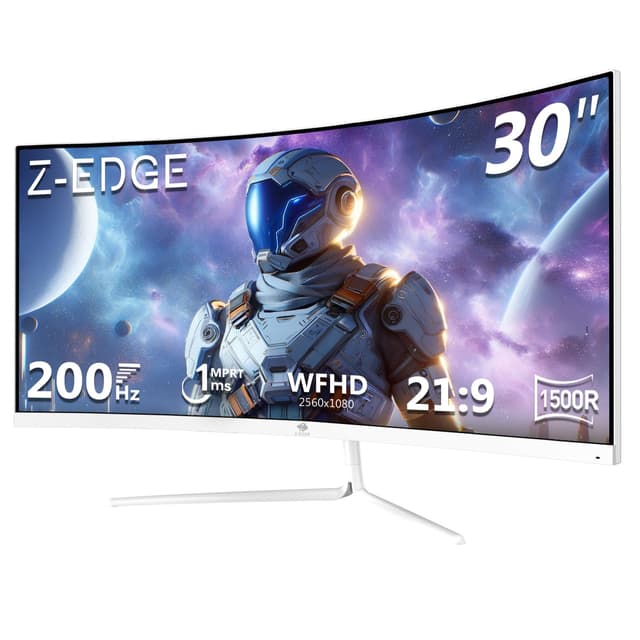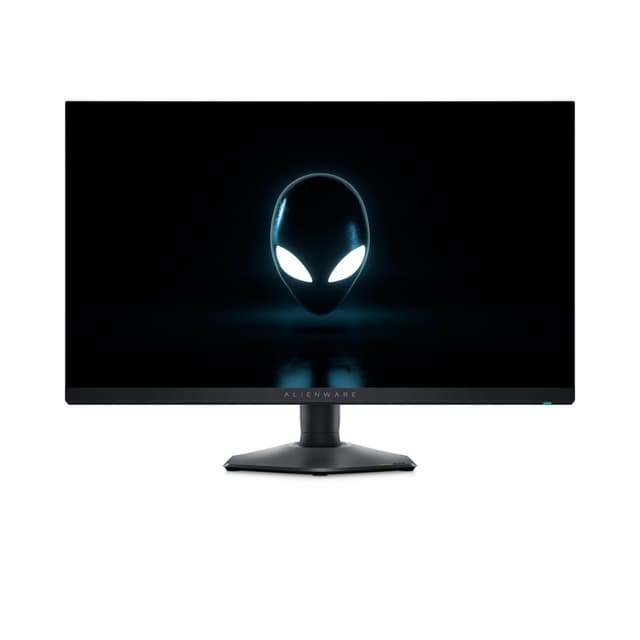
Choosing the right monitor for video editing matters more than almost any other part of your workstation setup, though pairing it with best PC accessories and monitors ensures your entire editing environment is optimized. A display with poor colour accuracy, limited colour gamut coverage, or the wrong resolution will mean every grade and cut you make is based on misleading information, and your finished work will look different on every other screen it plays on. This guide is aimed at UK video editors working across a range of budgets, from part-time content creators who need a reliable step up from a basic office screen, to semi-professional colourists who want accurate wide-gamut coverage without paying broadcast-monitor prices. We've also reviewed ASUS monitors under £300 for budget-conscious editors. Since last year, QD-OLED panels have become more accessible at the sub-£400 mark, 4K IPS options have dropped considerably in price, and ultrawide formats have gained traction among editors who want a wide timeline alongside a full preview window. The six picks below reflect that shift, covering panel type, colour space, resolution and connectivity for real editing workflows.
Quick Verdict
Best Overall: Philips Evnia 27M2N3800A, a 27-inch 4K IPS panel that balances resolution, colour accuracy and price in a way no other option on this list can match for pure editing use.
Best Value: MSI MAG 272QPW QD-OLED X28, which brings genuine OLED contrast and wide colour to editors who also game, at a price that would have seemed impossible two years ago.
Best for Ultrawide Timelines: LG UltraWide 34BA75QE, an IPS ultrawide with USB-C and built-in Ethernet that suits editors working from a laptop.
Spec Comparison
| Product | Price | Resolution | Panel Type | Refresh Rate | Screen Size | Key Ports |
|---|---|---|---|---|---|---|
| Philips Evnia 27M2N3800A | 4K (3840x2160) | IPS | 160 Hz | 27 inch | HDMI, DisplayPort (verified specs) | |
| MSI MAG 272QPW QD-OLED X28 | £448.99 | 2560x1440 | QD-OLED | 280 Hz | 27 inch | 2x HDMI 2.1, 1x DP 1.4a, 1x USB-C (15W PD) |
| LG UltraWide 34BA75QE | £412.36 | 3440x1440 | IPS | 60 Hz | 34 inch | USB-C, RJ45, HDMI, DP 1.4, USB hub, speakers |
| AOC Gaming CU34G2XPD | £257.53 | 3440x1440 | VA | 180 Hz | 34 inch | 2x HDMI 2.0, 2x DP 1.4, 4x USB-A, 3.5mm audio |
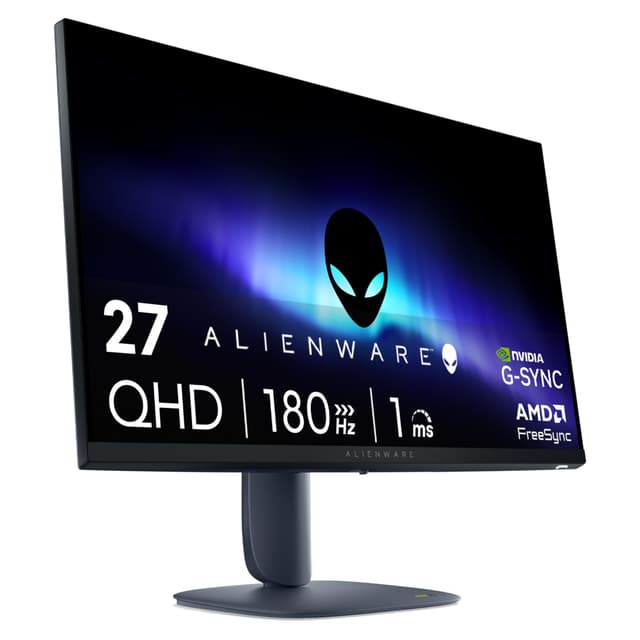
| Alienware AW2725DM | 2560x1440 | Fast IPS | 180 Hz | 27 inch | 2x HDMI, 1x DP, 3x USB |
1. Philips Evnia 27M2N3800A
The Philips Evnia 27M2N3800A is the pick that will suit the widest range of video editors in the UK right now. It is a 27-inch IPS panel running at native 4K resolution (3840x2160), and at its current street price it represents exceptional value for anyone who needs to edit at full 4K without spending north of £300 on a dedicated colour-accurate display. The 160 Hz refresh rate is largely irrelevant for editing work, but it means the panel is built on a high-quality substrate that tends to produce better static image quality than entry-level 60 Hz IPS alternatives.
For video editing specifically, the IPS panel technology is the most important characteristic here. IPS panels produce accurate, consistent colour across wide viewing angles, which matters when you are grading footage and need to be confident that the colour you see at the centre of the screen matches what you see towards the edges. VA panels, by contrast, suffer from colour shift at angles and can exhibit a phenomenon known as black crush, where shadow detail is lost because the panel's high static contrast ratio compresses the darkest tones. For editors who spend time in the shadows of their footage, this is a real problem that IPS avoids.
The 4K resolution on a 27-inch screen gives a pixel density of approximately 163 PPI. That is high enough that individual pixels are invisible at normal viewing distances, which means text in your NLE's interface is crisp and small details in your footage are genuinely visible. If you are editing content destined for YouTube, social media, or broadcast at 4K, you can view it at 1:1 pixel mapping without needing to scale the preview. That is a meaningful workflow advantage over a 1440p display, where you are always viewing 4K footage at a reduced scale.
The IPS panel also means that HDR content, while not broadcast-grade, is rendered with accurate colour. The Evnia supports HDR at its native resolution, which is useful for editors working with HDR-graded footage who want a rough sense of how the grade will translate, even if the panel cannot produce the peak brightness of a reference HDR display. Connectivity covers the essentials for a desktop editing setup, and the stand offers height, tilt and swivel adjustment, which is important for long editing sessions.
This is the monitor to buy if you edit video professionally or semi-professionally, work at 4K, and want the most accurate colour reproduction available at this price point. It is not a reference-grade colourist's display, but for the vast majority of UK editors, it is more than sufficient, and it doubles as a capable gaming monitor if you use your editing machine for both purposes.
Pros
- Native 4K IPS panel at a competitive UK price, ideal for 4K editing workflows
- IPS technology delivers consistent colour accuracy across the full screen area
- 163 PPI pixel density means fine detail in footage is clearly visible
Cons
- 27 inches at 4K can feel small for editors who want a large canvas without scaling
- No USB-C input listed in verified specs, limiting connectivity for laptop-based editors
2. MSI MAG 272QPW QD-OLED X28
The MSI MAG 272QPW QD-OLED X28 is the most technically impressive display on this list from a pure panel-quality standpoint. It uses a Quantum Dot OLED (QD-OLED) panel at 2560x1440 resolution on a 27-inch screen, and it brings two characteristics to editing work that no IPS or VA panel at any price can match: per-pixel contrast and near-perfect black levels. Every pixel on an OLED panel is its own light source, which means when a pixel is black, it is genuinely off. The contrast ratio is effectively infinite, and shadow detail in dark footage is rendered with a clarity that is simply not possible on a backlit LCD panel.
For video editors working with cinematic footage, documentary material, or any content that relies on mood created through shadow and highlight, the QD-OLED panel is transformative. You will see detail in the darkest parts of your image that you could not see on an IPS monitor, and the highlight rolloff in bright areas looks natural rather than clipped. The Quantum Dot layer over the OLED substrate also improves colour volume compared to white-OLED panels, meaning saturated colours at high brightness are more accurate and vivid.
The connectivity is excellent for an editing setup. Two HDMI 2.1 ports allow connection of multiple high-bandwidth sources, the DisplayPort 1.4a handles a desktop GPU at full resolution, and the USB-C port with 15W power delivery means you can connect a laptop with a single cable and charge it simultaneously, albeit at a modest rate. This is a genuinely useful feature for editors who work on a MacBook or a Windows laptop and want a single-cable desktop connection.
The resolution of 2560x1440 is the one area where this monitor falls short of the Philips Evnia for pure editing use. At 27 inches, 1440p gives around 109 PPI, which is noticeably less sharp than 4K at the same size. Editors working with 4K footage will be viewing it at a reduced scale, and fine detail in the image will not be fully visible at 1:1. However, for editors who prioritise colour and contrast over pixel-level sharpness, and particularly for those who also game on their editing machine, the QD-OLED panel is a compelling choice. The 280 Hz refresh rate is irrelevant for editing but speaks to the quality of the underlying panel.
One consideration for OLED panels in editing use is the risk of burn-in from static UI elements. NLE interfaces with fixed toolbars and timelines can, over years of use, cause differential ageing on OLED panels. Modern QD-OLED panels include pixel-shift and screen-saver mitigations, and MSI's implementation is among the better ones, but it is worth being aware of if you plan to use this display for eight or more hours of editing every day for several years.
Pros
- QD-OLED panel delivers effectively infinite contrast, revealing shadow detail no LCD can match
- USB-C with power delivery enables single-cable laptop connection for mobile editors
- 2x HDMI 2.1 and DisplayPort 1.4a cover all common editing workstation connections
Cons
- 1440p resolution means 4K footage cannot be previewed at 1:1 pixel mapping on a 27-inch screen
- Long-term OLED burn-in risk from static NLE interface elements is a genuine consideration for daily professional use
3. LG UltraWide 34BA75QE
The LG UltraWide 34BA75QE occupies a distinct niche in this list. It is a 34-inch ultrawide IPS monitor running at 3440x1440 resolution, and its primary appeal for video editors is the combination of a wide aspect ratio, a well-connected IPS panel, and a port selection that is unusually generous for a monitor in this class. The inclusion of USB-C, RJ45 Ethernet, DisplayPort 1.4, HDMI, a USB hub, and built-in speakers makes this a genuinely capable single-cable workstation display for editors who work from a laptop.
The ultrawide 21:9 aspect ratio has real practical value in video editing workflows. Non-linear editing software such as DaVinci Resolve, Premiere Pro and Final Cut Pro all benefit from horizontal screen space. On a 16:9 monitor, you are constantly making trade-offs between the size of your preview window and the length of your timeline. On a 21:9 ultrawide, you can have a full-size preview alongside a longer timeline without scrolling, or you can use the extra width for additional tool panels. Editors who have switched to ultrawide often find it difficult to go back.
The IPS panel technology means colour accuracy is consistent across the screen, which matters on a wide display where the viewing angle to the edges is more pronounced than on a 27-inch monitor. VA panels on ultrawide monitors can exhibit particularly noticeable colour shift towards the sides of the screen, which is problematic when you are grading footage that fills the preview area. The LG's IPS panel avoids this.
The 60 Hz refresh rate is the lowest on this list, but it is entirely adequate for video editing. Editors do not need high refresh rates for their work, and the 60 Hz specification here is a reflection of the monitor's positioning as a productivity and creative tool rather than a gaming display. The 5ms response time is similarly irrelevant for editing use. What matters is the panel's colour performance, and the IPS substrate with HDR10 support delivers a credible editing experience for content creators working in SDR and HDR workflows.
The built-in speakers and RJ45 Ethernet port are genuinely useful additions. Editors who review footage with clients or collaborators remotely will appreciate not needing a separate audio output device, and the Ethernet port means a stable wired network connection without needing a USB-C hub. The USB-C port supports both video input and data, making it a true single-cable solution for MacBook and Windows laptop users. At its price point, the LG UltraWide 34BA75QE is the best choice for editors who want a wide canvas and clean laptop connectivity.
Pros
- 21:9 ultrawide format gives editors more timeline and tool panel space without a dual-monitor setup
- USB-C, RJ45 Ethernet and USB hub make it a genuine single-cable workstation display for laptop editors
- IPS panel maintains consistent colour accuracy across the wide screen area
Cons
- 60 Hz refresh rate, while fine for editing, limits the display's versatility for gaming or fast-motion preview work
- 3440x1440 resolution does not allow 4K footage to be previewed at full native resolution
4. AOC Gaming CU34G2XPD
The AOC Gaming CU34G2XPD is a 34-inch curved ultrawide VA monitor running at 3440x1440 resolution with a 180 Hz refresh rate. It is the most affordable ultrawide on this list, and for editors on a tighter budget who want the workflow benefits of a 21:9 aspect ratio without spending close to £400, it is a compelling option. The 1500R curvature is relatively aggressive and suits close viewing distances, which is typical for desk-based editing work.
The port selection is one of the strongest points of this monitor for editing use. Two HDMI 2.0 ports, two DisplayPort 1.4 inputs, four USB-A downstream ports, and a 3.5mm audio output give you everything you need for a multi-source editing setup. If you work with both a desktop workstation and a laptop, you can connect both simultaneously and switch between them without unplugging anything. The four USB-A ports function as a built-in hub, which is useful for connecting drives, audio interfaces, or other peripherals directly to the monitor.
The VA panel, as discussed in the Samsung section above, brings a contrast advantage over IPS but introduces colour shift at angles and potential black crush in shadows. On a curved 34-inch screen, the viewing angle issue is partially mitigated by the curvature, which keeps more of the panel surface facing directly towards your eyes. However, it does not eliminate the issue entirely, and editors who need to make precise shadow decisions should be aware of this limitation.
The 3440x1440 resolution across 34 inches gives approximately 110 PPI, which is adequate for editing work but noticeably less sharp than a 4K display. At this resolution, 4K footage will be downscaled in your preview window, and fine detail in the image will not be fully visible. For editors who work primarily in 1080p or who use the timeline space more than the preview quality, this is an acceptable trade-off. For 4K-focused editors, the Philips Evnia or the Samsung 32-inch 4K would be better choices.
At its price point, the AOC CU34G2XPD is the best budget ultrawide for editors who want a wide timeline and good connectivity without breaking the bank. The 180 Hz refresh rate and FreeSync Premium support are bonuses for editors who also game, making this a genuinely dual-purpose display. The build quality is solid for the price, with a height-adjustable stand that makes it easy to set up ergonomically for long editing sessions.
Pros
- Four USB-A downstream ports and dual DisplayPort 1.4 inputs make it easy to connect multiple editing sources and peripherals
- 21:9 ultrawide format at a budget price point gives editors more screen real estate for timelines and panels
- 1500R curvature partially mitigates VA colour shift at the screen edges
Cons
- VA panel colour shift and black crush are a genuine limitation for shadow-detail-sensitive grading work
- 110 PPI pixel density means fine detail in 4K footage is not fully visible in the preview window
5. Alienware AW2725DM
The Alienware AW2725DM is a 27-inch Fast IPS monitor at 2560x1440 resolution with a 180 Hz refresh rate. It sits in an interesting position for video editors: it is primarily marketed as a gaming monitor, but Fast IPS panels have characteristics that make them genuinely useful for editing work, particularly for editors who also game and want a single display that handles both tasks well.
Fast IPS is a variant of IPS technology that uses a faster pixel response time, typically achieved through overdrive techniques. The colour accuracy and viewing angle performance of Fast IPS are comparable to standard IPS, which means the Alienware delivers the consistent, accurate colour that editing work demands. The 180 Hz refresh rate is again irrelevant for editing, but it indicates a high-quality panel that tends to have better factory calibration and colour consistency than budget IPS panels.
The 2560x1440 resolution at 27 inches gives 109 PPI, the same as the MSI QD-OLED. This is adequate for editing work but does not allow 4K footage to be previewed at full resolution. For editors working primarily in 1080p or 1440p, this is a non-issue. For 4K editors, it is a limitation. The three USB ports alongside the HDMI and DisplayPort inputs give a reasonable connectivity setup for a desktop editing workstation, though the lack of USB-C is notable at this price point.
The Alienware brand commands a premium, and at its price point you are paying partly for the build quality, the warranty support, and the brand's reputation for quality control. The AW2725DM has a well-regarded stand with full ergonomic adjustment, which is important for editors who spend long hours at their desk. The monitor's colour accuracy out of the box is generally well-reviewed, and while it is not factory-calibrated to a specific colour standard, it performs well enough for most editing workflows without manual calibration.
This is the monitor for editors who want a premium 1440p IPS display with gaming capability, and who value the Alienware build quality and support. It is not the best choice for dedicated 4K editing, but for content creators who edit and game on the same machine and want a reliable, well-built display, it is a strong option at its price point.
Pros
- Fast IPS panel delivers accurate, consistent colour across wide viewing angles, suitable for editing work
- Well-built stand with full ergonomic adjustment supports long editing sessions
- Strong brand warranty and quality control give confidence in long-term reliability
Cons
- 1440p resolution limits 4K footage preview quality compared to native 4K displays
- No USB-C input is a notable omission at this price point for laptop-based editors
How We Picked
Every monitor on this list was evaluated against criteria specific to video editing workflows rather than general consumer use. Panel type was the primary filter: IPS and OLED panels were prioritised over VA for their superior colour accuracy at viewing angles, with VA panels included only where they offered a compelling combination of resolution, screen size, and price that justified the colour trade-off. Resolution was assessed in the context of the screen size, with pixel density calculated to identify displays where fine detail in footage would be clearly visible. Connectivity was evaluated for real editing scenarios, including multi-source setups, laptop connections, and peripheral hubs. Verified manufacturer specifications were used throughout, and no specifications were assumed or extrapolated. Price was assessed against the UK market at the time of writing, with value judgements made relative to the editing-specific benefits each display offers.
Buying Guide
Panel Type: IPS, OLED or VA?
The single most important decision when choosing a monitor for video editing is panel type. IPS (In-Plane Switching) panels are the standard recommendation for colour-accurate work because they maintain consistent colour and brightness across wide viewing angles. When you shift your head slightly to one side while looking at an IPS monitor, the colours you see remain accurate. This matters enormously in editing, where you need to trust that the colour in the centre of the frame matches the colour at the edges.
OLED and QD-OLED panels take colour accuracy further by adding effectively infinite contrast. Each pixel is its own light source, so black pixels are truly black, and the transition from shadow to highlight in your footage is rendered with a subtlety that backlit LCD panels cannot achieve. For editors working with cinematic or documentary footage where shadow detail is critical, OLED is the premium choice. The main caveat is burn-in risk from static NLE interface elements over years of heavy use.
VA (Vertical Alignment) panels offer higher static contrast than IPS but suffer from colour shift at angles and black crush in shadows. They are generally not recommended for colour-critical editing work, though they can be acceptable for editors working primarily with bright, well-lit footage who prioritise a large screen at a low price.
Resolution and Screen Size
For 4K video editing, a 4K monitor is strongly recommended. It allows you to view your footage at 1:1 pixel mapping, meaning every pixel in your footage corresponds to one pixel on the screen. This lets you see fine detail, check focus, and evaluate sharpness in a way that is not possible on a 1440p or 1080p display. On a 27-inch 4K monitor, the pixel density is around 163 PPI, which is sharp enough that individual pixels are invisible at normal viewing distances. On a 32-inch 4K monitor, pixel density drops to around 138 PPI, which is still sharp but gives a larger physical canvas for complex editing interfaces.
1440p monitors are a reasonable choice for editors working primarily in 1080p, or for those who prioritise other characteristics such as OLED contrast or ultrawide aspect ratio. At 27 inches, 1440p gives around 109 PPI, which is adequate but noticeably less sharp than 4K.
Colour Space and HDR
Professional video editing often requires coverage of specific colour spaces: sRGB for web and broadcast, DCI-P3 for cinema, and Rec. 2020 for HDR content. Most monitors in this price range cover sRGB well and offer partial DCI-P3 coverage. True HDR editing requires a monitor with high peak brightness and local dimming, which is beyond the budget of most consumer displays. For SDR editing and rough HDR review, the monitors on this list are sufficient.
Connectivity
For desktop editing setups, DisplayPort 1.4 or HDMI 2.1 are the recommended connections for 4K at high refresh rates. For laptop-based editors, USB-C with DisplayPort Alt Mode is the most convenient single-cable solution. Ethernet ports and USB hubs built into the monitor reduce desk clutter and simplify cable management.
Is IPS or OLED Better for Video Editing?
Both are excellent choices. IPS is the safer, more affordable option with no burn-in risk. OLED delivers superior contrast and shadow detail but carries a long-term burn-in risk for heavy daily use. For most editors, a high-quality IPS panel at 4K is the practical recommendation. For those who can justify the premium and manage burn-in risk, QD-OLED is the better panel technology.
Do You Need a Good Monitor for Video Editing?
Yes, unequivocally. A monitor with poor colour accuracy means every decision you make about colour grading, exposure, and contrast is based on misleading information. Your finished work will look different on every other screen it plays on, and you will have no way of knowing whether your grade is correct. A good monitor is not a luxury for video editors, it is a fundamental tool.
Final Verdict
The Philips Evnia 27M2N3800A is the overall winner for video editing. It delivers native 4K resolution on an IPS panel at a price that undercuts most comparable displays, and the combination of accurate colour, high pixel density, and a 160 Hz panel substrate means it serves editors well across a range of content types and workflows. For editors who prioritise contrast and shadow detail above all else and who also game on their editing machine, the MSI MAG 272QPW QD-OLED X28 is the best alternative, bringing genuine OLED quality to a price point that was not available until recently. Editors who work from a laptop and want a wide timeline should look at the LG UltraWide 34BA75QE, which offers the best connectivity package on this list alongside a solid IPS ultrawide panel. Whatever your budget or workflow, prioritise panel type and resolution over refresh rate, and you will make the right choice.
Frequently Asked Questions
For most UK video editors, the Philips Evnia 27M2N3800A is the best choice. It combines a native 4K IPS panel with accurate colour reproduction and a competitive price, making it suitable for editors working in 4K across a range of content types. Editors who prioritise contrast and shadow detail may prefer the MSI MAG 272QPW QD-OLED X28, which uses a QD-OLED panel for effectively infinite contrast at the cost of a lower 1440p resolution.
Yes. A monitor with poor colour accuracy means every grading and exposure decision you make is based on inaccurate information, and your finished work will look different on other screens. A good monitor is not optional for video editing, it is a core tool. At a minimum, you should use an IPS panel with reasonable sRGB coverage. VA panels are acceptable for some workflows but introduce colour shift and black crush that can mislead your grading decisions.
Both are strong choices for different reasons. IPS panels deliver consistent, accurate colour across wide viewing angles with no burn-in risk, making them the safe, practical choice for daily professional use. OLED panels add effectively infinite contrast and superior shadow detail, which is transformative for cinematic and documentary editing. The main drawback of OLED for editing use is the long-term burn-in risk from static NLE interface elements. For most editors, a high-quality 4K IPS panel is the recommended starting point.
Not at all. 32GB RAM is considered a sensible baseline for 4K video editing in 2025, particularly when working with RAW or high-bitrate codecs in applications such as DaVinci Resolve or Adobe Premiere Pro. These applications use RAM for media caching, preview rendering, and plugin processing. 16GB can work for 1080p editing but will cause slowdowns in 4K workflows. 64GB is beneficial for complex multi-stream 4K or 8K projects but is not necessary for most editors.
For most 4K editing workflows, 64GB RAM is more than you need on a day-to-day basis. 32GB handles the majority of 4K projects comfortably. However, 64GB becomes genuinely useful when working with 8K RAW footage, running multiple GPU-accelerated effects simultaneously, or using DaVinci Resolve's Fusion page for complex compositing. If your budget allows and you plan to scale your work upwards, 64GB is a future-proof investment rather than overkill.