Blender artists and 3D modellers have specific demands that gaming-focused monitor reviews rarely address properly. You need accurate colour reproduction for texturing and rendering previews, enough screen real estate to keep your viewport, timeline, and node editor visible simultaneously, and a panel that renders gradients and shadows faithfully so what you see on screen matches your final render. In 2025, QD-OLED panels have become genuinely affordable, ultrawide formats have matured, and 4K VA panels now offer pixel density that was previously reserved for professional-grade displays costing thousands. Whether you are sculpting characters in Blender, lighting scenes in Cycles, or UV unwrapping complex meshes, the right monitor reduces eye strain, speeds up your workflow, and helps you make better creative decisions. This guide covers five monitors from the current UK market that represent the best options across different budgets and use-case priorities for 3D artists.
Quick Verdict
Best Overall: MSI MAG 272QP QD-OLED X50. The QD-OLED panel delivers self-emissive pixels, outstanding contrast, and wide colour gamut coverage that makes it the most colour-accurate display in this selection for texturing and lighting work.
Best Value Ultrawide: AOC Gaming CU34G2XPD. At its price point, a 34-inch 3440x1440 curved VA panel with 180 Hz gives 3D artists a wide viewport without the premium cost of IPS or OLED alternatives.
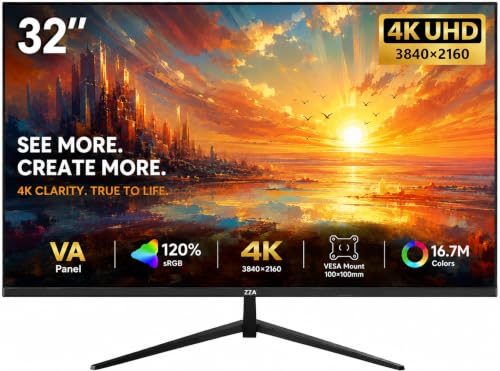
Best Value 4K: Samsung 32-inch 4K Smart Monitor. Four-thousand-pixel horizontal resolution on a 32-inch VA panel gives excellent pixel density for detailed UV work and render previewing at a competitive price.
The AOC CU34G2XPD makes a compelling case for the ultrawide format as the most practical screen shape for Blender users. The 34-inch 3440x1440 resolution provides a horizontal workspace that is roughly 38 percent wider than a standard 16:9 2560x1440 panel, which in Blender terms means you can comfortably display a full-width 3D viewport alongside a properties panel and an outliner without any of them feeling cramped. Artists who work with the node editor for shader or compositor work will particularly appreciate the extra horizontal space, as node networks sprawl horizontally and benefit enormously from wider screens.
The VA panel used here is a curved 1500R design, meaning the screen curves gently to match the natural arc of human vision at typical desk distances. For a 34-inch display, this curvature reduces the sense that the screen edges are further away than the centre, which helps with consistent colour perception across the full width. VA panels do have wider colour gamut coverage than standard IPS panels in many cases, and they offer significantly better contrast ratios, which helps when evaluating dark areas of renders or working with shadow-heavy scenes.
The port selection on the AOC CU34G2XPD is notably generous for its price bracket. Two HDMI 2.0 ports and two DisplayPort 1.4 connections mean you can connect multiple devices without a KVM switch, which is useful for artists who switch between a desktop workstation and a laptop. The four USB-A ports via the USB-B upstream connection effectively turn the monitor into a USB hub, reducing cable clutter on the desk. A 3.5mm audio output rounds out the connectivity.
The 180 Hz refresh rate is higher than most 3D artists will ever need for viewport work, but it does mean the panel has been engineered for fast pixel response times, and the 1ms response specification means there is minimal ghosting when panning around complex scenes. The curved VA panel will not match the colour accuracy of a QD-OLED or a high-end IPS display, and the contrast between dark and bright areas in gradient renders may show some of the VA panel's characteristic slight colour shift at extreme viewing angles. However, for the price, the sheer amount of screen real estate on offer makes this an outstanding value proposition for 3D artists working on a budget.
This is the monitor for Blender users who want maximum workspace width without spending on premium panel technology. The wide viewport, generous USB hub functionality, and dual DisplayPort connections make it a practical everyday workhorse for modelling, UV unwrapping, and compositing.
Pros
- 3440x1440 ultrawide resolution provides generous horizontal workspace for multi-editor Blender layouts
- Dual DisplayPort 1.4 and dual HDMI 2.0 ports plus a four-port USB hub reduce desk cable clutter
- 1500R curvature reduces perceived edge distortion across the wide panel for more consistent colour evaluation
Cons
- VA panel shows colour shift at extreme viewing angles, which can affect colour accuracy assessment when viewing renders from the side
- 3440x1440 resolution spread across 34 inches gives a lower pixel density than a 27-inch QHD display, making fine texture detail slightly less sharp
The LG 34WR50QK occupies an interesting position in this list as a more moderately priced 34-inch ultrawide that prioritises everyday usability over headline specifications. Where the AOC CU34G2XPD competes on refresh rate and port density, the LG 34WR50QK focuses on delivering a clean, well-calibrated ultrawide experience at a price that makes the 34-inch format accessible to artists who are not primarily gamers and do not need 180 Hz panel engineering.
The 3440x1440 resolution on a 34-inch VA curved panel gives the same fundamental workspace advantage as the AOC: Blender's multi-editor layout breathes at this aspect ratio in a way that 16:9 panels simply cannot match. The node editor, UV editor, and 3D viewport can coexist without constant panel resizing. LG's VA panel implementation here is tuned for a broader audience than pure gamers, and the 100 Hz refresh rate, while lower than the AOC's 180 Hz, is entirely sufficient for smooth viewport navigation in Blender on any modern GPU.
The 5ms response time is higher than the AOC's 1ms specification, but in the context of 3D modelling and rendering work rather than competitive gaming, this difference is imperceptible. What matters more for 3D artists is the panel's colour rendering, and LG's VA implementation here offers solid colour reproduction suitable for texturing and lighting work, though it will not match the colour volume of QD-OLED or the angular consistency of IPS panels.
Connectivity is more restrained than the AOC: two HDMI 2.0 ports and a single DisplayPort 1.4 cover the essentials without the USB hub functionality. For a single-workstation setup this is perfectly adequate, but artists who regularly switch between devices may find the limited port count a mild inconvenience. There is no USB-C connection, which is an omission that some modern laptop users will notice.
LG's monitor software and on-screen display menus are generally well regarded for ease of use, and the brand's reputation for consistent panel quality control means unit-to-unit variation is relatively low. The 34WR50QK is the sensible, no-fuss ultrawide choice for Blender artists who want the format benefits without paying for gaming-grade specifications they will never use. It suits freelancers, students, and hobbyists who spend long hours in Blender and want a comfortable, wide workspace at a fair price.
Pros
- 3440x1440 ultrawide at 34 inches gives the same generous Blender workspace as pricier competitors at a more accessible price
- LG's panel quality control is consistently reliable, reducing the risk of backlight bleed or colour uniformity issues out of the box
Cons
- Single DisplayPort 1.4 and no USB-C limit connectivity flexibility for multi-device or laptop-primary setups
- 5ms response time and 100 Hz refresh rate, while adequate for 3D work, mean this panel is less versatile if you also want to game competitively
- No USB hub functionality, so desk cable management requires additional accessories
The Alienware AW2725DM brings a Fast IPS panel to the 27-inch QHD format, and for 3D artists the IPS panel type is a meaningful distinction. IPS panels maintain colour accuracy across a much wider range of viewing angles than VA panels, which matters when you are leaning in to examine texture detail, or when colleagues or clients are viewing your work from the side. The colour shift that VA panels exhibit at off-axis angles is absent here, making the AW2725DM a more reliable reference display for evaluating the true colours of your materials and renders.
The 2560x1440 resolution at 27 inches gives approximately 109 PPI, which is the same as the MSI QD-OLED pick and represents a comfortable balance between sharpness and interface legibility without scaling. Blender's UI at 1440p on a 27-inch screen is clear and readable without needing fractional scaling, which avoids the occasional rendering artefacts that fractional scaling can introduce in Linux environments where many Blender power users operate.
Alienware's build quality and ergonomic stand design are traditional strengths of the brand, and the AW2725DM continues this. The stand offers height, tilt, and swivel adjustment, which is important for 3D artists who spend many hours at the desk and need to optimise their monitor position for comfort. The three USB ports on the monitor itself provide a convenient hub for peripherals such as a drawing tablet, USB audio interface, or external drive.
The Fast IPS panel technology means pixel response times are competitive with VA panels, and the 180 Hz refresh rate ensures smooth viewport interaction. Alienware monitors are known for good factory calibration, and the Fast IPS panel here should deliver solid Delta E performance out of the box, reducing the need for third-party calibration hardware unless you are working to strict colour management standards.
The main limitation compared to the MSI QD-OLED is contrast ratio. IPS panels, including Fast IPS variants, cannot match the infinite contrast of OLED technology, so dark areas in renders will appear slightly greyer than on the MSI. However, for artists who prioritise colour accuracy at off-axis angles and want a proven, well-supported brand with good warranty service in the UK, the Alienware AW2725DM is an excellent choice. It suits professional freelancers and studio artists who value reliable colour reproduction and ergonomic flexibility.
Pros
- Fast IPS panel maintains colour accuracy at wide viewing angles, making it more reliable for colour-critical texture and lighting evaluation
- Three USB ports on the monitor body provide a convenient hub for drawing tablets and other 3D artist peripherals
- Alienware's ergonomic stand with height, tilt, and swivel adjustment supports long modelling sessions comfortably
Cons
- IPS panel contrast ratio cannot match the QD-OLED alternative, so dark render areas appear slightly less deep
- 27-inch 16:9 format offers less simultaneous multi-editor workspace than 34-inch ultrawide options
Buying Guide
Panel Type: Why It Matters More for 3D Artists Than for Gamers
The three panel technologies represented in this guide, VA, IPS, and QD-OLED, each have distinct characteristics that affect 3D work differently. VA panels offer the best contrast ratios of the three, meaning darker blacks and more vivid colour saturation, which helps when evaluating the tonal range of rendered images. However, VA panels show noticeable colour shift when viewed from the side, which can cause you to misjudge colours if you are not sitting directly in front of the screen. IPS panels maintain colour consistency at wide viewing angles, making them more reliable for colour-critical work such as texturing and lighting. QD-OLED combines the infinite contrast of OLED with the wide colour gamut of quantum dot technology, making it the most capable panel type for colour-accurate 3D work, though it requires awareness of image retention risks with static interfaces.
Resolution and Screen Size
For Blender specifically, resolution determines how much of your scene and interface you can see simultaneously. A 1440p display at 27 inches gives a good balance of sharpness and interface legibility. Moving to 4K at 32 inches increases pixel density further and is particularly valuable for texture painting and UV work where fine detail matters. The ultrawide 3440x1440 format at 34 inches sacrifices some vertical resolution compared to a 16:9 1440p panel but gains significant horizontal workspace, which suits Blender's multi-editor layout extremely well.
Aspect Ratio and Workspace Layout
Blender's interface is designed to be split into multiple editors arranged side by side. The standard 16:9 aspect ratio works, but the 21:9 ultrawide format used by 34-inch monitors allows you to comfortably display a 3D viewport, a properties panel, an outliner, and a timeline simultaneously without any of them feeling cramped. Artists who use the node editor heavily for shader or compositor work will find the extra horizontal space particularly valuable, as node networks expand horizontally.
Connectivity for Workstation Use
A 3D workstation typically has a dedicated GPU, and you want to ensure your monitor's input ports match your GPU's outputs. DisplayPort 1.4 is the preferred connection for high-resolution, high-refresh-rate displays. HDMI 2.1 supports high bandwidth for 4K connections. USB hub functionality on the monitor itself is a practical convenience for 3D artists who use drawing tablets, external drives, or USB audio interfaces. USB-C connectivity is useful if you also work from a laptop.
Ergonomics for Long Sessions
3D modelling and sculpting sessions can last many hours. A monitor with a height-adjustable stand, tilt adjustment, and ideally swivel capability allows you to optimise your posture throughout the day. VESA mount compatibility is worth checking if you prefer a monitor arm, which frees up desk space and allows more flexible positioning. Eye comfort features such as flicker-free backlighting and low blue light modes are worth considering for artists who spend extended periods in front of the screen.
For Blender and 3D artists, the MSI MAG 272QP QD-OLED X50 is the overall winner. Its QD-OLED panel delivers the combination of true black levels, wide colour gamut, and self-emissive pixel accuracy that makes it the most faithful display for evaluating PBR materials, Cycles renders, and HDRI lighting scenarios. The HDMI 2.1 ports and USB-C connectivity future-proof it for evolving workstation configurations, and the 280 Hz refresh rate ensures viewport navigation remains fluid regardless of scene complexity. Artists on a tighter budget who want maximum workspace should look at the AOC CU34G2XPD, which delivers the ultrawide format with generous USB hub connectivity at a price that makes 34-inch 3440x1440 genuinely accessible. For those who prioritise pixel density and a larger physical screen, the Samsung 32-inch 4K Smart Monitor offers the sharpest image in the selection at a competitive price. Whichever you choose, any of these five monitors represents a meaningful upgrade over a standard 1080p display for serious 3D work.