DaVinci Resolve is one of the most GPU-hungry applications you can run on a desktop PC. Unlike most creative software, it offloads nearly every processing task, from colour grading and noise reduction to Fusion effects and AI-powered tools like Magic Mask, directly onto the graphics card. That means VRAM capacity, GPU compute throughput and hardware encode/decode support all matter far more than they do for gaming. Since last year, two significant shifts have changed the landscape: AMD's RDNA 4 architecture has arrived with substantially improved AV1 hardware encode support, and Nvidia's RTX 50-series has introduced GDDR7 memory alongside updated NVENC/NVDEC engines. This guide is aimed at video editors, colourists and motion graphics artists who need reliable, fast GPU acceleration in Resolve 19 and beyond. Whether you are cutting 4K timelines on a budget or grading 8K RAW on a professional workstation, there is a card here that matches your workflow and your wallet.
Quick Verdict
Best Overall: Asus TUF Radeon RX 7900 XT 20G OC (Graded)20 GB of VRAM at a price that no new card can match makes this the definitive choice for serious Resolve work. Best Value: PowerColor Hellhound RX 9070 16GBRDNA 4 compute, 16 GB GDDR6 and full AV1 encode/decode for under £560 is exceptional for editors who do not need the absolute maximum VRAM buffer.
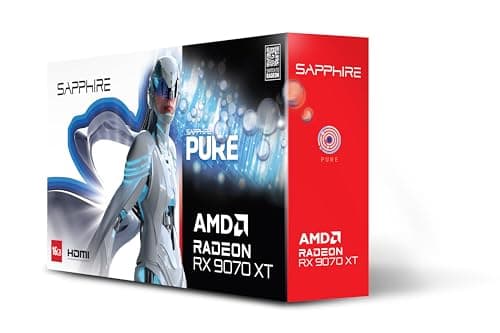
The XFX Mercury RX 9070 XT is one of the first RDNA 4 cards to land in UK retail, and it brings meaningful architectural improvements that matter specifically for video editors. The most important upgrade over RDNA 3 is the dual AV1 encode engine: where the RX 7900 XT has a single AV1 encoder, the RX 9070 XT has two, which roughly halves AV1 export times in Resolve's Deliver page. As AV1 becomes the default codec for high-quality streaming delivery, this is a genuine workflow advantage.
The card carries 16 GB of GDDR6 on a 256-bit bus, which is sufficient for the vast majority of 4K and most 6K workflows in Resolve. The RDNA 4 compute architecture also brings improved AI inference performance, which benefits Resolve's AI-powered tools including Magic Mask, Speed Warp and Super Scale. In practical terms, Magic Mask tracking on a 4K timeline is noticeably faster on RDNA 4 than on the equivalent RDNA 3 part, which translates to less waiting during complex rotoscoping sessions.
The XFX Mercury cooling solution uses a magnetic air design with three fans and a large vapour chamber heatsink. Thermal performance is strong, keeping the GPU well under its thermal limit during sustained Resolve exports. The RGB lighting is subtle and can be disabled via AMD's software if you prefer a cleaner look in a professional environment. Power consumption sits at around 304 W under full load, slightly lower than the RX 7900 XT despite offering competitive compute throughput.
The price is higher than the PowerColor Hellhound RX 9070 non-XT, but the XFX Mercury justifies the premium through the dual AV1 encoder, higher rasterisation throughput and slightly better AI compute performance. For editors who export AV1 regularly, the time saved on every export quickly adds up. DisplayPort 2.1 outputs also future-proof the card for high-refresh 4K or 8K monitor setups.
One consideration: at over £800, this card competes with the graded RTX 4080 Super in the catalogue. The RTX 4080 Super edges ahead on raw Resolve GPU compute in some benchmarks, but the dual AV1 encoder on the RX 9070 XT is a meaningful differentiator for delivery-focused workflows.
Verdict: The best new RDNA 4 card for editors who export AV1 regularly, with strong AI tool acceleration and solid 16 GB VRAM.
Pros
- Dual AV1 hardware encode engines cut AV1 export times roughly in half versus single-encoder cards
- RDNA 4 AI compute accelerates Magic Mask, Speed Warp and Super Scale in Resolve 19
- DisplayPort 2.1 supports 8K60 or 4K240 monitor configurations
Cons
- 16 GB VRAM is limiting for 8K RAW workflows compared to the 20 GB RX 7900 XT
- Priced above £800, making the graded RTX 4080 Super a close competitor on value
- RGB lighting adds cost that most professional editors would not prioritise
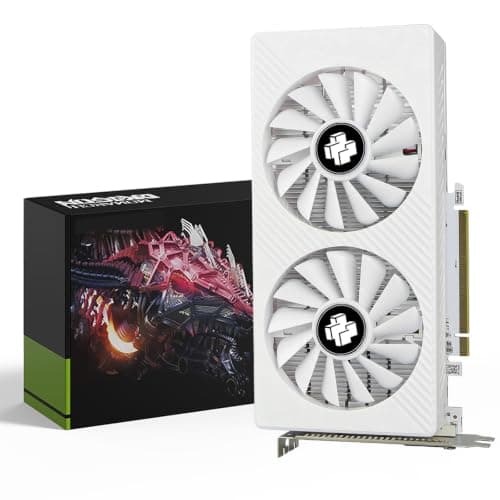
The PowerColor Hellhound RX 9070 is the best-value card in this entire roundup for editors working primarily with 4K timelines. It uses the same RDNA 4 architecture as the more expensive RX 9070 XT but with a slightly reduced compute unit count and lower clock speeds, which brings the price down to under £560. For DaVinci Resolve, the practical difference between the RX 9070 and RX 9070 XT is smaller than the price gap suggests, because Resolve's GPU workloads are often memory-bandwidth-bound rather than pure compute-bound at 4K.
The card carries 16 GB of GDDR6 on a 256-bit bus, identical to the XT variant. Crucially, it also carries the dual AV1 encode engine that is the defining feature of RDNA 4. This means AV1 exports from Resolve's Deliver page are just as fast as on the more expensive XT model. H.264 and H.265 hardware encode and decode are also fully supported, covering the full range of camera codecs and delivery formats that editors encounter in day-to-day work.
PowerColor's Hellhound cooler is a dual-fan design with a semi-passive mode that keeps the card completely silent during light timeline scrubbing. Under sustained GPU compute loads, the fans spin up but remain quieter than many triple-fan designs. The card's 220 W TDP is notably lower than competing options, making it a good choice for compact editing workstations or systems with modest PSUs. A quality 650 W PSU is sufficient for a full editing system built around the Hellhound.
The RDNA 4 architecture also brings improved video decode performance for newer codecs. HEVC 4:2:2 10-bit and AV1 decode are both hardware-accelerated, which matters when ingesting high-bitrate camera footage or proxies. For editors working with Sony FX series cameras, Canon Cinema RAW Light or DJI's D-Log footage, hardware-accelerated decode reduces the CPU overhead during playback and frees system resources for other tasks.
The main limitation compared to the RX 7900 XT above it in this list is the 16 GB VRAM ceiling. Editors working with 6K or 8K RAW media, or those who run very deep Fusion node trees, may find 16 GB constraining. For 4K-focused workflows, however, 16 GB is comfortably sufficient and this card represents outstanding value per pound spent.
Verdict: The best-value pick for 4K Resolve editors. RDNA 4's dual AV1 encoder and 16 GB VRAM at under £560 is hard to argue with.
Pros
- Dual AV1 hardware encode engines match the more expensive RX 9070 XT for delivery speed
- 220 W TDP is among the lowest in this category, suitable for compact workstations
- 16 GB GDDR6 covers all mainstream 4K and most 6K Resolve workflows comfortably
Cons
- Lower compute unit count than the RX 9070 XT means slower Fusion and AI tool performance
- 16 GB VRAM is insufficient for demanding 8K RAW grading sessions
Buying Guide
VRAM: the most important specification for Resolve
DaVinci Resolve's GPU memory manager works differently from most applications. It allocates VRAM for decoded frame buffers, LUT data, node tree caches and AI model weights simultaneously. Once the available VRAM is exhausted, Resolve falls back to system RAM, which is dramatically slower and causes dropped frames during playback and longer processing times during exports. For 4K timelines with a moderate number of colour nodes and effects, 12 GB is the practical minimum, but 16 GB gives comfortable headroom for complex grades. For 6K and 8K RAW workflows, or for editors who use Fusion heavily, 20 GB is the point at which VRAM stops being a constraint entirely.
Hardware encode and decode
Hardware video encode and decode engines on modern GPUs offload codec processing from the CPU and dramatically accelerate both playback and export in Resolve. H.264 and H.265 hardware acceleration is present on all cards in this list. AV1 hardware encode is the newer and more important consideration: AMD's RDNA 4 cards carry dual AV1 encode engines, which halves AV1 export times compared to single-encoder implementations. If your delivery pipeline includes AV1, RDNA 4 has a meaningful advantage. Nvidia's NVENC produces excellent H.264 and H.265 quality and is the preferred choice for editors delivering to broadcast platforms with strict codec quality requirements.
GPU compute and AI tools
Resolve's AI-powered tools, including Magic Mask, Speed Warp optical flow and Super Scale upscaling, rely on GPU compute rather than dedicated hardware. Nvidia's Tensor cores provide a performance advantage for these specific workloads, which is why RTX cards are often preferred in high-end post-production facilities. AMD's RDNA 4 architecture has closed the gap significantly, but Nvidia still leads in Tensor-heavy AI inference tasks. For editors who use AI tools occasionally, the difference is minor. For those who rely on Magic Mask or Speed Warp on every project, an RTX card may save meaningful time per day.
Power and system compatibility
High-end video editing cards draw between 220 W and 320 W under sustained load. This is not a brief gaming spike but a continuous workload during long exports. A quality 750 W PSU with adequate 12-pin or dual 8-pin connectors is the minimum for most cards in this list. The PowerColor Hellhound RX 9070 at 220 W is the exception, suitable for 650 W PSUs. Ensure your case has adequate airflow for sustained GPU loads, as thermal throttling during a long export will slow your workflow.
New versus graded
Several picks in this list are available in graded condition, meaning they have been refurbished and tested to a verified standard. For a workstation that will run sustained compute loads, graded cards from reputable retailers with a warranty are a sensible choice, offering significant savings. Check the warranty terms carefully and ensure the card has been tested under load before purchase.
The Asus TUF Radeon RX 7900 XT 20G OC in graded condition is the overall winner for DaVinci Resolve. No other card in this catalogue offers 20 GB of VRAM at anywhere near its price point, and in Resolve, VRAM capacity is the specification that most directly determines whether your workflow runs smoothly or stutters. The 320-bit memory bus, AV1 hardware encode support and strong RDNA 3 compute make it a well-rounded professional tool. For editors on a tighter budget who work primarily at 4K, the PowerColor Hellhound RX 9070 is the best-value alternative, bringing RDNA 4's dual AV1 encoder and 16 GB VRAM for under £560. Nvidia users who prioritise NVENC export quality and AI tool acceleration should look at the Gigabyte RTX 5070 Ti GAMING OC, which brings Blackwell's GDDR7 bandwidth and ninth-generation NVENC to the table at a price that, while higher, reflects genuine generational improvements.