Finding a desktop that handles lectures, essays, video calls and the occasional gaming session without draining a student loan is harder than it looks. The market in 2025 has shifted noticeably: refurbished business desktops now arrive with Windows 11 and NVMe SSDs as standard, while entry-level new-build PCs have crept up in price following component shortages. That means the sweet spot for students has moved. A well-specced second-generation office machine can undercut a brand-new budget tower by hundreds of pounds, yet still run every productivity app you need. Meanwhile, students who want a machine that doubles as a light gaming rig have more choice than ever at the sub-£700 mark. Whether you need something purely for word processing and web browsing or a box that can handle creative software and a few hours of gaming each evening, there is a sensible option on this list. All five picks below have been chosen with desk space, upgrade potential and long-term reliability in mind.
Quick Verdict
Best Overall: GMKtec K8 Plus, a compact powerhouse with a modern Ryzen 7 processor, 32 GB of DDR5 RAM and a 1 TB NVMe SSD at a price that makes sense for students who need genuine performance without a full tower footprint.
Best Value: Veno Scorp Optiplex i5-2400, the cheapest machine on this list by a significant margin. It is not fast, but for basic coursework, web browsing and video calls it is perfectly adequate, and it arrives with Windows 11 and a 1 TB NVMe SSD already fitted.
Spec Comparison
The Veno Scorp Optiplex is a refurbished Dell Optiplex chassis built around an Intel Core i5-2400 processor. That chip dates back to 2011, which sounds alarming until you consider what this machine actually costs and what most students actually do with a desktop. Essay writing, spreadsheets, video lectures, Zoom calls, light web browsing, and streaming: the i5-2400 handles all of it without complaint. The seller has fitted a generous 16 GB of RAM and a 1 TB NVMe SSD, which means boot times are fast and you will not run out of storage for lecture recordings and project files any time soon. Windows 11 is pre-installed, so there is no operating system faff out of the box.
Who is this for? Students on the tightest possible budget, particularly those in first or second year who need a reliable machine for coursework and nothing else. It is also a sensible choice for a student who already has a laptop and wants a secondary desktop for their room without spending serious money. The integrated graphics are not suitable for gaming beyond very old or very undemanding titles, and the i5-2400 will struggle with video editing or any CPU-heavy creative work. But for the core academic workload, it is genuinely adequate.
The NVMe SSD is the standout upgrade here. Older refurbished machines often ship with slow mechanical hard drives; having a proper NVMe drive means Windows 11 loads quickly and applications open without the usual refurbished-PC lag. The 16 GB of RAM is also more than most students will ever use for productivity tasks, and it gives the machine breathing room when running a browser with twenty tabs open alongside a video call and a document editor.
There are obvious limitations. The i5-2400 is a decade-and-a-half old processor, and it will not receive further Windows security updates beyond what is already supported. USB 3.0 support is limited on this generation of hardware. If your course involves data science, machine learning, video production or 3D modelling, look further down this list. But as a pure productivity machine at the lowest possible price point, the Veno Scorp Optiplex is hard to argue with.
Verdict: The cheapest route to a working Windows 11 desktop with a proper SSD. Ideal for basic student use; not suitable for anything graphically or computationally demanding.
Pros
- Lowest price on this list by a significant margin, making it genuinely accessible on a tight student budget
- 1 TB NVMe SSD provides fast boot times and ample storage for coursework and media files
- 16 GB RAM is generous for the price and handles multitasking productivity tasks comfortably
Cons
- Intel Core i5-2400 is a very old processor with no support for demanding software or modern gaming
- Integrated graphics rule out any meaningful gaming or GPU-accelerated creative work
The Dell Optiplex 3060 is a step up from the Veno Scorp in terms of processor generation, moving to an Intel Core i5-8500, which is an eighth-generation chip from 2018. That is a meaningful improvement: the i5-8500 is a six-core processor with a 3.0 GHz base clock and 4.1 GHz boost, and it handles everyday student workloads with noticeably more headroom than older quad-core chips. This particular listing ships with 8 GB of RAM and a 256 GB SSD, and it runs Windows 10 Pro.
The small form factor chassis is compact enough to sit beside a monitor on a student desk without dominating the space. Dell's Optiplex line has a strong reputation for reliability and repairability, which matters when you are buying refurbished. Parts are widely available, and the chassis is straightforward to open if you want to add RAM or swap the storage drive later.
The 256 GB SSD is the main practical limitation here. For a student who stores most files in the cloud, it is workable, but anyone who keeps large project files, video recordings or downloaded course materials locally will find themselves managing storage carefully. The 8 GB of RAM is also on the lower side in 2025, particularly if you run Chrome with multiple tabs alongside a video call and a productivity suite. Both are upgradeable, which keeps the long-term cost of ownership reasonable.
The integrated Intel UHD 630 graphics handle 4K video playback and dual-monitor output without issue, but gaming is limited to very light titles. For students on media, journalism or business courses who need a reliable machine for Office applications, web research and video calls, the Optiplex 3060 is a well-proven choice. It is more capable than the Veno Scorp Optiplex at a modest price premium, and the i5-8500 will remain supported by software for longer.
One note on the operating system: this ships with Windows 10 Pro rather than Windows 11. Windows 10 reaches end of support in October 2025, so students buying this machine should factor in either a Windows 11 upgrade check or the cost of a licence if the hardware supports it. The i5-8500 does meet Windows 11 requirements in most configurations.
Verdict: A reliable, compact refurbished office PC with a capable sixth-gen processor. The storage and RAM are worth upgrading if budget allows, but it works well for core student tasks out of the box.
Pros
- Intel Core i5-8500 six-core processor handles productivity workloads with genuine headroom
- Compact SFF chassis takes up minimal desk space and is easy to upgrade
- Dell Optiplex build quality and parts availability make it a reliable long-term buy
Cons
- 256 GB SSD is tight for students who store large files or course media locally
- Ships with Windows 10 Pro, which reaches end of support in October 2025
The Lenovo ThinkCentre M720 Tiny is one of the most practical student desktops on this list, and it earns that position through a combination of compact size, solid build quality and a sensible specification. The Intel Core i5-8400T processor is a low-power variant of Intel's eighth-generation Coffee Lake architecture, which means it runs cool and quiet, an important consideration if your machine lives in a small student room. It is paired with 16 GB of RAM and a 512 GB NVMe SSD alongside an additional HDD, giving you both fast primary storage and extra capacity for large files.
The ThinkCentre M720 Tiny is genuinely tiny. It is designed to be mounted behind a monitor or tucked into a corner of a desk, and it achieves this without compromising on connectivity. Lenovo's Tiny form factor has always been well-regarded for its port selection and its upgrade-friendliness, and the M720 continues that tradition. It runs Windows 10 Pro, which, as noted above, reaches end of support in late 2025, but the hardware is compatible with Windows 11.
For students, the 16 GB of RAM is the headline figure here. Running a browser with research tabs open, a word processor, a video call and a music streaming service simultaneously is exactly the kind of multitasking that catches lower-RAM machines out. The M720 Tiny handles it without issue. The NVMe SSD keeps the system responsive, and the additional HDD provides overflow storage for large downloads or media projects.
The i5-8400T is a six-core processor, but its lower clock speeds compared to the desktop i5-8500 in the Dell Optiplex mean it is slightly less snappy under sustained CPU load. For most student workloads, the difference is negligible. Where the ThinkCentre earns its higher price over the Dell is in the combination of more RAM, dual storage, and Lenovo's reputation for build quality and after-sales support.
Students studying computer science, business, or any course that involves running virtual machines or multiple applications simultaneously will appreciate the 16 GB of RAM. The integrated Intel UHD 630 graphics handle everyday display tasks and video playback without issue, but this is not a gaming machine. The price sits in the middle of this list, making it a sensible step up from the cheapest refurbished options for students who can stretch their budget slightly.
Verdict: The best all-round refurbished option on this list. The combination of 16 GB RAM, dual storage and a compact, quiet chassis makes it well-suited to the demands of student life.
Pros
- 16 GB RAM and dual NVMe SSD plus HDD storage configuration handles multitasking and large file storage simultaneously
- Extremely compact and quiet, well-suited to small student rooms
- Lenovo ThinkCentre build quality and upgrade-friendliness make it a reliable long-term investment
Cons
- i5-8400T low-power CPU is slower under sustained load than full-power desktop equivalents
- Ships with Windows 10 Pro, requiring an upgrade check before October 2025 end-of-support deadline
The GMKtec K8 Plus is a different kind of machine from the refurbished office PCs above. It is a brand-new mini PC built around AMD's Ryzen 7 8845HS, a modern eight-core, sixteen-thread processor designed for laptops but increasingly popular in compact desktop form factors. The 8845HS boosts to 5.1 GHz and includes AMD's Radeon 780M integrated graphics, which is currently one of the best integrated GPU solutions available. It ships with 32 GB of DDR5 RAM and a 1 TB PCIe 4.0 NVMe SSD, making it by far the most capable machine on this list in terms of raw specification.
For students, the Radeon 780M GPU is a genuine differentiator. It can handle light gaming at 1080p, including titles like Minecraft, Rocket League, Fortnite at lower settings, and older AAA games. It also accelerates video editing and creative software in a way that Intel UHD integrated graphics simply cannot match. Students on media production, graphic design, or architecture courses will notice the difference immediately.
The 32 GB of DDR5 RAM is overkill for basic coursework but genuinely useful for students running virtual machines, working with large datasets, or using memory-intensive creative applications. The 1 TB PCIe 4.0 NVMe SSD is fast enough that application load times and file transfers feel instantaneous. The compact chassis is smaller than most textbooks and produces very little noise under typical loads.
There are some caveats. The Ryzen 7 8845HS is a mobile processor, which means it is designed with power efficiency in mind rather than sustained desktop-class performance. Under prolonged heavy CPU loads, it will throttle more aggressively than a full desktop chip. For gaming, the Radeon 780M is impressive for integrated graphics but still falls well short of a dedicated GPU. Students who want to play modern AAA titles at high settings will need to look at a machine with a discrete graphics card.
The GMKtec K8 Plus sits at a price point that is notably higher than the refurbished machines above but significantly lower than a new gaming tower with a discrete GPU. For students who need a modern, fast, compact machine for a mix of productivity and light creative or gaming use, it represents excellent value. It is also new rather than refurbished, which means a full manufacturer warranty and no concerns about the previous life of the hardware.
Verdict: The best all-round new machine on this list for students who need modern performance in a compact form. The Ryzen 7 8845HS and Radeon 780M combination punches well above its weight for the price.
Pros
- AMD Ryzen 7 8845HS with Radeon 780M integrated GPU handles light gaming and creative software that older integrated graphics cannot
- 32 GB DDR5 RAM and 1 TB PCIe 4.0 NVMe SSD provide genuinely modern, fast performance for demanding student workloads
- Brand-new hardware with full warranty, not a refurbished unit with unknown history
Cons
- Mobile processor throttles under sustained heavy CPU loads more than a full desktop chip would
- No discrete GPU means modern AAA gaming at high settings is not achievable
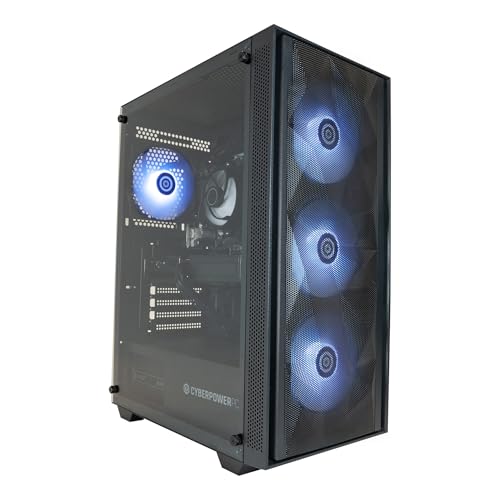
The Vibox I-7 is the only traditional desktop tower on this list and the only machine here built around a dedicated gaming-oriented configuration with an AMD Ryzen 3 3200G processor. The 3200G is an APU, meaning it combines CPU and GPU on a single chip, specifically the Radeon Vega 8 integrated graphics. It runs at up to 4.0 GHz and is paired with 16 GB of RAM and a 1 TB storage drive. Vibox is a UK-based system builder with a reasonable reputation for budget gaming builds, and the I-7 is aimed squarely at students who want a proper desktop tower that can handle both coursework and casual gaming.
The Ryzen 3 3200G is an older chip now, released in 2019, but it remains a capable processor for everyday tasks and light gaming. The Radeon Vega 8 integrated GPU is weaker than the Radeon 780M in the GMKtec K8 Plus, but it can still manage older games and esports titles at 1080p with settings turned down. Titles like CS2, League of Legends, Minecraft and older FIFA games are all achievable at playable frame rates. For students who want occasional gaming without spending on a dedicated GPU, it is a workable option.
The tower form factor has practical advantages for students thinking about the long term. Upgrading to a dedicated graphics card in the future is straightforward in a standard ATX or micro-ATX chassis, which means the Vibox I-7 can grow with your needs. If you finish your first year and decide you want to play more demanding games, adding a budget discrete GPU is a realistic option. The same cannot be said for the compact mini PCs or SFF office machines on this list.
The 1 TB of storage is adequate for most students, and 16 GB of RAM is a sensible amount for a machine in this price range. The Vibox I-7 costs more than the refurbished office PCs but less than the GMKtec K8 Plus, sitting in a middle ground that makes sense for students who specifically want a tower PC with upgrade potential rather than a compact sealed unit.
One consideration: the Ryzen 3 3200G is a four-core processor, which means it will feel the strain more than the six-core or eight-core chips in other machines on this list when running multiple demanding applications simultaneously. For pure gaming or pure productivity it is fine; for students who need to run a virtual machine alongside a browser and a video call, the core count can become a bottleneck.
Verdict: The best choice for students who want a traditional tower PC with upgrade potential and casual gaming capability. The Ryzen 3 3200G and Vega 8 combination is ageing but still functional for light gaming and all student productivity tasks.
Pros
- Tower form factor allows future GPU upgrades, giving the machine a longer useful lifespan than sealed compact units
- Radeon Vega 8 integrated graphics handle esports titles and older games at playable 1080p settings
- 16 GB RAM and 1 TB storage are generous for the price bracket
Cons
- Ryzen 3 3200G is a four-core chip that can struggle when multiple demanding applications run simultaneously
- Radeon Vega 8 is weaker than the Radeon 780M in the GMKtec K8 Plus despite the similar price point
Buying Guide
What to Look for in a Student Desktop
Processor Generation Matters More Than Clock Speed
When comparing desktops, it is tempting to focus on headline clock speed figures, but processor generation is a more reliable guide to real-world performance. An Intel Core i5-8500 from 2018 will outperform an Intel Core i5-2400 from 2011 in almost every task, even if the clock speeds look similar on paper. Newer processors have better instructions per clock, more efficient memory handling, and better support for modern software. For student use, aim for at least an eighth-generation Intel Core i5 or an AMD Ryzen 3000-series chip if buying refurbished, or a Ryzen 5000 or Ryzen 7000-series chip if buying new.
RAM: How Much Do You Actually Need?
For basic student use, 8 GB of RAM is the minimum. It will handle a word processor, a browser with several tabs, and a video call, but it will feel tight if you add more applications or run anything memory-intensive. 16 GB is the comfortable sweet spot for most students in 2025, covering multitasking, light creative work and the occasional gaming session without strain. 32 GB is genuinely useful for students on computer science, data science, architecture or video production courses, where virtual machines, large datasets or rendering tasks are common. Beyond 32 GB, you are into territory that most students will never need.
Storage: SSD Is Non-Negotiable
Any desktop you buy in 2025 should have an SSD as its primary drive. A mechanical hard drive as a boot drive makes Windows feel sluggish and application load times frustratingly slow. NVMe SSDs are faster than SATA SSDs, though the difference is less noticeable in everyday use than the marketing suggests. What matters more is capacity: 256 GB is tight for a primary drive if you store any media files locally, 512 GB is workable, and 1 TB is comfortable for most students. If a machine ships with a small SSD, check whether it is upgradeable before buying.
Integrated vs Discrete Graphics
For students who only need a desktop for productivity and media consumption, integrated graphics are perfectly adequate. Modern integrated GPUs from both Intel and AMD handle 4K video playback, dual-monitor output and light photo editing without issue. If you want to play games, the quality of integrated graphics varies significantly: AMD's Radeon 780M (found in the GMKtec K8 Plus) is substantially more capable than older Intel UHD solutions. For serious gaming, a machine with a dedicated GPU is necessary, but that pushes the price well above the budget range covered by this article.
New vs Refurbished
Refurbished business desktops from reputable sellers offer excellent value for students on tight budgets. Dell Optiplex and Lenovo ThinkCentre machines are built for commercial use, which means they are typically more robust than consumer-grade budget PCs. The main risks with refurbished hardware are shorter warranties and the possibility of wear on components like fans and storage drives. Always buy from a seller with a clear returns policy and check whether a warranty is included. New machines cost more but come with full manufacturer warranties and no uncertainty about previous use.
Form Factor and Desk Space
Student rooms are small. A full tower gaming PC is impractical in a room where your desk also holds textbooks, a lamp and a kettle. Small form factor PCs, mini PCs and all-in-one machines take up far less space and are easier to move at the end of term. The trade-off is that compact machines are generally harder to upgrade, so consider whether you are likely to want to add components in the future before committing to a sealed mini PC chassis.
For most students, the GMKtec K8 Plus Mini PC is the best overall choice on this list. It is a brand-new machine with a modern eight-core processor, AMD's best integrated GPU, 32 GB of DDR5 RAM and a fast 1 TB NVMe SSD. It handles every student workload with ease, manages light gaming better than any other machine here, and takes up almost no desk space. The price is higher than the refurbished options, but the combination of new hardware, full warranty and genuinely modern performance justifies the premium for students who can stretch their budget to reach it.
Students who cannot spend that much should look seriously at the Lenovo ThinkCentre M720 Tiny. It is the best of the refurbished options, offering 16 GB of RAM, dual storage, a compact chassis and Lenovo's well-regarded build quality. The i5-8400T processor is not exciting, but it is more than capable for academic workloads, and the machine is easy to upgrade if your needs change. For students on the absolute tightest budget, the Veno Scorp Optiplex gets the job done for basic coursework at a price that is hard to argue with, provided you go in with realistic expectations about what a 2011-era processor can and cannot do.