Your motherboard isn't just a platform, it's the difference between a build that hums along happily for five years and one that throttles under load, refuses to POST after a BIOS update, or simply won't talk to the NVMe drive you just spent good money on. Get it wrong and you'll spend more time troubleshooting than actually using the thing. The ASUS PRIME B450M-A II sits squarely in the budget Micro ATX bracket, targeting anyone building or upgrading on AMD's AM4 platform without wanting to spend a fortune on a chipset that does more than they'll ever need.
So is it any good? Yes, genuinely. For what it is, which is a no-nonsense budget board for Ryzen builds, it delivers where it counts. The BIOS FlashBack feature alone is worth talking about at this price, the I/O is solid for the money, and over 1,474 owner reviews averaging 4.4 stars tells you this isn't some paper-launch board that falls apart in the real world. But it's not perfect, and there are specific scenarios where you'd be better off spending a bit more or looking sideways at the competition. We'll get into all of that.
This review is grounded in the published specifications, the ASUS product listing, and the patterns that emerge from that substantial pool of owner feedback. We don't have a test bench here, but we know what matters in a budget AM4 board, and we'll tell you straight.
Core Specifications
The ASUS PRIME B450M-A II uses AMD's B450 chipset on the AM4 socket, which means it's compatible with the vast majority of Ryzen processors from the Ryzen 2000 series all the way through to Ryzen 5000. It's a Micro ATX board, so it'll fit in most mid-tower and small-form-factor cases without drama. Four DIMM slots support DDR4 memory up to 128GB total capacity, which is more than enough for any realistic use case you'd pair with a board at this price point.
On the storage side, you get one M.2 slot (supporting NVMe SSDs) alongside four SATA 6Gbps ports. The rear I/O includes HDMI, DVI-D, and D-Sub video outputs, which is genuinely useful if you're running a Ryzen APU like a Ryzen 5600G and want display connectivity without a discrete GPU. USB 3.2 Gen 2 Type-A makes an appearance, which is a pleasant surprise at this tier, and the board carries BIOS FlashBack for CPU-less BIOS updates. Networking is handled by 1 Gigabit Ethernet. There's Aura Sync RGB header support if you care about that sort of thing.
Nothing here is going to make enthusiasts swoon, but the spec sheet is honest and complete. ASUS hasn't tried to dress this up as something it isn't. The table below has the full rundown.
| Specification | Detail |
|---|---|
| Socket | AMD AM4 |
| Chipset | AMD B450 |
| Form Factor | Micro ATX |
| Memory Slots | 4 x DDR4 DIMM |
| Max Memory | 128GB |
| M.2 Slots | 1 x M.2 (NVMe) |
| SATA Ports | 4 x SATA 6Gbps |
| PCIe Slots | 1 x PCIe x16 (primary), additional x1 slots |
| USB (Rear) | USB 3.2 Gen 2 Type-A included |
| Video Outputs | HDMI, DVI-D, D-Sub |
| Ethernet | 1 Gigabit |
| BIOS FlashBack | Yes |
| RGB | Aura Sync support |
| Price | £150.43 ★★★★☆ (4.4) (1,473 reviews) |

Socket & CPU Compatibility
The AM4 socket is one of AMD's great success stories, and the ASUS PRIME B450M-A II takes full advantage of that. AMD's Ryzen lineup on AM4 spans from the original Ryzen 1000 series right through to the Ryzen 5000 series, including the popular Ryzen 5 5600, Ryzen 7 5700X, and the APU variants like the 5600G. That's an enormous pool of compatible processors, many of which are now available at very reasonable second-hand prices.
One thing to be aware of: if you're buying a newer Ryzen 5000 chip and your board ships with an older BIOS, you might need to update before the system will POST. This is where BIOS FlashBack earns its keep. You can flash a new BIOS version using just a USB drive and the dedicated button, without needing a compatible CPU already installed. That's not a feature you always see at this price, and it's saved more than a few builders from the headache of needing a loan CPU just to get started. Owner reviews consistently mention this as a genuine lifesaver when pairing the board with a Ryzen 5000 chip out of the box.
What you won't get is AM5 compatibility. This board is AM4 only, full stop. If you're planning to eventually upgrade to Ryzen 7000 series processors, you'll need an entirely new platform (AM5, different chipset, DDR5 memory). That's not a criticism of this board specifically, it's just the reality of where AMD's platform sits right now. If you're building an AM4 system as a cost-effective workhorse that you plan to run for three to five years without a CPU upgrade, this is perfectly sensible. If you're eyeing a Ryzen 7000 chip in the next 18 months, this isn't your board.
Chipset Features
The B450 chipset is AMD's mid-range offering from that generation, sitting above the entry-level A320 (which doesn't support overclocking) and below the X470 and X570. In practical terms, B450 gives you CPU overclocking support on unlocked Ryzen processors, which is a meaningful step up from A320. You're not getting the full PCIe lane count of X570, and there's no PCIe 4.0 support at the chipset level, but for the vast majority of Ryzen builds, that genuinely doesn't matter.
The B450 chipset provides a sensible allocation of USB ports and SATA connections for a budget board. Four SATA 6Gbps ports is enough for most builds, and the single M.2 slot covers the NVMe SSD that the majority of users will want. The chipset also handles the PCIe lanes for expansion slots beyond the primary x16 GPU slot. It's not a feature-packed chipset by any stretch, but it does the job it's designed to do without cutting corners that actually hurt users.
One area where B450 shows its age is the lack of native USB 3.2 Gen 2 at the chipset level (that's handled differently depending on implementation). The fact that ASUS has included USB 3.2 Gen 2 Type-A on the rear I/O is a nice touch regardless. Memory overclocking is supported, which means you can run faster DDR4 kits beyond the base JEDEC speeds, though results vary depending on your specific Ryzen CPU's memory controller. Ryzen 3000 and 5000 chips tend to be the sweet spot for memory overclocking on B450.
VRM & Power Delivery
Right, this is the section that separates the honest reviews from the marketing fluff. VRM quality on budget boards is where manufacturers cut costs, and sometimes those cuts bite users who pair the board with a power-hungry CPU. The ASUS PRIME B450M-A II is a budget Micro ATX board, so expectations need to be calibrated accordingly. It's not going to have the beefy power delivery of a premium X570 board, and nobody should expect it to.
For the CPUs this board is realistically paired with, such as a Ryzen 5 5600, Ryzen 7 5700X, or even the older Ryzen 5 3600, the VRM is adequate. These are 65W TDP processors that don't make extreme demands on power delivery. Where you'd want to think more carefully is if you're considering a Ryzen 9 5900X or 5950X. Those chips have higher power requirements, and while the board will technically work, sustained heavy loads could stress the VRM more than is ideal on a budget implementation. Owner feedback doesn't flag widespread thermal throttling issues on typical builds, which is reassuring, but it matters if you're planning to run a 16-core chip flat out for hours at a time.
There's no elaborate VRM heatsink here, which is fine given the target CPU range. ASUS has been sensible about matching the cooling to the expected thermal load rather than bolting on a decorative chunk of aluminium that does nothing. What matters is that for the Ryzen 5 and Ryzen 7 class processors this board is genuinely designed for, the power delivery holds up. Push it harder than that and you're asking the wrong board for the job.
Memory Support
Four DDR4 DIMM slots with support for up to 128GB total capacity. In practice, most people building on this platform will run two sticks in dual-channel configuration, which is the right call for Ryzen performance. AMD's Infinity Fabric architecture means memory speed has a real impact on CPU performance, particularly in gaming, and the B450 platform handles this well when you pair it with a decent DDR4 kit.
The board supports DDR4 with overclocking via AMD's EXPO equivalent (technically XMP profiles work here too, as most DDR4 kits use Intel's XMP standard which ASUS boards read without issue). You can push memory speeds beyond the base 2133MHz JEDEC spec, with many owners reporting stable operation at 3200MHz or 3600MHz with compatible kits. Ryzen 5000 CPUs tend to prefer 3600MHz with a 1:1 Infinity Fabric ratio, and this board can accommodate that.
Going above 3600MHz gets more dependent on your specific CPU's memory controller quality (what the community calls the silicon lottery) and your memory kit's ICs. The board itself isn't the limiting factor for most sensible overclocks. Starting with a reputable 3200MHz or 3600MHz CL16 or CL18 kit will serve you well here, and the four-slot design means you've got room to expand if you start with 16GB and want to double up later.
Storage Options
One M.2 slot and four SATA 6Gbps ports. That's the storage picture. The M.2 slot supports NVMe drives, which is what you want for your primary OS drive. A modern NVMe SSD like a Samsung 980 or a WD Blue SN570 will transform boot times and application load speeds compared to a SATA SSD, and the M.2 slot makes the installation clean with no cables to route.
The slot itself runs at PCIe Gen 3 speeds through the B450 chipset, which is entirely adequate for mainstream NVMe drives. PCIe Gen 4 M.2 support isn't available on B450, but the real-world performance difference between Gen 3 and Gen 4 NVMe in everyday use is smaller than the marketing suggests. Sequential reads and writes are faster on Gen 4, but random access performance, which is what actually matters for OS responsiveness, is comparable. Don't lose sleep over not having Gen 4 here.
Four SATA ports gives you room for a mix of SATA SSDs and mechanical hard drives if you need bulk storage. A typical build might use the M.2 slot for the OS drive, a SATA SSD for games, and a mechanical drive for media storage, and this board handles that configuration comfortably. RAID support is available through the chipset for those who want it, though RAID on a budget board is a niche use case. Most people won't touch it.
Expansion Slots & PCIe
The primary PCIe x16 slot is where your GPU goes, and it's reinforced with ASUS's SafeSlot construction (steel-reinforced slot) which helps prevent the slot from cracking under the weight of heavier graphics cards. That's a genuinely useful feature that not every budget board includes, and heavy AIB GPU coolers can stress unprotected slots over time.
Beyond the primary x16 slot, the board includes additional PCIe slots for expansion cards. These run at lower bandwidth than the primary slot, which is standard for this chipset tier. If you're adding a PCIe sound card, a capture card, or a Wi-Fi card, these slots will handle it without issue. GPU bandwidth isn't shared in any meaningful way for gaming workloads, so the primary slot delivers full bandwidth to your graphics card.
The Micro ATX form factor does limit the total slot count compared to a full ATX board, but realistically, most builds only need one GPU slot and maybe one additional slot. The PRIME B450M-A II covers that without wasting PCB real estate on slots that would never be used in a compact build. If you're running multiple GPUs for compute workloads, this isn't your board, but that's an extremely niche use case that doesn't apply to 99% of people considering a budget AM4 board.

Connectivity & Rear I/O
The rear I/O is where this board punches above its weight a bit. Three video outputs, which are HDMI, DVI-D, and D-Sub, make it genuinely versatile for APU builds or situations where you need display connectivity without a discrete GPU. That's three different monitor connection standards covered, which is more than you'd expect at this price. Whether you're connecting an older monitor via VGA (D-Sub), a mid-range display via HDMI, or using DVI-D for a panel that lacks HDMI, you're sorted.
USB connectivity includes USB 3.2 Gen 2 Type-A on the rear, which delivers 10Gbps transfer speeds and is fast enough for modern external SSDs and high-speed peripherals. There are also USB 2.0 ports for keyboards, mice, and other low-bandwidth devices. The internal headers include front panel USB 3.2 Gen 1 Type-A support, which means your case's front USB ports will work at proper speeds rather than being bottlenecked to USB 2.0 rates.
The audio output is handled by the onboard audio codec, which is fine for gaming headsets and desktop speakers. It's not going to replace a dedicated DAC for audiophiles, but that's not the audience for a budget AM4 board. The BIOS FlashBack button on the rear I/O is a standout feature, allowing BIOS updates without a CPU or RAM installed. You just need a USB drive with the BIOS file and power to the board. For anyone building with a brand-new Ryzen 5000 chip on a board that might ship with an older BIOS, this is genuinely invaluable.
WiFi & Networking
Ethernet is handled by a 1 Gigabit controller. For most home broadband connections in the UK, 1Gb Ethernet is more than sufficient. Unless you're on a multi-gigabit fibre connection or doing large file transfers across a NAS on a fast local network, you won't notice the absence of 2.5Gb. It's worth being clear-eyed about this though: 2.5Gb Ethernet is increasingly common on competing boards even at similar price points, and if you're future-proofing for a faster home network, it's a consideration.
There is no built-in Wi-Fi on the ASUS PRIME B450M-A II. If you need wireless connectivity, you'll need to add a PCIe Wi-Fi card or a USB Wi-Fi adapter. This is a common omission at the budget end of the market, and honestly, a wired connection is always preferable for a desktop anyway. But if your PC is going somewhere that a cable can't reach, factor in the cost of a Wi-Fi add-in card when budgeting.
For the vast majority of desktop builds, 1Gb Ethernet is perfectly adequate and the absence of Wi-Fi is a non-issue. Gamers, streamers, and general users on standard home broadband connections won't feel any limitation here. The Realtek Ethernet controller used on boards in this tier is reliable and well-supported by Windows and Linux drivers, with no widespread complaints in the owner feedback about network instability or dropout issues.
BIOS & Overclocking
ASUS's UEFI BIOS is genuinely one of the better implementations in the budget motherboard space. The interface is clean, logically organised, and doesn't bury the settings you actually need under seventeen layers of menus. There's an EZ Mode for beginners that shows you the essentials at a glance, and an Advanced Mode for when you want to dig into memory timings, CPU voltage, or fan curves. Most budget board BIOS interfaces feel like they were designed by someone who actively dislikes users. ASUS's doesn't.
Fan control through the BIOS is handled by ASUS's Fan Xpert 2+ software on the Windows side, or directly in the BIOS itself. You can set custom fan curves for each header, which matters if you care about noise levels or want to push cooling harder under load. Hybrid fan headers mean you can connect both PWM and DC fans without worrying about compatibility. That's a thoughtful touch that makes this board easier to work with than some competitors at the same price.
Overclocking support is present for unlocked Ryzen CPUs (anything with an X suffix, plus the standard non-X chips which are also overclockable on B450). You won't get the same depth of OC tuning as a premium X570 board, and the VRM headroom limits how aggressively you can push a high-core-count chip, but for sensible overclocks on a Ryzen 5 or Ryzen 7 processor, the BIOS provides the tools you need. Memory overclocking is accessible and works well with standard XMP profiles. Owner feedback on BIOS stability is largely positive, with the main caveat being that initial BIOS versions sometimes needed updating for full Ryzen 5000 compatibility, which FlashBack makes straightforward.
Build Quality & Aesthetics
The PRIME B450M-A II has a clean, understated look. It's not trying to be a showpiece board with aggressive angular heatsinks and RGB explosions. The PCB is dark, the heatsinks are functional rather than decorative, and the overall impression is of a board that was designed to work rather than to look good in a windowed case. If you want something that'll impress visitors at a LAN party, this probably isn't it. If you want something that'll run reliably for years, the build quality is solid for the price.
Aura Sync RGB support is present via headers, so if you're running RGB RAM or RGB fans and want them to sync up through ASUS's software, the capability is there. The board itself doesn't have onboard RGB LEDs as a major feature, which is actually fine. Onboard RGB adds cost without adding performance, and at this price point, keeping costs focused on the components that matter is the right call.
The physical build quality, based on the consistent owner feedback across those 1,473, is what you'd expect from ASUS's PRIME line: not premium, but not cheap either. The SafeSlot reinforcement on the PCIe x16 slot is a genuine quality-of-life addition. Capacitors and MOSFETs are sourced from reputable suppliers, and ASUS's manufacturing quality control at this tier is better than some competitors who cut corners on component selection. The board doesn't feel like it'll fall apart, and the owner review pool backs that up with very few reports of DOA units or early failures.
How It Compares
The obvious competitors in the budget AM4 Micro ATX space are the MSI B450M PRO-VDH MAX and the Gigabyte B450M DS3H. Both sit in a similar price bracket and target the same audience. The MSI board has a good reputation for BIOS usability and solid VRM implementation for the price, making it a genuine alternative. The Gigabyte option is typically the cheapest of the three but has a more mixed reputation in owner reviews, particularly around BIOS updates and long-term stability.
Where the ASUS PRIME B450M-A II wins is on BIOS quality and the FlashBack feature. ASUS's UEFI implementation is generally considered the most user-friendly of the three, and BIOS FlashBack is a feature the MSI and Gigabyte alternatives don't always include at this price. The USB 3.2 Gen 2 Type-A on the rear I/O is also a differentiator, giving you faster USB speeds than some competing boards offer. The 1Gb Ethernet is a slight weakness compared to boards that have moved to 2.5Gb, but it's not a dealbreaker for most users.
If you're willing to spend a bit more and move up to a B550 board, you get PCIe 4.0 support (for both the primary GPU slot and the M.2 slot), better chipset-level USB support, and generally improved VRM implementations. The ASUS PRIME B550M-A or the MSI B550M PRO-VDH Wi-Fi are worth a look if your budget stretches. But if you're firmly in the budget bracket and building around a Ryzen 5 or Ryzen 7 AM4 processor, the B450M-A II is a strong choice within its constraints.
| Feature | ASUS PRIME B450M-A II | MSI B450M PRO-VDH MAX | Gigabyte B450M DS3H |
|---|---|---|---|
| Socket | AM4 | AM4 | AM4 |
| Chipset | B450 | B450 | B450 |
| Form Factor | Micro ATX | Micro ATX | Micro ATX |
| M.2 Slots | 1 x NVMe | 1 x NVMe | 1 x NVMe |
| USB 3.2 Gen 2 | Yes (Type-A rear) | Limited | No |
| BIOS FlashBack | Yes | No | No |
| Ethernet | 1Gb | 1Gb | 1Gb |
| Video Outputs | HDMI, DVI-D, D-Sub | HDMI, DVI-D, D-Sub | HDMI, DVI-D, D-Sub |
| BIOS Quality | Excellent (ASUS UEFI) | Good (Click BIOS 5) | Adequate |
| RGB Support | Aura Sync | Mystic Light | RGB Fusion |

Final Verdict
The ASUS PRIME B450M-A II is a genuinely good budget AM4 board. Not a great board in the absolute sense, not something that'll make you excited in the way a premium X570 or B550 board might, but a solid, reliable, well-implemented Micro ATX platform that does its job without drama. The BIOS FlashBack feature is the headline differentiator at this price, and ASUS's UEFI interface is meaningfully better than what most competitors offer in the same bracket. The USB 3.2 Gen 2 Type-A on the rear I/O is a nice bonus that you don't always get here.
The 4.4-star average across over 1,474 owner reviews isn't a fluke. That's a large enough sample to be meaningful, and the consistency of positive feedback around build quality, BIOS usability, and compatibility with Ryzen 5000 chips (particularly when using FlashBack to update the BIOS) suggests this is a board that works as advertised for the people buying it. There are negative reviews, as there always are, but the common complaints are around specific compatibility edge cases or user error rather than systemic board failures.
Who should buy this? Anyone building a budget-to-mid-range Ryzen AM4 system in a Micro ATX case, particularly if you're pairing it with a Ryzen 5 5600, 5600G, or Ryzen 7 5700X. It's also a solid choice for upgrading an older AM4 system where the previous board has given up the ghost. The three video outputs make it especially good for APU builds where you need display connectivity without spending on a GPU.
Who should skip it? If you're planning to run a Ryzen 9 5900X or 5950X under sustained heavy loads, the VRM isn't the ideal match and you'd be better served by a B550 board with a more substantial power delivery implementation. And if you're even vaguely considering a Ryzen 7000 series processor in the next couple of years, stop here: you need an AM5 board, full stop. The honest don't-overspend line: if you only need to support a Ryzen 5 3600 or 3600X and your budget is tight, the Gigabyte B450M DS3H is typically a few pounds cheaper and covers the basics, even if it lacks FlashBack and the better BIOS. But if you can stretch to the ASUS, the quality difference is worth it.
At £150.43 in the budget bracket, the PRIME B450M-A II is a confident recommendation for the right build. It's not trying to be more than it is, and that honesty is refreshing.
What works. What doesn’t.
5 + 4What we liked5 reasons
- BIOS FlashBack allows CPU-less BIOS updates, invaluable for Ryzen 5000 compatibility
- ASUS UEFI is one of the best BIOS interfaces at this price point
- USB 3.2 Gen 2 Type-A on rear I/O is above average for the budget bracket
- Three video outputs (HDMI, DVI-D, D-Sub) make it versatile for APU builds
- 4.4 stars across 1,474 owner reviews points to genuine real-world reliability
Where it falls4 reasons
- Only 1Gb Ethernet when 2.5Gb is appearing on competing boards at similar prices
- Single M.2 slot limits NVMe storage expansion
- No built-in Wi-Fi
- VRM not ideal for Ryzen 9 class processors under sustained heavy load
Full specifications
12 attributes| Socket | AM4 |
|---|---|
| Chipset | B450 |
| Form factor | Micro-ATX |
| Bios flashback | true |
| M2 slots | 1 |
| MAX RAM | 128GB |
| MAX RAM GB | 128 |
| Network | 1 Gb Ethernet |
| Pcie 5 slots | 0 |
| Pcie slots | 1x PCIe 3.0 x16 (x16 mode), 1x PCIe 3.0 x16 (x8 mode), 1x PCIe 3.0 x16 (x4 mode), 2x PCIe 2.0 x1 |
| RAM slots | 4 |
| RAM type | DDR4 |
If this isn’t right for you
2 options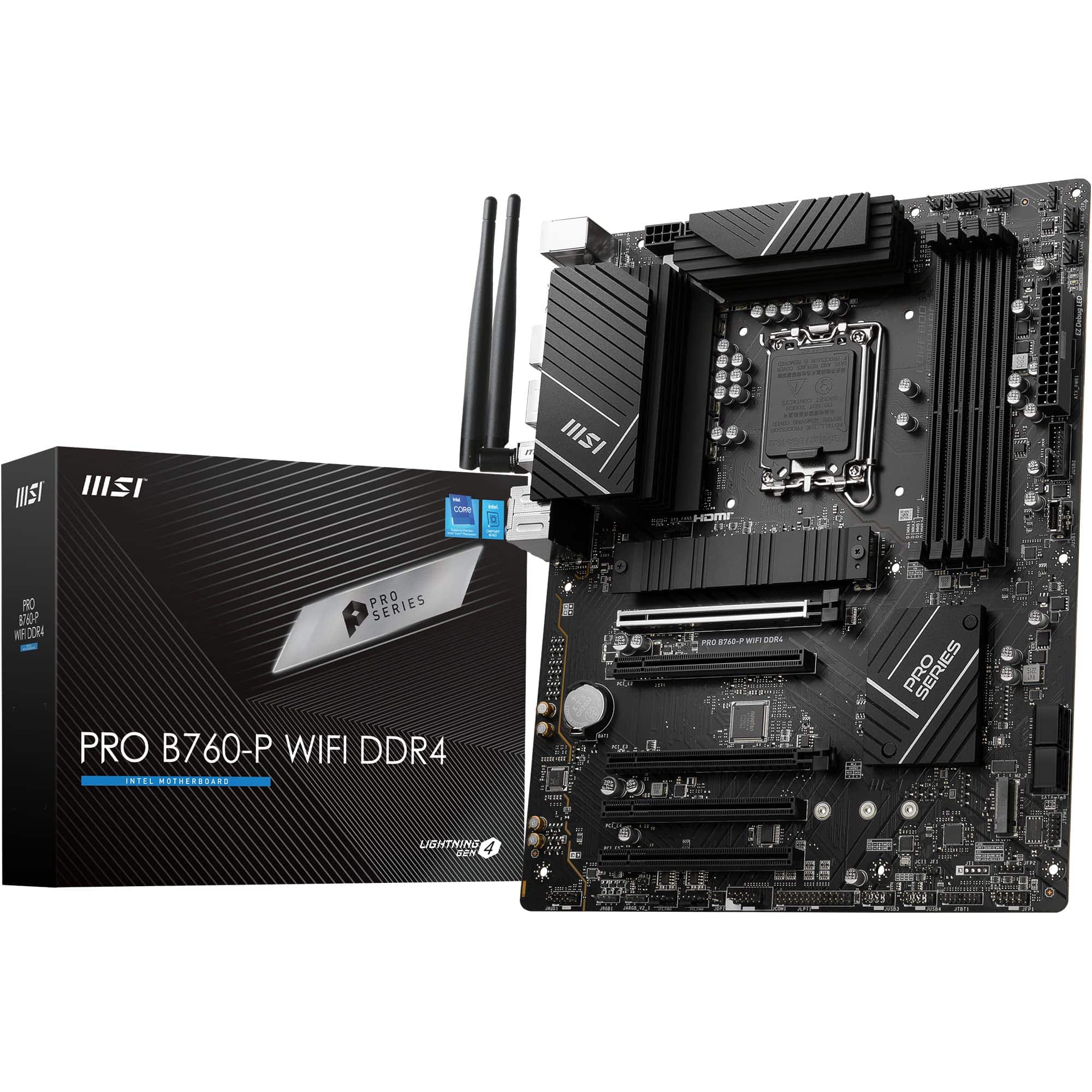 8.5 / 10
MSI PRO B760-P WIFI DDR4 Motherboard, ATX - Supports Intel 14th, 13th & 12th Gen Core Processors, LGA 1700 - DDR4 Memory Boost 5333+MHz/OC, PCIe 4.0 x16 Slots, M.2 Gen4 Slots, 2.5G LAN, Wi-Fi 6E
£129.95 · MSI
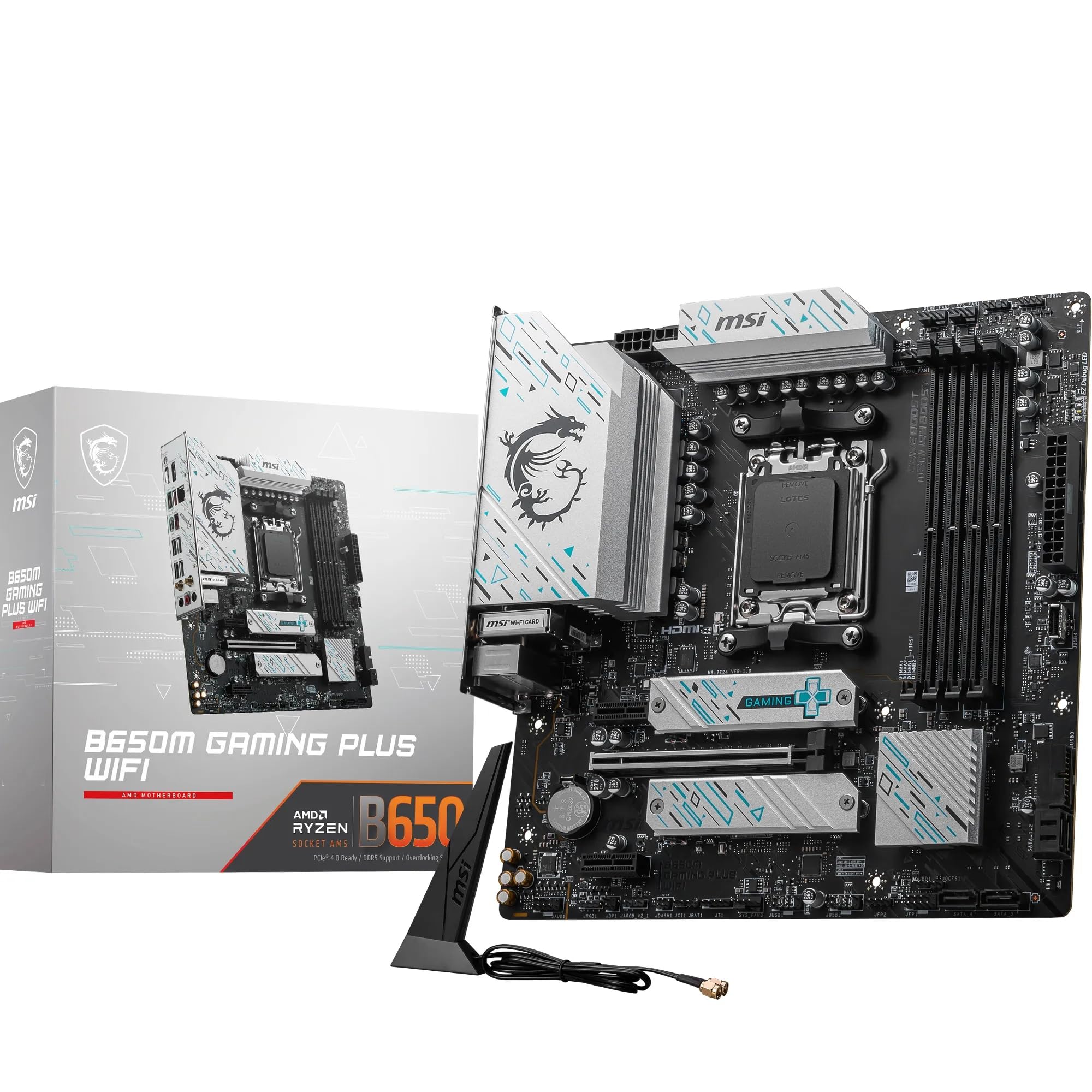 8.5 / 10
MSI B650M GAMING PLUS WIFI Motherboard, mATX - Supports AMD Ryzen 9000/8000 / 7000 Series Processors, AM5 - DDR5 Memory Boost 7800+ MHz/OC, PCIe 4.0 x16, M.2 Gen4, Wi-Fi 6E
£149.18 · MSI
Frequently asked
5 questions01Is the ASUS PRIME B450M-A II overkill for just gaming?+
Not at all. It's actually well-matched to a gaming build around a Ryzen 5 5600 or Ryzen 7 5700X. You get PCIe x16 for your GPU, an M.2 slot for a fast NVMe drive, and a BIOS that's easy to work with. The board doesn't have features you'd be paying for but never using. For a gaming PC in a Micro ATX case, this is a sensible, practical choice rather than an overspend.
02Will my existing CPU cooler work with the ASUS PRIME B450M-A II?+
The board uses the AMD AM4 socket, so any cooler with AM4 mounting support will work. That covers the vast majority of coolers released since 2017, including popular options from Noctua, be quiet!, Cooler Master, and Arctic. If your cooler is older and was designed for AM3 or earlier sockets, you'll need an AM4 mounting kit, which most cooler manufacturers supply separately. Check your cooler's compatibility list on the manufacturer's website to be sure.
03What happens if the ASUS PRIME B450M-A II doesn't work with my components?+
Amazon UK offers a 30-day return window under their standard returns policy, and purchases are covered by the Amazon A-to-Z Guarantee. If you have a compatibility issue, raise it with Amazon directly. For CPU compatibility specifically, the BIOS FlashBack feature means you can update the BIOS without a working CPU installed, which resolves the most common compatibility problem with newer Ryzen 5000 chips. Check the ASUS support page for the latest BIOS version and the CPU compatibility list before building.
04Is there a cheaper motherboard I should consider instead?+
Yes, honestly. The Gigabyte B450M DS3H is typically cheaper and covers the absolute basics for a Ryzen AM4 build. If your budget is very tight and you're running an older Ryzen 3000 chip that doesn't need a BIOS update, the Gigabyte will do the job. But if you're pairing the board with a Ryzen 5000 processor, the ASUS's BIOS FlashBack feature is worth the small price difference. The ASUS UEFI is also noticeably better to use than Gigabyte's implementation at this tier, which matters more than it sounds when you're configuring memory or fan curves.
05What warranty and returns apply to the ASUS PRIME B450M-A II?+
The specific manufacturer warranty period isn't listed in the verified product data, so we'd point you to ASUS's support pages for warranty terms. What we can confirm is that Amazon UK's standard 30-day return policy applies to purchases made through Amazon, along with the A-to-Z Guarantee that covers buyers if something goes wrong. For warranty claims after the return window, contact ASUS support directly.