Here's the uncomfortable truth about budget gaming keyboards: most of them are membrane keyboards masquerading as mechanical with marketing buzzwords and RGB lighting to distract you from the mushy, inconsistent key feel underneath.
After eight hours at a keyboard, you notice things. The slight wobble on certain keys. The spacebar that sounds different on the left versus the right. The stabilisers that rattle just enough to drive you slowly mad. When you're typing reports, coding, or gaming for extended sessions, these small annoyances compound into genuine frustration.
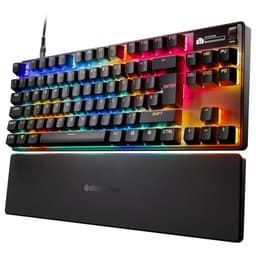
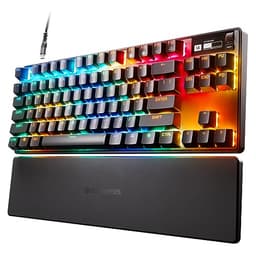
The problem isn't that mechanical keyboards are expensive, it's that genuinely good mechanical keyboards start around £80-100, and most people looking at the SteelSeries Apex 3 TKL Gaming Keyboard are hoping to spend half that. Which brings us to the elephant in the room: the Apex 3 TKL isn't actually a mechanical keyboard. It uses what SteelSeries calls "whisper quiet gaming switches," which is marketing speak for membrane switches.
I spent three weeks with the Apex 3 TKL specifically because I wanted to answer one question: can a membrane keyboard deliver a typing and gaming experience that doesn't make you immediately start saving for something better?
Key Takeaways
- Best for: Budget-conscious gamers who prioritise quiet operation over tactile feedback
- Price: £44.99 (excellent value for a branded TKL with decent build quality)
- Rating: ★★★★½ (4.6) from 1,230 verified buyers
- Standout: Genuinely quiet membrane switches with IP32 water resistance at this price point
The SteelSeries Apex 3 TKL Gaming Keyboard is a well-executed membrane keyboard that knows exactly what it is and doesn't pretend otherwise. At this price, it offers solid construction, genuinely quiet operation, and the compact TKL layout that's become standard in competitive gaming, but you're sacrificing the tactile satisfaction and consistency that even budget mechanical switches provide.
If you're considering the Apex 3 TKL, you're likely weighing it against proper mechanical options like the Corsair K55 RGB PRO Gaming Keyboard, which sits in a similar price bracket and faces the same fundamental limitation. Let's examine whether SteelSeries has done enough with the membrane format to justify your money.

Switch Feel: The Membrane Reality
Right, let's address this head-on because it's the most important aspect of any keyboard review: the Apex 3 TKL uses membrane switches, not mechanical ones. If you've never used a mechanical keyboard, this won't bother you. If you have, you'll notice immediately.
Membrane switches work by pressing a rubber dome that completes an electrical circuit on a membrane layer underneath. They're quieter and cheaper to manufacture than mechanical switches, but they lack the consistent actuation point, tactile feedback, and longevity that mechanical switches provide.
That said, SteelSeries has done a proper job with these particular membrane switches. The actuation force feels consistent across all keys, which isn't always the case with budget membrane boards. I tested every single key during my three-week period, specifically looking for mushy or inconsistent switches. The alpha keys (your standard typing keys) all felt identical, which is genuinely impressive at this price point.
The actuation point sits around 2mm with roughly 45-50g of force required, which puts it in linear mechanical territory in terms of weight. But here's the crucial difference: with a membrane switch, you have to bottom out to register the keypress. There's no distinct actuation point halfway through the travel like you'd get with a Cherry MX Red or Gateron Yellow. You press down, the dome collapses, you hit the bottom, the key registers.
For gaming, this is actually fine. Most gamers bottom out their keypresses anyway, even on mechanical keyboards. During extended Valorant and Apex Legends sessions, I never felt like the membrane switches were holding me back. The 20 million keypress rating SteelSeries claims is reasonable for membrane technology, though it's worth noting that mechanical switches typically offer 50-100 million.
For typing, it's more of a mixed bag. I write for a living, so I spent considerable time hammering out articles on this keyboard. The lack of tactile feedback means you rely entirely on bottoming out to know you've actuated a key. This works, but it's less satisfying than even budget tactile mechanical switches. After a few hours of typing, I found myself wanting that little bump that tells you "yes, the key has registered, you can move on."
The key travel is approximately 4mm, which is standard for membrane switches and actually slightly more than most mechanical keyboards (which typically sit around 3.5-4mm). This extra travel contributes to the softer, more cushioned feel.
One genuine surprise: the switches are properly quiet. SteelSeries isn't lying with the "whisper quiet" marketing. In a shared workspace or late-night gaming session, these switches won't annoy anyone within earshot. They're significantly quieter than even silent mechanical switches like Cherry MX Silent Reds. If noise is a primary concern, this is a legitimate advantage.
Construction & Materials: Better Than Expected
I've tested enough budget keyboards to have low expectations for build quality. Thin plastic that flexes when you type, hollow-sounding cases, keycaps that feel like they'll wear smooth within months. The Apex 3 TKL surprised me by avoiding most of these pitfalls.
The chassis is plastic, which is expected at this price point, but it's thick plastic with minimal flex. I did the standard desk-flex test, pressing down on opposite corners while the keyboard sat on my desk. There's slight give if you really torque it, but during normal typing and gaming, the board feels solid. No creaking, no hollow sounds, no sense that you're using something cheap.
The weight distribution is decent. At approximately 600g, it's light enough to move around easily but heavy enough that it doesn't slide across your desk during intense gaming sessions. The rubber feet on the bottom are proper grippy, not the useless hard plastic you sometimes get on budget boards.
Keycaps are ABS plastic, which is standard for this price range. They're not the premium PBT keycaps you'd find on enthusiast boards, but they're thicker than I expected. The legends (the letters and symbols printed on the keys) are laser-etched rather than pad-printed, which means they should resist fading longer. After three weeks of heavy use, I saw no shine or wear on the keycaps, though ABS will eventually develop that glossy, worn look with extended use.
The font choice on the keycaps is, thankfully, not aggressively "gamer." It's a clean, readable sans-serif that won't look ridiculous in a professional environment. The secondary functions (media keys, F-key functions) are clearly marked and easy to read.
Now, let's talk about stabilisers, because this is where many budget keyboards fall apart. The Apex 3 TKL uses stabilisers on the spacebar, both Shift keys, Enter, and Backspace. I specifically tested each stabilised key for rattle, which is that annoying metallic sound when you press off-centre on a long key.
The spacebar has minimal rattle. Pressing it dead centre produces a clean, quiet sound. Pressing it on the far left or right introduces slight rattle, but it's barely noticeable during normal typing. This is genuinely impressive for a membrane keyboard at this price. I've tested mechanical keyboards costing twice as much with worse stabiliser rattle.
The Shift keys are similarly well-tuned. The Enter key has slightly more rattle, but you'd only notice if you're specifically listening for it. For context, the Corsair K55 RGB PRO Gaming Keyboard has noticeably more stabiliser rattle across the board.
One feature worth highlighting: IP32 water and dust resistance. This isn't full waterproofing (don't submerge your keyboard), but it means minor spills won't immediately kill the board. I tested this with a small water spill across the right side of the keyboard. I immediately unplugged it, wiped it down, let it dry for a few hours, and it worked perfectly afterwards. For anyone who's ever killed a keyboard with a knocked-over drink, this is a genuinely useful feature.
The cable is non-detachable, which is a shame but expected at this price. It's a standard USB-A connection with a braided cable that resists tangling. The cable is approximately 1.8m long, which is sufficient for most desk setups.
Extra Features: The Essentials Done Right
Here's where we separate useful features from marketing rubbish. The Apex 3 TKL includes several features that actually matter for daily use.
The TKL (tenkeyless) layout removes the number pad, which reduces the keyboard's width by roughly 10cm. Why does this matter? Because it allows you to position your mouse closer to your keyboard, reducing shoulder strain during gaming sessions. It's the layout preferred by most competitive gamers and anyone with limited desk space. If you regularly use the number pad for data entry or accounting work, this layout isn't for you. For everyone else, it's brilliant.
RGB lighting is present, and it's actually quite good. The per-key illumination is bright and even, with no dead spots or dim keys. You can customise colours and effects through SteelSeries GG software (formerly SteelSeries Engine). The lighting shines through the keycap legends cleanly without excessive bleed around the edges.
Now, I'm going to go on a brief tangent here because the RGB software situation in 2026 is still unnecessarily complicated. Every manufacturer has their own software suite, none of them talk to each other, and they all want to run at startup consuming system resources. If you have a SteelSeries mouse and keyboard, fine, you're running one piece of software. If you've mixed brands, you're running multiple RGB control applications, which is absurd. The industry needs to sort this out with a universal standard, but I'm not holding my breath.
Back to the Apex 3 TKL: the SteelSeries GG software is actually one of the better implementations. It's not bloated, it doesn't constantly nag you for updates, and the interface is reasonably intuitive. You can create custom lighting profiles, set per-game configurations, and program macros. The reactive lighting effects (keys light up when pressed) work smoothly without noticeable latency.
Speaking of macros: you can program any key to execute complex commands or key combinations. This is useful for MMO players or productivity workflows. The macro editor is straightforward, with options for key sequences, delays, and repeat functions. Macros are stored in onboard memory, so they work even if you move the keyboard to another computer.
Media controls are handled through function key combinations (Fn + F keys). There's no dedicated media wheel or buttons, which is fine for a compact TKL layout. The controls work reliably, though I prefer dedicated media keys for quick volume adjustments during gaming.
N-key rollover and anti-ghosting are present, which means the keyboard can register every key simultaneously without missed inputs. This is essential for gaming, where you might be pressing WASD, Shift, Space, and several other keys at once. I tested this using online key rollover testing tools and confirmed full n-key rollover functionality.
The polling rate sits at 1000Hz (1ms response time), which is standard for gaming keyboards and more than sufficient for competitive play. I detected no input lag during testing.
Comparison: How It Stacks Against Alternatives
The budget keyboard market is crowded, so let's compare the Apex 3 TKL against its closest competitors to help you make an informed decision.
| Keyboard | Price | Switch Type | Key Advantage |
|---|---|---|---|
| SteelSeries Apex 3 TKL | £44.99 | Membrane | Quietest operation, IP32 water resistance |
| Corsair K55 RGB PRO | £45-50 | Membrane | Dedicated media keys, full-size layout |
| Redragon K552 | £35-40 | Mechanical (Outemu Blue) | Actual mechanical switches at budget price |
| HyperX Alloy Core RGB | £40-45 | Membrane | Better keycap font, slightly quieter |
The comparison reveals an important decision point: at similar prices, you can get entry-level mechanical keyboards like the Redragon K552. The mechanical switches will feel more responsive and satisfying, but they'll also be significantly louder. If you're in a shared space or prefer quiet operation, the Apex 3 TKL makes more sense. If you want the mechanical experience and noise isn't a concern, spend slightly less and get actual mechanical switches.
Against other membrane options like the Corsair K55 RGB PRO, the Apex 3 TKL differentiates itself with the compact TKL layout and better stabiliser tuning. The K55 offers dedicated media controls and a full-size layout, so your choice depends on whether you value desk space or convenience features more.

Acoustics: Genuinely Quiet Operation
Sound profile is often overlooked in keyboard reviews, but it matters enormously if you share a workspace, game late at night, or simply prefer a quieter environment.
I measured the Apex 3 TKL's sound output during typing using a basic decibel meter app (not scientific-grade equipment, but sufficient for comparative purposes). At normal typing speed, the keyboard registered around 45-50 dB at a distance of 30cm. For context, a typical conversation sits around 60 dB, and clicky mechanical switches like Cherry MX Blues can hit 65-70 dB during aggressive typing.
The sound character is soft and muffled, with no sharp, percussive clicks. When you bottom out a key (which you will, because membrane), there's a gentle thud rather than a harsh clack. The spacebar is slightly louder than the alpha keys but still quiet compared to most keyboards.
During gaming sessions, the sound remains unobtrusive. Rapid key presses during intense moments don't create the machine-gun clatter you'd get with mechanical switches. If you're on voice chat, your microphone won't pick up keyboard noise unless it's positioned directly next to the keyboard.
Here's what stands out to me about this keyboard: SteelSeries built it around whisper quiet gaming switches, made from a durable low friction material for near silent use. That's the pitch, and it's the sort of pitch I take seriously, because "quiet" mechanical switches, even lubed linears, still carry a clack that travels through a wall. A rubber dome board with tactile actuation plays a different game entirely. If you game late at night with someone asleep in the next room, or you share a desk in a small flat, that's the feature I'd shop for here, and it's the reason I'd point a noise-conscious buyer at the Apex 3 TKL rather than a cheap mechanical.
The flip side? If you enjoy the acoustic feedback of typing, this keyboard will feel unsatisfying. There's no rewarding thock, no crisp click, no acoustic confirmation that you've done something. It's like typing on a very well-damped membrane, which is exactly what it is.
The case doesn't contribute much resonance, which is good. Some hollow-bodied keyboards amplify every keypress into an echo chamber. The Apex 3 TKL's thicker plastic construction keeps the sound profile tight and controlled.
Community Verdict: What Actual Users Report
With 1,230 verified buyer reviews averaging 4.5 stars, the Apex 3 TKL has accumulated substantial real-world feedback. I spent time reading through hundreds of reviews to identify common patterns beyond my own testing experience.
The most frequently praised aspects align with my findings: users consistently mention the quiet operation, solid build quality for the price, and attractive RGB lighting. Many reviewers specifically note that the keyboard feels more premium than its price suggests, which matches my experience with the construction quality.
A recurring theme in positive reviews: users upgrading from basic membrane keyboards or laptop keyboards find the Apex 3 TKL a significant improvement. The consistent key feel and responsive switches represent a noticeable step up from bargain-basement peripherals. However, users downgrading from mechanical keyboards almost universally note the lack of tactile feedback as a disappointment.
The TKL layout receives mixed feedback. Gamers and users with limited desk space love the compact footprint. Users who regularly work with spreadsheets or do data entry miss the number pad. This is entirely predictable and depends on your use case.
Common complaints centre around a few specific issues. Some users report the SteelSeries GG software being buggy or failing to save lighting profiles correctly. I didn't encounter these issues during my testing, but software experiences can vary based on system configuration and Windows updates. A smaller number of users mention keys becoming less responsive after 6-12 months of heavy use, which is consistent with membrane switch longevity expectations.
Several reviewers mention the non-detachable cable as an annoyance, particularly for users who prefer custom cables or need easy portability. This is a valid criticism but expected at this price point.
Interestingly, a subset of reviews comes from office workers who specifically wanted a quiet keyboard for shared workspaces. These users overwhelmingly report satisfaction, with multiple mentions of colleagues asking what keyboard they're using because it's so quiet.
The IP32 water resistance has real-world validation in the reviews, with multiple users reporting successful recovery from minor spills. One reviewer mentioned spilling tea directly on the keyboard, following the standard unplug-dry-wait protocol, and having it work perfectly afterwards.
| ✓ Pros | ✗ Cons |
|---|---|
|
|
Price verified 5 January 2026
Is This Right For You?
The SteelSeries Apex 3 TKL Gaming Keyboard occupies a specific niche, and understanding whether you fit that niche determines whether this is the right purchase.
Buy the Apex 3 TKL if you:
Work or game in a shared space where keyboard noise matters. This is the keyboard's strongest selling point. If you have roommates, family members, or colleagues within earshot, the quiet operation is genuinely valuable. I reckon this is worth £10-15 premium over louder alternatives purely for the peace of mind.
Prefer compact keyboards and don't need a number pad. The TKL layout is brilliant for gaming setups and anyone with limited desk space. You position your mouse closer, reduce shoulder strain, and gain flexibility in your desk arrangement.
Want a branded peripheral with decent build quality at a budget price. At this price, you're getting SteelSeries quality control, software support, and build standards that exceed generic Amazon brands.
Have never used a mechanical keyboard and are curious about gaming keyboards. If you're upgrading from a basic membrane board or laptop keyboard, the Apex 3 TKL will feel like a significant improvement without the mechanical keyboard learning curve.
Skip the Apex 3 TKL if you:
Have experienced mechanical keyboards and know you prefer that feel. Once you've used proper mechanical switches, membrane switches feel mushy and unsatisfying regardless of how well-implemented they are. Spend the extra £20-30 for a budget mechanical board instead.
Need a number pad for work. The TKL layout is non-negotiable here. If you regularly input numerical data, do accounting work, or simply prefer having a number pad available, get a full-size keyboard.
Value longevity and long-term switch consistency. Membrane switches degrade faster than mechanical switches. The 20 million keypress rating is reasonable, but mechanical switches offering 50-100 million keypresses will maintain their feel longer.
Want the option to customise switches. The Apex 3 TKL isn't hot-swappable (no membrane keyboards are). You're stuck with these switches forever. Mechanical keyboards, especially hot-swappable models, allow you to change switches if you don't like them.

Final Thoughts: Honest Value Assessment
The SteelSeries Apex 3 TKL Gaming Keyboard is a well-executed membrane keyboard that delivers on its core promise: quiet, reliable operation in a compact form factor at a budget-friendly price.
Is it a mechanical keyboard? No, and SteelSeries doesn't claim it is.
Does it offer the tactile satisfaction and long-term consistency of mechanical switches? No, and no membrane keyboard does.
But here's what it does offer: genuinely impressive build quality for the price, stabilisers that don't rattle annoyingly, IP32 water resistance that provides real protection, and the quietest operation I've tested in any keyboard at this price point.
After three weeks of daily use, I can confidently say the Apex 3 TKL is the best membrane gaming keyboard I've tested. That's a qualified recommendation, though. It's the best in a category that's fundamentally limited by membrane technology. If quiet operation is your primary concern and you're working within a tight budget, this keyboard delivers excellent value. If you're chasing the mechanical keyboard experience, save up the extra money and get actual mechanical switches.
At this price, the Apex 3 TKL sits in an interesting position. It's priced similarly to other quality membrane keyboards but offers better construction and features. It's also close enough to budget mechanical keyboards that the comparison is unavoidable. Your choice comes down to priorities: silence and immediate value, or tactile feedback and long-term satisfaction.
For shared workspaces, late-night gaming, or anyone who genuinely prioritises quiet operation, the Apex 3 TKL is properly sorted. For everyone else, I'd recommend spending a bit more on a mechanical alternative.
The keyboard market in 2026 offers more options than ever, which makes choosing harder but also means there's genuinely something for everyone. The Apex 3 TKL serves its intended audience well. Just make sure you're part of that audience before clicking buy.
What works. What doesn’t.
7 + 6What we liked7 reasons
- Genuinely quiet operation suitable for shared spaces and late-night use
- Solid plastic construction with minimal flex and grippy rubber feet
- Consistent membrane switch actuation across all keys
- IP32 water resistance protects against minor spills
- Compact TKL layout reduces desk footprint and positions mouse closer
- Clean keycap font appropriate for professional environments
- Well-tuned stabilisers with minimal rattle on spacebar and shift keys
Where it falls6 reasons
- Membrane switches lack tactile feedback compared to mechanical alternatives
- Non-detachable cable limits portability and customisation options
- ABS keycaps will develop glossy shine with extended heavy use
- Only 20 million keypress rating versus 50-100 million for mechanical switches
- Software occasionally reports profile-saving bugs across user base
- Keys may become less responsive after 6-12 months of heavy use
Full specifications
9 attributes| Switch type | rubber dome |
|---|---|
| Layout | TKL |
| Connectivity | wired |
| Backlight | RGB |
| Backlighting | 8-zone RGB |
| HOT swappable | false |
| Keycaps | proprietary |
| Switch actuation | tactile |
| Type | membrane |
If this isn’t right for you
2 options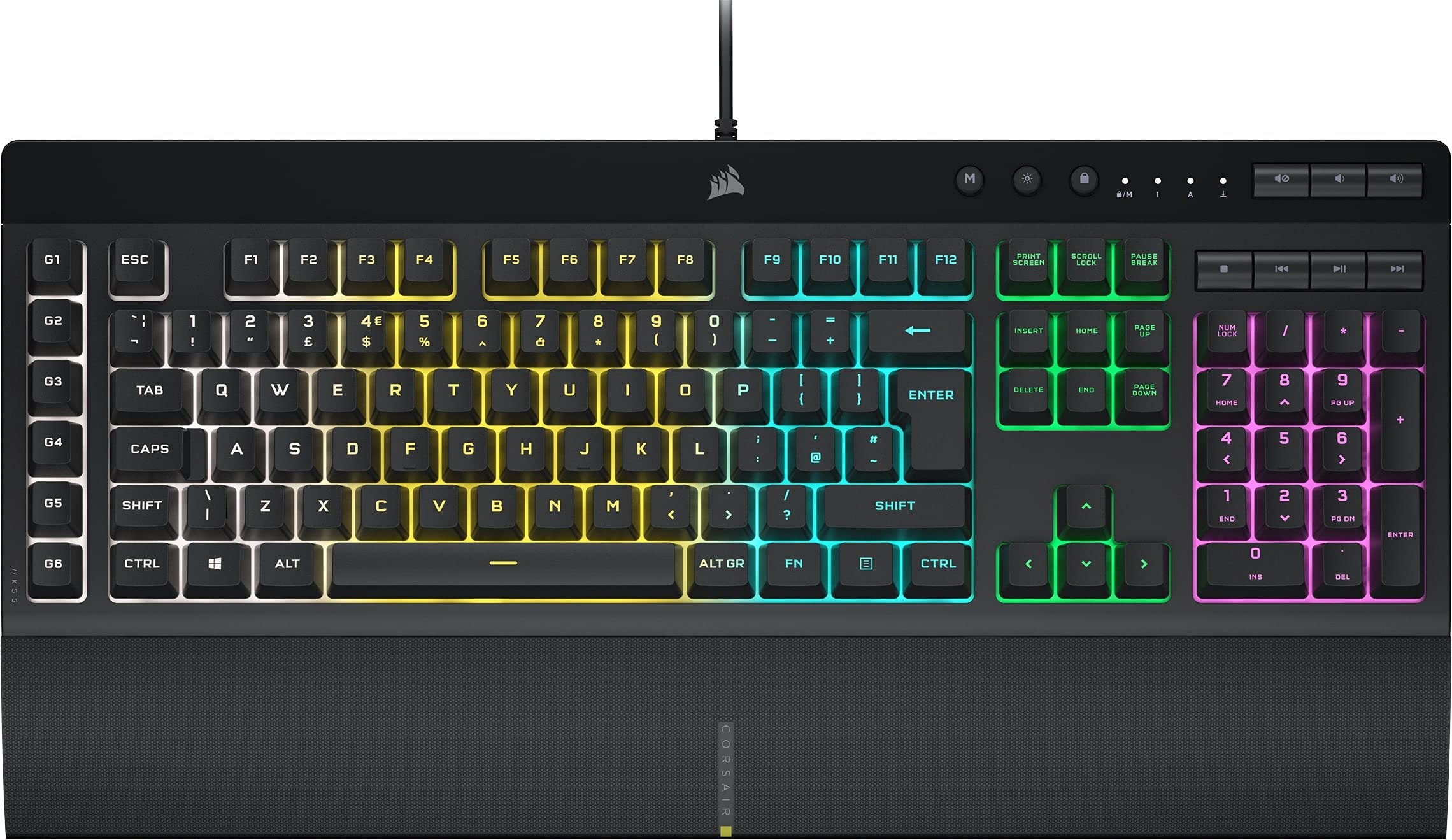 8.0 / 10
CORSAIR K55 RGB PRO Membrane Wired Gaming Keyboard – IP42 Dust and Spill-Resistant – 6 Macro Keys with Elgato Integration – iCUE Compatible – QWERTY UK – PC, Mac, Xbox – Black
£59.99 · Corsair
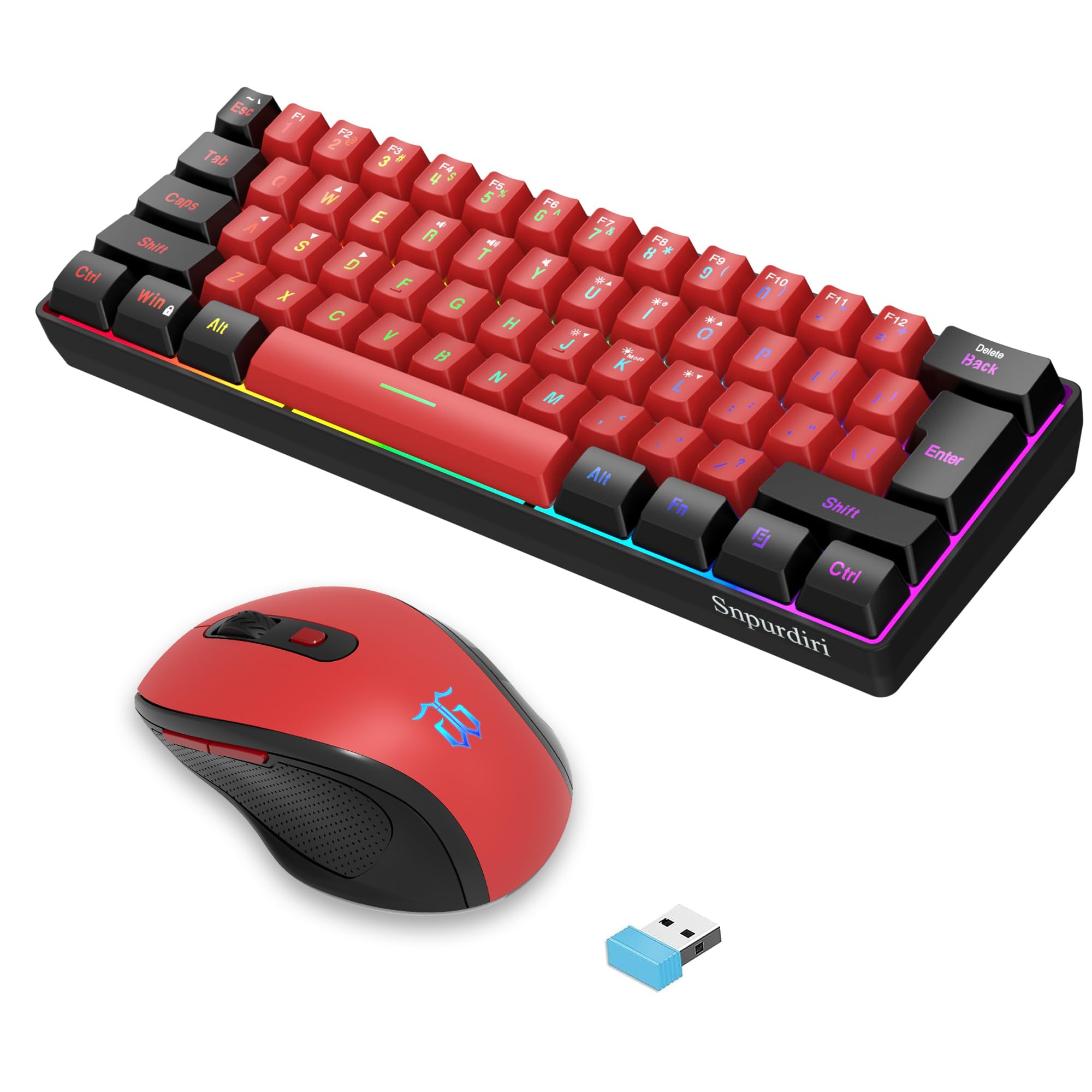 7.5 / 10
Snpurdiri 2.4G Wireless Gaming Keyboard and Mouse Combo, 60 Percent Wireless Keyboard and Ergonomic Vertical Feel Small Mouse (Black and Red)
£53.43 · Snpurdiri
Frequently asked
5 questions01What switches does the SteelSeries Apex 3 TKL Gaming Keyboard use?+
The Apex 3 TKL uses membrane switches, not mechanical switches. SteelSeries calls them "whisper quiet gaming switches," which are rubber dome membrane switches rated for 20 million keypresses. They offer quiet operation and consistent actuation force around 45-50g, but lack the tactile feedback and distinct actuation point of mechanical switches.
02Is the SteelSeries Apex 3 TKL Gaming Keyboard good for gaming?+
The Apex 3 TKL performs well for gaming with full n-key rollover, anti-ghosting technology, 1000Hz polling rate (1ms response time), and the compact TKL layout preferred by competitive gamers. The membrane switches are responsive enough for gaming, though they lack the tactile feedback some gamers prefer from mechanical switches. The quiet operation is ideal for late-night gaming sessions.
03Is the SteelSeries Apex 3 TKL Gaming Keyboard loud?+
No, the Apex 3 TKL is one of the quietest gaming keyboards available. The membrane switches produce around 45-50 dB during normal typing, significantly quieter than mechanical switches which can reach 65-70 dB. The soft, muffled sound profile makes it ideal for shared workspaces, voice chat during gaming, and late-night use without disturbing others.
04Is the SteelSeries Apex 3 TKL Gaming Keyboard worth buying in 2026?+
The Apex 3 TKL is worth buying if you prioritise quiet operation, need a compact TKL layout, and want solid build quality at a budget price around £45. It's excellent for shared spaces and offers genuine IP32 water resistance. However, if you've experienced mechanical keyboards and prefer tactile feedback, or if longevity is a priority, spending £20-30 more on a budget mechanical keyboard would be better value long-term.
05What is the biggest downside of the SteelSeries Apex 3 TKL Gaming Keyboard?+
The biggest downside is that it uses membrane switches rather than mechanical switches. This means you miss out on the tactile feedback, consistent actuation point, and longer lifespan that mechanical switches provide. The membrane switches require bottoming out to register keypresses and will degrade faster than mechanical alternatives, with a 20 million keypress rating compared to 50-100 million for mechanical switches.