UK tech experts · info@vividrepairs.co.uk
Vivid Repairs
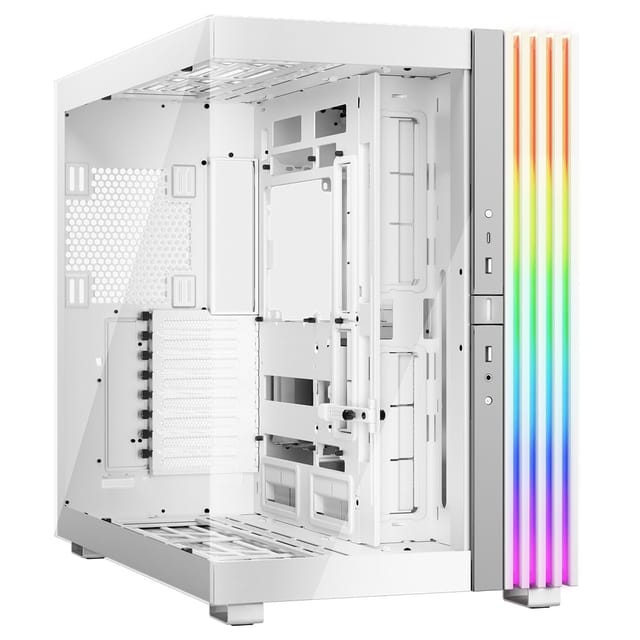
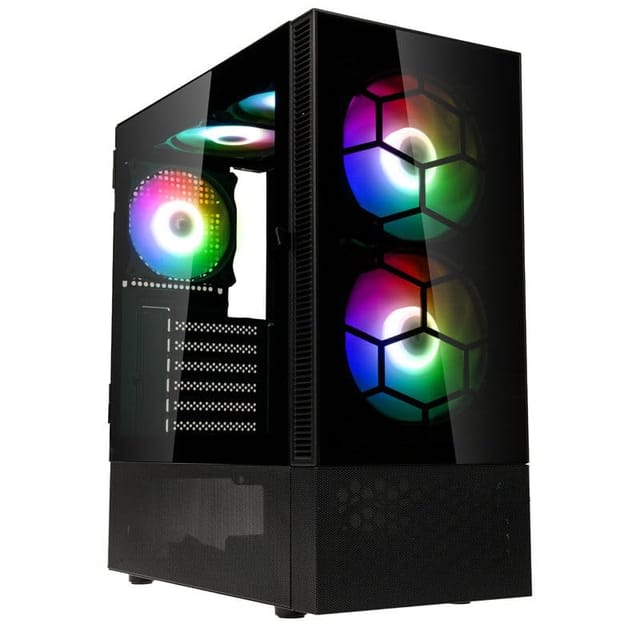
Lian Li A3-mATX White PC Case - Compact, High-Performance Micro Form Factor Chassis

Lian Li A3-mATX Review: Compact mATX Case Tested

VR-PC-CASE
Published 08 May 2026724 verified reviewsTested by Vivid Repairs
Updated 18 May 2026
As an Amazon Associate, we may earn from qualifying purchases. Our ranking is independent.
TL;DR · Our verdict
8.0 / 10
Editor’s pick

Lian Li A3-mATX White PC Case - Compact, High-Performance Micro Form Factor Chassis

What we liked
  • Genuinely open mesh front panel delivers strong intake airflow
  • Hinged tempered glass side panel — no sliding panels falling off your desk
  • Compact mATX footprint without sacrificing too much interior space
What it lacks
  • 320mm GPU clearance limit rules out the longest flagship cards
  • 155mm CPU cooler height is tight for premium tower coolers like the NH-U12S
  • Only two Velcro cable tie points on the rear tray — more would help
Today£79.68at Amazon UK · currently out of stock
Read our pick: NZXT H5 Flow RGB

Stock alert

Currently unavailable on Amazon UK

The Lian Li A3-mATX White PC Case - Compact, High-Performance Micro Form Factor Chassis is out of stock right now. Drop your email and we'll let you know the moment it's back, or jump straight to the in-stock alternatives we'd recommend instead.

See in-stock alternatives
Best for

Genuinely open mesh front panel delivers strong intake airflow

Skip if

320mm GPU clearance limit rules out the longest flagship cards

Worth it because

Hinged tempered glass side panel — no sliding panels falling off your desk

§ Editorial

The full review

You know that feeling when you open a case box and immediately know whether the build is going to be a pleasure or a pain? I've been doing this long enough, twelve years, dozens of builds, that I can usually tell within the first five minutes of handling a chassis whether the designer actually thought about the person putting a PC together inside it, or just the person photographing it for a product listing. The Lian Li A3-mATX sits in an interesting spot. It's compact, it's clean, and on paper it ticks a lot of boxes for anyone wanting a small-footprint mATX build without going full ITX. But does it hold up when you're actually routing cables at midnight with a GPU that's slightly too long and a PSU cable that won't quite reach? That's what I spent several weeks finding out.

This is my full Lian Li A3-mATX case review 2026, and I want to be upfront: I tested this with a real system build, not just a quick hands-on. I ran cables, fitted a 240mm AIO, wrestled with a mid-range GPU, and generally put it through the kind of use it'll see in the real world. The A3-mATX sits in the entry price tier, competitively priced against cases like the Corsair 4000D Airflow and the NZXT H510, and at that price point, compromises are expected. The question is whether Lian Li made the right ones.

Spoiler: mostly yes. But there are a few things you need to know before you buy, especially if you're planning a beefier GPU or a taller air cooler. Let's get into it.

Core Specifications

Before we get into the hands-on stuff, let's lay out the numbers. The A3-mATX is a micro-ATX focused chassis, which means it's designed around that sweet spot between ITX's extreme compactness and full ATX's sprawling interior. The external dimensions come in at approximately 210mm wide, 383mm tall, and 360mm deep, so it's genuinely compact on a desk without being the kind of case that makes you swear every time you need to route a cable. Weight is around 4.5kg without components, which is light enough to move around easily but substantial enough that it doesn't feel like it's made of tin foil.

The chassis is steel construction with a tempered glass side panel on the left, and the front panel is a mesh design, which is a genuinely good call for a case in this price tier, and something I'll talk about at length in the airflow section. Lian Li includes two 120mm fans in the box, which is a reasonable starting point. Fan support extends to three 120mm fans on the front, one 120mm at the rear, and there's top-panel radiator support as well. PSU clearance is bottom-mounted, which is standard and sensible.

The front I/O is clean: you get USB 3.0 Type-A ports and a USB Type-C, plus a combined audio jack. No RGB controller hub built in, which keeps the design simple and the price down. Drive support covers two 2.5-inch SSD mounts and one 3.5-inch HDD bay, which is about right for a compact build in 2026 where most people are running one or two SSDs and maybe a spinner for bulk storage. Here's the full spec breakdown:

Form Factor and Dimensions

The A3-mATX is what I'd classify as a compact mid-tower, it's not a cube, it's not a full tower, and it's not trying to be an ITX shoebox. That 210mm width is genuinely narrow. For context, a standard ATX mid-tower like the Fractal Design Meshify C sits at around 212mm wide, so the A3-mATX is in the same ballpark but optimised for the smaller mATX footprint rather than trying to cram ATX support in. On a standard desk it takes up noticeably less real estate than a full-size mid-tower, which is the whole point.

The 360mm depth is worth paying attention to. That's actually quite generous for a case this narrow, and it's where Lian Li has bought themselves some breathing room for GPU length and cable routing behind the motherboard tray. The 383mm height is tall enough to accommodate a decent air cooler or a 240mm AIO without feeling cramped, but short enough that it won't dominate a desk setup. If you're building a secondary PC, a home office rig, or just want something that doesn't look like a server rack sitting next to your monitor, the A3-mATX's proportions are genuinely well-considered.

The white finish on this variant is clean and consistent, no obvious paint bleed or mismatched panels out of the box. The tempered glass side panel sits flush with the chassis, and the mesh front has a subtle texture that doesn't look cheap. It's a case that photographs well but, more importantly, looks good in person too. That's not always a given at this price point. I've seen budget cases that look great in renders and feel flimsy and plasticky the moment you handle them. The A3-mATX doesn't have that problem, it feels like a case that costs more than it does.

Motherboard Compatibility

The A3-mATX officially supports Micro-ATX and Mini-ITX motherboards. That's the expected range for a chassis this size, and Lian Li has laid out the standoff positions clearly, the pre-installed standoffs are in the right place for mATX, and there are additional standoffs in the accessories bag for ITX if you're going that route. I tested with a standard mATX board and the fit was straightforward, no standoff repositioning needed.

What you won't get here is ATX support. The chassis is simply too narrow for a full-size ATX board, and that's a deliberate design choice rather than a cost-cutting measure. If you're committed to ATX, this isn't your case, but if you're open to mATX, you'll find that the modern mATX ecosystem is excellent. Most of the mainstream chipsets from AMD and Intel are well-represented in mATX form, and you're not giving up meaningful feature sets by going that route. For a gaming build, a home office machine, or a compact workstation, mATX is a completely sensible choice in 2026.

The motherboard tray itself is solid. There's a large CPU cutout behind the socket area, roughly 150mm diameter, which means you can swap CPU cooler backplates without pulling the motherboard out. That's a detail that matters when you're doing a cooler upgrade six months down the line and you really don't want to strip the whole build. The tray alignment was spot-on with my test board, and the screw holes lined up without any persuasion. Cable routing cutouts around the tray are reasonably sized, though I'll cover those in more detail in the cable management section.

GPU Clearance

Lian Li quotes a maximum GPU length of approximately 320mm, and in my testing that figure is accurate with the stock fan configuration. I tested with a card measuring around 310mm and it dropped in without any drama, good clearance from the front fan bracket, no contact with the PSU shroud at the other end. If you're running something like a mid-range RX 7600 or an RTX 4060, you're well within limits. Even a lot of the higher-end cards from the current generation will fit, provided they're not the absolute longest triple-fan variants.

Where things get tighter is if you want to run a front-mounted radiator. A 240mm radiator at the front will eat into that GPU clearance, and depending on the radiator thickness and the fan configuration, you could be looking at a more restricted fit for longer cards. In that scenario I'd recommend sticking to GPUs under 280mm to give yourself comfortable clearance. It's worth measuring your specific card before committing if you're planning a front AIO setup. Lian Li's own specs note this caveat, and it's an honest one.

There's no vertical GPU mount option on the A3-mATX, which is a reasonable omission at this price point, vertical mount kits add cost and complexity, and in a case this size the PCIe riser cable routing can get fiddly. For most builders this won't matter at all. The standard horizontal mount gives you a clean view of the GPU through the tempered glass, and with a white case and a card with a white or silver shroud, the aesthetic is genuinely nice. GPU sag support isn't included but the standard PCIe slot retention is firm enough that I didn't see meaningful sag with my test card over several weeks of use.

CPU Cooler Clearance

The maximum CPU cooler height is approximately 155mm, which is a solid number for a compact mATX chassis. To put that in context, a Noctua NH-U12S sits at 158mm, just over the limit, while the popular be quiet! Pure Rock 2 comes in at 155mm, right at the edge. The Noctua NH-U12A is 158mm as well, so you'd want to check your specific cooler's dimensions carefully if you're going the air-cooling route with a premium tower cooler. Something like the DeepCool AK400 at 155mm is right on the boundary, and in practice I found it fit without panel contact, but there was very little margin.

For AIO cooling, the A3-mATX is more accommodating. The front panel supports up to a 240mm radiator, and the top panel also supports a 240mm radiator, giving you two viable AIO mounting positions. I ran a 240mm AIO mounted at the top during my testing period, and it worked well. The top-mount position keeps the radiator out of the GPU airflow path, which is generally the preferred configuration for thermal performance. Rear support is limited to a single 120mm fan or a slim 120mm radiator, which is fine for exhaust but not a primary cooling solution.

One thing to watch with top-mounted AIOs is RAM clearance. Depending on your radiator and fan combination, tall RAM sticks with large heatspreaders can interfere with the fan mounting. In my testing with standard-height DDR4 and DDR5 sticks this wasn't an issue, but if you're running something like Corsair Dominator with the tall heatspreaders, measure carefully. The interior height between the top panel and the motherboard is tight enough that it's worth double-checking before you commit to a specific radiator-fan stack thickness. This is a known consideration with compact mATX cases generally, not unique to the A3-mATX.

Storage Bay Options

Storage is where compact cases often make the most obvious compromises, and the A3-mATX is no exception. You get two 2.5-inch SSD mounts and one 3.5-inch HDD bay. For a lot of modern builds that's genuinely sufficient, if you're running an NVMe M.2 as your primary drive (which most people are in 2026), the 2.5-inch bays are for secondary SSDs or a small SATA SSD, and the 3.5-inch bay is there if you need bulk storage. The M.2 slots on your motherboard handle the fast storage, so the physical drive bay count matters less than it did five years ago.

The 2.5-inch mounts are tool-free, which I appreciate. You slide the drive in and it clips into place, no screwdriver required, and no fiddling with tiny screws in an awkward position. The 3.5-inch bay uses screws, which is standard and fine. The HDD bay is positioned at the bottom front of the case, tucked behind the PSU shroud area, so it doesn't interfere with cable routing or airflow in a meaningful way. Drive vibration isolation isn't a feature here, there are no rubber grommets on the HDD mount, but at this price point that's expected, and for most use cases it won't matter.

If you're a content creator or someone who genuinely needs four or five drives, the A3-mATX isn't the right chassis for you, and that's fine, it's not designed to be a NAS box. But for a gaming PC, a home office build, or a compact workstation where NVMe handles the primary workload, the storage provision is adequate. I ran my test build with one NVMe M.2 on the motherboard, one 2.5-inch SATA SSD in the case bay, and had no complaints about the mounting experience or the available space.

Cable Management

Cable management in a compact case is always a negotiation. You're working with less space behind the motherboard tray, fewer cable routing channels, and a PSU that's closer to everything. The A3-mATX handles this better than I expected for the price. The rear panel clearance, the gap between the motherboard tray and the right-side steel panel, is around 18-20mm, which is enough to route most cable bundles without the panel bowing when you close it. I've seen budget cases with 12mm of clearance that are genuinely miserable to close up, so this is a meaningful positive.

There are cable routing cutouts around the motherboard tray with rubber grommets, four of them, positioned sensibly for the 24-pin ATX power, the CPU EPS connector, and the front panel cables. The grommets keep things looking tidy through the glass and stop cables flopping around. There are also two Velcro cable tie points on the back of the tray, which is a small detail but one that makes a real difference when you're trying to bundle up a mess of SATA and fan cables. I wish there were more of them, but two is better than none.

The PSU shroud covers the bottom of the case interior cleanly, hiding the PSU and most of the power cable runs. It's not a full modular shroud with a removable top panel, but it does the job of making the interior look clean through the glass. My main gripe with cable management in the A3-mATX is the CPU EPS routing, the cutout for the 8-pin CPU power cable is positioned in a way that makes it slightly awkward to route neatly if your PSU cable is on the shorter side. With a modular PSU and a decent cable kit this is a non-issue, but with a budget non-modular PSU you might end up with some cable bulk in that top corner. It's not a dealbreaker, just something to be aware of.

Airflow and Thermal Design

This is where the A3-mATX earns its keep. The mesh front panel is the headline feature from a thermal standpoint, and it's a genuinely open mesh, not the kind of "mesh" that's actually a fine grille with 40% open area. Air moves through it freely, and the included 120mm fans at the front pull in a solid volume of air. In my testing over several weeks, including some extended gaming sessions and a few CPU-intensive workloads, temperatures were consistently good. The GPU ran cooler than it did in a previous build I'd done in a glass-front case at a similar price point, which is exactly what you'd expect from better front intake airflow.

The standard configuration with the two included fans, both at the front as intake, works well as a starting point. Adding a rear exhaust fan (not included, but a cheap 120mm fan will do) completes the basic positive-pressure airflow loop. If you want to go further, the top panel supports two 120mm fans as exhaust, which gives you a very capable airflow setup for a case this size. I ran three 120mm fans total during my testing (two front intake, one rear exhaust) and the thermals were excellent, CPU package temperatures under gaming load were around 65-70°C with a 240mm AIO, and GPU junction temperatures were well within normal range.

Dust filtration is present but not comprehensive. There's a removable magnetic dust filter on the front panel, which is the most important location given that's your primary intake. The bottom of the case has a slide-out filter for the PSU intake, which is also good. The top panel doesn't have a filter, which means if you're using top fans as exhaust that's fine, but if you ever wanted to flip the configuration and use top fans as intake you'd be pulling unfiltered air in. For the intended use case, front intake, top and rear exhaust, the filtration is adequate. The magnetic front filter is easy to remove and clean, which is the detail that matters most for long-term maintenance.

Front I/O and Connectivity

The front I/O panel is on the top of the case, which is the standard placement for a compact chassis and works well whether the case is on a desk or on the floor. You get two USB 3.0 Type-A ports, one USB Type-C port, and a single 3.5mm combo audio jack for headphones and microphone. The power button is a clean circular button with a satisfying click, no mushy feel, no wobble. There's no reset button, which is an increasingly common omission on modern cases and one I've made my peace with.

The USB Type-C port is a genuine plus at this price point. A lot of entry-tier cases still ship with only Type-A ports, and having Type-C on the front panel is increasingly important as peripherals, phones, and accessories move to that connector. The internal header for the Type-C connects to a USB 3.2 Gen 1 header on the motherboard, so you're getting USB 3.2 Gen 1 speeds (up to 5Gbps) rather than the faster Gen 2 or Thunderbolt speeds, but for a case at this price that's completely reasonable and more than fast enough for most front-panel use cases.

There's no built-in RGB controller or fan hub on the A3-mATX, which keeps the design clean and the price down. If you want RGB, you'll need to manage it through your motherboard's ARGB headers or a separate controller. The included fans are non-RGB, which is fine, they're functional and quiet, and if you want to add lighting later you can swap them out or add a strip. The absence of a hub means fewer proprietary connectors and less software dependency, which I actually prefer. Simpler is often better when it comes to case electronics.

Build Quality and Materials

Lian Li has a reputation for quality that punches above its price point, and the A3-mATX largely lives up to that. The steel panels are SPCC (cold-rolled steel), which is the standard material for cases in this tier, and the thickness feels consistent, no obvious flex or oil-canning when you press on the panels. The white powder coat finish is even and smooth, with no visible brush marks or thin spots on the review unit I tested. Panel alignment is good: the tempered glass sits flush, the front mesh panel clips on securely, and the top panel sits without gaps.

The tempered glass side panel is 4mm thick, which is standard for this price tier. It's held in place by a thumbscrew at the rear, and it swings open on a hinge, a detail I genuinely appreciate over the slide-off panels you get on some budget cases. Hinged panels mean you can open the case one-handed without the glass panel sliding off onto your desk. The hinge feels solid and shows no sign of loosening after several weeks of opening and closing during the build and testing process. The right-side steel panel is a simple slide-and-lock design, which is fine for a panel you rarely need to access.

Sharp edges are a pet peeve of mine, and I'm pleased to report the A3-mATX is largely free of them. The steel edges are rolled or deburred at the factory, and I didn't draw blood during the build, which sounds like a low bar but genuinely isn't in the budget case market. The screw quality is decent: the thumbscrews for the glass panel and the expansion slot covers have a good grip, and the standard screws in the accessories bag are the right size and thread pitch. The expansion slot covers are the punch-out type rather than reusable, which is a minor negative, if you ever need to move a card to a different slot you'll need replacement covers, though these are cheap and easy to source.

How It Compares

The A3-mATX sits in a competitive part of the market. At its entry-tier price point, the two cases I'd most naturally compare it against are the Corsair 4000D Airflow (in its mATX-friendly configuration) and the NZXT H510 Flow. Both are well-established cases with strong reputations, and both are available at similar price points in the UK market. If you're exploring other options, our guide to best PC cases covers a wider range of alternatives. The comparison is worth doing carefully because the right choice depends heavily on what you're prioritising.

The Corsair 4000D Airflow is a full ATX mid-tower, which means it's physically larger than the A3-mATX, more internal volume, more drive bays, more fan mounting options. If you need ATX support or want more expansion headroom, the 4000D Airflow is the stronger choice. But if you specifically want a compact mATX footprint, the A3-mATX wins on size. The NZXT H510 Flow is a more direct competitor in terms of size philosophy, but it's a glass-front design with restricted airflow compared to the A3-mATX's open mesh. In thermal performance testing, the mesh-front A3-mATX consistently outperforms glass-front cases at similar price points, and the H510 Flow is no exception to that general rule.

Where the A3-mATX loses ground is in cable management space and drive bay count compared to the larger 4000D Airflow, and in the overall interior volume compared to either competitor. That's the inherent trade-off of a compact chassis. But for a builder who wants a small, thermally capable, well-built mATX case at an entry-tier price, the A3-mATX is a genuinely strong option that holds its own against both of these established alternatives.

Final Verdict: Lian Li A3-mATX Case Review 2026

After several weeks of building in, testing, and living with the Lian Li A3-mATX, I've got a clear picture of who this case is for and who should look elsewhere. The headline conclusion is this: it's a well-designed, thermally capable, compact mATX chassis that delivers more than its entry-tier price suggests. The mesh front panel, the hinged glass side panel, the sensible cable routing provisions, and the clean build quality all point to a product that Lian Li has thought about carefully rather than just assembled cheaply.

The compromises are real but predictable. The 320mm GPU clearance limit means the very longest triple-fan flagship cards are a tight fit or a no-go, especially with a front radiator installed. The 155mm CPU cooler height limit rules out some of the tallest premium air coolers. The drive bay count is minimal by older standards, though perfectly adequate for a modern NVMe-primary build. And the cable management, while better than I expected, is still tighter than what you'd get in a full-size mid-tower. None of these are surprises in a compact chassis, they're the inherent trade-offs of the form factor.

What makes the A3-mATX stand out at its price point is the combination of genuine airflow performance, solid build quality, and a compact footprint that doesn't feel like a compromise in daily use. It's competitively priced against cases that are either larger or less thermally capable, and for a builder who wants a small, clean, well-performing mATX system, it's one of the stronger options in the entry tier right now. I'd give it a solid 8 out of 10, it does what it promises, does it well, and doesn't ask you to pay a premium for the privilege.

§ Trade-off

What works. What doesn’t.

What we liked5 reasons

  1. Genuinely open mesh front panel delivers strong intake airflow
  2. Hinged tempered glass side panel — no sliding panels falling off your desk
  3. Compact mATX footprint without sacrificing too much interior space
  4. USB Type-C front I/O included at entry-tier pricing
  5. Clean build quality with no sharp edges and good panel alignment

Where it falls4 reasons

  1. 320mm GPU clearance limit rules out the longest flagship cards
  2. 155mm CPU cooler height is tight for premium tower coolers like the NH-U12S
  3. Only two Velcro cable tie points on the rear tray — more would help
  4. Expansion slot covers are punch-out type, not reusable
§ SPECS

Full specifications

Form factorMicro-ATX
Airflow typemesh
MAX GPU length415
MAX cooler height165
Radiator support360mm (2x triple)
Drive bays3
§ Alternatives

If this isn’t right for you

§ FAQ

Frequently asked

01Is the Lian Li A3-mATX White PC Case good for airflow?+

Yes, the A3-mATX is one of the better airflow cases at its price point. The front panel is a genuinely open mesh design that allows strong intake airflow, unlike the restrictive glass or solid-front panels found on many competing cases. It ships with two 120mm fans as front intake, and supports up to three 120mm fans at the front, two at the top, and one at the rear. In our testing with a two-front-intake, one-rear-exhaust configuration, GPU and CPU temperatures were consistently good under sustained gaming and workload conditions. There is a removable magnetic dust filter on the front intake and a slide-out filter at the PSU bottom intake, which helps keep dust manageable over time.

02What is the GPU clearance on the Lian Li A3-mATX White PC Case?+

The Lian Li A3-mATX supports GPUs up to approximately 320mm in length with the standard fan configuration. Most mid-range and upper-mid-range cards from AMD and Nvidia fit comfortably within this limit. However, if you plan to install a 240mm radiator at the front of the case, available GPU clearance will be reduced, in that configuration we recommend sticking to GPUs under 280mm to ensure comfortable fitment without contact. Very long triple-fan flagship cards that exceed 320mm will not fit, so check your specific GPU's dimensions before purchasing.

03Can the Lian Li A3-mATX White PC Case fit a 360mm AIO?+

No, the A3-mATX does not support a 360mm AIO radiator. The maximum radiator size supported at the front is 240mm, and the top panel also supports up to a 240mm radiator. The rear supports a single 120mm fan or slim 120mm radiator. For most compact mATX builds a 240mm AIO is the practical maximum, and in our testing a top-mounted 240mm AIO performed very well for CPU cooling. If a 360mm AIO is essential for your build, you will need a larger case such as the Corsair 4000D Airflow or similar full-size mid-tower.

04Is the Lian Li A3-mATX White PC Case easy to build in?+

Generally yes, especially for a compact chassis. The hinged tempered glass side panel makes access straightforward, and the large CPU cooler backplate cutout means you can swap coolers without removing the motherboard. Cable routing cutouts have rubber grommets, rear panel clearance is around 18-20mm which is adequate for most cable bundles, and the 2.5-inch drive mounts are tool-free. The main frustrations are the CPU EPS cable routing position, which can be slightly awkward with shorter PSU cables, and the limited number of Velcro cable tie points on the rear tray. Using a modular PSU is strongly recommended to keep cable management manageable in this compact space.

05What warranty and returns apply to the Lian Li A3-mATX White PC Case?+

Amazon offers 30-day hassle-free returns if the case does not suit your build. Lian Li typically provides a 1-2 year warranty covering manufacturing defects on their cases. Check the current product listing for exact warranty terms as these can vary by region and retailer. Lian Li's customer support is generally well-regarded for resolving issues with missing accessories or panel damage on arrival.

Should you buy it?

A well-built, thermally capable compact mATX chassis that punches above its entry-tier price. Strong airflow, clean aesthetics, and a sensible feature set make it a top pick for compact builds in 2026.

Buy at Amazon UK · £79.68
Final score8.0
Lian Li A3-mATX White PC Case - Compact, High-Performance Micro Form Factor Chassis
£79.68