Streaming on Twitch places very different demands on a monitor than pure gaming does. You need enough screen real estate to keep OBS, a chat window, and your game visible at once, a panel that renders colours accurately enough to know what your audience actually sees, and a refresh rate that keeps your gameplay smooth without bottlenecking your GPU. Since last year, QD-OLED panels have dropped noticeably in price, ultrawide curved screens have become more accessible at the mid-range, and 1440p has firmly replaced 1080p as the sweet spot for streamers who want a sharp desktop without the GPU overhead of 4K. Whether you are a part-time variety streamer on a tight budget or a full-time creator building a professional dual-monitor rig, the five monitors below cover every realistic use case in 2025.
Quick Verdict
Best Overall: MSI MAG 272QP QD-OLED X50. A 280 Hz QD-OLED panel at 1440p gives you cinema-grade colour accuracy, near-instant pixel response, and enough refresh headroom to make your gameplay footage look genuinely impressive on stream. Best Value: ASUS TUF Gaming VG249Q3R. A 180 Hz IPS panel at Full HD for well under £200 gives budget-conscious streamers smooth gameplay, accurate-enough colours, and a compact footprint that suits smaller desks and dual-monitor setups.
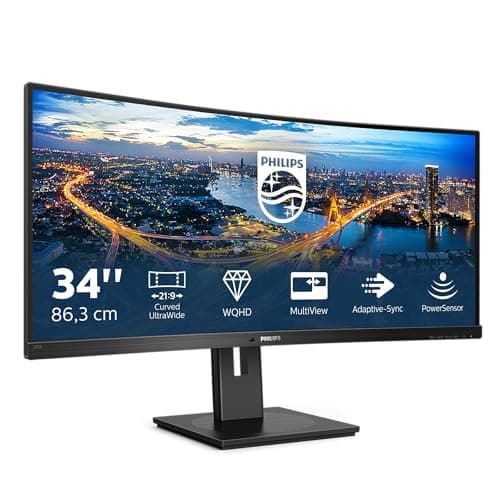
The AOC Gaming CU34G2XPD is the ultrawide monitor that makes the most sense for Twitch streamers who want to consolidate their game, OBS, and chat into a single screen without spending a fortune. At 34 inches with a 3440×1440 resolution and a 1500R curve, it gives you substantially more horizontal workspace than a standard 16:9 monitor, which is the single biggest quality-of-life upgrade for anyone managing a live broadcast. You can have your game running in the centre, OBS docked on one side, and your chat or browser on the other, all without alt-tabbing or glancing at a second screen.
The VA panel runs at 180 Hz with a 1ms response time, which is a significant improvement over the 100 Hz or 144 Hz ultrawide panels that dominated this price bracket a year ago. For streamers who also play competitively, 180 Hz keeps the experience feeling responsive rather than sluggish. VA panels are not as colour-accurate as IPS or OLED out of the box, but the contrast ratio is considerably higher, which gives dark scenes in games like Elden Ring or Diablo IV a depth and drama that IPS panels struggle to match. That contrast also makes your stream overlay elements pop more clearly against dark backgrounds.
The port selection on the CU34G2XPD is genuinely generous for the price. Two HDMI 2.0 ports and two DisplayPort 1.4 outputs mean you can connect multiple sources, and the four USB-A ports turn the monitor into a modest hub, useful for plugging in a stream deck, a USB microphone, or a headset dongle without reaching around the back of your PC. The 3.5mm audio output is handy for plugging in headphones directly. The 1500R curve is pronounced enough to feel immersive without being so aggressive that it distorts flat UI elements at the edges. For streamers who want an ultrawide experience at a mid-range price, this is the strongest option in the catalogue.
The main trade-off is the VA panel's weaker performance in bright, colourful scenes compared to IPS or QD-OLED, and the slightly narrower viewing angles. If you share your screen with others in the room, colours can shift noticeably off-axis. For a solo streaming setup, however, that is rarely an issue.
Verdict: The best ultrawide option for streamers who want a single-screen solution that handles gaming, OBS management, and chat monitoring without compromise on refresh rate.
Pros
- 34-inch ultrawide layout gives enough horizontal space to run a game, OBS, and chat simultaneously without a second monitor
- 180 Hz refresh rate is unusually fast for an ultrawide at this price, keeping competitive gameplay feeling sharp
- Four USB-A ports and dual DisplayPort 1.4 outputs make cable management and multi-source setups straightforward
Cons
- VA panel has narrower viewing angles than IPS, so colours shift if you are not seated directly in front
- 3440×1440 ultrawide resolution requires a reasonably powerful GPU to maintain high frame rates in demanding titles
The Alienware AW2725DM sits in an interesting position: it offers a 27-inch Fast IPS panel at 2560×1440 with a 180 Hz refresh rate, and it does so with Alienware's build quality and display calibration pedigree at a price that is far more accessible than the brand's OLED offerings. For Twitch streamers who want reliable, accurate colour reproduction and a monitor that will not introduce any nasty surprises when reviewing footage or designing overlays, the AW2725DM is a very sensible choice.
Fast IPS is the right panel technology for streamers who prioritise colour accuracy and wide viewing angles over the absolute contrast of VA or the peak brightness of QD-OLED. Skin tones, game environments, and brand colours all render with a consistency that makes the AW2725DM trustworthy as a reference display. The 1ms response time (GtG) keeps motion clear in fast-paced games, and 180 Hz is more than adequate for the vast majority of streaming content. Whether you are playing a battle royale, an RPG, or a simulation title, the panel keeps up without issue.
Alienware's stand is one of the better ones in this price range, offering height, tilt, swivel, and pivot adjustment. For streamers who spend long sessions at their desk, the ability to fine-tune monitor position without buying a separate arm is a genuine convenience. The port layout, with two HDMI inputs, one DisplayPort, and three USB ports, covers the essentials without being as generous as the AOC ultrawide. The three USB ports are particularly useful for a streaming setup: you can connect a stream deck, a USB hub, and a peripheral without reaching around the back of your PC.
Alienware monitors carry a premium over comparable panels from AOC or ASUS, and the AW2725DM is no exception. You are paying partly for the brand, partly for the build quality, and partly for the confidence that comes with Alienware's display calibration process. For streamers who value those things and want a 27-inch 1440p IPS monitor with a strong feature set, it is well worth the asking price. If budget is the primary concern, the ASUS TUF below offers similar core specs for less.
Verdict: A polished, well-calibrated 27-inch 1440p Fast IPS monitor that suits streamers who want reliable colour accuracy and a premium build without moving to OLED pricing.
Pros
- Fast IPS panel delivers wide viewing angles and accurate colour reproduction, making overlay design and footage review reliable
- Three USB ports on the monitor body reduce cable clutter for streaming peripherals like stream decks and USB microphones
- Alienware's stand offers full ergonomic adjustment including pivot, which is rare at this price point
Cons
- Carries a brand premium over comparable Fast IPS panels from other manufacturers at the same resolution and refresh rate
- No USB-C port, which limits connectivity options for laptop-based streaming setups
The ASUS TUF Gaming VG249Q3R is the monitor for streamers who are just starting out, working with a limited budget, or building a dual-monitor setup where one screen handles the game and the other manages OBS, chat, and browser tabs. At 23.8 inches with a 1920×1080 IPS panel running at 180 Hz, it covers the essentials without any unnecessary frills, and it does so at a price that leaves budget for other streaming equipment like a microphone, lighting, or a stream deck.
The IPS panel is the key reason to choose this over cheaper VA alternatives at the same size. IPS panels deliver wider viewing angles and more accurate colour reproduction than VA, which matters when you are evaluating how your stream looks or designing overlays. The 180 Hz refresh rate is fast enough to keep competitive gameplay smooth, and at 1080p, even a mid-range GPU can maintain high frame rates without breaking a sweat. For streamers playing games like Minecraft, Among Us, Stardew Valley, or other titles that do not demand cutting-edge hardware, 1080p at 180 Hz is genuinely all you need.
The port selection is practical: two HDMI 2.0 inputs, one DisplayPort 1.2, and a 3.5mm audio output cover all the standard connection scenarios. Two HDMI ports mean you can connect both a PC and a console without swapping cables, which is useful for variety streamers who switch between platforms. The 3.5mm audio output lets you plug headphones directly into the monitor, keeping your desk tidy. The stand is basic, offering tilt adjustment only, so streamers who want height or swivel adjustment will need a monitor arm.
The 23.8-inch size is actually an advantage in a dual-monitor configuration. Two of these side by side take up less desk space than a single ultrawide, and the symmetry looks clean on camera. For streamers who are conscious of their background setup, that matters. The TUF Gaming VG249Q3R is not the most exciting monitor on this list, but it is the most sensible entry point for anyone who wants a reliable, accurate, fast IPS panel without spending more than necessary.
Verdict: The best value pick for new streamers or those building a dual-monitor setup, offering a fast 180 Hz IPS panel at 1080p for a price that leaves room in the budget for other streaming essentials.
Pros
- IPS panel delivers accurate colours and wide viewing angles at a price well below comparable 1440p options
- 180 Hz refresh rate keeps gameplay smooth even on mid-range GPUs at 1080p
- Dual HDMI 2.0 inputs allow simultaneous connection of a PC and a console without cable swapping
Cons
- Stand only offers tilt adjustment, so a monitor arm is needed for proper ergonomic positioning
- 1080p resolution looks noticeably softer than 1440p on a desktop, which can make reading chat and OBS stats slightly less comfortable
Buying Guide
Panel Technology
Panel type is the single most important decision for a streaming monitor. IPS panels offer the best combination of colour accuracy and wide viewing angles for the money, making them the default recommendation for most streamers. VA panels offer higher native contrast, which suits dark game environments and horror content, but their narrower viewing angles and slower pixel response in dark tones are genuine trade-offs. QD-OLED panels sit at the top of the market: they combine OLED's infinite contrast and near-instant response with Quantum Dot colour enhancement, producing the most accurate and vivid image available. The trade-off is price and a small burn-in risk from static HUD elements, which is worth considering if you stream the same game with the same overlay for many hours each week.
Resolution and Screen Size
For a primary streaming monitor, 1440p (2560×1440) is the sweet spot in 2025. It is sharp enough to make your desktop and game look crisp, but it does not demand the GPU headroom that 4K requires. If you want to run a game, OBS, and chat on a single screen, an ultrawide 3440×1440 panel at 34 inches is the most practical solution. If you prefer a dual-monitor setup, two 27-inch 1440p or 24-inch 1080p monitors give you the same total workspace with more flexibility. Full HD (1920×1080) remains viable on a budget, particularly for streamers whose audience watches at 720p or 1080p anyway.
Refresh Rate
A higher refresh rate makes your gameplay feel smoother and your footage look more professional when clipped. For most streamers, 144 Hz to 180 Hz is the practical sweet spot: it is fast enough to eliminate tearing and judder in the majority of titles without requiring a top-tier GPU. If you play fast-paced competitive games like CS2 or Valorant and your GPU can sustain very high frame rates, 240 Hz or above becomes worthwhile. For casual or variety streamers, 100 Hz to 144 Hz is perfectly adequate.
Connectivity
Look for at least two HDMI inputs if you stream from both a PC and a console. DisplayPort is preferable for your primary PC connection as it supports higher refresh rates and resolutions at full bandwidth. USB-C is increasingly useful for connecting laptops or capture cards with a single cable. Built-in USB hubs on the monitor body are a genuine convenience for streaming peripherals: a stream deck, a USB microphone, and a headset dongle can all plug into the monitor rather than the back of your PC.
Ergonomics and Build Quality
Streamers spend long hours at their desks, so a monitor with height, tilt, swivel, and pivot adjustment is worth prioritising. If the included stand is basic, factor in the cost of a monitor arm. VESA mount compatibility (usually 100×100mm) is standard on most gaming monitors and gives you the option to add an arm later. A clean cable management solution through the stand keeps your background tidy on camera, which matters if your desk is visible during streams.
The MSI MAG 272QP QD-OLED X50 is the overall winner for Twitch streamers in 2025. Its QD-OLED panel delivers colour accuracy and contrast that no IPS or VA alternative in this selection can match, its 280 Hz refresh rate keeps gameplay footage looking sharp and professional, and its dual HDMI 2.1 ports handle both a gaming PC and a console without any cable juggling. For streamers who want the best possible image quality on their primary display and have the budget to invest, it is the clear choice. For those building their first streaming setup or working within a tight budget, the ASUS TUF Gaming VG249Q3R delivers a fast, accurate IPS panel at 1080p for a price that leaves room for the microphone, lighting, and capture card that matter just as much as the monitor itself.