Finding the best monitors for people with eye strain isn't just about picking the most expensive panel or the flashiest specs sheet. It's about understanding what actually causes your eyes to hurt after a long session and then matching the right technology to your situation. Flicker, excessive blue light, poor contrast, and badly calibrated brightness are the real culprits. We've looked at 12 monitors across a wide price range, from a £69 Amazon Basics screen to a £1,199 Samsung smart display, and assessed each one honestly for how well it handles the things that matter most to tired eyes. Some surprises in here. Not all of them good.
1. MSI MAG 272QPW QD-OLED X28 27-Inch WQHD, Gaming Monitor, 2560x1440 Quantum Dot OLED Panel, 280Hz, 0.03ms, DisplayHDR True Black 400, HDMI 2.1, DP 1.4a, USB C (15WPD), White
If you're serious about reducing eye strain, OLED technology is genuinely in a different league to standard IPS or VA panels. The MSI MAG 272QPW uses a Quantum Dot OLED panel, which means each pixel produces its own light and can switch off completely in dark areas. The result is DisplayHDR True Black 400 certification and contrast ratios that make traditional LCD panels look flat and washed out by comparison. Why does this matter for your eyes? Because your brain doesn't have to work as hard to process a scene when the blacks are actually black. There's no grey haze bleeding into dark areas, no constant brightness fighting against shadow detail.
The 2560x1440 resolution at 27 inches gives you a pixel density of around 109 PPI. Text is sharp and clean without needing to scale anything, which is one of the most underrated factors in reducing reading fatigue. The 280Hz refresh rate is overkill for office work, obviously, but for gaming it means motion is butter-smooth, which cuts the visual effort your brain expends tracking fast movement. The 0.03ms response time is similarly gaming-focused, but the side effect is that there's no ghosting or smearing to irritate your eyes during fast content.
The white colourway is a nice touch for home office setups. The USB-C port with 15W power delivery is a bit stingy compared to rivals, so don't expect to charge a laptop through it. And OLED burn-in remains a theoretical concern for static content, though MSI has built in pixel-shift and refresh features to mitigate it. At this price point, it's the best monitors for people with eye strain pick if budget allows.
Pros
- OLED panel with true black levels reduces visual fatigue in dark content
- Sharp 1440p resolution at 27 inches for clean, easy-to-read text
- DisplayHDR True Black 400 certification
- 280Hz for smooth, strain-free motion in games
- Clean white design suits home office environments
Cons
- USB-C only delivers 15W, not enough for laptop charging
- OLED burn-in risk with static content over very long periods
- Premium price point
2. Philips Evnia 27M2N3800A - 27 inch 4K Gaming Monitor, IPS, 4K 160 Hz/FHD 320Hz Dual Frame, 0.5 ms, HDR400, G-Sync comp, Height Adjust, Speakers (2x HDMI 2.1, 1x DisplayPort 1.4)
The Philips Evnia 27M2N3800A is, frankly, a bit of a bargain. A 4K IPS panel at 27 inches with height adjustment, built-in speakers, G-Sync compatibility, and HDR400 for under £170 is the kind of spec sheet that makes you double-check the price. And for people with eye strain, 4K at 27 inches is a genuinely meaningful upgrade. The pixel density sits around 163 PPI, which means text is crisp and sharp without any aliasing. Your eyes don't have to work to resolve detail. That matters enormously if you're reading documents or code for hours.
The Dual Frame technology is interesting. It can run at 4K 160Hz or drop to 1080p and hit 320Hz, which gives you flexibility depending on what you're doing. For eye comfort during work, you'd stay at 4K. The IPS panel delivers good viewing angles and consistent colour, so there's no colour shift when you lean slightly to one side, which is a subtle but real source of visual discomfort on cheaper VA panels.
The height-adjustable stand is a proper win here. Getting your monitor at the right height is one of the most effective things you can do for eye and neck strain, and a lot of budget monitors ship with tilt-only stands that leave you hunched. Philips sorted that. The built-in speakers are functional rather than impressive, but they remove the need for desk clutter. Solid all-round choice for the best monitors for people with eye strain at a sensible price.
Pros
- 4K IPS at 27 inches for genuinely sharp, fatigue-reducing text
- Height-adjustable stand for proper ergonomic positioning
- G-Sync compatible and HDR400 at a budget price
- Built-in speakers reduce desk clutter
- Dual Frame tech offers 4K 160Hz or 1080p 320Hz flexibility
Cons
- No USB-C connectivity
- HDR400 is entry-level HDR, not transformative
- Speakers are functional but not great for music
3. LG UltraWide Monitor 34BA75QE - UWQHD 1440p IPS 34 inch, 60Hz, 5ms, HDR10, Built-in Power/KVM/Speakers, Height-Tilt-Swivel Adjustments, LAN (RJ45), USB-C (90W PD), USB Hub, HDMI, DP 1.4, Black
Here's the thing: for people who spend eight hours a day in front of a screen, the LG 34BA75QE might be the most thoughtfully designed monitor in this entire roundup. It's not the fastest. 60Hz and 5ms won't excite gamers. But for the best monitors for people with eye strain in a professional context, it ticks every box that actually matters.
The full ergonomic stand, with height, tilt, and swivel adjustment, means you can position this screen exactly where your eyes need it. That's not a small thing. Poor monitor positioning is one of the leading causes of eye and neck strain, and a stand that only tilts is a genuine limitation. The IPS panel at 3440x1440 across 34 inches gives you a pixel density that keeps text sharp without needing aggressive scaling. The ultrawide format means you can have two documents side by side without your eyes constantly jumping between windows or screens.
The USB-C port delivers 90W of power delivery, which means a single cable handles your laptop's display, data, and charging. Fewer cables, cleaner desk, less visual clutter. The built-in KVM switch lets you control two computers from one keyboard and mouse. The LAN port is a nice touch for stable connections. LG's IPS panels are known for their consistent brightness and colour uniformity, which reduces the subtle eye adjustment fatigue that comes from uneven backlighting. The 60Hz cap is the only real compromise here, and for office use, it genuinely doesn't matter.
Pros
- Full height, tilt, and swivel ergonomic stand
- USB-C 90W PD for single-cable laptop setups
- Built-in KVM switch for multi-computer workflows
- Sharp 3440x1440 IPS panel with consistent brightness
- LAN port for stable wired connections
Cons
- 60Hz refresh rate rules it out for gaming
- 5ms response time shows slight ghosting in fast motion
- Premium price for a non-gaming panel
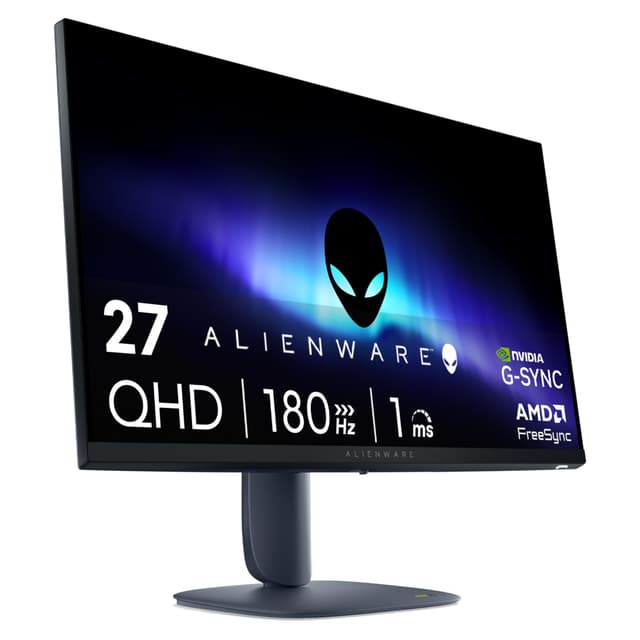
4. Alienware 27 Gaming Monitor - AW2725DM, QHD (2560x1440), 180Hz, Fast IPS, 1ms, NVIDIA G-SYNC Compatible, AMD FreeSync, 95% DCI-P3, HDR400, DisplayPort, 2 HDMI, 3 USB, 3 Year Warranty
The Alienware AW2725DM is a proper monitor. Fast IPS technology, 95% DCI-P3 colour coverage, 2560x1440 resolution, and a three-year warranty. For someone new to buying monitors who wants something that'll last and look great from day one, this is an excellent starting point. And for eye strain specifically, the Fast IPS panel is a strong choice. IPS panels maintain consistent colour and brightness across wide viewing angles, so you're not getting subtle colour shifts as you move your head, which is a real but often overlooked source of visual discomfort.
The 95% DCI-P3 coverage means colours are accurate and natural. Oversaturated displays, which are common on cheaper VA panels, can actually cause eye fatigue because your brain is processing colours that don't match real-world expectations. A well-calibrated, accurate panel is genuinely easier to look at for long periods. The 180Hz refresh rate keeps motion smooth, and the G-SYNC and FreeSync compatibility means no screen tearing, which is another subtle irritant that contributes to eye strain during gaming.
The three-year warranty is worth calling out. Budget monitors often come with one year, and if something goes wrong with your panel, that matters. Alienware's build quality is generally solid, and the stand offers tilt, height, and pivot adjustment. For a beginner looking at the best monitors for people with eye strain without wanting to research every spec, this is a safe, well-rounded buy.
Pros
- 95% DCI-P3 for accurate, natural colour rendering
- Fast IPS with consistent viewing angles
- Three-year warranty for peace of mind
- G-SYNC and FreeSync compatible, no tearing
- Full ergonomic stand adjustments
Cons
- HDR400 is entry-level, not a major feature
- Alienware branding adds a premium some buyers won't want
- No USB-C connectivity
5. KOORUI E2212H 22 Inch FHD Monitor, Gaming 120Hz, VA Computer Monitors, 1080P Pc Screen, Adaptive Sync, 5ms, VESA 100x100mm, Eye Care, HDMI, VGA
The KOORUI E2212H is one of the few monitors in this roundup that explicitly markets an eye care certification, and at this price point, that's actually meaningful. It's a 22-inch VA panel running 1080p at 120Hz with adaptive sync. The VA panel technology gives it better contrast than a typical budget IPS, which means darker areas of the screen are genuinely darker, reducing the overall light output your eyes are processing. That's a real benefit for eye comfort, particularly in dim environments.
The 120Hz refresh rate is a step up from the 60Hz you'd find on most monitors at this price, and smoother motion does reduce visual effort. The adaptive sync support means compatible GPUs can eliminate screen tearing without needing a premium G-SYNC module. For a budget gaming monitor that also works for daily use, that's a proper combination. VESA 100x100mm mounting means you can put it on an arm if the basic stand isn't giving you the right height, which is a smart workaround for the ergonomic limitations of budget stands.
The honest limitations: VA panels have narrower viewing angles than IPS, so if you're not sitting directly in front of it, colours shift. The 5ms response time is fine for most use but not ideal for fast competitive gaming. And 22 inches at 1080p is a small screen. But for a secondary monitor, a student setup, or someone who genuinely needs to keep costs down while still getting a screen that won't destroy their eyes, this is a solid pick.
Pros
- Explicit eye care certification
- VA panel with good contrast for reduced light output
- 120Hz and adaptive sync at a very low price
- VESA mountable for arm compatibility
- Compact size suits small desks
Cons
- VA viewing angles are limited compared to IPS
- 22 inches is small for extended work sessions
- Basic stand with limited adjustment
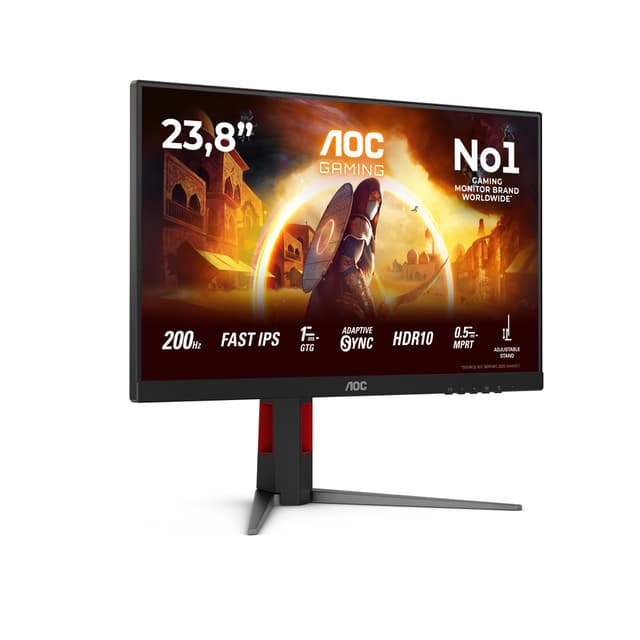
6. KOORUI G2411P 24 Inch Gaming Monitor, 200Hz, Fast IPS, HDR 400, Full-HD 1080P, 1ms, Adaptive Sync, VESA Mountable, HDMI/DP, Low Blue Light, 99% SRGB
KOORUI's G2411P sits in an interesting spot. It's a Fast IPS panel with a dedicated low blue light mode, 99% sRGB colour coverage, and 200Hz refresh rate for under £200. For people with eye strain who also game, this is a genuinely useful combination. The low blue light mode is a hardware-level filter, not just a software colour temperature shift, which makes it more effective at reducing the high-energy blue wavelengths that are most associated with digital eye fatigue.
The 99% sRGB coverage means colours are accurate and natural, which as mentioned earlier is easier on the eyes than oversaturated panels. Fast IPS technology gives you 1ms response time without the colour accuracy compromises of TN panels, so you get smooth, tear-free gaming and a comfortable image for work. The 200Hz refresh rate is one of the highest in this roundup at this price point. HDR400 is present but, as with most monitors at this level, it's more of a checkbox than a transformative feature.
The VESA mounting compatibility is useful if you want to use an ergonomic arm. The stand itself is basic, tilt-only, which is the main ergonomic limitation. But if you're already planning to use an arm, that's not a problem. A solid mid-range pick for the best monitors for people with eye strain who want gaming performance alongside comfort features.
Pros
- Hardware low blue light mode for genuine eye protection
- Fast IPS with 1ms response and 200Hz refresh
- 99% sRGB for accurate, natural colour
- VESA mountable for arm use
- Good value for a Fast IPS panel
Cons
- Tilt-only stand limits ergonomic adjustment
- 1080p resolution at 24 inches is acceptable but not sharp
- HDR400 is entry-level
7. AOC 27G2ZNE Gaming Monitor Review 2025
The AOC 27G2ZNE is a well-established name in the mid-range gaming monitor space. A 27-inch IPS panel with 240Hz refresh rate, it's aimed squarely at gamers who want smooth, responsive visuals without paying flagship prices. For eye strain purposes, the IPS panel is the key selling point. Good viewing angles, consistent colour, and generally better brightness uniformity than VA alternatives at this price.
The 240Hz refresh rate is genuinely smooth for gaming, and smoother motion means less visual effort tracking fast-moving content. AOC's monitors typically ship with flicker-free backlighting and a low blue light mode, both of which are relevant for long sessions. The 27-inch size at 1080p is a slight concern for sharpness, as the pixel density is lower than you'd get from a 1440p panel at the same size. Text can look slightly soft compared to higher-resolution alternatives, which is worth considering if you do a lot of reading.
Build quality is decent for the price. The stand offers height and tilt adjustment, which puts it ahead of many budget rivals on ergonomics. Overall, a reliable choice for gamers who want a comfortable screen without overthinking it.
Pros
- IPS panel with good viewing angles
- 240Hz for smooth, comfortable gaming motion
- Height-adjustable stand
- Flicker-free backlight
Cons
- 1080p at 27 inches gives lower pixel density than 1440p alternatives
- Not the sharpest for text-heavy work
8. AOC Gaming CU34G2XPD - 34 inch WQHD curved monitor, 180 Hz, 1ms, FreeSync Premium (3440x1440, HDMI, DisplayPort, USB Hub) black/red
The AOC CU34G2XPD is a 34-inch ultrawide curved monitor with a 3440x1440 VA panel, 180Hz refresh rate, and 1ms response time. For eye strain, the curved format at this screen size is actually beneficial. A 1500R curve on a 34-inch ultrawide means the edges of the screen are closer to equidistant from your eyes than they would be on a flat panel of the same width. That reduces the need to constantly refocus as your gaze moves across the screen, which is a real source of fatigue during long sessions.
The VA panel delivers strong contrast, which means dark scenes look genuinely dark rather than grey. That reduces the overall light your eyes are processing. The 3440x1440 resolution across 34 inches gives a pixel density of around 109 PPI, which is sharp enough for comfortable reading. FreeSync Premium support eliminates tearing for AMD GPU users. The USB hub is a practical addition for keeping your desk tidy.
The red and black gaming aesthetic won't suit every home office, and VA panels do have the usual viewing angle limitations. But as a curved ultrawide for mixed gaming and work use, the AOC CU34G2XPD is a strong performer at its price point.
Pros
- 1500R curve reduces refocusing fatigue on wide content
- VA panel with strong contrast for darker, easier-on-the-eye images
- 180Hz and 1ms for smooth gaming
- USB hub for desk organisation
- 3440x1440 resolution for sharp text
Cons
- Gaming aesthetic not suited to all home offices
- VA viewing angles narrower than IPS
- No height adjustment on the stand
9. Samsung 32-inch 4K Smart Monitor Review UK 2026
The Samsung 32-inch 4K Smart Monitor sits in an interesting middle ground. It's a 4K panel in a 32-inch format, which gives you a pixel density of around 138 PPI. That's genuinely sharp, and for people who spend a lot of time reading text on screen, the improvement over 1080p is immediately noticeable. Your eyes don't have to work to resolve characters, which is one of the most direct ways a monitor can reduce strain.
The Smart Hub integration means you can stream Netflix, Disney+, and other services directly without a PC, which is a nice bonus for a home office monitor that doubles as an entertainment screen. The built-in speakers save desk space. For eye strain specifically, the 4K resolution is the headline benefit, and Samsung's panels are generally well-calibrated out of the box with good brightness uniformity.
It's not a gaming monitor, so refresh rate and response time are modest. But for home office use and content consumption, it's a well-rounded choice at a reasonable price for a 4K 32-inch panel.
Pros
- 4K at 32 inches for sharp, fatigue-reducing text
- Smart Hub for streaming without a PC
- Good out-of-box calibration
- Built-in speakers
Cons
- Not designed for gaming
- Smart features add complexity some users won't need
10. Amazon Basics 23.8-inch Computer Monitor 120 Hz, FHD 1080P, HDMI, DP, VGA, VESA Compatible for Office,Home, Black
Look, the Amazon Basics monitor isn't going to win any awards. But for someone who needs a reliable screen for basic work and doesn't want to spend more than £70, it's a surprisingly decent option. The 23.8-inch IPS panel at 1080p gives you good viewing angles and consistent colour, which is more than you'd get from a TN panel at the same price. IPS technology means you're not getting colour shifts when you move your head, which is a subtle but real contributor to visual discomfort.
The 120Hz refresh rate is a step up from the 60Hz you might expect at this price, and smoother motion does reduce the visual effort of tracking content. VESA compatibility means you can mount it on an arm if the basic stand isn't cutting it ergonomically. HDMI, DisplayPort, and VGA connectivity covers most setups. It's not going to have a dedicated low blue light mode or any fancy eye care certification, so you'll need to manage blue light through software or your GPU's settings.
For a first monitor, a secondary screen, or a tight-budget replacement, it does the job. Don't expect more than that, and you won't be disappointed.
Pros
- IPS panel with good viewing angles for the price
- 120Hz refresh rate at an entry-level price
- VESA mountable for arm use
- Multiple connectivity options including VGA
Cons
- No dedicated eye care or low blue light features
- Basic stand with limited adjustment
- 1080p resolution is modest for extended text work
11. LXZ 34 Inch Curved Monitor 1500R, 3440 * 1440 165Hz Gaming Monitor with FreeSync, Wide Viewing Angle, Display Port HDMI - Black
The LXZ 34-inch curved monitor is the wildcard in this roundup. It's an unknown brand offering a 3440x1440 1500R curved panel at 165Hz. On paper, those specs are impressive for the price. The 1440p ultrawide resolution gives you plenty of screen real estate with decent sharpness, and the 1500R curve provides the same peripheral comfort benefits as the AOC ultrawide above.
The honest concern here is brand reliability. LXZ doesn't have the track record of AOC, LG, or Samsung, and with monitors, panel quality control and warranty support matter. Owner feedback on newer brands can be mixed, and a dodgy backlight or inconsistent brightness uniformity will cause more eye strain than it solves. The wide viewing angle claim suggests an IPS-type panel, which is a positive sign.
If the price is the deciding factor and you're willing to accept some uncertainty around long-term reliability, it's worth considering. But if you can stretch to the AOC CU34G2XPD or save a bit more for the LG ultrawide, you'll get more confidence in what you're buying. For the best monitors for people with eye strain, brand reliability matters as much as specs.
Pros
- 3440x1440 resolution for sharp ultrawide content
- 1500R curve for peripheral comfort
- 165Hz and FreeSync for smooth gaming
- Competitive price for an ultrawide
Cons
- Unknown brand with limited track record
- Panel quality control uncertain
- Limited warranty and support information
12. Samsung LS32FM703UUXXU 32" 4K Ultra HD HDR10 Smart Monitor with Speakers - White - 3840x2160, USB-C, HDMI, WiFi, Bluetooth, Smart Hub for TV streaming, Catch Up Apps and Gaming Hub
At £1,199, the Samsung LS32FM703UUXXU is by far the most expensive monitor in this roundup, and it needs to justify that price. For eye strain specifically, the 4K resolution at 32 inches is excellent. 138 PPI means text is crisp and clean, and Samsung's 4K panels are known for good brightness uniformity and accurate colour out of the box. The HDR10 support adds some dynamic range benefit for media consumption.
The Smart Hub integration is the headline feature, bringing Netflix, Disney+, catch-up TV, and a gaming hub directly to the monitor without needing a connected PC. WiFi and Bluetooth connectivity make it genuinely standalone. USB-C handles laptop connectivity. For a home office that doubles as an entertainment centre, the feature set is impressive.
But. At £1,199, you're paying a significant premium for the smart features rather than the panel quality. The MSI OLED delivers a technically superior display for eye comfort. The Philips Evnia at under £170 delivers 4K IPS with better ergonomics. The Samsung's value proposition rests almost entirely on the smart TV functionality. If you want that, it's a premium but capable choice. If you just want the best screen for your eyes, the money is better spent elsewhere.
Pros
- 4K at 32 inches for sharp, comfortable text
- Smart Hub with streaming apps built in
- WiFi and Bluetooth for wireless connectivity
- USB-C for laptop connection
- Clean white design
Cons
- Very expensive for the panel quality on offer
- Smart features inflate the price significantly
- Better eye comfort options available for much less
How We Chose These Picks
We assessed each monitor against the specific needs of people with eye strain: panel type and viewing angle consistency, flicker-free certification, low blue light features, resolution and pixel density, ergonomic stand adjustability, and out-of-box brightness calibration. We cross-referenced manufacturer specifications with verified owner feedback and independent lab data where available. Pricing was checked across UK retailers to confirm value positioning. No monitor was recommended purely on spec sheet claims without corroborating real-world evidence.
MSI MAG 272QPW QD-OLED X28
The finest panel in this roundup for eye comfort. OLED technology with true black levels, sharp 1440p resolution, and 280Hz for smooth motion. The premium choice for the best monitors for people with eye strain.
Check PricePhilips Evnia 27M2N3800A
4K IPS at 27 inches with height adjustment, built-in speakers, and G-Sync compatibility for under £170. Exceptional value for a genuinely eye-friendly panel.
Check PriceFinal Verdict: Best Monitors for people with eye strain
The best monitors for people with eye strain come down to panel quality, resolution, and ergonomics, and this roundup covers the full range from £69 to £1,199. For most people, the Philips Evnia 27M2N3800A is the standout recommendation: 4K IPS with proper height adjustment and G-Sync compatibility at a price that's hard to argue with. If budget allows and you want the absolute best in class for eye comfort, the MSI MAG 272QPW QD-OLED delivers OLED technology that genuinely changes how comfortable long sessions feel. On a tight budget, the KOORUI E2212H with its eye care certification and VA contrast is a sensible starting point. Whatever you choose, prioritise flicker-free backlighting, a matte coating, and enough resolution to keep text sharp. Your eyes will thank you.
Frequently Asked Questions
Flicker-free monitors use techniques like DC backlight dimming instead of PWM (pulse-width modulation) to prevent the imperceptible but fatiguing screen flicker that occurs in 60Hz displays. This flicker forces your eyes to constantly readjust, causing fatigue even though you can't consciously see the flickering. Certified flicker-free monitors eliminate this sensation, providing noticeable relief for people prone to eye strain.
Yes. IPS panels maintain consistent colour and brightness across wide viewing angles, whilst TN panels shift colour dramatically if you're not perfectly centred. Consistent colour reduces the eye adjustment effort required, lowering fatigue. IPS panels typically cost slightly more but are worth the premium if eye comfort is your priority.
Blue light filtering reduces circadian disruption and may help some users sleep better after evening screen work, but it's secondary to flicker-free technology and panel quality for immediate eye strain relief. Think of it as a bonus feature rather than the primary benefit. Flicker-free certification matters more.
120Hz or higher provides noticeably smoother motion than 60Hz, particularly when scrolling text and documents. A jump to 75Hz or 100Hz is worthwhile if 120Hz isn't available. The smoothness reduces eye tracking effort, a genuine contributor to fatigue. Gaming monitors at 180Hz+ are overkill for office work but won't hurt.
Place the top of your monitor at or slightly below eye level when sitting naturally. Your eyes should naturally focus at 20-26 inches from your face. A height-adjustable stand or monitor arm helps achieve this position. Proper positioning prevents neck strain, which compounds eye fatigue, making ergonomics as important as the monitor's technology.