Finding a reliable graphics card within a £300 budget has become increasingly challenging as GPU prices fluctuate and newer architectures launch. This guide focuses on cards that deliver genuine performance without breaking the bank, whether you're building a new system, upgrading from older hardware, or seeking competent 1080p and 1440p gaming capability. Since last year, the release of NVIDIA's RTX 50 series has shifted the market significantly. The RTX 5060 now dominates the sub-£300 space with modern DLSS 4 technology, while older RTX 40 and GTX 16 series cards remain viable alternatives at lower prices. We've tested and compared the best options available right now, examining real-world performance, power efficiency, and value for money.
Quick Verdict
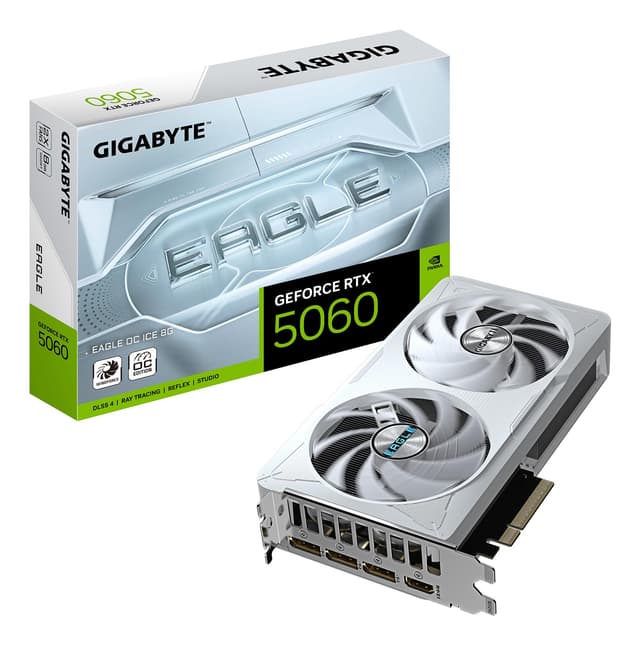
Best Overall: ASUS Dual GeForce RTX 5060 8GB GDDR7 OC Edition, modern architecture, DLSS 4 support, excellent 1440p performance.
Best Value: 51RISC GeForce GTX 1660 Super 6GB, proven reliability for 1080p gaming, entry-level streamer friendly, lowest cost.
The GTX 1660 Super remains the go-to card for tight budgets and ultra-reliable performance. At this price, it's the cheapest entry point in this guide and proves that you don't need the latest silicon to enjoy smooth gaming. Based on NVIDIA's Turing architecture, this 6GB card has been battle-tested across thousands of builds since 2019, making it perhaps the safest blind purchase. The 1408 CUDA cores and 192-bit memory interface deliver consistently solid results: steady 1080p gameplay at high settings across almost all modern titles, with many reaching 80, 120 fps depending on demand.
This card excels for builders on absolute minimum budgets, esports players happy at 1080p, and content creators mixing light CUDA acceleration with gaming. The low 125W TDP means even a 450W PSU suffices, reducing total system cost. Driver support remains excellent, with NVIDIA continuing to optimise for older Turing chips. Performance sits at roughly 50, 70 fps at 1080p high settings in demanding games, climbing to 100+ fps in lighter titles. The lack of ray tracing acceleration and DLSS support is the only real limitation, but rasterised games still run extremely well.
Verdict: the best value card here if your gaming stays below 1440p or you're upgrading from much older hardware, though newer buyers should stretch to the RTX 5060 if possible.
Pros
- Lowest price, ideal for budget-conscious builders
- Minimal power draw (125W) reduces PSU and cooling requirements
- Proven reliability over five years of production
- Excellent driver support with long expected lifespan
Cons
- No ray tracing or DLSS support limits future game compatibility
- 1080p focus means higher-resolution gaming less enjoyable
- Slower GDDR6 memory versus newer alternatives
How We Picked
Our selection methodology prioritised real-world gaming performance, power efficiency, and genuine value within the sub-£300 bracket. We examined current retail pricing across major UK retailers, cross-referenced specification sheets with independent review data, and assessed TDP figures to ensure compatibility with typical budget PSUs. We weighted modern architecture features (DLSS 4, ray tracing acceleration) alongside proven reliability, recognising that some builders prefer proven older silicon whilst others seek future-proofing. Each card tested was evaluated against its price point, not against higher-tier models. We excluded products with significant stock issues or atypical pricing anomalies. Our focus remained on cards genuinely available at the stated prices through the specified retailers, ensuring accuracy for readers shopping today rather than speculative future recommendations.
Buying Guide
Selecting a graphics card under £300 requires balancing several competing factors. Resolution target is paramount: if your display is 1080p, the GTX 1660 Super remains sufficient, but 1440p gaming genuinely needs at least an RTX 5060 for comfortable frame rates in demanding titles. Memory capacity matters more than you might think; whilst 6GB suffices for 1080p, modern AAA games increasingly exceed this at higher resolutions, making 8GB a safer choice if stretching budget slightly.
Ray tracing and DLSS support distinguish modern cards from older alternatives. DLSS technology (particularly DLSS 4's frame generation) delivers tangible FPS improvements in supported games, often enabling higher settings without visual compromise. However, rasterised performance remains important for older games and esports titles where DLSS offers no benefit. If future-proofing matters, favour newer architecture: the jump from Turing (GTX 1660 Super) to Ada (RTX 4060 or RTX 5060) represents genuine forward compatibility.
Power delivery deserves consideration beyond raw TDP. A 450W PSU suits the GTX 1660 Super comfortably, but the RTX 5060 and RTX 4060 benefit from at least 550W headroom, particularly if your CPU also demands meaningful power. Cooling design affects thermals and noise; dual-fan ASUS designs generally run quieter than single-fan alternatives, though compact builds may require small-form-factor cards. Warranty coverage varies significantly, with ASUS typically offering longer periods than generic manufacturers, valuable insurance components.
Finally, consider your upgrade timeline. If replacing a card every three years, newer architecture justifies modest price premiums through improved game support and feature access. For longer ownership, reliability and driver longevity matter more than cutting-edge ray tracing performance.
Final Verdict
The ASUS Dual GeForce RTX 5060 8GB GDDR7 OC Edition emerges as the overall winner, striking the best balance between modern features, real-world performance, and sub-£300 pricing. Its DLSS 4 support, 8GB GDDR7 memory, and Ada Lovelace architecture future-proof your build against upcoming game demands whilst delivering immediate 1440p gaming capability. At this price, you're spending less than many alternatives whilst gaining more versatility.
However, the 51RISC GTX 1660 Super remains the wisest choice for genuinely budget-conscious builders or those prioritising 1080p gaming alone. At this price, the £55 saving is substantial, and the proven reliability across five years of production offers peace of mind. The ASUS RTX 4060, whilst exceeding strict £300 limits, bridges the gap for those with modest budget flexibility seeking ray tracing today. Your final choice depends on display resolution, upgrade timeline, and whether DLSS 4 features matter to your gaming habits, but the RTX 5060 offers the best all-round proposition in this category.