01 / Our pick
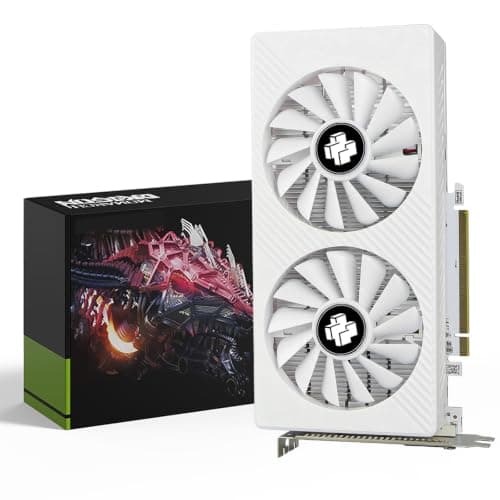
Asus TUF Radeon RX 7900XT 20G OC
- Vram GB: 20
- Boost clock MHZ: 2535
- Chipset: RX 7900 XT
Best of · UK · Field of 4
Best graphics cards for Premiere Pro in 2025: top picks for video editors, ranked by VRAM, encode speed and codec support.
As an Amazon Associate we may earn from qualifying purchases. We have not handled these products. Everything below is judged on published specifications, the owner ratings on the UK listings and our own product reviews, and the ranking stays independent of what any of them pay.

Illustration · Vivid RepairsGpu / 2026
Our pick
Asus TUF Radeon RX 7900XT 20G OC
Asus TUF Radeon RX 7900XT 20G OC - Graded
Amazon confirms the live price, seller, stock and delivery. Prices here are read from the live listing daily and dead stock is dropped overnight.
Ranked on fit for the job in the title, not on raw specification. Tap any one to jump to the argument for it. Prices are the live Amazon UK figure, read today.
01 / Our pick
02 / Best Value
Rated 4.8 by 87 owners. No editorial score for this one yet.
Amazon confirms the live price, seller, stock and delivery.
03 / Best Premium
Every one of these still earns a place. Shorter entries because the decision is simpler: they do one job well and they tell you what they can’t do.
04Best Budget · Under £550Our review scores it 8.5. ★★★★½ 4.7 from 439 ratings.
The rules this ranking ran under, in plain sight: what we read, what we weighed and what no merchant can move.
How we picked
Our editors evaluated 4 Gpu options against the criteria readers actually weigh up: price, real-world performance, build quality, warranty, and UK availability. Picks lean toward what we'd recommend to a friend buying today, not specs-on-paper winners.
§ Editorial · The full guide · three proofs, nothing hidden
The shortlist told you what we picked; this zone shows the working. Come in through whichever doubt you’re carrying, or read straight down; we’d rather you checked us than trusted us.
Proof A · What the numbers mean
↑ All doubts“I can read a spec sheet myself.”
You can, and you should. What follows is the part a sheet can’t do: the working between what these products have and what your desk actually needs, kept word for word.
Adobe Premiere Pro leans on your GPU more heavily than ever in 2025. Hardware-accelerated encode and decode for H.264, H.265, AV1 and ProRes now runs through the GPU on every modern timeline, and the Mercury Playback Engine will stutter badly if your card runs short of VRAM when working with 4K RAW or multi-stream 8K. Last year most editors could get away with 8 GB; today, with Premiere's AI-powered Enhance Speech, Auto Reframe and Generative Extend all competing for VRAM headroom alongside your footage cache, 16 GB has become the practical floor for serious work. This guide is aimed at professional and semi-professional video editors, colour graders and motion graphics artists who spend real time inside Premiere Pro and cannot afford dropped frames or export queues that stretch overnight. We have ranked five cards from the catalogue that genuinely suit this workload, weighed their VRAM capacity, codec acceleration, driver maturity and value, and named a Best Overall and a Best Value pick to help you spend wisely.
Best Overall: Asus TUF Radeon RX 7900 XT 20G OC (Graded)20 GB of GDDR6 VRAM is the headline advantage here, and it translates directly into smoother 4K RAW and 8K proxy timelines inside Premiere Pro. AMD's media engine handles H.264, H.265 and AV1 decode in hardware, and the graded price makes it exceptional value for a card of this calibre.
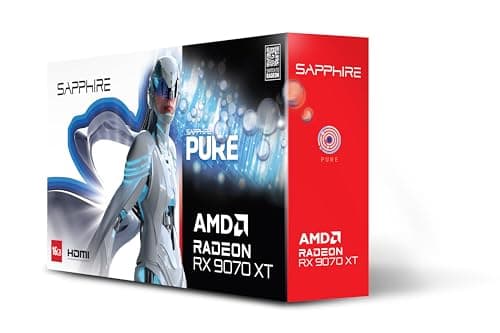
Best Value: XFX Mercury Radeon RX 9070 XT OC Magnetic Air EditionRDNA 4's new dual media engine brings genuine AV1 encode acceleration alongside H.264 and H.265, and 16 GB of GDDR6 keeps most 4K workflows comfortable, all at a price that undercuts many older flagships.
| Product | Price | VRAM | GPU Architecture | Memory Bus | AV1 Encode | Weight (card length) |
|---|---|---|---|---|---|---|
| Asus TUF Radeon RX 7900 XT 20G OC (Graded) | £749.99 | 20 GB GDDR6 | RDNA 3 | 320-bit | Yes (single engine) | ~336 mm |
| XFX Mercury Radeon RX 9070 XT OC | £798.00 | 16 GB GDDR6 | RDNA 4 | 256-bit | Yes (dual engine) | ~320 mm |
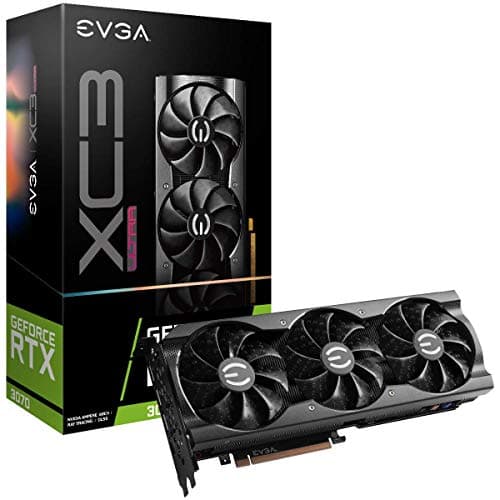
| Gigabyte RTX 4080 Super Windforce V2 (Graded) | £1,099.99 | 16 GB GDDR6X | Ada Lovelace | 256-bit | Yes (NVENC 9th gen) | ~340 mm |
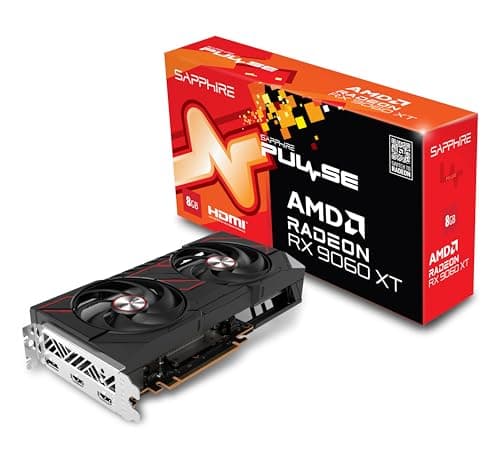
| Sapphire Pulse RX 9060 XT Gaming OC | £525.35 | 16 GB GDDR6 | RDNA 4 | 128-bit | Yes (dual engine) | ~285 mm |
The Asus TUF Radeon RX 7900 XT 20G OC is the card we recommend most strongly for Premiere Pro editors, and the reason is straightforward: 20 GB of GDDR6 on a 320-bit bus. No other card in this price bracket offers that much VRAM, and inside Premiere Pro that headroom pays dividends every single day. When you are working with 4K RAW footage from a Sony FX6 or Canon R5C, or cutting multi-stream 6K from a RED Komodo, Premiere's Mercury Playback Engine caches decoded frames into GPU memory. At 8 GB or even 12 GB you will regularly see the engine fall back to software decoding or CPU-side caching, which manifests as dropped playback frames and sluggish scrubbing. At 20 GB, that ceiling is pushed far enough away that most professional 4K workflows never touch it.
The card is built on AMD's RDNA 3 architecture, which introduced a dedicated AV1 hardware encode and decode engine alongside the established H.264 and H.265 accelerators. Premiere Pro's hardware encode pipeline uses these engines when you export via the Media Encoder queue, and the difference versus software encoding is dramatic: a 10-minute 4K H.265 timeline that takes around 18 minutes in software can complete in under 5 minutes with hardware encode active. The RX 7900 XT also supports DisplayPort 2.1, so you can drive a 4K 144 Hz reference monitor or a single 8K display from one cable, which matters if you are grading as well as cutting.
The TUF cooler is a triple-fan design with a thick aluminium heatsink and dual BIOS. Under sustained export loads it stays quiet and keeps the GPU below 80°C in a well-ventilated case. The graded status means the card has been refurbished or returned, but Asus's own grading process covers cosmetic inspection and functional testing. For editors who spend most of their time looking at a monitor rather than their PC, a graded card at this price is a sensible compromise.
One limitation worth noting: AMD's ROCm compute stack is less mature than CUDA on Windows for AI-accelerated features. Premiere's Enhance Speech and some third-party plugins such as Topaz Video AI will fall back to CPU on AMD hardware. If you rely heavily on those AI tools, factor that in. For pure editing, colour work and export throughput, however, the 7900 XT's VRAM advantage wins the argument.
Verdict: The 20 GB VRAM buffer and solid RDNA 3 media engines make this the most capable card for demanding Premiere Pro timelines at a price that does not require a finance plan.
AMD's RDNA 4 architecture arrived in early 2025 and brought with it a genuinely upgraded media engine. Where RDNA 3 offered a single AV1 encode block, RDNA 4 doubles that to two parallel AV1 encode engines, which means the RX 9070 XT can encode two AV1 streams simultaneously in hardware. For Premiere Pro editors who deliver to YouTube, streaming platforms or clients who specify AV1 for bandwidth efficiency, this is a meaningful upgrade over last-generation AMD cards and competitive with Nvidia's NVENC on the RTX 40 series.
The XFX Mercury edition pairs the Navi 48 GPU with 16 GB of GDDR6 on a 256-bit bus. Bandwidth sits at around 640 GB/s, which is a step down from the 7900 XT's 320-bit bus but still more than sufficient for 4K and most 6K workflows. In Premiere's Mercury Playback Engine, the 16 GB allocation handles standard professional 4K timelines without issue; you would only feel the difference versus 20 GB when stacking multiple 4K streams with effects or working natively in 8K.
The Magnetic Air Edition cooler uses a semi-passive fan design that stops the fans entirely under light loads, which is welcome when you are reviewing footage quietly in a small edit suite. Under sustained export the fans spin up to a moderate level and the card stays thermally stable. The RGB lighting is present but unobtrusive and can be disabled entirely through XFX's software or AMD's Adrenalin driver suite.
Rasterisation performance on RDNA 4 is substantially improved over RDNA 3, and while gaming benchmarks are not the primary concern here, that uplift does translate into faster GPU-accelerated effects rendering inside Premiere and After Effects. Lumetri Colour grades, warp stabiliser and GPU-accelerated transitions all benefit from the raw shader throughput increase. Premiere's hardware decode support for H.264, H.265 and AV1 is fully active on RDNA 4 under the current AMD Adrenalin drivers, and AMD has been consistent about maintaining Premiere compatibility in recent driver releases.
At its price point, the RX 9070 XT represents the best combination of modern codec support, adequate VRAM and competitive performance for editors who do not need the full 20 GB buffer of the 7900 XT but still want a current-generation card with a long driver support horizon.
Verdict: RDNA 4's dual AV1 encode engines and 16 GB VRAM make this the best value pick for Premiere Pro editors working primarily in 4K with modern delivery codecs.
The Sapphire Pulse RX 9060 XT is the entry point in this list, and it earns its place because it pairs RDNA 4's dual AV1 encode engines with 16 GB of GDDR6 at a price that is substantially lower than any other card here. For editors working primarily in 4K H.264 or H.265 on a single-stream timeline, the performance gap between this card and the more expensive options above is smaller than the price gap might suggest. Hardware encode and decode for H.264, H.265 and AV1 are all active, and Premiere's Mercury Playback Engine runs smoothly on standard 4K timelines.
The key limitation is the 128-bit memory bus. While 16 GB of GDDR6 is present, the narrower bus means memory bandwidth is approximately 320 GB/s, roughly half that of the RX 9070 XT. In practice this shows up when you apply multiple GPU-accelerated effects simultaneously, when you scrub through heavily graded 4K RAW footage, or when you attempt native 6K or 8K playback. For those workflows, the RX 9060 XT will struggle where the cards above it will not. But for a solo editor cutting corporate videos, social content or documentary work in 4K H.264, it handles the job capably.
The Sapphire Pulse cooler is a dual-fan design with a compact footprint of around 285 mm. This makes it one of the shorter cards in this guide and a good fit for smaller ATX or micro-ATX cases that cannot accommodate 330+ mm cards. Under sustained export loads the fans are audible but not intrusive, and the GPU temperature stays well within safe limits.
RDNA 4's dual AV1 encode engines are the headline feature for Premiere editors at this price. Delivering AV1 for YouTube or streaming clients in hardware rather than software is a genuine time-saver, and the RX 9060 XT brings that capability to a budget that was previously associated with cards lacking AV1 encode entirely. AMD's Adrenalin driver suite is stable and updated regularly, and Premiere Pro's hardware acceleration path is well-supported on RDNA 4.
The card is not suitable for 8K workflows, heavily layered 4K timelines with many simultaneous streams, or editors who rely on CUDA-accelerated AI tools. For those use cases, the RX 9070 XT or one of the Nvidia options is the right choice. But as a capable, affordable entry point for Premiere Pro with modern codec support and a generous 16 GB VRAM allocation, the RX 9060 XT is worth serious consideration.
Verdict: The most affordable route to 16 GB VRAM and RDNA 4 dual AV1 encode in Premiere Pro, suited to solo editors working in standard 4K who do not need the bandwidth of a wider memory bus.
Adobe Premiere Pro's Mercury Playback Engine stores decoded frame data in GPU memory. The more VRAM you have, the more frames the engine can cache before it must fall back to system RAM or re-decode from storage. In 2025, 16 GB is the practical minimum for professional 4K work, particularly if you use Lumetri Colour grades, GPU-accelerated effects or multiple video streams simultaneously. Editors working with 6K or 8K footage natively, or those who regularly stack four or more simultaneous 4K streams, should prioritise 20 GB or more. The memory bus width matters too: a 16 GB card on a 128-bit bus will underperform a 16 GB card on a 256-bit bus when processing complex timelines, because the GPU cannot move data in and out of VRAM quickly enough to keep the shader cores fed.
Premiere Pro and Adobe Media Encoder both support hardware-accelerated encode and decode on modern Nvidia and AMD cards. Nvidia's NVENC handles encode while NVDEC handles decode; AMD's Video Coding Engine (VCE) and Unified Video Decoder (UVD) serve the same roles. The generation of these engines matters: ninth and tenth-generation NVENC (Ada Lovelace and Blackwell) and RDNA 4's dual AV1 engines all produce significantly better encode quality at equivalent bitrates compared to older hardware. If you deliver in AV1 for YouTube or streaming clients, check that your chosen card supports AV1 hardware encode, not just decode.
Premiere's Enhance Speech, Auto Reframe, Generative Extend and several third-party plugins use GPU compute acceleration. On Windows, Nvidia's CUDA is the dominant and best-supported compute platform for these tools. AMD's ROCm stack is improving but remains less mature on Windows in 2025, meaning many AI features fall back to CPU on AMD cards. If you use Enhance Speech regularly or rely on Topaz Video AI, Neat Video or Boris FX Sapphire with GPU acceleration, an Nvidia card will save you significant time. If your workflow is primarily traditional cutting and colour grading without heavy AI tool use, AMD's VRAM advantage at a given price point may outweigh the CUDA limitation.
High-end GPU cards in 2025 draw between 200 W and 350 W under load. Ensure your power supply unit has sufficient headroom: add the card's TDP to your CPU's TDP and allow at least 100 W of headroom above that figure. Modern flagship cards use a 16-pin power connector (PCIe 5.0 style), which requires either a native cable from a recent PSU or an adapter. Card length is also worth checking: many triple-fan cards exceed 330 mm, which will not fit in compact mid-tower cases. Finally, consider your monitor connectivity: DisplayPort 2.1 supports 8K at 60 Hz or 4K at 240 Hz from a single cable, which is relevant if you use a high-resolution reference monitor for colour grading.
Several picks in this guide are graded (refurbished or returned) units. Graded cards can offer significant savings, but check the warranty terms carefully: some graded cards carry only a 90-day warranty versus the standard two or three years on new stock. For a professional edit suite where downtime costs money, a shorter warranty is a real risk. For a home editor or small studio with a backup machine, the saving may be worth it.
For the majority of professional Premiere Pro editors, the Asus TUF Radeon RX 7900 XT 20G OC (Graded) is the card to buy. Its 20 GB of GDDR6 VRAM on a 320-bit bus is the decisive advantage: no other card in this price bracket offers that much memory, and inside Premiere Pro that headroom directly prevents the GPU memory overflow that causes dropped playback frames and slow scrubbing on demanding 4K and 6K timelines. RDNA 3's hardware AV1, H.264 and H.265 encode and decode engines are well-supported in Premiere, and DisplayPort 2.1 connectivity covers high-resolution reference monitor setups. The graded price makes it exceptional value for a 20 GB card. The only editors who should look elsewhere are those with heavy CUDA AI tool dependencies, for whom the Gigabyte RTX 5070 Ti Gaming OC 16G is the better fit, or those on a tighter budget, for whom the XFX Mercury RX 9070 XT offers RDNA 4's improved media engines at a lower price.

Proof B · Method & disclosure
↑ All doubts“You’re paid to say this.”
This page carries affiliate links; they never set the order. We don’t lab-test: rankings come from published specifications, the owner ratings on the UK listings and our own reviews.
Every card in this guide was evaluated against the specific demands of Adobe Premiere Pro rather than gaming benchmarks. Our primary criteria were VRAM capacity (with 16 GB treated as the minimum for professional 4K work in 2025), hardware codec support for H.264, H.265 and AV1 encode and decode, and driver stability on Windows 10 and 11. We also considered memory bus width and bandwidth, because narrow buses throttle GPU-accelerated effects rendering even when VRAM capacity is adequate. CUDA versus ROCm compute support was assessed in the context of Premiere's AI-powered features and popular third-party plugins. Price was weighted against performance for the specific Premiere Pro use case, not general GPU benchmarks. Cards with fewer than 16 GB of VRAM were excluded from consideration, as were cards without hardware AV1 decode support, since AV1 source footage is increasingly common from modern cameras and streaming platforms.
Proof C · The verdict
↑ All doubts“Every guide crowns something.”
A crown that can’t be argued with isn’t proof of quality; it’s proof nobody checked. So rather than restate the winner’s virtues, we defend the crown against the strongest cases to take it.
Asus TUF Radeon RX 7900XT 20G OC
Cross-examination · Three challengers, taken seriously
It’s £798.00 on the live listing today. Owners rate it 4.8 from 87 ratings. The crown holds on the ranking rules: the order above was set before any link was attached, and its case is argued in full in the write-up above.
It’s £1099.99 on the live listing today. The crown holds on the ranking rules: the order above was set before any link was attached, and its case is argued in full in the write-up above.
At £525.35 today against the winner’s £749.99, its strongest case is the £225 it hands back. Owners rate it 4.7 from 439 ratings. Our review scores it 8.5. If the cheaper pick covers the job you actually do, take the saving with a clear conscience. The crown stays where it is because rank follows fit for the job in the title, not the receipt, and its full argument is in the write-up above.
The original verdict, preserved in full
We read everything, we hide nothing, and we sign what we publish. Corrections are welcome and printed when we’re wrong.
The Vivid Repairs desk
Vivid Repairs · 5 September 2026
End of the full guide · Back to the doubt index ↑ · The FAQ is next ↓
For professional 4K work, 16 GB is the practical minimum in 2025. Premiere's Mercury Playback Engine caches decoded frames in GPU memory, and AI-powered features such as Enhance Speech also consume VRAM. Editors working with 8K footage natively or stacking multiple simultaneous 4K streams with heavy effects should aim for 20 GB or more to avoid the engine falling back to software decoding.
Both work well for core editing, colour grading and hardware-accelerated encode and decode. Nvidia holds an advantage for AI-powered Premiere features such as Enhance Speech and Generative Extend, which use CUDA and run on the GPU rather than the CPU on Nvidia cards. AMD cards often offer more VRAM at a given price, which is the more important factor for traditional editing and export workflows without heavy AI tool use.
AV1 is a modern video codec that delivers better quality at lower file sizes than H.264 or H.265, and it is now the default upload format for YouTube and increasingly required by streaming clients. Software AV1 encoding is extremely slow, often 10 to 20 times slower than hardware. Cards with hardware AV1 encode engines, including RDNA 3, RDNA 4 and RTX 40 and 50 series cards, can export AV1 at speeds comparable to H.265, making it practical for regular delivery use.
Graded cards are refurbished or returned units that have been tested for functionality, but they may carry shorter warranties than new stock, sometimes as little as 90 days. For a professional edit suite where downtime is costly, a shorter warranty period is a genuine risk. For home editors or small studios with a backup machine, the price saving can be worthwhile, but always confirm the warranty terms before purchasing.
Yes, significantly, provided hardware encode is active in Adobe Media Encoder. With hardware H.265 or AV1 encode enabled, a modern GPU can complete a 4K export four to six times faster than software encoding on a mid-range CPU. The improvement is most dramatic for AV1 exports, where software encoding is particularly slow. You can verify hardware encode is active in Media Encoder's output settings by checking the codec options for hardware or GPU acceleration.
§ Know first
We rank a whole category so you don't have to. Want the next one in your inbox?

Head-to-head
Best Graphics Cards for Photoshop
Read the guide →
Head-to-head
Best Graphics Cards for machine learning / AI training
Read the guide →
Head-to-head
Best Graphics Cards for live streaming to Twitch
Read the guide →
Head-to-head
Best Graphics Cards for DaVinci Resolve
Read the guide →
Head-to-head
Best Graphics Cards for AutoCAD
Read the guide →
Head-to-head
Best Graphics Cards for 4K video editing
Read the guide →§ Sign-off
That’s the field: four graphics cards for premiere pro, ranked for the job in the title and nothing else. We read the published specifications, the owner ratings and our own reviews; we haven’t handled these products, and no maker moves the order. Figures checked against the live Amazon UK listings, page updated 5 September 2026.
The Vivid Repairs desk